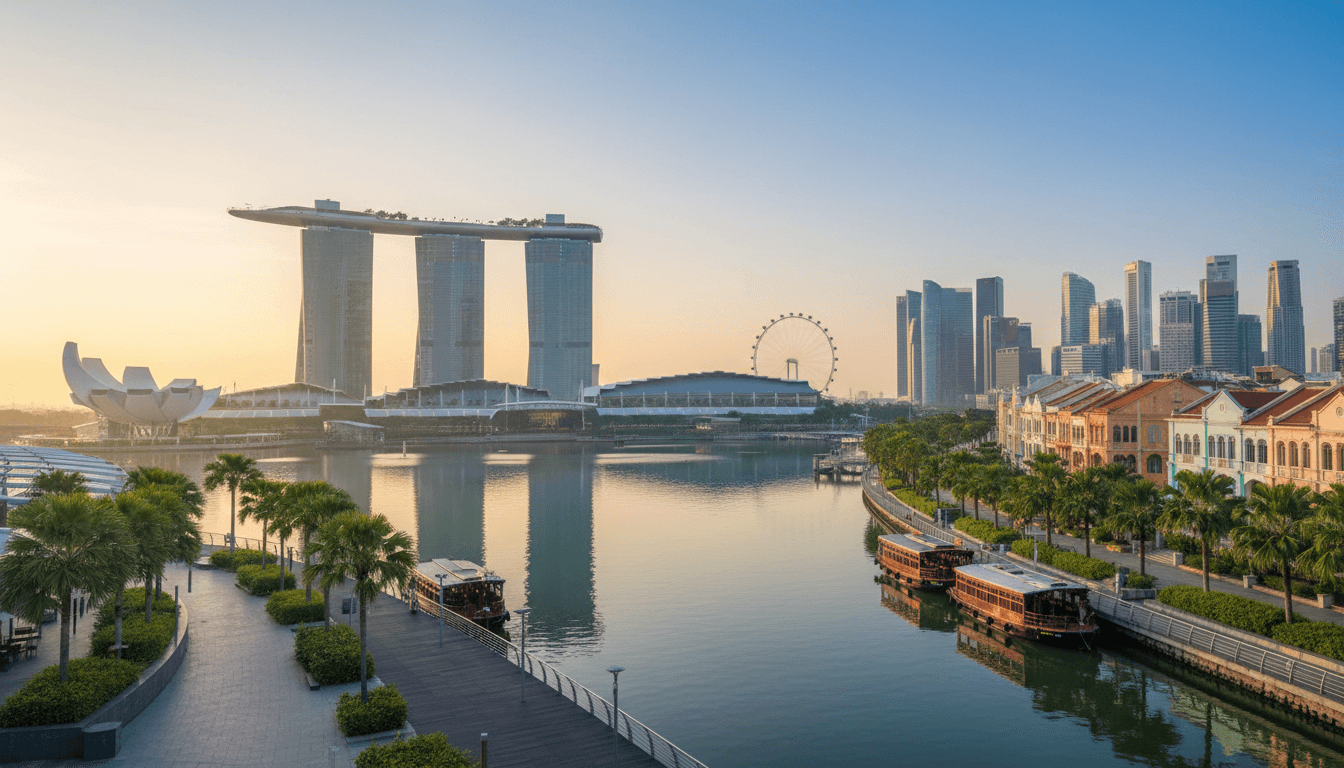
Local Experiences in Singapore: 47 Authentic Activities Only Home Swappers Discover

SwappaHome Editorial Team
Home Exchange & Slow Travel Editorial
Skip the tourist traps. These local experiences in Singapore—from secret hawker stalls to neighborhood rituals—are what home swapping unlocks.
The first morning I woke up in my Singapore home swap—a compact HDB flat in Tiong Bahru—I made a mistake that turned into the best thing that happened all trip.
I wandered downstairs at 6:30 AM, jet-lagged and desperately seeking coffee, and accidentally joined what I thought was a queue for a café. Turns out, I'd stumbled into a tai chi session in the void deck below the apartment block. An elderly woman named Mdm. Tan handed me a paper fan and said, in perfect English, "You're late, but we'll catch you up."
That's the thing about local experiences in Singapore—they don't happen at Marina Bay Sands or on the Sentosa monorail. They happen in the spaces between the tourist highlights, in neighborhoods where actual Singaporeans live, work, argue about which kopi is best, and practice tai chi at dawn. And home swapping? It drops you directly into those spaces.
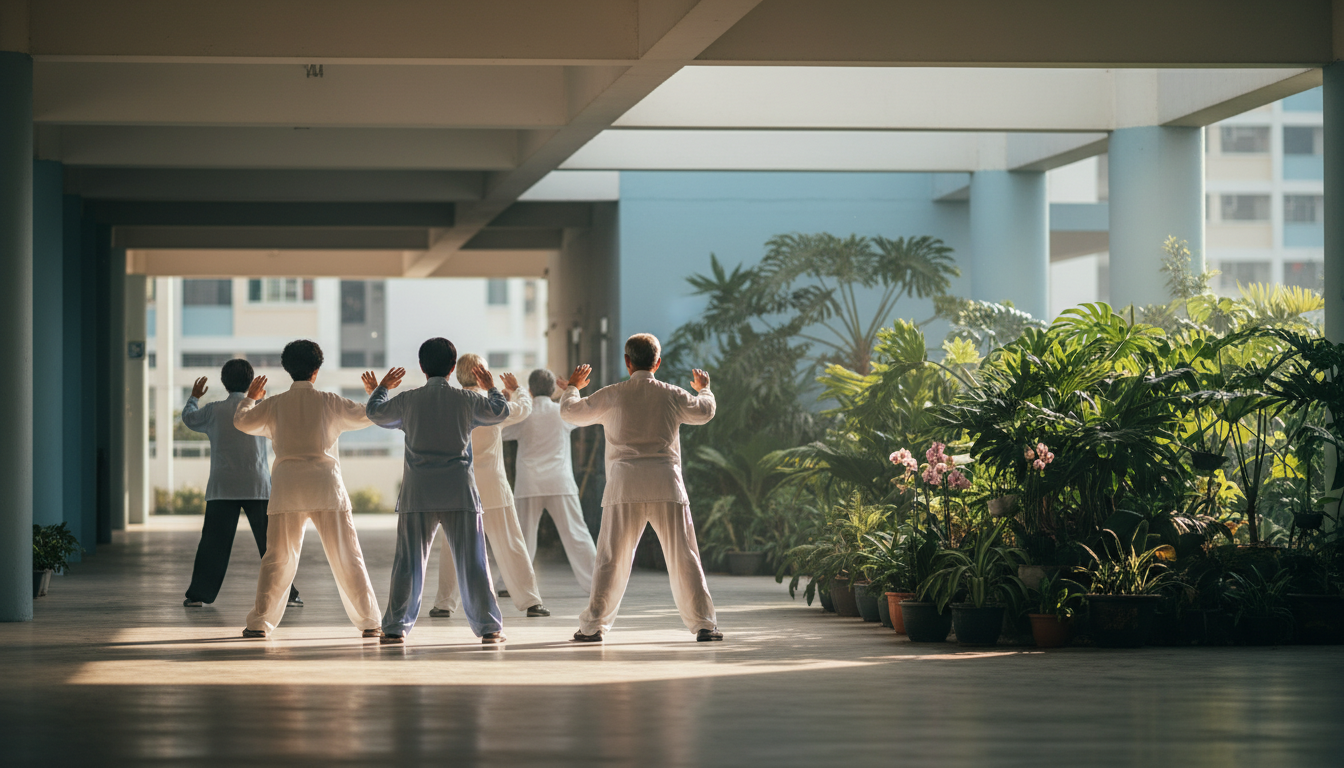 Early morning tai chi session in an HDB void deck, elderly residents in loose clothing moving in uni
I've done three home swaps in Singapore over the past four years—Tiong Bahru, Katong, and most recently, a surprising gem in Yishun. Each one taught me something the Lonely Planet never mentioned. This guide is everything I wish I'd known, plus the stuff my hosts scribbled on napkins for me.
Why Home Swapping Unlocks Authentic Singapore Experiences
Here's what most travel guides won't tell you: Singapore is actually two cities.
There's Tourist Singapore—clean, efficient, Instagram-ready. Gardens by the Bay, the Merlion, that rooftop infinity pool everyone photographs. It's genuinely impressive, don't get me wrong. Then there's Local Singapore—the one where your neighbor aunty judges your grocery choices, where the best char kway teow comes from a stall with no signage, where entire communities gather at 5 AM for bird singing competitions. Yes, really. This Singapore doesn't advertise itself. You have to live in it to find it.
Home swapping puts you in the second Singapore by default.
When you're staying in someone's actual home—in their neighborhood, using their wet market, nodding at their neighbors—you absorb local rhythms without trying. My Tiong Bahru host left me a handwritten list of her morning routine spots. That list was worth more than any guidebook I've ever bought.
The practical benefits stack up too. A hotel in Singapore's city center runs $250-400 USD per night for anything decent. My home swaps? Zero accommodation cost through SwappaHome's credit system—I'd hosted a lovely couple from Melbourne the month before and used those credits. Over two weeks, that's roughly $4,200 saved. Money I spent instead on eating my way through every hawker center on the island.
The Best Neighborhoods for Authentic Local Experiences in Singapore
Location matters more in Singapore than almost anywhere I've traveled. The island is tiny—you can cross it in 45 minutes—but neighborhoods have distinct personalities that shape your entire experience.
Tiong Bahru: The Heritage Heartland
My first Singapore swap was here, and I'm biased, but Tiong Bahru remains my favorite neighborhood for first-time visitors seeking local experiences in Singapore.
The area centers around Singapore's oldest public housing estate, built in the 1930s with Art Deco flourishes you don't expect in tropical Asia. Curved balconies, spiral staircases, geometric details—it feels like stepping into a Wong Kar-wai film.
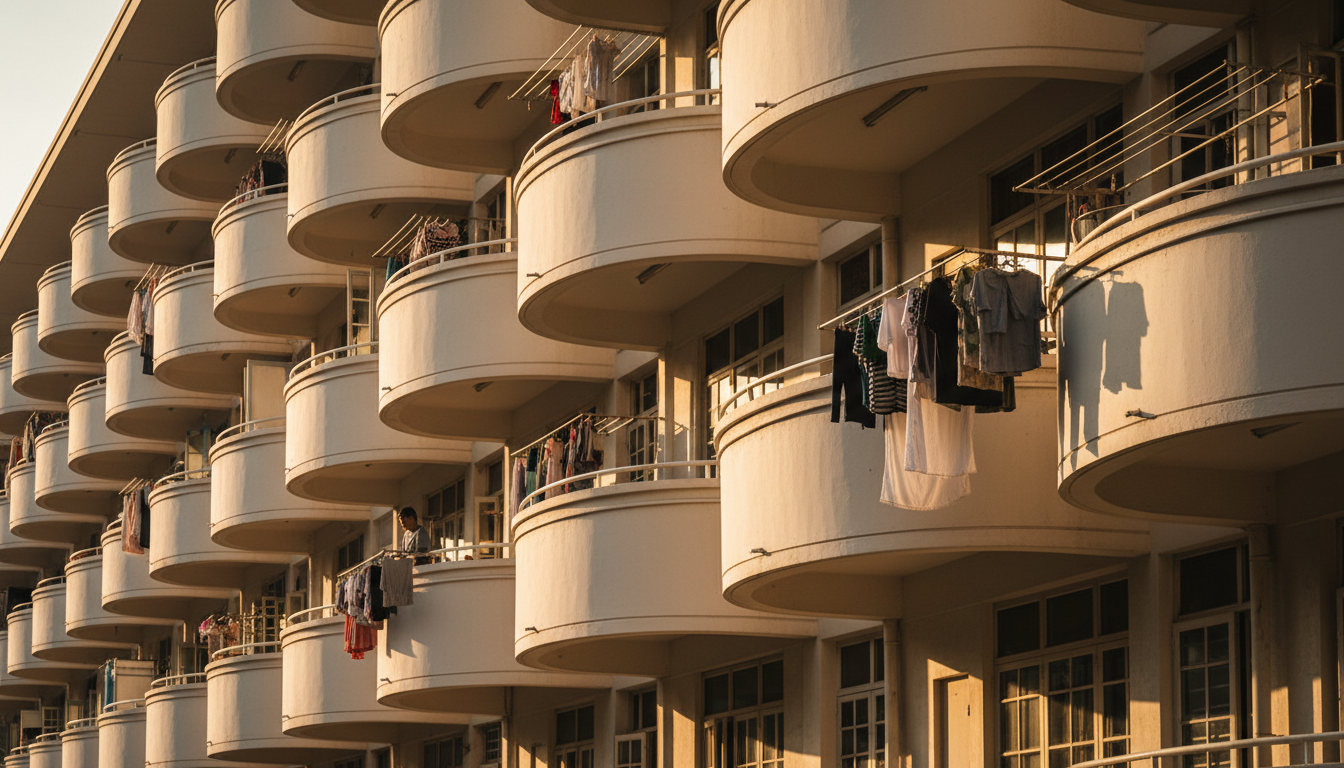 Art Deco HDB flats in Tiong Bahru with curved white balconies, laundry hanging from bamboo poles, mo
But the real magic is the community. The wet market at Tiong Bahru Market opens at 6 AM, and by 7, every plastic stool is occupied by regulars eating chwee kueh (steamed rice cakes with preserved radish) and gossiping in a mix of Hokkien, Mandarin, and English. I went every morning of my swap. By day four, the chwee kueh uncle knew my order.
Local tip: The hawker center on the second floor is famous, but locals know the ground-floor wet market stalls do a better lor mee (braised noodles in thick gravy). Look for the stall with the longest queue of elderly customers—they're never wrong.
Katong and Joo Chiat: Peranakan Soul
My second swap landed me in Katong, and it completely reframed what I thought I knew about Singaporean culture.
This is the heart of Peranakan heritage—the unique culture born from Chinese immigrants marrying local Malays centuries ago. The result is a cuisine, aesthetic, and way of life that exists nowhere else on Earth. The shophouses here are painted in sherbet colors—mint green, powder pink, sky blue—with intricate tile work and carved wooden doors.
I stayed in a converted shophouse where my host's grandmother's nyonya kebaya (traditional blouse) still hung in the guest room closet. She'd left a note: "Feel free to try it on. My grandmother would have wanted her clothes to see Katong again."
I cried a little, honestly.
The neighborhood's local experiences center around food. Kim Choo Kueh Chang has been making rice dumplings since 1945—the nyonya chang (blue-tinged glutinous rice with candied winter melon) is unlike anything you've tasted. 328 Katong Laksa serves what many consider Singapore's definitive laksa, though locals will fight you on this. The spoon-cut noodles in that rich coconut curry broth—I still dream about it.
Yishun: The Underdog Neighborhood
Okay, hear me out.
Yishun has a reputation among Singaporeans as the "weird" neighborhood—there's a running joke that all the strangest news stories come from Yishun. But my most recent swap was there, and I'm convinced it's the most underrated spot for authentic local experiences in Singapore.
It's a mature HDB estate in the north, far from tourist areas, which means you're the only foreigner for blocks. The Yishun Park Hawker Centre is massive, cheap, and packed with families on weekends. I paid $3.50 SGD (about $2.60 USD) for a plate of chicken rice that rivaled the famous Tian Tian stall—without the 45-minute queue.
The neighborhood also borders the Yishun Dam and Lower Seletar Reservoir, where I discovered Singaporeans' obsession with fishing. Every evening, dozens of locals set up along the water with coolers, folding chairs, and serious equipment. I sat with a retiree named Mr. Lim who taught me to bait a hook and told me about growing up in kampong (village) Singapore before all the development. Those conversations don't happen at tourist attractions.
Morning Rituals: How Locals Actually Start Their Day
Forget the hotel breakfast buffet. The real Singapore wakes up early and moves with purpose.
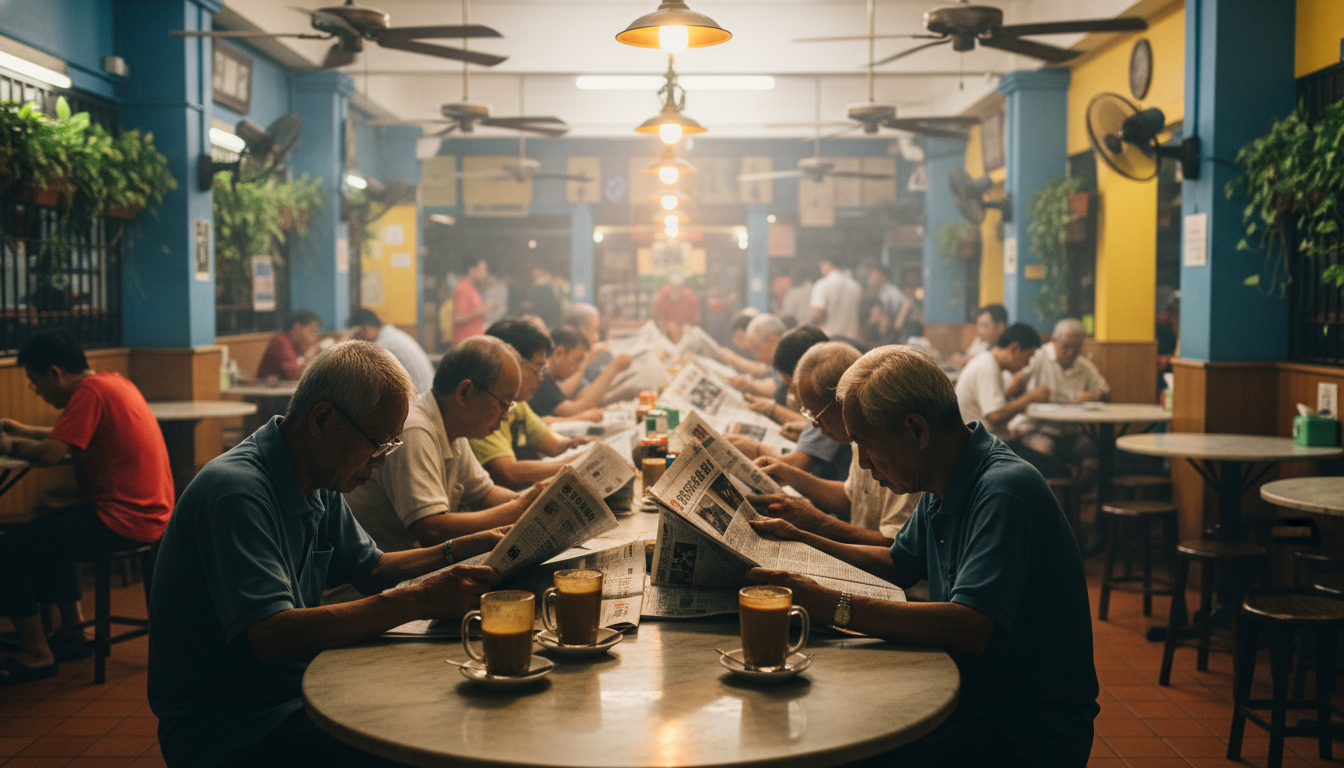 Crowded kopitiam at 7 AM, elderly men reading Chinese newspapers, condensation on kopi glasses, ceil
The Kopitiam Coffee Culture
Singaporean coffee culture predates any third-wave pour-over trend by about a century. The kopitiam (traditional coffee shop) is where deals are made, gossip is exchanged, and the day officially begins.
Ordering kopi is an art form. "Kopi" gets you coffee with condensed milk and sugar. "Kopi-O" is black with sugar. "Kopi-C" uses evaporated milk instead of condensed. "Kopi-O-kosong" is black with no sugar. "Kopi-gao" means extra strong. You can combine these—"Kopi-C-gao-siu-dai" gets you evaporated milk coffee, extra strong, less sweet. My Tiong Bahru host wrote out a cheat sheet for me. I still have it in my wallet.
The best kopitiams are the ones that haven't been renovated—look for marble-top tables, wooden stools, and uncles in singlets reading the Chinese papers. Ya Kun Kaya Toast is the famous chain, but locals prefer neighborhood spots like Heap Seng Leong in Lavender or Tong Ah in Keong Saik.
The Wet Market Experience
If you're home swapping, you have a kitchen. Use it—but first, experience a wet market.
These aren't farmers' markets in the Western sense. They're chaotic, loud, and slightly overwhelming sensory experiences where vendors have been selling the same products for decades. The seafood is so fresh it's often still moving. The vegetables are things you've never seen before. The aunties will absolutely judge you if you pick the wrong pomelo.
I recommend going early (before 8 AM) and watching before buying. Notice which stalls have the longest queues—Singaporeans are obsessive about finding the "best" version of everything, and they vote with their feet. After a few visits, vendors start recognizing you. That's when the good stuff happens—they'll set aside the best cuts, warn you away from produce that's past its prime, and occasionally throw in extra herbs "for the ang moh who keeps coming back."
Tekka Market in Little India is the most famous, but I prefer the neighborhood markets—Tiong Bahru, Ghim Moh, and Clementi are all excellent and far less touristy.
Hawker Center Secrets: Beyond the Famous Stalls
Every Singapore guide tells you to eat at hawker centers. What they don't tell you is how to eat at hawker centers like a local.
The Tissue Paper System
This confused me for an embarrassingly long time. Singaporeans reserve seats at crowded hawker centers by placing tissue packets on tables. It's called "choping," and it's sacred. Never, ever sit at a table with tissues on it, even if it looks empty. You will receive glares that could curdle laksa.
The Numbering System
Many hawker stalls give you a number when you order, then shout it out when your food's ready. The catch: they often shout in Hokkien, Mandarin, or Malay. I learned to hover near the stall and watch for my dish being plated. Less elegant, but effective.
The Actually Best Stalls
Tourists flock to the Michelin-starred hawker stalls—Hill Street Tai Hwa Pork Noodle, Hawker Chan. They're good, but the queues are brutal and locals have moved on to quieter gems.
Here's my shortlist from four years of Singapore home swaps: Heng Heng Cooked Food at Chinatown Complex does curry chicken noodles with a depth of flavor that haunts me—$4 SGD. Bedok 85 Fengshan is worth the trip east; the bak chor mee (minced meat noodles) at stall 58 is legendary. Whampoa Makan Place in Balestier is old-school with no tourists, and the fried Hokkien mee here beats anything in the city center. Geylang Serai Market has the best Malay food on the island—go for nasi padang, point at whatever looks good, and they'll pile it on rice.
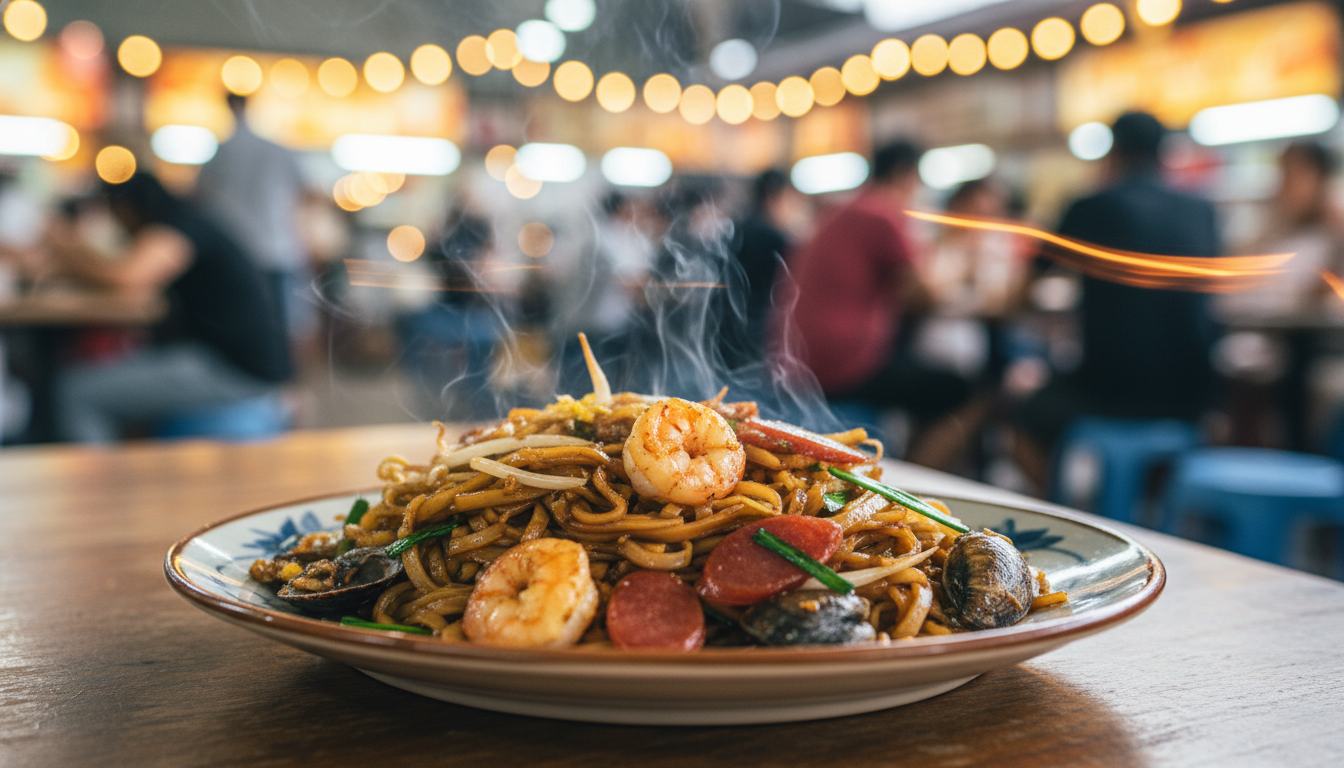 Close-up of a plate of char kway teow with wok hei smoke rising, prawns and cockles visible, hawker
Cultural Experiences That Don't Feel Like Tourism
Temple Mornings in Chinatown
The Buddha Tooth Relic Temple gets all the attention, but the local experiences in Singapore's Chinatown happen at the smaller temples.
Thian Hock Keng Temple is the oldest Hokkien temple in Singapore, and on mornings when there's no tour group, it's genuinely peaceful. I watched a grandmother teach her granddaughter how to properly offer joss sticks—the ritual, the prayers, the specific way to bow. She noticed me watching and, instead of being annoyed, invited me to light incense with them. "Good luck for your travels," she said.
Sri Mariamman Temple on South Bridge Road is Singapore's oldest Hindu temple, and during evening puja (prayer ceremony), the energy shifts completely. The drums, the bells, the smell of jasmine and camphor—it's overwhelming in the best way. You can observe respectfully from the sides. Just remove your shoes and dress modestly.
The Bird Singing Competitions
I mentioned this earlier, but it deserves its own section because it's so wonderfully bizarre.
Every weekend morning, mostly elderly Chinese men gather in specific locations—Kebun Baru is the most famous—with their caged songbirds. The birds compete in singing contests, judged on melody, stamina, and something called "character." The owners hoist the cages high on poles, and the birds sing their hearts out while their humans sit below, drinking kopi and arguing about whose bird is superior.
It's been a tradition for decades, and it's dying out—younger Singaporeans aren't interested. But if you're an early riser and want to witness something utterly unique, show up around 7 AM on a Sunday. No one will explain the rules to you. You'll be confused. It's perfect.
The Void Deck Culture
HDB flats have "void decks"—open-air ground floors used for community activities. This is where Singapore's multicultural identity actually plays out daily.
During my Tiong Bahru swap, I saw: a Malay wedding setup one weekend, a Chinese funeral wake the next, a kids' birthday party, a chess tournament among retirees, and my accidental tai chi session. The void deck is living room, community center, and social hub all in one.
You can't really plan void deck experiences—they happen when you're living in a neighborhood, walking through on your way somewhere else. That's the home swap advantage.
Day Trips That Feel Local, Not Touristy
Pulau Ubin: Singapore's Last Kampong
Take the bumboat from Changi Point Ferry Terminal ($4 SGD round trip) to Pulau Ubin, and you'll step back 50 years.
This island off Singapore's northeast coast is what the whole country looked like before development—wooden kampong houses, wild jungle, dirt roads. Only about 30 people still live here full-time. Rent a bike (around $10-15 SGD for the day) and explore the mangroves, the abandoned quarries turned swimming holes, and the Chek Jawa wetlands.
I spent a full day here during my Yishun swap. Had lunch at a ramshackle coffee shop where the aunty served whatever she felt like cooking that day—$5 SGD for a plate of fried rice and a cold drink. Watched monitor lizards the size of dogs cross the road. Felt like I'd discovered a secret Singapore had been hiding.
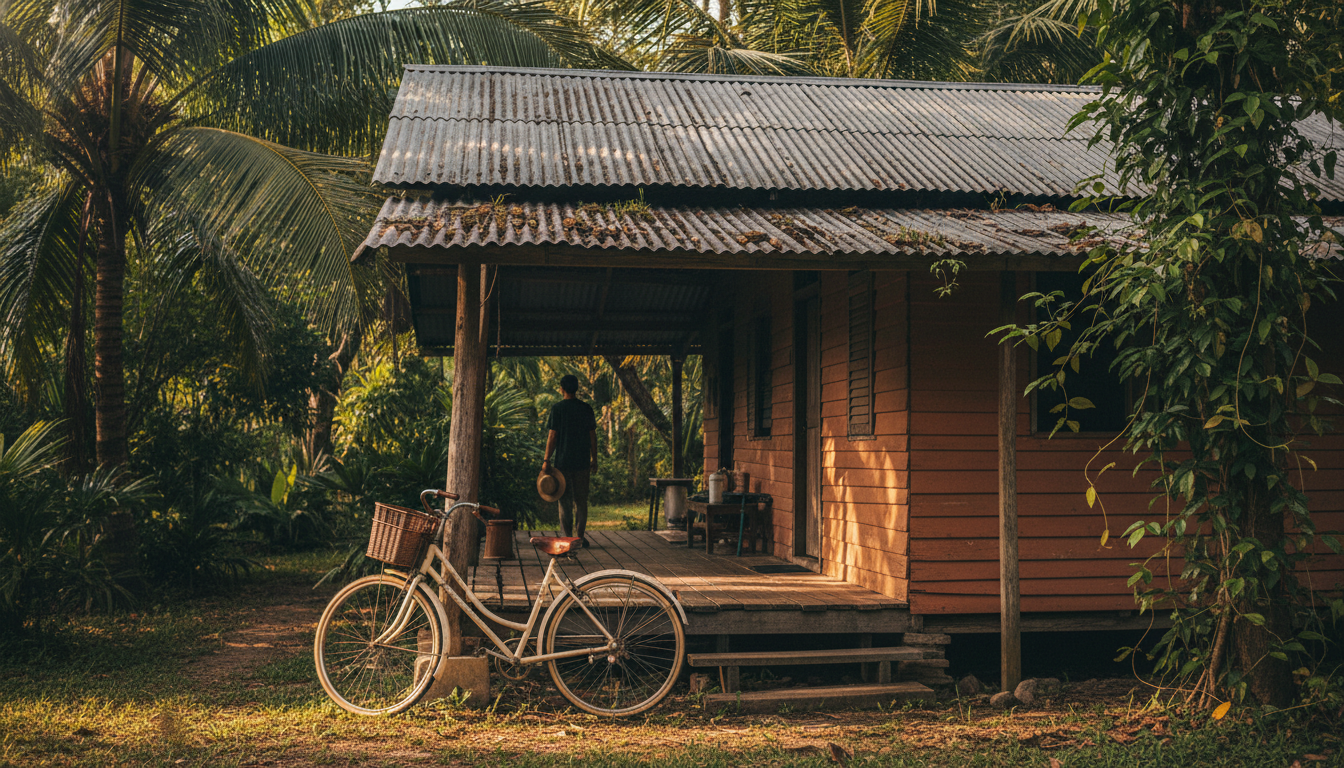 Rustic kampong house on Pulau Ubin with corrugated roof, jungle growing around it, vintage bicycle l
The Southern Ridges Walk
This 10-kilometer trail connects several parks along Singapore's southern hills, and somehow tourists miss it entirely.
Start at Kent Ridge Park and walk through HortPark, the Henderson Waves bridge (an architectural marvel that looks like a wooden ribbon), and end at Mount Faber. The whole thing takes 3-4 hours if you're leisurely, and you'll pass maybe a dozen people, all locals walking their dogs or jogging.
Henderson Waves at sunset is genuinely one of the most beautiful spots in Singapore. I sat there with a takeaway kopi and watched the sky turn pink over the container port. No crowds. No entrance fee. Just me and a few elderly couples taking their evening stroll.
Neighborhood Food Tours (DIY Version)
Forget the organized food tours that cost $100 USD and take you to the same five stalls. Here's how to eat like a local across different neighborhoods.
The Little India Circuit
Start at Tekka Centre for breakfast—order thosai (crispy fermented crepes) with sambar and coconut chutney. Walk down Serangoon Road, popping into the spice shops and flower garland stalls. Lunch at Komala Vilas for vegetarian South Indian—their masala dosai has been the same recipe since 1947. End at the Sri Veeramakaliamman Temple for afternoon prayers. Budget: Under $20 SGD for a full day of eating.
The Geylang Experience
Geylang has a reputation as Singapore's red-light district, which keeps tourists away. Their loss—it's also the best place for late-night local food.
Start around 9 PM. Walk Lorong 9 for frog porridge (trust me). Hit Lorong 29 for beef hor fun. End at one of the durian stalls that line the main road—Geylang is where Singaporeans go for the best durian, and the vendors will help you pick a good one if you're brave enough to try.
I'll be honest: I hated durian the first time. By my third Singapore swap, I was craving it. Stockholm syndrome, maybe.
The Tiong Bahru Loop
Morning: Chwee kueh at the wet market, followed by kopi at Tiong Bahru Bakery (yes, it's trendy, but the croissants are actually excellent). Afternoon: Explore the Art Deco blocks, check out the independent bookshop BooksActually (now called Birds of Paradise), grab lor mee for late lunch at the hawker center. Evening: Cocktails at Jigger & Pony if you're feeling fancy, or just a cold Tiger beer at one of the old-school coffee shops.
Practical Tips for Home Swappers in Singapore
Getting Around
Singapore's MRT (metro) system is absurdly efficient and cheap. Get an EZ-Link card at any station ($10 SGD including $5 credit) and you can tap on buses and trains anywhere on the island. Most journeys cost $1-2 SGD.
Grab (Southeast Asia's Uber) is everywhere if you need a car, but honestly, I rarely used it. The MRT goes almost everywhere, and walking Singapore's neighborhoods is half the experience.
The Weather Reality
Singapore is hot. Not "California summer" hot—equatorial, humid, "your shirt is soaked in five minutes" hot. Average temperature is 31°C (88°F) year-round, with humidity around 80%.
Locals adapt by doing everything early or late. Shopping malls are aggressively air-conditioned for a reason. Carry a small towel. Embrace the sweat.
The afternoon thunderstorms (usually 3-5 PM) are spectacular and brief. Locals don't even bother with umbrellas—they just wait it out in a kopitiam with an iced drink.
Money Matters
Singapore uses the Singapore Dollar (SGD). Current exchange rate hovers around 1 USD = 1.35 SGD.
Hawker food runs $3-6 SGD per dish. Kopi is $1.20-1.80 SGD. MRT rides cost $1-2.50 SGD. A Grab across town is $15-25 SGD. Craft cocktails hit $20-28 SGD. Credit cards work everywhere except traditional hawker stalls and wet markets—bring cash for those.
What to Bring Your Host
Singaporean home swap hosts appreciate thoughtful gifts from your home country. My go-tos: local chocolate (they love anything from Europe), specialty coffee beans, or something unique to your city. Avoid anything that needs refrigeration or anything too bulky.
One host left me a gift in return—a jar of homemade pineapple tarts. I almost cried at the airport eating the last one.
Making the Most of Your Home Swap
The secret to unlocking authentic local experiences in Singapore isn't a secret at all: stay longer than you think you need.
Most tourists do Singapore in 3-4 days. They see Marina Bay, eat at a hawker center, visit Gardens by the Bay, and leave. They've experienced Tourist Singapore, which is fine, but they've missed the deeper stuff.
Home swapping encourages longer stays—you're not paying $300/night, so why rush? My swaps have been 10 days, two weeks, even three weeks. By week two, I had a "usual" at my neighborhood kopitiam. The wet market aunty saved me the good pomelos. I knew which elevator in the HDB block was faster.
That's when Singapore stops being a destination and starts being a place you actually know.
SwappaHome made this possible for me. The credit system means I could host travelers in San Francisco, then use those credits for an extended Singapore stay without worrying about accommodation costs. My Tiong Bahru host and I have actually become friends—she visited San Francisco last year and stayed with me. We went to the Ferry Building farmers market and I showed her my morning routine. Full circle.
Finding Your Singapore Home Swap
If you're browsing SwappaHome for Singapore listings, here's what I'd prioritize:
Location over luxury. A simple HDB flat in Tiong Bahru or Katong will give you a better experience than a fancy condo in the Marina Bay area. You want to be where Singaporeans actually live.
Look for hosts with local tips. The best listings mention neighborhood recommendations, favorite hawker stalls, or morning routines. These hosts understand what makes home swapping special.
Check the transport links. Make sure there's an MRT station within 10-15 minutes walking distance. Singapore is small, but you'll want easy access to different neighborhoods.
Read the reviews. SwappaHome's review system is your friend. Look for mentions of helpful hosts, accurate descriptions, and good communication.
Someone in Singapore might be looking at your listing right now, dreaming about experiencing your neighborhood. That's the magic of this whole thing. It's not just about free accommodation; it's about genuine cultural exchange, about seeing places through local eyes, about building connections that outlast the trip itself.
My next Singapore swap is already booked—a place in Queenstown, one of the oldest HDB estates, scheduled for next March. The host mentioned there's a legendary bak kut teh stall nearby that's been operating since the 1970s. I've already started planning my morning routine around it.
That's the thing about local experiences in Singapore. Once you've had a taste of the real city—the one that wakes up at dawn, argues about coffee, and gathers in void decks—the tourist version just doesn't satisfy anymore.
You've been warned.
Frequently Asked Questions
What are the best local experiences in Singapore for first-time visitors?
Start with the hawker centers—Maxwell Food Centre and Tiong Bahru Market are excellent introductions. Visit a wet market in the morning, explore heritage neighborhoods like Katong or Tiong Bahru, and experience a kopitiam for traditional coffee culture. These authentic local experiences in Singapore cost almost nothing and reveal the city's true character far better than tourist attractions.
Is home swapping safe in Singapore?
Singapore consistently ranks as one of the world's safest countries, making it ideal for home swapping. The city has extremely low crime rates, and HDB neighborhoods are tight-knit communities where neighbors look out for each other. SwappaHome's verification and review system adds another layer of trust, though I always recommend getting your own travel insurance for peace of mind.
How much money can I save home swapping in Singapore versus hotels?
Hotels in central Singapore cost $200-400 USD per night for decent options. A two-week home swap saves approximately $3,000-5,000 USD in accommodation costs alone. Through SwappaHome's credit system, you earn credits by hosting guests at home, then spend those credits on stays—no money changes hands between members. I typically redirect those savings into food experiences and day trips.
What neighborhoods should I avoid for home swapping in Singapore?
No neighborhoods in Singapore are unsafe, but some offer fewer local experiences. The Marina Bay and Orchard Road areas are tourist-heavy and expensive, with less authentic neighborhood culture. For genuine local experiences in Singapore, prioritize mature HDB estates like Tiong Bahru, Katong, Queenstown, or even northern areas like Yishun where you'll be immersed in everyday Singaporean life.
When is the best time to visit Singapore for local experiences?
Singapore's weather is consistent year-round (hot and humid), so timing matters less than in seasonal destinations. Visiting during cultural festivals—Chinese New Year (January/February), Hari Raya (varies), or Deepavali (October/November)—adds incredible depth to local experiences. Neighborhoods transform with decorations, special foods appear at hawker centers, and you'll witness traditions that tourists rarely see.

Published by
SwappaHome
SwappaHome Editorial Team
Home Exchange & Slow Travel Editorial
The SwappaHome Editorial Team brings together travel research, home-exchange community insights, and platform data to produce practical guides for first-time and experienced home swappers. Every article cites real platforms, current market rates, and verifiable city-level facts so readers can make informed decisions without guessing.
Ready to try home swapping?
Join SwappaHome and start traveling by exchanging homes. Get 7 free credits when you sign up!
Related articles
Bachelor and Bachelorette Parties in Singapore: The Complete Home Swap Group Guide for 2026
Planning a bachelor or bachelorette party in Singapore? Discover how home swapping lets groups of 6-12 stay together in luxury condos, saving thousands while partying in Marina Bay.
Cycling in Lisbon: 7 Home Swap Bike Tour Itineraries for Every Rider
Discover the best cycling routes in Lisbon with these home swap bike tour itineraries—from waterfront paths to hilltop adventures, all starting from your borrowed home.
Graduation Trip to Barcelona: How Home Swapping Gives New Graduates the Ultimate Celebration
Planning a graduation trip to Barcelona? Discover how home swapping lets new graduates explore Spain's most vibrant city without the hostel crowds or hotel costs.