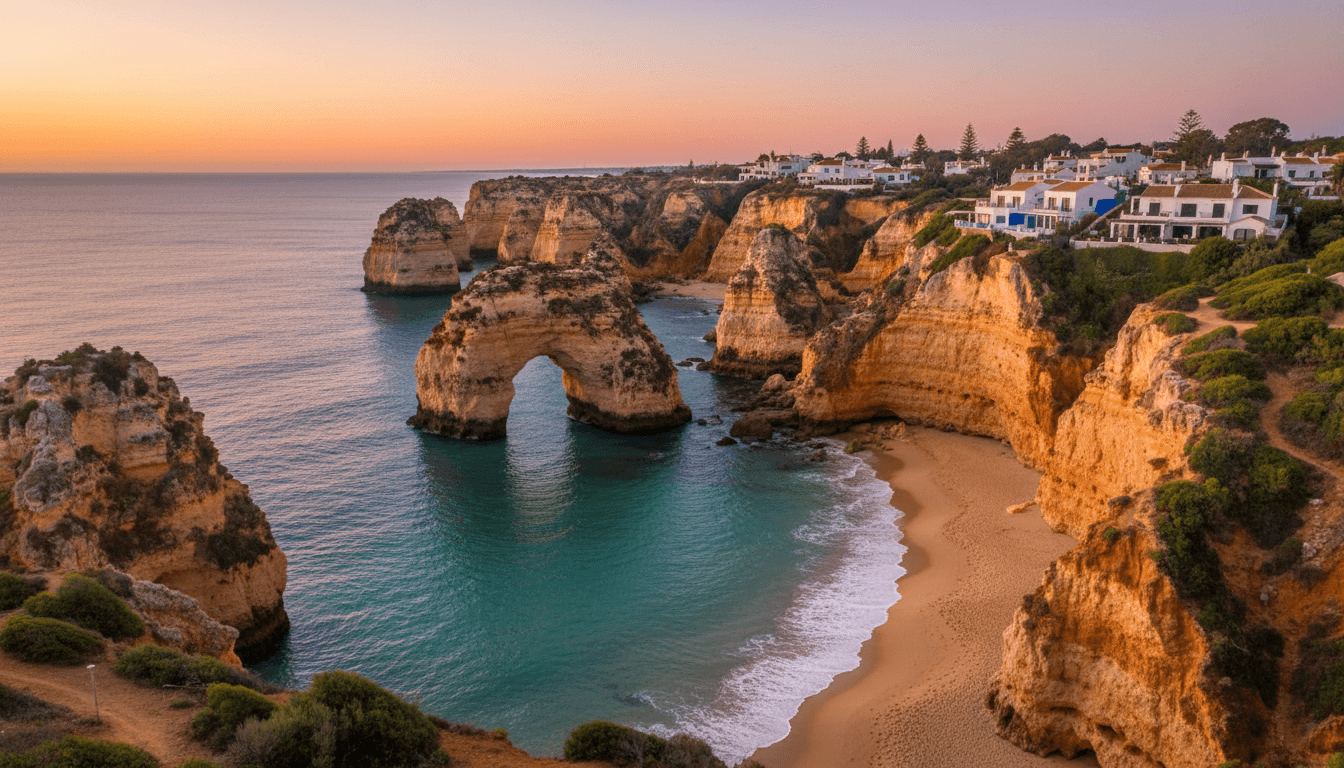
Home Swapping in Algarve: The Insider's Guide to Portugal's Stunning Southern Coast

SwappaHome Editorial Team
Home Exchange & Slow Travel Editorial
Discover how home swapping in Algarve lets you experience Portugal's golden coast like a local—from secret beaches to cliffside villages, all without hotel prices.
That first morning in the Algarve, I was standing on a terrace in Lagos at 7 AM, still jet-lagged and clutching a coffee my home swap host had left for me. The cliffs were glowing this impossible shade of orange in the early light, and I remember thinking: no hotel balcony could have given me this moment.
That was three years ago. I've been back twice since—both times through home swapping—and honestly, I'm convinced it's the only way to truly experience this corner of Portugal. Not the resort version. Not the all-inclusive package. The real thing.
Home swapping in Algarve opens doors that money literally can't buy. A fisherman's cottage in Ferragudo. A modern apartment with a rooftop pool in Albufeira. A renovated farmhouse in the hills above Tavira. These aren't vacation rentals with inflated prices—they're real homes, offered by real people who want to travel too.
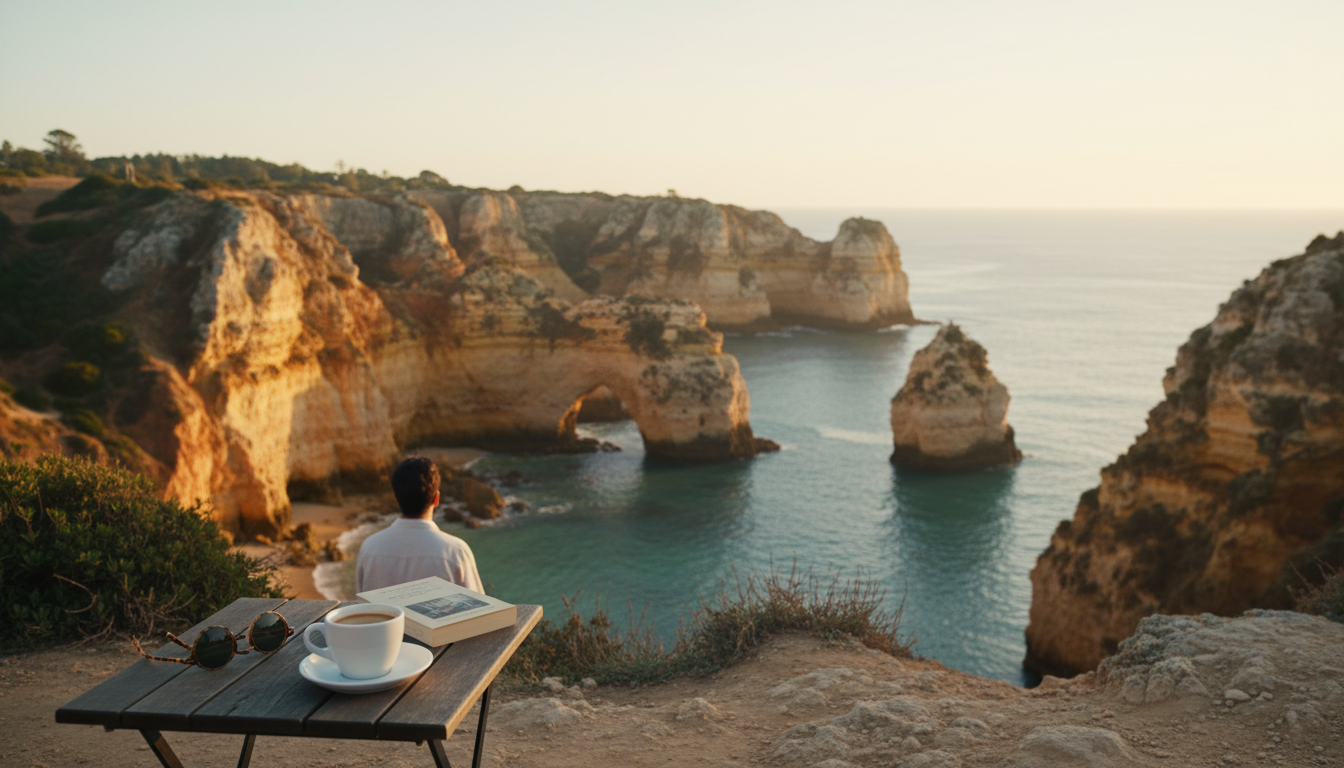 Golden morning light hitting the dramatic ochre cliffs of Ponta da Piedade near Lagos, with a small
Why Home Swapping in Algarve Makes Perfect Sense
So here's the thing about the Algarve: it's gorgeous, but it's also become expensive. Like, really expensive. A decent hotel room in Lagos during summer? You're looking at €180-250 ($195-270 USD) per night. Albufeira's even worse. And those prices get you a room—not a home.
When you home swap in Algarve, you're looking at 1 credit per night on SwappaHome, regardless of whether you're staying in a modest studio or a villa with a pool. That's the beauty of the credit system. Earn credits by hosting travelers in your home, spend them anywhere in the world. No money changes hands between members.
But it's not just about savings. It's about experience.
Last summer, I stayed in a converted fisherman's house in Ferragudo—this tiny village across the river from Portimão that most tourists never see. My host, Mariana, left me a hand-drawn map of her favorite spots: the bakery where she gets her morning pastéis de nata, the beach bar that only locals know about, the cliff path leading to a hidden cove. You can't Google this stuff. You can't buy it.
I woke up to church bells. Bought sardines from a guy selling them from a cooler on the beach. Spent my evenings on a terrace watching fishing boats come in. The whole two weeks cost me 14 credits.
Best Neighborhoods for Home Exchange in Algarve
The Algarve stretches about 150 kilometers along Portugal's southern coast, and where you base yourself matters. A lot. Here's my honest breakdown after exploring most of it:
Lagos: The Sweet Spot for First-Timers
Lagos has that rare combination of historic charm, stunning beaches, and enough infrastructure to feel comfortable. The old town is a maze of cobblestone streets, whitewashed buildings, and hole-in-the-wall restaurants that haven't changed in decades.
For home swapping, Lagos offers variety—apartments in the historic center (walking distance to everything), villas in the hills with pools, modern places near Meia Praia beach. I'd recommend the old town for first-timers. You can walk everywhere, and there's a farmers market on Saturday mornings worth planning your trip around.
The famous grottos of Ponta da Piedade are a 20-minute walk from the center. Book a kayak tour (around €35/$38 USD) and go early—by 10 AM, it's overrun with boat tours.
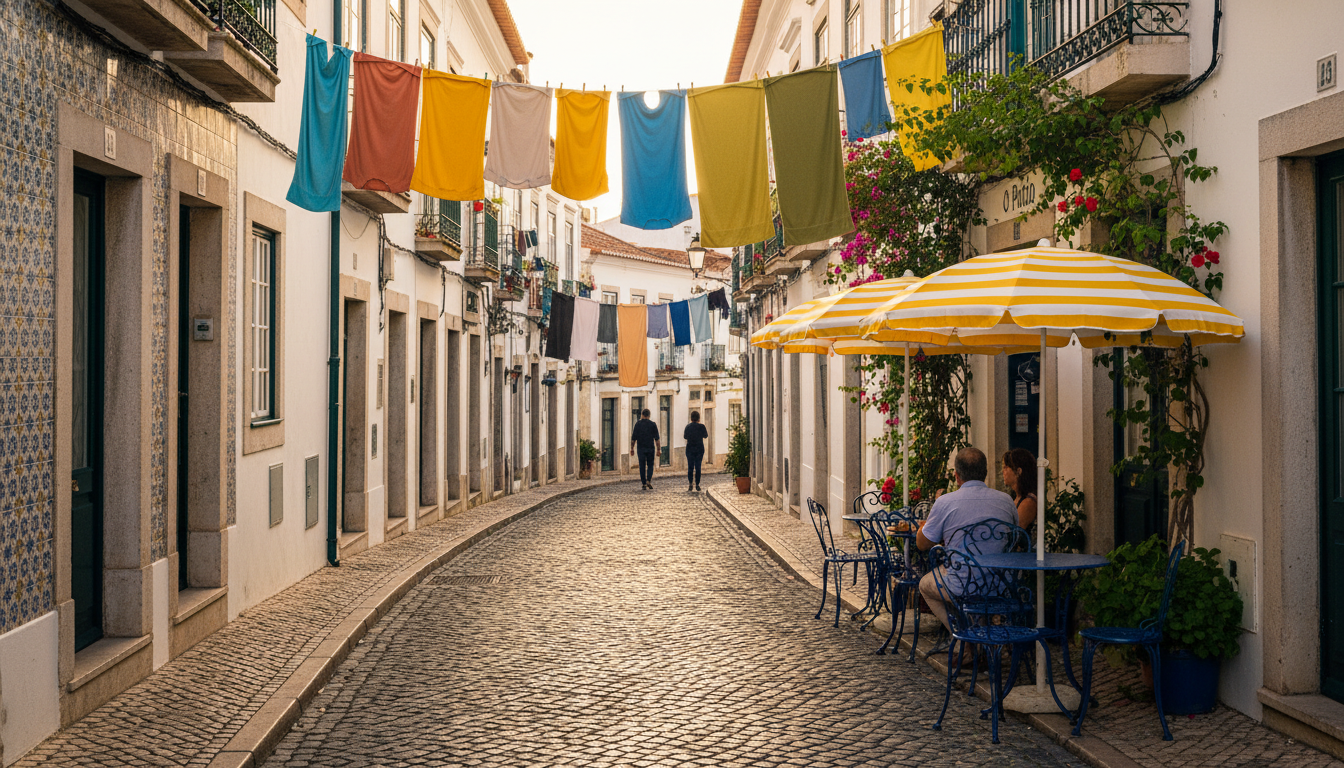 Narrow cobblestone street in Lagos old town with traditional Portuguese tiles, hanging laundry, and
Tavira: For Those Who Want to Slow Down
If Lagos is the Algarve's charming extrovert, Tavira is its quieter, more sophisticated sibling. This is where Portuguese families vacation. Where the restaurants don't have English menus. Where you might be the only non-local on the beach.
Tavira sits on a river, connected by an ancient Roman bridge, with churches dating back to the Moorish era. The beaches here are on Tavira Island—you take a small ferry (€2/$2.15 USD round trip) and suddenly you're on endless stretches of sand with maybe a dozen other people.
Home swaps in Tavira tend to be traditional townhouses or apartments in restored buildings. Expect terracotta tiles, wooden shutters, and rooftop terraces. The town is flat and walkable, which matters when it's 35°C in August.
Albufeira: Skip the Strip, Find the Old Town
I'll be honest—I almost didn't include Albufeira because the "Strip" (the main tourist drag) is everything I hate about resort tourism. Loud bars. British stag parties. Restaurants with photos on the menu.
But.
The old town of Albufeira is genuinely lovely. Whitewashed houses tumbling down to a protected beach, narrow streets with actual Portuguese restaurants, and some of the best seafood I've had in the country. The trick is staying in the old town and pretending the Strip doesn't exist.
Home swaps here can be hit or miss—make sure you're clear about location. Old town or Olhos de Água (a quieter beach area to the east) are your best bets.
Ferragudo: The Local's Secret
This is my personal favorite, and I'm almost reluctant to share it. Ferragudo is a fishing village—a real one, not a "preserved" tourist version. About 2,000 people live here year-round. There's one main beach, a handful of restaurants, and a 16th-century fortress you can walk around.
Home swaps in Ferragudo are rare, which means when one comes up, grab it. You'll likely be in a traditional village house with thick walls that stay cool in summer and a terrace overlooking the river. The nearest supermarket is in Portimão (10 minutes by car), so you'll need to plan ahead.
But that's kind of the point.
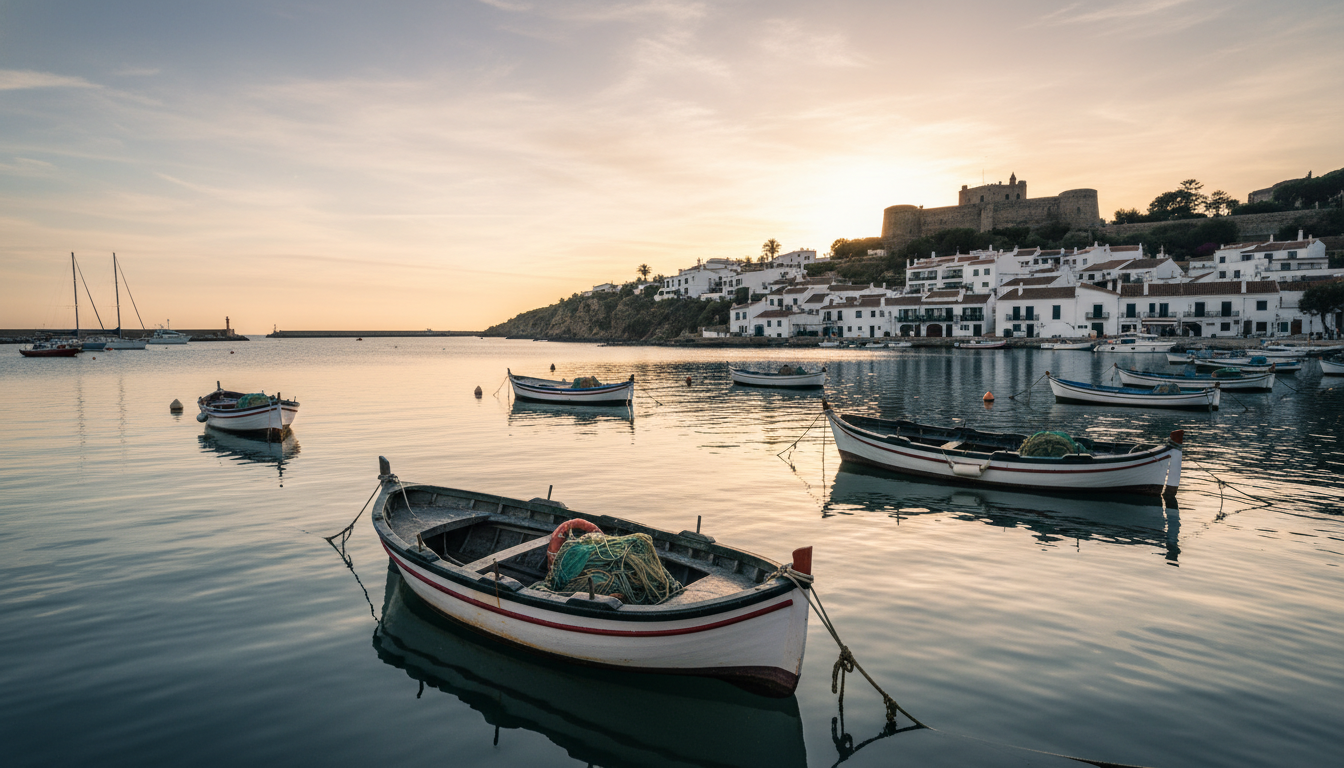 Small fishing boats moored in Ferragudo harbor at sunset, with the silhouette of the fortress and vi
How to Find the Perfect Algarve Home Swap
Alright, practical stuff. Here's how to actually make this happen.
Start by creating a profile on SwappaHome that shows your home at its best. Good photos matter—natural light, tidy spaces, that one corner that photographs well. Write your description like you're telling a friend about your place, not selling a product.
Then search for Algarve listings. You can filter by location, dates, and amenities. When you find something promising, read the reviews from other members. The community aspect of home swapping means reputation matters—people are accountable because their reviews follow them.
Send a booking request with a personal message. Mention why you're interested in their specific home, a bit about yourself, and what you're hoping to experience in the Algarve. Generic copy-paste messages get ignored.
Here's something important: you don't need to do a direct swap. You might host someone from Germany in your San Francisco apartment, then use those credits to stay in Portugal. The system is flexible.
New to SwappaHome? You start with 7 free credits—enough for a solid week in the Algarve to test the waters.
What to Expect From Your Algarve Host
Portuguese hosts tend to be generous. Expect detailed instructions, local recommendations, and often a welcome gift—a bottle of wine, fresh fruit, or pastries from the local bakery. I've never arrived at a Portuguese home swap without finding coffee, tea, and basic supplies waiting.
Communication style varies, but most hosts are responsive and helpful. Use SwappaHome's secure messaging to coordinate arrival times, key handoffs, and any questions about the home. Some hosts prefer to meet you in person; others leave keys with a neighbor or in a lockbox.
A few things specific to Algarve homes:
Air conditioning isn't universal, especially in older buildings. Those thick stone walls keep things surprisingly cool, but if you're visiting in July-August and need AC, confirm before booking. Parking can be tricky in historic centers—ask your host about options, as many have designated spots or know where to find free street parking. And water pressure in older homes is sometimes... characterful. It's rarely a problem, just don't expect power showers.
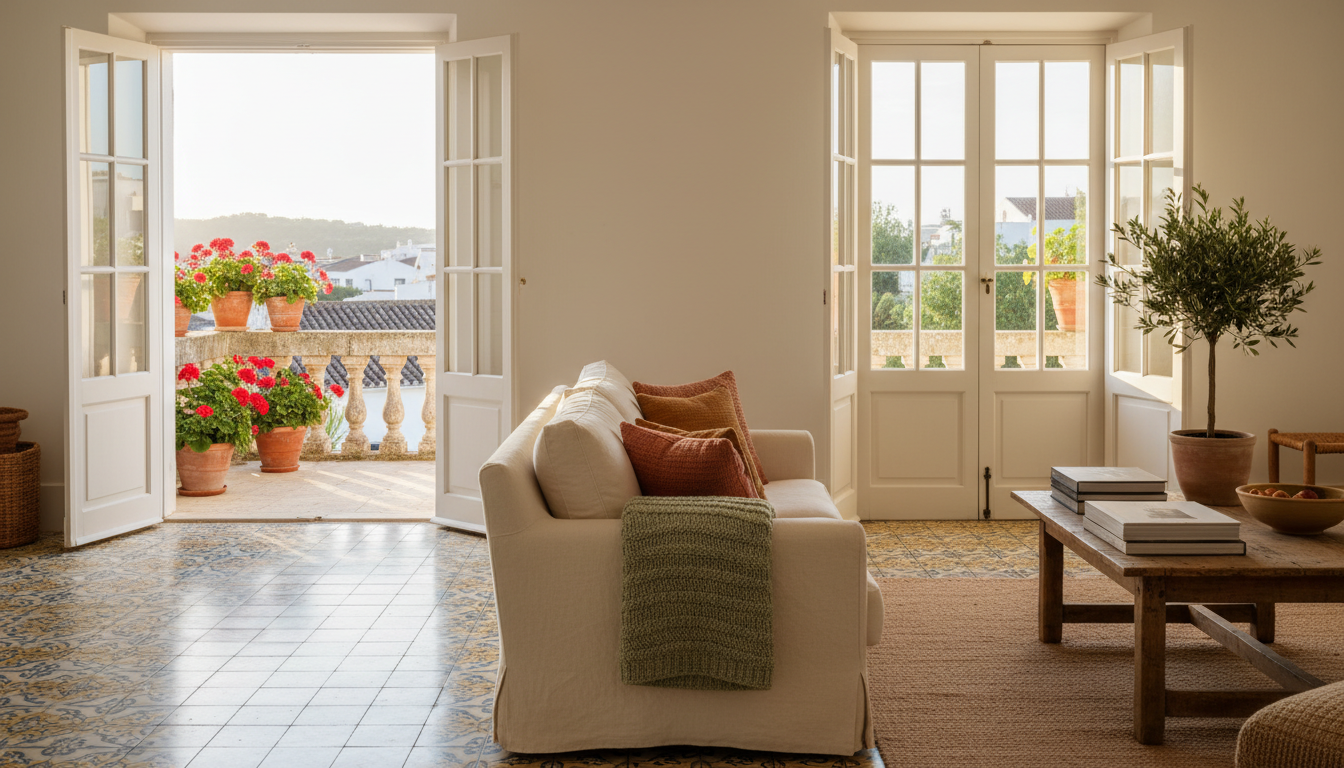 Bright, airy Portuguese living room with traditional azulejo tiles, a comfortable sofa, and French d
When to Visit the Algarve (And When to Avoid It)
Timing matters more here than in most destinations.
July and August are peak season. Beaches are packed, prices for everything spike, and temperatures regularly hit 35-40°C. If you have kids bound by school schedules, you're stuck with this—but try to book a home with a pool or near the western beaches, which catch more breeze.
May-June and September-October are the sweet spot. Water's warm enough to swim, crowds thin dramatically, and the light is incredible. This is when I'd recommend the Algarve to anyone with flexibility.
November through March is off-season. Some restaurants close, beach towns feel sleepy, but the weather is mild (15-18°C most days) and you'll have the cliffs and coves to yourself. Great for hiking, exploring, and actually talking to locals who have time to chat.
Home swap availability follows these patterns—more options in shoulder season, competitive in peak summer. Plan ahead if you're targeting July-August.
Getting Around: Car vs. No Car
Hot take: you need a car in the Algarve.
I know that's not what you want to hear if you prefer public transit, but the best beaches, restaurants, and villages aren't connected by reliable buses. Rental cars are reasonable—expect €25-40 ($27-43 USD) per day for a basic compact in shoulder season, more in summer. Book early. Like, months early for July-August.
If you're staying in Lagos or Tavira and don't plan to explore much, you could manage without a car. Both towns are walkable, with beaches accessible on foot or by short ferry. But you'd miss a lot.
The drive along the N125 and the coastal roads is part of the experience. Stopping at a random beach because it looked interesting. Finding a restaurant in a village you can't pronounce. Getting slightly lost and ending up somewhere better than your original plan.
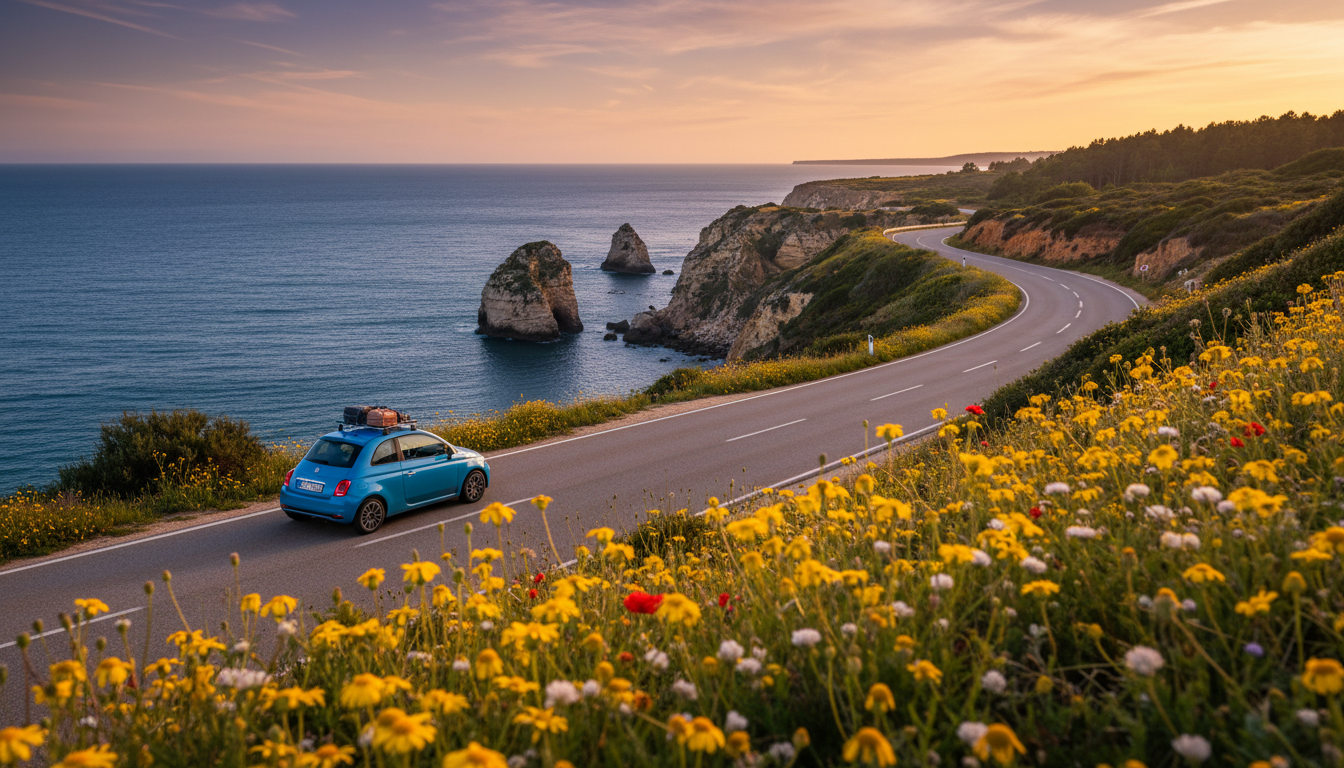 Winding coastal road along Algarve cliffs with a small rental car, dramatic ocean views, and yellow
Beaches Worth the Effort
The Algarve has over 100 beaches. I won't list them all, but here are the ones I keep going back to:
Praia da Marinha is the postcard beach. Dramatic cliffs, sea stacks, crystal water. Arrive before 9 AM or after 5 PM, or you'll be fighting for space.
Praia do Camilo is tiny, tucked between cliffs, accessed by a steep wooden staircase. Not for mobility-challenged visitors, but magical if you can manage the steps.
Praia da Ilha de Tavira—take the ferry, walk 10 minutes past the main beach area, and you'll find yourself nearly alone on pristine sand.
Praia da Bordeira is on the west coast, completely different vibe. Wild, windswept, popular with surfers. The beach is massive—you could walk for an hour and not reach the end.
Praia de Benagil is famous for the sea cave, which means it's crowded. Worth seeing once, but don't plan to spend the day.
Food and Drink: What to Eat Where
Portuguese cuisine doesn't get the attention it deserves. In the Algarve, seafood dominates, and the quality is exceptional.
Order the cataplana—a copper clam-shaped pot filled with seafood, sausage, and potatoes, steamed in wine and garlic. It's meant for sharing and comes to the table still bubbling. Most restaurants charge €35-50 ($38-54 USD) for a cataplana for two.
Grilled sardines are everywhere in summer. The good ones are simply prepared—charcoal-grilled, served with boiled potatoes and a salad. Look for restaurants where locals eat; avoid anywhere with a "tourist menu."
Pastéis de nata (custard tarts) are a national obsession. Every bakery makes them, quality varies wildly. Warm from the oven with a sprinkle of cinnamon is the only acceptable way.
Wines from the Algarve are underrated. Look for bottles from Lagoa or Lagos regions—whites are crisp and mineral, perfect for hot days.
For restaurants, I keep a running list of places that haven't let me down: O Camilo in Lagos has a cliffside location near Praia do Camilo with excellent grilled fish. Noélia in Cabanas de Tavira is legendary for seafood—cash only, no reservations, worth the wait. A Eira do Mel in Ferragudo serves traditional dishes in a village setting, family-run for decades.
Budget Breakdown: What to Actually Expect
Let me give you real numbers from my last two-week Algarve trip:
Accommodation was 14 credits on SwappaHome (equivalent to €0 cash). Rental car came to €420 ($455 USD) for 14 days, booked 3 months ahead. Gas was €85 ($92 USD). Food ran about €350 ($380 USD)—mix of cooking at home and eating out. Activities cost €120 ($130 USD) for a kayak tour, boat trip, couple of museum entries. Miscellaneous was €75 ($81 USD)—coffee, snacks, that bottle of wine I couldn't resist.
Total for 2 weeks: roughly €1,050 ($1,140 USD), not including flights.
Compare that to hotel-based travel: accommodation alone would have been €2,500+ ($2,700 USD). Home swapping isn't just cheaper—it's a completely different economic equation.
Safety and Trust in Home Swapping
I get asked about this a lot. Isn't it weird having strangers in your home? What if something goes wrong?
The community aspect of SwappaHome is what makes it work. Members review each other after every exchange, building a reputation over time. People take care of homes because their reviews follow them—a bad review affects their ability to travel.
That said, SwappaHome is a platform connecting members, not an insurance company. If you want coverage for potential damages or theft, arrange your own travel and home insurance. I personally have a policy that covers my home when I'm traveling, and I recommend the same for peace of mind.
In seven years of home swapping—40+ exchanges—I've never had a serious issue. A broken wine glass once. A misunderstanding about check-out time. Nothing that a message and basic courtesy couldn't resolve.
The verification system helps too. Members can verify their identity, which adds a layer of trust. I only accept requests from verified members, and I look for hosts with established review histories.
Making the Most of Your Algarve Home Swap
A few final thoughts from someone who's done this enough times to learn from mistakes.
Bring a small gift for your host. Nothing expensive—something from your hometown, a nice chocolate, a handwritten thank-you note. It sets the tone for the whole exchange.
Leave the home better than you found it. Strip the beds, take out the trash, wipe down the kitchen. Basic stuff, but it matters.
Take your host's recommendations seriously. That restaurant they mentioned? Go there. The beach they said was their favorite? Visit it. They know things Google doesn't.
And don't overschedule. The Algarve rewards slow travel. Some of my best memories are from days when I had no plan—wandering into a village, finding a beach I'd never heard of, spending three hours at a café watching the world go by.
The Algarve isn't a secret anymore—too many people have discovered those cliffs and beaches for that. But the version most visitors see, from hotel windows and tour buses, is only a fraction of what's here.
Home swapping in Algarve gives you the other version. The one where you know which bakery opens at 6 AM. Where you have a terrace to watch the sunset from. Where you leave feeling like you lived somewhere, not just visited.
If you're curious about trying it, SwappaHome is where I'd start. List your home, see what's available in the Algarve, and send a message to someone whose place looks interesting. The worst that happens is you have a conversation with a stranger who shares your love of travel.
The best that happens? You end up on a terrace in Lagos at 7 AM, watching the cliffs turn orange, thinking about how you almost booked a hotel instead.
Frequently Asked Questions
Is home swapping in Algarve safe for first-timers?
Home swapping in Algarve is as safe as anywhere, thanks to SwappaHome's review system and member verification. The community holds people accountable—bad behavior means bad reviews, which limits future exchanges. I'd recommend starting with hosts who have established review histories and arranging your own travel insurance for extra peace of mind.
How much can I save with home swapping vs hotels in Algarve?
During peak season, decent Algarve hotels cost €180-250 ($195-270 USD) per night. A two-week stay would run €2,500-3,500 ($2,700-3,800 USD) for accommodation alone. With home swapping, you'd spend 14 credits—no cash exchanged. Even factoring in other expenses, most travelers save 60-70% compared to traditional accommodation.
What's the best time of year for home swapping in Algarve?
May-June and September-October offer the ideal combination of warm weather, swimmable seas, and fewer crowds. Home swap availability is also better during shoulder season. July-August works if you're flexible, but book early—popular listings get snapped up months in advance.
Do I need a car for a home swap in Algarve?
Yes, I'd strongly recommend renting a car. The Algarve's best beaches, restaurants, and villages aren't well-connected by public transport. Expect to pay €25-40 ($27-43 USD) per day for a rental. If you're staying exclusively in Lagos or Tavira and don't plan to explore, you could manage without one.
How do I find home swap listings in Algarve?
Create a profile on SwappaHome showcasing your home, then search Algarve listings filtered by location and dates. Send personalized booking requests explaining why you're interested in specific homes. New members receive 7 free credits—enough for a week-long trial in the Algarve to experience home swapping firsthand.

Published by
SwappaHome
SwappaHome Editorial Team
Home Exchange & Slow Travel Editorial
The SwappaHome Editorial Team brings together travel research, home-exchange community insights, and platform data to produce practical guides for first-time and experienced home swappers. Every article cites real platforms, current market rates, and verifiable city-level facts so readers can make informed decisions without guessing.
Ready to try home swapping?
Join SwappaHome and start traveling by exchanging homes. Get 7 free credits when you sign up!
Related articles
Bachelor and Bachelorette Parties in Singapore: The Complete Home Swap Group Guide for 2026
Planning a bachelor or bachelorette party in Singapore? Discover how home swapping lets groups of 6-12 stay together in luxury condos, saving thousands while partying in Marina Bay.
Cycling in Lisbon: 7 Home Swap Bike Tour Itineraries for Every Rider
Discover the best cycling routes in Lisbon with these home swap bike tour itineraries—from waterfront paths to hilltop adventures, all starting from your borrowed home.
Graduation Trip to Barcelona: How Home Swapping Gives New Graduates the Ultimate Celebration
Planning a graduation trip to Barcelona? Discover how home swapping lets new graduates explore Spain's most vibrant city without the hostel crowds or hotel costs.