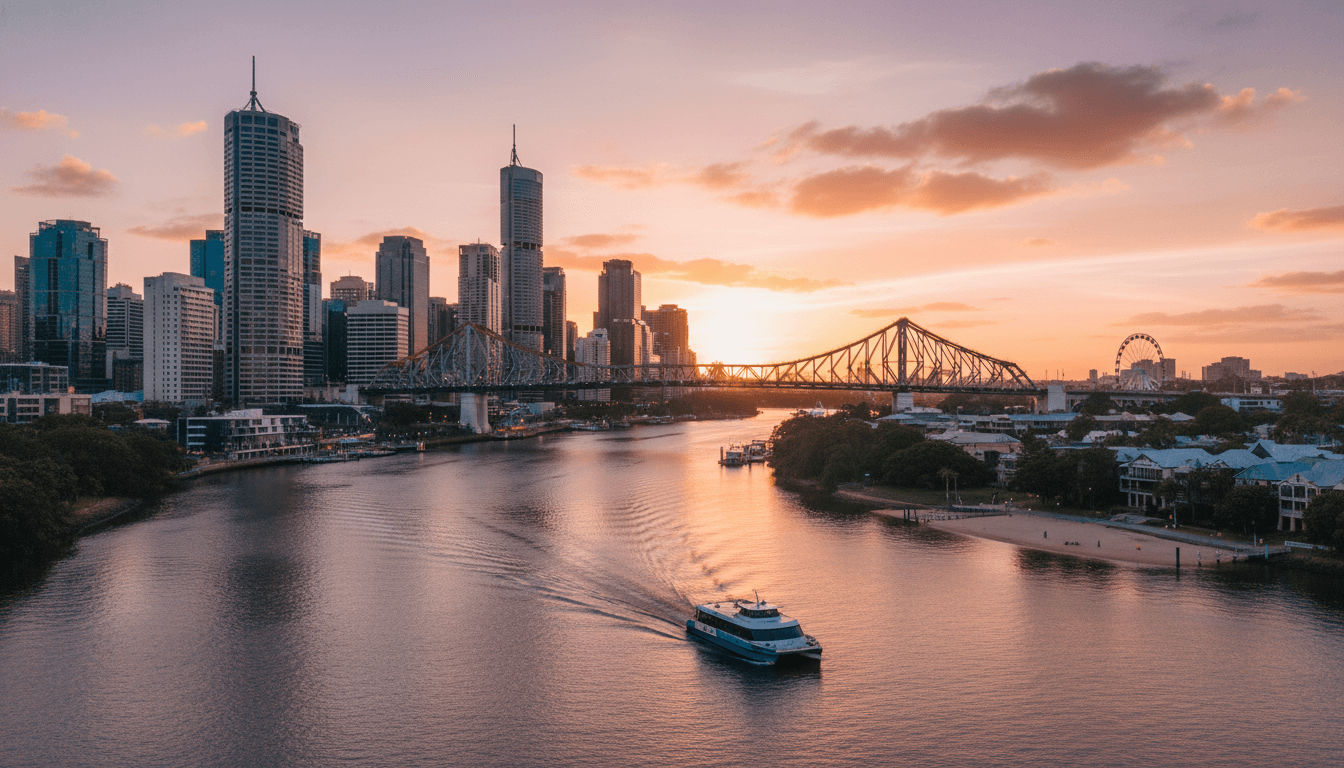
Best Neighborhoods for Home Swapping in Brisbane: Your Local's Guide to Where to Stay

SwappaHome Editorial Team
Home Exchange & Slow Travel Editorial
Discover the best neighborhoods for home swapping in Brisbane—from riverside West End to leafy Paddington. A local's guide to finding your perfect Aussie home exchange.
I wasn't supposed to fall for Brisbane.
It was meant to be a two-night stopover—a logistical pit stop between Sydney and the Great Barrier Reef. Nothing more. But then I found myself on a rooftop terrace in New Farm, watching flying foxes stream across a tangerine sunset, cold glass of Queensland wine in hand, and suddenly I understood why my home swap hosts had warned me: "Everyone underestimates Brisbane."
Finding the best neighborhoods for home swapping in Brisbane changed everything about that trip. Instead of some forgettable hotel near the airport, I spent a week in a Queenslander cottage with a mango tree in the backyard. I borrowed my hosts' bikes. Discovered their favorite dumpling spot. Left with a list of places I'm still working through on return visits.
Brisbane isn't flashy like Sydney or moody like Melbourne. It's the friend who doesn't try too hard but somehow always knows the best bar, the hidden beach, the café where the barista remembers your order. And when you're staying in someone's actual home rather than a tourist precinct, you get to experience that warmth firsthand.
So let me walk you through the neighborhoods where I'd swap homes in a heartbeat—and a few where I'd think twice.
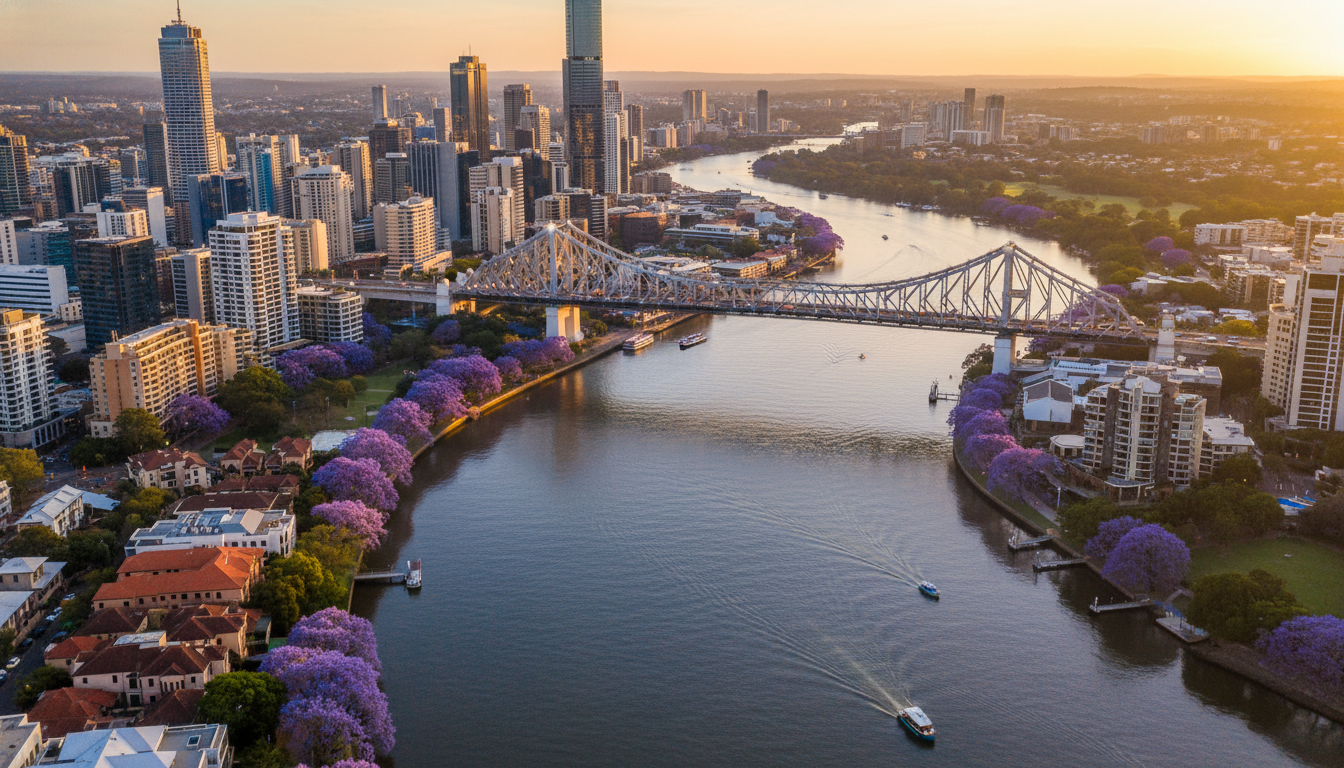 Aerial view of Brisbane River curving through the city at golden hour, with the Story Bridge illumin
Why Brisbane Home Swapping Beats Traditional Accommodation
Let's talk numbers for a second. Brisbane hotels in decent areas run $180-280 AUD ($115-180 USD) per night. Airbnbs have crept up too—a one-bedroom in a good suburb easily hits $150-200 AUD nightly, plus those cleaning fees that make you wince.
Home swapping? One credit per night through SwappaHome, regardless of whether you're staying in a modest apartment or a sprawling Queenslander with a pool. Those 7 free credits new members receive? That's potentially 7 nights in Brisbane without accommodation costs.
But honestly, the money isn't even the best part.
When I stayed in that New Farm terrace, my hosts left me their car ("parking's a nightmare in the city, just take the Mazda"), their Netflix login, and a handwritten map to their favorite breakfast spot. The café owner recognized me as "Sarah and Tom's friend" and threw in a free lamington. You don't get that at the Marriott.
Home exchanges also mean kitchens—real ones, not hotel-room microwaves. Brisbane's farmers markets are legendary, and being able to cook with finger limes and macadamias from the Jan Powers Markets transformed my mornings. Plus, neighborhoods that feel residential rather than touristy tend to have better coffee shops. Australians don't mess around with their coffee, and the best baristas aren't wasting their talents on airport-hotel lobbies.
New Farm: The Best Brisbane Neighborhood for First-Time Home Swappers
If I could only recommend one neighborhood for home swapping in Brisbane, New Farm wins. No hesitation.
It's the Goldilocks zone—close enough to the CBD (15-minute walk, 5-minute ferry), trendy enough to have excellent restaurants, but residential enough that you'll actually meet neighbors. The tree-lined streets feel almost European, with heritage Queenslanders sitting next to sleek modern apartments. There's a genuine mix of young professionals, long-time residents, and families, which translates to diverse home swap options.
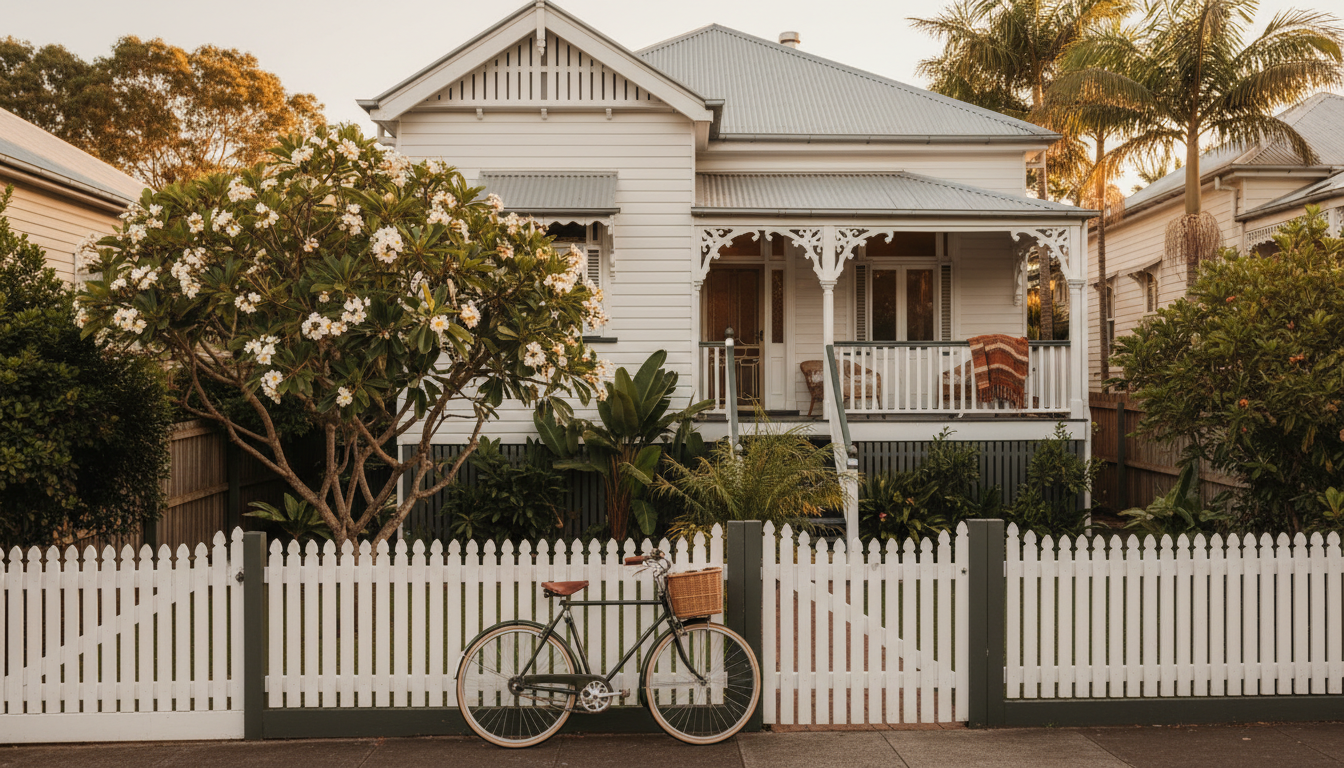 A classic white Queenslander house in New Farm with a wrap-around veranda, tropical garden with fran
New Farm Park is the neighborhood's heart—23 hectares of riverside greenery where locals walk dogs, practice yoga, and gather for weekend picnics. The Powerhouse (a converted power station turned arts center) hosts markets, comedy shows, and the kind of experimental theater that makes you feel cultured without being pretentious.
For food, Brunswick Street is your spine. Watt does modern Australian in a heritage building. Sourced Grocer handles provisions. And Chouquette? Their French pastries will ruin you for lesser croissants. My swap hosts' tip: hit the New Farm Deli early on Saturday for their house-made sausage rolls before they sell out.
Home swap reality check: New Farm properties go fast. The neighborhood is popular with SwappaHome members, so flexibility on dates helps. Expect mostly apartments and townhouses rather than standalone homes—land is precious here.
What New Farm Homes Are Actually Like
I've done two swaps in New Farm now. The first was a one-bedroom apartment in a converted wool store—exposed brick, polished concrete floors, a balcony overlooking the river. The second was the top floor of a federation-era house, complete with original fireplaces (decorative in Brisbane's climate) and a clawfoot tub.
Both had that lived-in quality that makes home exchanges special. Dog-eared novels on shelves. A collection of mismatched mugs. A note explaining which burner on the stove runs hot. Real homes, not staged properties.
West End: Brisbane's Bohemian Heart for Creative Travelers
West End is where Brisbane gets weird—in the best possible way.
This is the neighborhood for home swappers who want character over polish. The streets are a patchwork of Greek delis that have been there since the 1950s, vegan cafés with names like "Grown," vintage shops selling everything from mid-century furniture to 1980s band tees, and community gardens tucked between apartment blocks.
Boundary Street is the main artery, but the real West End reveals itself on the side streets. I found my favorite Brisbane coffee shop—Blackstar Coffee Roasters—by following my nose down a laneway. The barista had tattoo sleeves and opinions about extraction times. The flat white was transcendent.
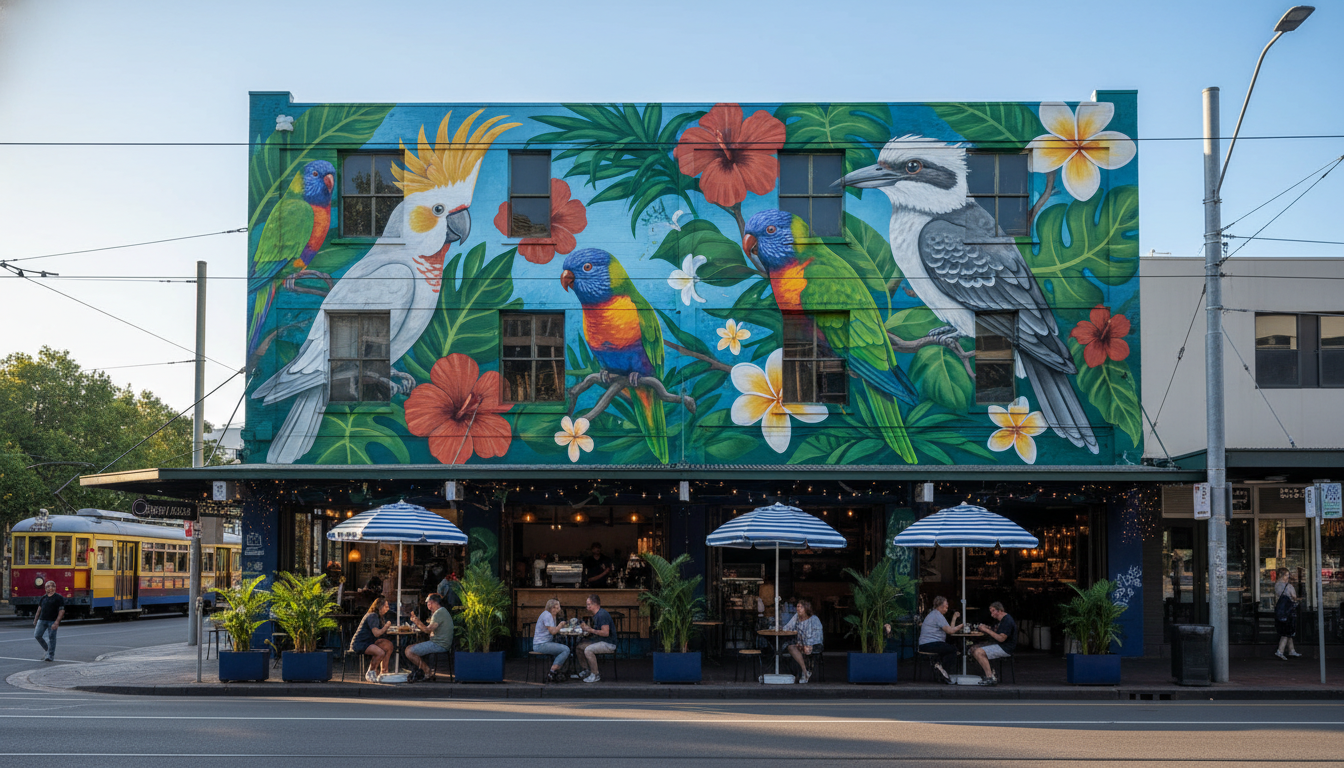 Colorful street art mural on a West End building featuring Australian native birds and tropical plan
The Saturday Davies Park Market is non-negotiable if you're staying in West End. It's less polished than the New Farm markets—more tie-dye, more earnest conversations about permaculture—but the produce is exceptional. Grab a bánh mì from the Vietnamese stall, some goat cheese from the local dairy, and a punnet of strawberries that actually taste like strawberries.
West End is also Brisbane's most walkable neighborhood. The South Bank Parklands are a 10-minute stroll, the GOMA (Gallery of Modern Art) is right there, and you can walk along the river all the way to the city. No car needed, which matters when you're home swapping and might not have access to one.
Home swap reality check: West End skews younger and more apartment-heavy. You'll find more one-bedroom units than family homes. The neighborhood can be noisy on weekend nights—Boundary Street has bars that get lively. If you're a light sleeper, ask your swap host about street noise.
My Honest Take on West End
I love West End for short stays—a week or less. It's energizing, walkable, and has the best food diversity in Brisbane (Greek, Vietnamese, Ethiopian, Nepalese, all within a few blocks). But for longer swaps, I'd want somewhere slightly quieter. The constant buzz that feels exciting on day three can feel exhausting by day ten.
Paddington: Heritage Charm for Home Swappers Who Love Architecture
Paddington is where I'd live if I moved to Brisbane tomorrow.
This hillside suburb, about 3 kilometers west of the CBD, is essentially a living museum of Queenslander architecture. Those iconic raised wooden houses with wrap-around verandas, intricate lacework, and rooms designed to catch every breeze? Paddington has them in spades, painted in heritage colors and surrounded by subtropical gardens.
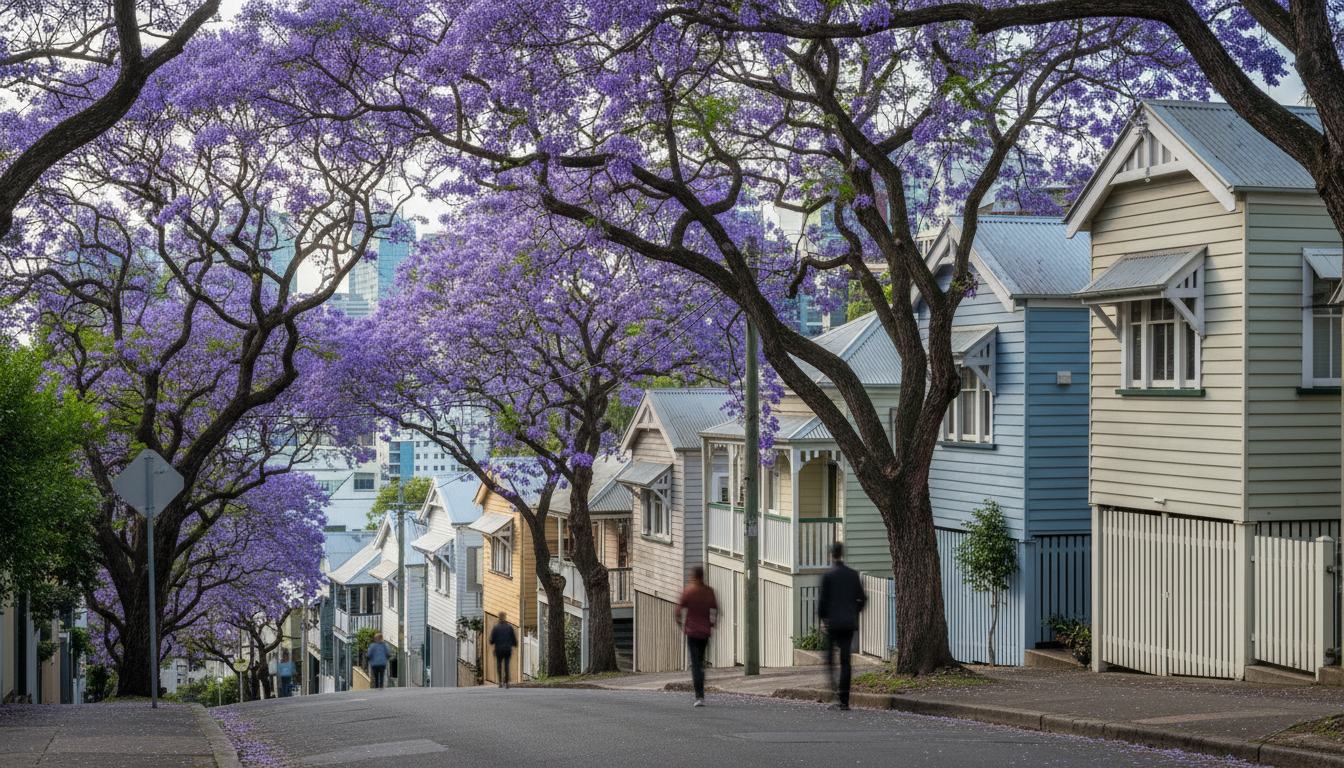 A row of pastel-colored heritage Queenslander cottages on a steep Paddington street, with jacaranda
The main drag, Given Terrace (which becomes Latrobe Terrace as you head uphill), is lined with antique shops, boutiques, and cafés that feel plucked from a more gracious era. Sassafras does excellent breakfast. Lefty's Old Time Music Hall serves cocktails in a space that looks like a Victorian fever dream. The Paddo Tavern is where locals actually drink—unpretentious, good pub food, a beer garden that catches the afternoon breeze.
For home swapping in Brisbane with families, Paddington deserves serious consideration. The homes are larger than inner-city apartments, often with actual backyards. The neighborhood is quieter, more residential, and has excellent access to parks. Rosalie Village, at the bottom of the hill, has a supermarket, butcher, and bottle shop—everything you need without driving.
Home swap reality check: Paddington is hilly. Like, San Francisco hilly. If mobility is a concern, check with your swap hosts about stairs and inclines. Also, while the heritage homes are gorgeous, some haven't been updated in decades. Ask about air conditioning—Brisbane summers are no joke, and ceiling fans only do so much when it's 35°C (95°F) with 80% humidity.
The Paddington Home Swap Experience
My Paddington swap was in a 1920s worker's cottage that had been lovingly restored. Original VJ walls, a claw-foot tub, a kitchen that mixed modern appliances with vintage character. The backyard had a lemon tree, a hammock, and a resident possum who visited the back steps each evening for apple slices (my hosts left instructions).
That possum became the highlight of my trip. I'd sit on the back steps at dusk, watching it delicately eat apple pieces, and feel genuinely grateful for the kind of travel experience that hotels simply can't provide.
Teneriffe: Upscale Riverside Living for Discerning Home Swappers
Teneriffe is New Farm's more polished sibling.
This former industrial area—all wool stores and wharves—has been transformed into Brisbane's most sought-after riverside address. The heritage warehouses now house luxury apartments, the wharves host ferry terminals and restaurants, and the streets are lined with boutiques that make you check price tags twice.
For home swapping in Brisbane when you want a touch of luxury, Teneriffe delivers. The apartments here tend to be newer, larger, and better appointed than elsewhere. River views are common. Building amenities—pools, gyms, rooftop terraces—are standard. It's the neighborhood where Brisbane's successful professionals live, and their homes reflect that.
The Teneriffe Ferry Terminal is a highlight. Catching the CityCat ferry to South Bank or the city feels like a mini-cruise, and it's often faster than driving. The Woolstore precinct has excellent restaurants—Beccofino for Italian, Mosconi for wine and cheese, The Smoke BBQ for when you want brisket at 11 AM (no judgment).
Home swap reality check: Teneriffe is expensive, and the homes available for swap reflect that. Expect modern apartments rather than character homes. The neighborhood can feel slightly sterile compared to West End or Paddington—it's polished but not quirky. Great for couples seeking comfort; less ideal if you want to feel like you're somewhere distinctly Brisbane.
Kangaroo Point: Best Brisbane Neighborhood for Active Home Swappers
Kangaroo Point is a geographic oddity—a peninsula jutting into the Brisbane River, creating cliffs that have become the city's outdoor adventure playground.
If you're the type who wants to rock climb before breakfast, kayak at lunch, and cycle along the river at sunset, this is your neighborhood. The Kangaroo Point Cliffs are famous for abseiling and climbing (night climbing is particularly popular, with the city lights reflecting off the water). The river loop offers some of Brisbane's best cycling and running paths. And the Story Bridge Adventure Climb starts right here.
 Rock climbers scaling the Kangaroo Point Cliffs at sunset, with Brisbanes CBD skyline glittering acr
The neighborhood itself is quieter than you'd expect given its location. It's mostly residential, with a few excellent restaurants clustered near the cliffs. Cliffs Café is the obvious choice for post-climb coffee, but I prefer Wombat Café for its slightly hidden feel and excellent eggs.
For home swapping in Brisbane with river access, Kangaroo Point is unbeatable. Many apartments have balconies overlooking the water, and the ferry to South Bank takes about three minutes. You're close to everything but removed from the bustle.
Home swap reality check: Kangaroo Point is small—there are fewer homes available for swap compared to larger suburbs. The peninsula shape means limited street parking and occasional traffic bottlenecks. And while the cliffs are spectacular, the neighborhood lacks the café culture of New Farm or the character of Paddington.
Bulimba and Hawthorne: Brisbane's Family-Friendly Home Swap Haven
I'm grouping these neighboring suburbs because they share a vibe: leafy, family-oriented, and centered around Oxford Street's village atmosphere.
Bulimba and Hawthorne sit across the river from New Farm, connected by ferry and bridge. The streets are wide, the houses have actual yards, and you'll see more prams than pub crawls. For home swapping in Brisbane with kids, this is the sweet spot.
Oxford Street is the commercial heart—a walkable strip of cafés, boutiques, a cinema, and restaurants that cater to the brunch-and-wine-bar crowd. The Balmoral Cinema is a heritage gem, showing mainstream films in art-deco surroundings. Oxford Larder does excellent cheese boards. And the ice cream at Gelateria Cremona is worth the inevitable queue.
The homes here tend to be larger than inner-city options—Queenslanders with multiple bedrooms, modern houses with pools, apartments with parking. If you're swapping with a family and need space, Bulimba delivers without feeling suburban in a boring way.
Home swap reality check: You'll want a car or bike in Bulimba. While Oxford Street is walkable, getting to the city or other suburbs requires transport. The ferry is lovely but doesn't run late. Also, the neighborhood is genuinely quiet at night—great for sleep, less great if you want spontaneous evening adventures.
South Brisbane and Woolloongabba: Emerging Neighborhoods for Adventurous Home Swappers
These adjacent suburbs are Brisbane's next frontiers—still gritty in parts, rapidly changing, and offering home swap options that might surprise you.
South Brisbane puts you steps from GOMA, QPAC (Queensland Performing Arts Centre), and the South Bank Parklands. The neighborhood is a mix of old workers' cottages, new apartment towers, and creative spaces. Fish Lane has become a dining destination, with restaurants like Julius, Chu the Phat, and Gauge squeezed into a laneway that feels almost Melbourne-like.
Woolloongabba (locals say "the Gabba") is rougher around the edges but has its charms. The Gabba stadium hosts cricket and AFL, bringing energy to match days. Antique Alley on Logan Road is a treasure hunter's paradise. And the Greek Club serves moussaka and souvlaki that transport you to the Aegean.
Home swap reality check: These neighborhoods are in transition. Some streets are lovely; others are still industrial or run-down. Check specific addresses carefully and don't hesitate to ask potential swap partners for honest assessments. The upside? You might find a character-filled home at a fraction of what New Farm would cost.
Neighborhoods I'd Avoid for Brisbane Home Swapping
Real talk: not every Brisbane suburb makes sense for visitors.
Fortitude Valley is Brisbane's nightclub district. Great for a night out, terrible for sleeping. The home swap options tend to be small apartments in buildings that vibrate with bass until 3 AM. Unless you're specifically here to party, stay elsewhere and visit.
Brisbane CBD is fine for business travelers but lacks soul. The apartments are generic, the streets empty after 6 PM, and you'll miss what makes Brisbane special. It's a city that lives in its suburbs, not its center.
Outer suburbs (Springfield, North Lakes, etc.) might offer larger homes, but you'll spend your trip in a car. Brisbane's charm is in its inner suburbs—the walkable neighborhoods with distinct personalities. A McMansion in the suburbs defeats the purpose.
How to Find the Perfect Brisbane Home Swap
Alright, practical stuff.
On SwappaHome, Brisbane has a healthy community of members, but it's not as saturated as Sydney or Melbourne. This is actually good news—less competition for the homes that are listed, and hosts who are genuinely enthusiastic about swapping rather than treating it like a transaction.
When reaching out to potential Brisbane hosts, mention specific things about their home that appeal to you. "I love that your Queenslander has a veranda—I'm imagining morning coffee watching the world go by" beats "I'd like to stay at your place." Australians value authenticity, and a genuine message goes a long way.
Be flexible on dates if you can. Brisbane's peak seasons are obvious—winter (June-August) when southerners escape the cold, and school holidays when families travel. Shoulder seasons (March-May, September-November) offer better availability and arguably better weather. Summer (December-February) is hot, humid, and stormy, but you'll have your pick of homes.
Timing Your Brisbane Home Swap: When to Visit
Brisbane's subtropical climate means you can visit year-round, but each season offers something different.
Autumn (March-May): My favorite. The humidity drops, the temperatures are perfect (20-25°C/68-77°F), and the city feels energized after summer's lethargy. Jacarandas bloom in October, but autumn has its own golden light.
Winter (June-August): Dry, mild, and busy. Expect daytime temperatures around 20°C (68°F) and cool nights. This is peak tourist season, so book home swaps early.
Spring (September-November): Warming up, occasional storms, but generally lovely. Jacaranda season (October-November) turns the city purple and is genuinely spectacular.
Summer (December-February): Hot, humid, and punctuated by dramatic afternoon storms. Some people love the tropical intensity; others wilt. Air conditioning becomes non-negotiable.
What Brisbane Home Swap Hosts Expect From You
Australian hospitality is genuine but comes with unspoken expectations.
Leave the home as you found it—or better. This isn't just about cleaning; it's about respect. Replace what you use, take out the trash, strip the beds. My Brisbane hosts have consistently gone above and beyond for me, and I try to match that energy.
Communicate openly. If something breaks or goes wrong, tell them immediately. Australians appreciate directness over awkward silence. Most issues are easily solved with a quick message.
Respect the neighborhood. Brisbane suburbs are genuine communities. Wave to neighbors, keep noise reasonable, don't park across driveways. You're a temporary resident, not a tourist.
Making the Most of Your Brisbane Home Swap
A few final thoughts from someone who's done this a few times.
Borrow what's offered. If your hosts leave bikes, use them. If they recommend their local café, go there. If they say the neighbor's cat visits for pats, embrace it. The joy of home swapping is living like a local, and that means accepting the life your hosts have curated.
Explore beyond your neighborhood. Brisbane's suburbs each have distinct personalities, and the ferry system makes hopping between them easy and scenic. Spend a morning in New Farm, lunch in West End, afternoon in South Bank. The city reveals itself through its neighborhoods.
And honestly? Talk to people. Australians are friendly in an uncomplicated way. Ask the barista where they'd go for dinner. Chat with the person next to you at the farmers market. Brisbane isn't a city that keeps its secrets—it just waits for you to ask.
I've done home swaps on six continents now, and Brisbane remains one of my favorites. Not because it's the most dramatic or famous destination, but because the homes I've stayed in—and the people who've shared them—have given me something hotels never could: a sense of belonging, even if just for a week.
That rooftop terrace in New Farm, watching the flying foxes at sunset? I think about it more than I think about the Sydney Opera House or the Great Barrier Reef. That's the magic of home swapping in Brisbane. You don't just visit. You arrive.
Frequently Asked Questions
Is home swapping in Brisbane safe for first-time exchangers?
Brisbane has an active, friendly home swap community with a strong review culture. SwappaHome's verification and rating system helps build trust between members. Start by connecting with hosts who have multiple positive reviews, communicate openly about expectations, and consider getting your own travel insurance for peace of mind. Most Brisbane swappers are experienced and genuinely welcoming to newcomers.
How much can I save with home swapping in Brisbane compared to hotels?
Significant savings are typical. Brisbane hotels in good neighborhoods average $180-280 AUD ($115-180 USD) per night, while home swapping costs one SwappaHome credit per night regardless of property size or location. For a two-week stay, you could save $2,500-4,000 AUD ($1,600-2,500 USD) compared to hotel rates—plus you'll have a kitchen to reduce dining costs.
What's the best Brisbane neighborhood for home swapping with kids?
Bulimba and Hawthorne offer the best family home swap experience. Expect larger homes with yards, family-friendly cafés along Oxford Street, nearby parks, and a genuine village atmosphere. Paddington is another excellent choice for its heritage homes with space, though the hills can be challenging with strollers.
When is the best time to find Brisbane home swaps?
Autumn (March-May) and spring (September-November) offer the best combination of weather and availability. Winter (June-August) is peak season with more competition for homes. Book 2-3 months ahead for popular neighborhoods like New Farm or Paddington, or be flexible with dates to find last-minute opportunities.
Do I need a car for home swapping in Brisbane?
Not necessarily, depending on your neighborhood. New Farm, West End, South Brisbane, and Kangaroo Point are highly walkable with excellent ferry connections. Paddington, Bulimba, and outer suburbs benefit from having a car. Many Brisbane hosts offer their vehicles as part of the swap—just ask when arranging your exchange.

Published by
SwappaHome
SwappaHome Editorial Team
Home Exchange & Slow Travel Editorial
The SwappaHome Editorial Team brings together travel research, home-exchange community insights, and platform data to produce practical guides for first-time and experienced home swappers. Every article cites real platforms, current market rates, and verifiable city-level facts so readers can make informed decisions without guessing.
Ready to try home swapping?
Join SwappaHome and start traveling by exchanging homes. Get 7 free credits when you sign up!
Related articles
Home Swap in Rome: Where to Find the Best Properties for Your Italian Exchange
Discover where to find the best home swap properties in Rome—from Trastevere's cobblestone charm to Testaccio's local authenticity. Real neighborhoods, real advice.

Home Swap in Bangkok: Where to Find the Best Properties for Free Stays
Discover where to find the best home swap properties in Bangkok—from riverside condos in Charoen Krung to family homes in Ari. Real neighborhoods, real savings.
Home Swap for Beach Lovers: 12 Coastal Destinations Ranked for 2026
Discover the best coastal destinations for home swapping in 2026. From Portugal's Algarve to Australia's Gold Coast, find your perfect beach exchange.