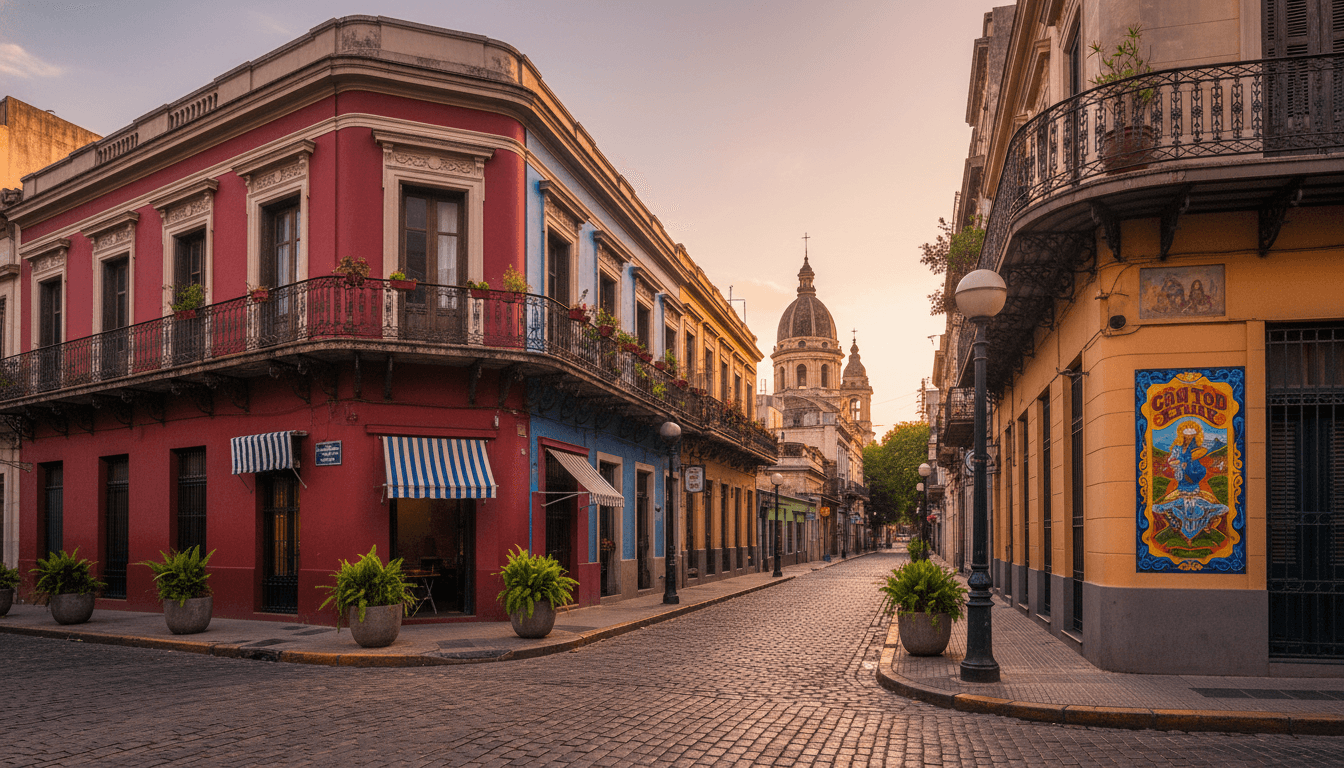
Home Swapping in Buenos Aires: The 9 Best Neighborhoods for Your Stay

SwappaHome Editorial Team
Home Exchange & Slow Travel Editorial
Discover the best Buenos Aires neighborhoods for home swapping—from tango-filled San Telmo to leafy Palermo. Local tips, costs, and insider advice from 40+ swaps.
The smell hit me first. Woodsmoke and grilling meat drifting up from the parrilla three floors below, mixing with jasmine from the courtyard. I was standing on a borrowed balcony in San Telmo, watching the Sunday antique market unfold along Defensa Street, and I remember thinking: this is why home swapping in Buenos Aires beats any hotel experience.
That was my first swap in Argentina, four years ago. I've been back three times since—staying in different neighborhoods each time through SwappaHome—and I'm convinced Buenos Aires is one of the most underrated cities for home exchange. The apartments are gorgeous (those original hardwood floors!), the hosts are warm, and your credits stretch further here than almost anywhere else I've traveled.
But here's the thing about Buenos Aires: where you stay matters more than in most cities. Each barrio has its own personality, pace, and quirks. Pick the wrong one for your travel style, and you'll spend half your trip in Ubers. Pick the right one, and you'll feel like a local by day three.
So let me walk you through the best neighborhoods for home swapping in Buenos Aires—the ones where SwappaHome members actually list their homes, where you'll find that perfect apartment with the balcony and the afternoon light, and where you'll wake up excited to explore.
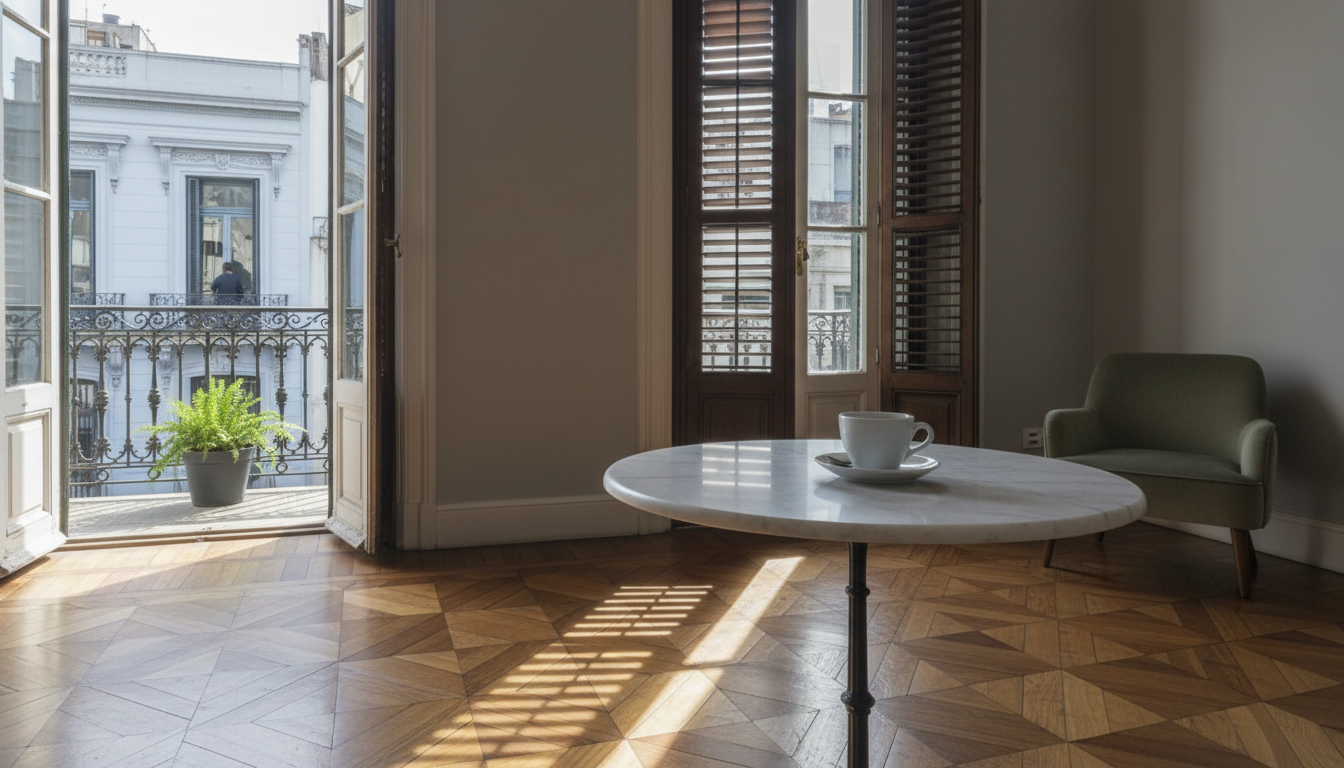 Morning light streaming through wooden shutters onto original parquet floors in a classic Buenos Air
Why Buenos Aires is Perfect for Home Swapping
Before we dive into neighborhoods, let me tell you why this city works so well for home exchange.
The architecture, first of all. Buenos Aires has some of the most stunning residential buildings in South America—think Parisian-style apartments with 12-foot ceilings, ornate moldings, and those iconic balcones corridos (continuous balconies) that let you watch neighborhood life unfold below. These aren't places you'd find on typical booking sites. They're family apartments, passed down through generations, filled with books and art and actual lives. The kind of spaces that make you feel something.
Then there's the economics. Argentina's complicated currency situation means your SwappaHome credits go incredibly far here. While you're earning credits hosting guests in more expensive cities, you can spend them in Buenos Aires where the cost of living is lower—but the quality of homes is exceptional. I've stayed in apartments here that would cost $400/night in Paris, all for the same 1 credit per night.
And porteños (Buenos Aires locals) genuinely love hosting. There's a cultural warmth here that translates into detailed welcome guides, stocked fridges, and neighbors who'll invite you for mate on the rooftop. My San Telmo host left me a hand-drawn map of her favorite empanada spots. My Palermo host arranged for his mother to teach me how to make dulce de leche. This isn't transactional—it's connection.
Palermo: The Most Popular Neighborhood for Home Swapping in Buenos Aires
Let's start with the obvious choice—because it's obvious for good reason.
Palermo is Buenos Aires' largest neighborhood, and it's where you'll find the highest concentration of home swap listings. The area actually splits into sub-neighborhoods, each with its own distinct vibe.
Palermo Soho is the creative heart—cobblestone streets lined with boutiques, street art on every corner, and more specialty coffee shops than you can visit in a week. Apartments here tend to be in renovated casas chorizo (traditional narrow houses) or newer low-rise buildings. Expect to pay around $15-20 USD for a craft cocktail, $8-12 for excellent brunch, and $3-4 for coffee.
Palermo Hollywood leans more nightlife-oriented, with production studios, bars that don't close until 6 AM, and a younger, more transient crowd. Great if you're here to party; maybe skip it if you need sleep.
Palermo Chico is the embassy district—quieter, greener, and significantly more expensive. The apartments here are larger and often come with doormen (encargados) who'll accept your packages and water your host's plants.
I stayed in a Palermo Soho apartment last winter—a converted top-floor unit with a private terrace overlooking Plaza Armenia. The host had left detailed instructions for her espresso machine (an Italian import she was clearly proud of) and a list of her favorite wine bars within walking distance. That terrace became my office, my dining room, and my sunset-watching spot for two weeks.
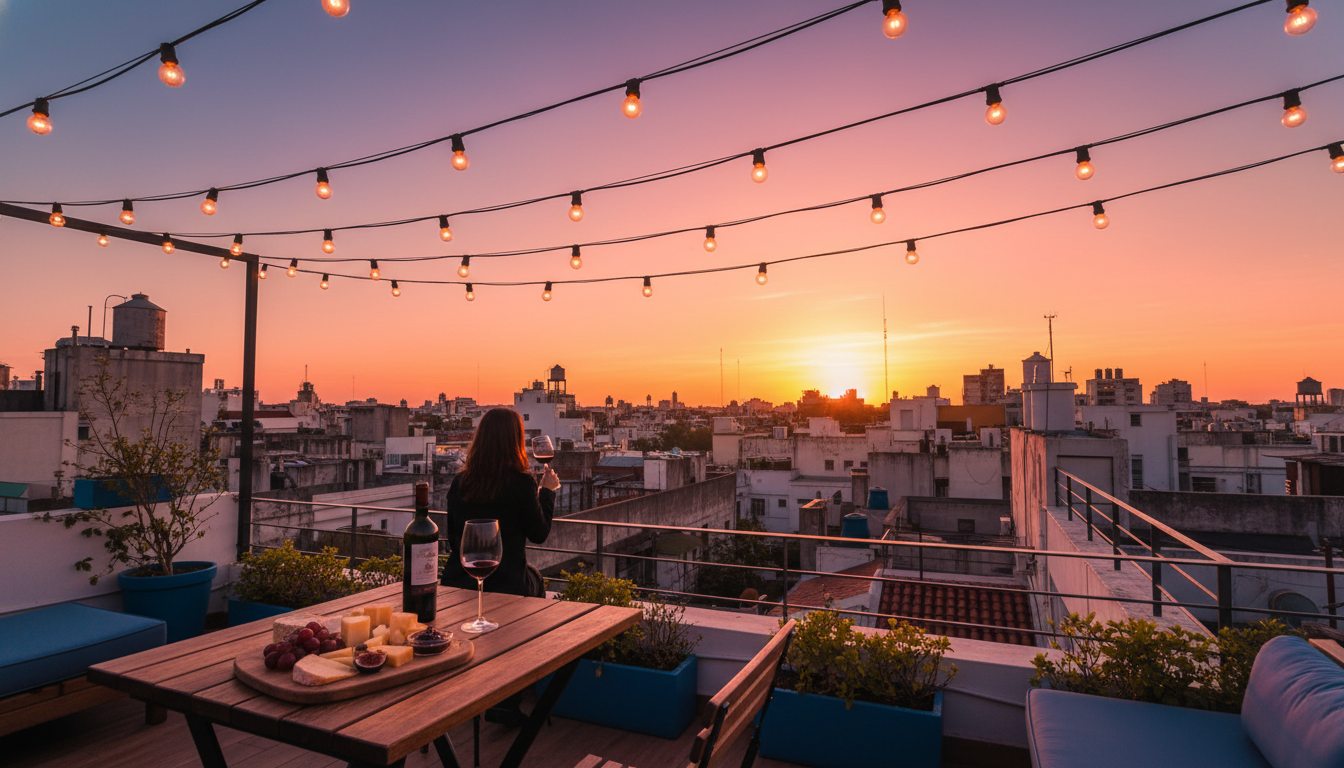 Rooftop terrace in Palermo Soho at golden hour, string lights overhead, small table with wine and ch
Who Should Swap in Palermo?
First-time Buenos Aires visitors who want convenience and options. Foodies and nightlife enthusiasts. Remote workers who need reliable wifi and good coffee nearby. Anyone who values walkability—you can go days without needing transportation here.
Who Might Want to Look Elsewhere?
Travelers seeking authentic, old-school Buenos Aires atmosphere. Budget-conscious visitors (Palermo is the most expensive barrio for dining and shopping). Anyone who finds trendy neighborhoods exhausting.
San Telmo: Where Home Swapping Meets Authentic Buenos Aires
San Telmo is where I always tell people to start if they want to feel Buenos Aires rather than just visit it.
This is the city's oldest residential neighborhood, and it wears its history openly. Colonial buildings with crumbling facades stand next to perfectly restored mansions. Tango music drifts from milongas (tango halls) every night of the week. The Sunday market along Defensa Street transforms the neighborhood into a sprawling celebration of antiques, street food, and impromptu performances.
Home swap options in San Telmo tend to be in converted conventillos (old tenement buildings now renovated into apartments) or classic departamentos in buildings from the early 1900s. The ceilings are high, the floors creak pleasantly, and the light through those tall windows is genuinely special.
My first Buenos Aires swap was in San Telmo, on a quiet street called Bolívar. The apartment had been in my host's family since the 1940s—original tile floors, a claw-foot bathtub, and a collection of vinyl records I was encouraged to play. The building's encargado brought me medialunas (Argentine croissants) every morning because, as he explained, "the señora always has medialunas."
Pricing in San Telmo is noticeably lower than Palermo. Expect $10-15 for a nice dinner, $5-8 for drinks, and some of the best cheap pizza in the city ($3-4 for a slice of fugazzeta).
The San Telmo Trade-offs
I'll be honest: San Telmo isn't as polished as Palermo. Some streets feel sketchy after dark—not dangerous exactly, but you'll want to stay aware. The neighborhood has more visible poverty and homelessness than the northern barrios. Infrastructure is older, which means occasional plumbing quirks and buildings without elevators.
But for me, that's part of the appeal. San Telmo feels real in a way that Palermo sometimes doesn't. You're not in a tourist bubble here. You're in a neighborhood where people actually live, argue, hang laundry, and gossip with their neighbors.
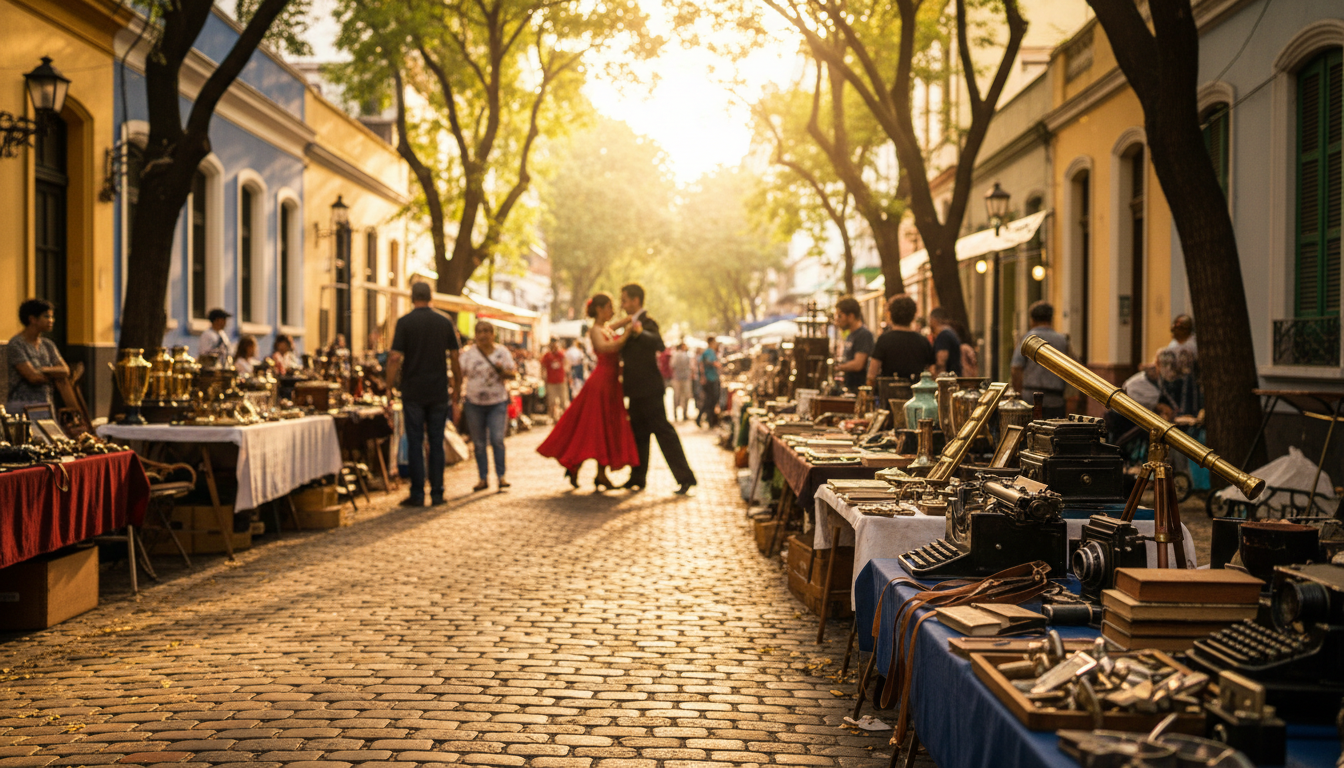 Cobblestone street in San Telmo on a Sunday afternoon, antique vendors with brass items and vintage
Recoleta: Elegant Home Swapping for Architecture Lovers
If San Telmo is Buenos Aires' bohemian soul, Recoleta is its aristocratic face.
This is where you'll find the city's grandest architecture—Belle Époque mansions, French-style apartment buildings with marble lobbies, and wide boulevards lined with jacaranda trees that explode into purple every November. The famous Recoleta Cemetery (where Evita is buried) anchors the neighborhood, surrounded by museums, upscale restaurants, and some of the most expensive real estate in South America.
Home swapping in Recoleta means staying in apartments that feel like small museums. I toured one listing (didn't end up booking) that had original Tiffany light fixtures and a library with floor-to-ceiling mahogany shelves. The host was a retired architect who'd spent decades restoring the space. These aren't typical vacation rentals—they're homes with stories.
The neighborhood is quieter than Palermo or San Telmo, more residential and less nightlife-oriented. You'll find older couples walking small dogs, nannies pushing designer strollers, and businesspeople in suits heading to the nearby financial district. It's refined. Some might say stuffy.
Dining prices are higher here—$20-30 for a nice dinner, $15-20 for lunch at one of the traditional confiterías (grand old cafés). But the experience of having coffee at Café La Biela, surrounded by 100 years of history, is worth the premium.
Recoleta Home Swap Considerations
The apartments are stunning but often come with quirks. Many buildings are designated historical landmarks, which means renovations are restricted—so you might have gorgeous original details alongside outdated kitchens or tiny bathrooms. Elevators in older buildings can be... character-building (read: small and slow).
Recoleta also isn't particularly walkable for daily life. You'll want to Uber to most restaurants and bars in Palermo or San Telmo. It's better suited for travelers who prioritize their home base over neighborhood exploration.
Villa Crespo: The Insider's Choice for Buenos Aires Home Swapping
Here's my actual recommendation for experienced travelers: skip the obvious neighborhoods and swap in Villa Crespo.
Villa Crespo sits just west of Palermo Soho, and it's where locals go when they're priced out of Palermo but don't want to leave the area. The neighborhood has exploded in the last five years—new restaurants, wine bars, and boutiques opening constantly—but it still feels like a secret. Rents are lower, the pace is slower, and you're more likely to hear Spanish than English on the streets.
The home swap options here tend to be excellent value. You'll find the same converted casas chorizo and modern apartments as Palermo, but hosts are often younger professionals or creative types who've put real thought into their spaces. My favorite Buenos Aires swap ever was a Villa Crespo apartment owned by a graphic designer—every detail was considered, from the vintage furniture to the curated book collection to the perfectly positioned reading chair by the window.
The food scene is arguably better than Palermo now. Restaurants like Don Julio (consistently ranked among the world's best steakhouses) are here. So are excellent natural wine bars, Armenian bakeries (Villa Crespo has a historic Armenian community), and some of the city's best pizza.
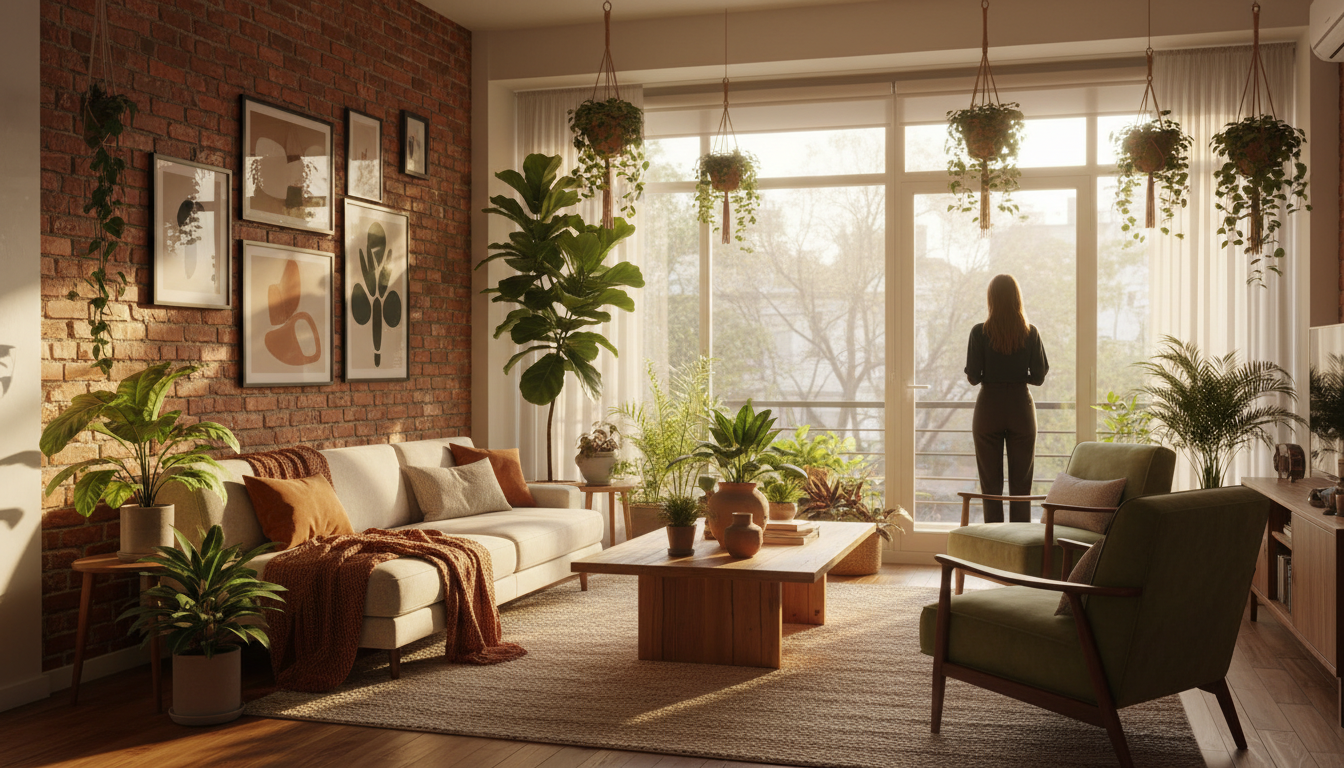 Interior of a thoughtfully designed Villa Crespo apartment, mid-century modern furniture, exposed br
Why Villa Crespo Works for Home Swapping
The neighborhood attracts the kind of hosts who actually use SwappaHome themselves—travelers who understand what makes a good swap experience. Listings here tend to have better communication, more detailed guides, and hosts who are genuinely excited to share their neighborhood secrets.
Prices run 20-30% lower than Palermo for dining and shopping. A great steak dinner with wine might cost $25-35 instead of $40-50. Coffee is $2-3. The Sunday farmers market at Parque Centenario (technically in neighboring Caballito, but walking distance) is one of the best in the city.
Belgrano: Family-Friendly Home Swapping in Buenos Aires
Belgrano rarely makes tourist neighborhood guides, but it's worth considering if you're traveling with kids or want a quieter, more residential experience.
This northern neighborhood feels almost suburban compared to the center—tree-lined streets, actual houses with gardens, excellent schools, and a large Chinatown (Barrio Chino) that's become a destination in its own right. The apartments here tend to be larger than in Palermo or San Telmo, often with multiple bedrooms and dedicated office spaces.
I haven't personally swapped in Belgrano, but I toured a listing there last year—a three-bedroom house with a backyard garden, owned by a family who travels frequently for the father's work. They'd set up one bedroom specifically for guests' children, complete with toys and books in multiple languages. That kind of thoughtfulness is common in Belgrano listings.
The trade-off is distance. You'll need 20-30 minutes by Uber to reach most tourist attractions, and the nightlife options are limited. But if you're staying for a month or more, working remotely, or traveling with family, Belgrano offers a quality of life that's hard to match elsewhere.
Puerto Madero: Modern Luxury (But Is It Worth It?)
I'll be honest—I'm not a huge Puerto Madero fan, but I'd be doing you a disservice not to mention it.
This waterfront district was redeveloped in the 1990s from old docks into a gleaming modern neighborhood of high-rise towers, luxury hotels, and corporate headquarters. The apartments are new, the amenities are excellent (pools, gyms, 24-hour security), and the views across the Río de la Plata can be stunning.
But.
Puerto Madero has no soul. It could be any modern waterfront development anywhere in the world. The restaurants are overpriced and mediocre. The streets are empty after office hours. You'll feel like you're staying in a business hotel, not a Buenos Aires home.
That said, if you prioritize modern conveniences over character—reliable hot water, strong wifi, air conditioning that actually works—Puerto Madero delivers. The home swap listings here are typically corporate apartments owned by business travelers, so they're well-equipped for remote work.
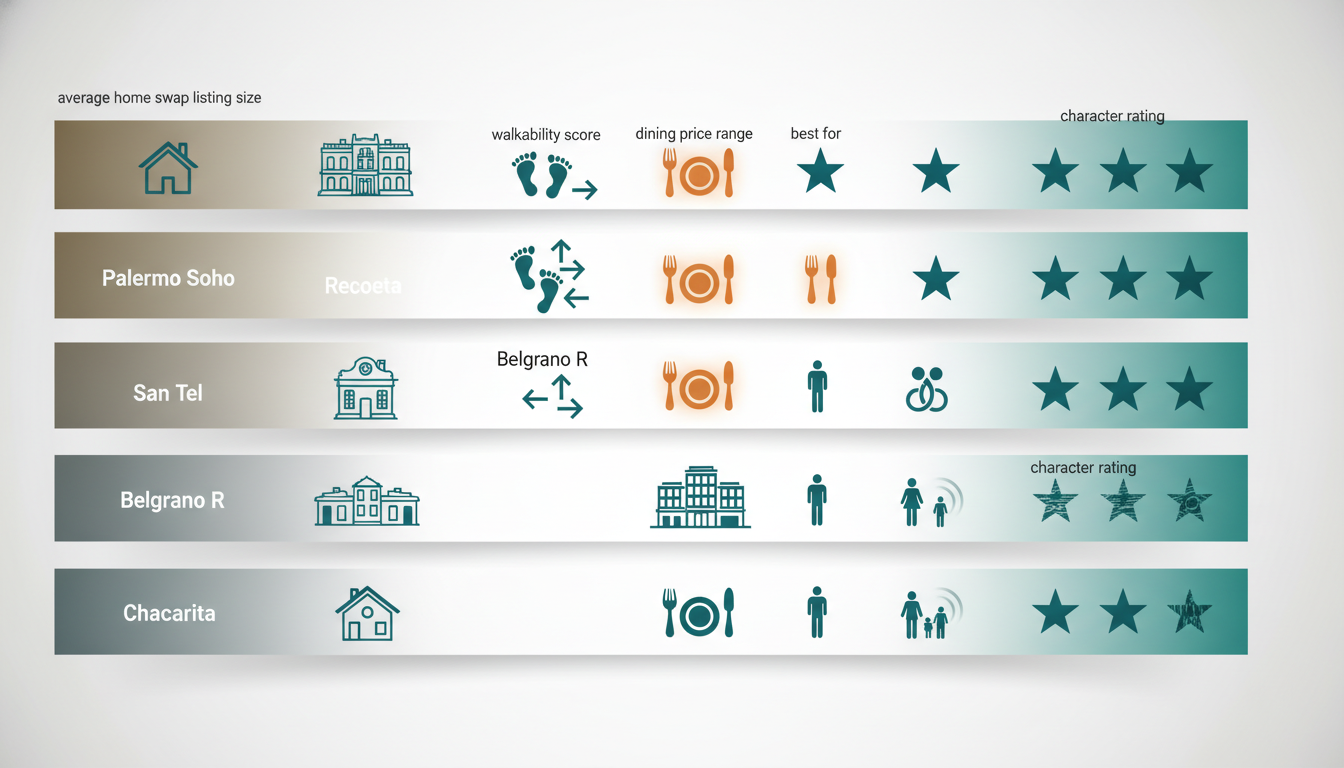 Comparison infographic showing 6 Buenos Aires neighborhoods with icons for average home swap listing
Colegiales: The Emerging Neighborhood for Buenos Aires Home Swaps
Colegiales is having a moment, and savvy home swappers should pay attention.
Sitting north of Palermo Hollywood, this former industrial neighborhood has transformed rapidly over the past few years. Old warehouses are becoming loft apartments. Vacant lots are turning into urban gardens. Young families are moving in, drawn by lower prices and a genuine sense of community.
The home swap listings in Colegiales tend to be newer renovations—think exposed brick, polished concrete floors, and industrial-chic aesthetics. The hosts are often young professionals or entrepreneurs who've invested in their spaces. One listing I bookmarked (still hoping to book it someday) is a converted printing factory with 20-foot ceilings and a private courtyard.
The neighborhood isn't as polished as Palermo—you'll encounter more graffiti, more construction, and fewer English menus. But that's exactly why I like it. Colegiales feels like Palermo did 15 years ago, before it became the default tourist choice.
Practical Tips for Home Swapping in Buenos Aires
Now that you know where to look, here's some Buenos Aires-specific advice I've picked up over four swaps.
Timing matters. Buenos Aires empties out in January when locals flee to beach towns. This is actually great for home swapping—you'll find more listings available, and the city is pleasantly quiet. Avoid the first two weeks of July (winter school holidays) when domestic tourism spikes.
Ask about utilities. Argentina's electricity grid is... temperamental. Ask your host about the building's power situation, especially in older neighborhoods like San Telmo. Some buildings have backup generators; many don't. Summer brownouts are common.
The encargado is your friend. Most Buenos Aires apartment buildings have a building manager (encargado) who lives on-site. Introduce yourself when you arrive. They'll accept packages, let in repair people, and generally make your life easier. A small tip (1,000-2,000 pesos, roughly $3-5 USD) at the end of your stay is customary and appreciated.
Bring cash, but use cards strategically. Argentina's dual exchange rate situation is complex and constantly changing. As of my last visit, the "blue dollar" rate (informal market) was significantly better than official rates. Ask your host for current advice—they'll know the best strategy.
Don't skip the welcome guide. Buenos Aires hosts tend to create incredibly detailed guides—favorite restaurants, trusted taxi apps, which kiosco (corner store) has the best medialunas. Actually read these. They're gold.
How to Find the Best Buenos Aires Home Swap on SwappaHome
When you're searching for Buenos Aires listings on SwappaHome, filter strategically.
Start by narrowing to verified members—this ensures you're connecting with hosts who've confirmed their identity. Read reviews carefully, paying attention to communication style and accuracy of listings. Buenos Aires hosts tend to be responsive (the culture values communication), so if someone takes days to reply to your initial message, that's a yellow flag.
Look for listings with detailed descriptions and multiple photos. The best Buenos Aires hosts understand that their apartment's character is a selling point—they'll photograph the morning light, the view from the balcony, the neighborhood café downstairs. Generic listings with minimal photos often indicate hosts who aren't fully engaged with the platform.
When you find a promising listing, send a personalized message. Mention specific details from their listing. Explain why you're interested in their neighborhood. Buenos Aires hosts appreciate guests who've done their homework—it signals you'll respect their home and community.
And remember: SwappaHome uses a simple credit system. You'll spend 1 credit per night regardless of the apartment's size or neighborhood. That penthouse in Recoleta costs the same as a studio in Villa Crespo—so don't be afraid to reach for listings that might seem "too nice." The credit system levels the playing field.
My Honest Take: Which Buenos Aires Neighborhood Should You Choose?
After four swaps across three neighborhoods, here's my real advice:
First visit, want convenience: Palermo Soho. It's the safe choice, and safe isn't bad. You'll have excellent restaurants, easy transportation, and a forgiving learning curve for Buenos Aires quirks.
Second visit, want depth: San Telmo or Villa Crespo. Now that you understand the city's rhythm, you can appreciate these neighborhoods' character without feeling overwhelmed.
Extended stay (1+ months): Villa Crespo or Belgrano. The lower prices and residential feel make daily life more sustainable. You'll develop routines, recognize neighbors, and actually feel like you live there.
Architecture obsession: Recoleta. Nothing else compares for sheer architectural beauty, even if the neighborhood itself is quieter.
Traveling with family: Belgrano, hands down. Space, safety, and sanity.
Whatever you choose, remember that Buenos Aires rewards slow travel. Don't try to see everything. Pick a neighborhood, settle in, and let the city reveal itself. That's the whole point of home swapping—you're not a tourist passing through. You're borrowing someone's life for a while, and that's a privilege worth savoring.
Frequently Asked Questions
Is home swapping in Buenos Aires safe?
Yes, home swapping in Buenos Aires is generally safe, especially in established neighborhoods like Palermo, Recoleta, and Belgrano. Use SwappaHome's verification features, read member reviews carefully, and communicate thoroughly with your host before arrival. As with any travel, consider getting your own travel insurance for additional peace of mind.
How much can I save with home swapping vs hotels in Buenos Aires?
Significant savings are possible. A mid-range Palermo hotel runs $150-250 USD per night, while home swapping costs only SwappaHome credits (1 credit per night). Over a two-week stay, you could save $2,000-3,500 compared to hotels—plus you'll have a kitchen, laundry, and more space.
What's the best neighborhood for home swapping in Buenos Aires for first-time visitors?
Palermo Soho is the best neighborhood for first-time Buenos Aires home swappers. It offers excellent walkability, abundant dining options, reliable infrastructure, and the highest concentration of SwappaHome listings. You'll have an easy introduction to the city while staying in a characterful apartment.
When is the best time to find home swap listings in Buenos Aires?
January offers the most availability as locals vacation elsewhere, though the city is hot and some businesses close. For the best balance of availability and atmosphere, try March-May (autumn) or September-November (spring). Avoid early July when domestic tourism peaks.
Do I need to speak Spanish for home swapping in Buenos Aires?
While helpful, Spanish isn't essential for home swapping in Buenos Aires. Most SwappaHome hosts in popular neighborhoods speak English, and communication happens through the platform's messaging system. Learning basic phrases will significantly enhance your neighborhood experience and interactions with building staff, though.

Published by
SwappaHome
SwappaHome Editorial Team
Home Exchange & Slow Travel Editorial
The SwappaHome Editorial Team brings together travel research, home-exchange community insights, and platform data to produce practical guides for first-time and experienced home swappers. Every article cites real platforms, current market rates, and verifiable city-level facts so readers can make informed decisions without guessing.
Ready to try home swapping?
Join SwappaHome and start traveling by exchanging homes. Get 7 free credits when you sign up!
Related articles
Home Swap in Rome: Where to Find the Best Properties for Your Italian Exchange
Discover where to find the best home swap properties in Rome—from Trastevere's cobblestone charm to Testaccio's local authenticity. Real neighborhoods, real advice.

Home Swap in Bangkok: Where to Find the Best Properties for Free Stays
Discover where to find the best home swap properties in Bangkok—from riverside condos in Charoen Krung to family homes in Ari. Real neighborhoods, real savings.
Home Swap for Beach Lovers: 12 Coastal Destinations Ranked for 2026
Discover the best coastal destinations for home swapping in 2026. From Portugal's Algarve to Australia's Gold Coast, find your perfect beach exchange.