Cartagena Neighborhood Guide for Home Swappers: From Trendy Getsemaní to Colonial Centro

SwappaHome Editorial Team
Home Exchange & Slow Travel Editorial
Discover the best Cartagena neighborhoods for home exchange—from artsy Getsemaní to historic Centro. Local tips, prices, and insider advice for your Colombian swap.
The humidity hit me like a warm blanket the moment I stepped out of Rafael Núñez Airport. It was 8 PM, and Cartagena was just waking up—or rather, it never really sleeps. My home swap host, a Colombian architect named Daniela, had left detailed instructions about which taxi line to trust (the official yellow ones inside the terminal, $12-15 to the Old City) and a warning: "Don't fall in love with my city too fast. You'll never want to leave."
She was right.
This guide comes from three separate stays over two years—each in a different barrio, each revealing another layer of this Caribbean gem. Choosing the right neighborhood isn't just about location. It's about deciding what kind of Colombian experience you want to wake up to every morning.
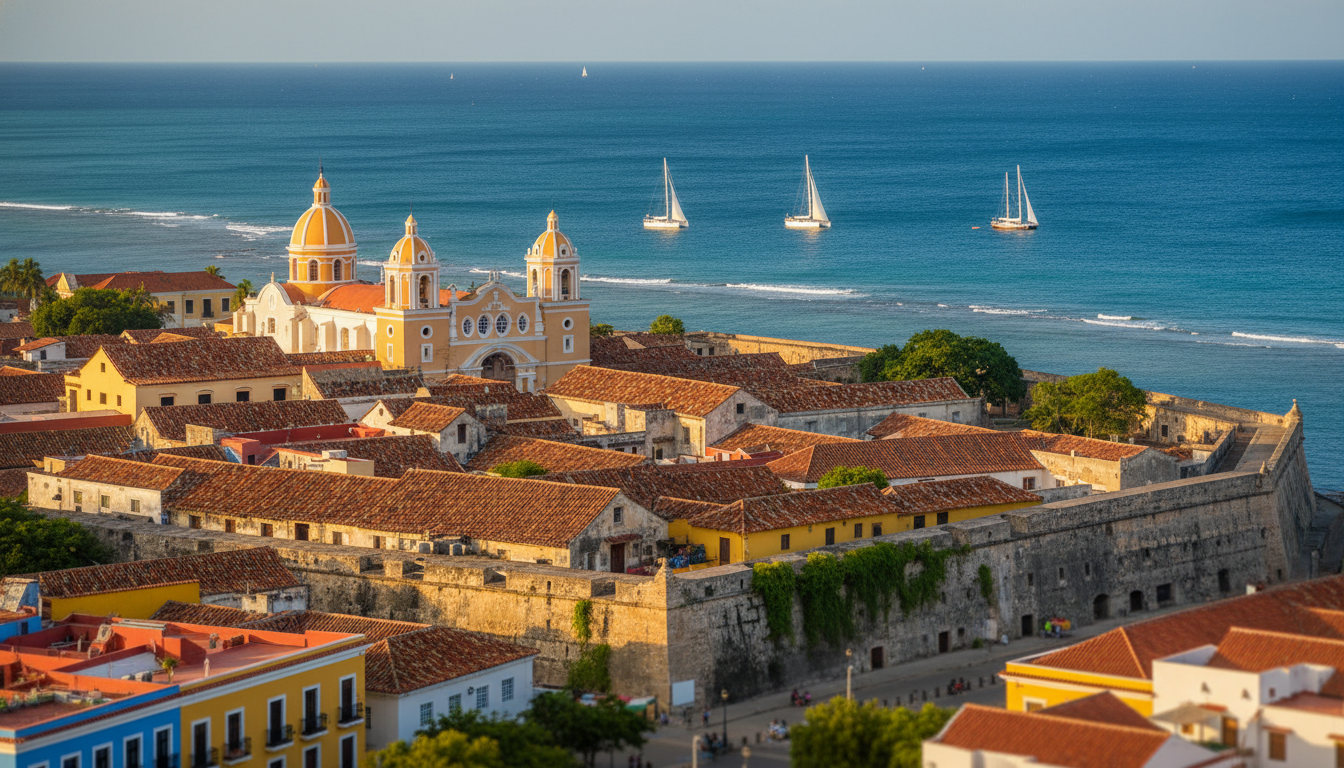 aerial view of Cartagenas walled city at golden hour, showing terracotta rooftops, colonial church d
Why Cartagena is Perfect for Home Swapping
Here's something most travel guides won't tell you: Cartagena's hotel scene is wildly overpriced for what you get. A decent boutique hotel in the Old City runs $180-300/night, and honestly? Many of them feel like they're coasting on location alone. The AC struggles, the walls are thin, and you're paying premium prices for a room that could be anywhere.
Home swapping changes everything.
Suddenly you're not a tourist—you're living in a 400-year-old colonial house with 14-foot ceilings and a rooftop terrace where you drink your morning tinto (Colombian coffee, strong and sweet) while watching the city stretch awake. You have a kitchen to store the mangoes from the fruit vendor who passes every morning at 7 AM, calling out "¡Mango, mango, mango biche!" in that sing-song way. You have a neighbor who waves and eventually invites you for sancocho on Sunday.
Through SwappaHome's credit system—where you earn 1 credit per night hosting guests and spend 1 credit per night wherever you stay—a two-week Cartagena adventure that would cost $3,000+ in hotels becomes essentially free. You're not just saving money; you're trading up to an experience hotels literally cannot provide.
But which neighborhood? That's where it gets interesting.
Centro Histórico: Colonial Grandeur Inside the Walls
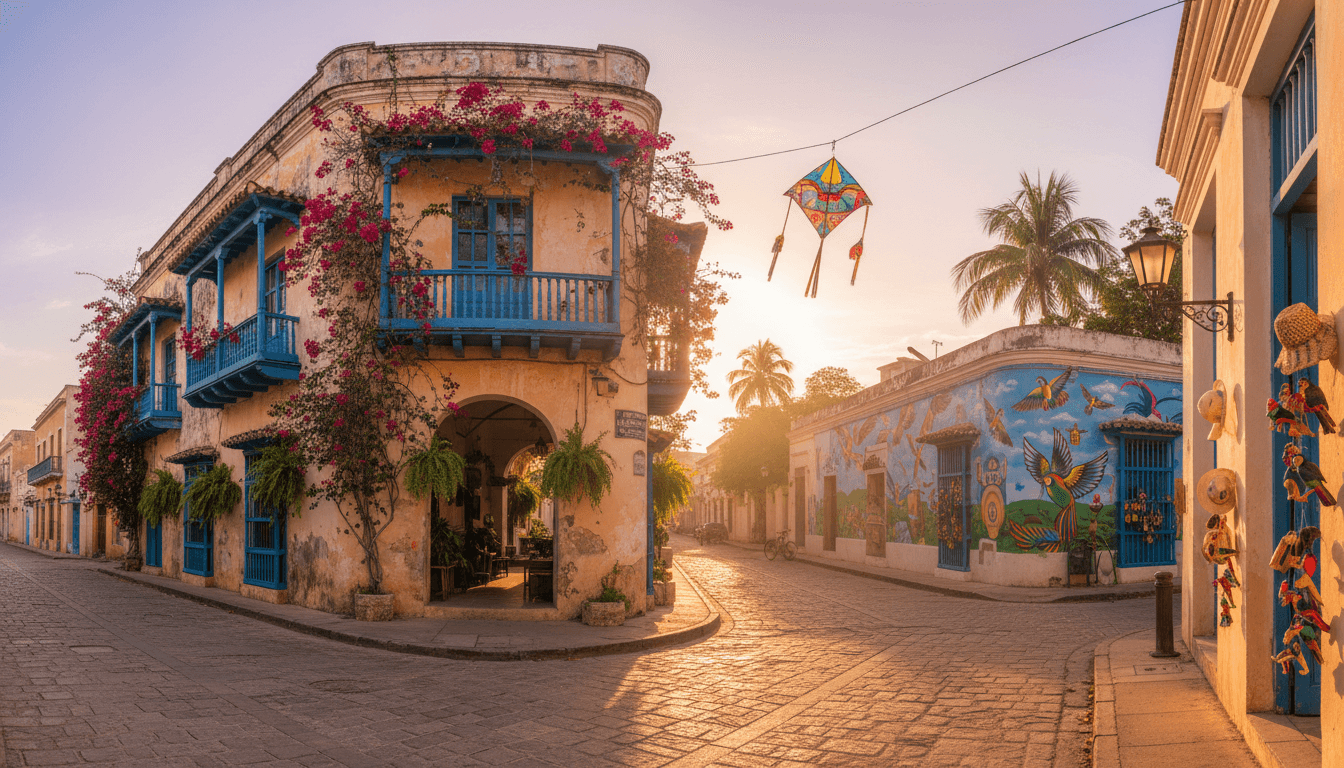
The obvious choice—and for good reason. Centro Histórico, the walled city, is what most people picture when they imagine Cartagena: candy-colored colonial buildings draped in bougainvillea, horse-drawn carriages clattering over cobblestones, balconies overflowing with flowers.
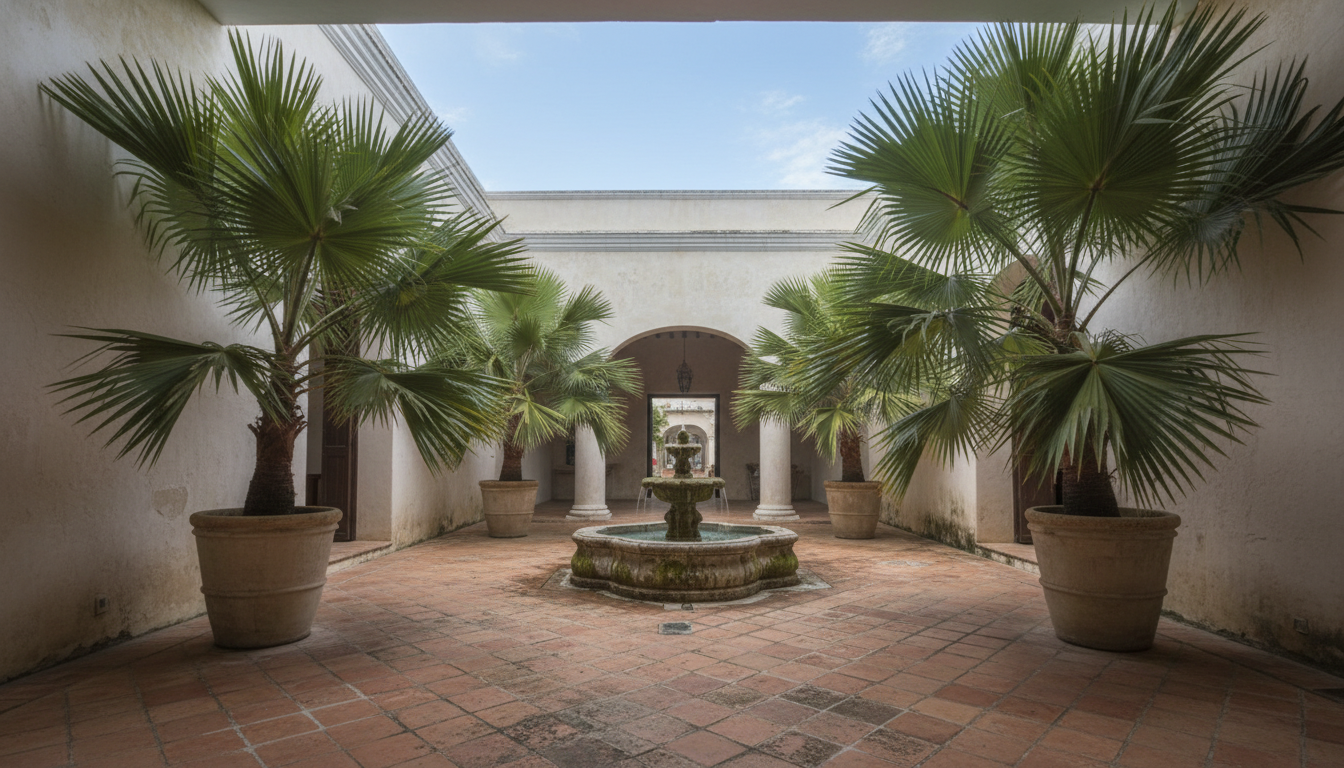
My first Cartagena home swap was here, in a converted 18th-century house on Calle del Cuartel. The front door was this massive wooden thing with iron studs that looked like it could withstand a pirate siege (which, historically, it probably had to). Inside: a central courtyard with a small fountain, bedrooms arranged around it, and a spiral staircase leading to a rooftop with views of the cathedral dome.
 interior courtyard of a colonial Cartagena house with potted palms, a small fountain, terracotta til
What Centro Living Actually Feels Like
Mornings are quiet—surprisingly so. Most tourists don't start moving until 10 AM, so if you're an early riser, you'll have the streets almost to yourself. I'd walk to La Cevichería (Calle Stuart No. 7-14) before the lunch crowds and get a table without waiting. Their coconut ceviche costs around 45,000 COP ($11) and it's worth every peso.
Afternoons get hot. Like, aggressively hot. The stone streets radiate heat, and you'll understand why siesta culture exists. This is when having a home swap apartment with good AC (always ask your host about this) becomes crucial. Hotels often have one window unit struggling; private homes in Centro frequently have split systems in every room.
Evenings transform the neighborhood entirely. The walls glow amber in the sunset light, street musicians appear in Plaza Santo Domingo, and the energy shifts from historical site to living city. Restaurant prices inside the walls are tourist-level ($15-30 for mains at most sit-down places), but the atmosphere is undeniable.
Centro: The Honest Downsides
I'm going to be real with you—Centro isn't perfect for everyone.
The cobblestones murder your feet and any wheeled luggage. Everything costs more inside the walls. The vendor situation can be intense; you'll be offered sunglasses, hats, and tours approximately every 90 seconds on main streets. And some of those gorgeous colonial buildings? The plumbing is as old as they are. Always ask your swap host about water pressure and hot water reliability.
Home swap availability in Centro tends toward the higher end—these are often second homes or investment properties rather than primary residences. That's not necessarily bad; it just means you might find fewer "lived-in" spaces with personal touches.
Best for: First-time Cartagena visitors, history lovers, people who prioritize walkability to major sights, those who want to be in the heart of the action.
Getsemaní: The Artsy Neighborhood Every Home Swapper Should Consider
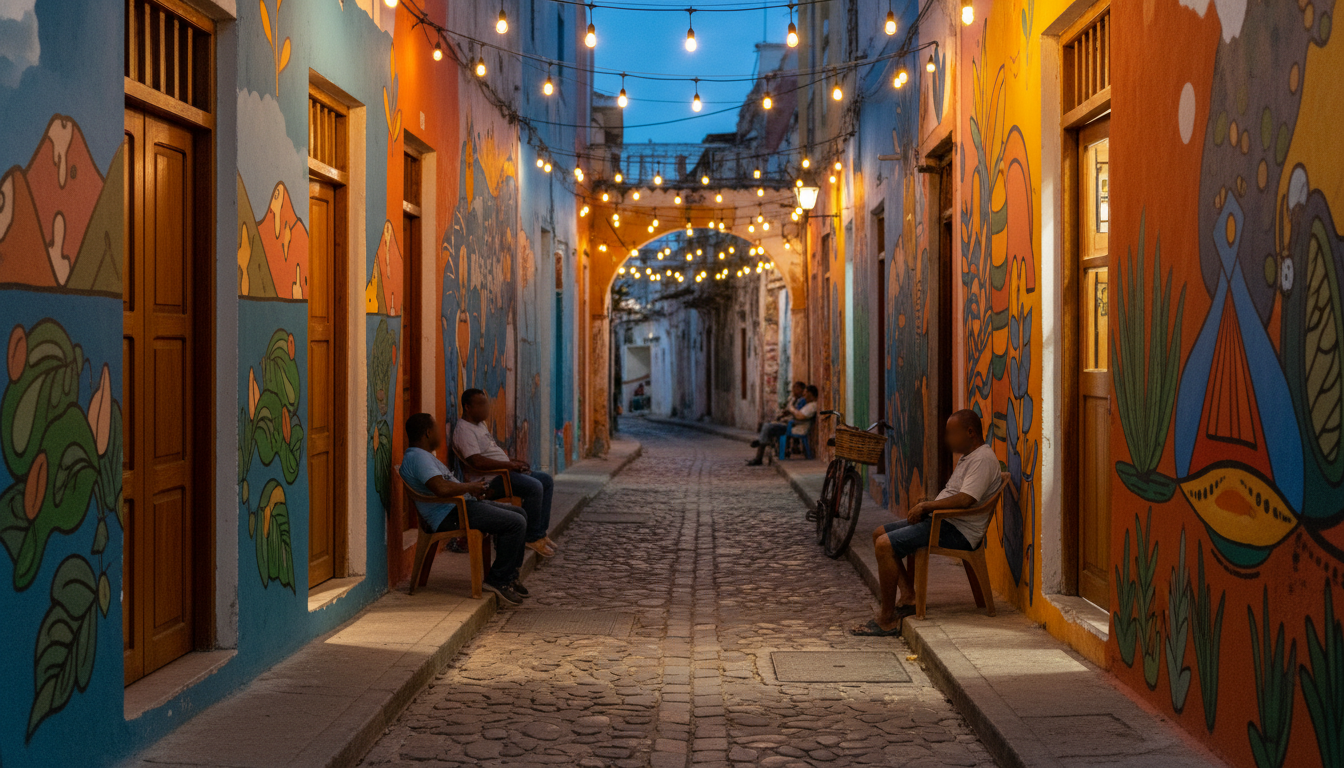
Walk five minutes south of the walled city, through the Clock Tower gate, and everything changes. Getsemaní—once considered Cartagena's "rough" neighborhood—has transformed into the city's creative soul. If Centro is Cartagena's postcard, Getsemaní is its Instagram feed: street art murals on every corner, rooftop bars with fairy lights, boutique hostels converted from colonial houses.
My second Cartagena home swap was here, in a third-floor apartment on Calle de la Sierpe. The building's exterior was covered in a massive mural of a woman with flowers in her hair. Inside, my host—a graphic designer who splits time between Cartagena and Medellín—had filled the space with local art, a hammock on the balcony, and a kitchen stocked with Aguila beer and fresh limes.
 narrow Getseman street at dusk with colorful street art murals on both sides, string lights overhead
The Getsemaní Vibe: Why It's Different
Getsemaní feels younger, scrappier, more real. The gentrification debate is ongoing (and worth being aware of as a traveler), but the neighborhood still maintains a working-class Colombian energy that Centro has largely lost. Abuelas sit on plastic chairs outside their homes. Kids play fútbol in Plaza de la Trinidad until dark. The music coming from open windows isn't curated for tourists—it's champeta and vallenato at full volume because that's what people actually listen to.
Food here is cheaper and often better. Demente (Callejón Angosto) does creative cocktails for 25,000 COP ($6). La Cocina de Pepina (Calle Larga) serves traditional Cartagena dishes—arroz con coco, fried fish, patacones—at local prices ($8-12 for a full meal). The street food scene is incredible: arepas de huevo for 3,000 COP (75 cents), empanadas for 2,000 COP, fresh fruit cups for 5,000 COP.
Nightlife is concentrated here too. Café Havana (corner of Calle de la Media Luna and Calle del Guerrero) is the famous salsa spot—get there before 10 PM on weekends or you're not getting in. Alquímico (Calle del Colegio) is the cocktail bar that put Cartagena on the global drinks map; their rooftop has three levels, each with a different vibe.
Getsemaní for Home Swappers: What to Know
Home swap options in Getsemaní tend to be more "local" feeling—actual apartments where people live, not vacation rentals. This means more personality but sometimes less polish. My swap had a washing machine but no dryer (common in Colombia—you'll hang dry), a kitchen with all the basics, and neighbors who became friends by day three.
The neighborhood is safe, but use normal city awareness. I walked home alone at midnight multiple times without issues, but I also stuck to well-lit streets and didn't flash expensive gear. Same rules as anywhere.
One thing: Getsemaní can be loud. Really loud. Music until 2-3 AM is normal on weekends, and the streets echo. If you're a light sleeper, ask your host about noise levels or request a unit facing an interior courtyard.
Best for: Solo travelers, younger crowds, budget-conscious swappers, nightlife enthusiasts, people who want local flavor over tourist polish, creatives and artists.
San Diego: The Quiet Corner Most Tourists Miss
Tucked into the northeastern section of the walled city, San Diego is Centro's quieter, more residential sibling. Same colonial architecture, same UNESCO World Heritage designation, but without the tour groups and restaurant touts. Most visitors walk through San Diego on their way somewhere else without realizing they're missing one of Cartagena's most livable neighborhoods.
I discovered San Diego by accident during my first trip—got lost looking for a restaurant and ended up in a plaza where the only other people were a grandmother feeding pigeons and two kids on bikes. No vendors. No noise. Just the sound of wind chimes from someone's balcony.
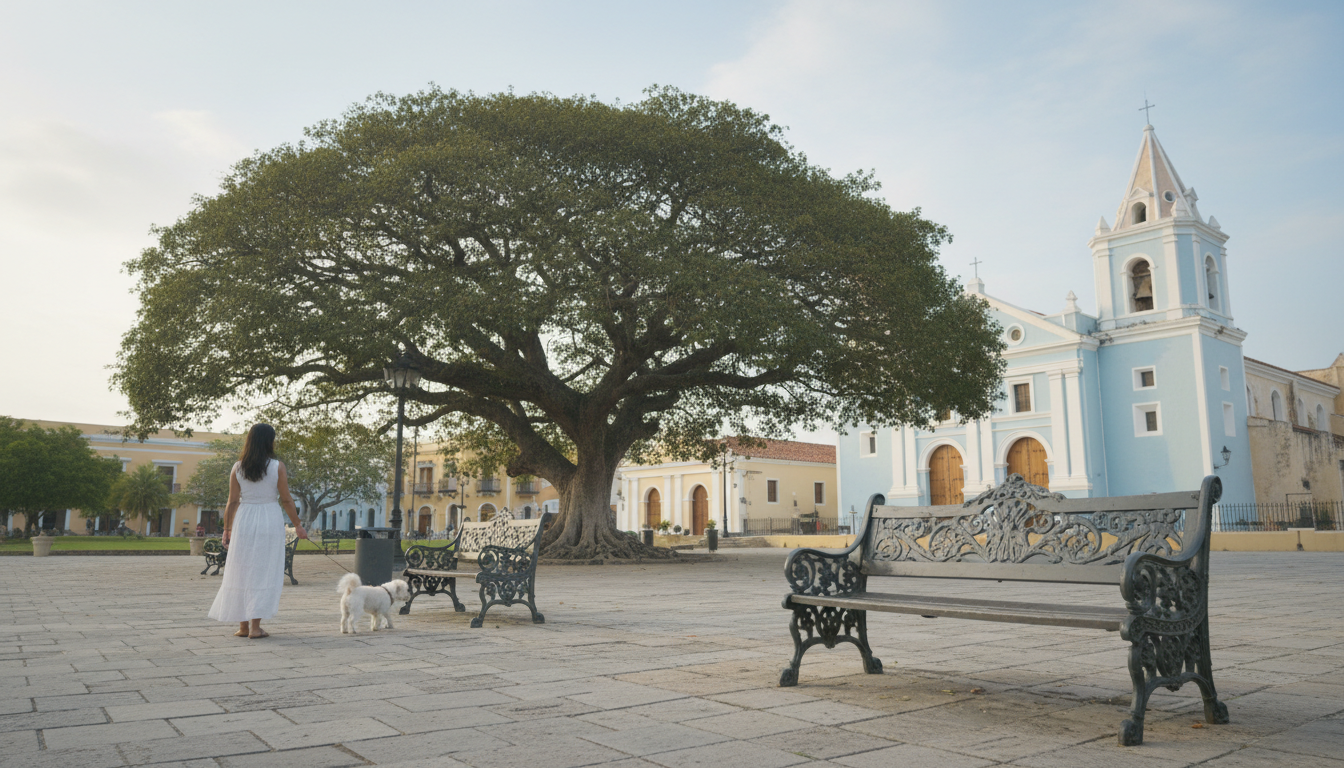 quiet San Diego plaza in Cartagena with a colonial church, a single large tree providing shade, a fe
Why San Diego Works for Home Swappers
San Diego offers the best of both worlds: you're inside the walls (everything walkable, safe, convenient) but without the intensity of Centro proper. Restaurants here cater more to locals and long-term visitors than day-trippers. La Mulata (Calle Quero) does a legendary fried fish lunch for 28,000 COP ($7). Interno (Calle del Santísimo) is a tiny cocktail bar with maybe 15 seats that most tourists never find.
Home swaps in San Diego tend to be in beautiful old buildings that haven't been fully converted to tourist use. My friend did a swap here last year in a house that had been in the same family for four generations—original tile floors, a courtyard with a mango tree, and a host who left homemade coconut rice in the freezer with reheating instructions.
The neighborhood is also home to some of Cartagena's best-preserved colonial architecture. The streets are narrower, the buildings less restored (in a good way—you see the authentic patina), and the pace is noticeably slower. Morning coffee on a San Diego balcony, watching the neighborhood wake up, is a different experience than the same morning in Centro.
San Diego Considerations
The downside? Less happening at night. If you want to be steps from bars and restaurants at 11 PM, San Diego will feel sleepy. You're a 10-minute walk from Getsemaní's nightlife, which isn't far, but it's not out-your-door convenient.
Some of the older buildings here haven't been updated as much either. Ask about AC, hot water, and WiFi specifically—these aren't guaranteed in historic properties.
Best for: Couples seeking romance, travelers who want peace and quiet, repeat Cartagena visitors who've "done" the main sights, writers and remote workers, those who prefer residential vibes.
Bocagrande: The Modern Beach Alternative
I'll be honest—Bocagrande isn't my personal vibe. But it would be incomplete to write a Cartagena neighborhood guide without mentioning it, because for certain travelers, it's exactly right.
Bocagrande is Cartagena's Miami Beach: a peninsula of high-rise condos, beach hotels, chain restaurants, and shopping malls. It's about a 15-minute taxi ride ($5-7) from the Old City. The beach itself is... fine. Grayish sand, calm water, packed with vendors selling everything from massages to ceviche to temporary tattoos.
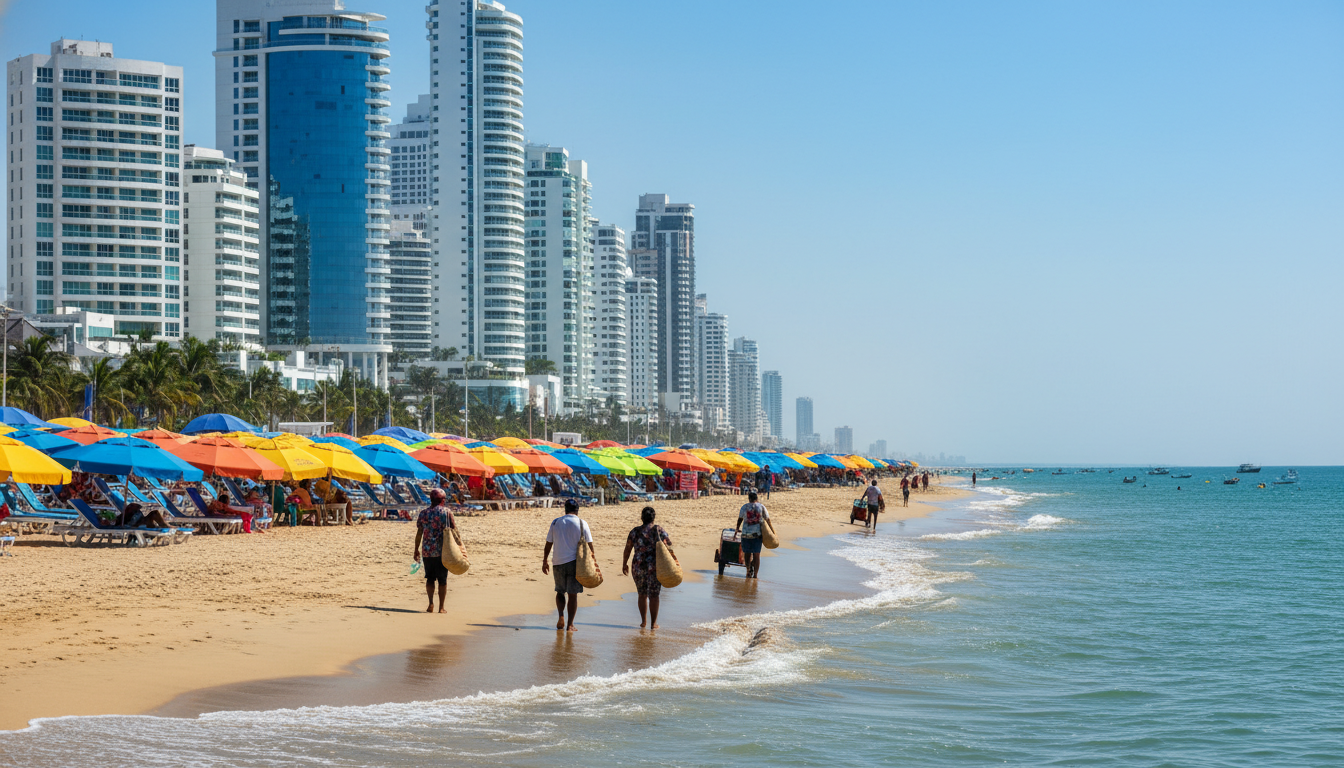 Bocagrande beach at midday with high-rise condos in the background, colorful beach umbrellas, vendor
When Bocagrande Makes Sense
Here's who should consider a home swap in Bocagrande: families with kids who want beach access and pool amenities. Travelers who prioritize modern conveniences (reliable AC, American-style kitchens, elevators) over colonial charm. People who find the Old City's cobblestones and stairs challenging. Those who want to feel like they're at a beach resort rather than in a historic city.
Home swaps here are typically in condo buildings, many with pools, gyms, and 24-hour security. The apartments tend to be newer and more standardized—less character, but also fewer surprises with plumbing or electricity.
Food in Bocagrande is pricier and more international. You'll find sushi, Italian, steakhouses, and familiar chains. For authentic Cartagena cuisine, you'll need to taxi to the Old City.
Best for: Families with children, travelers with mobility concerns, those who prioritize beach access and modern amenities, visitors who prefer predictable comfort over historic character.
Manga and Pie de la Popa: The Residential Secrets
Now we're getting into neighborhoods most tourists never see—and where some of the most interesting home swaps hide.
Manga is a small island connected to the mainland by a bridge, originally developed in the early 1900s as Cartagena's wealthy residential area. The architecture here is different: Republican-era mansions with wraparound porches, art deco buildings from the 1930s, tree-lined streets that feel almost Southern U.S. in character. It's quiet, residential, and about 10 minutes by taxi from the Old City.
Pie de la Popa sits at the base of the Convento de la Popa hill, mixing old money mansions with newer developments. Some of Cartagena's most stunning private homes are here, hidden behind high walls and tropical gardens.
Home Swapping in Manga and Pie de la Popa
These neighborhoods offer something rare in Cartagena: space. Instead of compact colonial apartments, you might find a three-bedroom house with a garden, a pool, parking (useful if you're renting a car for day trips), and the kind of quiet that doesn't exist inside the walls.
The trade-off is location. You'll need taxis or Uber for everything—there's no walking to dinner or stumbling home from a bar. Restaurants and nightlife are minimal in these areas. You're choosing a retreat, not a base camp.
I know a couple who did a month-long swap in Manga while working remotely. They loved having a full house with office space, a yard for morning yoga, and the ability to escape the tourist energy entirely. They'd taxi into the Old City for dinner a few times a week, but mostly they enjoyed the peace.
Best for: Remote workers needing space, families wanting a house rather than apartment, travelers with cars, those seeking true residential immersion, longer stays where location matters less.
Practical Tips for Your Cartagena Home Swap
After three stays, here's what I wish someone had told me before my first Cartagena home exchange:
Climate Realities
Cartagena is hot year-round. We're talking 85-95°F (29-35°C) with humidity that makes it feel hotter. When evaluating home swaps, AC isn't optional—it's essential. Ask specifically: "Does every bedroom have AC? How old are the units? Is there backup if one fails?" I've stayed in places where the living room AC worked great but the bedroom unit was struggling, and sleep became difficult.
Ceiling fans make a huge difference too. And check if there's a backup generator or what happens during power outages (they're not super common, but they happen).
Water and Utilities
Tap water in Cartagena is technically treated, but most locals and long-term visitors drink bottled or filtered water. Ask your host about their setup—many homes have a water cooler with 5-gallon jugs that get delivered, or an under-sink filter.
Hot water for showers varies wildly. Colonial buildings often have electric shower heads (those things that look slightly terrifying but work fine) or small tank heaters. Modern apartments usually have better systems. If hot showers matter to you, ask directly.
Getting Around
Within the Old City and Getsemaní, you'll walk everywhere. Comfortable shoes are non-negotiable—those cobblestones are beautiful but brutal on feet and ankles. For trips to Bocagrande, Manga, or day trips, Uber works well and is cheaper than taxis. A ride from Centro to Bocagrande runs about 12,000-18,000 COP ($3-4.50).
For day trips to Playa Blanca, Islas del Rosario, or other beaches, you can book boats from the main dock (Muelle de los Pegasos) or arrange through tour operators. Expect to pay $25-50 for basic island day trips, more for private boats or all-inclusive experiences.
Food and Cooking
One of the joys of home swapping is having a kitchen. Cartagena's markets are incredible—Mercado de Bazurto is the main public market (chaotic, authentic, not for the faint-hearted) where you can buy fresh fish, tropical fruits, and vegetables at local prices. For a more manageable experience, the Éxito supermarket chain has locations around the city with everything you'd need.
Local fruits to try: mamoncillo (like a lychee), níspero, corozo (makes a delicious juice), and zapote. Buy them from street vendors—they're cheaper and usually riper than supermarket options.
Safety and Common Sense
Cartagena is generally safe for tourists, especially in the neighborhoods covered here. Standard precautions apply: don't flash expensive jewelry or electronics, be aware of your surroundings at night, use official taxis or Uber rather than random cars.
The beach vendors in Bocagrande and Playa Blanca can be persistent—a firm "no gracias" works, and they'll move on. In the Old City, you'll get approached for tours, restaurants, and various services constantly. It's not aggressive, just persistent. Polite declining is fine.
When home swapping, SwappaHome's verification system helps establish trust between members, and the review system means hosts have accountability. I always recommend getting your own travel insurance that covers accommodation issues—it's not something the platform provides, but it's smart practice for any trip.
Making Your Cartagena Home Swap Happen
Here's my honest take after multiple stays: Cartagena rewards the home swapper more than almost any city I've visited. The gap between hotel experiences and local living is enormous here. Hotels give you a nice room and proximity to sights. A home swap gives you a life—a neighborhood, a routine, a sense of belonging that transforms a vacation into something deeper.
Start browsing SwappaHome listings a few months before your trip. Cartagena is popular, and the best properties in Centro and Getsemaní get booked. Write personalized messages to hosts—mention specific things about their home that appeal to you, share a bit about yourself, explain why you're excited about their neighborhood. The community aspect of home exchange means hosts want to know who's staying in their space.
And if you're on the fence about which neighborhood? For first-timers, I'd say Getsemaní. It gives you the best taste of what makes Cartagena special—the history, the art, the music, the food, the people—without the tourist markup of Centro or the isolation of outer neighborhoods. You can walk to everything, eat incredibly well on any budget, and fall asleep to the sound of salsa drifting up from the street.
That's not a bad way to experience Colombia.
Have you done a home swap in Cartagena? I'd love to hear which neighborhood you chose and what surprised you. Drop a comment or find me on SwappaHome—I'm always updating my mental map of this city.
Frequently Asked Questions
Is Cartagena safe for home swappers staying in local neighborhoods?
Yes, Cartagena is generally safe for travelers, especially in tourist-friendly neighborhoods like Centro, Getsemaní, San Diego, and Bocagrande. Use standard precautions: avoid displaying expensive items, stick to well-lit streets at night, and use Uber or official taxis. Home swapping in residential areas often feels safer than hotels because you blend into the neighborhood and have local contacts through your host.
What's the best neighborhood in Cartagena for first-time home swappers?
Getsemaní offers the ideal first-time experience—it's walkable to the Old City sights, has the best food and nightlife scene, features more affordable home swap options than Centro, and provides authentic local atmosphere. You get colonial architecture and street art, traditional restaurants and craft cocktails, all within a compact area that's easy to navigate.
How much can I save with home swapping versus hotels in Cartagena?
Boutique hotels in Cartagena's Old City average $180-300 per night. A two-week stay would cost $2,500-4,200 in accommodation alone. With SwappaHome's credit system (1 credit = 1 night, new members start with 7 free credits), that same stay costs nothing beyond your membership. Even accounting for hosting guests at your home, the savings are substantial.
When is the best time to visit Cartagena for a home swap?
December through April offers the driest weather, but it's also peak season with higher demand for home swaps—book 3-4 months ahead. May through November sees occasional rain (usually brief afternoon showers) but fewer tourists and more swap availability. Avoid major Colombian holidays like Semana Santa (Easter week) unless you book very early, as domestic tourism spikes.
Do I need to speak Spanish for a home swap in Cartagena?
Basic Spanish helps enormously but isn't strictly necessary. In tourist areas, many people speak some English. Your home swap experience improves dramatically with even simple Spanish though—communicating with hosts, chatting with neighbors, ordering at local restaurants, and navigating markets all become easier. Download a translation app as backup, and learn key phrases before arrival.

Published by
SwappaHome
SwappaHome Editorial Team
Home Exchange & Slow Travel Editorial
The SwappaHome Editorial Team brings together travel research, home-exchange community insights, and platform data to produce practical guides for first-time and experienced home swappers. Every article cites real platforms, current market rates, and verifiable city-level facts so readers can make informed decisions without guessing.
Ready to try home swapping?
Join SwappaHome and start traveling by exchanging homes. Get 7 free credits when you sign up!
Related articles

Bachelor and Bachelorette Parties in Singapore: The Complete Home Swap Group Guide for 2026
Planning a bachelor or bachelorette party in Singapore? Discover how home swapping lets groups of 6-12 stay together in luxury condos, saving thousands while partying in Marina Bay.
Cycling in Lisbon: 7 Home Swap Bike Tour Itineraries for Every Rider
Discover the best cycling routes in Lisbon with these home swap bike tour itineraries—from waterfront paths to hilltop adventures, all starting from your borrowed home.
Graduation Trip to Barcelona: How Home Swapping Gives New Graduates the Ultimate Celebration
Planning a graduation trip to Barcelona? Discover how home swapping lets new graduates explore Spain's most vibrant city without the hostel crowds or hotel costs.