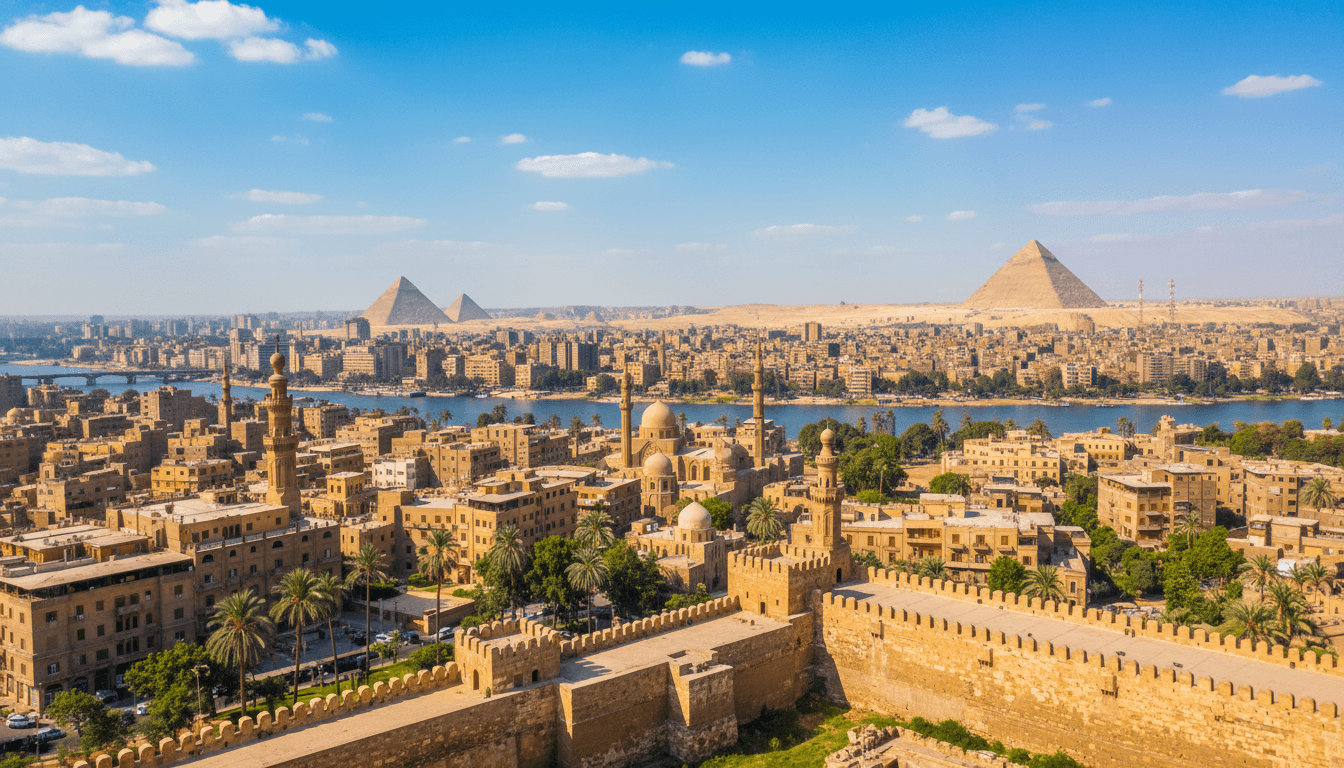
Home Swapping in Cairo: Is Egypt's Capital Worth It for Exchange Travelers?

SwappaHome Editorial Team
Home Exchange & Slow Travel Editorial
Discover if home swapping in Cairo is right for you. Real experiences, neighborhood tips, and honest advice for exchange travelers heading to Egypt.
The call to prayer echoed across the rooftops as I stood on a balcony in Zamalek, watching the Nile turn gold in the early morning light. My host's cat—a fat orange tabby named Cleopatra, naturally—wound between my ankles while I sipped the strongest Turkish coffee I'd ever had. This was my third day of home swapping in Cairo, and I was already questioning everything I thought I knew about travel in Egypt.
Here's the thing about Cairo: it's not an easy city. Loud, chaotic, occasionally overwhelming, and absolutely nothing like the polished European destinations that dominate most home exchange platforms. But is home swapping in Cairo worth it? After spending three weeks there across two separate exchanges, I have thoughts. Lots of them.
 sunrise view over the Nile from a Zamalek apartment balcony, with traditional wooden mashrabiya scre
Why Home Swapping in Cairo Is Different From Anywhere Else
Let me be real with you—Cairo isn't Barcelona or Amsterdam. The home exchange community here is smaller, the logistics can be trickier, and you'll need to adjust your expectations. But that's precisely what makes it interesting.
Most tourists experience Cairo through the buffer of tour buses and five-star hotel lobbies. They see the Pyramids, cruise down the Nile, and leave without ever understanding how Cairenes actually live. Home swapping strips away that tourist bubble entirely. You shop at the local ahwa (coffee shop), figure out which bread vendor makes the best aish baladi, and learn that the best foul medames in your neighborhood comes from a guy with a cart who only shows up before 8 AM.
The homes available for exchange here tend to fall into two categories: modern apartments in upscale neighborhoods like Zamalek, Maadi, and New Cairo, or more traditional flats in areas like Dokki and Mohandessin. Both offer something hotels simply can't—a kitchen to retreat to when the street food becomes too much, a washing machine (trust me, you'll need it), and neighbors who'll invite you for tea whether you're ready or not.
The Best Cairo Neighborhoods for Home Exchange
Not all Cairo neighborhoods are created equal for home swapping. Choosing the right one can make or break your experience.
Zamalek: The Island Escape
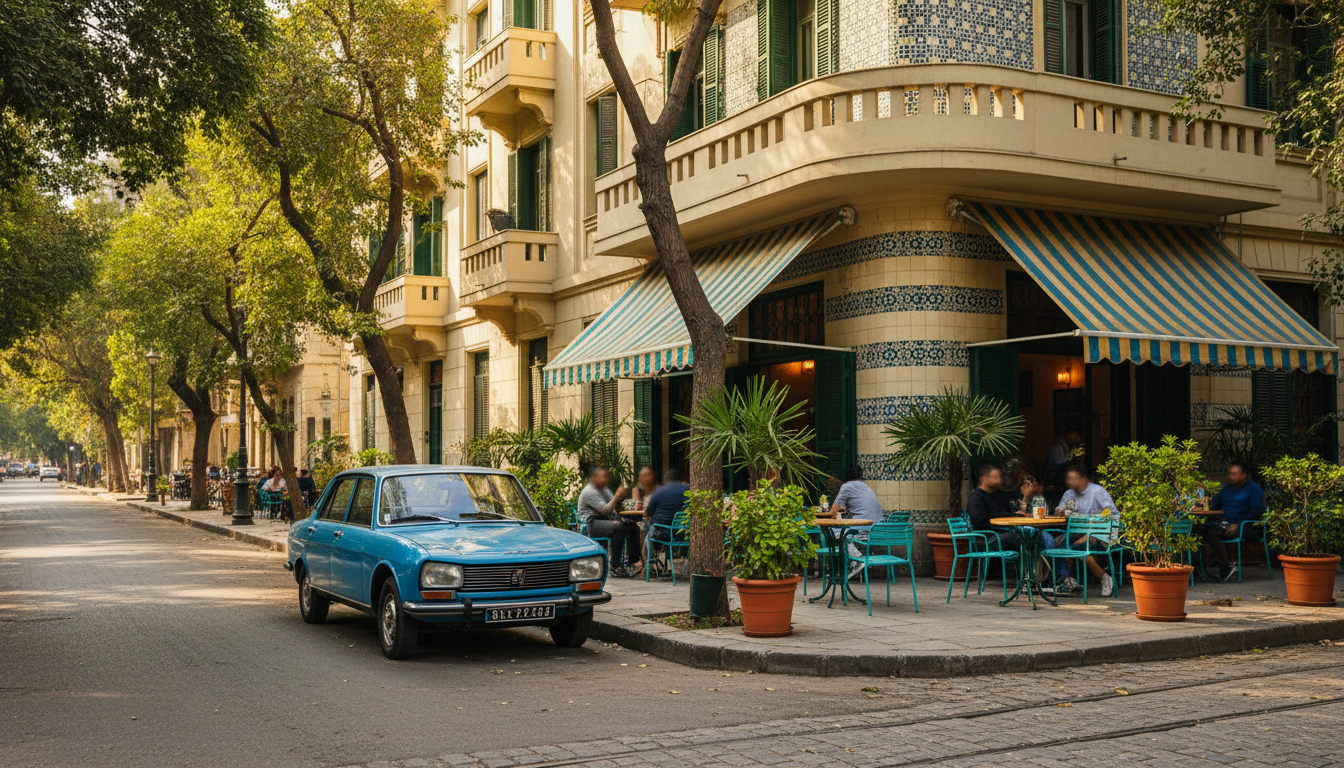
Zamalek sits on Gezira Island in the middle of the Nile, and honestly? It feels like a different city entirely. Tree-lined streets, art deco architecture, embassies, and a concentration of cafes and restaurants that cater to both expats and wealthy Egyptians. This is where I did my first Cairo swap, and it spoiled me.
The apartment belonged to a professor at the American University who was spending the summer in Vancouver. Three bedrooms, a proper kitchen, and a balcony overlooking a quiet side street where I could hear birds instead of car horns. Apartments in Zamalek on SwappaHome tend to be well-appointed—think modern kitchens, reliable air conditioning, and fast internet. You're looking at homes that would cost $150-250 per night on Airbnb, but through home exchange, it's just credits.
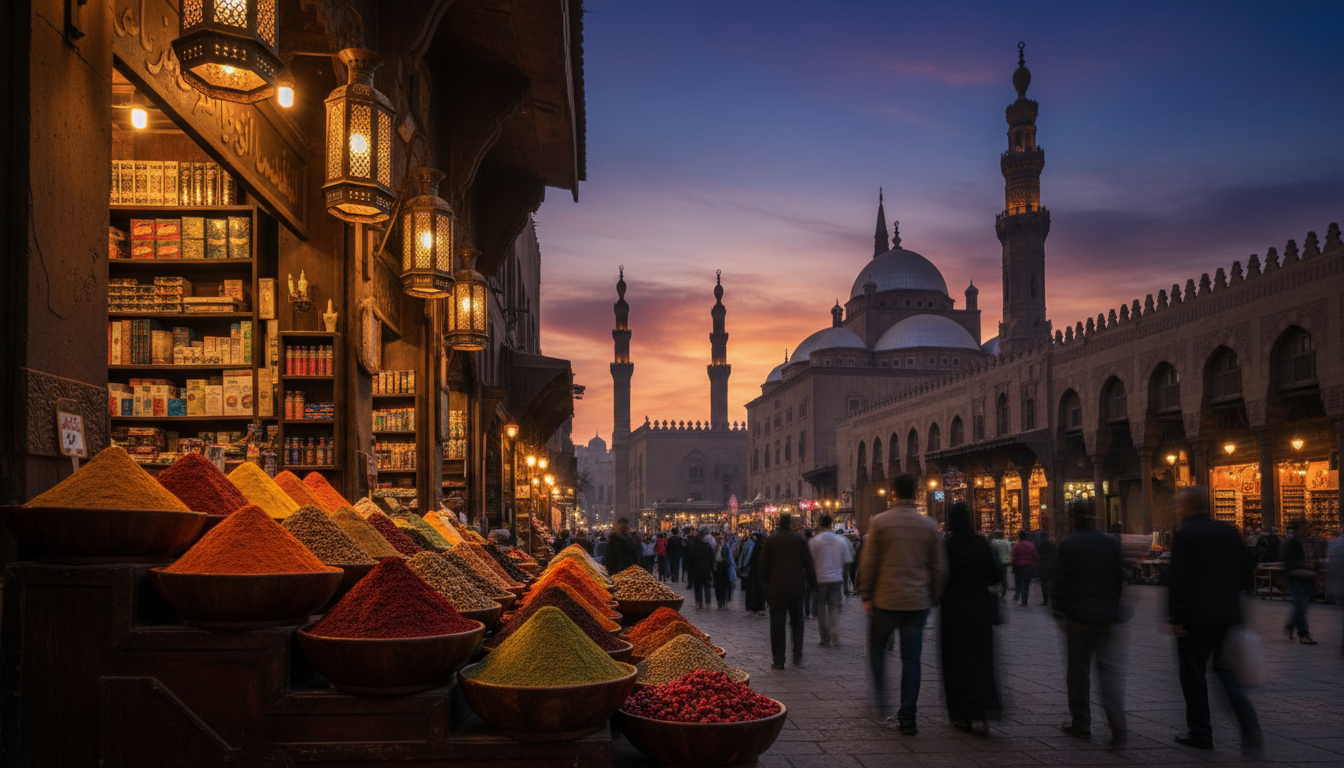
The downside? Zamalek can feel a bit insulated from "real" Cairo. You'll need to cross bridges to reach the Egyptian Museum, Khan el-Khalili, or Islamic Cairo. But after a day of sensory overload, that insulation starts feeling like a feature, not a bug.
 leafy residential street in Zamalek with art deco apartment buildings, a corner cafe with outdoor se
Maadi: Suburban Calm With Character
Maadi is Cairo's expat heartland, located south of the city center along the Nile's eastern bank. It's greener, quieter, and more spread out than central Cairo—a small-town feel despite being part of a megacity of 22 million people.
Home exchanges in Maadi often come with perks you won't find elsewhere: gardens, parking spaces, sometimes even swimming pools in compound communities. The trade-off is distance. You're 20-30 minutes from downtown by Uber (which costs about $3-5 USD), and the metro doesn't reach most of Maadi's residential areas.
I'd recommend Maadi for families with kids, longer stays of two weeks or more, or anyone who prioritizes peace and quiet over being in the thick of things. The neighborhood has excellent restaurants, particularly along Road 9, and a thriving community of long-term expats who've been swapping homes here for years.
Dokki and Mohandessin: Authentic and Affordable
These neighboring districts on the Nile's west bank offer a more authentically Egyptian experience. The streets are busier, the buildings older, and the prices—for everything from food to taxis—noticeably lower than Zamalek or Maadi.
Home exchanges here tend to be in apartment buildings that might look dated from the outside but often hide surprisingly comfortable interiors. My second Cairo swap was in Mohandessin, a two-bedroom flat owned by a journalist who was visiting family in Alexandria. The building had no elevator, the stairwell was dim, and I'll admit my heart sank a little when I first arrived.
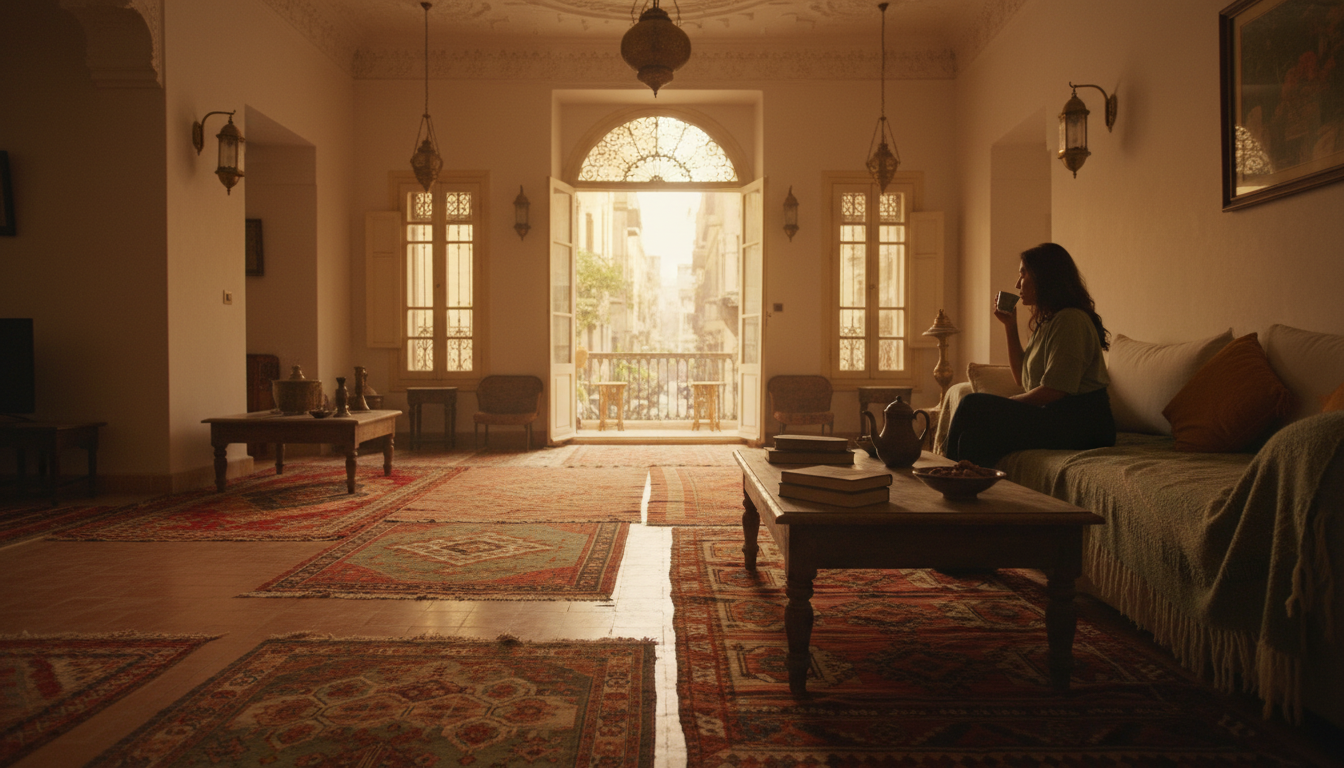
Then I walked inside. High ceilings, beautiful tilework, a kitchen stocked with spices I couldn't identify, and a living room lined with books in three languages. The neighborhood mosque's call to prayer became my alarm clock, and the corner koshary shop became my addiction. Sometimes the best home swaps are the ones that surprise you.
New Cairo and 6th of October City: Modern but Distant
These planned communities on Cairo's outskirts represent a completely different vision of Egyptian life. Gated compounds, shopping malls, international schools—it's suburban development that could be anywhere in the world. Home exchanges here often feature newer construction, more space, and amenities like gyms and pools.
But here's my honest take: unless you have a specific reason to be in these areas (visiting friends, a business trip), they're not ideal for tourists. You're 45 minutes to an hour from the Pyramids, the Egyptian Museum, and everything that makes Cairo Cairo. The home swapping experience loses something when you're essentially staying in a gated community that requires a car for everything.
 interior of a traditional Cairo apartment with high ceilings, colorful kilim rugs, brass lanterns, a
What Cairo Home Exchanges Actually Look Like
Let's get practical. What should you expect when you book a home swap in Cairo?
The Homes
Cairo apartments tend to be larger than European equivalents—space isn't at the same premium here. A typical two-bedroom in Zamalek might be 120-150 square meters, with separate living and dining areas, a full kitchen, and often a maid's room that hosts use as storage or a home office.
Air conditioning is non-negotiable from April through October. Temperatures regularly hit 35-40°C (95-104°F), and Cairo's famous dust means you'll want to keep windows closed during the day. Every home I've exchanged in had split-unit AC in the bedrooms and living areas—make sure to confirm this before booking.
Kitchens vary wildly. Some are fully equipped with ovens, dishwashers, and every gadget imaginable. Others are more basic, reflecting the Egyptian preference for eating out or ordering in. The good news? Food delivery in Cairo is absurdly cheap and efficient. Apps like Talabat and Elmenus will bring restaurant meals to your door for $5-10 USD, including delivery.
The Hosts
Cairene hosts on SwappaHome tend to be well-traveled professionals, academics, or business people who've discovered home exchange through international networks. Many speak excellent English, though some older hosts may prefer Arabic or French.
Egyptian hospitality is legendary, and this extends to home swapping. Don't be surprised if your host leaves you a welcome basket with local treats, a handwritten guide to the neighborhood, or instructions for their doorman to help you with anything you need. That doorman thing, by the way, is crucial—most Cairo apartment buildings have a bawab (doorman/porter) who lives on-site and becomes your go-to person for everything from receiving packages to recommending restaurants.
The Logistics
Getting from Cairo International Airport to your swap home is straightforward. Uber works throughout the city and costs about $8-15 USD to most neighborhoods. The airport also has a decent taxi system with fixed prices posted—expect to pay 200-300 Egyptian pounds ($6-10 USD) to central Cairo.
Internet is generally reliable in middle-class and upscale neighborhoods. Most homes have DSL or fiber connections adequate for video calls and streaming. Mobile data is cheap—a local SIM card with 10GB costs about $5 USD from Vodafone, Orange, or Etisalat kiosks at the airport.
 Egyptian breakfast spread on a kitchen table - foul medames, falafel, fresh pita bread, white cheese
The Honest Challenges of Home Swapping in Cairo
I wouldn't be doing my job if I only painted a rosy picture. Cairo presents real challenges for home exchangers, and you should know about them before booking.
Fewer Listings Than Major European Cities
The home exchange community in Cairo is growing but still relatively small compared to Paris, Barcelona, or London. You might find 50-100 active listings versus thousands in European capitals. This means less choice and the need to book further in advance—especially for popular neighborhoods like Zamalek.
The flip side? Less competition for the listings that do exist. I've had hosts accept my requests within hours because they were excited to connect with someone who actually wanted to experience their city beyond the tourist trail.
Communication Styles Differ
Egyptians communicate differently than Northern Europeans or North Americans. Responses might come at odd hours (Cairo's social life runs late), and plans can be more fluid than you're used to. This isn't rudeness—it's a different relationship with time and scheduling.
My advice: be patient, be flexible, and don't panic if your host takes a day to respond to messages. They're probably just busy with the organized chaos of Cairo life.
Infrastructure Surprises
Power outages happen, though they're less common than they were a decade ago. Water pressure can be inconsistent. Elevators in older buildings may be... character-building experiences. None of this is unique to home swapping—it's just Cairo being Cairo.
The key is setting appropriate expectations. You're not staying at the Four Seasons. You're living like a local, and locals deal with these minor inconveniences all the time. Your host will usually leave instructions for what to do if the power cuts out (check the circuit breaker, call the bawab) or the water stops (wait 20 minutes, it usually comes back).
Safety Perceptions vs. Reality
Let's address the elephant in the room. Many Western travelers have concerns about safety in Egypt, fueled by news coverage that rarely distinguishes between different parts of this enormous country.
Here's my experience: Cairo felt safer than many American cities I've visited. Violent crime against tourists is rare. The main annoyances are persistent touts near tourist sites, occasional taxi scams (use Uber), and the general chaos of navigating a city that doesn't believe in traffic rules.
Home swapping actually increases your safety in some ways. You're staying in residential neighborhoods, not tourist zones. You have a local contact (your host) who can advise on anything concerning. And you look less like a target when you're walking out of an apartment building rather than a hotel lobby.
That said—and this is important—SwappaHome is a platform that connects members. It doesn't provide insurance or guarantees. If you want coverage for your belongings or liability protection, arrange your own travel insurance before you go. I use World Nomads for all my international trips, including home exchanges.
 Khan el-Khalili bazaar at dusk, with brass lanterns glowing, spice stalls in the foreground, and the
Making the Most of Your Cairo Home Exchange
So you've decided Cairo home swapping is for you. Here's how to make it exceptional.
Timing Your Visit
Cairo is best from October through April when temperatures are manageable (15-25°C / 60-77°F) and the air is clearer. December and January can actually be chilly at night—pack layers. Ramadan transforms the city in beautiful ways but means many restaurants close during daylight hours; if you're not fasting, this requires some adjustment.
Avoid July and August unless you have a specific reason to be there. The heat is brutal, the dust is worse, and many Cairenes escape to Alexandria or the North Coast, meaning fewer potential hosts and a quieter city.
Building Your Swap Profile for Egyptian Hosts
Egyptian hosts appreciate guests who show genuine interest in their country beyond the pyramids. In your swap request, mention specific things you want to experience—Islamic Cairo's architecture, the Egyptian Museum's collection, the food scene in Downtown. Show that you've done your research.
Include photos of your home that demonstrate you're a responsible homeowner. Egyptians take hospitality seriously, and they want to know their home is going to someone who'll treat it with respect. Reviews from previous swaps carry significant weight.
What to Bring That You Can't Easily Find
Cairo has everything you need, but a few items are worth packing: your preferred sunscreen brand (local options are limited and expensive), any specific medications (pharmacies are everywhere but may not stock Western brands), a good dust mask if you have respiratory sensitivities, modest clothing for mosque visits (women should have something to cover their hair; everyone should avoid anything above the knee), and a portable power bank for long days exploring.
Connecting With Your Host's Network
The best part of home swapping in Cairo? The connections. Your host likely has friends, colleagues, or family who'd love to show you around. Don't be shy about asking for introductions.
My Zamalek host connected me with her friend who ran a food tour company. That introduction led to a private tour of Downtown Cairo's hidden restaurants, a cooking class in someone's home, and friendships that lasted long after I left Egypt. None of that would have happened from a hotel.
Is Cairo Home Swapping Right for You?
After all this, here's my honest assessment.
Cairo home swapping is right for you if you're comfortable with some chaos and unpredictability, if you want to experience a city most tourists never really see, if you're flexible and patient with different communication styles, if you're excited by the idea of living in a neighborhood rather than just visiting sights, and if you understand that home exchange is about cultural exchange, not just free accommodation.
It might not be right for you if you need everything to be predictable and polished, if you're uncomfortable in environments where you don't speak the language, if you're looking for a relaxing beach vacation (wrong country), or if you're not willing to put in extra effort to find and secure a swap.
For me, those three weeks in Cairo across two exchanges were among the most memorable travel experiences I've had in seven years of home swapping. Not because everything went smoothly—it didn't—but because I experienced a city that most visitors never really know.
I watched my Zamalek neighbors gather for iftar during Ramadan. I learned to navigate the metro system during rush hour. I found a coffee shop where the owner remembered my order by the third visit. I stood on the Giza Plateau at sunset and then went home to make pasta in my borrowed kitchen.
That's what home swapping in Cairo offers: not a tourist experience, but a glimpse of actual life in one of the world's oldest and most fascinating cities.
Getting Started With Cairo Home Exchange
If you're ready to try it, here's your action plan.
First, make sure your SwappaHome profile is complete and compelling. Good photos of your home, detailed descriptions, and ideally a few reviews from previous exchanges. Egyptian hosts are selective—give them reasons to say yes.
Second, start your search early. Three to six months ahead isn't too soon for Cairo, especially if you're targeting Zamalek or Maadi during peak season (October-March). Use specific search terms and be willing to reach out to hosts whose listings catch your eye, even if their calendar isn't marked as available.
Third, be generous in your communication. Introduce yourself properly, explain why you're interested in Cairo, and ask thoughtful questions about the home and neighborhood. Egyptian culture values personal connection—a generic copy-paste request won't get you far.
And finally? Approach the whole experience with curiosity rather than expectations. Cairo will surprise you. Some of those surprises will be challenging, and some will be magical. That's the deal.
As I write this, I'm already planning my next Cairo swap. There's a listing in Garden City that caught my eye—a colonial-era apartment with twelve-foot ceilings and a view of the Nile. The host is a retired diplomat who spent decades in Southeast Asia. I have a feeling there are stories in that apartment, and I want to hear them.
That's the thing about home swapping in Cairo. It's not just about the pyramids or the museums or even the incredible food. It's about the lives that unfold in this ancient, chaotic, endlessly surprising city. And there's no better way to touch that life than by living in someone's home, even if just for a little while.
Frequently Asked Questions
Is home swapping in Cairo safe for solo travelers?
Home swapping in Cairo is generally safe for solo travelers, including women. You'll be staying in residential neighborhoods rather than tourist zones, which often feels more secure. The main considerations are standard urban awareness—use Uber instead of street taxis, avoid walking alone late at night in unfamiliar areas, and trust your instincts. Having a local host contact adds an extra layer of security.
How much money can I save home swapping in Cairo versus hotels?
A decent hotel in Cairo's safe neighborhoods costs $80-150 USD per night, while upscale options run $200-400. Home swapping eliminates accommodation costs entirely—you're just using SwappaHome credits (1 credit per night). For a two-week stay, that's $1,100-2,800 in savings on hotels alone, plus you'll save on meals by cooking in your borrowed kitchen.
What's the best neighborhood in Cairo for first-time home swappers?
Zamalek is the best Cairo neighborhood for first-time home swappers. It offers a gentler introduction to the city with tree-lined streets, reliable infrastructure, excellent restaurants, and easy access to the Nile. The neighborhood has a concentration of well-maintained apartments from experienced hosts, and you're just a short Uber ride from major attractions.
Do I need to speak Arabic for home swapping in Cairo?
You don't need Arabic for home swapping in Cairo, though learning a few phrases helps enormously. Most SwappaHome hosts in Cairo speak English, and younger Egyptians in urban areas are often multilingual. Translation apps work well for everyday interactions. Your host will typically leave instructions in English and may introduce you to English-speaking neighbors or their bawab (doorman) who can assist.
When is the best time of year for Cairo home exchange?
The best time for Cairo home exchange is October through April when temperatures range from 15-25°C (60-77°F). November and March offer ideal weather with fewer tourists. Avoid June through August when extreme heat makes sightseeing uncomfortable. Ramadan (dates vary) transforms the city beautifully but requires flexibility around restaurant hours and local schedules.

Published by
SwappaHome
SwappaHome Editorial Team
Home Exchange & Slow Travel Editorial
The SwappaHome Editorial Team brings together travel research, home-exchange community insights, and platform data to produce practical guides for first-time and experienced home swappers. Every article cites real platforms, current market rates, and verifiable city-level facts so readers can make informed decisions without guessing.
Ready to try home swapping?
Join SwappaHome and start traveling by exchanging homes. Get 7 free credits when you sign up!
Related articles
How to Extend or Modify a Home Swap Mid-Stay: The Complete Flexibility Guide
Need to extend your home swap or change dates mid-trip? Here's exactly how to negotiate changes, handle credits, and keep both parties happy.

How to Visit Bali for Free with Home Exchange: The Complete 2026 Guide
Skip the $150/night villas. Home exchange in Bali lets you stay in Ubud rice field houses and Seminyak beach pads for zero accommodation cost. Here's exactly how.
How to Vet Home Swap Guests: 12 Red Flags Every Host Should Know
Learn how to vet home swap guests before handing over your keys. Spot the 12 red flags experienced hosts watch for—and protect your home with confidence.