Local Experiences in Cairo: 27 Authentic Activities Only Home Swappers Discover

SwappaHome Editorial Team
Home Exchange & Slow Travel Editorial
Skip the tourist traps. These local experiences in Cairo—from hidden coffee houses to rooftop iftars—are what happens when you actually live in a neighborhood.
The call to prayer woke me at 4:47 AM on my first morning in Zamalek. I lay there in my borrowed apartment, staring at the ceiling, thinking: this is nothing like the Cairo in travel brochures.
Three weeks later, I'd eaten koshari at a hole-in-the-wall that doesn't even have a sign. I'd learned to haggle in broken Arabic at a vegetable cart. I'd watched the sun set over the Nile from a rooftop that no hotel guest will ever see. That's what local experiences in Cairo actually look like—not the pyramids (though yes, obviously, go see them), but the texture of daily life in a city that's been continuously inhabited for over a thousand years.
I'm writing this for fellow home swappers because staying in someone's actual apartment changes everything about how you experience Cairo. You're not a tourist passing through. You're temporarily living a Cairo life, with a neighborhood grocer who starts recognizing you and a favorite bench in the local park. That shift—from visitor to temporary resident—unlocks experiences that money genuinely cannot buy.
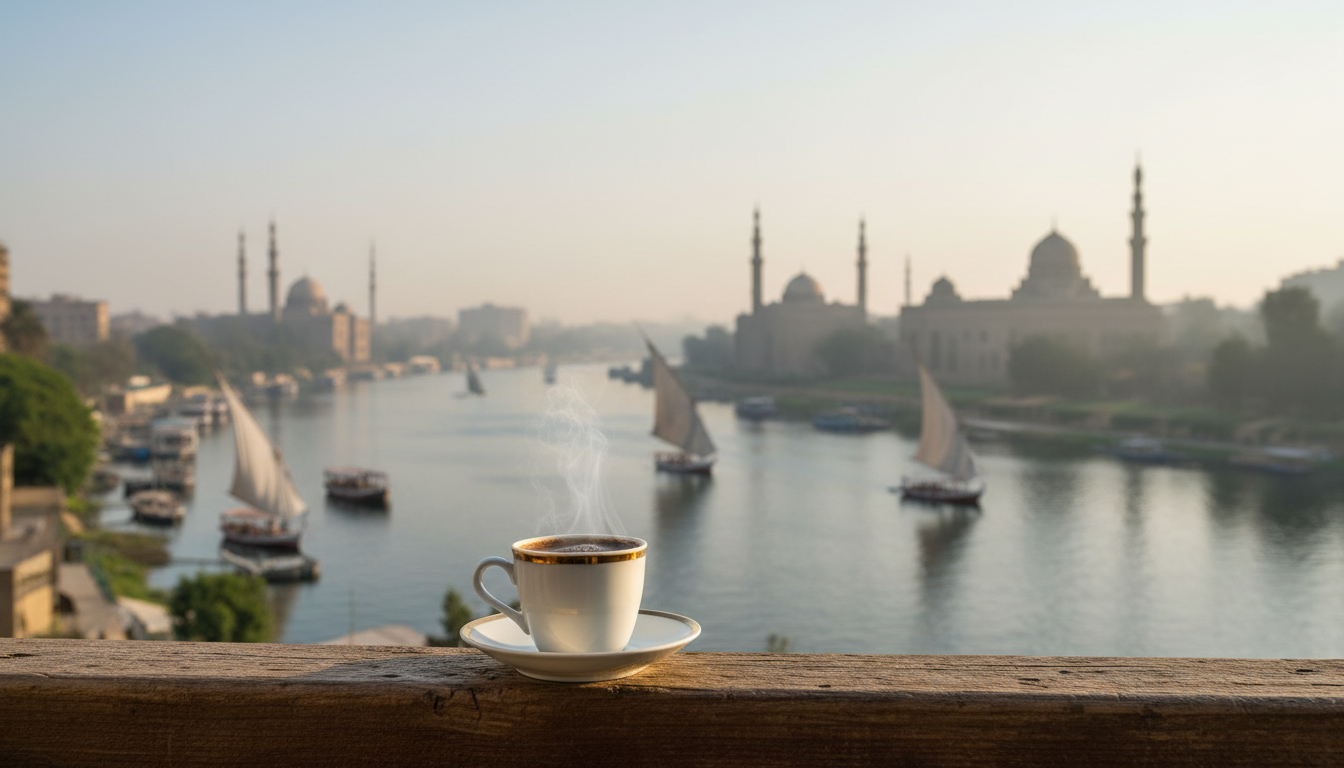 early morning view from a Zamalek apartment balcony, showing the Nile with feluccas, minarets in the
Why Home Swapping Transforms Your Cairo Experience
Here's something I've noticed after seven years of trading homes: the best local experiences in Cairo happen in residential neighborhoods, not tourist zones. When you're staying in someone's Maadi apartment or their family flat in Heliopolis, you're automatically positioned to discover what locals actually do.
My host in Zamalek—a university professor named Layla—left me a handwritten list of her favorite spots. Not a single one appeared in my Lonely Planet. There was the juice stand on 26th of July Street where she gets her morning guava juice (12 EGP, about $0.40). The bookshop on Shagaret El Dorr Street where the owner will make you tea while you browse. The specific bench in the Gezira Club grounds where she reads on Friday mornings.
This is the difference between visiting Cairo and living in Cairo, even temporarily. You inherit someone's rhythms, their shortcuts, their secret spots. In a city as layered and complex as this one, those insider details matter more than anywhere else I've traveled.
The tourist experience of Cairo is genuinely overwhelming—the traffic, the touts, the sheer sensory assault of it all. But neighborhood Cairo? It's surprisingly gentle. Kids playing football in side streets. Old men smoking shisha outside corner shops. Women hanging laundry on balconies while chatting with neighbors. That's the Cairo I fell in love with, and it's only accessible when you're actually staying in a neighborhood.
Authentic Cairo Neighborhoods for Home Exchange Living
Zamalek: Island Living with a Literary Soul
Zamalek was my introduction to residential Cairo, and I'm biased—I think it's the perfect base for first-time home swappers. This island neighborhood in the middle of the Nile has tree-lined streets, art deco buildings, and a surprisingly walkable layout.
The local experiences here center around café culture and bookshops. Diwan Bookstore on 26th of July Street is legendary—three floors of books with a café where Cairo's intellectuals have been arguing about politics for decades. Grab a coffee, pick up a novel by Naguib Mahfouz (Egypt's Nobel laureate), and you're doing exactly what Zamalek residents do.
For morning rituals, walk to Beano's on Shagaret El Dorr Street. It's a local chain, not a tourist spot, and the regulars treat it like their living room. A latte runs about 75 EGP ($2.50), and the people-watching is exceptional. In the evenings, walk along the Nile Corniche as the sun sets. Families are out, couples are strolling, vendors are selling roasted sweet potatoes. It's Cairo at its most romantic and accessible.
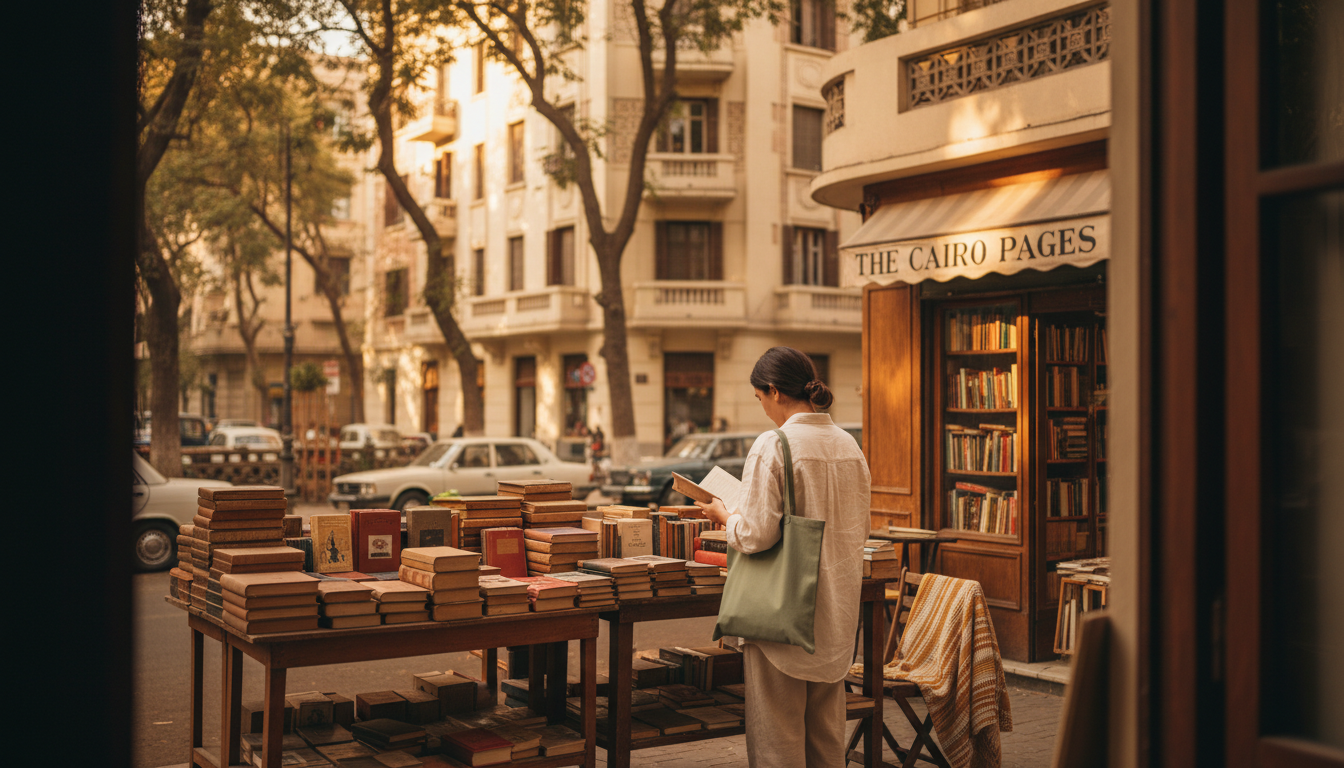 tree-lined street in Zamalek with art deco apartment buildings, a small bookshop with books displaye
Maadi: Expat Comfort Meets Egyptian Authenticity
Maadi is where Cairo's expat community has lived for generations, and it shows—you'll find excellent international restaurants alongside deeply Egyptian experiences. The neighborhood feels almost suburban, with wide streets and actual gardens.
The Road 9 area is the heart of local life here. On Friday mornings, there's an informal market where residents sell everything from homemade jam to secondhand books. It's not a tourist market—it's neighbors selling to neighbors—and the vibe is wonderfully low-key.
Maadi's secret weapon? The Wadi Degla protectorate, a 20-minute drive away. This desert canyon is where Cairo families go hiking on weekends. Pack a picnic, hire a taxi (about 200 EGP round trip, roughly $6.50), and spend a morning scrambling over rocks in what feels like another planet. I met more Egyptian families there than I'd encountered in a week of tourist sites.
Heliopolis: Belle Époque Architecture and Local Street Food
Heliopolis was built in the early 1900s as a planned European-style suburb, and the architecture is stunning—think Brussels meets the Middle East. It's less polished than Zamalek, more authentically middle-class Egyptian, and absolutely packed with local experiences that tourists never find.
The Baron Palace—a Hindu-inspired mansion built by a Belgian industrialist—recently reopened after restoration. But honestly, I preferred just wandering the streets around Korba, looking at the ornate buildings and stopping at whatever food cart smelled best.
Heliopolis is street food heaven. The feteer shops here serve Egypt's answer to pizza—flaky, buttery pastry that can be sweet or savory. Feteer Meshaltet on Othman Ibn Affan Street has been making them for 40 years. A full feteer with honey and cream runs about 80 EGP ($2.60), and it's enough for two people.
The Food Experiences That Define Cairo Living
I need to talk about food because local experiences in Cairo are inseparable from eating. This isn't a foodie city in the Instagram sense—there aren't many photogenic plates or trendy restaurants. But the depth of culinary tradition here is staggering.
Koshari: Cairo's Democratic Dish
Koshari is Cairo's street food soul—a carb-bomb of rice, lentils, pasta, chickpeas, and crispy onions, doused in tomato sauce and garlic vinegar. Every neighborhood has its legendary koshari spot, and finding your local one is a genuine rite of passage.
In Zamalek, Abu Tarek is famous, but honestly, the no-name place on Brazil Street (look for the green tiles) makes a better version. A large bowl costs 35 EGP (about $1.15). You'll see lawyers eating next to construction workers—koshari is the great equalizer.
The move: order a "koshari kebir" (large), add extra "da'a" (garlic sauce), and grab a table if there is one. Eat fast—this isn't lingering food.
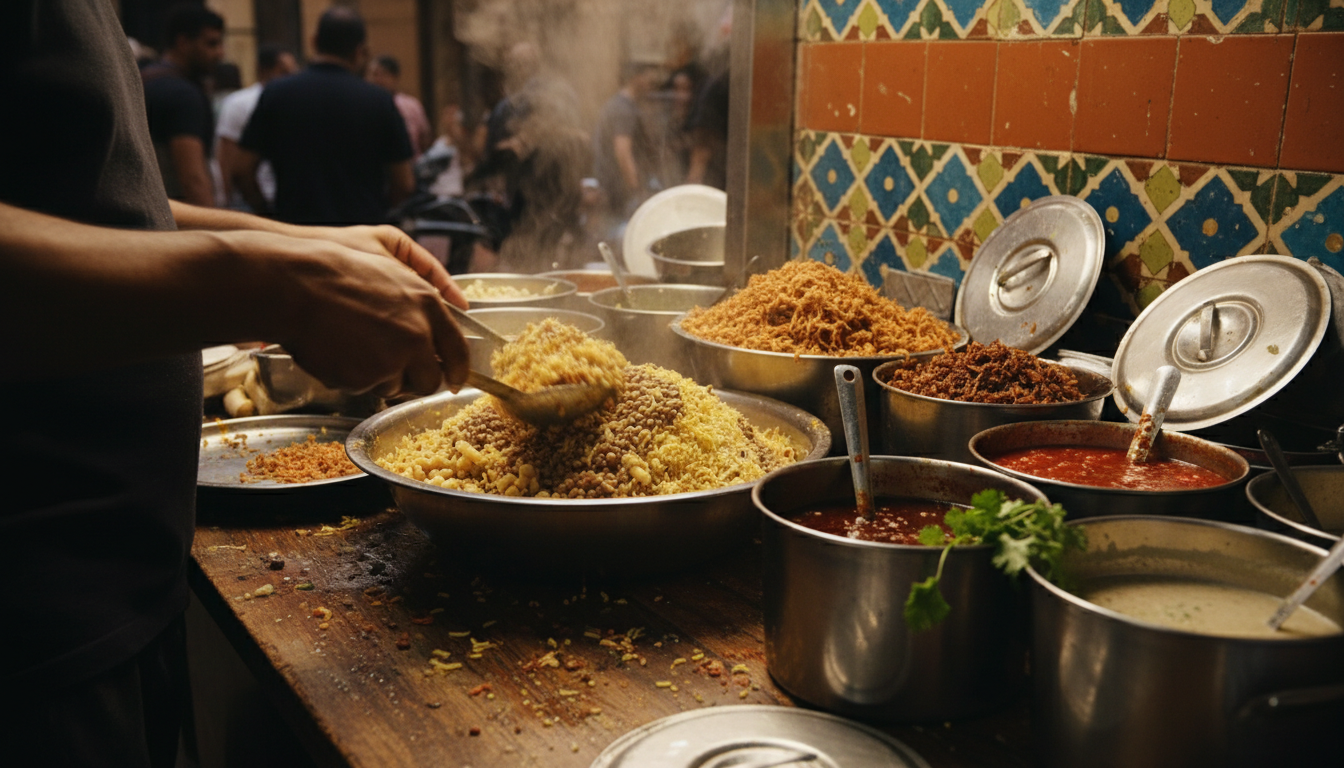 steaming bowl of koshari being assembled by hands at a street-side counter, with containers of crisp
Breakfast Like a Cairene
Forget hotel buffets. Egyptian breakfast is an event, and experiencing it locally is one of the best things you can do as a home swapper.
Foul (stewed fava beans) and ta'ameya (Egyptian falafel, made with fava beans instead of chickpeas) are the foundation. In most neighborhoods, there's a fuul cart that sets up around 7 AM. You'll see people grabbing sandwiches on their way to work—a fuul sandwich costs about 10 EGP ($0.33).
For a sit-down breakfast, find a local "fuul and ta'ameya" restaurant. Gad is a reliable chain, but the independent spots are better. Order the works: fuul, ta'ameya, eggs, cheese, and fresh baladi bread. With tea, you're looking at maybe 80 EGP ($2.60) for a feast.
My Zamalek host introduced me to her breakfast routine: fresh juice from the stand on the corner, then fuul from the cart by the metro station, eaten on a bench in the small park. Total cost: 25 EGP. Total satisfaction: immeasurable.
The Coffee House Tradition
Ahwas (traditional coffee houses) are Cairo's living rooms. Men—and increasingly women—sit for hours over tiny cups of Turkish coffee, playing backgammon, watching football, arguing about everything.
El Fishawi in Khan el-Khalili is the famous one, but it's become a tourist attraction. For an authentic ahwa experience, find the one in your neighborhood. Every residential area has several. Look for plastic chairs on the sidewalk, a TV showing football, and old men smoking shisha.
The etiquette: order "ahwa sada" (coffee without sugar), "ahwa mazboot" (medium sugar), or "ahwa ziyada" (extra sweet). A coffee costs 10-15 EGP. You can sit for hours—no one will rush you. If you want to play backgammon (tawla), just gesture at a board; someone will play with you.
I spent an entire afternoon at an ahwa in Dokki, not speaking more than ten words of Arabic, playing backgammon with a retired engineer who beat me seven times in a row. We communicated entirely through gestures and laughter. That's a local experience in Cairo that no tour can replicate.
Beyond the Pyramids: Historical Experiences Locals Actually Enjoy
Yes, see the pyramids. Obviously. But here's what Cairenes actually do when they want to connect with their city's history.
Islamic Cairo on Foot
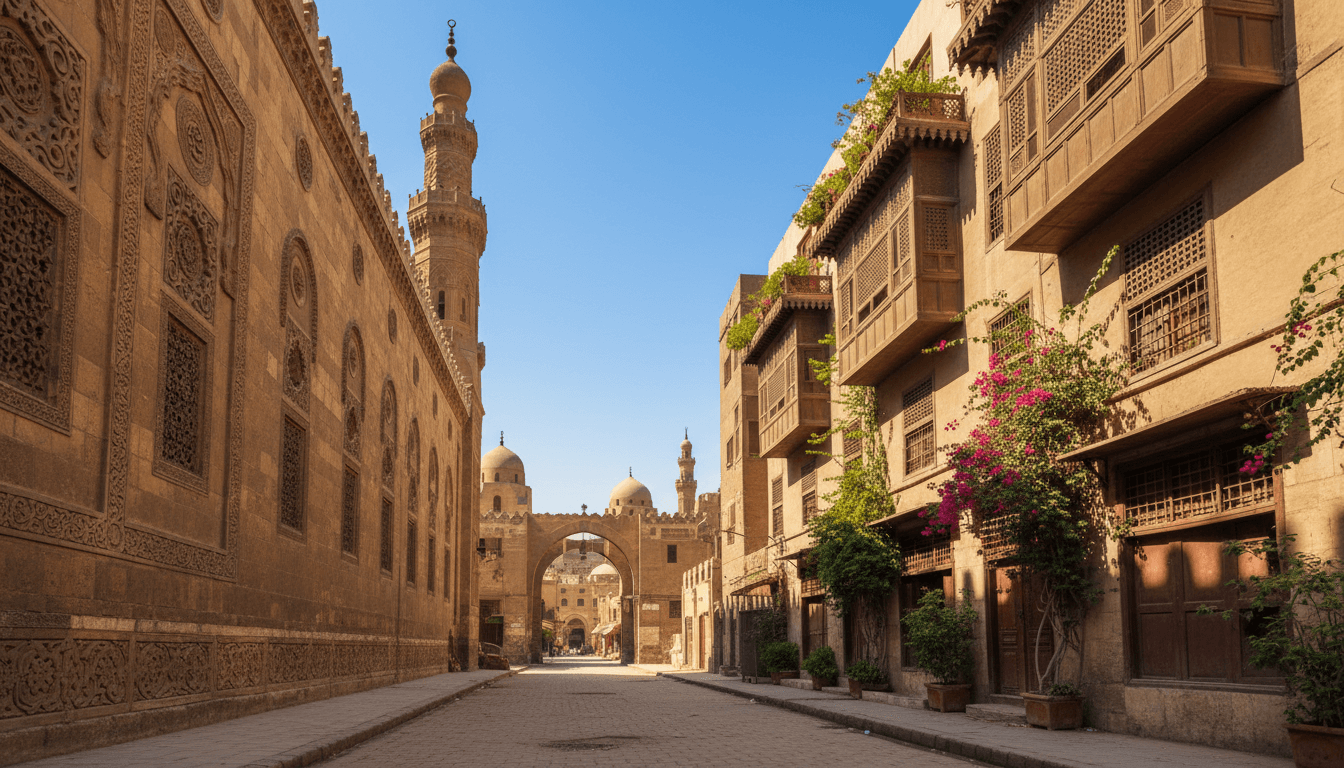
The medieval Islamic district is a UNESCO World Heritage site, but it's also a living, breathing neighborhood. The difference between visiting as a tourist and exploring as a temporary resident is huge.
Skip the guided tours. Enter through Bab Zuweila (one of the old city gates), climb the minaret for views, then just wander. The streets are a maze—you will get lost, and that's the point. You'll stumble into workshops where craftsmen make traditional lanterns, mosques where people are actually praying, and tea shops where no one speaks English.
Al-Azhar Mosque is the world's second-oldest university, and it's still functioning. You can enter (women should bring a headscarf), sit in the courtyard, and watch students studying. It's been happening here for over a thousand years.
The Muizz Street area is most magical at night when the shops are lit up and families are out walking. Come around 8 PM, get lost, eat whatever looks good.
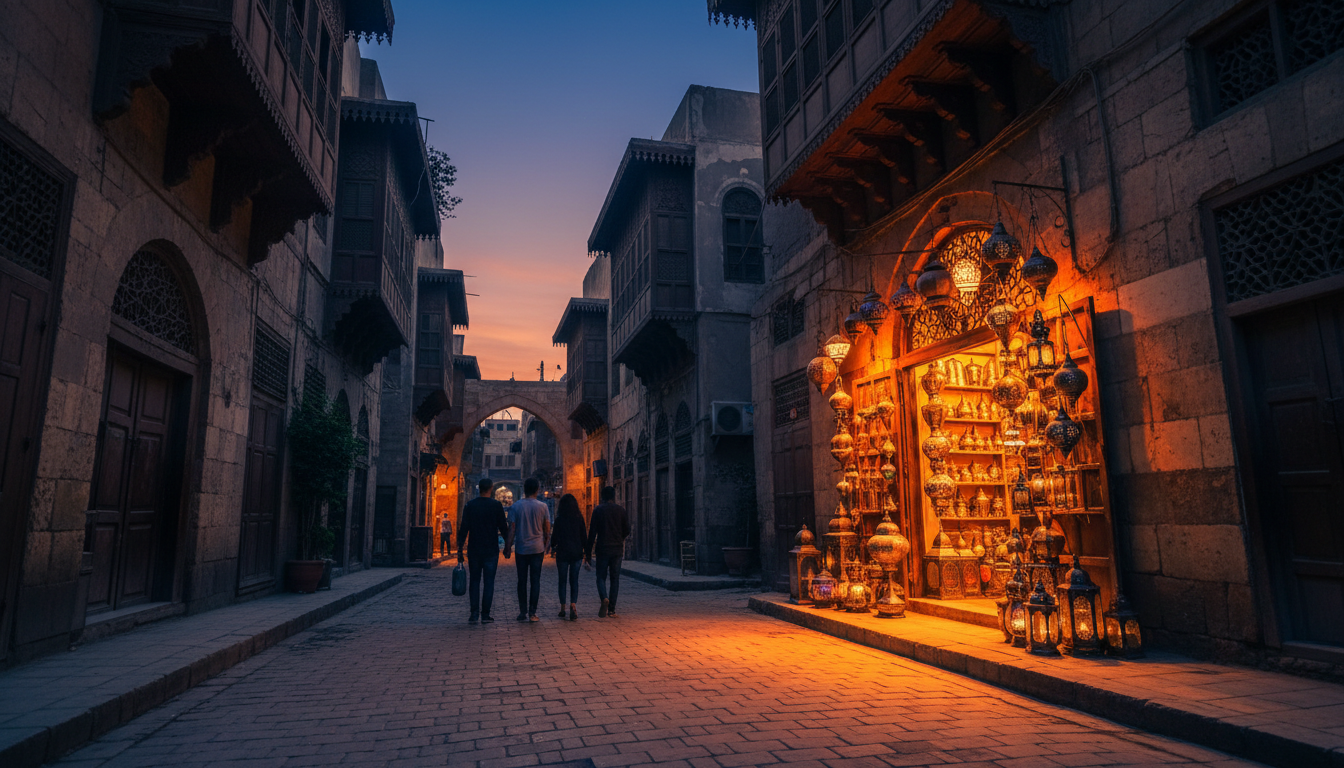 narrow lane in Islamic Cairo at dusk, ornate mashrabiya wooden screens on buildings, a single lit la
Coptic Cairo: The Other Ancient City
Cairo's Christian quarter predates Islamic Cairo by centuries. The Hanging Church, built on top of a Roman fortress, has been in continuous use since the 7th century. But what I loved most was the neighborhood around it—quieter, more residential, with old Coptic families who've lived there for generations.
The Coptic Museum is small but extraordinary—early Christian art that you won't see anywhere else. Then walk through the neighborhood, peek into churches (they're welcoming to visitors), and find the tiny café behind the Church of St. Sergius where local parishioners drink tea after services.
The City of the Dead: Respectful Exploration
This is sensitive, and I want to be clear: the City of the Dead is a functioning cemetery where people actually live among the tombs. It's not a tourist attraction. But if you approach it respectfully, it's one of Cairo's most profound experiences.
The area around the Mosque of Imam al-Shafi'i is the most accessible. Come on a Friday when families visit graves. You'll see picnics happening among the tombs—death and life intertwined in a way that's distinctly Egyptian. Don't take photos of people without permission. Dress conservatively. If someone invites you for tea, accept graciously.
I went with my host's neighbor, a woman who visits her grandmother's grave every Friday. She explained the traditions, introduced me to the caretaker families, and helped me understand that this isn't morbid—it's a living relationship with ancestors that Cairo has maintained for centuries.
Nile Experiences Beyond the Tourist Feluccas
The Nile defines Cairo, and locals have a completely different relationship with it than tourists do.
The Real Felucca Experience
Yes, take a felucca ride—but not from the tourist docks near the major hotels. Walk south along the Corniche in Maadi or Giza until you find the local boats. The captains there aren't performing for tourists; they're just doing their job.
Negotiate a price (200-300 EGP for an hour is fair, about $6.50-$10), bring your own drinks and snacks, and go at sunset. The difference in atmosphere is remarkable—less sales pitch, more genuine sailing.
Even better: ask your home swap host if they know a felucca captain. Layla's family has used the same one for decades. He took me out for 150 EGP, shared his tea, and told me stories about how the river has changed over his 40 years of sailing it.
Riverside Cafés and Restaurants
The tourist boats on the Nile are floating buffets with belly dancers. Skip them. Find the riverside cafés where Cairenes actually hang out instead.
Sequoia in Zamalek is popular with young professionals—it's a massive outdoor space right on the water. Not cheap by Cairo standards (expect 300-400 EGP per person, around $10-13), but the setting is spectacular and the crowd is entirely local.
For something more casual, the string of cafés along the Corniche in Maadi offers shisha, tea, and Nile views for a fraction of the price. Grab a table, order a mint tea (15 EGP), and watch the boats go by.
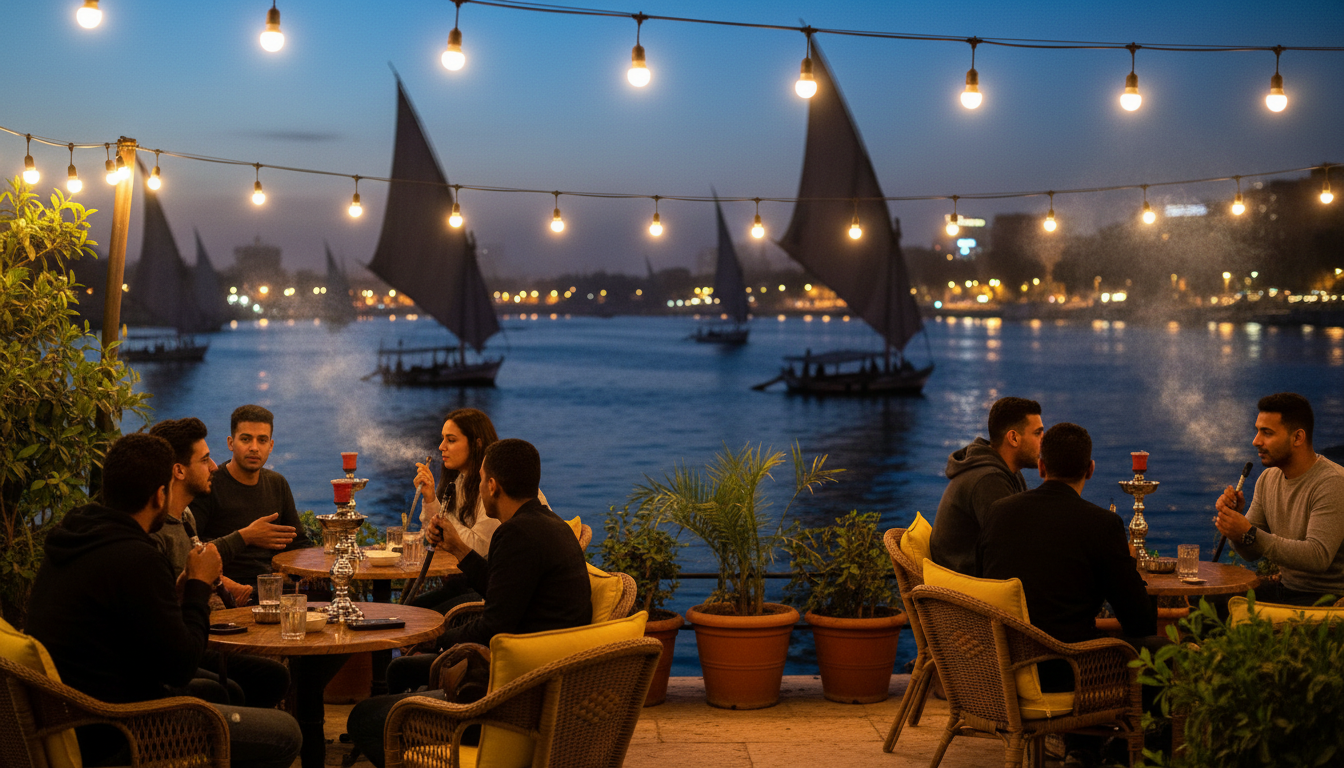 evening scene at a Nile-side caf in Maadi, strings of lights, young Egyptians at tables with shisha
Market Experiences: Shopping Like a Local
Khan el-Khalili is famous, and it's worth visiting—but it's also a tourist market with tourist prices. For authentic local experiences in Cairo, you need to find the markets where Cairenes actually shop.
Souq el-Gomaa (Friday Market)
This sprawling flea market in the City of the Dead area is chaos incarnate—and absolutely fascinating. Egyptians come here to buy everything from car parts to antique furniture to live chickens. It's not curated or pretty, but it's real.
Go early (it starts at dawn), wear clothes you don't mind getting dusty, and bring cash in small bills. Bargaining is expected and aggressive. I found a beautiful vintage brass lamp for 100 EGP ($3.30) after starting at 500.
Fair warning: this is not for the faint of heart. It's crowded, loud, and overwhelming. But if you want to see Cairo's commercial soul, this is it.
Neighborhood Souqs
Every Cairo neighborhood has its own market street, and these are where you'll find the best local experiences for everyday shopping.
In Zamalek, the small market on Mohammed Mazhar Street has fruit vendors, a butcher, and a spice shop that's been family-run for three generations. In Maadi, the Road 9 market on Fridays is perfect for browsing.
The key is to go regularly. By my second week, the fruit vendor in Zamalek was saving me the good mangoes and refusing to let me overpay. That's not something that happens to tourists.
Evening and Nightlife: What Cairenes Actually Do After Dark
Cairo comes alive at night. The heat breaks, families come out, and the city transforms.
The Corniche After Sunset
This is the simplest and best evening activity: walk along the Nile Corniche after sunset. Families are picnicking on the grass, couples are strolling, vendors are selling everything from corn on the cob to cotton candy.
In Zamalek, start at the Marriott end and walk north. In Maadi, the stretch near the yacht club is popular with families. In Giza, the Corniche near the zoo has the best people-watching.
Bring some cash for snacks—roasted sweet potatoes (batata), corn (dora), and lupini beans (termis) are the traditional Corniche foods. A bag of termis costs 10 EGP and is strangely addictive.
Live Music and Cultural Events
Cairo has a thriving arts scene that tourists rarely discover. The Cairo Opera House in Zamalek hosts everything from classical concerts to contemporary dance—tickets often cost less than 200 EGP ($6.50).
For something more casual, the Cairo Jazz Club in Agouza has live music most nights. It's where Cairo's creative class hangs out, and the vibe is more Brooklyn than Middle East. Cover charges vary but rarely exceed 150 EGP.
El Sawy Culturewheel, built under a bridge in Zamalek, is a cultural center with free or cheap events almost every night—poetry readings, art exhibitions, indie concerts. Check their Facebook page for listings.
Ramadan Nights (If You're Lucky Enough to Visit)
If your home swap falls during Ramadan, you're in for something special. The city transforms after iftar (the evening meal breaking the fast).
The streets of Islamic Cairo become a festival—lanterns everywhere, special Ramadan foods, families out until dawn. The atmosphere is impossible to describe and impossible to forget.
Many homes host iftar gatherings, and if your swap host invites you to one, say yes. It's one of the most intimate local experiences in Cairo you can have—breaking fast with a family, eating traditional foods, experiencing the spiritual rhythm of the month.
Practical Tips for Home Swappers in Cairo
Getting Around Like a Local
The Cairo Metro is excellent, cheap (8 EGP per ride, about $0.26), and the best way to cross the city. The women-only cars (first and second cars of each train) are a comfortable option for solo female travelers.
Uber and Careem work well and are much easier than negotiating with taxi drivers. A ride across town rarely costs more than 100 EGP ($3.30).
For short distances, walk. Cairo is more walkable than its reputation suggests, especially in residential neighborhoods. Just watch out for the sidewalks—they're often blocked by parked cars or vendors.
Language and Communication
English is widely spoken in tourist areas but less so in residential neighborhoods. Learning a few Arabic phrases goes incredibly far. "Shukran" (thank you)—use constantly. "Bekam?" (how much?)—essential for shopping. "La, shukran" (no, thank you)—for persistent vendors. "El hisab, law samaht" (the bill, please)—in restaurants.
Cairenes are genuinely delighted when foreigners attempt Arabic. Even terrible pronunciation gets warm responses.
Safety and Comfort
Cairo is safer than its chaotic appearance suggests. Violent crime against tourists is rare. The main annoyances are persistent touts and aggressive vendors—a firm "la, shukran" usually works.
For women: dress modestly (shoulders and knees covered) in traditional areas. In Zamalek and Maadi, standards are more relaxed. Street harassment exists but is mostly verbal; walking with purpose and ignoring comments is the standard response.
The heat is serious from May to September. Plan outdoor activities for early morning or evening. Drink more water than you think you need.
Making Connections: The Social Side of Home Swapping
The best local experiences in Cairo often come through people, not places. Home swapping puts you in a unique position to make genuine connections.
Your swap host is your first resource. Before you arrive, ask them for recommendations—not just tourist sites, but their actual routines. Where do they get coffee? What's their favorite neighborhood walk? Most hosts are thrilled to share.
SwappaHome's messaging system makes this easy—I had a two-week email exchange with Layla before arriving, and by the time I got to her apartment, I already had a list of her favorite spots and an invitation to her cousin's birthday dinner.
The neighbors matter too. Introduce yourself to the bawab (doorman)—he's the building's social hub and can help with everything from finding a good laundry service to recommending a doctor. A small tip (50-100 EGP) when you arrive establishes goodwill.
What to Leave Behind, What to Bring Home
After three weeks living in Cairo, I came home with more than souvenirs. I learned to slow down—Cairo's pace is different, more human-scaled despite the chaos. I learned that hospitality isn't just a concept but a practice, embedded in daily interactions.
The spices from the Zamalek market ran out after a few months. The brass lamp from the Friday market still sits on my desk. But what I really brought home was a different way of seeing cities—not as collections of attractions, but as places where people actually live.
That's what home swapping offers that no hotel can match. You don't visit Cairo; you temporarily live there. You have a neighborhood, a routine, a favorite coffee cart. When you leave, you leave as someone who knows the city from the inside.
If you're considering a home swap in Cairo, do it. The city is challenging, yes—loud, chaotic, occasionally overwhelming. But it's also warm, fascinating, and endlessly surprising. From the inside of a Zamalek apartment, watching the Nile turn gold at sunset while the call to prayer echoes across the water, it might just be the most magical city in the world.
Frequently Asked Questions
Is Cairo safe for home swappers and solo travelers?
Cairo is generally safe for travelers, including solo visitors. Violent crime against tourists is rare, and residential neighborhoods like Zamalek, Maadi, and Heliopolis feel secure. The main challenges are traffic, persistent vendors, and occasional street harassment (mostly verbal). Using common sense, dressing modestly in traditional areas, and staying aware of your surroundings will serve you well. Many home swappers, including solo women, have positive experiences living in Cairo neighborhoods.
What's the best time of year to do a home swap in Cairo?
The ideal months for local experiences in Cairo are October through April when temperatures are comfortable (15-25°C/60-77°F). Summer months (May-September) bring extreme heat often exceeding 40°C/104°F, making outdoor exploration difficult. Ramadan offers unique cultural experiences but requires flexibility around fasting schedules. Winter months (December-February) are popular, so book your swap early through platforms like SwappaHome.
How much money do I need daily for local experiences in Cairo?
Cairo is remarkably affordable for local experiences. Budget $15-25 USD daily for food, transport, and activities when living like a local. Street food meals cost $1-3, metro rides $0.26, and Uber trips across town $3-5. Coffee house visits run $0.50-1, and museum entries average $3-6. Your biggest savings come from home swapping itself—avoiding Cairo's $100-200/night hotel costs while gaining access to residential neighborhoods.
Which Cairo neighborhood is best for first-time home swappers?
Zamalek is ideal for first-time home swappers seeking local experiences in Cairo. This island neighborhood offers tree-lined streets, excellent cafés, walkable layout, and a mix of Egyptian and international residents. It's safe, well-connected by metro, and close to major attractions while maintaining authentic neighborhood character. Maadi suits families with its suburban feel, while Heliopolis appeals to those wanting deeper immersion in middle-class Egyptian life.
Do I need to speak Arabic to enjoy local Cairo experiences?
No, but basic Arabic phrases dramatically improve your local experiences in Cairo. English is common in tourist areas and educated circles, but residential neighborhoods have limited English speakers. Learn "shukran" (thank you), "bekam" (how much), and "la shukran" (no thank you). Cairenes warmly appreciate any Arabic attempts. Translation apps help, and your home swap host can teach you essential phrases for their specific neighborhood.

Published by
SwappaHome
SwappaHome Editorial Team
Home Exchange & Slow Travel Editorial
The SwappaHome Editorial Team brings together travel research, home-exchange community insights, and platform data to produce practical guides for first-time and experienced home swappers. Every article cites real platforms, current market rates, and verifiable city-level facts so readers can make informed decisions without guessing.
Ready to try home swapping?
Join SwappaHome and start traveling by exchanging homes. Get 7 free credits when you sign up!
Related articles
Bachelor and Bachelorette Parties in Singapore: The Complete Home Swap Group Guide for 2026
Planning a bachelor or bachelorette party in Singapore? Discover how home swapping lets groups of 6-12 stay together in luxury condos, saving thousands while partying in Marina Bay.
Cycling in Lisbon: 7 Home Swap Bike Tour Itineraries for Every Rider
Discover the best cycling routes in Lisbon with these home swap bike tour itineraries—from waterfront paths to hilltop adventures, all starting from your borrowed home.
Graduation Trip to Barcelona: How Home Swapping Gives New Graduates the Ultimate Celebration
Planning a graduation trip to Barcelona? Discover how home swapping lets new graduates explore Spain's most vibrant city without the hostel crowds or hotel costs.