Home Swapping in Cairo: The 7 Best Neighborhoods for an Authentic Egyptian Stay

SwappaHome Editorial Team
Home Exchange & Slow Travel Editorial
Discover the best Cairo neighborhoods for home swapping—from historic Zamalek to vibrant Downtown. Local insights, safety tips, and what each area offers travelers.
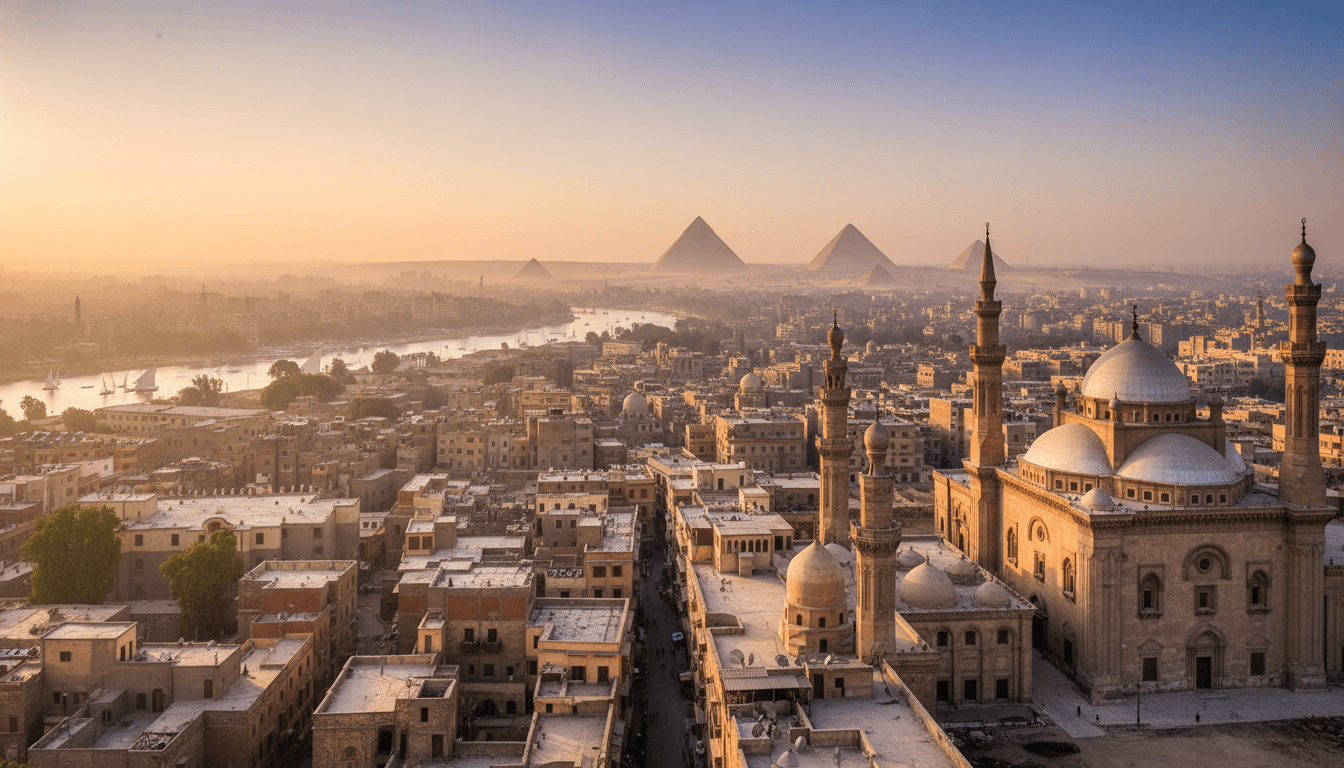
The call to prayer echoed across the Nile just as the sun hit the minarets, turning everything gold. I was standing on a balcony in Zamalek, coffee in hand, watching feluccas drift past—and I remember thinking: this is why I home swap.
That Cairo trip changed how I thought about Egypt entirely. I'd been nervous, honestly. The news, the chaos, the unfamiliar. But staying in a real apartment, in a real neighborhood, with a local's recommendations scribbled on a napkin? It transformed everything. Three swaps later, I'm convinced that home swapping in Cairo is one of the most underrated ways to experience this extraordinary city.
The neighborhood you choose matters more here than almost anywhere else I've traveled. Cairo is massive—over 20 million people—and each district has its own personality, pace, and quirks. Pick the wrong one, and you'll spend half your trip stuck in traffic. Pick the right one, and you'll have the pyramids, the bazaars, and the best koshari of your life all within reach.
 Early morning view from a Zamalek apartment balcony overlooking the Nile River, with feluccas sailin
Here's everything I've learned about Cairo's best neighborhoods for home exchange—where to stay, what to expect, and which areas match your travel style.
Why Home Swapping in Cairo Makes So Much Sense
Before I get into neighborhoods, let me explain why Cairo is particularly well-suited for home exchange.
The economics are hard to ignore. A decent hotel in a safe Cairo neighborhood runs $80-150 USD per night. Airbnbs in good areas? Similar range, sometimes more. But with SwappaHome's credit system—where you earn 1 credit per night hosting and spend 1 credit per night staying—you can spend two weeks in a gorgeous Zamalek apartment for zero accommodation cost. I've done the math on my Cairo trips: roughly $2,400 saved across three visits.
Then there's the experience gap. Cairo's hotels tend to be either luxury bubbles or budget options in touristy zones. Neither gives you access to daily Egyptian life—the neighborhood bakeries, the corner ahwas where men play backgammon for hours, the rooftop views that don't cost $30 for a cocktail. When you stay in someone's home, you inherit their neighborhood.
And this surprised me: Egyptians are incredibly hospitable hosts. Every swap I've done, I've received detailed notes, WhatsApp introductions to neighbors, and recommendations that never made it into any guidebook. One host literally arranged for her building's bawab to help me navigate my first taxi negotiation.
Zamalek: The Best Cairo Neighborhood for First-Time Home Swappers
If you're doing your first home swap in Cairo, start here. I'm not even going to pretend to be objective—Zamalek is where I always stay, and where I'd send my own mother.
Zamalek is an island in the Nile, which gives it a completely different feel from mainland Cairo. The streets are tree-lined (rare in Cairo), the traffic is manageable (rarer still), and there's a genuine walkability that doesn't exist in most of the city. You can stroll to cafés, galleries, and restaurants without constantly dodging cars or breathing exhaust.
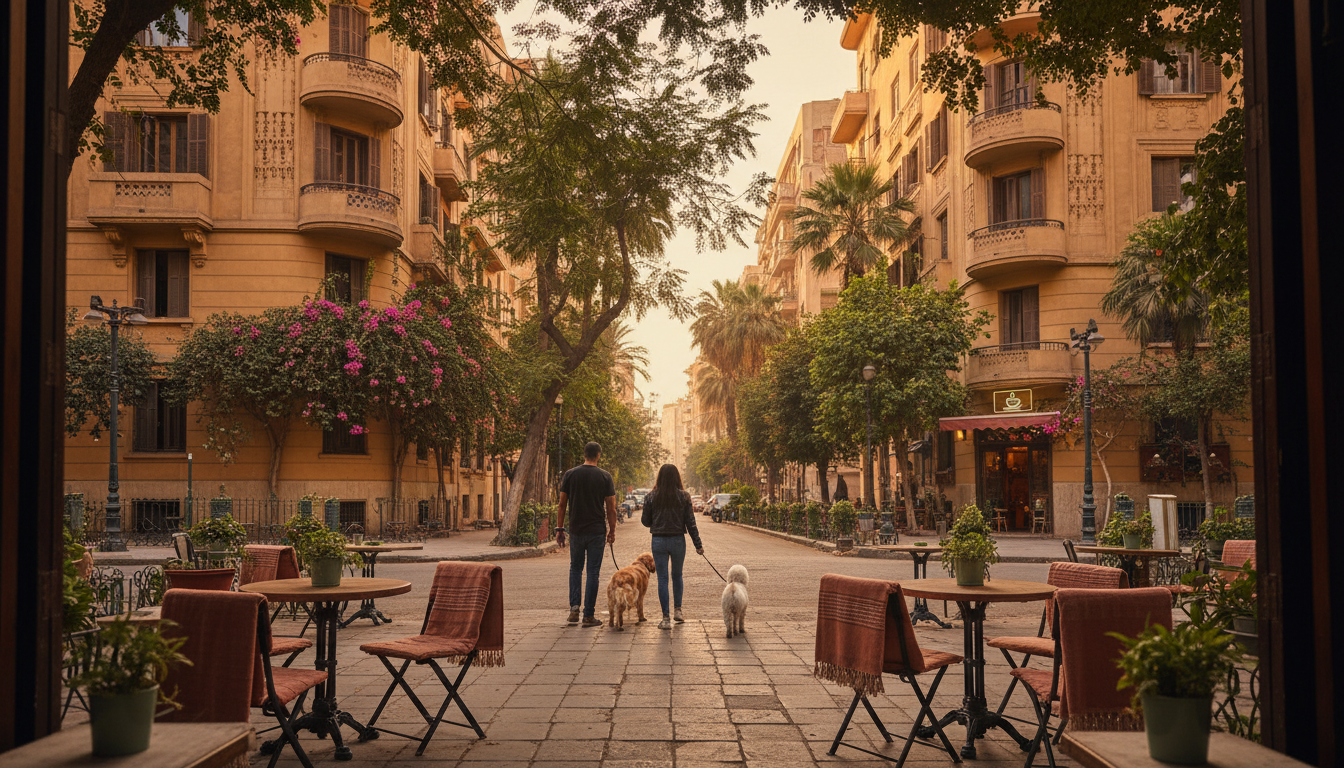 Leafy residential street in Zamalek with Art Deco apartment buildings, a small caf with outdoor seat
The architecture here is stunning—crumbling Art Deco mansions next to renovated belle époque buildings. Many homes available for swap are in these older buildings, which means high ceilings, wooden floors, and balconies with Nile views. My first Zamalek apartment had a living room bigger than my entire San Francisco studio.
What Zamalek Offers Home Swappers
The practical stuff: You're 15 minutes by Uber to the Egyptian Museum and Downtown, 30-40 minutes to the Pyramids (traffic depending), and walking distance to some of Cairo's best restaurants. Sequoia, right on the Nile's northern tip, is perfect for sunset drinks. Abu El Sid serves traditional Egyptian food in a gorgeous setting. Zooba does elevated street food if you want koshari and ful without the street-side experience.
Grocery shopping is easy—there's a Seoudi supermarket and several smaller shops. The Cairo Opera House and its grounds are a peaceful escape. And the 26th of July corridor gives you quick access across the city.
Typical home swap listings in Zamalek: 2-3 bedroom apartments, often with Nile views, ranging from modest to genuinely luxurious. Expect older buildings with character (and sometimes quirky plumbing—pack patience).
Who it's best for: First-timers, families, anyone who values walkability and safety, travelers who want a home base for day trips.
Maadi: Cairo's Greenest Neighborhood for Home Exchange
Maadi is where Cairo's expat community has lived for decades, and it shows. This southern suburb feels almost suburban—wide streets, actual gardens, international schools, and a pace that's noticeably slower than central Cairo.
I stayed in Maadi during my second Cairo swap. The contrast with Zamalek was striking. Where Zamalek feels European-Egyptian, Maadi feels like a green oasis that could be anywhere. That's both its strength and weakness.
The Maadi Home Swap Experience
The homes here tend to be larger—villas with gardens, spacious apartments in newer buildings. If you're traveling with kids or want outdoor space, Maadi delivers. Several SwappaHome members in Maadi have homes with actual backyards, which is almost unheard of in Cairo.
The neighborhood has excellent restaurants (I still dream about the Thai food at Bua Khao) and genuine grocery stores with imported goods. Road 9 is the main commercial strip—cafés, shops, pharmacies, everything you need.
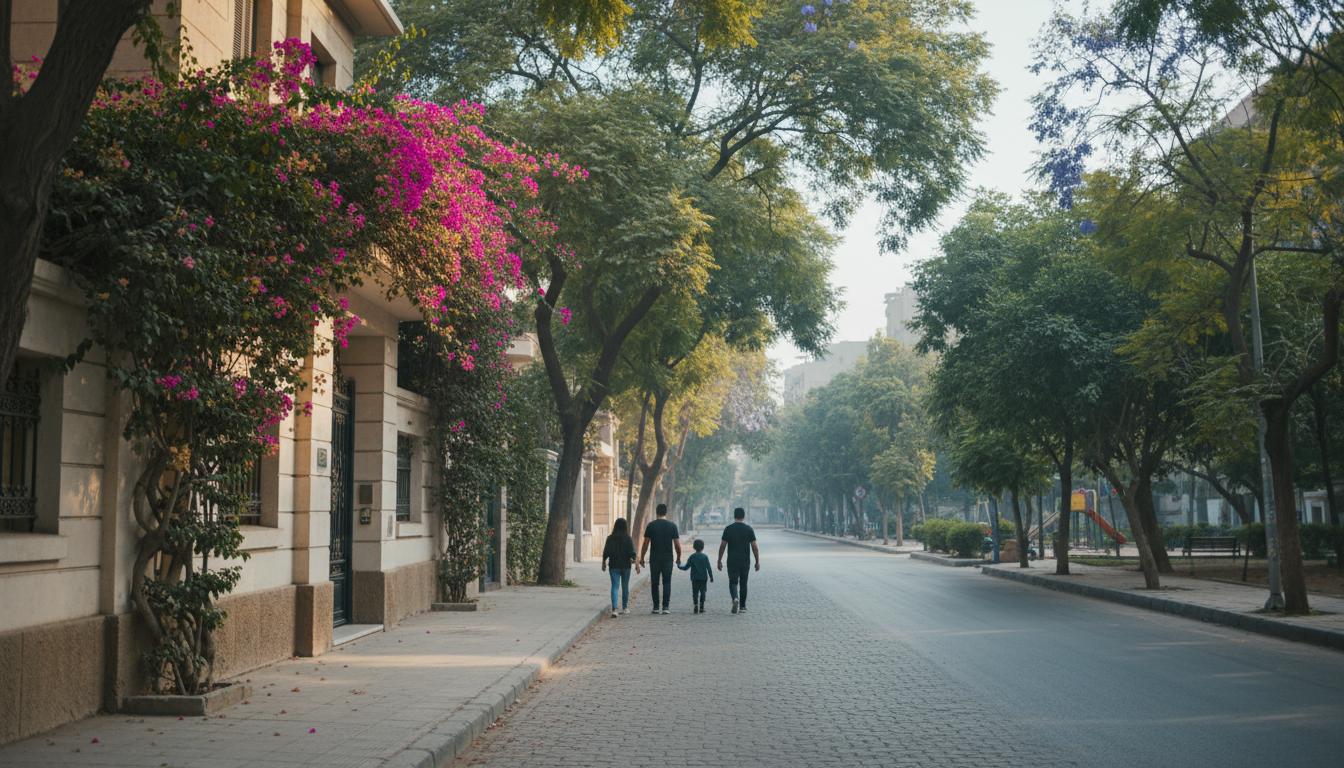 Tree-lined residential street in Maadi with a villa entrance, bougainvillea climbing the walls, and
The downside? Maadi is far from central Cairo attractions. The Pyramids are 45-60 minutes away. Downtown is 30-40 minutes. You'll need to Uber everywhere, and while rides are cheap (typically $3-6 USD to central Cairo), the commute time adds up.
Who it's best for: Families with kids, longer stays (2+ weeks), travelers who prioritize space and quiet over proximity, anyone working remotely who needs reliable calm.
Downtown Cairo: For the Adventurous Home Swapper
Real talk: Downtown Cairo is chaotic. It's loud, crowded, polluted, and overwhelming. It's also absolutely magnificent if you want the raw, unfiltered Cairo experience.
This is where the Egyptian revolution happened. It's where the grand colonial-era buildings are slowly crumbling. It's where you'll find the best street food, the most authentic ahwas, and architecture that makes you want to weep at what's being lost to neglect.
Home Swapping in Downtown Cairo
The swap options here tend to be apartments in historic buildings—think 15-foot ceilings, ornate moldings, and windows that rattle when trucks pass. The buildings often look rough from outside but hide renovated gems inside. I know one member whose Downtown apartment has original 1920s tilework and a rooftop terrace overlooking the Egyptian Museum.
You're walking distance to everything central: Tahrir Square, the Egyptian Museum (until it fully moves to the Grand Egyptian Museum in Giza), the old book market, countless galleries and cultural spaces. The Townhouse Gallery is a must. Café Riche has been serving coffee since 1908.
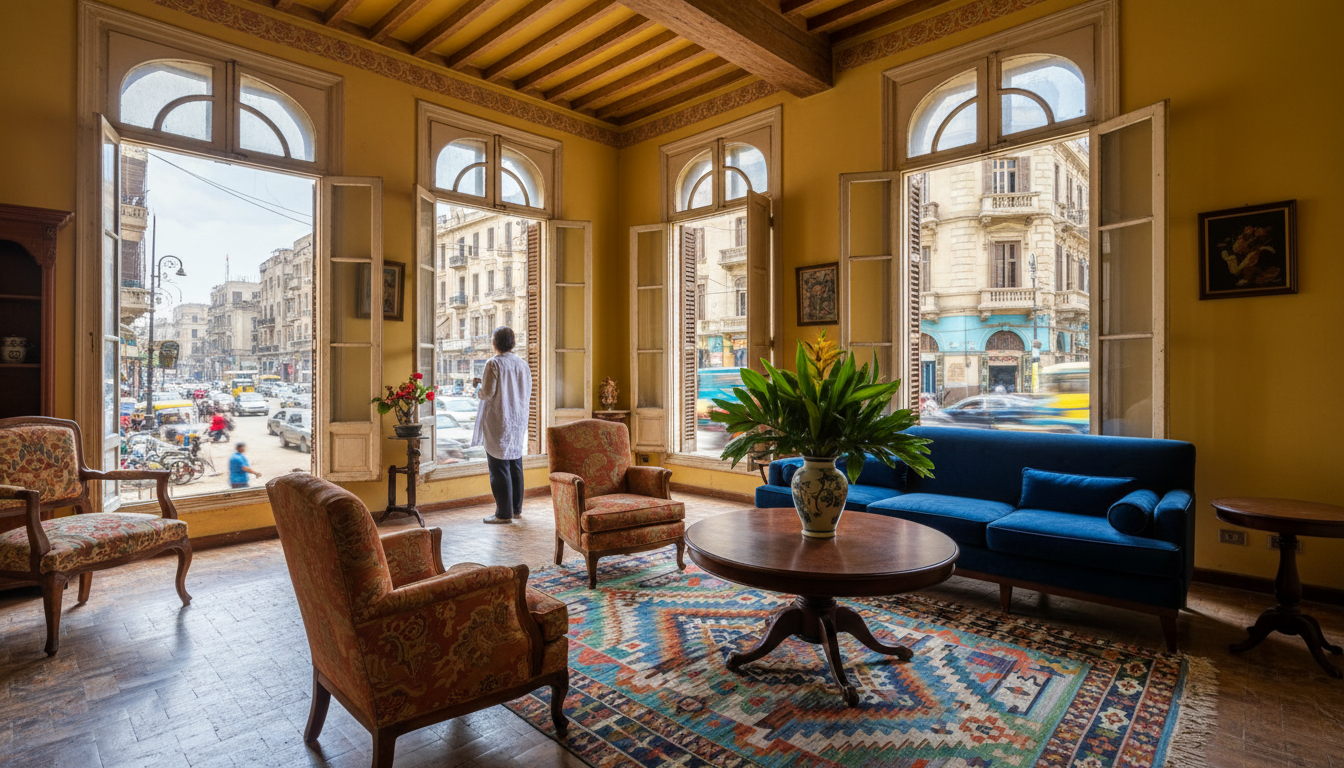 Interior of a renovated Downtown Cairo apartment with soaring ceilings, vintage furniture, and tall
But—and this is important—Downtown requires a higher tolerance for urban intensity. The streets are clogged with cars. The sidewalks are often blocked. The noise doesn't stop. Air quality is genuinely poor. If you're sensitive to any of this, Zamalek or Maadi will serve you better.
Who it's best for: Urban adventurers, architecture lovers, solo travelers comfortable with chaos, anyone who wants to feel the city's heartbeat.
Garden City: The Quiet Historic Gem
Garden City might be Cairo's best-kept secret for home swapping. This small neighborhood, tucked between Downtown and the Nile, was designed by British urban planners in the early 1900s with curving streets meant to discourage through traffic. It worked—Garden City is remarkably quiet despite being completely central.
The homes here are embassy residences, old mansions, and elegant apartments. Many are owned by families who've lived here for generations, which means the swap options tend toward the refined. Expect antiques, libraries, and that particular Egyptian-European aesthetic that defined upper-class Cairo for a century.
What Makes Garden City Special
Location is the killer feature. You're walking distance to the Egyptian Museum, the Nile Corniche, and Downtown's chaos—but you can retreat to tree-lined streets that feel almost Mediterranean. The Four Seasons is here (useful for its restaurants and Nile-side bar even if you're not staying), and the neighborhood has a genuine residential calm.
The downsides: Fewer restaurants and shops than Zamalek, and the swap options are limited since it's a small area. When listings appear, they go fast.
Who it's best for: History buffs, travelers who want central location with residential peace, couples seeking a romantic base.
Heliopolis: Old-World Charm Away from the Center
Heliopolis (Masr El-Gedida) is Cairo's original planned suburb, built in the early 1900s as a luxury development. The architecture here is unlike anywhere else in Egypt—Belgian-designed buildings with Moorish influences, wide boulevards, and the stunning Baron Empain Palace (recently restored and open to visitors).
Heliopolis isn't where most tourists stay, and that's part of its appeal for home swappers. You'll be in a real Egyptian neighborhood, surrounded by families and daily life, with excellent local restaurants and none of the tourist markup.
The Heliopolis Home Swap Experience
The apartments here are often spacious and well-maintained, in buildings that have genuine architectural interest. You're near the airport (20-30 minutes), which is convenient, but far from the Pyramids and central Cairo (45-60 minutes to either).
Korba, the neighborhood's heart, has a pedestrianized square with cafés and a cinema. The vibe is distinctly local—you'll see families out for evening walks, kids playing, life happening without tourist awareness.
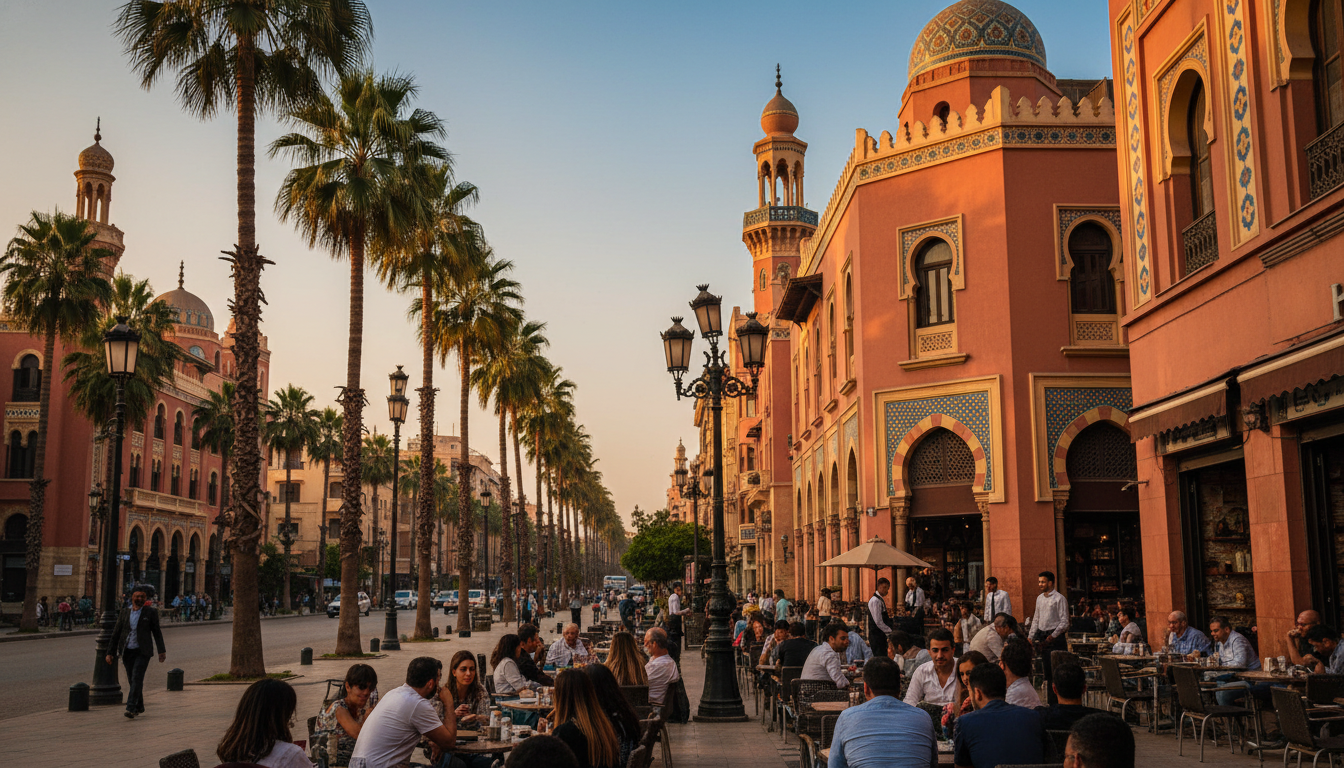 The distinctive Moorish-Belgian architecture of Heliopolis at golden hour, showing ornate building f
Who it's best for: Travelers seeking authentic local life, architecture enthusiasts, anyone with early flights, longer stays where central location matters less.
Giza: Staying Near the Pyramids Through Home Exchange
Yes, you can home swap in Giza—and yes, waking up with a view of the Pyramids is exactly as magical as it sounds.
Giza is technically a separate city, but it's functionally part of greater Cairo. The area near the Pyramids has developed significantly, with homes and apartments that cater to the obvious draw. Several SwappaHome members have properties in the Haram district with actual pyramid views from their windows or rooftops.
What to Expect from Giza Home Swaps
The experience varies wildly depending on exact location. Properties right near the Pyramids entrance can feel touristy—you'll deal with touts and vendors. Properties slightly further back, in residential Giza, offer the view without the hassle.
The major trade-off: Giza is far from central Cairo. Traffic across the river is brutal. If you want to visit Downtown, the Egyptian Museum, or Islamic Cairo, you're looking at 45-90 minute commutes depending on time of day. Many travelers do a split stay—a few nights in Giza for the Pyramids experience, then move to Zamalek or Downtown for city exploration.
Who it's best for: Pyramid-obsessed travelers (no judgment—I am one), photographers chasing golden hour shots, anyone doing a split-stay Cairo trip.
Dokki and Mohandiseen: The Practical Middle Ground
These adjacent neighborhoods on the west bank of the Nile don't have Zamalek's charm or Maadi's green space, but they offer something valuable: affordability and accessibility.
Dokki and Mohandiseen are middle-class Egyptian neighborhoods—busy, commercial, and very much part of real Cairo life. The swap options here tend to be modest apartments in newer buildings, priced (in credit terms) the same as everywhere else but often larger than what you'd find in Zamalek.
Why Consider Dokki or Mohandiseen
You're close to both central Cairo and Giza without being stuck in either's traffic patterns. The neighborhoods have everything you need—supermarkets, pharmacies, restaurants—at local prices. And you'll experience Cairo as Cairenes actually live it, without the expat bubble or tourist polish.
The downsides: Less walkable than Zamalek, less green than Maadi, less architecturally interesting than Downtown. These are practical neighborhoods, not romantic ones.
Who it's best for: Budget-conscious travelers, those planning extensive day trips, anyone who wants maximum space for their swap.
How to Find the Best Cairo Home Swap for Your Trip
Now that you know the neighborhoods, here's how to actually secure a great swap.
Start Your Search Early
Cairo isn't as saturated with home swap options as European cities. Start browsing SwappaHome listings 3-4 months before your trip. Save favorites, message hosts with questions, and be flexible on exact dates if possible.
Communicate Thoroughly
Egyptian hosts tend to be incredibly responsive and helpful, but clear communication matters. Ask about air conditioning (essential from April-October), hot water reliability, elevator status (many older buildings have lifts that... sometimes work), neighborhood noise levels, and bawab arrangements—they're helpful but expect small tips.
Verify the Location Precisely
Cairo addresses can be confusing. Ask for a Google Maps pin and look at the actual building on Street View if available. Confirm which floor the apartment is on. Fifth-floor walkups exist and are not for everyone.
Consider a Split Stay
For trips longer than a week, I often recommend splitting between two neighborhoods. A few nights in Giza for the Pyramids, then move to Zamalek for city exploration. Or start in Maadi for jet-lag recovery, then shift to Downtown for intensive sightseeing. SwappaHome's credit system makes this easy—you're spending 1 credit per night regardless of location.
Safety and Practical Tips for Cairo Home Swapping
I get asked about safety constantly, so let me be direct: Cairo is generally safe for tourists, but it requires street smarts.
The neighborhoods I've listed are all considered safe for visitors. Zamalek, Maadi, and Garden City are particularly low-stress. Downtown and Giza require more awareness—petty theft can happen, and solo women will get more attention.
For home swap-specific safety, I recommend getting your own travel insurance that covers accommodation issues (SwappaHome connects members but doesn't provide coverage for damages or disputes), using SwappaHome's messaging system to build rapport with hosts before committing, checking reviews from previous guests thoroughly, and asking hosts about building security and bawab presence.
A few practical essentials: Uber works perfectly in Cairo and is far less stressful than taxis—budget $3-8 USD for most rides. Download Google Maps offline since data isn't always reliable. Carry small bills for tips and small purchases (10-50 EGP notes). Summer is brutal—confirm A/C before booking anything between June and August. And remember that Friday is the weekend, so many things close or operate on reduced hours.
Making the Most of Your Cairo Home Swap
The magic of home swapping in Cairo isn't just the free accommodation—it's the access.
When you stay in a local's apartment, you get their Cairo. Their coffee shop. Their fruit vendor. Their shortcut to the metro. I've discovered restaurants that don't appear in any guidebook because my hosts wrote them on Post-it notes. I've been invited to a neighbor's iftar dinner during Ramadan. I've learned which bakery makes the best feteer at 2am.
This isn't something hotels can offer. It's not even something most Airbnbs offer, since many are investor-owned and impersonal.
Home exchange creates connection. And in Cairo—a city that can feel overwhelming and impenetrable—that connection transforms everything.
If you're considering Cairo, I'd say: do it. Pick your neighborhood based on what matters to you—walkability, pyramid views, local immersion, family space. Start browsing SwappaHome's Cairo listings. Message some hosts. Ask questions.
And when you're standing on that balcony, watching the sun hit the minarets while the call to prayer echoes across the Nile, you'll understand exactly why this city gets under your skin.
Frequently Asked Questions
Is home swapping in Cairo safe for tourists?
Yes, home swapping in Cairo is safe when you choose reputable neighborhoods like Zamalek, Maadi, or Garden City. Use SwappaHome's review system to verify hosts, communicate thoroughly before your trip, and consider getting your own travel insurance for extra peace of mind. The platform's member verification helps ensure you're connecting with legitimate hosts.
How much can I save with home exchange in Cairo vs hotels?
A quality hotel in a safe Cairo neighborhood costs $80-150 USD per night. Over a two-week trip, that's $1,120-2,100 USD. With SwappaHome's credit system (1 credit per night, 7 free credits for new members), your accommodation cost is effectively zero. Most travelers save $1,500-2,500 USD on a typical Cairo trip.
Which Cairo neighborhood is best for first-time visitors?
Zamalek is the best Cairo neighborhood for first-time home swappers. It's safe, walkable, tree-lined, and centrally located on a Nile island. You're 15 minutes from major attractions, surrounded by excellent restaurants, and staying in a neighborhood that feels manageable while still being authentically Egyptian.
Can I find home swaps near the Pyramids of Giza?
Yes, several SwappaHome members offer homes in Giza with actual pyramid views. These properties are perfect for photographers and Pyramid-focused trips. However, Giza is far from central Cairo (45-90 minute commutes), so many travelers do split stays—a few nights near the Pyramids, then relocate to Zamalek or Downtown.
What's the best time of year for a Cairo home swap?
October through April offers the most comfortable weather for Cairo home swapping, with temperatures between 60-80°F (15-27°C). Summer months (June-August) are extremely hot, often exceeding 100°F (38°C), making reliable air conditioning essential. Confirm A/C availability with your host before booking summer stays.

Published by
SwappaHome
SwappaHome Editorial Team
Home Exchange & Slow Travel Editorial
The SwappaHome Editorial Team brings together travel research, home-exchange community insights, and platform data to produce practical guides for first-time and experienced home swappers. Every article cites real platforms, current market rates, and verifiable city-level facts so readers can make informed decisions without guessing.
Ready to try home swapping?
Join SwappaHome and start traveling by exchanging homes. Get 7 free credits when you sign up!
Related articles
Home Swap in Rome: Where to Find the Best Properties for Your Italian Exchange
Discover where to find the best home swap properties in Rome—from Trastevere's cobblestone charm to Testaccio's local authenticity. Real neighborhoods, real advice.

Home Swap in Bangkok: Where to Find the Best Properties for Free Stays
Discover where to find the best home swap properties in Bangkok—from riverside condos in Charoen Krung to family homes in Ari. Real neighborhoods, real savings.

Home Swap for Beach Lovers: 12 Coastal Destinations Ranked for 2026
Discover the best coastal destinations for home swapping in 2026. From Portugal's Algarve to Australia's Gold Coast, find your perfect beach exchange.