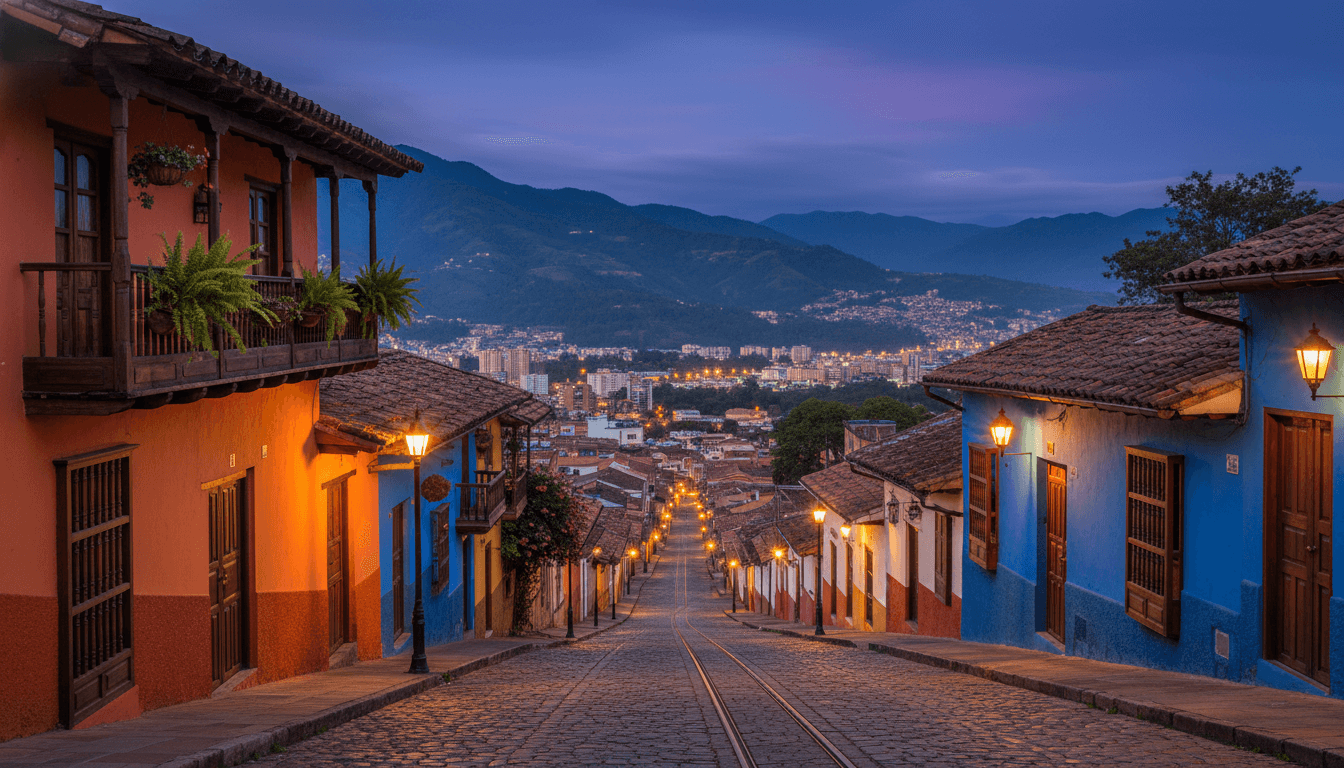
Best Neighborhoods for Home Swapping in Medellín: Your Complete Local Guide

SwappaHome Editorial Team
Home Exchange & Slow Travel Editorial
Discover the best Medellín neighborhoods for home swapping—from trendy El Poblado to authentic Laureles. Local tips, safety insights, and where to find your perfect swap.
I still remember standing on a rooftop terrace in Laureles, watching the sun sink behind the mountains while cumbia music drifted up from a corner tienda. My host's neighbor, a retired professor named Carlos, had just handed me a cup of tinto and was explaining why he'd never move to El Poblado "even if they paid me." That conversation changed everything about how I approached home swapping in Medellín—and honestly, it's why I keep coming back.
The best neighborhoods for home swapping in Medellín aren't necessarily the ones you'll find in most travel guides. Sure, the glossy recommendations have their place. But after three separate swaps in this city over the past four years, I've learned that where you stay dramatically shapes your entire experience. And with Medellín's neighborhood personalities being so distinct, choosing the right one for your home exchange is arguably the most important decision you'll make.
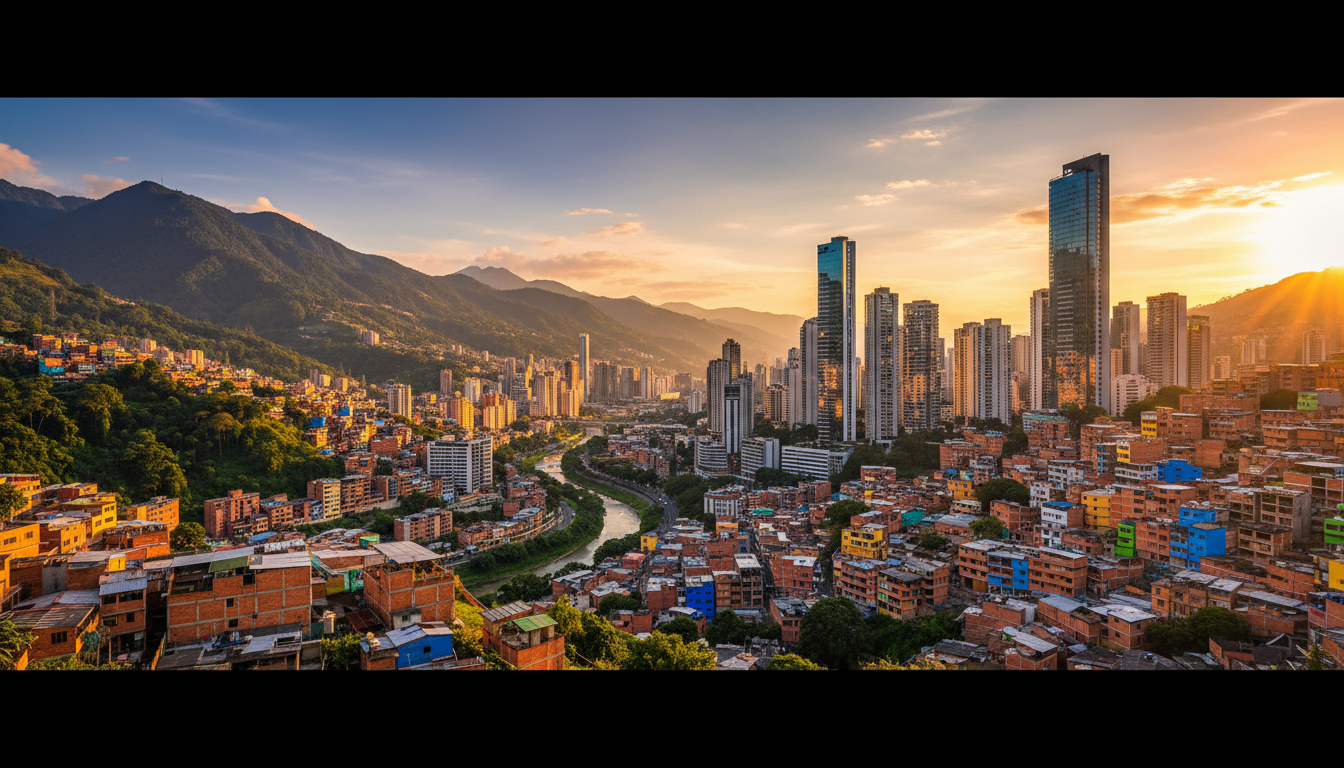 panoramic view of Medellns valley at golden hour, showing the contrast between green mountains, mode
Why Medellín Has Become a Home Swap Hotspot
Here's the thing about Medellín that took me a while to understand: it's not trying to be anything other than what it is. Unlike some cities that contort themselves for tourists, Medellín just... exists. People live their lives. The metro runs on time. Abuelas sell empanadas on corners. And increasingly, locals are opening their homes to travelers through platforms like SwappaHome.
The home swapping scene here has exploded in the past few years, driven partly by the digital nomad influx and partly by Colombians discovering that hosting travelers is a genuinely fun way to experience other cultures. I've noticed the swap listings on SwappaHome growing every time I check—there were maybe 40 when I first looked in 2019, and now there are well over 200.
What makes Medellín particularly suited for home exchange is the apartment culture. Unlike sprawling cities where everyone lives in houses, paisas (as locals call themselves) predominantly live in apartments, many in well-maintained buildings with porteros (doormen) and shared amenities. Security is built-in. Neighbors look out for each other. You're inheriting a whole micro-community when you swap.
The cost of living difference also works in your favor if you're coming from North America or Europe. Your swap partner gets to experience your expensive city for free, while you get to live in a place where a full lunch costs $4 and a beer at a local bar runs about $1.50. Everyone wins.
El Poblado: The Comfortable Choice for First-Time Visitors
Let me be honest with you—El Poblado is where most gringos end up, and there's nothing wrong with that. It's safe, it's walkable, it's full of excellent restaurants, and you'll never struggle to find someone who speaks English. If this is your first time in Colombia and you're feeling a bit nervous, El Poblado is a perfectly reasonable home base.
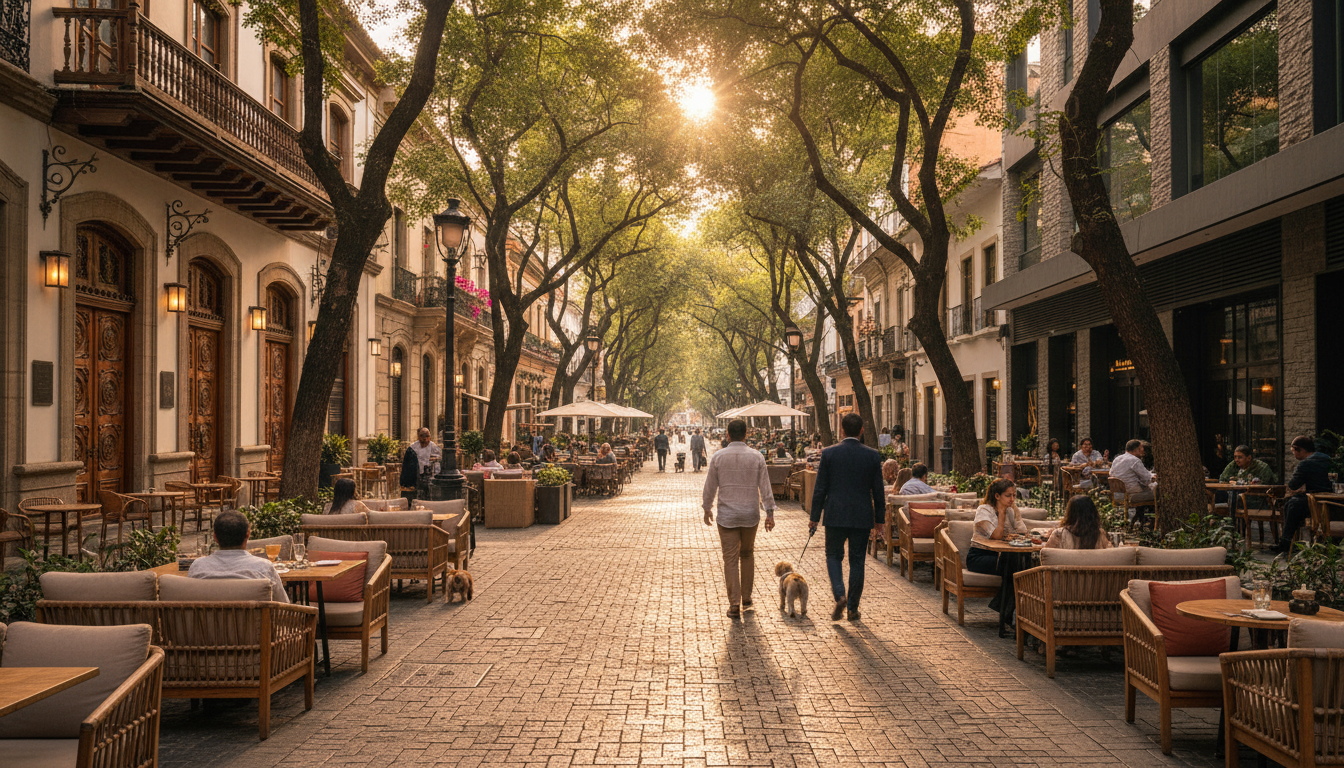 tree-lined street in El Poblados Provenza area with outdoor cafes, well-dressed locals walking small
The neighborhood sprawls across a hillside in the southeastern part of the city, and it's actually several distinct sub-neighborhoods worth understanding.
Provenza has become the trendy heart of El Poblado. Think specialty coffee shops (Pergamino is my favorite—try their cold brew), boutique stores, and restaurants that would fit right into Brooklyn or East London. Home swap listings here tend to be modern apartments in newer buildings, often with gyms and rooftop pools. Expect your swap partner's place to have good wifi and a fully equipped kitchen. The downside? It can feel a bit bubble-like. You might go days without needing to speak Spanish.
Parque Lleras area is the nightlife zone. If you're in your twenties and want to party, great. If you're looking for a quiet home swap where you can sleep before 2am on weekends, maybe look elsewhere. The apartments directly around the park tend to be older and can get noisy.
Manila and Astorga are the more residential parts of El Poblado, slightly uphill from the action. This is where you'll find families, older buildings with more character, and a slightly more authentic vibe. I did a two-week swap in Manila once, and my neighbor brought me sancocho (a traditional soup) when she heard I was sick. That doesn't happen in Provenza.
Pricing context: if you were paying for accommodation, El Poblado Airbnbs run $60-150/night depending on the building. With SwappaHome's credit system, you're using the same 1 credit per night whether you're staying in a basic studio or a penthouse with a view—which makes snagging a nice El Poblado apartment a genuinely great deal.
Who Should Home Swap in El Poblado
First-time Colombia visitors. Families with children. Remote workers who need reliable infrastructure. Anyone nervous about safety. People who prioritize convenience over authenticity. No judgment—I stayed in El Poblado my first time too.
Laureles: Where I'd Actually Live (and Swap)
Okay, here's where my bias shows. Laureles is my favorite neighborhood in Medellín, and it's where I always try to find home swaps now. It's where that rooftop conversation with Carlos happened, and it's where I've had my most meaningful experiences in the city.
Laureles sits on the western side of the Medellín River, in a flat area that makes walking and biking actually pleasant—El Poblado's hills can be brutal. The neighborhood was developed in the 1940s and 50s, so you get these gorgeous mid-century buildings with actual architectural character. Curved balconies. Decorative tiles. Apartments with those high ceilings that modern construction abandoned.
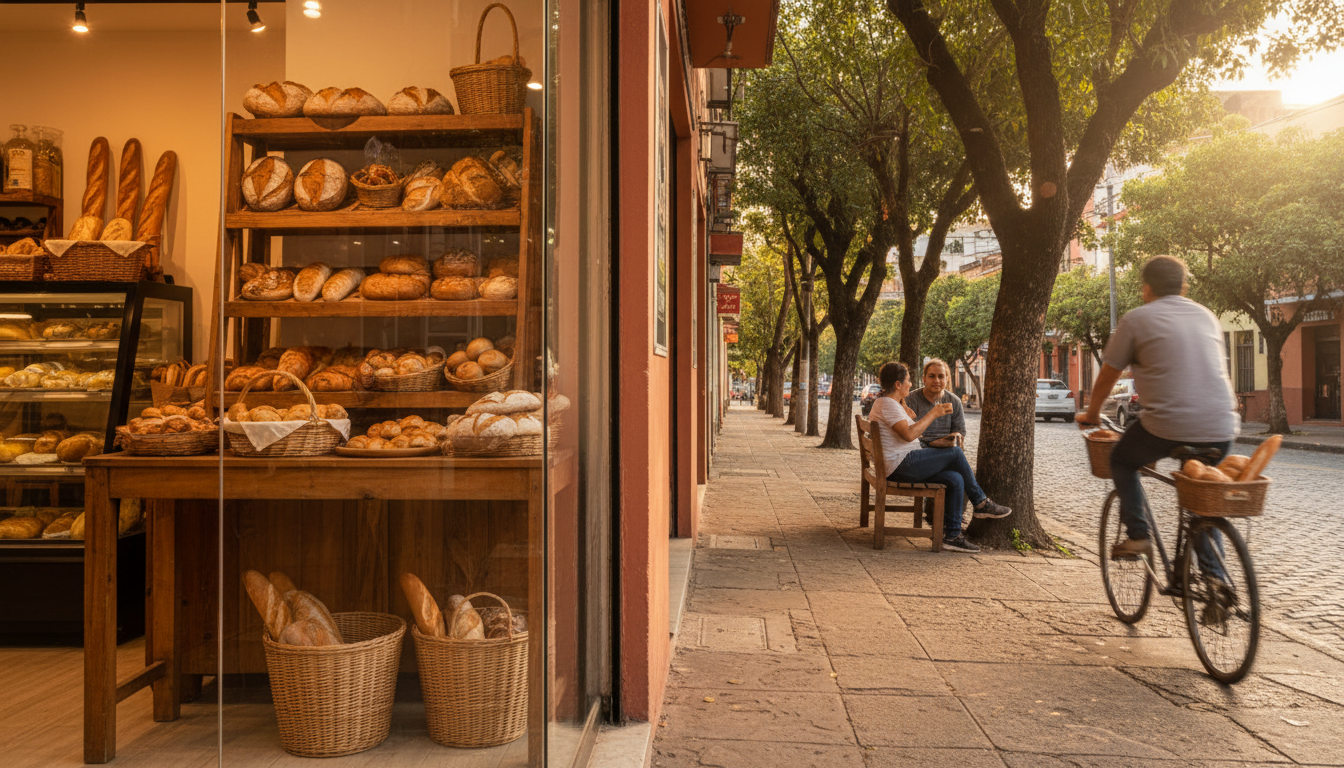 a typical Laureles street scene showing a local panadera with fresh bread displayed, mature trees pr
The vibe here is distinctly middle-class Colombian. Your neighbors will be teachers, small business owners, retirees, and young professionals. The restaurants serve bandeja paisa and corrientazo (set lunch menus) for $3-4. The bars are unpretentious places where people actually dance salsa instead of just watching others do it.
What I love about home swapping in Laureles is that you genuinely feel like a temporary resident rather than a tourist. My last swap was in a building where the portero, Don Jorge, learned my name by day two and started saving me the good mangoes from the fruit vendor who came by each morning. You can't buy that experience.
La 70 (Carrera 70) is the main artery of Laureles nightlife—a long street lined with bars, restaurants, and clubs. It gets lively on weekends but doesn't have the aggressive party atmosphere of Parque Lleras. The apartments within a few blocks of La 70 are ideal for people who want easy access to nightlife but also want to sleep on Tuesday nights.
Primer Parque de Laureles is the neighborhood's heart—a small park where families gather, kids play soccer, and old men argue about politics. The surrounding blocks are quieter and more residential. Perfect for families or anyone wanting a peaceful home base.
Segundo Parque and beyond gets progressively more local as you move west. Fewer English speakers, fewer tourists, more authentic daily life. I'd recommend this zone for intermediate Spanish speakers who want immersion.
Laureles Home Swap Considerations
The buildings here are older, which means some quirks. Water pressure can be inconsistent. Not every apartment has air conditioning—though Medellín's eternal spring climate means you rarely need it. Elevators might be tiny or nonexistent.
But honestly? These minor inconveniences are worth it for the neighborhood character.
Envigado: The Local Secret for Long-Term Swaps
Technically, Envigado is its own municipality rather than a Medellín neighborhood, but it's seamlessly connected by metro and most people consider it part of the greater city. And here's the thing—it's increasingly where savvy home swappers are looking.
Envigado has this small-town-within-a-city feel that I find incredibly appealing. The central area around Parque Principal is genuinely charming, with a white church, outdoor cafes, and locals who still greet strangers. It's safer than most of Medellín (consistently ranked as one of the safest municipalities in the valley), and it's significantly cheaper.
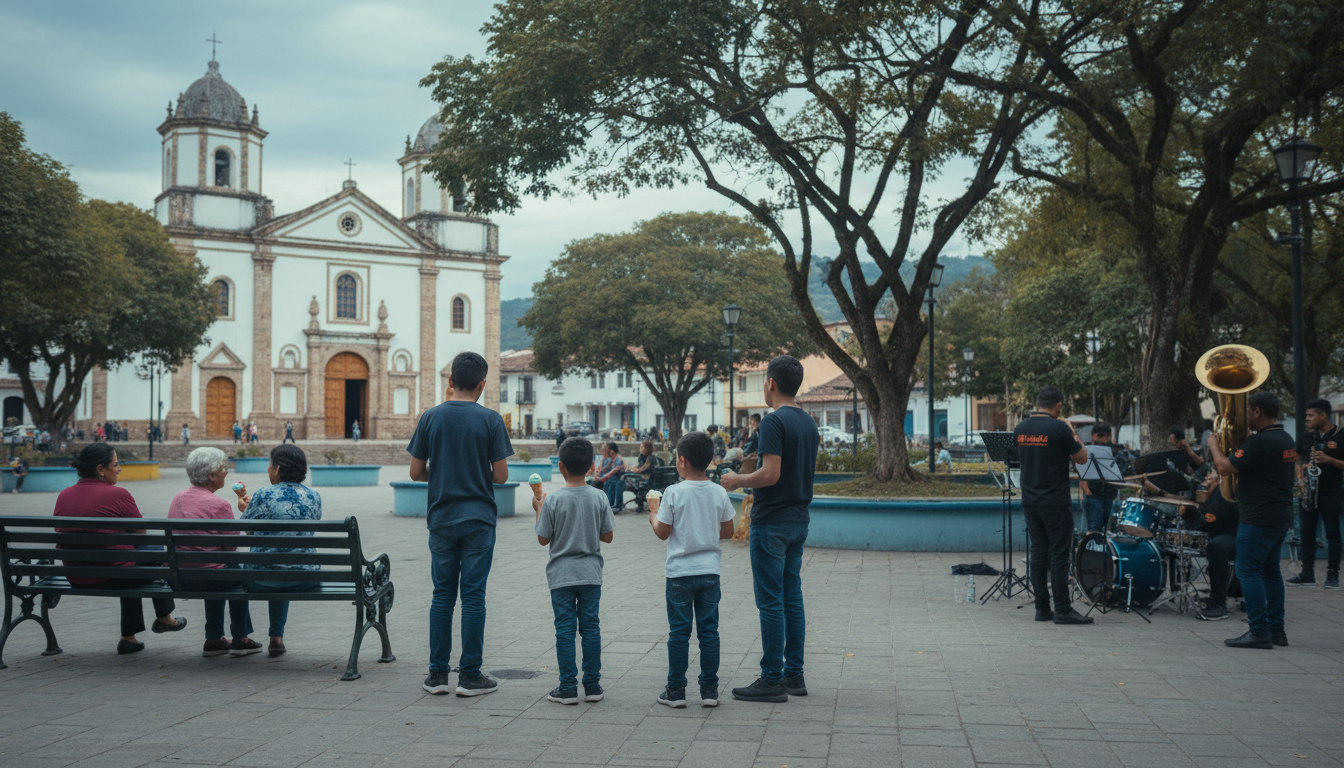 Envigados main plaza on a Sunday afternoon, families eating ice cream, elderly couples on benches, t
The home swap listings I've seen in Envigado tend to be larger apartments—families live here, so you get actual bedrooms instead of studio conversions. If you're traveling with kids or just want more space, this is where to look.
My friend Sarah did a month-long swap in Envigado last year while working remotely. She became a regular at a tiny bakery called Panadería Versalles. By week three, they were saving her favorite pan de queso without her asking. That's the Envigado experience.
The downside? It's about 25-30 minutes by metro to El Poblado and 40+ minutes to Laureles. If you're planning to be out every night, the commute might get old. But for remote workers, retirees, or anyone prioritizing quality of life over nightlife proximity, Envigado is worth serious consideration.
Belén: The Underrated Middle Ground
I'll be honest—I haven't done a home swap in Belén yet, but it's at the top of my list for next time. This neighborhood sits between Laureles and the western mountains, and it offers something increasingly rare: authentic Medellín life at prices that haven't been inflated by foreign demand.
Belén is a working-class neighborhood with a strong sense of community. The central area around Parque de Belén is lively and safe, with good restaurants, local bars, and easy metro access. The housing stock is mostly mid-rise apartments from the 70s and 80s—nothing fancy, but solid and well-maintained.
What's drawing me to Belén is the emerging food scene. Some of Medellín's most interesting new restaurants are opening here, started by young chefs who got priced out of El Poblado. There's an excellent craft brewery called Cervecería Libre, and a coffee roaster called Rituales that rivals anything in Provenza.
The metro station Belén connects you to the rest of the city easily, and you're close to the cable car that goes up to Parque Arví—one of Medellín's best day trips.
Belén Home Swap Reality Check
Belén requires more Spanish than El Poblado or tourist-heavy parts of Laureles. The infrastructure is less polished—sidewalks might be uneven, buildings might not have doormen. But if you're comfortable with a more local experience and want to stretch your home swap credits further, Belén delivers.
Neighborhoods to Approach with Caution
I want to be real with you here because I've seen too many travel blogs gloss over safety. Medellín has transformed dramatically, but it's still a city with significant inequality and some areas that aren't suitable for foreign visitors—especially those unfamiliar with urban Colombia.
Centro (Downtown) is fascinating to visit during the day but I wouldn't recommend a home swap there. The area around Parque Berrío and the Botero sculptures is fine for walking around, but the residential areas nearby can be sketchy, especially at night.
Castilla, Robledo, and neighborhoods in the far north are working-class areas that are perfectly safe for locals but can be challenging for obvious foreigners. Unless you speak fluent Spanish and have Colombian friends guiding you, I'd skip these for home swapping.
The comunas on the hillsides (except for Comuna 13, which has become a tourist attraction) are still largely off-limits. Some are controlled by gangs, and even well-intentioned tourism can create problems. This isn't fear-mongering—it's respecting local reality.
My rule of thumb: if a home swap listing seems surprisingly cheap or is in an area you can't find much information about, do extra research. Check the exact address on Google Street View. Ask your potential swap partner direct questions about safety. Trust your instincts.
 infographic showing a simplified map of Medelln with neighborhoods color-coded by suitability for ho
How to Find the Best Medellín Home Swap
Alright, let's get practical.
Timing matters. Medellín's peak seasons are December-January (holiday season), Semana Santa (Easter week), and August (Feria de las Flores). During these times, local families often travel, meaning more swap options become available. But it also means more competition from other travelers. I've had the best luck in shoulder seasons—March-April and September-November.
Look for verified profiles. On SwappaHome, I always filter for members who've completed verification. In a city where you're navigating unfamiliar territory, knowing your swap partner is who they say they are provides genuine peace of mind.
Read between the lines in listings. A listing that mentions "great wifi" and "standing desk" is probably from a digital nomad who'll understand your needs. A listing with extensive kitchen descriptions suggests someone who cooks and has a well-equipped space. Pay attention to what people emphasize.
Ask about the building. In Medellín, the building matters almost as much as the apartment. Ask about the portero situation (24-hour doormen are ideal), whether there's a gym or pool, and what the neighbors are like. A great apartment in a sketchy building isn't a great swap.
Be upfront about your Spanish level. If you don't speak Spanish, you need a swap partner who can leave detailed instructions, introduce you to key neighbors, and be reachable for questions. Some hosts are better at this than others.
Making Your Medellín Home Swap Successful
After multiple swaps here, I've developed some specific strategies that might help.
Arrive during daylight. Medellín's airport is in a different city (Rionegro), and the drive takes 45-60 minutes through mountains. Arriving in the dark as a first-timer can be disorienting. Book flights that land before 4pm if possible.
Get a local SIM card immediately. Data is cheap ($15-20 for a month of unlimited), and having Google Maps, Uber, and WhatsApp working makes everything easier. Claro and Tigo are the main carriers; you can get SIMs at the airport or any Éxito supermarket.
Learn the building codes. Your swap partner should explain how to enter the building, use the intercom, deal with the portero, and handle deliveries. Write this down. Colombian apartment buildings have their own logic that isn't always intuitive.
Establish a relationship with the portero. This person is your building's gatekeeper and unofficial concierge. A friendly greeting each time you pass, maybe a small tip ($5-10) when you leave, and they'll look out for you. They can receive packages, recommend local services, and alert you if anything seems off.
Use Rappi for everything. This delivery app is ubiquitous in Medellín and delivers groceries, restaurant food, pharmacy items, and basically anything else. It's a lifesaver when you're still figuring out the neighborhood.
The Real Cost Advantage of Home Swapping in Medellín
Let me break down why home swapping makes particular sense here.
A decent hotel in El Poblado runs $80-150/night. A nice Airbnb is $60-100/night. Over a two-week trip, you're looking at $840-2,100 in accommodation costs alone.
With SwappaHome, you're using 14 credits for those two weeks—credits you earned by hosting travelers in your own home. The actual cost? Zero dollars for accommodation. You might spend $50-100 on utilities (though many swap partners include this), and that's it.
But here's what the math doesn't capture: the experience is fundamentally different. You're not staying in a sanitized tourist rental. You're living in someone's actual home, with their books on the shelves, their coffee maker, their neighbor who brings over empanadas. You're embedded in a real neighborhood with a real life.
That's worth more than any amount of money saved.
My Honest Recommendation
If you're asking me where to focus your home swap search in Medellín, here's my hierarchy:
For first-timers: El Poblado (Manila or Astorga sub-neighborhoods), or Laureles if you have basic Spanish.
For repeat visitors: Laureles (anywhere), Envigado, or Belén if you're adventurous.
For families: Envigado or residential El Poblado.
For digital nomads: Provenza in El Poblado (best infrastructure) or Laureles (better value and vibe).
For long-term stays (1+ months): Envigado or Laureles. The lower cost of living and stronger community connections make a real difference over time.
Getting Started with Your Medellín Home Swap
If you're serious about swapping in Medellín, here's what I'd do.
First, get your own home listed on SwappaHome. Take good photos, write an honest description, and start building your profile. The platform's credit system means you earn 1 credit for every night you host—those credits become your ticket to Medellín.
Second, start browsing Medellín listings now, even if your trip is months away. Get a feel for what's available, what neighborhoods appeal to you, and what kind of homes exist in your target areas. Save favorites. Reach out to potential swap partners early—the best listings get snapped up.
Third, be a good guest. The home swap community in Medellín is still relatively small, and word gets around. Leave places cleaner than you found them. Write thoughtful reviews. Be responsive and communicative. Your reputation follows you.
I'm heading back to Medellín in a few months—already have a swap lined up in Laureles, in a building I've been eyeing for years. There's something about this city that keeps pulling me back. Maybe it's the weather. Maybe it's the people. Maybe it's just that feeling of waking up in someone's home, making coffee in their kitchen, and knowing you belong there, at least for a little while.
That's what home swapping gives you. Not just a place to stay, but a place to live.
Frequently Asked Questions
Is home swapping in Medellín safe for foreigners?
Home swapping in Medellín is generally safe when you choose the right neighborhoods. Stick to El Poblado, Laureles, Envigado, or Belén for your home exchange. Use SwappaHome's verification features, read reviews carefully, and communicate thoroughly with your swap partner about building security and neighborhood specifics. I've done three swaps in Medellín without any safety issues.
What's the best neighborhood for home swapping in Medellín for first-time visitors?
El Poblado is the best neighborhood for home swapping in Medellín if you're visiting Colombia for the first time. It offers the most tourist infrastructure, English-speaking residents, and familiar amenities. The Manila and Astorga sub-neighborhoods provide a good balance of safety and authenticity without the party atmosphere of Parque Lleras.
How much can I save with home swapping vs hotels in Medellín?
Home swapping in Medellín can save you $60-150 per night compared to hotels, or $840-2,100 over a two-week stay. With SwappaHome's credit system, you use 1 credit per night regardless of the property—credits earned by hosting guests in your own home. Your only costs are utilities and personal expenses.
Do I need to speak Spanish for a home swap in Medellín?
Basic Spanish helps significantly for home swapping in Medellín, especially in neighborhoods like Laureles, Envigado, or Belén. El Poblado is more English-friendly. Choose a swap partner who can leave detailed instructions in English and introduce you to English-speaking neighbors or building staff if your Spanish is limited.
When is the best time to find home swaps in Medellín?
The best times to find Medellín home swaps are during local travel seasons when residents leave the city: December-January holidays, Easter week, and August's Feria de las Flores. Shoulder seasons (March-April, September-November) offer less competition from other travelers. Start searching on SwappaHome 2-3 months before your planned trip for the best selection.

Published by
SwappaHome
SwappaHome Editorial Team
Home Exchange & Slow Travel Editorial
The SwappaHome Editorial Team brings together travel research, home-exchange community insights, and platform data to produce practical guides for first-time and experienced home swappers. Every article cites real platforms, current market rates, and verifiable city-level facts so readers can make informed decisions without guessing.
Ready to try home swapping?
Join SwappaHome and start traveling by exchanging homes. Get 7 free credits when you sign up!
Related articles
Home Swap in Rome: Where to Find the Best Properties for Your Italian Exchange
Discover where to find the best home swap properties in Rome—from Trastevere's cobblestone charm to Testaccio's local authenticity. Real neighborhoods, real advice.

Home Swap in Bangkok: Where to Find the Best Properties for Free Stays
Discover where to find the best home swap properties in Bangkok—from riverside condos in Charoen Krung to family homes in Ari. Real neighborhoods, real savings.

Home Swap for Beach Lovers: 12 Coastal Destinations Ranked for 2026
Discover the best coastal destinations for home swapping in 2026. From Portugal's Algarve to Australia's Gold Coast, find your perfect beach exchange.