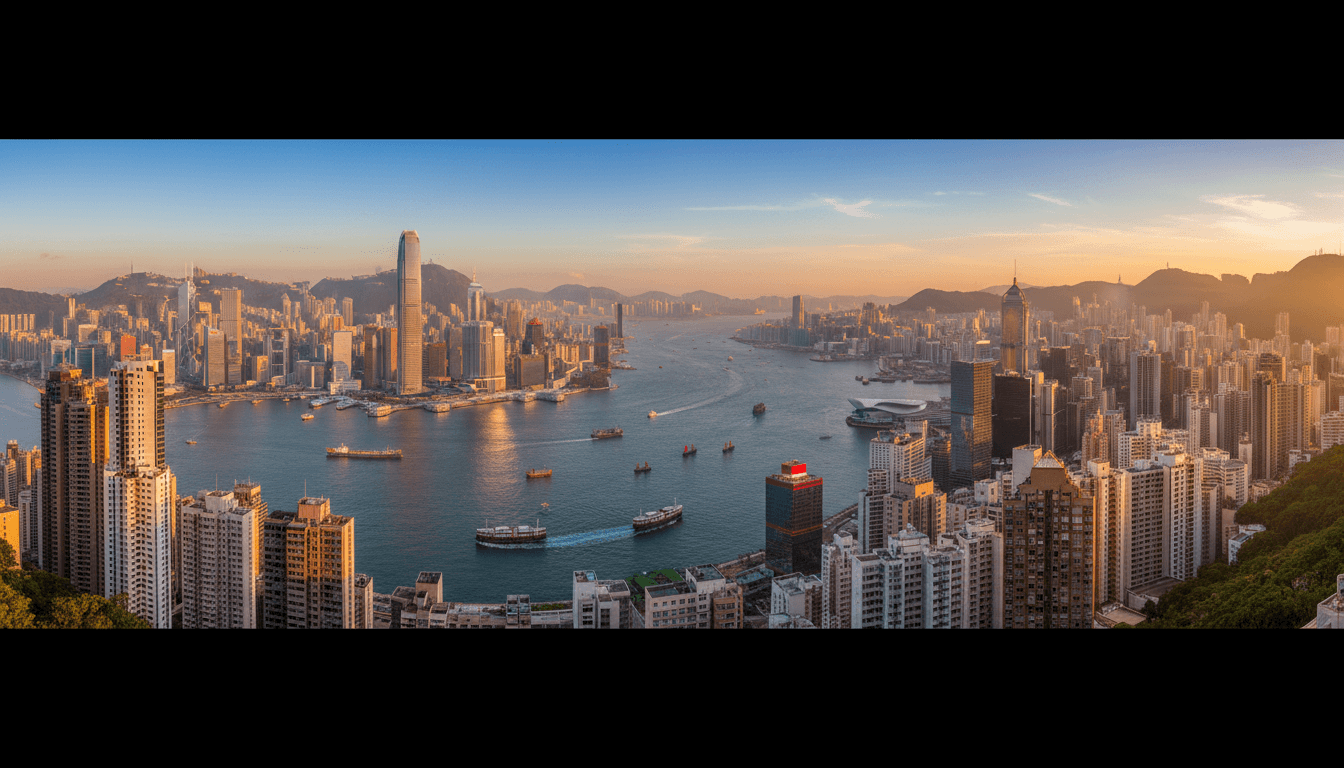
Home Swaps in Hong Kong: The Working Professional's Guide to Living Like a Local

SwappaHome Editorial Team
Home Exchange & Slow Travel Editorial
Discover the best home swaps in Hong Kong for remote workers and business travelers. From Central's skyscrapers to Sai Kung's seaside escapes, find your perfect work-life balance.
I was three espressos deep at a café in Sheung Wan when I realized I'd made a terrible mistake.
Not the coffee—the coffee was perfect, a flat white from Cupping Room that cost me HK$48 (about $6 USD). The mistake was booking a hotel for my two-week work trip to Hong Kong. My "business traveler" rate came out to $280 USD per night for a room so small I had to close the bathroom door to open the closet. The desk? A glorified shelf that wobbled every time I typed.
That was four years ago. Since then, I've done home swaps in Hong Kong three times. And honestly? I'm convinced it's the only way for working professionals to experience this city without either going broke or losing their minds in a cramped hotel room.
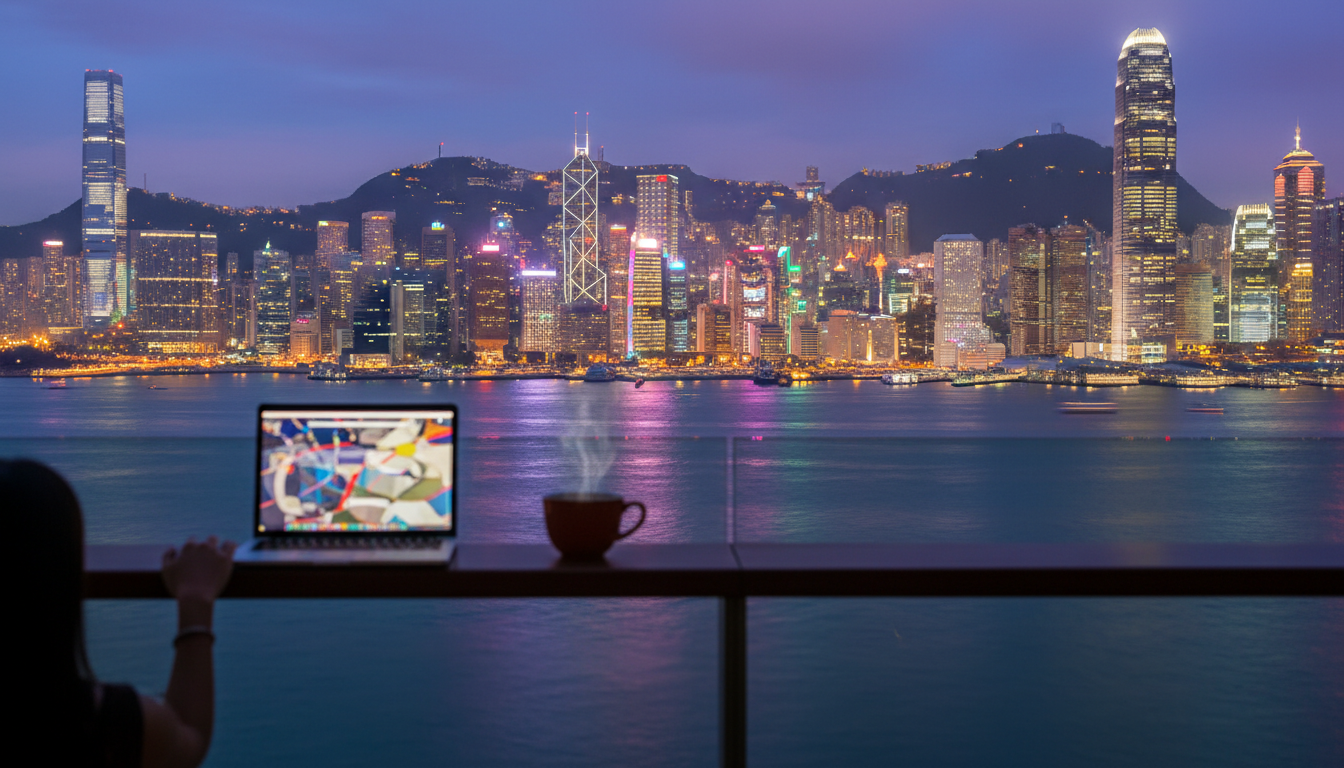 Panoramic view of Hong Kongs Victoria Harbour at dusk, with the glittering skyline of Central reflec
Here's the thing about Hong Kong: it's one of the most expensive cities on the planet for accommodation. We're talking $200-400 USD per night for anything decent in a central location. But the city is also full of professionals who travel constantly for work—finance people, consultants, tech workers, entrepreneurs shuttling between Hong Kong, Singapore, Shanghai, and beyond. Their apartments sit empty for weeks at a time.
Which is exactly where home swaps become genuinely life-changing.
Why Home Swaps in Hong Kong Make Sense for Remote Workers
Let me paint you a picture of my last Hong Kong home swap.
I stayed in a 650-square-foot apartment in Mid-Levels—which, for Hong Kong, is practically a mansion. The owner, a management consultant named Vivian, was spending six weeks in London for a project. Her place had a proper desk setup with a 27-inch monitor, ergonomic chair, and fiber internet that clocked 500 Mbps. There was a kitchen where I could actually cook (goodbye, $15 hotel breakfast buffets). A washing machine. A balcony with a sliver of harbor view where I'd take my morning calls.
Total cost? One credit per night on SwappaHome. I'd earned those credits hosting guests in my San Francisco apartment earlier that year.
The math is almost embarrassing. A comparable serviced apartment in Mid-Levels runs HK$2,500-4,000 per night ($320-510 USD). Over two weeks, that's $4,480-7,140 USD. My home swap cost me nothing except the credits I'd already banked.
But the money is only part of it. What really matters for working professionals is the quality of life.
The Work-From-Home Setup Advantage
Hotel desks are designed for writing postcards, not running spreadsheets for eight hours. Most Hong Kong professionals—especially in finance and tech—have invested in serious home office setups. Standing desks, multiple monitors, proper lighting. When you do a home swap, you inherit all of that.
Vivian's apartment had a dedicated workspace in a corner with natural light. Her building had a quiet study lounge on the 30th floor that I could use when I needed a change of scenery. The gym was included. So was the rooftop pool.
Try getting that at a hotel without paying an extra $100 per night.
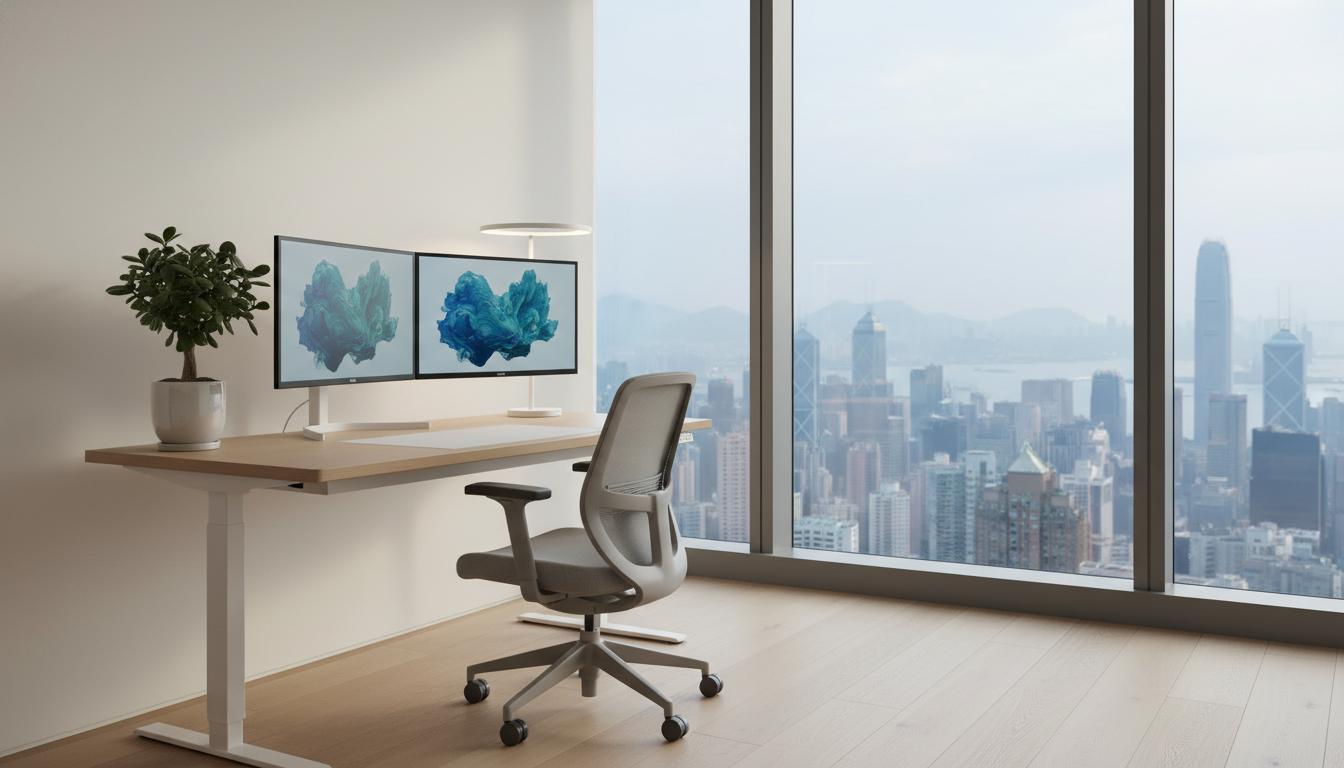 Modern home office setup in a Hong Kong apartment with floor-to-ceiling windows overlooking the city
The Neighborhood Immersion Factor
When you're staying in someone's home, you automatically become part of their neighborhood ecosystem. You discover their coffee spot, their dry cleaner, their favorite dai pai dong for late-night noodles. The security guard starts recognizing you. The auntie at the fruit stand gives you the good mangoes.
This matters more than you'd think when you're trying to work. There's a comfort in routine, in knowing where to get a decent lunch within a five-minute walk, in not having to google "good wifi cafe near me" every single day.
Best Hong Kong Neighborhoods for Home Swaps: A Working Professional's Breakdown
Not all Hong Kong neighborhoods are created equal—especially if you're trying to balance work with actually enjoying one of Asia's most dynamic cities. Here's my honest take on where to look based on your work style and priorities.
Central and Sheung Wan: For the High-Powered Networker
If your Hong Kong trip involves client meetings, investor pitches, or schmoozing at the Foreign Correspondents' Club, Central is the obvious choice. You're walking distance to the IFC, Exchange Square, and basically every major bank and law firm.
Sheung Wan, just west of Central, offers slightly more character and better food options while keeping you close to the action. The neighborhood has transformed over the past decade—now it's all specialty coffee shops, wine bars, and galleries mixed in with traditional dried seafood shops and temples. Expect apartments here to be smaller (400-600 sq ft is typical) but well-appointed. Most buildings have gyms and pools. The MTR access is unbeatable.
This neighborhood works best for finance professionals, consultants, and anyone with a packed meeting schedule. Just know you're getting smaller living spaces, higher noise levels, and limited green space. For comparison, business hotels here run $350-500 USD per night.
Mid-Levels and Soho: The Sweet Spot for Remote Workers
This is where I'd recommend most working professionals look for home swaps in Hong Kong.
Mid-Levels sits on the slopes of Victoria Peak, connected to Central by the famous outdoor escalator system—the longest in the world, and yes, it's as weird and wonderful as it sounds. The apartments here tend to be larger, with better views and more natural light. Many buildings have serious amenities: pools, tennis courts, clubhouses. The neighborhood is residential enough to be quiet during work hours but close enough to Central that you can be in a meeting in 15 minutes.
Soho (South of Hollywood Road) is the lower portion, packed with restaurants, bars, and galleries. It's where the expat crowd hangs out, which means excellent international food options and a social scene if you want it.
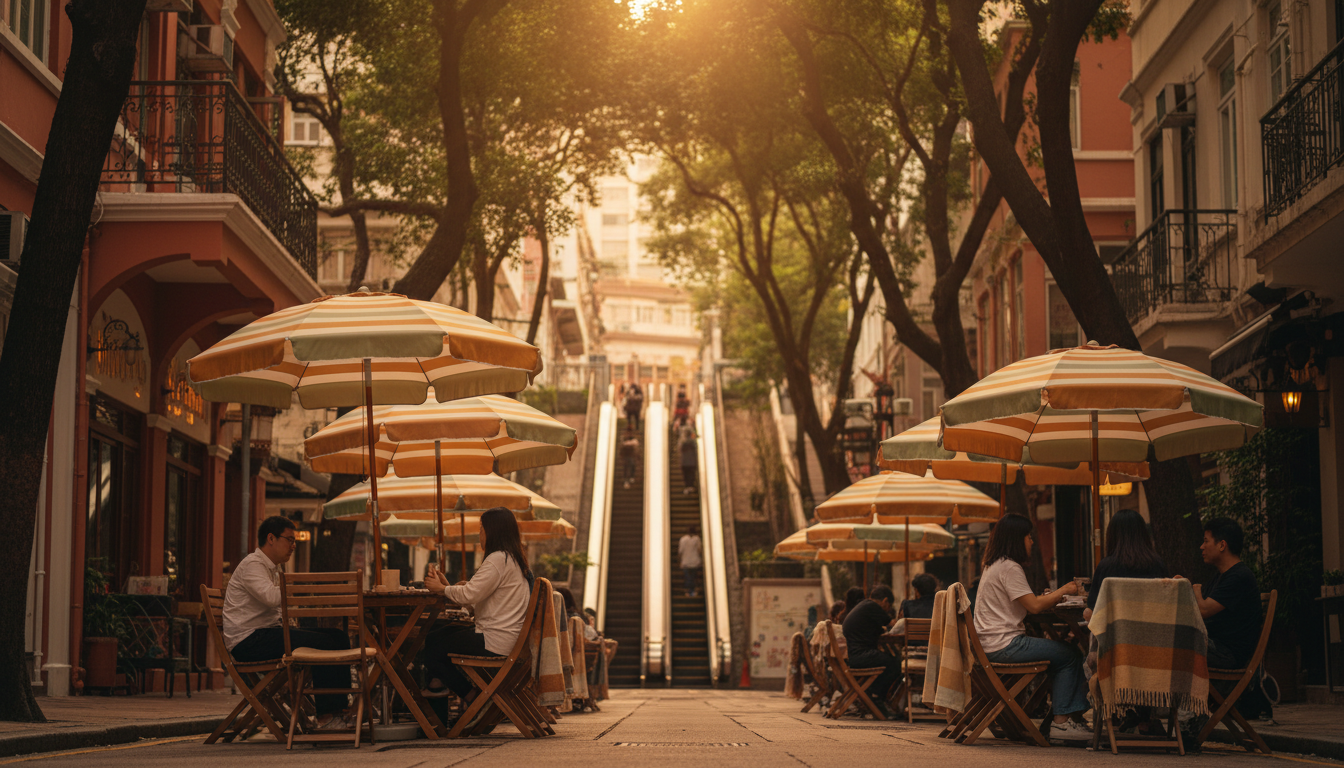 Tree-lined street in Hong Kongs Mid-Levels neighborhood with traditional tong lau buildings, outdoor
Best for remote workers, entrepreneurs, and anyone wanting work-life balance. The terrain is hilly though—lots of stairs—and it can feel somewhat isolated from "real" Hong Kong. Hotels here typically run $280-400 USD per night.
Wan Chai and Causeway Bay: Urban Energy Central
Wan Chai has shed its old reputation (if you know, you know) and emerged as a genuinely interesting neighborhood for young professionals. The area around Star Street is particularly appealing—boutique shops, independent restaurants, and a more local vibe than Central.
Causeway Bay is Hong Kong's shopping heart. Chaotic and crowded, yes, but also incredibly convenient. Need anything at any hour? Causeway Bay has it. The food options are endless, from cheap noodle shops to high-end Japanese omakase. Apartments in these areas tend to be newer, with modern amenities, and you're right on the MTR line.
Night owls and first-time Hong Kong visitors tend to love it here. Just brace yourself for crowds, noise, and sensory overload. Hotels run $200-350 USD per night.
Sai Kung and Clear Water Bay: The Weekend Warrior's Paradise
Okay, this one's a wildcard. But hear me out.
Sai Kung is Hong Kong's "back garden"—a peninsula on the eastern side of the New Territories with beaches, hiking trails, and a charming waterfront town. Clear Water Bay, nearby, has some of Hong Kong's most beautiful coastline and a golf course.
If your work is fully remote and you don't need to be in Central for meetings, a home swap out here offers something rare in Hong Kong: space, nature, and quiet. Many homes have actual gardens. Some have pools. The air is cleaner. The pace is slower.
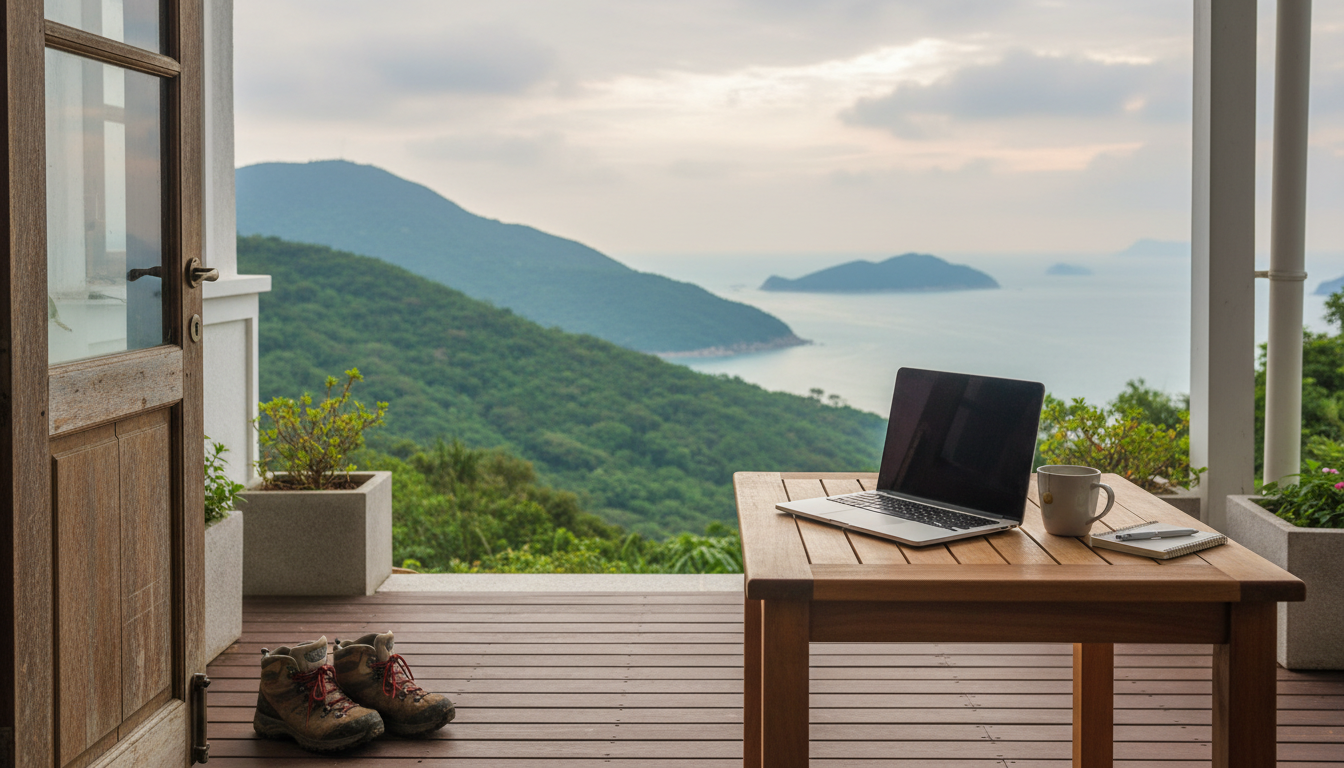 Wooden deck of a village house in Sai Kung overlooking the sea, with hiking shoes by the door, a lap
The catch? You're 45-60 minutes from Central by car or public transport. But if you're just grinding through Zoom calls and spreadsheets, does it matter if you're doing it with a view of volcanic rock formations instead of skyscrapers?
Best for fully remote workers and nature lovers escaping burnout. Limited public transport and fewer dining options are the tradeoffs. Hotel options are limited here, typically $150-250 USD per night.
Kennedy Town and Sai Ying Pun: The Underrated Gems
These western neighborhoods have become increasingly popular with young professionals over the past few years, and for good reason. The MTR extension made them accessible, but they've kept their local character—wet markets, traditional shops, neighborhood temples.
Kennedy Town has a waterfront promenade that's perfect for morning runs or evening walks. Sai Ying Pun has some of the best local food in Hong Kong—the kind of places where you point at what looks good and trust the process.
Apartments here offer better value than Central or Mid-Levels, often with more space. The vibe is more residential, more authentic, more... Hong Kong. Budget-conscious professionals and food lovers thrive here. The learning curve is steeper if you don't speak Cantonese, and there are fewer Western amenities. Hotels typically run $180-280 USD per night.
How to Find the Perfect Home Swap in Hong Kong for Work
Alright, let's get practical. Finding a home swap that actually works for professional life requires a bit more due diligence than your typical vacation exchange.
The Non-Negotiables for Working Professionals
When I'm browsing SwappaHome listings for a work trip, I've learned to filter ruthlessly.
Internet Speed: Ask for specifics. Hong Kong generally has excellent internet infrastructure, but older buildings can be spotty. You want at least 100 Mbps, ideally 500+. Ask the host to run a speed test and send you the results.
Workspace: Look for photos of the actual desk setup. Is there a proper chair? Natural light? Enough space for your laptop plus documents? If the listing shows a tiny desk crammed into a corner of the bedroom, that's a red flag.
Noise Levels: Hong Kong is loud. Ask about the apartment's orientation—does it face a busy street or a quiet courtyard? What floor is it on? Higher floors are generally quieter but may have more wind noise.
Air Conditioning: This isn't optional. Hong Kong summers are brutal—35°C (95°F) with 90% humidity. Make sure the AC works well and covers the workspace area.
Building Amenities: A gym and pool can replace an expensive gym membership. A business center or study lounge gives you backup workspace options.
Questions to Ask Before Confirming
I always send potential hosts a message covering these points:
"Hey! I'm planning to work remotely during my stay. Could you tell me about your internet speed (a speed test screenshot would be amazing), the desk/workspace situation, and typical noise levels during work hours? Also, are there any regular building maintenance days or construction nearby I should know about?"
Most hosts appreciate the thoroughness—it shows you'll take care of their space.
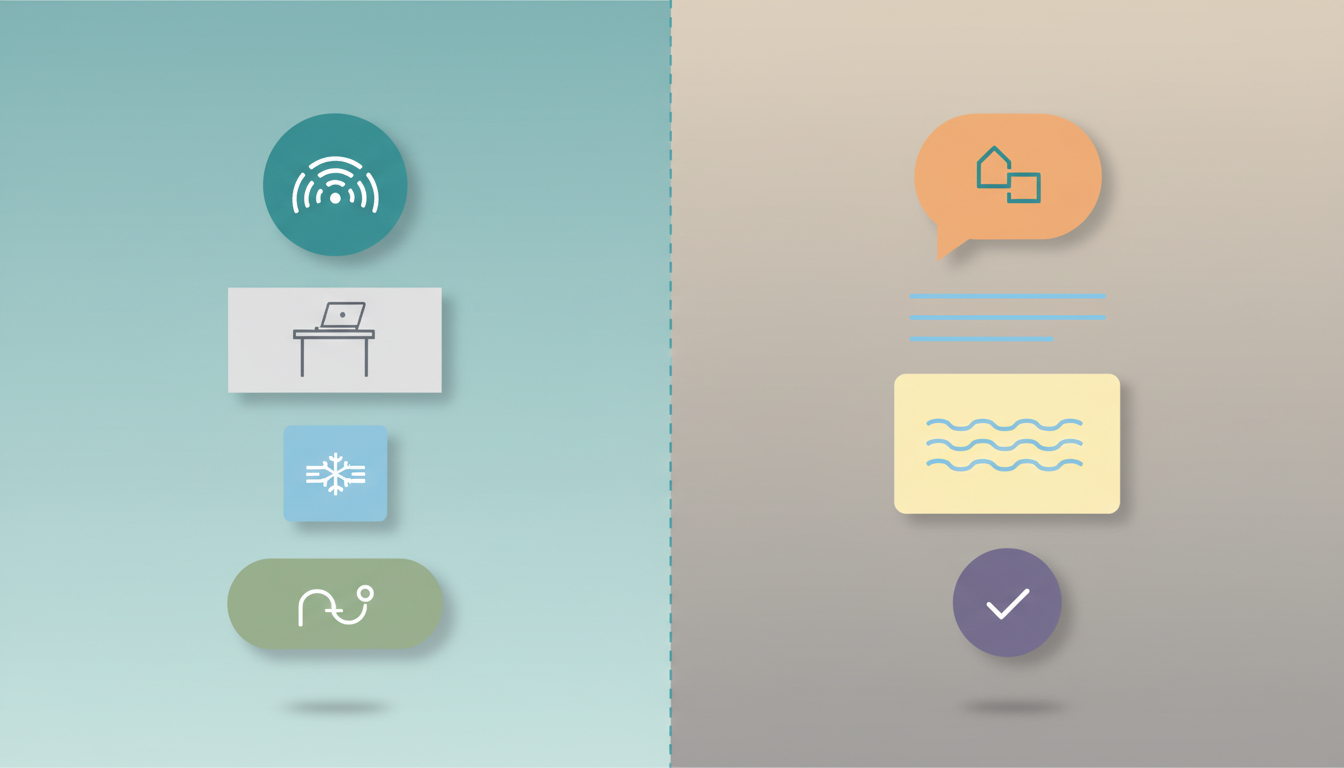 Split-screen infographic showing a checklist of home swap essentials for remote workers on one side
Timing Your Hong Kong Home Swap
Hong Kong professionals travel constantly, which means home swap availability is actually pretty good year-round. But there are patterns.
Peak availability hits during Chinese New Year (late January/February), summer holidays (July-August), and the Christmas/New Year period—this is when Hong Kong residents travel most. March through May and September through November tend to be busy work periods with fewer people traveling.
Weather-wise, October through December is Hong Kong's sweet spot—clear skies, comfortable temperatures, low humidity. If you can time your work trip for this window, do it.
Making the Most of Your Hong Kong Home Swap
Once you've secured your swap, here's how to actually thrive as a working professional in Hong Kong.
Setting Up Your Work Routine
Hong Kong operates in a unique time zone position. If you're working with US teams, you're looking at evening and night calls (8am EST = 9pm HKT). European teams are more manageable (9am London = 5pm HKT). Asia-Pacific? You're golden.
I've found the best rhythm is to front-load focused work in the morning when the city is relatively calm, take a long lunch break to explore, then handle calls and meetings in the late afternoon and evening.
Most Hong Kong apartments are small enough that separating "work" and "life" space is challenging. My trick: change locations for different types of work. Deep focus work at the apartment desk. Creative brainstorming at a café. Calls from a co-working space or the building's business center.
The Best Cafés for Working Professionals
Because sometimes you need to get out of the apartment.
In Central and Sheung Wan, try Cupping Room (great coffee, decent wifi, tolerant of laptop workers), The Coffee Academics (multiple outlets, reliable), or Halfway Coffee (tiny but excellent). Mid-Levels and Soho have Fuel Espresso on the escalator route, Coffee Roastery by Cupping Room, and Elephant Grounds. Wan Chai offers Holly Brown (spacious), The Coffee Academics Star Street, and Fineprint. Out in Kennedy Town and Sai Ying Pun, look for Craft Coffee Roaster, Brew Bros, or Accro Coffee.
Expect to pay HK$40-60 ($5-8 USD) for a decent coffee. Most places won't rush you out if you're nursing a drink and working quietly.
Co-Working Spaces as Backup
Even with a great home office setup, sometimes you need a change of scenery or a proper meeting room. Hong Kong has excellent co-working options.
WeWork has multiple locations across Hong Kong Island and Kowloon, with day passes available for around HK$350 ($45 USD). The Hive has more of a creative and startup vibe, with locations in Wan Chai, Central, and Kennedy Town—day passes start from HK$280 ($36 USD). Garage Society is popular with entrepreneurs and has Central and Wan Chai locations. The Work Project is the premium option with beautiful design at IFC and other locations.
Balancing Work and Hong Kong Life
Here's my unpopular opinion: if you're in Hong Kong purely to grind through work in an apartment, you're doing it wrong. The whole point of a home swap is to live like a local, not just work like a local.
Block out time for experiences. An early morning dim sum at Lin Heung Tea House (get there by 7am for seats). A sunset hike up Victoria Peak via the Morning Trail. A ferry ride to one of the outlying islands on a weekend. Late-night dai pai dong hopping in Sham Shui Po.
The beauty of a home swap is that you have time. You're not cramming tourist highlights into a four-day trip. You can take it slow, discover neighborhoods organically, and actually rest.
The Practical Stuff: What Working Professionals Need to Know
Getting a SIM Card and Staying Connected
Hong Kong has some of the best mobile coverage in the world. Grab a prepaid SIM at the airport from 3HK, China Mobile, or SmarTone. A 30-day tourist SIM with 10GB of data runs about HK$100-150 ($13-19 USD). Top up easily at any 7-Eleven.
For longer stays, consider a monthly plan. Most carriers offer no-contract options for around HK$200-300 ($26-38 USD) with unlimited data.
Transportation for the Working Professional
Get an Octopus card immediately. It works on the MTR, buses, ferries, trams, and most convenience stores. You can add it to Apple Pay or Google Wallet for extra convenience.
The MTR is your best friend—clean, efficient, air-conditioned, and covers most of the city. Taxis are affordable by Western standards (starting at HK$27 or $3.50 USD) and useful for getting to meetings when you're running late. Uber works but isn't technically legal, which creates occasional weirdness. Most locals use HKTaxi or the regular taxi apps.
Eating Well Without Breaking the Bank
Hong Kong can be as cheap or expensive as you want it to be for food.
Budget meals at cha chaan tengs (local diners), noodle shops, rice box takeaways, and food courts run HK$40-80 ($5-10 USD). Mid-range options—casual restaurants, lunch sets at nicer places, dim sum—cost HK$100-200 ($13-26 USD). Splurge territory starts at HK$300+ ($38+ USD) for fine dining, omakase, and hotel restaurants.
With a kitchen in your home swap, you can also cook. Wet markets have incredible fresh produce and seafood at reasonable prices. The Wellcome and ParknShop supermarket chains are everywhere.
Real Talk: Is a Hong Kong Home Swap Right for You?
I'll be honest—home swapping in Hong Kong isn't for everyone.
It works brilliantly if you're comfortable with smaller spaces, enjoy urban density, and can handle a bit of chaos. Hong Kong apartments are efficient but compact. The city is crowded, fast-paced, and occasionally overwhelming. If you need sprawling space and absolute quiet to work, this might not be your jam.
But if you thrive in vibrant environments, love great food, and want to experience one of Asia's most fascinating cities beyond the tourist bubble—while saving thousands of dollars in the process—then home swaps in Hong Kong are genuinely transformative.
The working professionals I know who've tried it rarely go back to hotels. There's something about having a real home base—a kitchen, a workspace, a neighborhood—that changes the entire texture of a work trip.
You stop being a tourist passing through. You start being someone who lives here, even if just for a few weeks.
If you're considering your first Hong Kong home swap, SwappaHome has a solid selection of listings from local professionals. The credit system works beautifully for business travelers—host guests when you're traveling for work, then use those credits for your own trips. It's how I've funded most of my Asia travel over the past few years.
Start browsing, send some messages, ask the detailed questions. Your future self—sitting on a Mid-Levels balcony with a harbor view and a perfectly functioning wifi connection—will thank you.
Frequently Asked Questions
Is home swapping in Hong Kong safe for solo professionals?
Yes, Hong Kong is one of the safest major cities in the world, with very low crime rates. Home swapping adds an extra layer of security through SwappaHome's verification and review system—you're staying in vetted members' homes, and the community accountability keeps everyone honest. That said, always communicate clearly with your host and consider getting your own travel insurance for peace of mind.
How much can I save with home swaps in Hong Kong compared to hotels?
The savings are substantial. Business hotels in Central Hong Kong cost $280-500 USD per night, while serviced apartments run $200-400 USD. Over a two-week work trip, you're looking at $4,000-7,000 USD in accommodation costs. With SwappaHome's credit system (1 credit per night, regardless of location), you can stay for free using credits earned from hosting—potentially saving your entire accommodation budget.
What internet speed should I expect in Hong Kong home swaps?
Hong Kong has excellent internet infrastructure overall. Most residential apartments have fiber connections ranging from 100 Mbps to 1 Gbps. Always ask your host for a speed test before confirming your swap—aim for at least 100 Mbps for reliable video calls. Newer buildings in Central, Mid-Levels, and Wan Chai typically have the fastest connections.
Can I find home swaps in Hong Kong with proper home office setups?
Absolutely. Many Hong Kong professionals work in finance, consulting, and tech, which means they've invested in quality home office equipment. Look for listings that specifically mention workspace amenities, and don't hesitate to ask hosts about their desk setup, chair quality, and monitor availability. SwappaHome's messaging system makes it easy to clarify these details before booking.
What's the best neighborhood in Hong Kong for remote workers doing home swaps?
Mid-Levels and Soho offer the best balance for most remote workers—larger apartments than Central, excellent amenities, quiet enough for focused work, but close to restaurants and nightlife. For those prioritizing nature and space over urban convenience, Sai Kung and Clear Water Bay provide a completely different experience with beaches, hiking, and village house living.

Published by
SwappaHome
SwappaHome Editorial Team
Home Exchange & Slow Travel Editorial
The SwappaHome Editorial Team brings together travel research, home-exchange community insights, and platform data to produce practical guides for first-time and experienced home swappers. Every article cites real platforms, current market rates, and verifiable city-level facts so readers can make informed decisions without guessing.
Ready to try home swapping?
Join SwappaHome and start traveling by exchanging homes. Get 7 free credits when you sign up!
Related articles

Home Swap in Rome: Where to Find the Best Properties for Your Italian Exchange
Discover where to find the best home swap properties in Rome—from Trastevere's cobblestone charm to Testaccio's local authenticity. Real neighborhoods, real advice.

Home Swap in Bangkok: Where to Find the Best Properties for Free Stays
Discover where to find the best home swap properties in Bangkok—from riverside condos in Charoen Krung to family homes in Ari. Real neighborhoods, real savings.

Home Swap for Beach Lovers: 12 Coastal Destinations Ranked for 2026
Discover the best coastal destinations for home swapping in 2026. From Portugal's Algarve to Australia's Gold Coast, find your perfect beach exchange.