LGBTQ+ Friendly Madrid: The Complete Home Swap Guide for Queer Travelers

SwappaHome Editorial Team
Home Exchange & Slow Travel Editorial
Discover why Madrid ranks among Europe's most welcoming cities for LGBTQ+ travelers. Your complete guide to inclusive neighborhoods, queer-owned spots, and home swapping in Spain's rainbow capital.
The rainbow crosswalk at Chueca metro station isn't just performative—it's a promise. Step onto Calle de Hortaleza on any given evening and you'll find couples holding hands without a second glance, drag queens grabbing café con leche before their shows, trans women shopping at the same boutiques as everyone else. LGBTQ+ friendly Madrid isn't a marketing slogan. It's the lived reality of a city that legalized same-sex marriage in 2005—a full decade before the United States.
For queer travelers considering a home swap in Madrid, this matters more than you might expect. Staying in a neighborhood apartment rather than a tourist-district hotel means actually living in this acceptance, not just visiting it. You wake up in Lavapiés to the sound of your neighbor's flamenco practice. Or in Malasaña, surrounded by vintage shops and queer-friendly cafés that have been serving the community for decades.
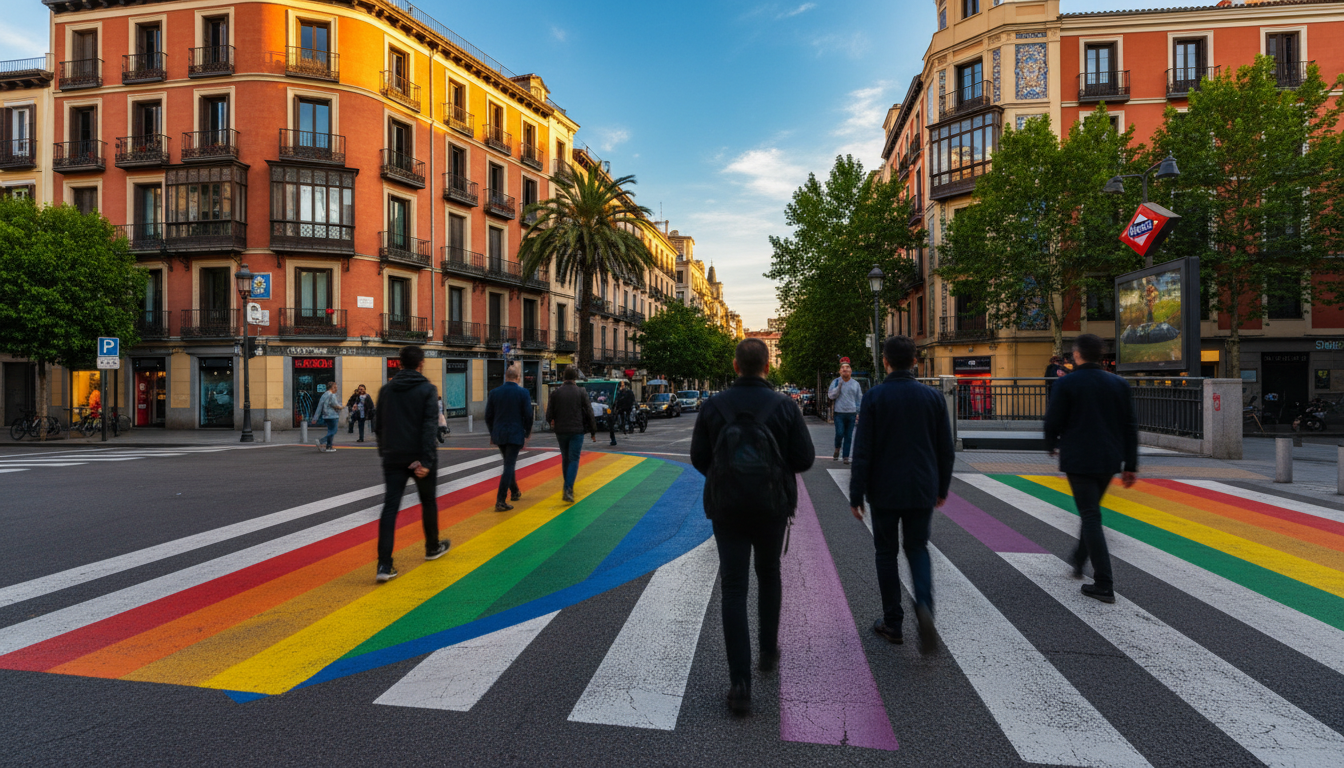 Rainbow crosswalk at Chueca metro station with pedestrians crossing, evening golden hour light, hist
Why Madrid Ranks Among Europe's Most LGBTQ+ Welcoming Cities
Spain consistently tops LGBTQ+ travel safety indexes, and Madrid sits at the heart of that reputation. The numbers tell part of the story: Spain scored 13 out of 13 on ILGA-Europe's legal equality index, with protections covering employment, housing, hate crimes, and legal gender recognition. But statistics don't capture what it actually feels like to walk through Plaza de Chueca at midnight, surrounded by queer joy that's been cultivated over decades.
The city's LGBTQ+ history runs deep. After Franco's death in 1975, Madrid became the epicenter of La Movida Madrileña—a cultural explosion that embraced sexual liberation alongside artistic freedom. Directors like Pedro Almodóvar built international careers telling queer Spanish stories. The community infrastructure that emerged during those years? It still thrives today.
Madrid Pride (Orgullo de Madrid) draws over two million people each July, making it one of the world's largest Pride celebrations. But here's the thing: the city's queerness isn't confined to one weekend. Year-round, you'll find LGBTQ+ film festivals, bear weeks, leather events, and cultural programming that treats queer life as ordinary rather than exceptional.
For home swap travelers, this normalization is the point. You're not visiting a gay ghetto or seeking out hidden bars—you're simply existing in a city where your identity is unremarkable.
Best LGBTQ+ Neighborhoods for Your Madrid Home Swap
Chueca: The Historic Heart
Chueca is Madrid's gayborhood, but calling it that undersells its evolution. What started as a neglected neighborhood in the 1980s has become one of the city's most desirable areas—property values have increased roughly 340% since 1995, driven partly by LGBTQ+ community investment and partly by its central location.
The neighborhood centers on Plaza de Chueca, a small square that transforms nightly into an impromptu community gathering. Surrounding streets pack in queer-owned businesses: Berkana, one of Europe's oldest LGBTQ+ bookstores, sits on Calle de Hortaleza. A Diferent Club draws crowds for weekend dancing. Mama Inés serves traditional Spanish tortilla to a mixed crowd that's been coming for years.
Home swaps in Chueca typically list between €80-150/night on rental platforms, but through SwappaHome's credit system, you're exchanging nights rather than cash. The apartments tend toward compact but characterful—think exposed brick, interior courtyards, balconies overlooking pedestrianized streets. Many buildings date to the 19th century, with high ceilings and that particular Madrid light that floods through tall windows.
Here's the honest truth about Chueca: it's touristy during Pride and on weekend nights. If you want the neighborhood's authentic rhythm, swap during October through May, when locals reclaim the streets and you can actually get a table at La Barraca without a reservation.
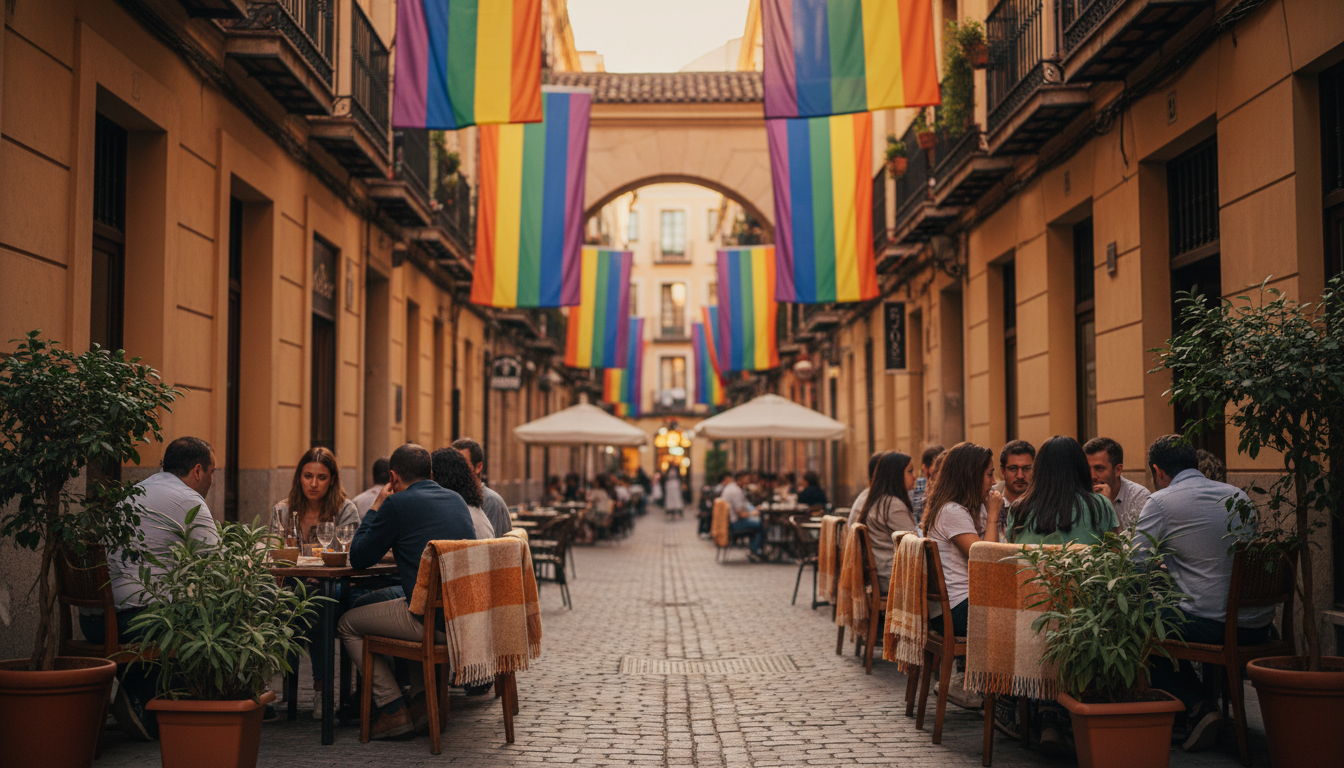 Narrow cobblestone street in Chueca with rainbow flags hanging between balconies, locals at outdoor
Lavapiés: Diverse and Unpretentious
Lavapiés offers something different: a neighborhood where queerness intersects with Madrid's immigrant communities, working-class roots, and artistic underground. The streets here mix Bangladeshi restaurants, flamenco tablaos, African hair salons, and queer-friendly bars without any of them feeling out of place.
The neighborhood has historically attracted LGBTQ+ residents priced out of Chueca, along with artists, activists, and anyone seeking Madrid's least polished authenticity. La Tabacalera, a former tobacco factory turned cultural center, hosts queer events alongside community organizing. Café Barbieri has been operating since 1902, serving coffee to a clientele that's evolved from factory workers to filmmakers to drag performers.
Home swaps in Lavapiés run slightly cheaper—expect apartments that would list around €60-100/night on rental platforms. The trade-off? Older buildings, sometimes without elevators, in a neighborhood that still shows its edges. Some SwappaHome members specifically seek this out, preferring authenticity over polish.
Worth noting: Lavapiés metro station has limited accessibility, with stairs rather than elevators. If mobility is a concern, look for swaps near Tirso de Molina or Antón Martín stations instead.
Malasaña: Queer-Adjacent Cool
Malasaña doesn't market itself as an LGBTQ+ neighborhood, but its history of counterculture makes it inherently welcoming. This is where La Movida happened—where Almodóvar filmed, where punk and new wave collided, where being different was the point.
Today, Malasaña attracts a younger, hipper crowd. Vintage shops line Calle de Velarde. Record stores still sell vinyl. The queer presence here is less concentrated than Chueca but equally comfortable—you'll find lesbian-owned wine bars, non-binary fashion designers, and a general atmosphere of "be whoever you want."
Plaza del Dos de Mayo anchors the neighborhood, filling nightly with people drinking cañas (small beers) on the benches. Home swaps here tend toward renovated apartments with mid-century touches, typically listing around €90-130/night on rental platforms. The neighborhood's appeal is walkability: you're 10 minutes from Gran Vía, 15 from the Prado, and surrounded by some of Madrid's best independent restaurants.
La Latina: Sunday Tradition
La Latina isn't specifically LGBTQ+ focused, but it hosts El Rastro—Madrid's massive Sunday flea market—and the tradition of Sunday afternoon cañas that follows. The streets between La Latina and Tirso de Molina metros fill with mixed crowds, including plenty of queer groups continuing the weekend.
Home swaps here put you in Madrid's oldest architecture, with buildings dating to the Habsburg era. Expect thick walls, irregular layouts, and the particular charm of apartments carved from medieval structures. The neighborhood quiets dramatically on weekday evenings, making it ideal for travelers who want energy on demand but peace as the default.
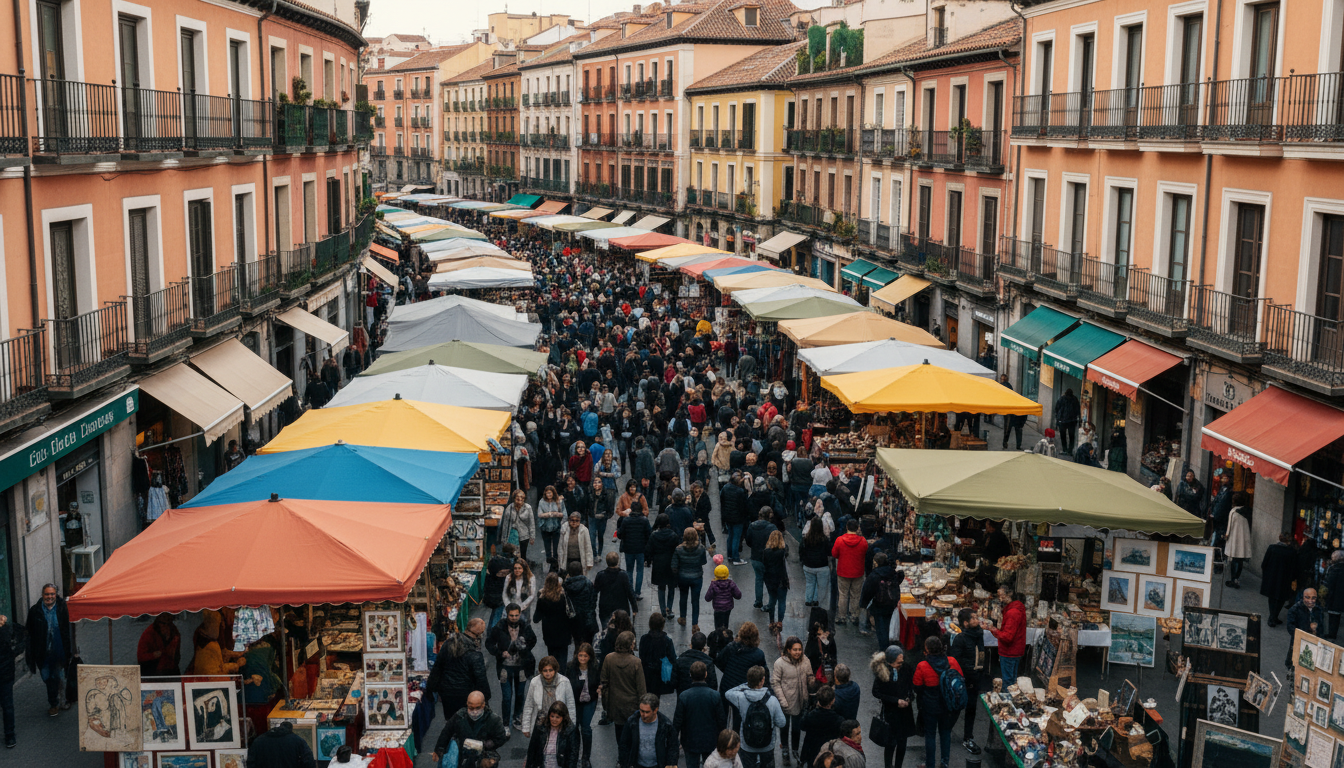 Aerial view of El Rastro market on Sunday morning, crowds browsing stalls along Calle de la Ribera d
Navigating LGBTQ+ Madrid: Practical Guidance for Home Swap Travelers
Safety and Public Affection
Madrid is genuinely safe for LGBTQ+ travelers—not in the qualified "safe compared to" way, but in the absolute sense. Same-sex couples hold hands throughout the city center without incident. Trans individuals navigate daily life with legal protections and social acceptance that, while imperfect, exceed most global cities.
That said, common sense applies. Late-night incidents occasionally occur in any major city. The outer neighborhoods—Vallecas, Carabanchel, some parts of Usera—are working-class and conservative, though not dangerous. If you're swapping in these areas (which offer significantly larger apartments for families), you might notice less visible queerness, but hostility remains rare.
The Spanish approach to LGBTQ+ acceptance has a particular flavor: less performative allyship, more casual acceptance. Don't expect rainbow capitalism everywhere—expect something better, which is being treated as unremarkable.
Healthcare and Resources
Spain's public healthcare system covers emergency care for tourists, but LGBTQ+-specific health services require some navigation. Sandoval Centro Sanitario, near Chueca, offers free sexual health testing including HIV/STI screenings with English-speaking staff. No appointment needed—just show up during opening hours (Monday-Friday, 9am-2pm).
For trans travelers, Spain recognizes legal gender changes without surgery requirements, and pharmacies stock hormone medications. However, obtaining prescriptions as a tourist is complicated. Bring sufficient supplies, and if refills become necessary, Farmacia Chueca on Calle de Hortaleza has experience with trans healthcare.
COGAM (Colectivo de Lesbianas, Gays, Transexuales y Bisexuales de Madrid) operates a community center in Chueca offering resources, support groups, and information for visitors. Their English-language services are limited but available.
Language and Communication
Madrid is less English-fluent than Barcelona or Amsterdam, but LGBTQ+ vocabulary translates easily. "Gay" and "lesbiana" work as expected. "Trans" is understood. "No binario" (non-binary) is gaining recognition, though older Madrileños may be unfamiliar.
Useful phrases for queer travelers:
- "¿Es un local LGBTQ+ friendly?" (Is this an LGBTQ+ friendly place?)
- "Mi pareja" (my partner—gender neutral)
- "Somos una pareja" (we're a couple)
In practice, you'll rarely need these. The assumption in central Madrid tends toward acceptance, and most service staff won't blink at same-sex couples or gender-non-conforming presentation.
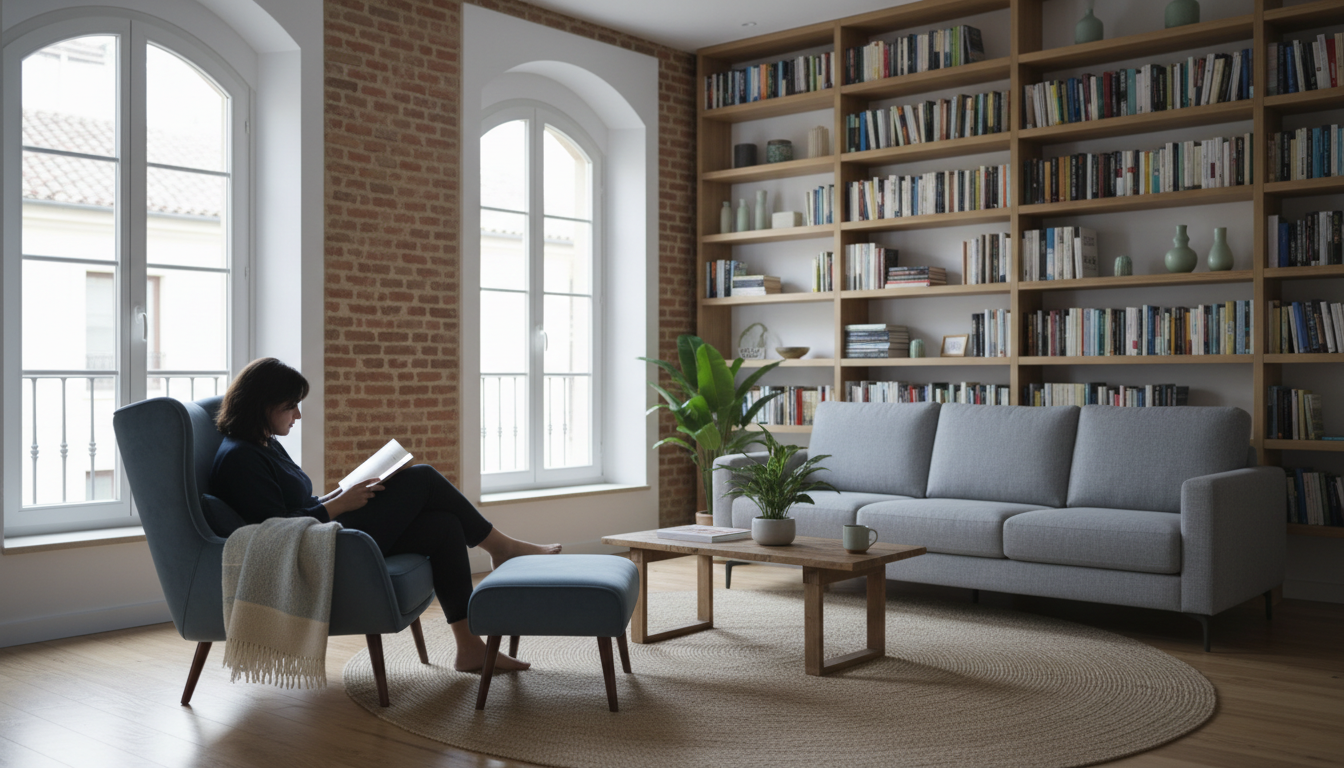 Interior of a cozy Madrid apartment living room with exposed brick, tall windows with afternoon ligh
LGBTQ+ Venues and Experiences Worth Your Time
Beyond the Circuit Bars
Chueca's bar scene is famous, but it's also predictable. Here's what seasoned travelers actually recommend:
Café Acuarela on Calle de Gravina serves as Chueca's unofficial living room—a café-bar that's been hosting queer conversations since 1992. The decor hasn't changed much, which is the point. Order a gin-tonic (Spain does them properly, with balloon glasses and premium botanicals) and settle into a corner.
Fulanita de Tal on Calle de la Ruda is Madrid's most established lesbian bar, though the crowd skews mixed on weekends. The name is a play on "fulana" (a dismissive term for women) reclaimed with attitude.
Strong Center isn't a bar but a gay sauna in Chueca that's been operating since 1993. For travelers interested in this scene, it's clean, well-maintained, and draws a local rather than tourist crowd. Entry runs around €17-20 depending on the day.
La Kama near Lavapiés programs queer-focused concerts, theater, and performance art. Check their schedule for events during your swap—the programming tends toward experimental and politically engaged.
Cultural Institutions with LGBTQ+ Relevance
The Museo Reina Sofía houses Picasso's Guernica, but its contemporary collection includes significant queer Spanish artists. Look for work by Pepe Espaliú, whose AIDS-era performances remain powerful, and the photography of Alberto García-Alix documenting La Movida's queer underground.
Cineteca Madrid in Matadero screens LGBTQ+ films year-round, not just during LesGaiCineMad (Madrid's queer film festival in November). The venue itself—a converted slaughterhouse turned cultural complex—hosts queer events throughout the year.
Casa de América occasionally programs Latin American LGBTQ+ cinema and cultural events, connecting Madrid's queer community with the broader Spanish-speaking world.
Annual Events to Plan Around
Orgullo de Madrid (Madrid Pride): Late June/early July. The main parade runs from Atocha to Plaza de Colón, but the week-long programming spreads across the city. Home swaps during Pride book months in advance—start looking in January if this is your target.
LesGaiCineMad: November. Spain's oldest LGBTQ+ film festival, running since 1996. Screenings happen at Cineteca and other venues, with a mix of Spanish-language and international films.
Madrid Bear Pride (Mad.Bear): March. A week of events for the bear community, centered on Chueca but spreading to venues citywide.
Trans Pride Madrid: Separate from the main Pride, typically in late June, focusing specifically on trans visibility and rights.
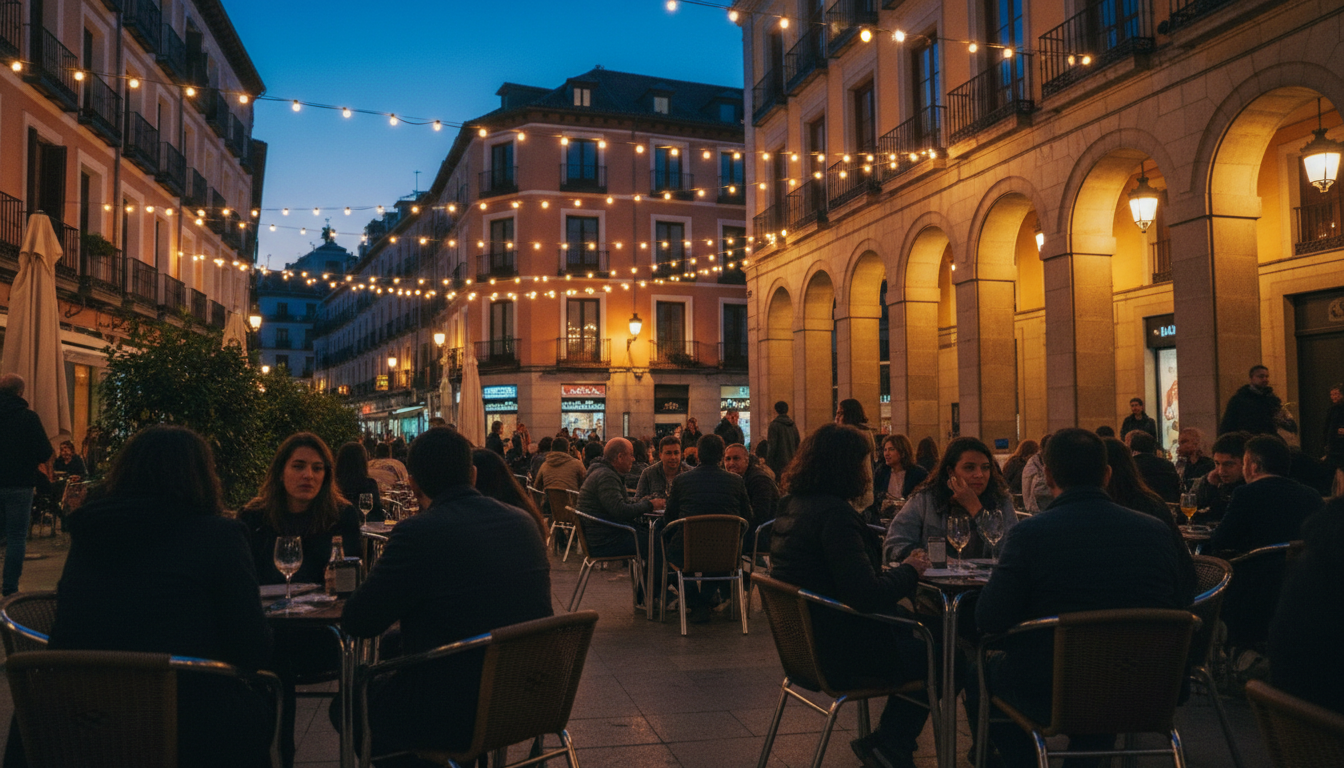 Evening scene at Plaza de Chueca with diverse crowd at outdoor caf tables, string lights overhead, h
Home Swapping Logistics for LGBTQ+ Travelers in Madrid
Finding the Right Swap
SwappaHome's platform doesn't filter by LGBTQ+ friendliness explicitly—because in Madrid, the assumption is that any central listing is welcoming. That said, some strategies help.
Look for listings in Chueca, Lavapiés, Malasaña, or La Latina. Read host profiles for signals: mentions of Pride attendance, rainbow flags in photos, or simply the casual mention of a same-sex partner.
When messaging potential swap partners, you don't need to come out or explain yourself. A simple "My partner and I are excited about your apartment" communicates everything necessary. If a host responds strangely to this, that's useful information—and vanishingly rare in Madrid listings.
What to Expect from Madrid Apartments
Madrid apartments differ from Northern European or American standards in ways that catch some travelers off guard.
Size: Expect 40-70 square meters for a one-bedroom, which feels spacious by Madrid standards. Two-bedrooms suitable for families or groups run 70-100 square meters.
Light: Madrid gets over 2,800 hours of sunshine annually—more than any other European capital. Apartments with south-facing windows can get hot in summer (May-September). Look for listings mentioning air conditioning, or plan your swap for spring or fall.
Kitchens: Smaller than American kitchens, but functional. Most include a gas cooktop, small oven, and the essential coffee maker. Washing machines are standard; dryers are rare (Madrileños hang-dry on interior patios or balconies).
Noise: Madrid is loud. The city doesn't quiet down until 1-2am, and weekend nights run later. If you're a light sleeper, look for interior-facing apartments ("interior" in listings) rather than street-facing ("exterior"). You'll sacrifice some light for significant quiet.
Getting Around as a Home Swapper
Madrid's metro system is extensive, affordable (€1.50-2 per ride, or €12.20 for a 10-trip pass), and runs until 1:30am nightly. The system is largely accessible, though some older stations lack elevators—check accessibility maps if this matters.
From the airport (MAD), the metro takes about 40 minutes to central stations and costs €4.50-5 including the airport supplement. Taxis run €30 fixed rate to anywhere within the M-30 ring road.
Within central Madrid, walking works best. Chueca to the Prado is 20 minutes on foot. Malasaña to Retiro Park is 25 minutes. Part of the home swap experience is learning these routes, discovering the small plazas and hidden corners that define Madrid's texture.
Making the Most of Your LGBTQ+ Madrid Home Swap
Living Like a Local
Madrid's rhythm differs from other European capitals. Lunch happens at 2-3pm. Dinner starts at 9pm at the earliest, more commonly 10pm. Bars stay open until 3am on weeknights, later on weekends. Adjusting to this schedule is part of the experience—and easier when you're staying in an apartment rather than fighting hotel breakfast hours.
The SwappaHome community often mentions that Madrid home swaps come with unexpected bonuses: a host's favorite tapas route written on a note, recommendations for the neighborhood pharmacy that stays open late, the name of the best bakery for Sunday morning churros.
Shop at neighborhood markets rather than supermarkets when possible. Mercado de San Miguel is beautiful but tourist-priced. Mercado de San Fernando in Lavapiés or Mercado de San Antón in Chueca offer better value and more local character. San Antón, notably, has a rooftop terrace bar that's become a low-key queer gathering spot.
Day Trips from Your Madrid Base
Toledo (30 minutes by train, €13 round trip) offers medieval architecture and a surprisingly queer-friendly old town—several gay-owned guesthouses have opened in recent years.
Segovia (27 minutes by high-speed train, €25 round trip) has the famous aqueduct and roast suckling pig. Less queer-specific, but welcoming.
Sitges, while technically a Barcelona day trip, is accessible from Madrid by high-speed train (2.5 hours, €60-80 round trip). Spain's most famous gay beach town makes for an ambitious but doable day trip during summer.
Connecting with Local Community
For travelers staying longer than a week, connecting with Madrid's LGBTQ+ community deepens the experience.
COGAM hosts regular social events, some English-friendly. Check their calendar for conversation groups, hiking excursions, and cultural outings.
Fundación Triángulo focuses on LGBTQ+ rights and occasionally hosts public events.
Meetup groups in Madrid include English-speaking LGBTQ+ social groups, though activity varies.
The most organic connections happen simply by frequenting the same cafés. Spend a few mornings at Café Acuarela or Federal Café in Malasaña, and you'll start recognizing faces. Madrid rewards regulars.
The Honest Case for Home Swapping in LGBTQ+ Madrid
Hotels in central Madrid run €150-300/night for anything decent, more during Pride or major events. Vacation rentals on commercial platforms add 15-20% in fees. A week in Madrid can easily cost $1,500-2,500 in accommodation alone.
Home swapping through SwappaHome's credit system sidesteps this entirely. You're exchanging nights—one credit per night, regardless of whether you're staying in a Chueca studio or hosting someone in your own home. The economics make extended stays possible: two weeks in Madrid becomes realistic when you're not hemorrhaging cash on hotels.
But the real argument isn't financial. It's experiential.
Staying in a local's apartment in Lavapiés, with their books on the shelf and their coffee maker on the counter, you're not a tourist consuming Madrid's queerness. You're participating in it. You wake up, make coffee, walk to the market, nod at the same neighbors your host nods at. The city stops being a destination and starts being, temporarily, home.
For LGBTQ+ travelers especially, this matters. Queer life isn't a museum exhibit or a neighborhood to visit—it's daily existence, morning routines, the particular café where everyone knows you're together. Home swapping in Madrid lets you experience that ordinariness, which is ultimately what equality looks like.
The SwappaHome community includes plenty of LGBTQ+ members, many listing homes in cities worldwide. A Madrid swap might lead to hosting a queer couple from São Paulo, or swapping with a trans family from Berlin. The network effect builds: each exchange strengthens connections across a global queer community that's always traveled, always sought each other out, always found home in unexpected places.
Madrid is one of those places. The rainbow crosswalk at Chueca isn't just paint—it's an invitation. And a home swap is the best way to accept it.
Frequently Asked Questions
Is Madrid safe for LGBTQ+ travelers?
Madrid is one of Europe's safest cities for LGBTQ+ travelers. Spain's comprehensive legal protections, combined with widespread social acceptance, mean same-sex couples can hold hands and trans individuals can navigate daily life without significant risk. Central neighborhoods like Chueca, Malasaña, and Lavapiés are particularly welcoming, with visible queer communities year-round.
What is the best neighborhood for an LGBTQ+ home swap in Madrid?
Chueca remains Madrid's historic gayborhood and offers the highest concentration of LGBTQ+ venues, but Lavapiés and Malasaña provide equally welcoming atmospheres with different vibes. Chueca suits travelers wanting immediate access to queer nightlife; Lavapiés offers diversity and authenticity; Malasaña attracts a younger, artsy crowd. All three neighborhoods have active home swap listings.
When is Madrid Pride and should I plan my home swap around it?
Madrid Pride (Orgullo de Madrid) occurs in late June or early July, drawing over two million attendees. It's spectacular but crowded—home swaps book months in advance and the city's prices spike. For a more local experience of LGBTQ+ Madrid, consider visiting during shoulder seasons (October-November or March-May) when the community is visible but the tourist crowds aren't.
How much can I save with a home swap versus hotels in Madrid?
Central Madrid hotels average €150-300/night, while comparable vacation rentals run €100-180/night plus platform fees. Through SwappaHome's credit system, you exchange nights rather than money—one credit per night regardless of location. A two-week Madrid stay that might cost €2,000-4,000 in hotels costs only the credits you've earned by hosting others, making extended LGBTQ+ Madrid trips financially accessible.
Are there LGBTQ+ specific resources for travelers in Madrid?
COGAM (Madrid's main LGBTQ+ organization) operates a community center in Chueca with visitor resources. Sandoval Centro Sanitario offers free sexual health services including HIV testing with English-speaking staff. Berkana bookstore on Calle de Hortaleza stocks LGBTQ+ literature and serves as an informal information hub. Most resources concentrate in Chueca, within walking distance of typical home swap locations.

Published by
SwappaHome
SwappaHome Editorial Team
Home Exchange & Slow Travel Editorial
The SwappaHome Editorial Team brings together travel research, home-exchange community insights, and platform data to produce practical guides for first-time and experienced home swappers. Every article cites real platforms, current market rates, and verifiable city-level facts so readers can make informed decisions without guessing.
Ready to try home swapping?
Join SwappaHome and start traveling by exchanging homes. Get 7 free credits when you sign up!
Related articles
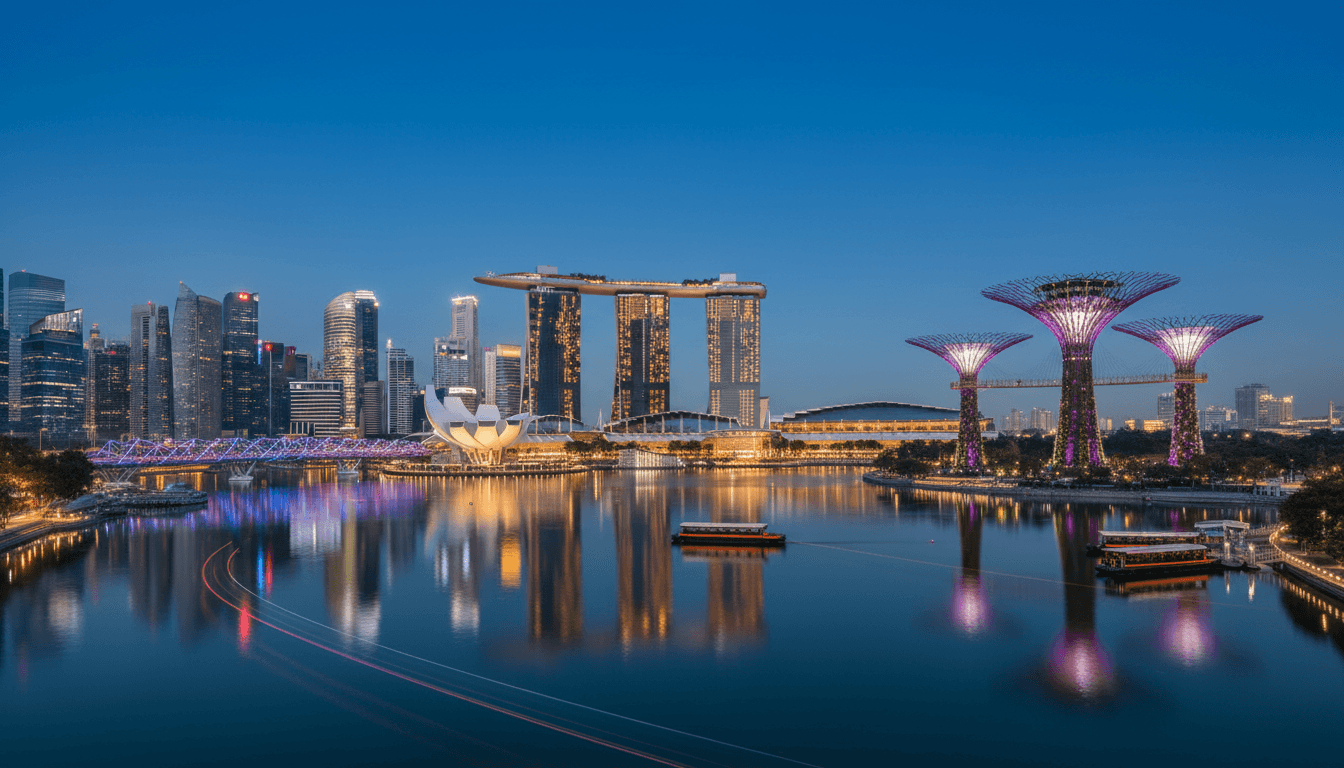
Bachelor and Bachelorette Parties in Singapore: The Complete Home Swap Group Guide for 2026
Planning a bachelor or bachelorette party in Singapore? Discover how home swapping lets groups of 6-12 stay together in luxury condos, saving thousands while partying in Marina Bay.
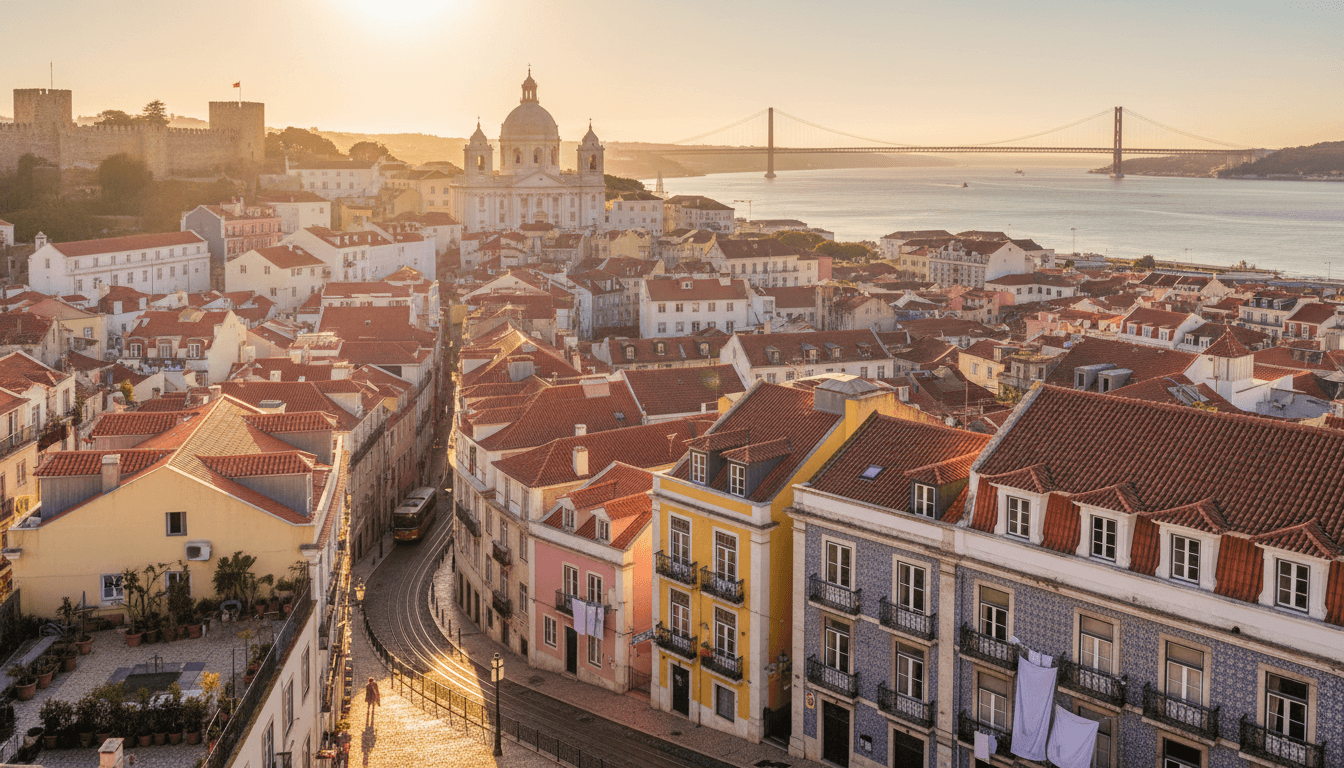
Cycling in Lisbon: 7 Home Swap Bike Tour Itineraries for Every Rider
Discover the best cycling routes in Lisbon with these home swap bike tour itineraries—from waterfront paths to hilltop adventures, all starting from your borrowed home.
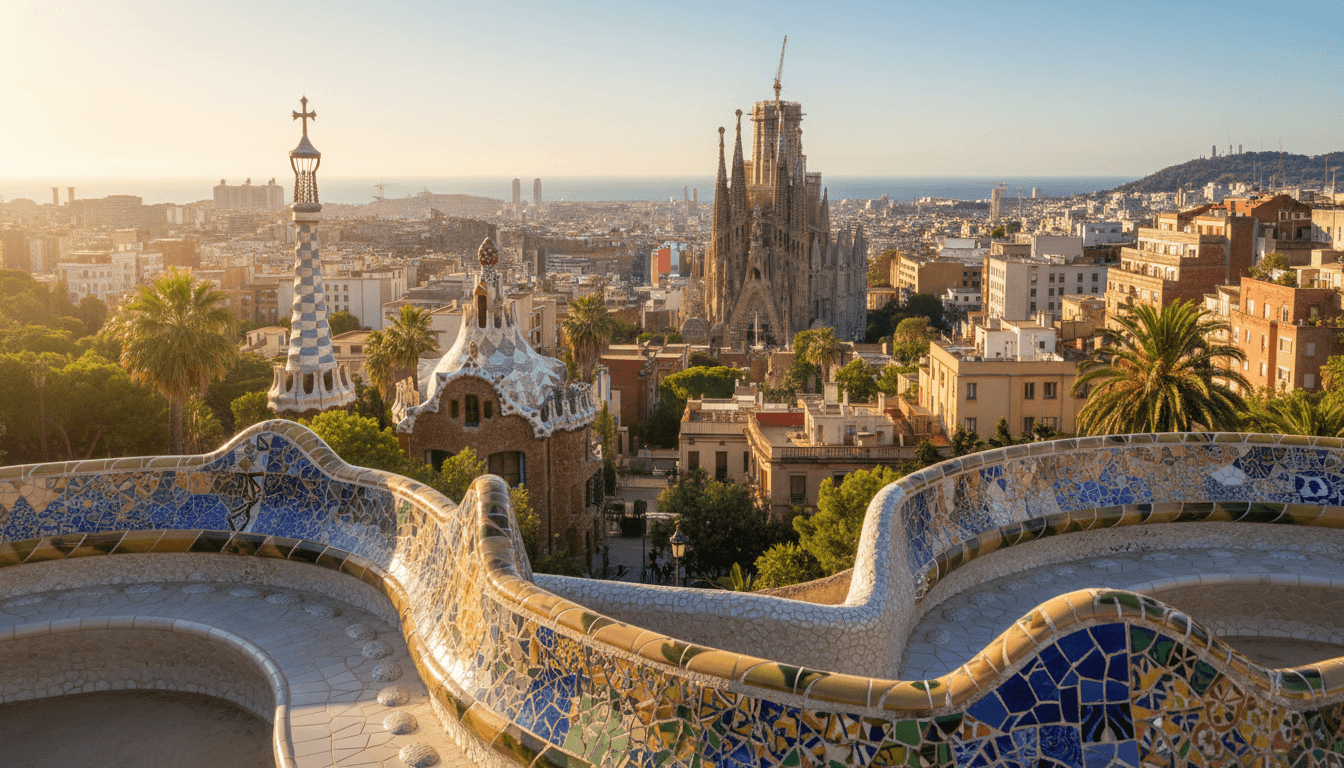
Graduation Trip to Barcelona: How Home Swapping Gives New Graduates the Ultimate Celebration
Planning a graduation trip to Barcelona? Discover how home swapping lets new graduates explore Spain's most vibrant city without the hostel crowds or hotel costs.