
Lisbon Architecture Guide: A Home Swap Traveler's Self-Guided Building Tour

SwappaHome Editorial Team
Home Exchange & Slow Travel Editorial
Discover Lisbon's architectural treasures from Manueline masterpieces to azulejo-covered facades. This self-guided tour reveals buildings most tourists miss—perfect for home swap travelers.
The morning light hits the azulejo tiles on Rua Augusta differently than anywhere else in Europe. That distinctive Portuguese blue-and-white ceramic work catches the sun at about 8 AM, turning an ordinary walk to the padaria into something that stops you mid-stride. This is what a Lisbon architecture guide written for home swap travelers needs to capture—not the rushed tour-bus version of the city's buildings, but the slow revelation that comes from actually living in a neighborhood for a week or two.
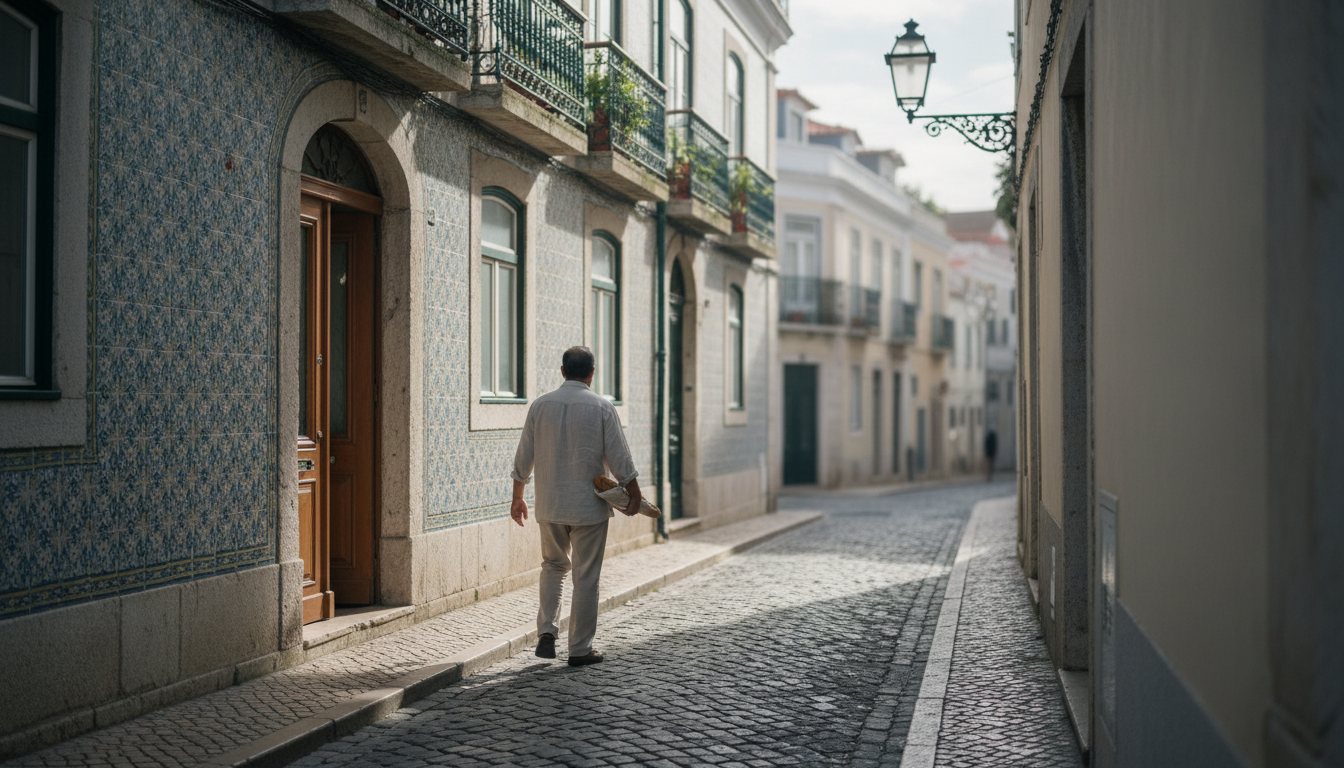 Morning light illuminating traditional azulejo-tiled building facade on a narrow Alfama street, with
Most architecture guides to Lisbon focus on the obvious monuments—Jerónimos Monastery, Belém Tower, the Praça do Comércio. Those are magnificent, certainly. But the real architectural education happens when you're walking from your borrowed apartment in Graça down to the Feira da Ladra flea market, passing three centuries of building styles in fifteen minutes. That's the Lisbon architecture experience that home exchange travelers get to know intimately.
Why Home Swap Travelers See Lisbon's Architecture Differently
Here's what changes when you're staying in someone's actual Lisbon apartment rather than a hotel in Baixa: you stop being a tourist looking at buildings and start being a temporary resident living inside them.
This shift comes up constantly in the SwappaHome community. Members who've exchanged homes in Lisbon describe noticing architectural details that guidebooks never mention—the way 18th-century stairwells were designed to maximize natural light, or how the traditional Pombaline buildings in Baixa use a distinctive wooden cage structure (gaiola) that made them earthquake-resistant after the devastating 1755 quake.
Stay in a fourth-floor walk-up in Mouraria, and you become intimately familiar with those stairs. You notice the worn marble steps, the wrought-iron railings, the small shrine to Nossa Senhora tucked into the landing. These aren't tourist attractions. They're the living architecture of a city that's been continuously inhabited for over 3,000 years.
The economics matter too. A week in a Lisbon hotel runs €150-280 per night for anything central and decent—that's €1,050-1,960 for a week. Home swap travelers using the credit system pay nothing for accommodation, which means more budget for actually experiencing the city. Take a private architecture walking tour with Context Travel (around €80-100 per person), buy a few architecture books from Livraria Bertrand on Rua Garrett, and still come out dramatically ahead.
The Seven Architectural Eras You'll Walk Through
Lisbon isn't a museum city frozen in one period. It's a palimpsest—layers of construction from Phoenician times through last year's renovation, all visible if you know where to look.
Moorish Foundations (8th-12th Century)
Start at the Castelo de São Jorge, but don't just snap photos from the miradouro. Walk the walls and look at the construction techniques. The lower portions show Moorish building methods—smaller, more irregular stones fitted together with remarkable precision. The Moors controlled Lisbon (then called al-Ushbuna) for over 400 years, and their influence runs deeper than most visitors realize.
In Alfama, the oldest neighborhood, the street layout itself is Moorish architecture. Those narrow, winding lanes weren't random—they were designed to provide shade, channel breezes, and create defensible spaces. When you're staying in an Alfama apartment, you're living inside urban planning that predates Portugal itself.
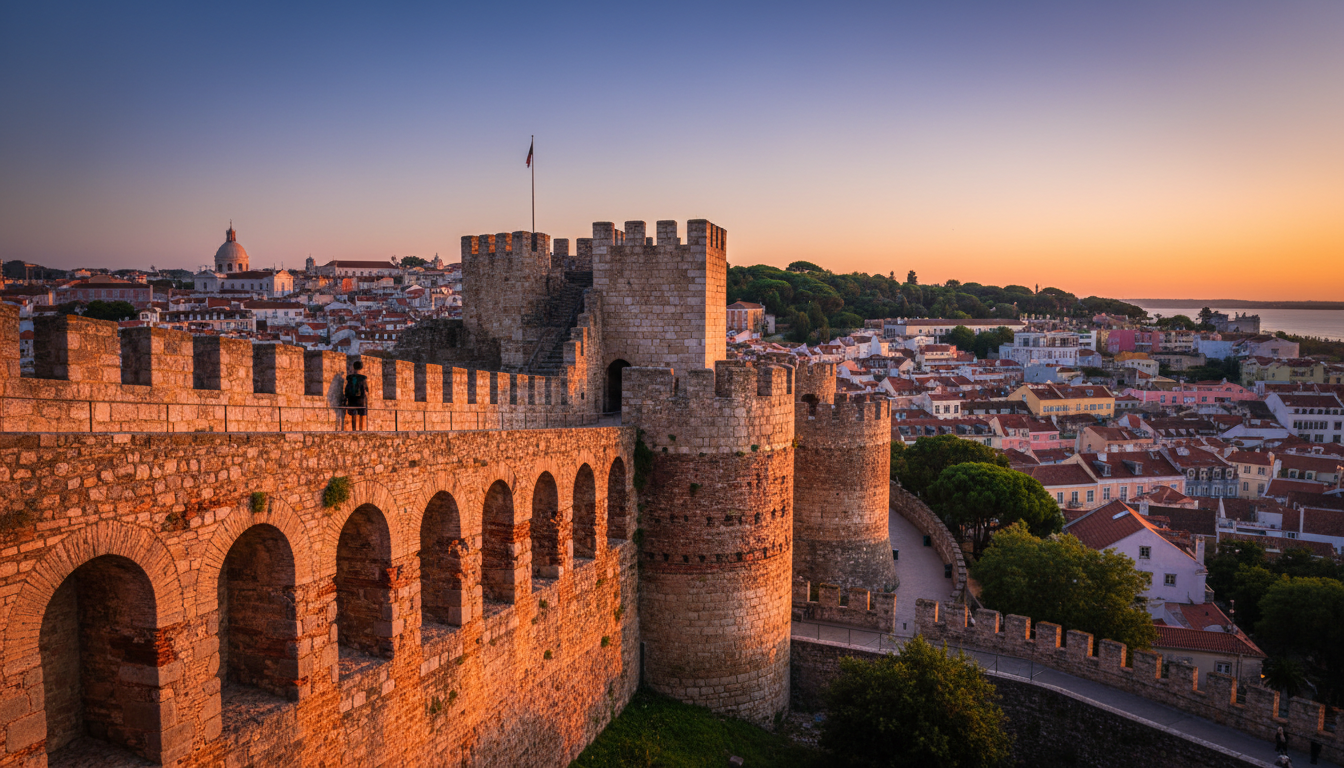 Ancient stone walls of Castelo de So Jorge showing the contrast between Moorish lower sections and l
Manueline Magnificence (1495-1521)
This is Portugal's unique contribution to world architecture—a style so distinctive it's named after King Manuel I. The Jerónimos Monastery in Belém is the masterpiece, and yes, every tourist visits. But here's what most miss: go early (doors open at 10 AM, arrive by 9:45) and spend your time in the cloisters, not the church.
The cloisters contain some of the most intricate stone carving ever achieved. Look for the maritime motifs—ropes, anchors, armillary spheres, exotic plants from newly discovered lands. This architecture was propaganda in stone, announcing Portugal's Age of Discovery to the world. The entrance fee is €10, but it's free on the first Sunday of every month.
The Torre de Belém (€8 entry, or €12 combined with Jerónimos) shows Manueline military architecture—those distinctive corner turrets with their Venetian-influenced design represent one of the earliest examples of a bastion fort in Portugal.
Pombaline Reconstruction (1755-1880)
The 1755 earthquake, followed by tsunami and fire, destroyed 85% of Lisbon. What rose from the rubble was revolutionary—Europe's first planned urban reconstruction, overseen by the Marquês de Pombal.
Walk the grid of Baixa (lower town) and you're walking through Enlightenment ideals made physical. The streets are numbered rationally. The buildings are uniform in height. And hidden inside those seemingly identical facades is the gaiola pombalina—a flexible wooden frame designed to sway with earthquakes rather than collapse.
Staying in a Baixa apartment? Many have been converted from commercial to residential use. Ask your host about the building's structure—original gaiola frames are often still intact, visible in basement areas or during renovations.
The Praça do Comércio anchors this district—a massive waterfront square that replaced the destroyed royal palace. The triumphal arch on Rua Augusta wasn't completed until 1873, making it one of the longest construction projects in Lisbon's history.
 Wide view of Praa do Comrcio at golden hour, showing the symmetrical Pombaline buildings, the triump
Romantic and Revival Styles (1850-1920)
As Portugal stabilized in the 19th century, wealthy families built fantasy palaces in the hills around Lisbon. The Palácio da Pena in Sintra (€14 entry) is the famous one—a fever dream of Romantic architecture mixing Manueline, Moorish, and Germanic influences.
Within Lisbon proper, look for the revival buildings along Avenida da Liberdade. This Champs-Élysées-inspired boulevard showcases Portuguese interpretations of European styles—neo-Manueline, neo-Moorish, Art Nouveau. The Tivoli Hotel (now Tivoli Avenida Liberdade) and the old Cinema São Jorge building are worth examining.
In the Príncipe Real neighborhood, the romantic garden with its massive Mexican cypress tree (planted in 1842, now supported by an iron structure that's become architecture itself) represents the era's obsession with exotic nature.
Estado Novo Monumentalism (1933-1974)
Portugal's dictatorship left its architectural mark, particularly in Belém. The Padrão dos Descobrimentos (Monument to the Discoveries) and the adjacent Museu de Arte Popular represent fascist-era monumentalism—imposing, nationalistic, designed to project power.
The style is controversial, but architecturally significant. The monument (€10 to go inside, free to view from outside) offers one of the best views of the Jerónimos Monastery and the 25 de Abril Bridge. Understanding this era helps explain the stark contrast with what came after.
Post-Revolution Modernism (1974-2000)
After the Carnation Revolution, Lisbon's architecture opened up. The Centro Cultural de Belém (1992), designed for Portugal's EU presidency, represents this period—massive, confident, distinctly Portuguese modernism in limestone and concrete.
The Estação do Oriente, designed by Santiago Calatrava for Expo '98, is the era's showpiece. The station's tree-like steel and glass canopy covers eight railway tracks and a metro station. It's worth the trip to Parque das Nações just to experience the space—and the surrounding Expo district shows 1990s optimism about technology and urban renewal.
 Interior of Estao do Oriente showing Calatravas dramatic white steel and glass canopy structure with
Contemporary Lisbon (2000-Present)
The 21st century brought both careful restoration and bold new construction. The MAAT (Museum of Art, Architecture and Technology) by Amanda Levete opened in 2016—a sinuous white form along the Tejo riverfront that's become Lisbon's most photographed new building. Entry is €9, but the roof walkway is free and offers remarkable views.
In the creative hub of LX Factory, industrial architecture from the 19th century has been repurposed into studios, restaurants, and shops. This adaptive reuse represents contemporary Lisbon's approach—honoring the old while making it relevant.
The ongoing renovation of Mouraria and Alfama shows the tensions in contemporary preservation. Gentrification has brought investment and restoration, but also displacement. The architecture improves; the community character is under pressure. It's a conversation worth having with your home swap hosts, many of whom have strong opinions on the changes.
A Self-Guided Architecture Walk: Alfama to Belém
This route covers approximately 8 kilometers and takes 4-6 hours depending on how many stops you make. Start early to avoid afternoon heat and crowds.
Morning: Alfama and Mouraria (2-3 hours)
Begin at the Miradouro da Senhora do Monte in Graça—the highest viewpoint in Lisbon. From here, you can see the entire city's architectural layers spread below. The Castelo de São Jorge dominates the middle ground, with Baixa's Pombaline grid beyond, and the Tagus River stretching to the horizon.
Walk down through Graça to the Feira da Ladra (Tuesday and Saturday mornings only), passing 18th-century townhouses with their characteristic wrought-iron balconies. The market itself occupies the Campo de Santa Clara, surrounded by the baroque Igreja de Santa Engrácia (now the National Pantheon, €5 entry) and the 17th-century Convento de São Vicente de Fora.
Continue into Alfama proper. There's no map for this—the neighborhood defeats GPS. Let yourself get lost in the medieval street pattern. Look up constantly. The azulejo work on residential buildings ranges from simple geometric patterns to elaborate narrative scenes.
Stop at Casa dos Bicos on Rua dos Bacalhoeiros. This 16th-century house, with its facade of diamond-shaped stones (inspired by Italian Renaissance palaces), now houses the José Saramago Foundation. The ground floor is free to visit and shows archaeological excavations beneath the building.
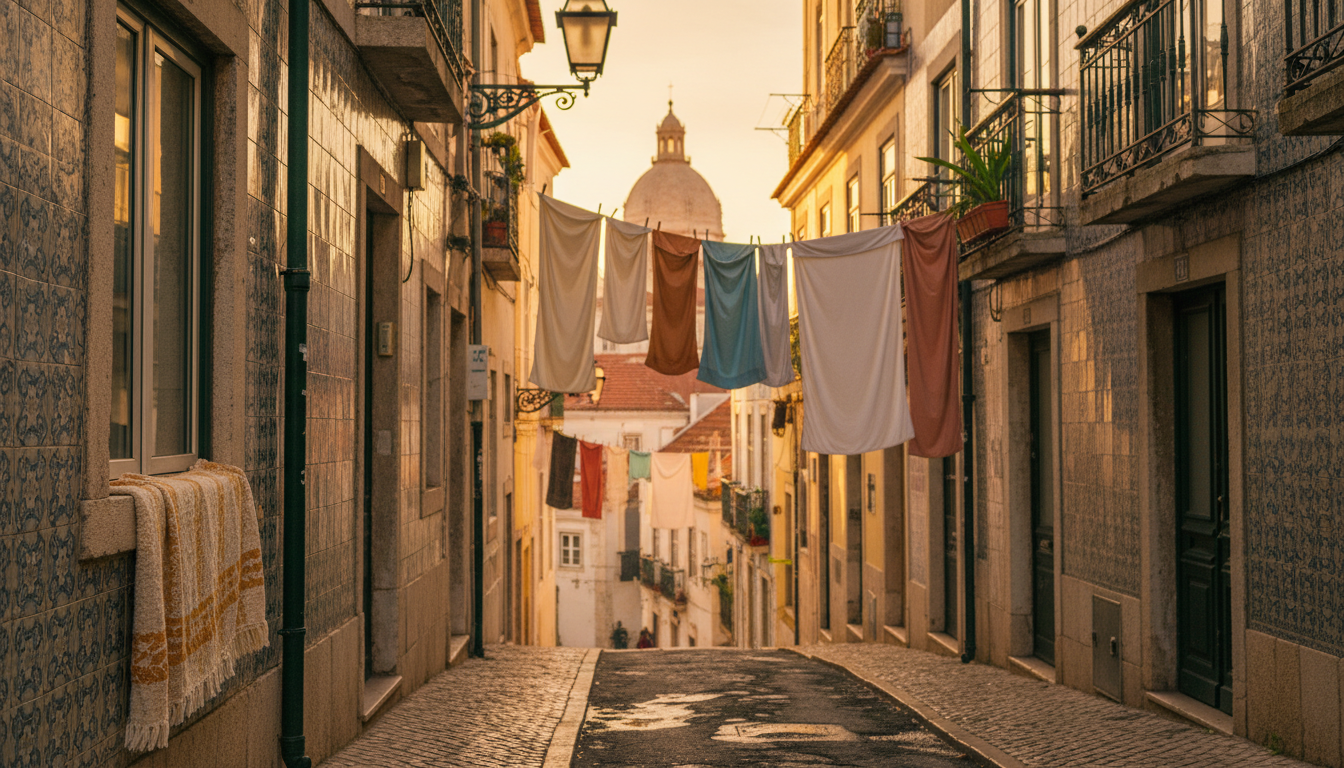 Narrow Alfama street with laundry hanging between buildings, azulejo tiles on walls, and the dome of
Midday: Baixa and Chiado (1-2 hours)
Take the iconic Tram 28 from Alfama (or walk down to Praça do Comércio). The tram itself is a piece of mobile architecture—the wooden cars date from the 1930s, and the route was designed to navigate Lisbon's steepest streets.
In Baixa, walk the length of Rua Augusta from the waterfront to the arch. Notice the uniformity—every building is the same height, with the same window patterns. This was radical urban planning in the 18th century.
Climb to Chiado via the Elevador de Santa Justa (€5.30 round trip, or free with a Lisboa Card). This neo-Gothic iron elevator, built in 1902 by a student of Gustave Eiffel, connects Baixa to the Carmo neighborhood. The views from the top platform are worth the queue.
In Chiado, the Igreja do Carmo ruins stand as Lisbon's most evocative earthquake memorial. The Gothic church lost its roof in 1755 and was never rebuilt—the skeletal arches now frame the sky. Entry is €5 and includes a small archaeological museum.
Afternoon: Belém (2-3 hours)
Take Tram 15E from Praça do Comércio to Belém (about 20 minutes, €3 single journey). This waterfront route passes the Santos design district and the Alcântara docks, showing Lisbon's industrial heritage.
In Belém, the architectural highlights cluster within walking distance. Start with the Torre de Belém on the waterfront, then walk east along the promenade past the Padrão dos Descobrimentos to the Jerónimos Monastery.
Between the monastery and the river, the MAAT building offers a contemporary counterpoint. Walk up onto the undulating roof for free—the view back toward the monastery shows five centuries of Portuguese ambition in a single frame.
End at Pastéis de Belém (Rua de Belém 84-92) for the famous custard tarts. The bakery occupies a 19th-century building with azulejo-covered rooms that extend far deeper than the shopfront suggests. A pastel de nata and espresso costs about €2.50—arguably Lisbon's best architectural refreshment.
Neighborhood Architecture: Where to Base Your Home Swap
The neighborhood you choose for your home exchange shapes your architectural experience. Here's what to expect in Lisbon's main residential areas.
Alfama
The oldest neighborhood, with buildings dating from the Moorish period through the 19th century. Expect narrow streets, steep stairs, and apartments that have been continuously modified for centuries. Many buildings have medieval foundations with later additions stacked on top.
Home swap apartments here tend to be smaller and quirkier—exposed stone walls, uneven floors, tiny kitchens. The trade-off is living inside architectural history. Morning light through small windows. The sound of Fado from a nearby restaurant. The smell of grilled sardines from the tasca downstairs.
Baixa and Chiado
Pombaline architecture dominates—regular, rational, with high ceilings and large windows. Apartments in these 18th-century buildings often feature original details like ornate plasterwork and hardwood floors. The grid layout makes navigation easy, and you're central to everything.
The catch: these buildings are old, and many haven't been modernized. Expect stairs (lots of them), occasional plumbing quirks, and noise from the busy streets below. But the bones are magnificent.
Príncipe Real and Bairro Alto
19th-century bourgeois architecture—larger apartments, more ornate facades, garden squares. Príncipe Real in particular has seen significant renovation, with many buildings restored to their original grandeur.
This is where you'll find some of the most comfortable home swap options—renovated apartments with modern amenities inside historic shells. The neighborhood is also Lisbon's LGBTQ+ hub, with a vibrant nightlife scene (Bairro Alto gets loud on weekends).
Graça and Mouraria
Working-class neighborhoods with a mix of architectural periods. Mouraria is undergoing rapid gentrification, with traditional buildings being converted to tourist apartments. Graça remains more residential, with spectacular views from multiple miradouros.
Home swaps here offer authenticity—you're living where Lisboetas actually live, not in a tourist zone. The architecture is less grand but more human-scaled. Local shops, neighborhood restaurants, the rhythm of ordinary Portuguese life.
Belém and Ajuda
Western Lisbon, along the river. Belém has the monuments; Ajuda has the residential neighborhoods. Architecture here ranges from the Manueline masterpieces to 20th-century apartment blocks.
Fewer home swap options in this area, but those that exist offer proximity to the major architectural sites and a quieter, more suburban feel. The riverside promenade is excellent for morning runs.
Practical Tips for Architecture Enthusiasts
Best Times for Photography
Lisbon faces west toward the Atlantic, which creates distinctive lighting conditions. Morning light (7-10 AM) is best for Alfama and the eastern neighborhoods—the sun illuminates the azulejo tiles beautifully. Late afternoon (4-7 PM) works better for Belém and the western areas, with golden hour light on the monuments.
The famous Lisbon light that artists have celebrated for centuries comes partly from the city's position and partly from the white limestone and ceramic tiles that reflect and diffuse sunlight. Overcast days can actually be excellent for photography—the soft light reduces harsh shadows on intricate architectural details.
Guided Tour Options
For deeper architectural understanding, consider these options:
Context Travel offers small-group architecture walks led by local experts (€80-100 per person, 3 hours). Their "Lisbon's Architectural Layers" tour covers similar ground to the self-guided walk above but with scholarly commentary.
Lisbon Architecture Triennale (held every three years, next in 2025) organizes special building access and exhibitions. Check their website for programming.
Open House Lisboa (annual event, usually in October) opens private buildings and architectural offices to the public for one weekend. If your home swap coincides with this event, it's unmissable.
Resources for Self-Study
Pick up these books at Livraria Bertrand (Rua Garrett 73, the world's oldest operating bookstore—itself an architectural landmark):
- "Lisbon: A Cultural History" by Paul Buck
- "Azulejos of Portugal" by Rioletta Sabo
- "The Architecture of Lisbon" by Helena Barreiros
The Museu de Lisboa (€3 entry, free on Sundays until 2 PM) has permanent exhibitions on the city's urban development, including models showing Lisbon before and after the 1755 earthquake.
What Your Home Swap Host Might Share
One of the genuine advantages of home exchange is access to local knowledge. SwappaHome members who've stayed in Lisbon frequently mention hosts who shared architectural insights no guidebook contains—the best angle for photographing a particular church, the building where a famous architect lived, the café with the most impressive original interior.
When arranging your exchange, mention your interest in architecture. Many Lisbon residents are proud of their city's built heritage and happy to share their favorite overlooked details. Some hosts leave notes about their neighborhood's history; others might offer to meet for coffee and a walking tour.
The Architecture You Live Inside
Here's what makes a Lisbon home swap different from a hotel stay, architecturally speaking: you're not looking at buildings, you're inhabiting one.
That 18th-century Pombaline apartment with its high ceilings and wooden floors? You're sleeping in it, cooking in its kitchen, watching the light change through its tall windows. The medieval Alfama house with the worn stone stairs? You're climbing them every day, learning their rhythm, noticing which step creaks.
This isn't just tourism—it's temporary residence in architectural history. The buildings become familiar rather than foreign. You start to understand why the windows are placed where they are, why the rooms connect in particular ways, why the neighborhood feels the way it does.
We've seen this come up often in the SwappaHome community: this kind of slow, residential travel changes how you see architecture everywhere. After a week living in a Lisbon building, travelers report noticing the buildings in their own cities differently. They look up more. They wonder about the history behind ordinary facades.
Lisbon rewards this kind of attention. The city has been continuously inhabited for millennia, rebuilt after disaster, shaped by empire and revolution and European integration. Every street contains evidence of this history, if you know how to read it.
A Lisbon architecture guide for home swap travelers isn't really about monuments and museums—though those matter. It's about the education that comes from living inside a city's buildings, walking its streets daily, becoming temporarily local. That's what home exchange makes possible, and it's why Lisbon, with its layered architectural history and welcoming residential neighborhoods, is such an ideal destination for this kind of travel.
The morning light on those azulejo tiles will be waiting tomorrow, and the day after that. You'll have time to notice.
Frequently Asked Questions
What is the best neighborhood in Lisbon for architecture enthusiasts?
Alfama offers the most concentrated architectural history, with buildings spanning Moorish foundations through 19th-century additions. For home swap travelers, it provides daily immersion in medieval urban planning and traditional Portuguese residential architecture. Expect narrow streets, steep stairs, and apartments with centuries of character—plus easy walking access to the Castelo de São Jorge and waterfront monuments.
How much does it cost to visit Lisbon's main architectural landmarks?
Most major sites charge €8-14 for entry. Jerónimos Monastery costs €10 (free first Sundays), Torre de Belém is €8, and the MAAT museum charges €9. A Lisboa Card (€22 for 24 hours) includes free public transport and discounts on many attractions. Home swap travelers typically save €1,000-2,000 on accommodation alone, making these entrance fees easily affordable.
Can you see Lisbon's architecture without joining an organized tour?
Absolutely. Lisbon's architectural treasures are largely visible from public streets and accessible neighborhoods. The self-guided walk from Alfama to Belém covers all major periods and takes 4-6 hours. For deeper understanding, Context Travel offers expert-led architecture walks (€80-100), but independent exploration with a good guidebook works well for most visitors.
What makes Pombaline architecture unique to Lisbon?
Pombaline buildings, constructed after the 1755 earthquake, feature the gaiola pombalina—a flexible wooden cage structure designed to withstand seismic activity. This was revolutionary 18th-century engineering. The style also standardized building heights and facade designs across the Baixa district, creating Europe's first comprehensively planned urban reconstruction. Many home swap apartments in downtown Lisbon occupy these historic buildings.
Is the Lisbon Open House event worth planning a home swap around?
Open House Lisboa (typically October) opens private buildings, architectural offices, and normally inaccessible spaces to the public for one weekend. For architecture enthusiasts, it's exceptional—you'll see interiors that aren't otherwise visitable. If you can time your home swap to coincide with this annual event, the architectural access is unmatched anywhere in Portugal.

Published by
SwappaHome
SwappaHome Editorial Team
Home Exchange & Slow Travel Editorial
The SwappaHome Editorial Team brings together travel research, home-exchange community insights, and platform data to produce practical guides for first-time and experienced home swappers. Every article cites real platforms, current market rates, and verifiable city-level facts so readers can make informed decisions without guessing.
Ready to try home swapping?
Join SwappaHome and start traveling by exchanging homes. Get 7 free credits when you sign up!
Related articles

Bachelor and Bachelorette Parties in Singapore: The Complete Home Swap Group Guide for 2026
Planning a bachelor or bachelorette party in Singapore? Discover how home swapping lets groups of 6-12 stay together in luxury condos, saving thousands while partying in Marina Bay.
Cycling in Lisbon: 7 Home Swap Bike Tour Itineraries for Every Rider
Discover the best cycling routes in Lisbon with these home swap bike tour itineraries—from waterfront paths to hilltop adventures, all starting from your borrowed home.
Graduation Trip to Barcelona: How Home Swapping Gives New Graduates the Ultimate Celebration
Planning a graduation trip to Barcelona? Discover how home swapping lets new graduates explore Spain's most vibrant city without the hostel crowds or hotel costs.