New Year's Eve Home Swap in São Paulo: How to Celebrate Like a Local in Brazil's Biggest City

SwappaHome Editorial Team
Home Exchange & Slow Travel Editorial
Skip the tourist traps and celebrate New Year's Eve in São Paulo through a home swap. Insider tips on neighborhoods, parties, and the famous Paulistano Réveillon traditions.
The bass hit my chest before I even stepped out of the elevator.
December 31st, 2019. My home swap apartment in São Paulo's Vila Madalena neighborhood had these floor-to-ceiling windows overlooking a city that was already humming with anticipation. Somewhere below, someone was grilling picanha on a tiny balcony—that smoky, charred meat smell drifting up and mixing with distant samba. I stood there thinking: this is nothing like the New Year's Eve I'd imagined.
It was better.
If you're considering a New Year's Eve home swap in São Paulo, you're about to experience something most tourists never see. While they're crammed into overpriced hotel bars watching fireworks from a distance, you'll be on someone's rooftop terrace, clinking glasses with neighbors you just met, eating homemade rabanada at 2 AM, finally understanding why Paulistanos insist their city throws the best Réveillon in the world.
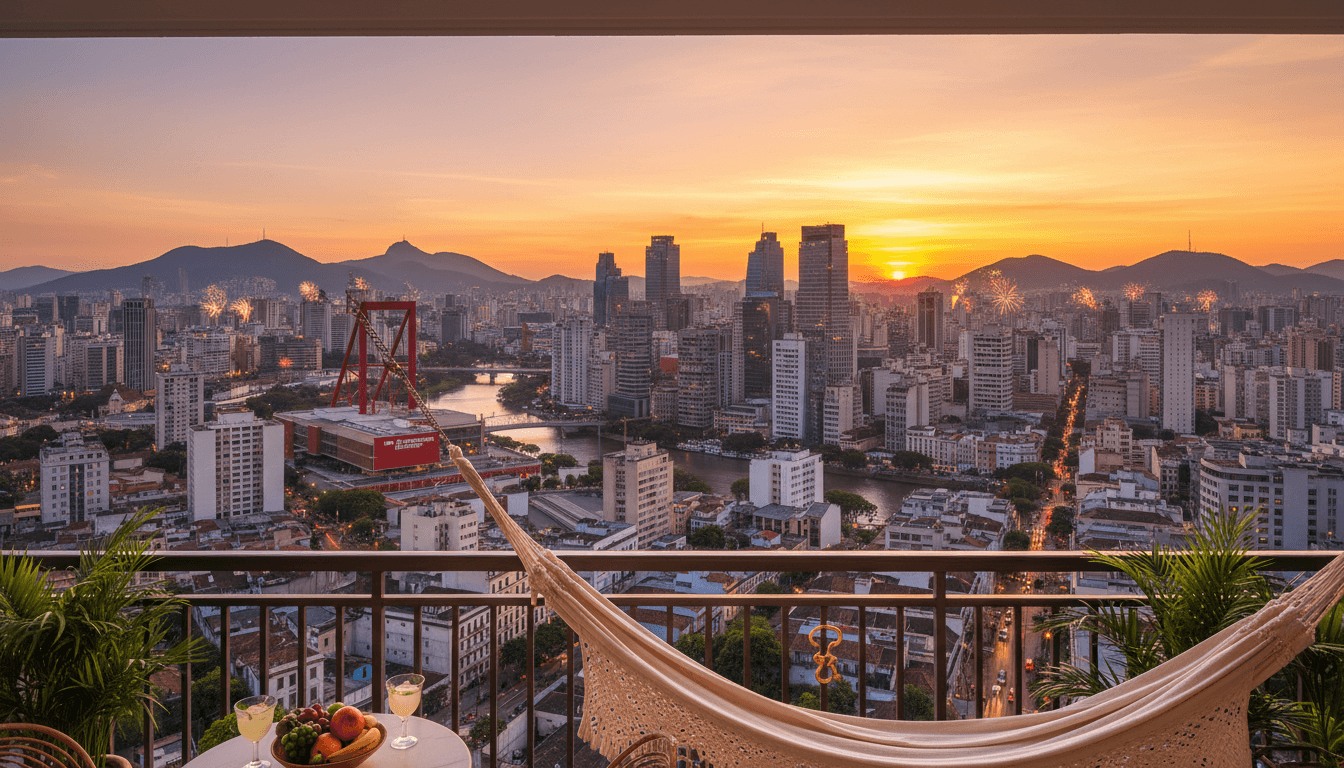
 Aerial view of So Paulos skyline at dusk on New Years Eve, with scattered fireworks beginning to lig
Why a Home Swap Beats Hotels for New Year's Eve Here
Here's something I learned the hard way during my first Brazilian New Year's: the magic doesn't happen in hotel lobbies or tourist zones. It happens in apartment buildings. On rooftops. In neighborhood streets that get blocked off for impromptu parties.
When you do a home swap in São Paulo for Réveillon, you're not just getting free accommodation—you're getting access to an entire ecosystem of celebration that's invisible to hotel guests. Your swap host will probably leave you notes about which bakery has the best panetone, which neighbor throws the best party, where to watch fireworks without fighting crowds.
The economics are compelling too. A decent hotel during Réveillon runs $200-450 USD per night, with minimum stays of 3-4 nights. That's $800-1,800 just for somewhere to sleep. Through SwappaHome, you're spending credits you've already earned—1 credit per night, regardless of how fancy your swap home is. My Vila Madalena apartment would have cost around $280/night on Booking.com. Instead? Five credits I'd earned hosting a lovely couple from Portugal back in October.
But honestly, the money isn't even the main reason I'll never do a São Paulo New Year's any other way.
It's the kitchen.
You need a kitchen for Brazilian New Year's Eve. Trust me. You'll want to make or reheat the lentil stew that's supposed to bring prosperity. You'll need somewhere to store the champagne—Brazilians drink a lot of champagne on Réveillon. And at 4 AM, when you're finally home from whatever rooftop party you ended up at, you'll want to make scrambled eggs and strong coffee before watching the sunrise.
Hotels don't give you that.
Best Neighborhoods for a New Year's Eve Home Swap
Not all São Paulo neighborhoods celebrate equally. Some turn into ghost towns as residents flee to the beach. Others become the epicenter of everything. Here's where you want to be:
Vila Madalena: For Street Parties and the Art Crowd
This is where I stayed, and I'm biased—but Vila Madalena during New Year's is electric. The neighborhood's known for street art, bohemian bars, and creative types who actually stay in the city for the holiday. Expect impromptu street parties, bars that stay open until sunrise, a younger, artsy crowd.
Home swap apartments here tend to be in older buildings with character—exposed brick, eclectic furniture, balconies perfect for people-watching.
Pro tip: Beco do Batman gets crowded with tourists during the day, but on New Year's Eve around 11 PM? It becomes a legitimate party spot with DJs and dancing.
Jardins: For Something More Polished
If you want upscale, Jardins is São Paulo's equivalent of Manhattan's Upper East Side—tree-lined streets, designer boutiques, some of the city's best restaurants. New Year's Eve here is champagne-and-canapés rather than beer-and-street-food, but equally memorable.
Home swaps in Jardins often come with doormen, pools, those gorgeous floor-to-ceiling windows. You'll pay the same 1 credit per night as anywhere else, but you'll feel like you're living in a magazine spread.
The restaurants along Rua Oscar Freire do special Réveillon menus—expect $150-250 USD per person for multi-course dinners with wine pairings. Expensive, yes. But half what you'd pay in New York or London for equivalent quality.
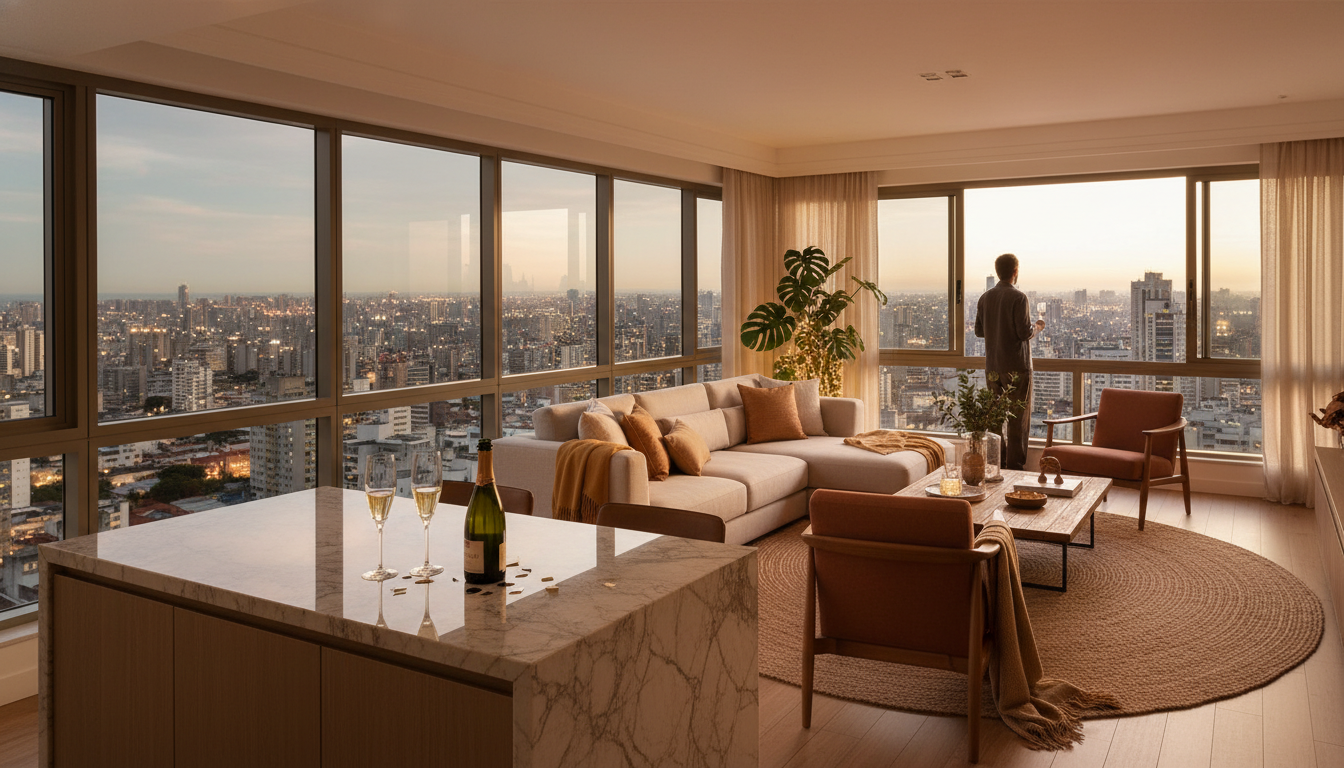 Elegant apartment interior in Jardins neighborhood with modern Brazilian design, large windows showi
Pinheiros: The Sweet Spot
Pinheiros sits between Vila Madalena's chaos and Jardins' polish. Young professionals, thriving craft beer scene, the perfect balance of celebration and sanity.
The neighborhood has exploded with gastronomy in recent years. Rua dos Pinheiros is basically a food corridor, and many restaurants host special New Year's Eve events without the astronomical Jardins prices.
For home swappers, Pinheiros offers excellent metro access (Faria Lima station is right there), walkable streets, a mix of converted lofts in old factories and sleek modern apartments.
What About Paulista Avenue?
Avenida Paulista hosts a massive free New Year's Eve concert every year. Millions of people pack the avenue for performances and the countdown. It's impressive, chaotic, absolutely worth experiencing once.
But I wouldn't recommend staying right on Paulista. The avenue is primarily commercial—residential options are limited and noisy year-round. Instead, stay in one of the neighborhoods above and take the metro to Paulista for the countdown. The green line runs extended hours on New Year's Eve.
How to Find the Perfect São Paulo Home Swap
Timing is everything. Brazilians start planning their Réveillon months in advance, and the best listings get snapped up quickly.
Start looking in September. I know that sounds early, but São Paulo hosts visitors from all over Brazil during this time. By November, the best apartments in Vila Madalena and Pinheiros are usually gone.
Look for hosts traveling domestically. Many Paulistanos escape to beach towns like Ubatuba, Ilhabela, or Santa Catarina's coast for New Year's. These hosts are often more flexible with dates and more likely to leave detailed notes about neighborhood celebrations.
Check for rooftop or balcony access. This isn't just about views—though watching fireworks from a private terrace is magical. It's about participating in the Brazilian tradition of gathering outside at midnight. If your swap home has outdoor space, you'll naturally end up meeting neighbors.
Ask about building parties. Many apartment buildings host communal New Year's Eve celebrations—on the rooftop, by the pool, in common areas. Your host will know if their building does this and can often arrange for you to be included.
I always message potential hosts asking specifically about Réveillon traditions in their building and neighborhood. The responses tell me a lot about how integrated my experience will be.
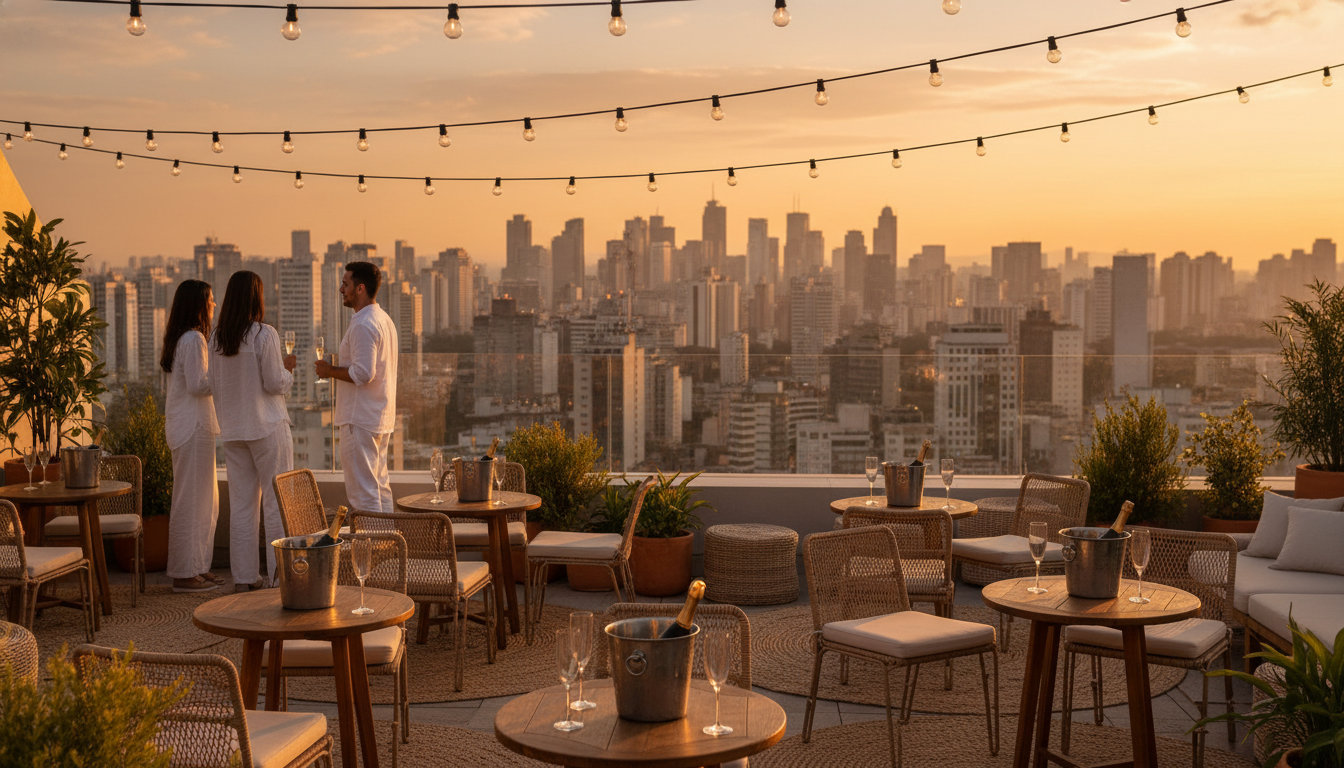 Rooftop terrace of a So Paulo apartment building decorated for New Years Eve with string lights, sma
Brazilian New Year's Traditions You'll Actually Experience
Here's where staying in someone's actual home transforms everything.
The White Clothing Thing
Everyone wears white on New Year's Eve in Brazil. Everyone. It symbolizes peace and good energy for the coming year. Your swap host will probably mention this, but if they don't: pack white. All white if possible. You'll feel awkward being the only person in black at any party.
Some people add colored underwear for specific wishes—yellow for money, red for love, green for health. I'm not saying you have to participate. I'm also not saying I haven't worn yellow underwear on December 31st in Brazil. Multiple times.
The Food Rituals
Brazilian New Year's Eve food is deeply symbolic, and having a kitchen means you can participate properly.
Lentils represent coins and prosperity—you're supposed to eat them right at midnight or as your first meal of the new year. Most Brazilians prepare a simple stew with sausage, served with rice. Pomegranate seeds should be eaten in threes, with the seeds saved in your wallet for the year. Grapes are eaten at midnight—twelve of them, one for each month, making a wish with each. Sparkling wine flows freely. Brazilians consume more per capita during Réveillon than any other time. Local brands like Chandon Brazil and Salton are excellent and cost $15-30 USD at any supermarket.
Having a kitchen means you can host your own gathering, prepare traditional foods, actually live the experience rather than observe it.
The Jumping Waves Tradition
São Paulo doesn't have a beach. But many Paulistanos drive to the coast specifically to jump seven waves at midnight while making wishes. If your swap host is heading to the beach, ask them about it—the tradition is beautiful and surprisingly moving even for skeptics.
For those staying in the city, some creative Paulistanos substitute jumping in pools or even fountains. I witnessed a group of neighbors doing this in a building pool in Pinheiros once. Ridiculous and wonderful.
 Brazilian New Years Eve table spread with lentil stew, grapes, pomegranate, champagne glasses, all o
A Practical Timeline for Planning Your Swap
September-October
Start browsing SwappaHome for São Paulo listings. Message hosts whose places look promising, even if their calendar isn't open yet—many don't think about listing holiday availability until someone asks. I've secured swaps simply by being first to reach out.
Look at flight prices too. São Paulo has two major airports—Guarulhos (GRU) international and Congonhas (CGH) domestic. Flights from North America typically run $800-1,200 USD roundtrip during the holiday season if you book early.
November
Confirm your swap and start communicating about neighborhood specifics. Ask your host: What's the building's New Year's Eve situation? Which neighbors should I introduce myself to? Where do you personally watch fireworks? What's the nearest supermarket for last-minute champagne runs?
Book any restaurant reservations you want—popular spots fill up weeks in advance.
December 26-30
Arrive and settle in. Don't try to arrive on December 31st—you'll be exhausted and miss the buildup, which is half the fun.
Use these days to explore your neighborhood, find the good bakeries, maybe meet some neighbors. Brazilians are incredibly friendly, and mentioning you're doing a home swap often leads to party invitations.
Hit a feira (street market) for fresh fruits, including those pomegranates and grapes. The Feira de Pinheiros on Saturday mornings is excellent.
December 31st
Sleep in. Seriously. The night will be long.
Spend the afternoon preparing food, chilling champagne, getting into the spirit. Most Brazilians eat a late lunch and don't have dinner until after midnight.
Get dressed—in white!—around 9 PM. If you're heading to Avenida Paulista for the concert, leave by 10 PM. Crowds get intense.
Midnight happens. Fireworks explode from seemingly every building in the city. You'll understand why I keep coming back.
January 1st
The city is quiet. Almost eerily so. Perfect for wandering empty streets, finding the one padaria that's open, processing what you just experienced.
 Empty So Paulo street on January 1st morning, golden light, a few scattered confetti remnants on the
What to Expect From Your Host
Brazilian hospitality is legendary. My Vila Madalena host left me a hand-drawn map of her favorite neighborhood spots, a bottle of local sparkling wine with a note saying "for midnight," her mother's lentil stew recipe (in Portuguese, which I had to Google Translate, but still), contact info for three neighbors who were staying in town and happy to include me in their celebrations, and detailed instructions for the building's rooftop access code.
Not every host will do all this, but Brazilian culture emphasizes making guests feel at home. Don't be surprised if your host checks in via WhatsApp to make sure you're having a good time.
Safety and Practical Stuff
I'd be doing you a disservice if I didn't address this honestly. São Paulo is a massive city with real urban challenges. New Year's Eve is generally safe—people everywhere, celebratory mood, increased police presence.
That said: don't carry valuables. Leave your passport at your swap home. Bring only the cash you need, one card, and your phone. I use a small crossbody bag that stays in front of my body. Use ride apps—99 and Uber both work well. Expect surge pricing after midnight; budget $30-50 USD for rides that would normally cost $10-15. Stay aware in crowds. The Paulista celebration is massive and mostly safe, but pickpockets work big crowds everywhere.
Learn basic Portuguese phrases too. English is less common here than in Rio. "Feliz Ano Novo" and "Saúde" will get you far.
Beyond December 31st
Most visitors stay a week or more—the city deserves it. With your home base secured, you can explore without expensive hotel nights ticking away.
Mercado Municipal is São Paulo's grand market. Go hungry. The mortadella sandwiches are legendary—thick slabs on fresh bread. The pastel de bacalhau is equally essential. Pinacoteca is Brazil's oldest art museum and genuinely world-class. Entry's around $5 USD. Beco do Batman for street art—go on January 2nd when crowds have dissipated. Sunday morning at Feira da Benedito Calixto for antiques, food, and live music. This is where Paulistanos actually hang out.
For day trips: Embu das Artes (30 minutes) has a famous Sunday art fair. Campos do Jordão (2.5 hours) offers Swiss-chalet architecture and cooler mountain temperatures. Santos (1.5 hours) is the nearest beach and where Pelé played most of his career.
Why I Keep Coming Back
I've celebrated New Year's Eve in Times Square (once, never again), Sydney Harbor (beautiful but impersonal), various European capitals. São Paulo through a home swap remains my favorite.
It's not the fireworks—though they're spectacular. It's not the parties—though they're legendary.
It's the intimacy.
When you're standing on a stranger-turned-friend's balcony at midnight, champagne in hand, watching a city of 12 million people explode with joy, you feel part of something. The neighbor who invited you to their party. The host who left you wine. The doorman who wished you Feliz Ano Novo that morning. They've all contributed to your experience.
You're not observing Brazilian New Year's Eve. You're living it.
That's what home swapping gives you that no hotel ever can. And São Paulo, with its warmth and chaos and surprising tenderness, is the perfect place to discover it.
Start browsing SwappaHome now. The best listings go fast, and you'll want time to connect with your host. Your future self—the one eating lentils at midnight on a stranger's rooftop, surrounded by people in white, watching fireworks paint the sky—will thank you.
Frequently Asked Questions
Is a New Year's Eve home swap in São Paulo safe for solo travelers?
São Paulo is generally safe for solo travelers during New Year's Eve, especially in neighborhoods like Vila Madalena, Jardins, and Pinheiros. Streets are full of celebrants, and the atmosphere is welcoming. Use common sense—don't flash valuables, use ride apps at night, stay aware in large crowds. Many solo travelers find that home swapping actually feels safer than hotels because you're integrated into a residential community with neighbors who look out for each other.
How much can I save with a home swap versus a hotel?
Hotels during Réveillon typically cost $200-450 USD per night with 3-4 night minimum stays, totaling $800-1,800 for the holiday period. Through SwappaHome, you spend 1 credit per night regardless of the property's value. For a week-long stay, you could save $1,500-3,000 compared to hotel rates while getting a full kitchen and more authentic experience.
When should I book my São Paulo home swap for New Year's Eve?
Start searching in September and aim to confirm by early November. São Paulo hosts many domestic and international visitors for Réveillon, and the best listings in desirable neighborhoods get booked quickly. Messaging hosts early—even before their calendar shows availability—often works because many don't think to list holiday dates until someone asks.
What should I wear to New Year's Eve celebrations?
Wear white. This is non-negotiable in Brazilian culture—white symbolizes peace and positive energy for the coming year. Pack all-white outfits for December 31st, and consider colored underwear for specific wishes (yellow for prosperity, red for love, green for health). You'll feel conspicuous being the only person not in white.
Do I need to speak Portuguese?
Basic phrases help significantly since English is less common here than in Rio. Learn "Feliz Ano Novo," "Saúde," and basic greetings. However, younger Brazilians in neighborhoods like Vila Madalena and Pinheiros often speak some English, and translation apps work well. Your swap host's written notes will bridge most gaps.

Published by
SwappaHome
SwappaHome Editorial Team
Home Exchange & Slow Travel Editorial
The SwappaHome Editorial Team brings together travel research, home-exchange community insights, and platform data to produce practical guides for first-time and experienced home swappers. Every article cites real platforms, current market rates, and verifiable city-level facts so readers can make informed decisions without guessing.
Ready to try home swapping?
Join SwappaHome and start traveling by exchanging homes. Get 7 free credits when you sign up!
Related articles
Bachelor and Bachelorette Parties in Singapore: The Complete Home Swap Group Guide for 2026
Planning a bachelor or bachelorette party in Singapore? Discover how home swapping lets groups of 6-12 stay together in luxury condos, saving thousands while partying in Marina Bay.
Cycling in Lisbon: 7 Home Swap Bike Tour Itineraries for Every Rider
Discover the best cycling routes in Lisbon with these home swap bike tour itineraries—from waterfront paths to hilltop adventures, all starting from your borrowed home.

Graduation Trip to Barcelona: How Home Swapping Gives New Graduates the Ultimate Celebration
Planning a graduation trip to Barcelona? Discover how home swapping lets new graduates explore Spain's most vibrant city without the hostel crowds or hotel costs.