How to Vet Home Swap Guests: 12 Red Flags Every Host Should Know

SwappaHome Editorial Team
Home Exchange & Slow Travel Editorial
Learn how to vet home swap guests before handing over your keys. Spot the 12 red flags experienced hosts watch for—and protect your home with confidence.
Someone you've never met wants to sleep in your bed, cook in your kitchen, and have full run of your home for a week. That's home swapping in a nutshell—and it's precisely why knowing how to vet guests separates confident hosts from anxious ones.
Here's the thing: most home exchange guests are genuinely wonderful people. The SwappaHome community consistently reports positive experiences, with the vast majority of exchanges going smoothly. But "most" isn't "all," and your home isn't a statistic. It's where you keep your grandmother's china, your work laptop, and that weird collection of vintage records you'd be devastated to lose.
This guide breaks down the exact process experienced home-swap hosts use to evaluate potential guests—from obvious warning signs to subtle patterns that only become clear after hosting dozens of travelers. Whether you're approving your first guest request or your fiftieth, these vetting strategies will help you say yes with confidence and recognize when to politely decline.
 Split-screen showing a cozy living room on one side and a laptop displaying a guest profile with rev
Why Vetting Home Swap Guests Matters More Than You Think
Home swapping operates on trust. Unlike hotels with security deposits and professional cleaning crews, you're handing your keys to someone based largely on their profile, your communication, and your gut instinct. That's not a flaw in the system—it's the foundation of what makes home exchange so meaningful. But it does mean the vetting process carries real weight.
The stakes aren't just about potential damage. A poorly vetted guest might leave your home in a state that takes days to restore, violate house rules in ways that affect neighbors or building management, create awkward situations with your community that outlast their stay, or damage your reputation as a host if they complain unfairly.
Most experienced swappers will tell you that problematic guests almost always showed warning signs beforehand. The hosts who got burned usually admit—in retrospect—that they ignored their instincts or rushed the vetting process because they were eager to confirm a booking.
The Profile Deep-Dive: What to Look for Before You Even Respond
Before exchanging a single message, a guest's profile tells you more than you might realize. Treat profile review like reading a resume—not just for what's there, but for what's missing.
Completeness Signals Commitment
A thorough profile suggests someone who takes home swapping seriously. Look for multiple, well-lit photos of their home showing different rooms. Blurry photos, only exterior shots, or just 2-3 images of the same angle? Worth noting. Hosts who care about their own space typically document it well.
Does their listing read like they actually live there? Specific mentions of the neighborhood, nearby amenities, quirks of the space ("the shower takes 30 seconds to warm up" or "the third stair creaks") indicate someone thoughtful about the guest experience.
On SwappaHome, members can complete identity verification. A verified profile doesn't guarantee a perfect guest, but it confirms they're willing to be accountable. And pay attention to profile age and activity—a profile created yesterday with a request for next week is different from an established member with history on the platform. Neither is automatically disqualifying, but context matters.
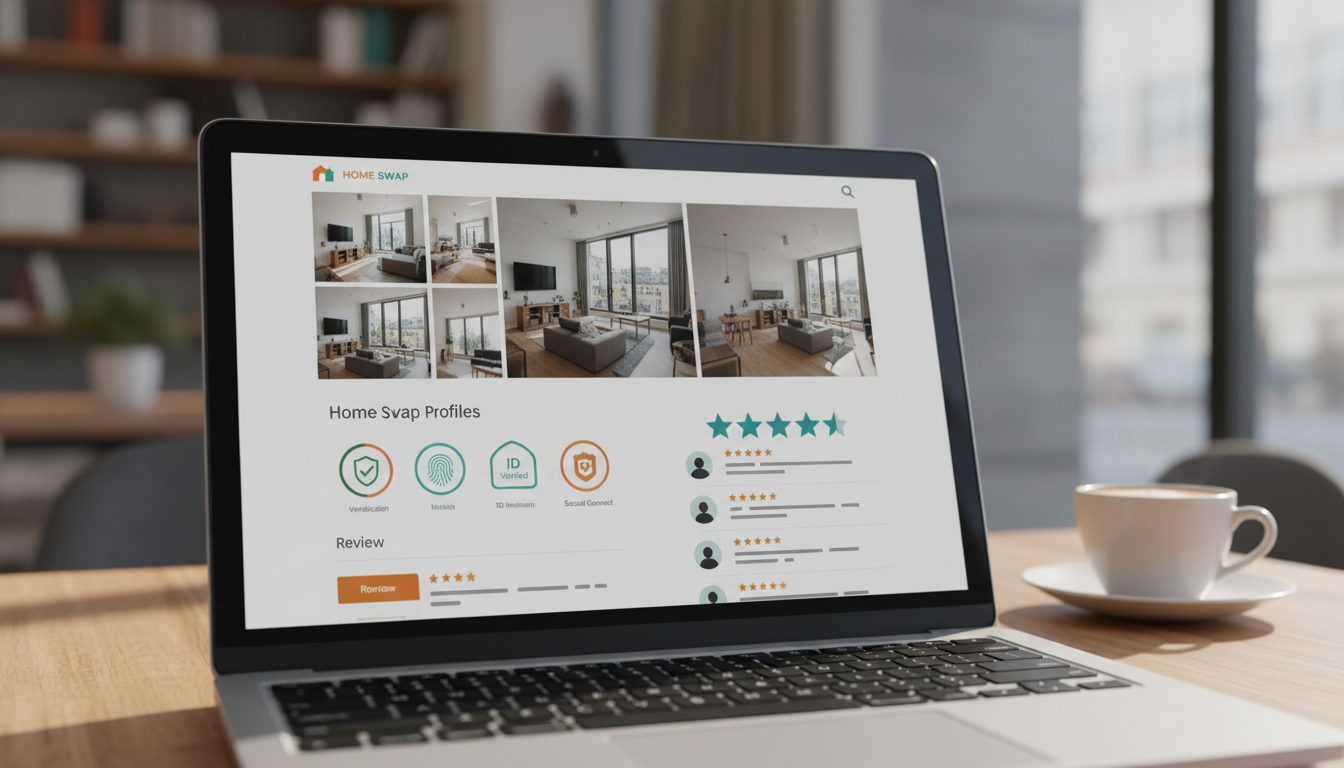 Close-up of a laptop screen showing a detailed home swap profile with multiple photos, verification
Reviews Are Your Best Friend—Read Between the Lines
The review system exists precisely because past behavior predicts future behavior. Read every review, not just the star rating. A 4-star review that says "lovely guests but left the kitchen needing a deep clean" tells you more than a 5-star with "Great!" Generic positive reviews might indicate hosts who didn't want confrontation. Specific praise ("left our plants healthier than they found them") signals genuine care.
Look for patterns. One mention of "communication could have been better" might be a personality mismatch. Three mentions? That's a pattern worth considering.
Check what kind of homes they've stayed in. Someone who's successfully completed exchanges in similar properties to yours—same size, similar neighborhood type, comparable value—has relevant experience. A guest whose entire history is studio apartments might need more guidance in your four-bedroom home with a garden.
Notice the absence of reviews too. Everyone starts somewhere, and new members shouldn't be automatically rejected. But a profile that's been active for two years with zero reviews? That warrants questions about why.
The 12 Red Flags Experienced Hosts Watch For
These warning signs come from aggregated feedback across the home-swap community. Not every red flag means automatic rejection—but each one deserves attention and often follow-up questions.
Red Flag #1: Vague or Non-Specific Requests
"Your place looks great, we'd love to stay sometime!" isn't a booking request—it's a fishing expedition. Genuine guests typically specify exact dates (or a narrow range), who's traveling, purpose of the trip, and why your specific location appeals to them. A message that could be copy-pasted to any listing suggests either inexperience or low investment in the exchange.
Red Flag #2: Reluctance to Answer Basic Questions
Reasonable questions include: Who will be staying? What brings you to the area? Have you done home exchanges before? Guests who deflect, give one-word answers, or seem annoyed by standard inquiries are showing you how they communicate. If they're evasive before the booking, imagine resolving an issue during their stay.
Red Flag #3: Pressure to Skip Normal Processes
"Can we just handle this off-platform?" or "I don't really do video calls" or "Let's skip the formalities"—these phrases should trigger caution. Legitimate guests understand that verification steps protect both parties. Those who resist them may have reasons they're not sharing.
Red Flag #4: Mismatched Details
The profile says they're a couple, but the request mentions "a few friends joining." Their listed home is in Chicago, but they mention "our place in Miami." The dates they request don't align with what they say they're visiting for. Inconsistencies deserve clarification. Sometimes there's a simple explanation. Sometimes there isn't.
 A thoughtful host sitting at a kitchen table with a cup of tea, reviewing messages on their phone wi
Red Flag #5: No Questions About Your Home
Someone planning to live in your space for a week should have questions. Where's the nearest grocery store? Is parking included? Are the neighbors noise-sensitive? A guest with zero questions either hasn't thought through the reality of staying there—or doesn't plan to respect the space enough to care about details.
Red Flag #6: Last-Minute Requests with Urgency
"Our Airbnb fell through and we need a place by Thursday" might be legitimate, but it removes your ability to properly vet. Rushed decisions favor the requester, not the host. If you can't complete your normal vetting process, it's okay to decline—even if the guest seems nice.
Red Flag #7: Profile Photos That Don't Match the Vibe
This one's subtle. Someone requesting your quiet cottage in the Cotswolds whose profile photos show exclusively party scenes and nightclub selfies might not be lying about anything—but there's a potential mismatch in expectations. Worth a conversation about what they're looking for from the stay.
Red Flag #8: Excessive Focus on Your Valuables
"Is that a real Eames chair?" or "I noticed you have a wine collection—is that included?" might be innocent appreciation. But guests who seem more interested in your belongings than the experience of staying in your neighborhood warrant attention.
Red Flag #9: Resistance to House Rules
You mention no smoking; they ask if the balcony counts. You say no parties; they ask about "having a few friends over for dinner." Someone negotiating your rules before they've even arrived is telling you they view those rules as suggestions.
Red Flag #10: Poor Grammar Combined with Unusual Requests
Home swapping is international—imperfect English is completely normal and not a red flag on its own. But generic, poorly written messages combined with requests that don't quite make sense can indicate scam attempts rather than genuine travelers.
Red Flag #11: They've Never Hosted
Not automatically disqualifying—everyone starts somewhere. But guests who've only traveled and never opened their own home haven't experienced the host side of the exchange. They may not understand the vulnerability involved. For never-hosted guests, consider asking more detailed questions about their expectations.
Red Flag #12: Your Gut Says No
This is the most important one. After all the logical evaluation, something just feels off. The messages are technically fine but leave you uneasy. Trust it. You don't owe anyone access to your home, and "I don't have a good feeling about this" is a complete reason to decline.
 Infographic showing the 12 red flags as icons with brief labels, arranged in a visually scannable gr
The Vetting Conversation: Questions That Reveal Character
Once you've reviewed the profile and haven't hit any immediate deal-breakers, it's time for the conversation. This is where you move from evaluating data to evaluating a person.
Start With Open-Ended Questions
Closed questions give you information. Open questions give you insight.
Try asking what draws them to your neighborhood specifically, or about their best home exchange experience and what made it great. Ask how they typically prepare a home before guests arrive at their place, or what their usual approach is when something unexpected comes up during a stay. The answers reveal how they think, not just what they've done.
Discuss Logistics in Detail
Practical conversations surface potential issues. What time are they arriving? Do they need flexibility? How will key exchange work? Get specific about who's actually staying—names, ages, relationship to the requester. Are they bringing a car? How reachable will they be during the stay?
Someone who engages thoughtfully with logistics is planning a real stay. Someone who brushes past these details may not be taking the exchange seriously.
The Video Call: Worth the Awkwardness
Many experienced hosts won't confirm a booking without a video call. Yes, it can feel awkward. Yes, it takes time. But fifteen minutes on a call tells you more than fifty messages.
You're not interrogating them—you're having a conversation. Show them around your space via video. Let them show you theirs. Discuss the neighborhood, share restaurant recommendations.
Pay attention to whether they seem genuinely interested in your home and area. Are they asking questions and engaging, or just waiting for the call to end? Does their vibe match their profile and messages? If a guest refuses a video call entirely, that's significant information.
 Two people on a video call, one showing their living room through the phone camera while the other t
What to Do When You Spot Red Flags
Identifying concerns is step one. Handling them appropriately is step two.
When It's a Yellow Flag: Ask Follow-Up Questions
Not every concern is a deal-breaker. A new member with no reviews might be a wonderful guest who just hasn't had the opportunity yet. Before declining, try asking them to tell you about any previous home exchange or hosting experience, or to clarify exactly who would be staying.
Genuine guests respond well to reasonable questions. Their answers either resolve your concerns or confirm them.
When It's a Red Flag: Decline Gracefully
You don't need to explain or justify declining a request. A simple message works: "Thanks so much for your interest in our home. After reviewing your request, I don't think we're the right fit for your trip. I hope you find a great place to stay!"
No need to list their red flags. No need to apologize extensively.
When You're Unsure: Buy Time
"Thanks for reaching out! I'm reviewing a few requests for those dates and will get back to you within 48 hours." This gives you time to complete a more thorough profile review, ask additional questions, consult with other household members, or simply sit with your instincts. Rushing to confirm because someone is eager is how regrettable bookings happen.
Building Your Own Vetting System
Every host develops their own process over time. Know your non-negotiables before requests come in—completed identity verification, at least one previous review, video call before confirmation, clear answers about who's staying. It's harder to maintain standards when you're excited about a potential booking.
Some hosts find it helpful to score potential guests across categories: profile completeness, review quality, communication quality, logistics fit, gut feeling. A total below a certain threshold triggers automatic decline. Above another threshold means automatic acceptance. The middle range gets extra consideration.
Special Situations: Vetting Beyond the Standard
First-Time Exchangers
New members deserve a chance—everyone was new once. But they warrant extra vetting. Ask about their motivation for trying home exchange and any hosting experience in other contexts. Be extra clear about expectations and house rules. Consider a shorter initial stay if you're uncertain.
Groups and Families
When multiple people are staying, get clear information about who's in the group and understand the dynamics. Discuss supervision if children are involved. Confirm everyone understands and agrees to house rules.
Long-Term Stays
A week-long guest who's slightly imperfect is manageable. A month-long guest with issues is a much bigger problem. For stays beyond two weeks, more thorough vetting is justified, video calls become essentially mandatory, and references from previous long-term hosts are valuable.
High-Value Properties
If your home contains expensive items, art, or specialized equipment, be explicit about what's included and what's off-limits. Consider whether certain items should be secured or removed. More experienced guests may be appropriate for high-value homes.
The Trust Equation: Vetting as Relationship Building
Here's what the best home-swap hosts understand: vetting isn't about suspicion—it's about building the foundation for a great exchange.
When you ask thoughtful questions, you're not interrogating someone. You're showing that you take home exchange seriously and expect them to as well. Good guests appreciate this. They want to know their own home will be treated with equal care when they host.
The vetting conversation often becomes the beginning of a genuine connection. Many SwappaHome members report that their best exchanges came from guests they had the most thorough pre-booking conversations with. The investment in getting to know each other pays off in better communication, clearer expectations, and more enjoyable experiences for everyone.
That's the magic of home exchange done right. And it starts with taking the vetting process seriously.
A Final Word on Trusting the Community
After all this talk of red flags and vetting processes, worth remembering: the overwhelming majority of home exchange guests are exactly who they say they are. They're travelers who've discovered that staying in real homes beats hotels, that living like a local enriches travel, and that the home-swap community is built on mutual respect.
The SwappaHome community works because most people are trustworthy and want the same things you do—a great experience, a well-cared-for home, and the chance to travel more affordably and authentically.
Vetting isn't about assuming the worst. It's about creating the conditions for the best possible exchange. When you take the time to evaluate guests thoughtfully, ask the right questions, and trust your instincts, you're not being paranoid—you're being a responsible host.
Your home is worth protecting. Your instincts are worth trusting. And the right guests—the ones who pass your vetting process with flying colors—are worth welcoming.
Frequently Asked Questions
How do I vet home swap guests if they have no reviews?
New members without reviews require extra vetting but shouldn't be automatically rejected. Ask about their motivation for home swapping, any hosting experience in other contexts (Airbnb, hosting friends), and conduct a video call to assess their communication style and genuine interest. Request detailed information about their travel plans and be explicit about your expectations. Consider offering a shorter initial stay to build mutual trust.
What should I do if a home swap guest lies on their profile?
If you discover misrepresentations before the stay, decline the booking immediately—you don't owe an explanation beyond "we're not the right fit." If discovered during or after, document everything and leave an honest review to warn future hosts. Report serious misrepresentations to the platform. Trust your instincts: one lie usually indicates others.
Can I ask home swap guests for references?
Yes, and experienced hosts often do for longer stays or higher-value properties. Ask if they can connect you with a previous host who'd vouch for them. Genuine guests typically appreciate the thoroughness. Resistance to providing references when requested reasonably is itself a yellow flag worth noting.
How long should the vetting process take for home exchange guests?
Most successful vetting takes 3-7 days, including profile review, message exchange, and a video call. Rushing this process for urgent requests often leads to regret. If a guest pressures you to decide immediately, that urgency itself is a red flag. Take the time you need to feel confident.
What's the biggest red flag when vetting home swap guests?
Resistance to normal verification steps—refusing video calls, wanting to communicate off-platform, or pushing back on reasonable questions—is the most consistent predictor of problematic guests. Legitimate travelers understand that vetting protects both parties and engage willingly with the process.

Published by
SwappaHome
SwappaHome Editorial Team
Home Exchange & Slow Travel Editorial
The SwappaHome Editorial Team brings together travel research, home-exchange community insights, and platform data to produce practical guides for first-time and experienced home swappers. Every article cites real platforms, current market rates, and verifiable city-level facts so readers can make informed decisions without guessing.
Ready to try home swapping?
Join SwappaHome and start traveling by exchanging homes. Get 7 free credits when you sign up!
Related articles
How to Extend or Modify a Home Swap Mid-Stay: The Complete Flexibility Guide
Need to extend your home swap or change dates mid-trip? Here's exactly how to negotiate changes, handle credits, and keep both parties happy.

How to Visit Bali for Free with Home Exchange: The Complete 2026 Guide
Skip the $150/night villas. Home exchange in Bali lets you stay in Ubud rice field houses and Seminyak beach pads for zero accommodation cost. Here's exactly how.

Is Rome Good for Home Swapping? An Honest Analysis for 2026
Discover if Rome is worth it for home swapping in 2026. Real neighborhood tips, cost breakdowns, and honest advice from the SwappaHome community.