Seoul for Retirees: Your Complete Guide to Relaxed Home Exchange Experiences in South Korea

SwappaHome Editorial Team
Home Exchange & Slow Travel Editorial
Discover why Seoul is perfect for retirees seeking affordable, authentic travel through home exchange. Slow-paced neighborhoods, healthcare access, and genuine Korean hospitality await.
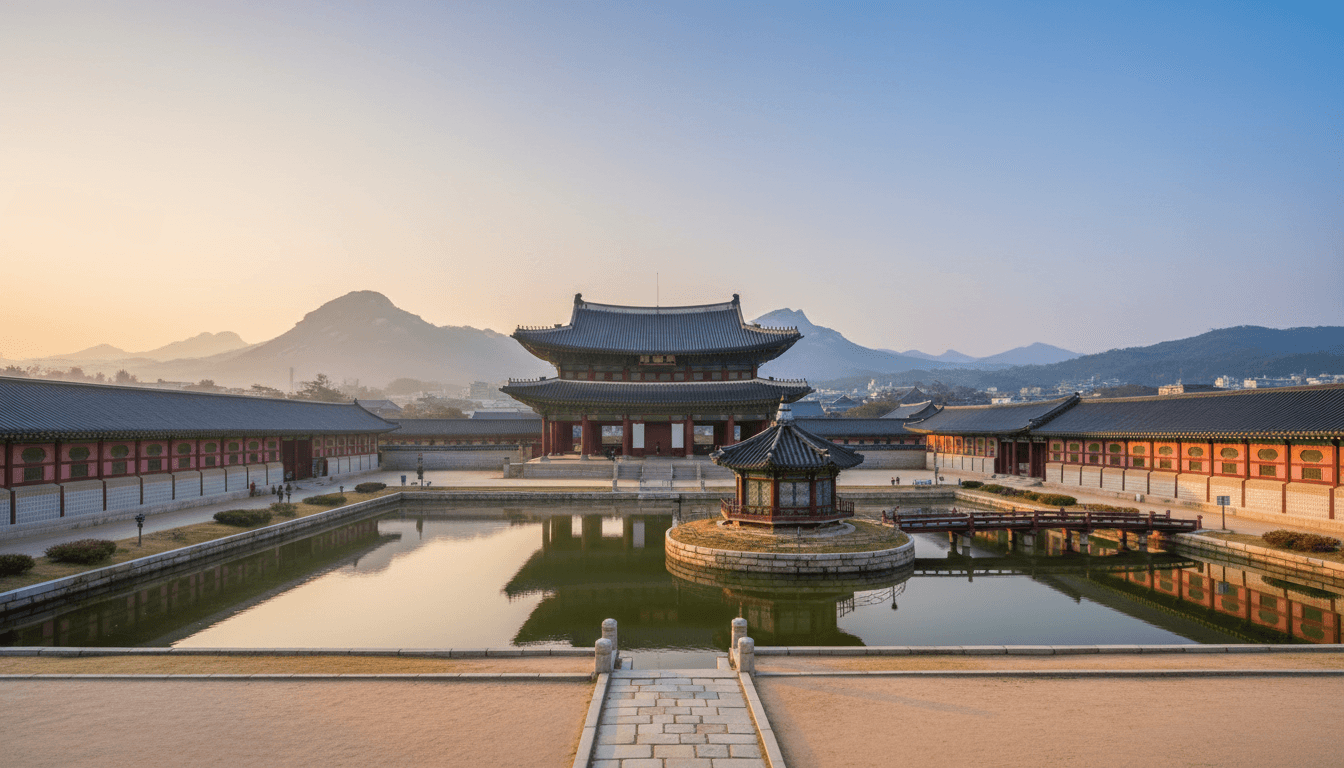
I was sitting in a heated floor apartment in Seoul's Bukchon neighborhood last October, watching the sun set behind Gyeongbokgung Palace, when my 67-year-old neighbor from the building stopped by with homemade kimchi. She didn't speak much English. I don't speak much Korean. We sat together anyway, drinking barley tea, pointing at photos on our phones, laughing at nothing in particular.
That's the thing about Seoul for retirees doing home exchange—it's not the Seoul you see in K-drama montages or breathless TikTok videos about nightlife. There's another city here, one that moves at the pace of morning tai chi in the parks, of grandmothers selling vegetables at traditional markets, of entire neighborhoods designed around the idea that life shouldn't be rushed.
 Early morning scene in Bukchon Hanok Village with elderly locals doing stretching exercises near tra
I've been writing about home exchange travel for seven years now, and I keep coming back to Seoul as one of my top recommendations for travelers over 60. Not despite the city's reputation as a high-tech metropolis—but because of the surprising contrast between that reputation and the reality of daily life here.
Why Seoul Home Exchange Works Perfectly for Retired Travelers
Let me be real with you: Seoul wasn't on my radar as a retirement-friendly destination until I did my first home swap here in 2019. I'd assumed it would be overwhelming—too fast, too crowded, too confusing for someone looking for a relaxed pace.
I was wrong. Spectacularly wrong.
Seoul has one of the most rapidly aging populations in the world, which means the entire city infrastructure has evolved to accommodate older residents. Elevators everywhere. Seats reserved for seniors on every subway car (and people actually respect them). Restaurants with floor seating AND table options. Walking paths that are smooth, well-lit, and clearly marked.
The home exchange angle makes it even better. When you're staying in someone's actual apartment—rather than a hotel in the tourist district—you end up in neighborhoods where real Seoulites live. These tend to be calmer, greener, and infinitely more interesting than Myeongdong or Hongdae.
On SwappaHome, I've noticed a growing number of Korean retirees listing their homes. Many have adult children abroad and are eager to visit them, making them perfect exchange partners for Western retirees wanting to experience Korea. The credit system means you don't need to coordinate a simultaneous swap—host a guest in your home, earn credits, then use those credits whenever you're ready to visit Seoul.
Best Seoul Neighborhoods for Retirees Seeking Home Exchange
Not all Seoul neighborhoods are created equal when you're looking for a relaxed home exchange experience. Here's where I'd actually recommend staying—based on my own swaps and conversations with dozens of retired home exchangers.
Bukchon and Samcheong-dong: Traditional Charm Without the Chaos
This is where I stayed during that kimchi-sharing evening I mentioned. Bukchon Hanok Village is famous for its traditional Korean houses (hanok), but what tourists don't realize is that it's also a functioning neighborhood where people actually live.
The pace here is deliberately slow. Narrow alleyways discourage cars. Small cafes serve traditional teas. Art galleries outnumber convenience stores. The nearby Samcheong-dong area has gentle slopes rather than Seoul's notorious hills, making it walkable for most fitness levels.
Home exchange options here tend to be smaller—often one-bedroom apartments or renovated hanok guesthouses—but the atmosphere is unmatched. And here's the thing I love about SwappaHome: it uses a flat rate of 1 credit per night regardless of location or property type. No surge pricing, no premium fees. For retirees on fixed budgets, that predictability matters.
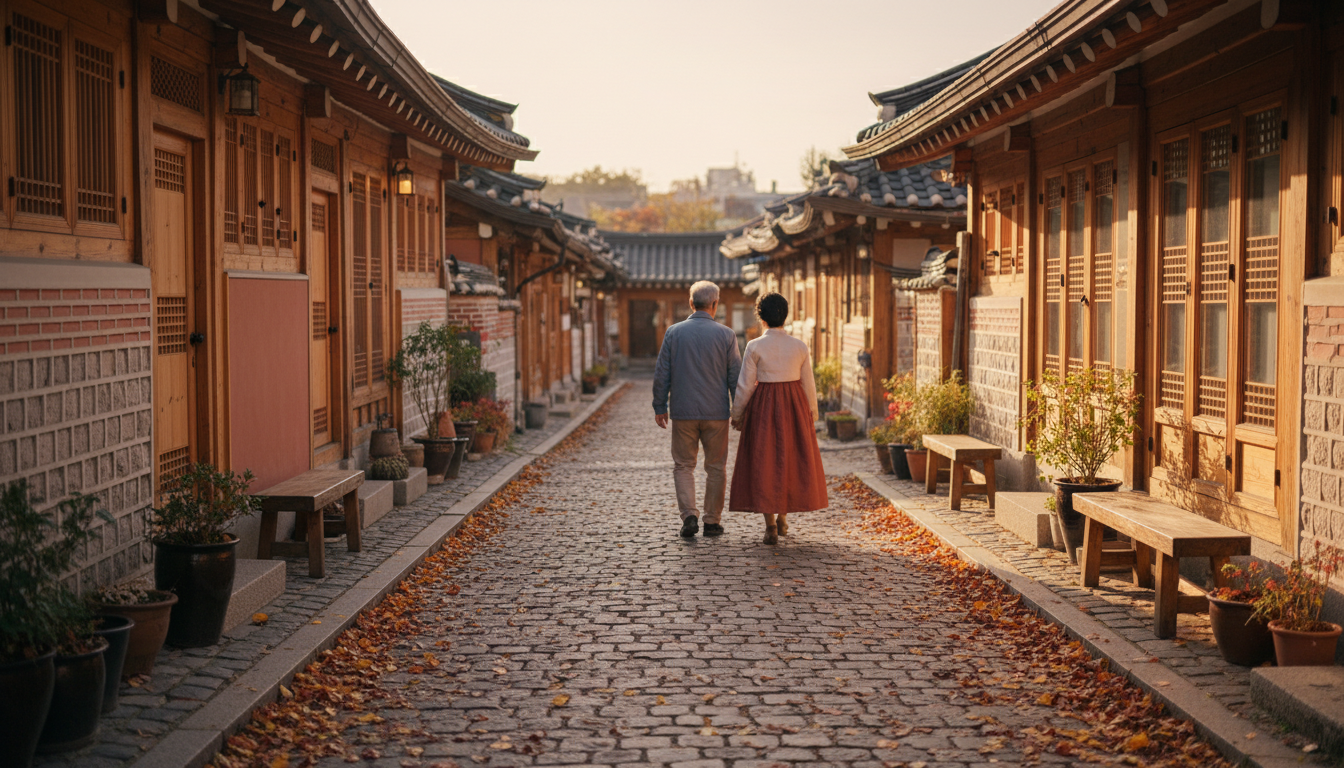 Quiet cobblestone alley in Samcheong-dong with traditional tea houses, elderly Korean couple walking
Yeonnam-dong: The Underrated Gem
If Bukchon feels too touristy (it can get crowded midday), Yeonnam-dong offers similar vibes with more local authenticity. This neighborhood near Hongik University has transformed over the past decade from a quiet residential area into a haven for independent cafes, bookshops, and small restaurants.
The key feature for retirees: Gyeongui Line Forest Park. This elevated park built on an old railway line runs right through the neighborhood, offering flat, shaded walking paths perfect for morning strolls. Benches everywhere. Public restrooms every few hundred meters. Older Koreans doing group exercises at dawn.
I did a two-week home exchange here in spring 2022, staying in a third-floor apartment (with elevator) owned by a retired professor visiting his daughter in Toronto. The apartment had a small balcony overlooking the park. I spent mornings watching the neighborhood wake up—grandmothers power-walking in visors, grandfathers playing badminton, young parents pushing strollers.
Rent in this area runs about $1,200-1,800/month for a decent one-bedroom, which gives you context for how much you're saving through home exchange. Two weeks in a comparable Airbnb would cost $800-1,200 USD. Through SwappaHome? Fourteen credits that you've already earned by hosting.
Seochon: Palace-Adjacent Living
Seochon sits just west of Gyeongbokgung Palace, and it's become my go-to recommendation for first-time Seoul visitors over 60. The neighborhood has strict building height limits (nothing can block palace views), which creates an unusually low-rise, village-like atmosphere in the middle of a megacity.
The streets here are genuinely flat—a rarity in hilly Seoul. Traditional markets, family-run restaurants serving the same recipes for decades, and a strong sense of community among longtime residents. Several home exchange listings I've seen here are from retired artists and writers who've lived in Seochon for 20+ years.
One practical note: Seochon has fewer modern apartment buildings, so you're more likely to find walk-up housing without elevators. Always check listing details carefully if mobility is a concern.
Navigating Seoul's Healthcare System as a Retired Home Exchanger
This is the part that surprises most Western retirees: Seoul has world-class healthcare at a fraction of U.S. or European prices. And it's remarkably accessible to visitors.
I'm not talking about medical tourism for major procedures (though that's a thing here). I'm talking about the peace of mind that comes from knowing you can walk into a clinic for a check-up, fill a prescription at a pharmacy, or see a specialist—all without the anxiety of American healthcare costs.
During my last Seoul home exchange, I developed a stubborn cough that wouldn't quit. Walked into a neighborhood clinic (no appointment), saw a doctor within 20 minutes, got a diagnosis (minor bronchitis), and left with medication. Total cost without any insurance: 35,000 Korean won. That's about $26 USD.
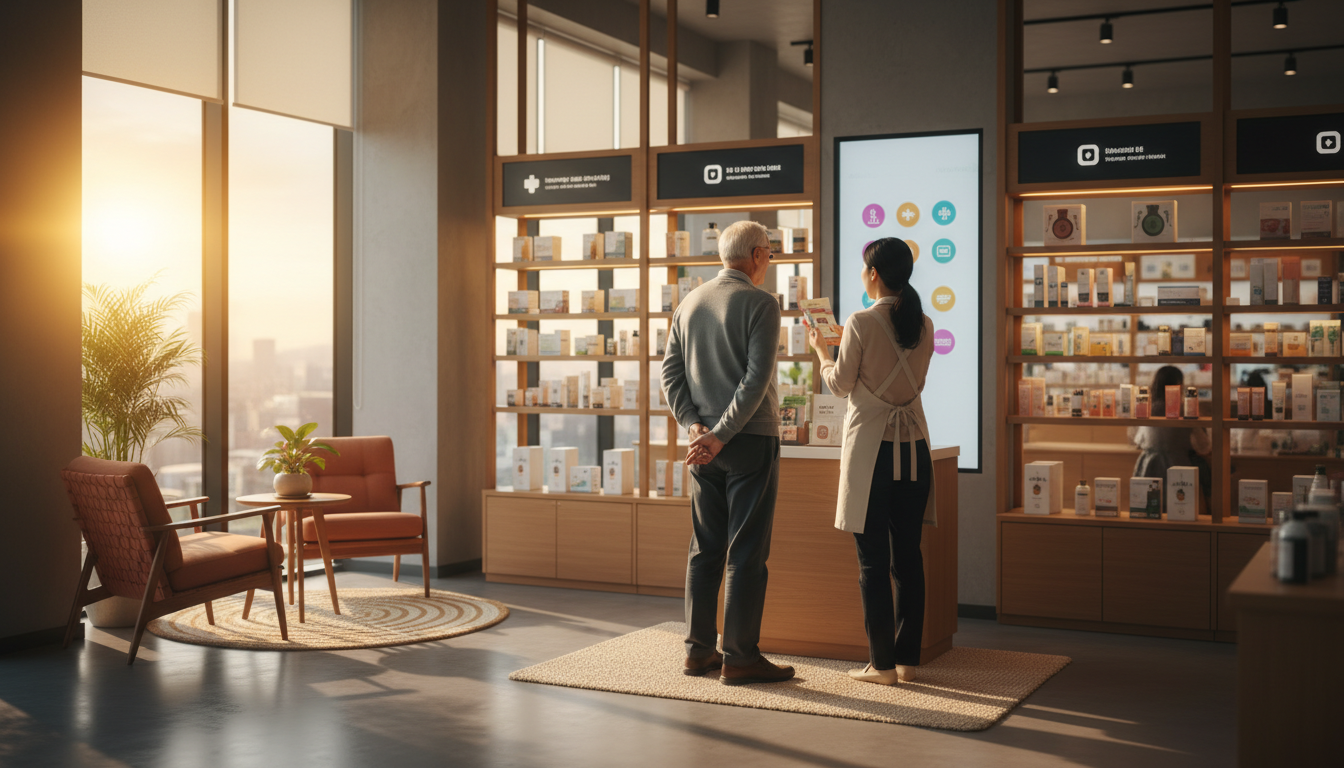 Modern Seoul pharmacy interior with helpful pharmacist assisting elderly Western customer, clear sig
Most pharmacies in Seoul have staff who speak basic English, and many medications that require prescriptions elsewhere are available over-the-counter here. Major hospitals like Samsung Medical Center and Asan Medical Center have dedicated international clinics with English-speaking staff.
That said—and this is important—SwappaHome doesn't provide any health insurance or medical coverage. You're responsible for your own travel insurance, and I'd strongly recommend getting a policy that covers medical evacuation if you're staying longer than a few weeks. Companies like World Nomads or Allianz offer plans specifically designed for older travelers.
The Daily Rhythm: What Relaxed Seoul Life Actually Looks Like
Let me walk you through a typical day from my most recent Seoul home exchange, because I think it captures why this city works so well for retirees.
6:30 AM: Woke up to the sound of temple bells from a small Buddhist temple two blocks away. Made coffee using the pour-over setup my host left (Koreans take coffee seriously). Sat on the heated floor—ondol heating is a revelation if you have joint pain—and watched the neighborhood through the window.
8:00 AM: Walked to the local market for breakfast. Bought fresh kimbap (Korean rice rolls) for 3,000 won ($2.25) and a container of cut fruit for 5,000 won ($3.75). Ate on a bench in a small park, watching elderly men play janggi (Korean chess).
10:00 AM: Slow walk to Changdeokgung Palace. Bought the 3,000 won senior ticket (available to anyone over 65, regardless of nationality). Spent two hours wandering the Secret Garden, which limits visitors and feels genuinely peaceful.
1:00 PM: Lunch at a neighborhood restaurant—doenjang-jjigae (soybean paste stew) with banchan (side dishes) for 8,000 won ($6). The ajumma running the place remembered me from previous visits and added extra kimchi.
3:00 PM: Rest time. Back to the apartment for a nap on the heated floor. This is completely normal in Korean culture—the afternoon rest isn't laziness, it's rhythm.
5:00 PM: Evening walk along Cheonggyecheon Stream, an urban waterway that runs through central Seoul. Flat paths, benches every 50 meters, beautiful lighting as the sun sets.
7:00 PM: Dinner at a local Korean BBQ place. Yes, you can do Korean BBQ solo—many restaurants have single-serving portions. Cost: about 15,000 won ($11) for pork belly with all the fixings.
9:00 PM: Back home. Video call with family using the apartment's fast WiFi (Korea has the best internet infrastructure in the world—streaming and video calls are flawless). Read a book. Early bed.
Total spending for the day: roughly $25 USD, including a palace visit and two restaurant meals.
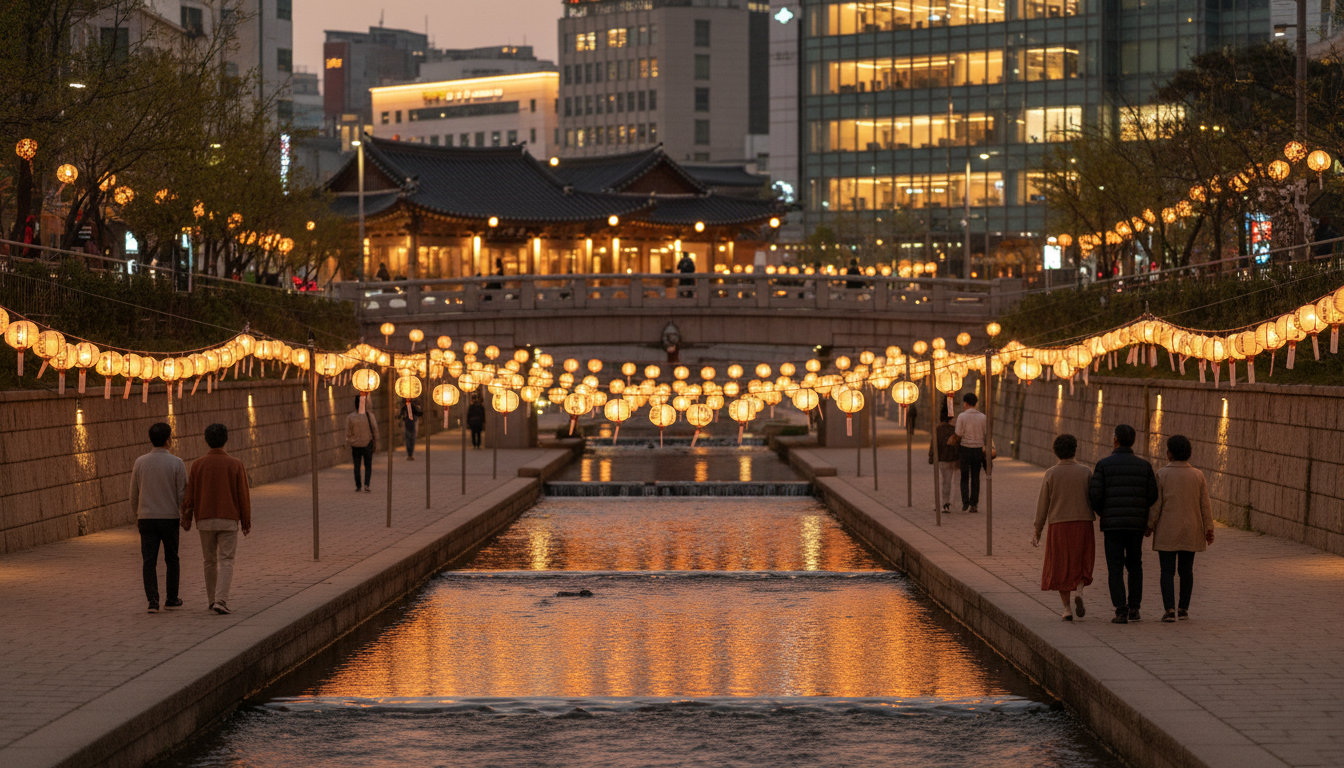 Peaceful evening scene at Cheonggyecheon Stream with soft lantern lighting, elderly couples strollin
Practical Tips for Seoul Home Exchange Success Over 60
After multiple Seoul home exchanges and countless conversations with retired travelers, here's what actually matters:
Transportation Without Stress
Seoul's subway system is genuinely excellent for older travelers. Every station has elevators (look for the wheelchair symbol on maps). Announcements come in Korean, English, Chinese, and Japanese. Trains run every 2-4 minutes during the day.
Get a T-money card at any convenience store (2,500 won for the card, then load money as needed). Seniors over 65 ride free on subways—just show your passport at the ticket gate.
Taxis are cheap by Western standards. A 20-minute ride across the city costs about 8,000-12,000 won ($6-9). Kakao Taxi app works like Uber and shows the fare upfront—no Korean language needed.
Food Considerations
Korean food is generally healthy—lots of vegetables, fermented foods, lean proteins. But it can be spicy. Really spicy. If you have digestive sensitivities, learn the phrase "an maepge juseyo" (not spicy, please). Most restaurants will accommodate.
Vegetarians have a harder time—meat and fish products appear in unexpected places. Buddhist temple cuisine restaurants (look for 사찰음식) offer entirely plant-based traditional Korean meals, and they're often the most interesting dining experiences anyway.
Language Barriers (They're Smaller Than You Think)
Koreans under 40 generally speak some English. Koreans over 60 generally don't. This creates an interesting dynamic where younger people often help facilitate communication with older locals.
Google Translate's camera feature is a game-changer for menus and signs. Papago (a Korean translation app) works even better for Korean specifically.
Most home exchange hosts leave detailed instructions in English, and the SwappaHome messaging system lets you communicate with potential hosts before committing to a swap.
Safety and Security
Seoul is extraordinarily safe. Violent crime against tourists is virtually nonexistent. Petty theft is rare. I've accidentally left my phone on café tables multiple times and always found it waiting when I returned.
That said, home exchange requires trust on both sides. SwappaHome's review system helps build accountability—look for hosts with multiple positive reviews, and don't hesitate to ask questions before confirming a swap. The platform's verification features add another layer of confidence.
I always recommend getting your own travel insurance that covers personal belongings, just for peace of mind. SwappaHome connects members but doesn't provide coverage for damages or losses—that's between you and your insurance provider.
 Infographic showing Seoul safety statistics compared to major Western cities, plus icons for senior-
Seasonal Considerations for Retired Seoul Visitors
Timing matters more than you might think.
Spring (April-May): Cherry blossom season. Gorgeous, but crowded. Book home exchanges 3-4 months ahead. Temperatures are mild (15-20°C/60-68°F).
Summer (June-August): Hot, humid, and rainy. Not ideal for leisurely walking. Many Koreans take vacation, so home exchange availability actually increases—but you'll be competing with families for popular listings.
Autumn (September-November): My favorite. Crisp air, stunning foliage, perfect walking weather. This is peak season for retired travelers, so plan ahead.
Winter (December-February): Cold but manageable (-5 to 5°C/23-41°F). Heated floors make apartments cozy. Fewer tourists means more authentic experiences. Traditional markets are magical in winter.
I did a January home exchange once, and the memory of walking through Namdaemun Market in light snow, warming my hands on a cup of hotteok (sweet pancakes), remains one of my favorite travel moments.
Building Connections: The Social Side of Seoul Home Exchange
Here's something I didn't expect when I started home exchanging in Seoul: the social opportunities.
Korean culture has deep respect for elders. As a retired traveler, you're not invisible here—you're acknowledged, often deferred to, sometimes even celebrated. The grandmother selling vegetables at the market might give you an extra handful of green onions. The young barista might practice English with you. The temple volunteer might spend an extra hour showing you around.
Home exchange amplifies this. When you stay in someone's actual home, you often inherit their neighborhood relationships. My host in Yeonnam-dong introduced me (via email) to her regular coffee shop, her favorite banchan vendor, and her neighbor who spoke English. These connections transformed a solo trip into something richer.
SwappaHome's community aspect matters here. The members who list homes in Seoul tend to be genuinely interested in cultural exchange—they're not just renting out investment properties. Many leave detailed guidebooks, local recommendations, and offers to help via message if you have questions.
What to Expect from Your Seoul Home Exchange Property
Korean apartments differ from Western ones in ways that might surprise you.
Ondol (heated floors): Most Korean homes have radiant floor heating. It's controlled by a thermostat, and it's glorious for anyone with joint pain or circulation issues. You'll probably sleep on the floor at least once just to experience it.
Smaller spaces: Seoul apartments tend to be compact by American standards. A "large" one-bedroom might be 500 square feet. This isn't a problem for most retirees traveling light, but don't expect sprawling living rooms.
Bidets: Nearly universal. Once you experience a heated seat with water spray, you'll wonder why the rest of the world hasn't caught on.
Shoe removal: Always remove shoes at the door. Hosts typically provide house slippers.
Recycling complexity: Korea has elaborate recycling rules. Your host should leave instructions—follow them carefully. It's part of being a respectful guest.
No ovens: Most Korean kitchens don't have Western-style ovens. You'll find stovetops, rice cookers, and often air fryers or toaster ovens. If baking is part of your routine, adjust expectations.
Budget Reality Check: Seoul Home Exchange Costs for Retirees
Let me give you real numbers from my last three-week Seoul home exchange:
Accommodation: 21 credits (earned by hosting two guests in my San Francisco apartment)
Flights (San Francisco to Seoul): $890 round trip (booked 3 months ahead)
Daily expenses: Food ran me $20-30 a day eating well. Transportation was $5-8 daily (less with the senior subway discount). Activities came to $5-15 depending on the day—many temples and parks are free or nearly free. Add another $5-10 for coffee, snacks, small purchases.
Three-week total: Approximately $1,200-1,500 USD, not including flights.
Compare that to a hotel-based trip. A decent Seoul hotel in a central location runs $100-150/night minimum. That's $2,100-3,150 just for accommodation—more than my entire trip cost.
This is why home exchange is transformative for retirees on fixed incomes. The savings aren't marginal; they're the difference between traveling and not traveling.
Getting Started with Seoul Home Exchange on SwappaHome
If Seoul is calling to you, here's the practical path forward.
First, create your SwappaHome profile and list your home. Be detailed and honest—Korean hosts appreciate thoroughness. Include photos of your neighborhood, not just your apartment. Mention what makes your location interesting for visitors.
You'll start with 7 free credits, which covers 7 nights in Seoul (or anywhere else). If you want a longer stay, host a guest or two first. Even hosting for a weekend builds your credit balance and your review history.
Search Seoul listings and message hosts who interest you. Ask questions: Is there an elevator? How far is the nearest subway? What's the neighborhood like for walking? Good hosts respond thoughtfully.
Book your exchange through the platform's system—this protects both parties and ensures the credit transaction is recorded properly.
Then go. Walk slowly. Eat well. Let Seoul surprise you.
I think about that evening in Bukchon sometimes—the one with the kimchi and the barley tea and the language barrier that somehow wasn't a barrier at all. My neighbor and I sat together for maybe an hour. When she left, she patted my hand twice, the way Korean grandmothers do.
That's not something you get from a hotel. It's not something you can buy. It's what happens when you stop being a tourist and start being a temporary neighbor.
Seoul is waiting. And for retirees willing to slow down and exchange homes instead of just visiting, it offers something rare: a city that feels both utterly foreign and surprisingly like home.
Frequently Asked Questions
Is Seoul safe for elderly travelers doing home exchange?
Seoul consistently ranks among the world's safest major cities. Violent crime against tourists is extremely rare, and the city's infrastructure—elevators in every subway station, well-lit streets, accessible healthcare—makes it particularly welcoming for older travelers. The home exchange community adds another layer of security through verified profiles and review systems.
How much money can retirees save with Seoul home exchange versus hotels?
Significant savings are typical. A decent Seoul hotel costs $100-150 per night, meaning a three-week stay runs $2,100-3,150 for accommodation alone. Through home exchange at 1 credit per night, your accommodation cost is effectively zero (using credits earned by hosting). Most retirees report total trip costs of $1,200-1,500 for three weeks, including all food, transportation, and activities.
Do I need to speak Korean for a Seoul home exchange?
No Korean language skills are required, though learning basic phrases enhances the experience. Most home exchange hosts provide English instructions, Google Translate's camera feature handles menus and signs, and younger Koreans generally speak conversational English. The SwappaHome messaging system allows clear communication with hosts before and during your stay.
What's the best time of year for retirees to visit Seoul through home exchange?
Autumn (September-November) offers ideal conditions: comfortable temperatures, stunning foliage, and perfect walking weather. Spring (April-May) is beautiful but crowded during cherry blossom season. Winter appeals to those who enjoy cozy heated-floor apartments and fewer tourists. Summer's heat and humidity make it less suitable for leisurely exploration.
Can I access healthcare in Seoul during a home exchange stay?
Yes, Seoul offers world-class healthcare at affordable prices. Walk-in clinic visits typically cost $20-40 USD without insurance, and major hospitals have English-speaking international clinics. However, SwappaHome doesn't provide health coverage—arrange your own travel insurance with medical evacuation coverage before departing, especially for stays longer than two weeks.

Published by
SwappaHome
SwappaHome Editorial Team
Home Exchange & Slow Travel Editorial
The SwappaHome Editorial Team brings together travel research, home-exchange community insights, and platform data to produce practical guides for first-time and experienced home swappers. Every article cites real platforms, current market rates, and verifiable city-level facts so readers can make informed decisions without guessing.
Ready to try home swapping?
Join SwappaHome and start traveling by exchanging homes. Get 7 free credits when you sign up!
Related articles
Bachelor and Bachelorette Parties in Singapore: The Complete Home Swap Group Guide for 2026
Planning a bachelor or bachelorette party in Singapore? Discover how home swapping lets groups of 6-12 stay together in luxury condos, saving thousands while partying in Marina Bay.
Cycling in Lisbon: 7 Home Swap Bike Tour Itineraries for Every Rider
Discover the best cycling routes in Lisbon with these home swap bike tour itineraries—from waterfront paths to hilltop adventures, all starting from your borrowed home.

Graduation Trip to Barcelona: How Home Swapping Gives New Graduates the Ultimate Celebration
Planning a graduation trip to Barcelona? Discover how home swapping lets new graduates explore Spain's most vibrant city without the hostel crowds or hotel costs.