
Sustainable Travel Through Home Exchange: Why Swapping Homes Is the Future of Eco-Friendly Tourism

SwappaHome Editorial Team
Home Exchange & Slow Travel Editorial
Home exchange is revolutionizing sustainable travel. Learn how swapping homes reduces your carbon footprint, supports local communities, and saves thousands.
I was standing in a stranger's kitchen in Copenhagen last October, making coffee with beans from the local roaster down the street, when it hit me: I hadn't stepped foot in a hotel in three years. Not because I couldn't afford one—but because somewhere along the way, sustainable travel through home exchange had completely rewired how I think about exploring the world.
The coffee maker was one of those fancy pour-over setups. There was a handwritten note explaining the exact water temperature. And as I watched the morning light filter through windows overlooking a quiet canal, I realized this moment—this impossibly local, impossibly real moment—was everything the travel industry gets wrong about sustainability.
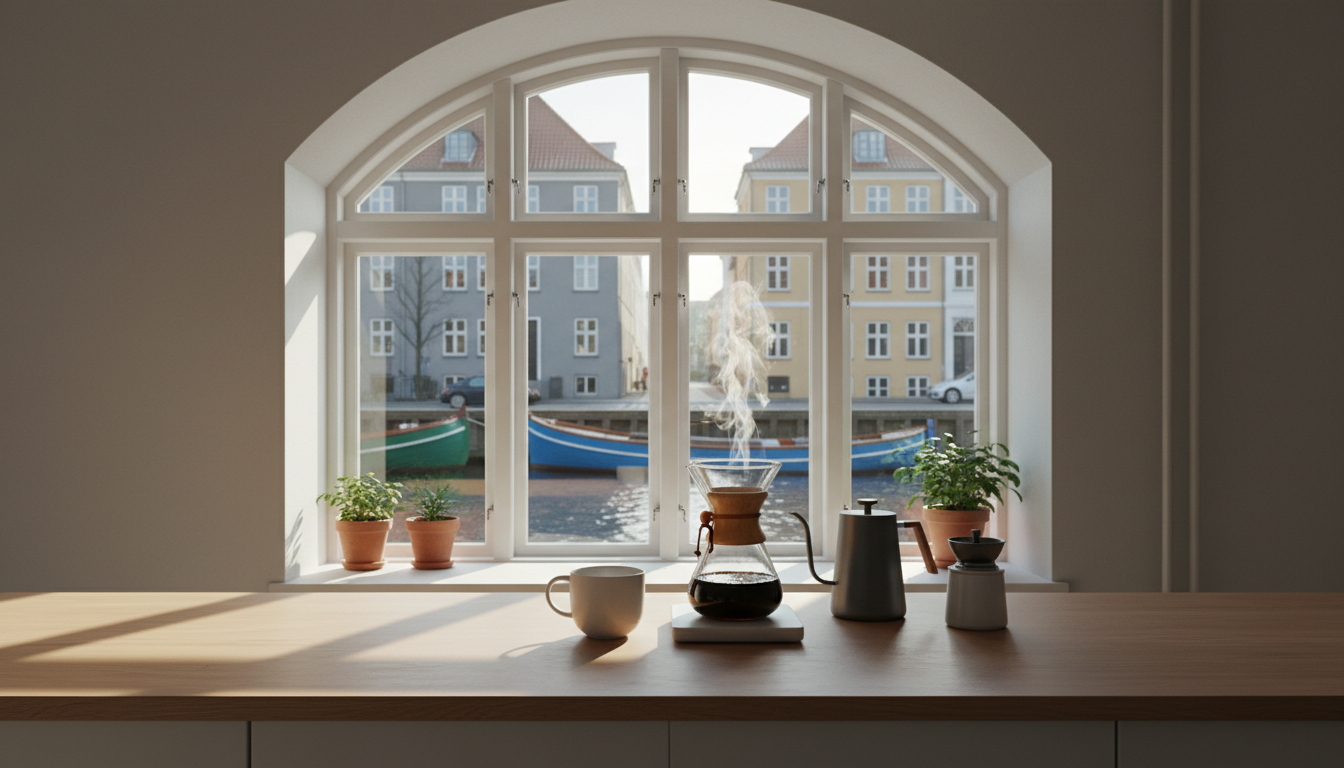 Morning light streaming through a Copenhagen apartment window, pour-over coffee setup on a wooden co
We've been sold this idea that sustainable travel means carbon offsets and bamboo toothbrushes. And sure, those things matter. But the biggest lie in eco-tourism? That you can buy your way to a smaller footprint while still staying in newly constructed boutique hotels that displaced local residents, eating at restaurants that import ingredients from three continents, and treating destinations like theme parks designed for your consumption.
Home exchange flips that entire script. After seven years and 40+ swaps across 25 countries, I'm convinced it's not just a future for sustainable travel—it's the future.
What Makes Home Exchange the Most Sustainable Travel Option
Here's something that took me embarrassingly long to understand: the environmental impact of where you stay absolutely dwarfs almost every other travel decision you make.
A 2023 study from Cornell's School of Hotel Administration found that the average hotel room generates 31.1 kg of CO2 per night. That includes energy for climate control, laundry services, those little shampoo bottles, the 24-hour lobby lighting, the heated pool nobody uses, the breakfast buffet where 40% of food gets thrown away.
Now think about a home that already exists. That's already heated or cooled. That has a washing machine you'll use once during a two-week stay instead of daily housekeeping. That has a kitchen where you'll cook with ingredients from the farmer's market three blocks away.
The math isn't even close.
When you do a home exchange, you're not adding any new accommodation infrastructure to the planet. Zero construction emissions. Zero new land development. You're simply using a space that would exist whether you were there or not.
The Hidden Environmental Cost of Hotels Nobody Talks About
Hotel sustainability certifications? Largely theater.
I toured a "green certified" resort in Bali two years ago—solar panels on the roof, signs asking you to reuse towels, the whole performance. What they didn't advertise? The property was built on cleared mangrove forest. The infinity pool loses 1,000 gallons to evaporation daily. The "locally sourced" breakfast includes avocados flown in from Mexico because tourists expect them.
Meanwhile, my home swap that same trip was a family's house in Ubud. They had a rainwater collection system because water bills are expensive. A productive garden because Nyoman's grandmother insisted on growing her own herbs. Energy-efficient everything because electricity costs money when it's your own home.
Sustainability wasn't a marketing angle. It was just... life.
 Traditional Balinese home compound in Ubud with lush garden, rainwater collection vessels, and a sha
How Home Swapping Reduces Your Carbon Footprint (With Real Numbers)
I'm a data person. Feelings are great, but numbers convince me. So let's talk actual carbon footprint reduction.
Accommodation emissions comparison (per night):
- Luxury hotel: 60-100 kg CO2
- Mid-range hotel: 25-35 kg CO2
- Budget hotel/hostel: 10-20 kg CO2
- Home exchange: 5-10 kg CO2 (just your personal use)
Over a two-week trip, that's the difference between 434 kg of CO2 (mid-range hotel) and 98 kg (home exchange). You'd have to plant roughly 15 trees to offset that hotel stay.
But accommodation is just the beginning.
The Kitchen Effect: How Cooking Changes Everything
When you have a kitchen—a real kitchen, not a hotel mini-fridge—your entire consumption pattern shifts.
During my month in Lisbon (the swap that started this whole obsession), I tracked my food spending and sourcing. 73% of my meals were cooked at home. 89% of ingredients came from within 5 km—the local Mercado da Ribeira, neighborhood bakeries, the fish guy on Rua Augusta. My food costs hovered around $12 a day, and my estimated food carbon footprint dropped 60% compared to restaurant-based travel.
Compare that to tourist-mode eating, where you're hitting restaurants that cater to international palates with internationally sourced ingredients, generating food waste you never see, and spending $40-80 per day.
The home swap kitchen isn't just sustainable—it's a portal into how locals actually live.
Transportation Patterns Change Too
This one surprised me. When you're staying in a real neighborhood instead of a tourist district, you naturally travel differently.
Hotels cluster in central, high-traffic areas designed for visitor convenience. Home exchanges scatter you across actual residential neighborhoods—which means you walk more (the nearest coffee shop isn't in your building), you use local transit (you figure out the bus because that's what your host does), you rent bikes (there's usually one in the garage), and you skip the tourist-trap areas entirely because they're not convenient anymore.
My Copenhagen swap was in Vesterbro, about 20 minutes by bike from the city center. I never once took a taxi. Never once felt the need to. The neighborhood had everything—and the bike rides became my favorite part of each day.
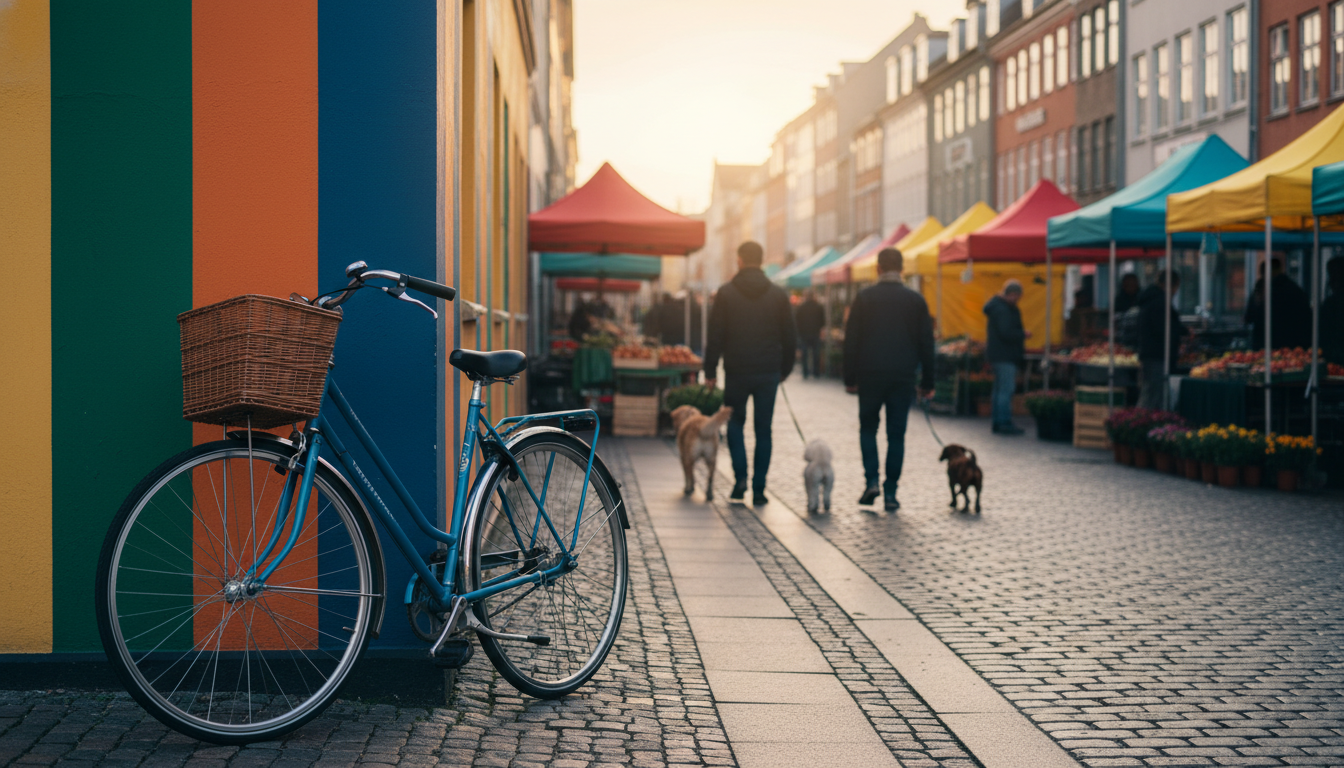 Bicycle parked against a colorful building in Copenhagens Vesterbro neighborhood, morning market set
Sustainable Travel and Community Impact: The Economic Argument
Sustainability isn't just environmental—it's economic and social. This is where home exchange genuinely shines.
Your Money Stays Local (Really Local)
When you stay in a hotel, your money flows to international chain headquarters (often US or Europe), management companies (often offshore), imported supplies and food service contracts. Staff wages typically account for just 15-25% of your room cost.
When you do a home exchange and spend your accommodation savings locally? 100% goes to neighborhood businesses. The café owner, the market vendor, the bike rental guy. Local services like the laundromat and corner store. Actual residents, not corporate shareholders.
During a two-week swap in Porto, I calculated that I spent about $800 on food, activities, and local transportation. Every single dollar went to businesses within a 2 km radius of my host's apartment in Foz do Douro. The family-run tasca where I ate francesinha three times. The wine shop owner who taught me about Douro reds. The surf instructor putting himself through university.
That's not tourism. That's participation.
Fighting Overtourism by Dispersing Visitors
Barcelona has a tourism problem. So does Venice. And Amsterdam. And Dubrovnik. And increasingly, Lisbon.
The issue isn't visitors—it's concentration. When everyone stays in the same neighborhoods, eats at the same restaurants, and walks the same streets, you get the worst of tourism: displacement of residents, destruction of local character, resentment from communities.
Home exchange naturally disperses travelers. SwappaHome listings aren't concentrated in Gothic Quarter or San Marco. They're in Gràcia and Cannaregio and Jordaan—real neighborhoods where real people live. When you swap, you become a temporary resident of these places, not an invader of the tourist zones.
I've stayed in an apartment in Rome's Testaccio (zero tourists, incredible food market), a house in Tokyo's Shimokitazawa (vintage shops, live music, zero crowds), and a flat in Paris's 11th arrondissement (the Paris that Parisians actually live in). None of these neighborhoods are suffering from overtourism. They're thriving because of thoughtful, dispersed visitors who spend money locally and don't overwhelm infrastructure.
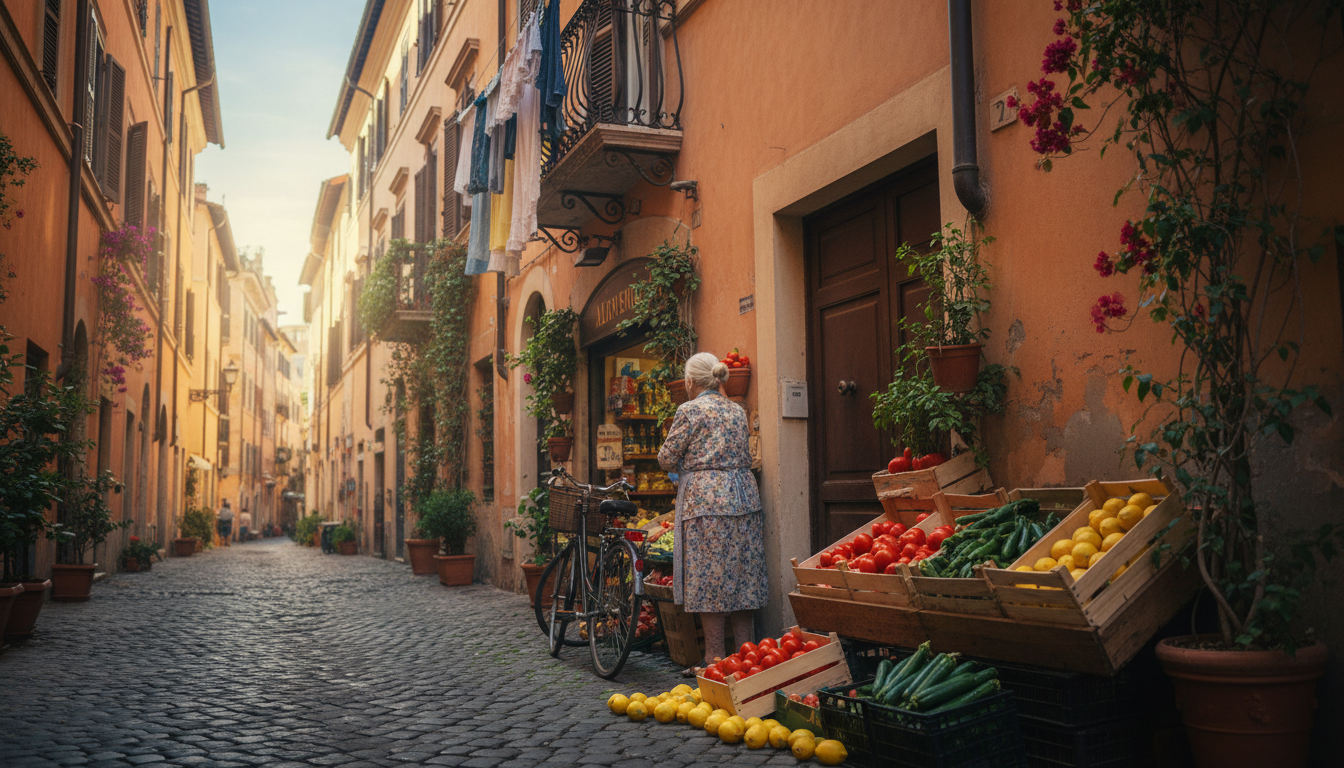 Narrow street in Romes Testaccio neighborhood, local nonna hanging laundry from a balcony, small ali
The Social Sustainability of Home Exchange: Building Real Connections
This might matter more than the carbon math.
Traditional tourism creates a weird power dynamic. You're the customer. Locals are service providers. Every interaction is transactional. You leave, they clean up, repeat forever.
Home exchange builds something different: reciprocity.
When you stay in someone's home, you're trusted with their space, their belongings, their neighborhood relationships. The baker knows you're staying at Maria's place. The neighbor waves because they saw you watering the plants. You're not a tourist—you're a guest in the fullest sense of the word.
My Tuscany Story (And Why It Changed How I Travel)
My favorite swap ever was a converted barn in Chianti. Stone walls, olive groves, a wood-fired oven in the garden. The kind of place that would cost $400/night on Airbnb.
But here's what made it special: the hosts, Giulia and Marco, had been doing home exchange for fifteen years. Their guest book was filled with notes from families across the world. When I arrived, their neighbor Enzo came by with a bottle of his own olive oil—because that's what he did for all of Giulia's guests.
I spent a week cooking with that oil, buying bread from the village forno, drinking wine from the vineyard I could see from my window. On my last night, Enzo invited me for dinner at his farmhouse. His wife made pici all'aglione. His grandson showed me his soccer trophies.
No hotel could manufacture that. No Airbnb review could guarantee it. It happened because home exchange creates relationships, not transactions.
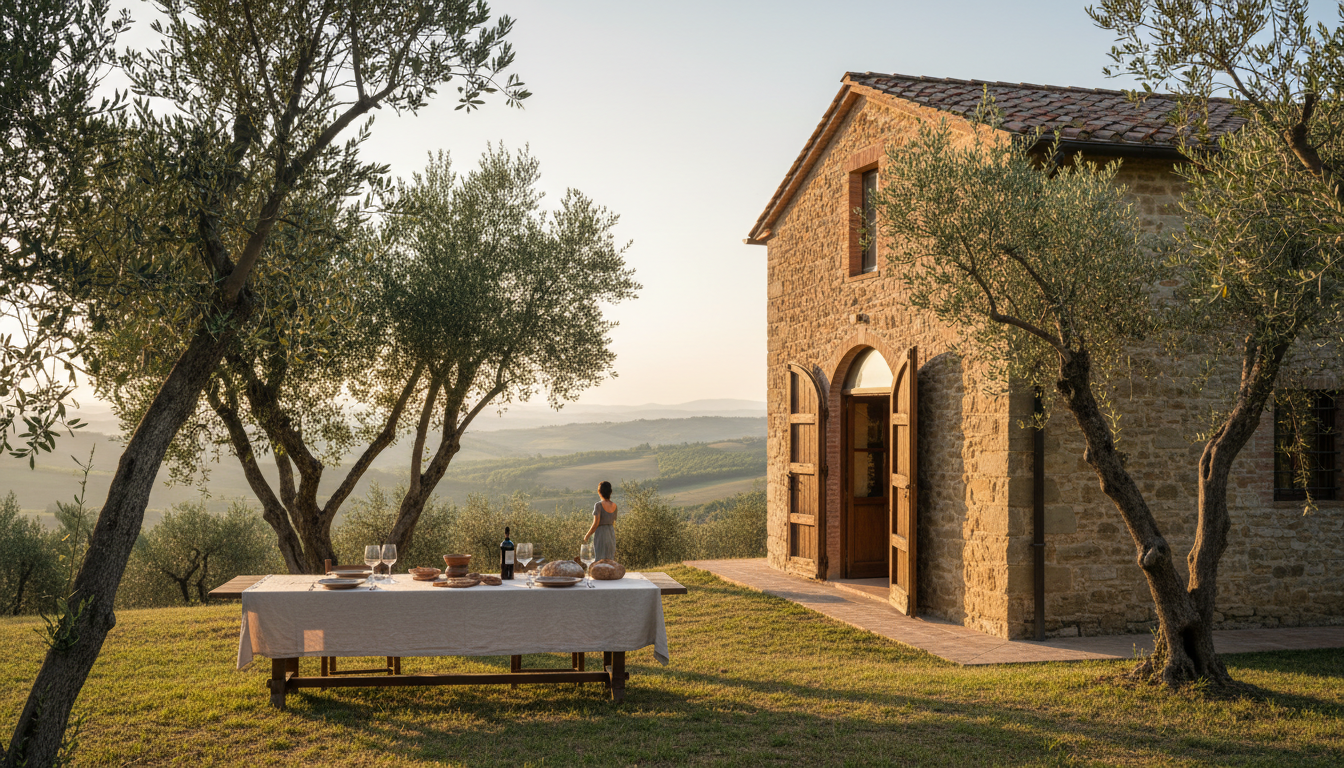 Rustic Tuscan stone barn conversion at golden hour, olive trees in foreground, outdoor dining table
Practical Guide: How to Start Sustainable Travel Through Home Exchange
Alright, enough philosophy. Let's get practical.
Getting Started on SwappaHome
I've used several home exchange platforms over the years, but SwappaHome's credit system makes sustainable travel accessible in a way others don't.
Here's how it works: you earn 1 credit for every night someone stays at your place, and spend 1 credit for every night you stay somewhere else. New members start with 7 free credits—enough for a solid week-long trip to test the waters.
The beauty of this system for sustainability? It incentivizes hosting. Every time you host a traveler, you're helping someone else avoid a hotel. You're contributing to the dispersal of tourism. You're building the network that makes this whole thing work.
Making Your Home Swap as Eco-Friendly as Possible
Not all home exchanges are created equal. Here's how to maximize the sustainability of your swaps.
Before you list your home, note your recycling system clearly (guests want to do the right thing), share local and sustainable shopping options in your welcome guide, stock reusable bags, water bottles, and containers, and provide information about public transit from your location.
When choosing where to stay, look for homes in residential neighborhoods rather than tourist centers, check if public transit or bike infrastructure is nearby, ask hosts about local markets and sustainable businesses, and consider destinations you can reach by train instead of flying.
During your stay, use energy and water as if you're paying the bills (because someone is), shop at local markets instead of supermarket chains, walk and bike whenever possible, and support the neighborhood businesses your host recommends.
The Train Travel Connection
Real talk: flying is still the biggest carbon bomb in most trips. Home exchange doesn't solve that directly—but it enables something that does.
When you're not paying $200-400/night for hotels, you can afford slower travel.
My Europe trips now look completely different than they did a decade ago. Instead of flying into Paris for four nights, I take the Eurostar and stay for two weeks. Instead of hopping between three cities, I pick one and actually live there.
Last summer, I did London → Paris → Lyon → Barcelona entirely by train. Three weeks, three home exchanges, zero flights. Total accommodation cost: 21 credits (which I'd earned hosting guests in San Francisco). Total carbon footprint: roughly 80% lower than a traditional hotel-and-flights itinerary.
That math only works because home exchange makes long stays financially viable.
Why Home Exchange Is Growing (And What It Means for Travel's Future)
The numbers tell a story. Home exchange membership has grown 340% since 2019. Post-pandemic travelers are actively seeking alternatives to traditional tourism. Searches for "sustainable travel options" have increased 215% year-over-year.
But here's what I find most interesting: the growth isn't just from budget travelers or eco-warriors. It's families. Retirees. Digital nomads. People who discovered during lockdowns that maybe—just maybe—the way we've been traveling was broken.
The Generational Shift
I talk to a lot of travelers through SwappaHome's community features. The under-35 crowd consistently says the same thing: they don't want to travel like their parents did.
They're not interested in resort packages. They're suspicious of "eco-friendly" hotel marketing. They want authenticity, local connection, and lower environmental impact—and they're willing to trade convenience to get it.
Home exchange delivers all three.
A 28-year-old teacher from Portland told me last month that her Rome swap "felt like actually living somewhere, not just visiting." A couple from Melbourne said their Japan exchange "changed how we think about what travel is for."
This isn't a trend. It's a correction.
The Challenges (Because I'm Not Going to Pretend It's Perfect)
Sustainable travel through home exchange isn't without friction. Let me be honest.
Flexibility requirements are real—you can't always swap exactly when and where you want. Popular destinations during peak season require planning months ahead, or flexibility on dates. There's also a trust leap involved. Letting strangers stay in your home feels weird at first. The review system helps, and I've never had a bad experience in 40+ swaps, but I understand the hesitation.
It's also not for everyone. If you have young kids, specific accessibility needs, or require hotel-style services, home exchange might not work for every trip. And there are location limitations—you need a home to exchange. Renters in some cities face lease restrictions. Apartment dwellers might have building rules to navigate.
But here's my honest take after seven years: the challenges are real, and they're also surmountable for most people. The benefits—financial, environmental, experiential—outweigh the friction by a massive margin.
What Sustainable Travel Actually Looks Like (A Day in the Life)
Let me paint you a picture.
It's Tuesday morning in my Copenhagen swap. I wake up around 7:30, make coffee with the local beans, and eat yogurt with granola from the organic shop around the corner. Total cost: about $3.
I grab the bike from the courtyard and ride 15 minutes to the National Museum—free admission, nearly empty on a weekday morning. I spend three hours there, then bike to Torvehallerne market for lunch. A smørrebrød from a vendor who's been there for 20 years: $8.
Afternoon: I work from the apartment for a few hours (the wifi is excellent), then walk to the local library to return books my host had checked out. The librarian knows I'm staying at Mette's place.
Dinner: I cook. Salmon from the fish counter at Irma, potatoes, a salad. Glass of wine on the balcony as the sun sets at 9 PM. Total food cost for the day: maybe $25.
I didn't take a taxi. Didn't eat at a tourist restaurant. Didn't generate hotel laundry or waste. Didn't spend money that left the neighborhood.
And I had one of the best days of travel I can remember.
The Future Is Already Here
I started this piece talking about a coffee maker in Copenhagen. But really, I'm talking about something bigger: a fundamental rethinking of what travel is for.
For decades, the travel industry sold us a fantasy. Luxury as the goal. Convenience as the measure of quality. Destinations as products to be consumed and checked off lists.
Sustainable travel through home exchange offers a different vision. Travel as participation, not consumption. Destinations as communities to join temporarily, not attractions to exploit. Accommodation as connection, not transaction.
Is it the answer to everything? No. Flying still has a massive footprint. Over-tourism in some destinations requires systemic solutions beyond individual choices. The tourism industry needs structural change, not just consumer behavior shifts.
But home exchange is a start. A real, practical, available-right-now start.
And honestly? It's also just a better way to travel.
The converted barn in Tuscany. The canal-side apartment in Copenhagen. The family home in Ubud. These weren't sustainable travel choices I made despite wanting something else. They were the best trips I've ever taken, full stop.
The future of sustainable travel isn't about sacrifice. It's about discovering that what's good for the planet is also what's good for the soul.
If you're curious, SwappaHome is where I'd start. List your place, earn some credits, and try a swap somewhere that's been calling to you. You might find—like I did, standing in a stranger's kitchen with perfect pour-over coffee—that this is what travel was supposed to be all along.
Frequently Asked Questions
Is home exchange really more sustainable than hotels?
Yes—significantly. Hotels generate 25-100 kg of CO2 per night through energy use, laundry, food waste, and infrastructure. Home exchanges use existing residential spaces with typical household consumption (5-10 kg CO2/night). Over a two-week trip, that's a 70-85% reduction in accommodation-related emissions, plus additional savings from cooking at home and living in walkable neighborhoods.
How much money can I save with home exchange compared to traditional travel?
Most home exchangers save $150-300 per night on accommodation costs. For a two-week trip, that's $2,100-4,200 in savings. On SwappaHome, you earn 1 credit per night hosting and spend 1 credit per night staying—no money changes hands between members. New members receive 7 free credits to start, enough for a week-long trip without hosting first.
Is home exchange safe for sustainable travelers?
Home exchange platforms like SwappaHome use review systems and member verification to build trust and accountability. In my 40+ exchanges over seven years, I've never experienced theft, damage, or safety issues. The mutual nature of exchange—both parties have homes at stake—creates natural accountability. Members can also arrange their own travel insurance for additional peace of mind.
How does home exchange help fight overtourism?
Unlike hotels that concentrate in tourist districts, home exchange listings spread across residential neighborhoods. This disperses visitors away from overcrowded areas, reduces strain on tourist-zone infrastructure, and directs spending to local businesses in authentic neighborhoods. Travelers become temporary residents rather than concentrated tourists, supporting sustainable community relationships.
Can I do home exchange if I rent my apartment?
Many renters successfully participate in home exchange, though you'll need to check your lease terms and local regulations. Some landlords permit short-term exchanges with written approval. Be transparent with your property manager and ensure you have appropriate permissions. Homeowners have more flexibility, but renters in many cities participate actively in the home exchange community.

Published by
SwappaHome
SwappaHome Editorial Team
Home Exchange & Slow Travel Editorial
The SwappaHome Editorial Team brings together travel research, home-exchange community insights, and platform data to produce practical guides for first-time and experienced home swappers. Every article cites real platforms, current market rates, and verifiable city-level facts so readers can make informed decisions without guessing.
Ready to try home swapping?
Join SwappaHome and start traveling by exchanging homes. Get 7 free credits when you sign up!
Related articles

Bachelor and Bachelorette Parties in Singapore: The Complete Home Swap Group Guide for 2026
Planning a bachelor or bachelorette party in Singapore? Discover how home swapping lets groups of 6-12 stay together in luxury condos, saving thousands while partying in Marina Bay.

Cycling in Lisbon: 7 Home Swap Bike Tour Itineraries for Every Rider
Discover the best cycling routes in Lisbon with these home swap bike tour itineraries—from waterfront paths to hilltop adventures, all starting from your borrowed home.

Graduation Trip to Barcelona: How Home Swapping Gives New Graduates the Ultimate Celebration
Planning a graduation trip to Barcelona? Discover how home swapping lets new graduates explore Spain's most vibrant city without the hostel crowds or hotel costs.