The Rise of the Sharing Economy: How Home Swapping Fits Into Sharing Economy Travel

SwappaHome Editorial Team
Home Exchange & Slow Travel Editorial
Somewhere along the way, we stopped defaulting to hotels. I don't know exactly when it happened, but it did. These days people rent a stranger's spare room, borrow someone's car for the weekend, or...
Somewhere along the way, we stopped defaulting to hotels. I don't know exactly when it happened, but it did. These days people rent a stranger's spare room, borrow someone's car for the weekend, or straight-up trade houses with a family halfway across the planet. Sharing economy travel snuck up on the hospitality industry and quietly rewired how millions of us book trips and decide where to sleep at night.
Home swapping sits right in the middle of all this. You trade your house with another traveler's house for a set stretch of time, nobody pays anybody for the stay, and you both come out ahead. It's cheaper than a hotel, it's more real than a hotel, and it fits the whole sharing economy mindset almost perfectly.
So let me walk you through what the sharing economy actually is, how house swapping clawed its way from an obscure hobby into a legit branch of the travel world, and where the home exchange industry seems to be heading.
Table of Contents
- What Is the Sharing Economy, and Why Is Travel Its Fastest-Growing Segment?
- How Did Sharing Economy Travel Evolve From Couchsurfing to Home Swapping?
- Where Does Home Exchange Fit Into the Sharing Economy Travel Model?
- What Home Exchange Industry Trends Are Shaping the Market Right Now?
- Home Swapping vs. Other Sharing Economy Travel Options
- What Are the Financial and Environmental Benefits of Sharing Economy Travel?
- How Does Technology Power the Modern Home Exchange Industry?
- Is Home Swapping Safe? Addressing Common Concerns
- Frequently Asked Questions
What Is the Sharing Economy, and Why Is Travel Its Fastest-Growing Segment?
The sharing economy is basically people trading access to stuff they already own, usually through an app, instead of buying that stuff or service from a big company. A car, a power drill, a house. Rather than paying a corporation for something, you rent, borrow, or swap it directly with another person who's got one sitting around.
And travel? Travel turned out to be the perfect playground for this. Think about it. The two biggest chunks of any trip's budget are where you sleep and how you get around, and both are absolutely swimming in wasted capacity. A four-bedroom house sitting dark and empty while its owners are off in Portugal is exactly the kind of idle asset this whole model was built to unlock. PwC's early research on the collaborative economy projected that sectors like travel accommodation and transportation would end up pulling in substantially more global revenue than the traditional rental industries within a decade, and honestly, watching Airbnb and the home exchange networks blow up since then, that call aged pretty well.
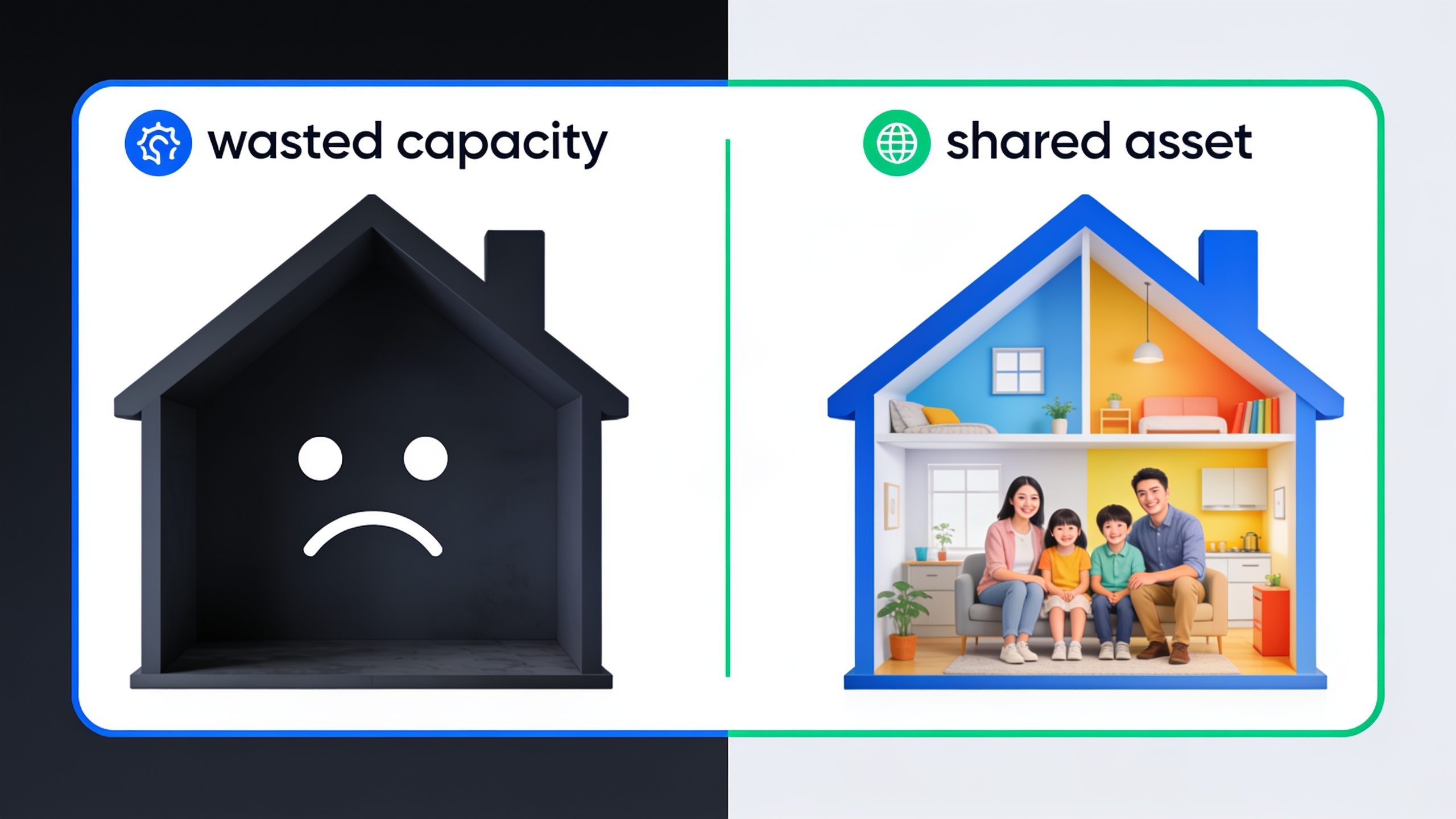 Infographic showing how home swapping transforms unused residential properties into shared travel accommodations
Anyway, the point is this stopped being a fringe thing a long time ago. People now compare peer-to-peer options against hotels before they book, the same way you'd check two airlines. It's just part of how trips get planned now.
How Did Sharing Economy Travel Evolve From Couchsurfing to Home Swapping?
Sharing economy travel grew out of scrappy, trust-based arrangements between strangers in the early 2000s and turned into the polished, platform-driven industry we've got today, one that covers vacation rentals, ride-sharing, home exchange, and experience tourism. It didn't happen all at once. It came in waves, each one building on the trust and tech of the last.
The Early Trust-Based Networks
Couchsurfing showed up in 2004 and pretty much normalized the wild idea of crashing at a stranger's place for free. The whole thing ran on profiles, references, and community reputation. No money involved. What it proved is that people were genuinely willing to open their doors to someone they'd never met, as long as there was enough social accountability baked into the system to keep everyone honest.
The Monetization Wave
Then Airbnb rolled in around 2008 and added the obvious missing piece: money. Suddenly your spare room or your whole apartment could be an income stream. That changed everything, because goodwill only attracts so many hosts, but actual earnings? That pulls in a crowd. This is really the moment sharing economy travel stopped being a curiosity and became mainstream.
The Home Exchange Resurgence
Here's the funny part. Home swapping is older than both of them. Way older. There were organizations arranging vacation home swaps back in the 1950s, mostly European teachers trying to travel cheap over the summer. So the concept isn't new at all. What's new is the tech wrapped around it. Modern platforms handle the matching, the verification, the scheduling, all the stuff that used to be a nightmare of letters and phone calls. Now you can actually find a compatible swap in a place you genuinely want to go. If you want to dig into how that's shaking out, this piece on how home swapping is changing the future of travel gets into the mechanics.
Where Does Home Exchange Fit Into the Sharing Economy Travel Model?
Home exchange is the no-money, you-scratch-my-back version of peer-to-peer lodging: two households trade access to their homes instead of one paying the other. That reciprocity is what sets it apart from the Airbnb crowd, where somebody's earning and somebody's spending.
And that reciprocal setup is home exchange's not-so-secret weapon. No cash changes hands for the stay, which means the single biggest line item in almost anyone's travel budget just vanishes. Poof. A family that might drop $150 to $300 a night on a rental in a hot destination can swap houses with another family instead and pay basically nothing beyond a modest membership fee. That's why swapping hits so hard with the budget-minded crowd: retirees trying to stretch a fixed income across months of travel, and families who actually need multiple bedrooms and a working kitchen, not a shoebox hotel room where everyone's tripping over each other.
But it's not just about the money. Swapping gives you something hotels physically cannot: a real place. You're staying in someone's actual home, with their books on the shelf, their weird collection of kitchen gadgets, their notes about the good bakery down the street. You feel like you live somewhere instead of visiting it. That's the same itch driving all those experience marketplaces and local tour apps. People are tired of being tourists. They want to be temporary locals.
What Home Exchange Industry Trends Are Shaping the Market Right Now?
Right now the home exchange industry is moving in three clear directions: rapid digitization, a flood of remote workers using swaps for long stays, and a growing hunger for verified, insured exchanges as the whole thing matures past its hobbyist roots. A few things are hitting at once here.
Longer Stays Driven by Remote Work
Remote work completely blew up the old timeline. Ten years ago most swaps ran a week or two, timed around a fixed vacation. Now platforms are fielding requests for month-long and multi-month stays because digital nomads have figured out they can live in a new city without paying rent in two places at once. It's a smart hack, really. And it feeds into that broader "bleisure" thing, where the line between a work trip and a vacation has basically dissolved.
Consolidation and Platform Sophistication
The small regional swap clubs are getting swallowed or squeezed out by bigger platforms with slick apps, calendar syncing, and built-in messaging. We've seen this movie before, honestly. It's exactly what happened to ride-sharing and short-term rentals a decade ago, where a mess of scrappy local services collapsed into a handful of well-funded giants.
Multi-Generational Adoption
Swapping used to be a retiree thing, all flexible schedules and long trips. Not anymore. Younger families are one of the fastest-growing segments now, and the reason is dead simple: home swapping solves a very specific, very annoying problem. Try finding affordable, roomy lodging with a kitchen and a washing machine for a family of five. Hotels are terrible at this, and they charge you a fortune for the privilege of being terrible at it.
Rising Demand for Trust and Verification Layers
As more homes flood into the pool, people naturally want more reassurance. Identity checks, photo-verified listings, clear damage and liability policies. I'd argue this is the most important trend of the bunch, because trust is the whole ballgame. Without it, nobody swaps. Anyone thinking about a trade should really understand how coverage works before they commit, and this guide on handling insurance and liability in home swapping lays out what protections usually exist and what to grill a potential partner about.
Home Swapping vs. Other Sharing Economy Travel Options
Home swapping is one of several models fighting for your accommodation budget, and they each come with different costs, trust requirements, and sweet spots. Here's how the main options stack up side by side.
| Model | Typical Cost | Trust Mechanism | Best For | Main Drawback |
|---|---|---|---|---|
| Home Exchange (Swapping) | Membership fee only, no nightly rate | Mutual reciprocity, reviews, verification | Families, retirees, long stays, budget travelers | Requires coordinating with another household |
| Short-Term Rental (Airbnb-style) | $100-$300+ per night | Host/guest reviews, platform mediation | Solo travelers, short trips, flexible dates | Cost adds up fast over longer stays |
| Couchsurfing | Free | Community references, profile history | Solo backpackers, social travelers | Less privacy, no dedicated space |
| House Sitting | Free lodging in exchange for pet/home care | Background checks, references | Long-term travelers, pet lovers | Responsibility for someone else's property/pets |
| Traditional Hotel | $120-$400+ per night | Brand reputation, third-party ratings | Business travel, short stays, convenience | Least authentic, least budget-friendly for families |
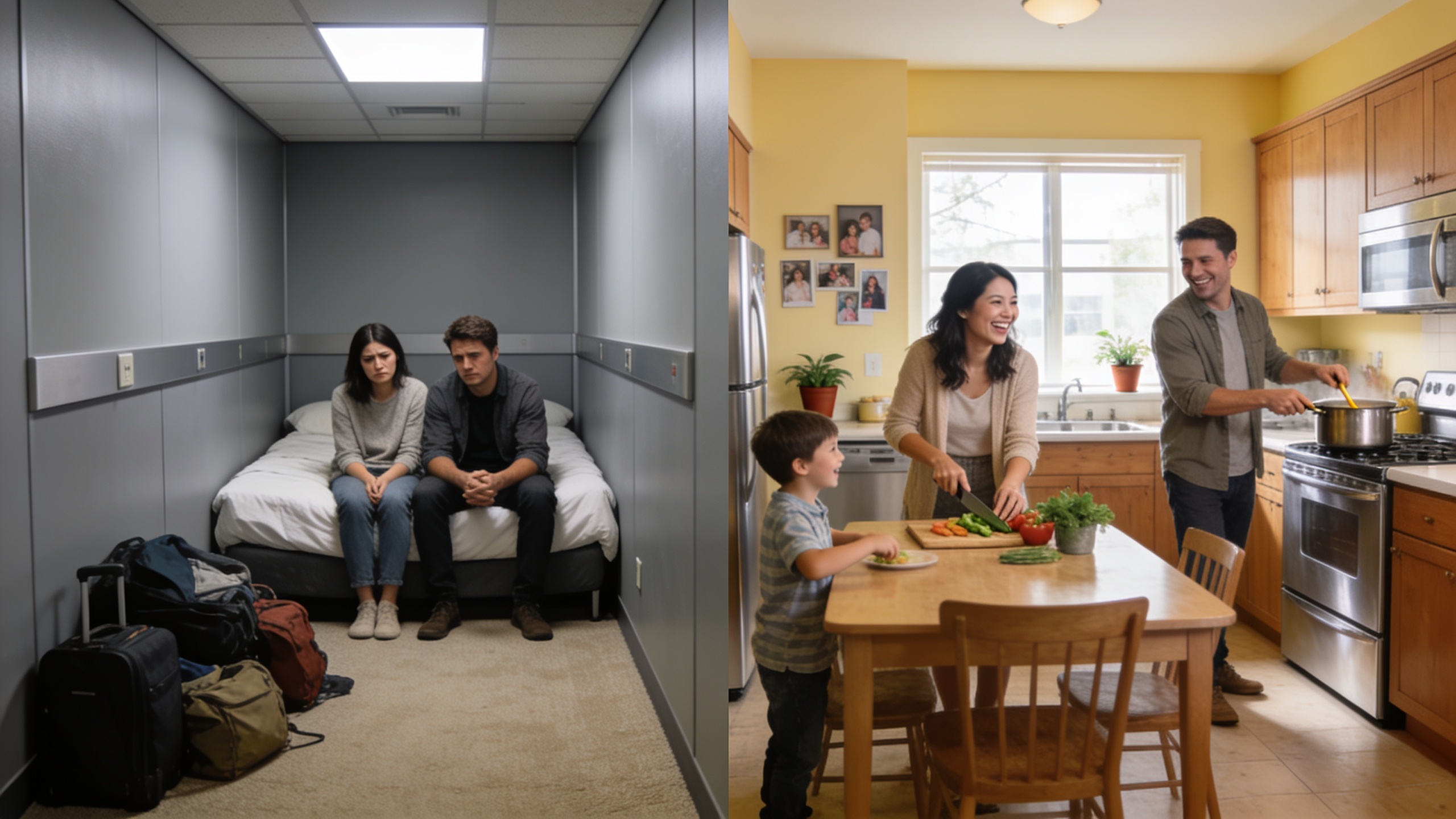 Side-by-side comparison of a cramped hotel room versus a spacious home kitchen during a house swap, illustrating the lifestyle difference between traditional and sharing economy accommodations
The table pretty much tells the story. Home exchange wins big for people who want longer stays and lower costs and don't mind giving up the freedom of booking night to night. It's a lousy fit for a spontaneous weekend where you decide to go somewhere on Thursday. But a two-week family vacation? A month abroad as a nomad? The math almost always tilts toward a swap over anything else on that list.
What Are the Financial and Environmental Benefits of Sharing Economy Travel?
Sharing economy travel saves you money by cutting out the middleman markups, and it can ease environmental strain by squeezing more use out of housing that already exists instead of demanding new tourist accommodations get built. Both of those are a big part of why the model keeps growing.
The money side is almost embarrassingly simple. No nightly fee means your biggest recurring travel expense just disappears. On a two-week international trip, that can add up to thousands of dollars you'd otherwise hand over to hotels or rentals, money that can go toward flights or dinners or actually doing things instead. This is exactly why swapping clicks so hard with retirees on fixed incomes and with younger families who want great trips without racking up debt to get them.
The environmental case is a little fuzzier, but it holds up. Because swaps use regular residential homes rather than dedicated tourist units, they don't pile onto the short-term-rental housing crunch that's turned into a genuine political brawl in places like Barcelona and New York. And swapping nudges you toward living like a local anyway, shopping at the neighborhood grocery store, using the household stuff that's already there, instead of generating the endless waste a hotel churns out. All those daily linen changes. The little plastic shampoo bottles. It adds up.
How Does Technology Power the Modern Home Exchange Industry?
Technology runs the modern home exchange industry by automating the matching, verification, communication, and scheduling that people used to do by hand with mailed catalogs and long phone calls. Strip that digital layer away and swapping would still be the tiny word-of-mouth club it was for most of the last century.
Behind the curtain, a swap platform has all the operational headaches of any modern marketplace: verifying users, keeping messaging secure, syncing calendars across time zones, processing membership payments. It's a lot. Plenty of travel and hospitality companies lean on specialized tech partners to build and maintain this stuff, and firms like SamaiSolutions focus specifically on helping businesses streamline those systems so a platform can grow without falling apart at the seams.
Marketing matters just as much as the backend, though people forget that. As more swap platforms scramble for attention, content and search visibility have become survival tools for reaching travelers who are Googling "alternatives to hotels" for the very first time. AI-driven tools like RobinRank, which automates SEO content and backlink building, show how smaller travel brands are using AI marketing to punch above their weight against the giant, deep-pocketed hotel and rental companies.
And then there's local discovery, which is quieter but genuinely useful. When you land in a strange city through a swap, you need to find restaurants and services and stuff to do, fast. AI-powered local directories, like Bournemouth Info for the Bournemouth, Poole, and Christchurch area over in the UK, are turning into handy companion tools for exactly that, helping swappers get their bearings in a new neighborhood way quicker than generic search ever could.
Is Home Swapping Safe? Addressing Common Concerns
Home swapping is generally safe as long as both parties use a platform with identity verification, communicate clearly, and put down a documented agreement covering house rules, liability, and emergency contacts. The scary stuff people worry about usually isn't the real risk. It's rarely about personal safety. It's about property damage, crossed wires, and fuzzy expectations, and all three are manageable if you prep properly.
Most decent platforms now demand some form of identity verification before you can even list a home or kick off a swap, and a lot of them push for (or flat-out require) a video call between the two households before anything's final. A written agreement covering check-in and check-out, the rules on pets or smoking, and what happens if something breaks goes a shockingly long way toward heading off arguments. Oh, and check whether your homeowner's insurance covers a swap at all, because policies are all over the map on this. That insurance and liability in home swapping guide I mentioned earlier covers the specific gaps to watch for and how extra coverage can plug them.
There's also a softer kind of safety that's easy to miss: just being comfortable in the place itself. People heading somewhere unfamiliar tend to relax once they've scoped out local services ahead of time, whether that's a reliable pharmacy or, if you're settling in for a longer stretch, wellness spots like the treatments at Idun Aesthetics over in Cairns, Australia. That's exactly the kind of local gem you stumble onto when you're actually living in a neighborhood instead of blowing through it as a tourist. Feeling at home in a destination, not just locked-doors secure in the house, is honestly a huge part of what makes a swap trip feel safe and, you know, actually fun.
Frequently Asked Questions
Is home swapping actually part of the sharing economy? Yep, no question. It's a direct offshoot of the sharing economy travel model because it runs on peer-to-peer access to an underused asset (your house) through a digital platform instead of a normal rental deal. The one big difference from the other options is that swapping is reciprocal, not paid. Both sides trade access rather than one charging the other.
How much can you really save with a home exchange versus hotels or rentals? Depends on where you're going and how long you're staying, but since swaps wipe out the nightly cost entirely, families doing two-week trips commonly report saving somewhere between $1,500 and $4,000 compared to booking equivalent hotel rooms or vacation rentals for the same stretch. The pricier the destination's usual lodging, the more you pocket.
Do you have to swap homes at the exact same time as your partner? Not always. Loads of platforms handle non-simultaneous swaps, where one household stays at the other's place during a totally different window, often tracked through a points or credit system instead of a rigid date-for-date match. That said, simultaneous swaps are still the most common setup, mostly because they're easier to coordinate and there's real peace of mind in knowing your own home is occupied and looked after while you're gone.
What happens if something gets broken during a swap? Most established platforms nudge members to photograph the home's condition before and after, and plenty of them recommend or require a written agreement spelling out how minor damage gets handled, usually just direct reimbursement between the two parties. For bigger stuff, you really need to know whether your homeowner's insurance or a platform-specific protection plan kicks in, because coverage varies a lot from one provider to the next.
Who's home swapping actually best for? It shines for families who need several bedrooms and a full kitchen, retirees with flexible calendars who can commit to longer trips, and remote workers or nomads who want a genuine home base rather than a hotel room for weeks on end. It's a poor fit for last-minute single-night trips, where the effort of arranging a swap just isn't worth the savings.
Sharing economy travel is well past the experiment stage now, and home swapping stands out as one of its most financially compelling corners, especially if you judge a good trip by both the memories and what's left in your bank account afterward. As verification tech keeps improving, remote work keeps smearing the line between vacation and everyday life, and more households catch on to the idea of trading houses instead of paying for them, home exchange is starting to look less like a fringe alternative and more like a permanent part of how people plan to see the world.

Published by
SwappaHome
SwappaHome Editorial Team
Home Exchange & Slow Travel Editorial
The SwappaHome Editorial Team brings together travel research, home-exchange community insights, and platform data to produce practical guides for first-time and experienced home swappers. Every article cites real platforms, current market rates, and verifiable city-level facts so readers can make informed decisions without guessing.
Ready to try home swapping?
Join SwappaHome and start traveling by exchanging homes. Get 7 free credits when you sign up!