
Is Rome Good for Home Swapping? An Honest Analysis for 2026

SwappaHome Editorial Team
Home Exchange & Slow Travel Editorial
Discover if Rome is worth it for home swapping in 2026. Real neighborhood tips, cost breakdowns, and honest advice from the SwappaHome community.
Picture yourself stepping off the tram at Piazza Argentina, keys in hand, walking past the ruins where Julius Caesar was assassinated—straight toward an apartment that's yours for the next two weeks. No hotel lobby. No €400-per-night bill. Just a local neighborhood, a working espresso machine, and the kind of Roman life that tourists pay thousands to approximate but never quite reach.
So is Rome good for home swapping? The short answer: it's one of the best cities in Europe for it—but with some important caveats that most travel advice conveniently ignores.
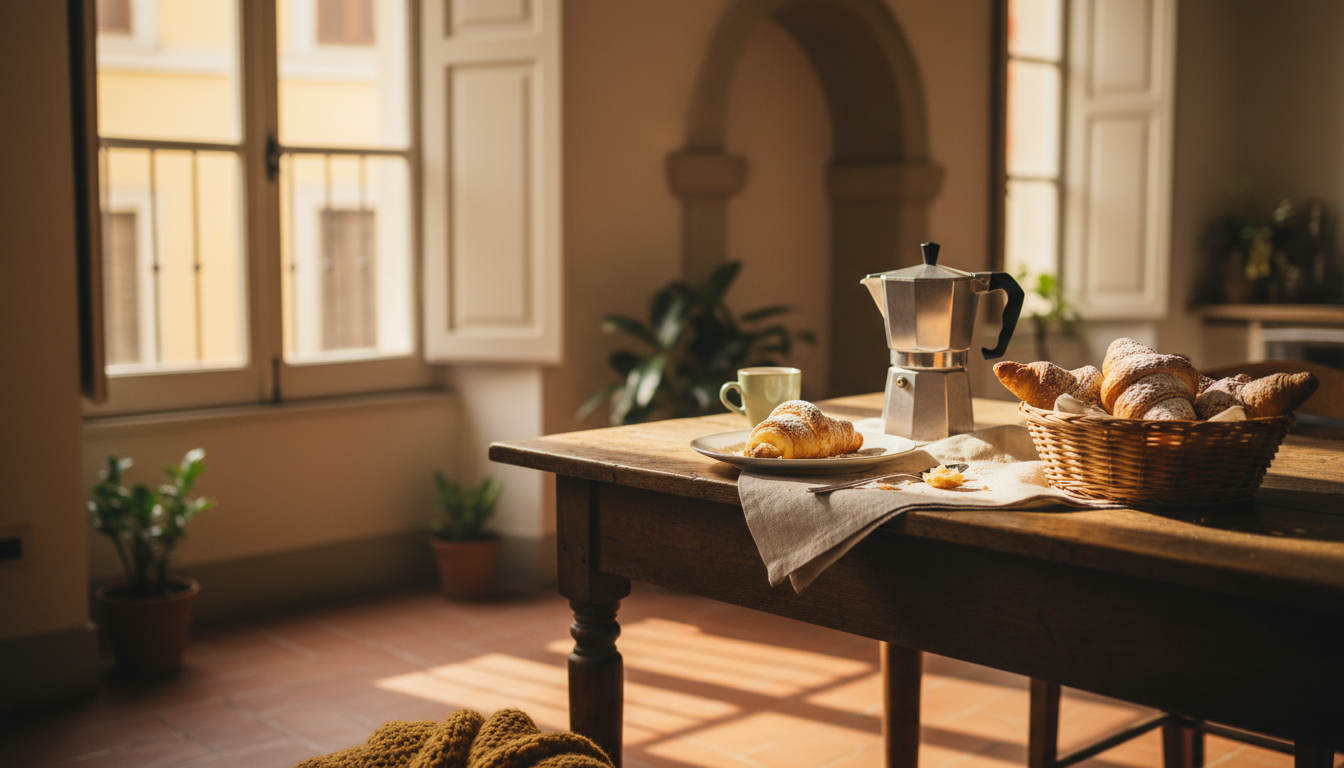 Morning light streaming through shuttered windows onto a rustic kitchen table with fresh cornetti an
Why Rome Ranks Among Europe's Best Home Swap Destinations
Rome isn't just good for home swapping—it's practically designed for it. Here's the honest breakdown of what makes the Eternal City work so well for this kind of travel.
The Supply-Demand Sweet Spot
Romans travel. A lot. The August exodus—when locals flee the city's brutal heat—has been a cultural institution for centuries. This creates a natural pool of homeowners who want to travel but don't want their apartments sitting empty, or worse, vulnerable to Rome's opportunistic petty thieves.
The SwappaHome community currently shows strong activity in Rome, with listings concentrated in the historic center, Trastevere, Testaccio, and increasingly in neighborhoods like Pigneto and Ostiense. Unlike Paris or London where supply barely keeps pace with demand, Rome offers a more balanced marketplace.
The Hotel Alternative Math Actually Works
Let's talk numbers, because this is where Rome home swapping gets genuinely compelling.
A mid-range hotel in central Rome—something clean, well-located, with a decent breakfast—runs €180–280 per night in 2026. That's roughly $195–305 USD at current exchange rates. For a two-week trip, you're looking at $2,700–4,270 just for accommodation.
A home swap? Zero accommodation cost beyond SwappaHome's membership. You're spending credits earned by hosting others—or using the 7 free credits that come with new memberships.
But here's what the simple math misses: Roman hotels are notoriously small. A "double room" often means a bed wedged between walls with barely enough space to open a suitcase. Home swaps in Rome typically offer 60–100 square meters of living space, a full kitchen (crucial in a city where restaurant meals average €15–25 per person), and often a washing machine—a genuine luxury when traveling for more than a week.
Location Quality That Hotels Can't Match
The best Roman apartments for home swapping sit in residential buildings that hotels simply can't access. We're talking about that fourth-floor walkup in Monti with the rooftop terrace overlooking Santa Maria Maggiore. The converted artist's studio in San Lorenzo with 16-foot ceilings. The family apartment in Garbatella—a neighborhood most tourists never discover—where the local bar knows everyone's coffee order.
Hotels cluster around Termini station and the Spanish Steps. Home swaps scatter across neighborhoods where Romans actually live.
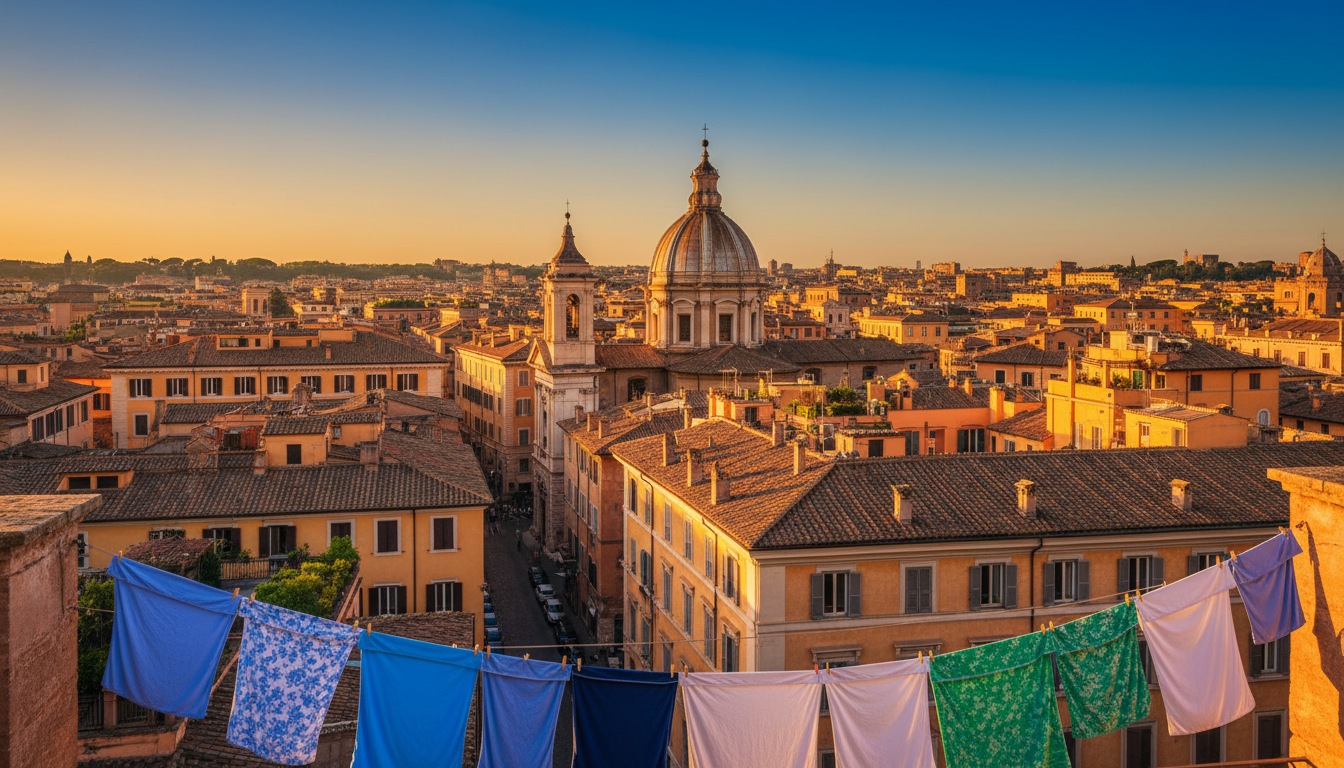 Aerial view of Romes terracotta rooftops at golden hour, showing the dome of SantIvo alla Sapienza a
The Honest Challenges of Home Swapping in Rome
Now for the part most home-swap evangelists skip: Rome presents genuine challenges worth understanding before committing.
The Building Infrastructure Reality
Roman residential buildings are old. Charmingly, historically, sometimes frustratingly old. Many lack elevators ("no lift" is a common listing note), which means hauling luggage up marble staircases worn smooth by centuries of use. Air conditioning remains inconsistent—some apartments have it, many don't, and those that do often have single-room units that struggle against July heat.
The plumbing situation deserves its own paragraph. Roman water pressure varies wildly by neighborhood and building. Trastevere's ancient infrastructure means some apartments have genuinely weak showers. The city's limestone-heavy water supply leaves deposits that can affect appliances. None of this is dealbreaking, but it's worth knowing that a Roman home swap might not have the same creature comforts as a renovated hotel.
The August Paradox
August seems perfect for Rome home swapping: Romans leave, apartments become available, you swoop in. But here's the catch—Rome in August is genuinely brutal. We're talking 35–40°C (95–104°F) with humidity that makes the air feel thick. Many local restaurants and shops close entirely ("Chiuso per ferie" signs appear everywhere). The Vatican Museums become a sweaty sardine can of fellow tourists.
If a Roman home swap lacks proper air conditioning, August becomes an endurance test rather than a vacation. The SwappaHome community generally recommends shoulder seasons—April to early June, or mid-September through October—when temperatures hover around 20–25°C and the city actually functions.
The Tourist Tax Complication
Rome charges a tourist tax ("tassa di soggiorno") of €3–7 per person per night, depending on accommodation type and star rating. Hotels collect this automatically. Home swaps exist in a gray area—technically, the tax might apply, but enforcement for private exchanges is essentially nonexistent. Most home swappers in Rome don't pay it, but it's worth knowing the rule exists.
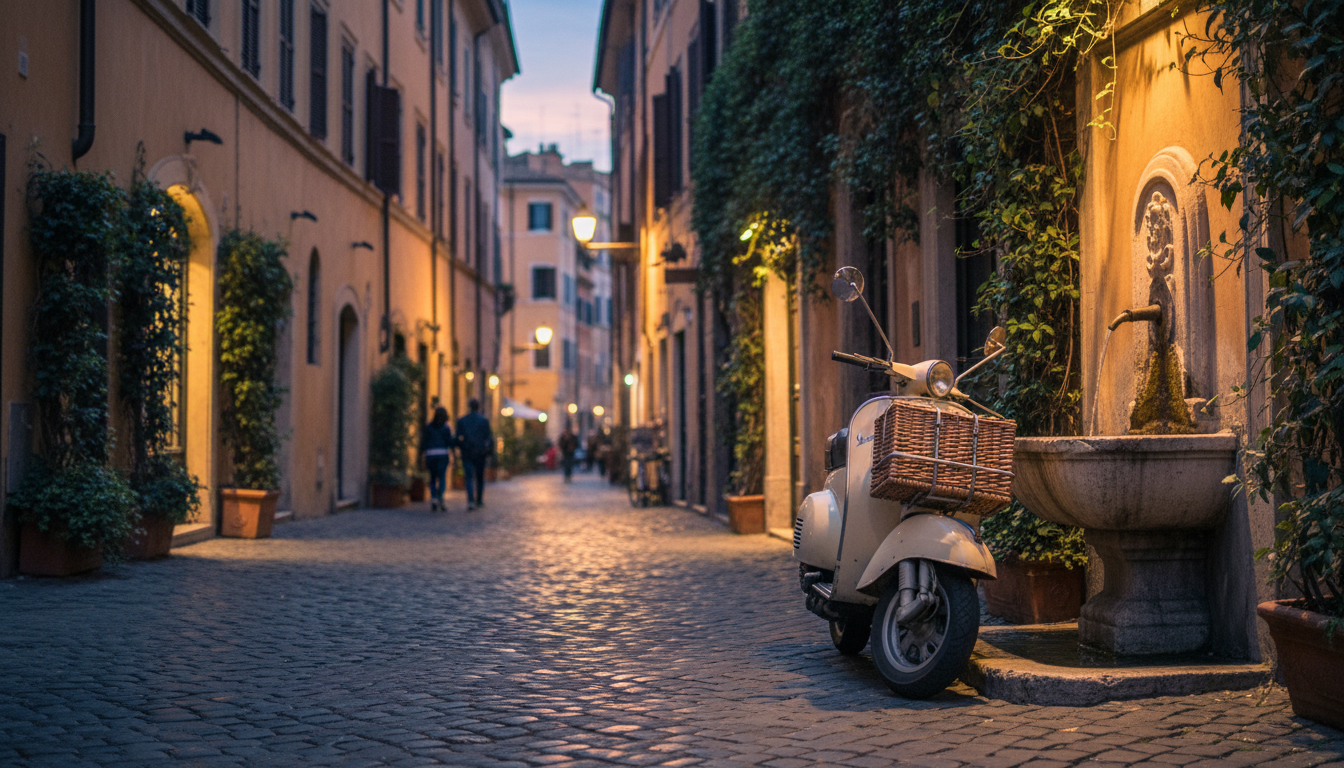 A narrow cobblestone street in Trastevere at dusk, warm light spilling from trattorias, ivy climbing
Best Rome Neighborhoods for Home Swapping (Ranked Honestly)
Not all Roman neighborhoods work equally well for home exchanges. Here's the real breakdown based on SwappaHome community feedback.
Trastevere: The Classic Choice (With Caveats)
Trastevere remains the most requested neighborhood for Rome home swaps, and for good reason. The medieval streets, the abundance of restaurants, the proximity to the historic center—it delivers the Rome of imagination.
But Trastevere has become almost too popular. Weekend nights bring crowds of tourists and young Romans that can make the narrow streets feel more like a theme park than a neighborhood. Noise levels after midnight can be significant, especially in summer when everyone's windows are open.
Best for: First-time Rome visitors who want walkability and atmosphere. Watch out for: Noise, tourist density, and apartments without elevators in ancient buildings.
Monti: The Sophisticated Alternative
Monti offers Trastevere's charm with better infrastructure. Located between the Colosseum and Termini station, this former working-class neighborhood has gentrified into Rome's most design-conscious area. Vintage shops line Via del Boschetto, excellent wine bars dot the piazzas, and the vibe skews slightly older and more Italian than Trastevere's international crowd.
Home swaps in Monti tend to be in better-maintained buildings with more modern amenities. The metro stop at Cavour provides easy access across the city.
Best for: Travelers who want charm plus convenience, especially those interested in design, wine, and a slightly more local feel. Watch out for: Higher demand means less availability; book requests well in advance.
Testaccio: The Insider's Pick
Testaccio rarely appears on tourist itineraries, which is precisely why it works so well for home swapping. This historically working-class neighborhood—built around the old slaughterhouse that's now a contemporary art museum—offers Rome's best food scene without the markup.
The covered market at Mercato di Testaccio provides daily groceries at local prices. Trattorias like Da Felice and Flavio al Velavevodetto serve Roman classics (cacio e pepe, carbonara, coda alla vaccinara) to predominantly Italian crowds. The neighborhood's 1920s-era residential buildings often have elevators and more reliable plumbing than the historic center.
Best for: Food-focused travelers, those staying longer than a week, anyone wanting to live like a Roman rather than a tourist. Watch out for: Fewer "postcard" views; requires more intentional exploration of central attractions.
Pigneto: The Emerging Option
Pigneto has transformed from a gritty working-class area into Rome's most creative neighborhood. Street art covers building facades, independent cafés and record shops line the pedestrianized main strip, and the aperitivo scene rivals anywhere in the city.
Home swap availability in Pigneto has grown significantly as younger Romans—exactly the demographic most likely to travel and swap—have moved here seeking affordable rent. Apartments tend to be larger and more modern than the historic center, often with outdoor space.
The trade-off: Pigneto sits outside the tourist zone, about 20 minutes by tram to the Colosseum. For travelers who want to explore beyond the obvious attractions, this is a feature. For those with limited time focused on major sites, it's a genuine inconvenience.
Best for: Longer stays, creative travelers, those who've already "done" Rome's highlights. Watch out for: Distance from central attractions, some streets still feel rough around the edges.
Centro Storico: The Premium Option
Home swaps directly in Rome's historic center—around Piazza Navona, Campo de' Fiori, or the Pantheon—exist but command premium positioning. These apartments typically belong to Romans who travel frequently and want reciprocal access to prime locations elsewhere.
The experience is unmatched: stepping out your door onto a Renaissance piazza, walking to every major attraction, living inside the postcard. But competition is fierce, buildings are ancient (often without elevators or air conditioning), and the neighborhood empties of actual Romans after dark.
Best for: Short trips where location matters most, travelers with mobility concerns who can find rare ground-floor or elevator-equipped buildings. Watch out for: High demand, tourist crowds, limited local amenities like supermarkets.
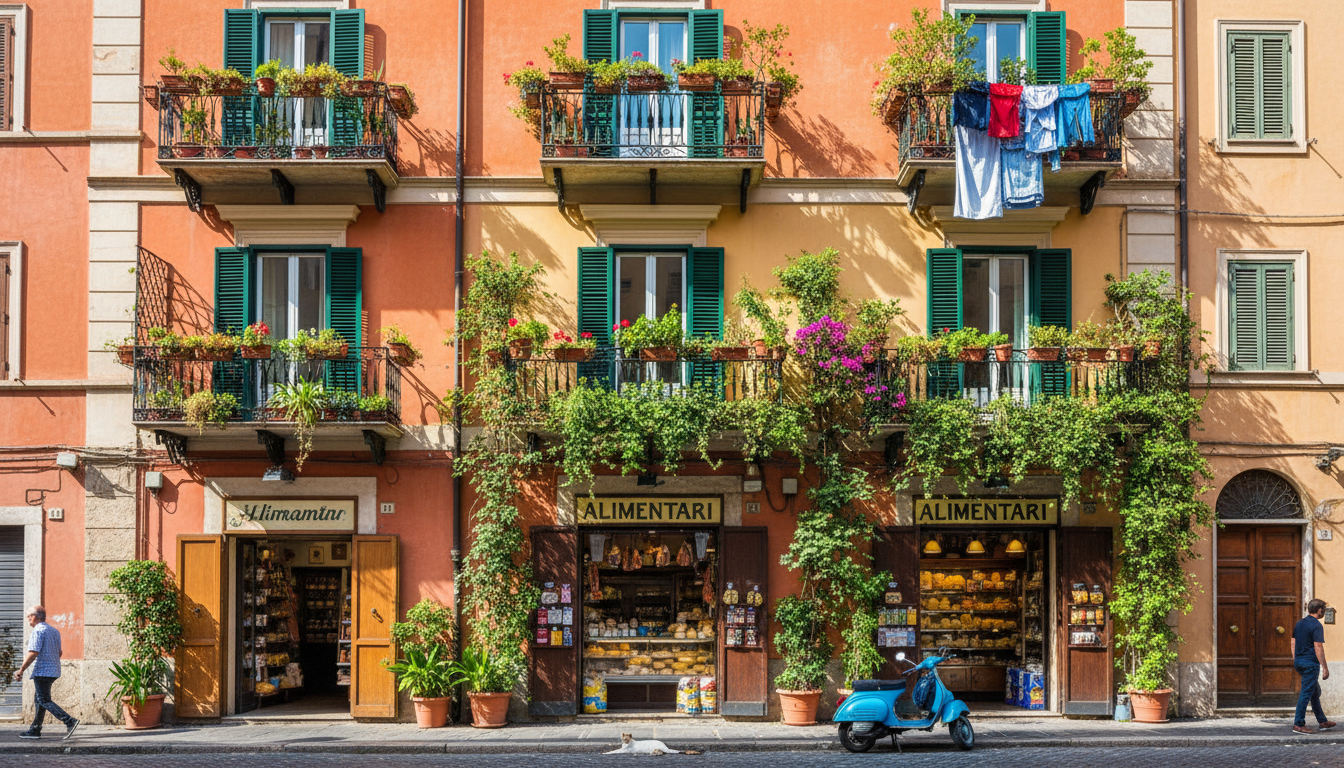 The colorful facade of a residential building in Testaccio with green shutters, potted plants on bal
How to Actually Secure a Rome Home Swap
Knowing Rome is good for home swapping means nothing without actually booking an exchange. Here's what works.
Timing Your Request
Roman hosts receive the most requests for Easter week, the October shoulder season, and December holidays. For those with flexibility, target less obvious windows: late January (mild weather, minimal tourists), early March (before Easter crowds), or November (Rome's quietest month).
Send requests 2–3 months in advance for popular neighborhoods, 4–6 months for peak periods. Last-minute requests (under 3 weeks) rarely succeed unless you're extremely flexible on location.
Crafting a Request That Gets Accepted
Roman hosts—like hosts everywhere—want to know their home will be respected. But they also have specific concerns worth addressing:
Mention if you've visited Rome before (shows you won't need hand-holding). Note your Italian language ability, even if it's just "basic phrases" (Italians appreciate the effort). Be specific about dates rather than vague ranges. Explain why you want to stay in their specific neighborhood. Offer to video chat before confirming—it builds trust.
A request that says "We're looking for somewhere in Rome for about two weeks in spring" will lose to one that says "We'd love to stay in Testaccio specifically because we're passionate about Roman cuisine and want to shop at the market daily. Our dates are April 12–26, and we're happy to share references from previous swaps."
The Reciprocal vs. Non-Reciprocal Question
Rome works for both simultaneous swaps (you stay in their Rome apartment while they stay in yours) and credit-based non-reciprocal exchanges. However, Romans with desirable properties often prefer reciprocal arrangements because it means their home is occupied—important in a city where break-ins aren't unknown.
If you're offering a property in a destination Romans want to visit (London, New York, Barcelona, Tokyo), emphasize this in your request. If your home is in a less obvious location, the credit system lets you book without needing to find a direct match.
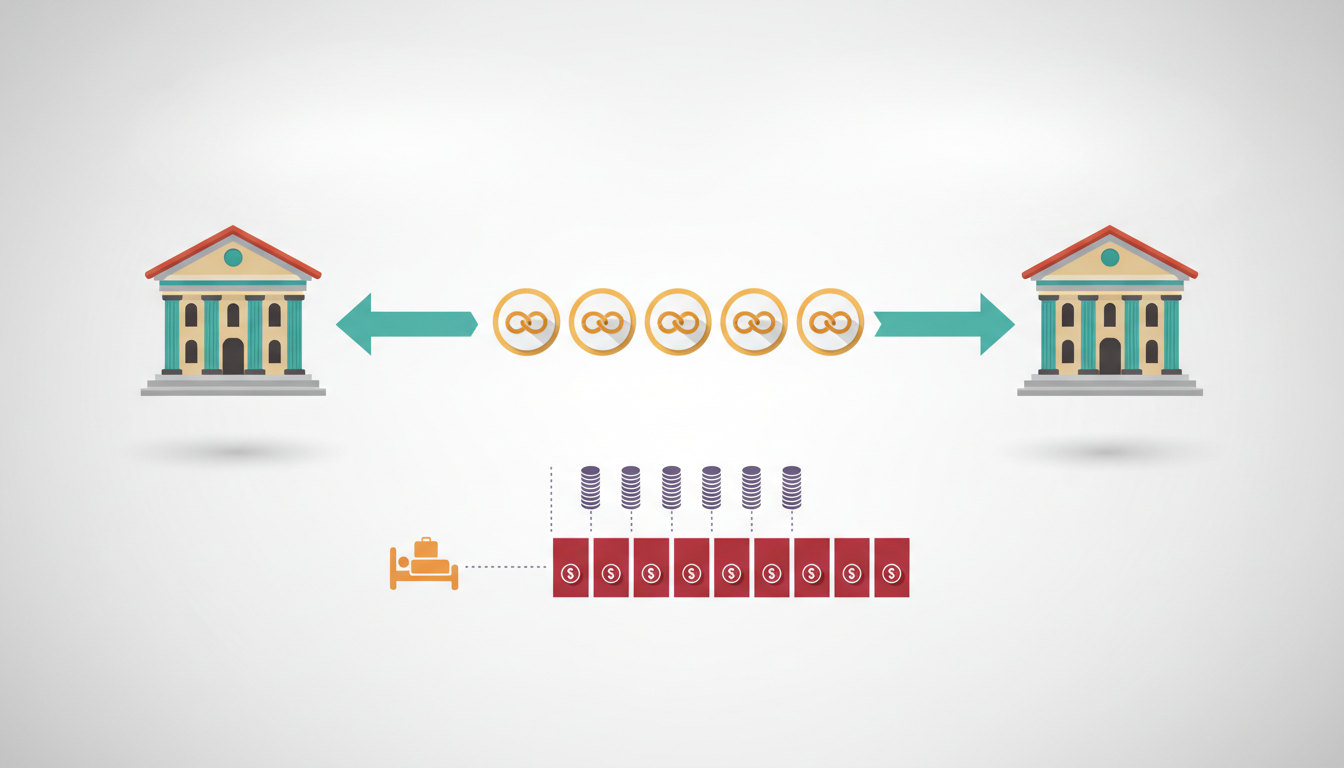 A SwappaHome-style infographic showing the credit system icons of a Rome apartment, arrows showing c
What to Expect Inside a Roman Home Swap
Roman apartments differ from what most North Americans and Northern Europeans consider standard. Here's what to anticipate.
Kitchen Realities
Italian kitchens prioritize function over size. Expect a smaller refrigerator than you're used to (Italians shop frequently rather than stocking up), a stovetop moka pot for coffee (espresso machines are rarer than you'd think), and limited counter space. Most kitchens lack dishwashers.
The upside: Roman kitchens are designed for actual cooking. You'll find quality pots and pans, proper knives, and often a well-stocked spice collection. The neighborhood alimentari (small grocery store) and the nearest market will become daily stops.
Bathroom Notes
The bidet is standard in Italian bathrooms—not optional, not unusual, just expected. Roman water heaters are typically tankless or small-tank systems, meaning very long showers might run cold. Water pressure, as mentioned, varies significantly by building and neighborhood.
Climate Control
Central heating in Rome is often building-controlled, meaning you can't adjust it yourself during winter months. It typically runs from November 1 to April 15, regardless of actual temperatures. Air conditioning, where it exists, is usually a split-unit system that cools one or two rooms rather than the whole apartment.
The Portiere Question
Some Roman buildings still have a portiere—a building superintendent who manages keys, packages, and general oversight. If your swap building has one, introduce yourself upon arrival. They're invaluable for local recommendations and can help if anything goes wrong.
Practical Rome Home Swap Tips the Guides Miss
Transportation From Fiumicino
Rome's main airport (FCO) sits 30 kilometers from the city center. The Leonardo Express train (€14 one-way) runs to Termini station in 32 minutes. But if your swap is in Trastevere, Testaccio, or Ostiense, the regional FL1 train to Trastevere station (€8) makes more sense.
Taxis charge a flat €50 to anywhere within the Aurelian Walls. Uber exists but operates in a legal gray area and costs roughly the same.
The SIM Card Situation
Italian data plans are remarkably cheap. A tourist SIM from TIM, Vodafone, or WindTre costs €15–25 for a month of generous data. Buy one at the airport or any tabacchi (tobacco shop) in the city. Your home swap host can usually recommend the nearest one.
Grocery Shopping Strategy
Roman supermarkets (Conad, Carrefour, Despar) close earlier than you'd expect—often by 8 PM—and may close entirely on Sundays. The local alimentari stays open later but charges more. Markets like Campo de' Fiori (touristy, overpriced) or Testaccio (local, reasonable) operate mornings only, typically 7 AM to 2 PM.
The Coffee Protocol
Roman bars charge different prices for coffee consumed standing at the counter versus sitting at a table. A cappuccino might be €1.50 standing, €3.50 seated. Locals stand. For the full Roman experience, order "un caffè" (espresso) at the bar, drink it in three sips, and leave. Your home swap's moka pot handles the leisurely morning coffee at a fraction of the cost.
When Rome Home Swapping Doesn't Make Sense
Honesty requires acknowledging when this isn't the right choice.
Very Short Trips (Under 5 Days)
The logistics of key exchange, learning the apartment's quirks, and settling into a neighborhood barely pay off for trips under a week. Hotels offer simplicity that matters when time is limited. For a long weekend in Rome, home swapping probably isn't worth the coordination.
First-Time Travelers Who Need Support
Roman home swaps assume a certain level of travel competence. There's no front desk to ask for directions, no concierge to book restaurants, no housekeeping to refresh towels. For those nervous about navigating a foreign city independently, a hotel's support structure might serve better.
Travelers With Specific Accessibility Needs
Rome's historic buildings rarely meet modern accessibility standards. Elevators are uncommon, bathrooms are small, and cobblestone streets challenge wheelchairs and mobility devices. While accessible home swaps exist, they require significant advance planning and limit neighborhood options considerably.
Peak Season Without Advance Planning
Trying to book a Rome home swap for Easter week when it's already February? Probably too late for desirable properties. Last-minute hotel availability, while expensive, at least exists. Last-minute home swap availability in prime Rome neighborhoods essentially doesn't.
The Verdict: Is Rome Worth It for Home Swapping?
After weighing the evidence, Rome emerges as one of Europe's strongest home swap destinations—but not unconditionally.
Rome works exceptionally well for home swapping when you plan 2–4 months ahead for standard dates (4–6 months for peak periods), stay at least one week to justify the coordination, choose neighborhoods based on your priorities rather than default tourist zones, accept that Roman apartments have character (which sometimes means quirks), want to cook at least some meals, and value living in a neighborhood over staying in a tourist bubble.
Rome works less well when you need guaranteed amenities like reliable AC or elevator access, travel in August without confirmed air conditioning, have only a few days and want maximum simplicity, or prefer the support structure of hotel services.
The SwappaHome community consistently rates Rome among the top five European cities for home exchange experiences. The combination of high supply, reasonable demand balance, and neighborhoods that genuinely reward residential stays makes Rome work in ways that some other major cities don't.
But the best Rome home swaps require homework. Know what you're getting into, choose your neighborhood intentionally, and request properties well in advance. Do that, and you'll unlock a version of Rome that hotel guests simply can't access—one where you buy your tomatoes from the same vendor every morning, where the barista starts making your coffee when you walk in, where the city stops being a destination and starts being, briefly, home.
Frequently Asked Questions
Is home swapping in Rome safe for first-time swappers?
Rome is generally safe for home swapping, with the same precautions you'd take anywhere. The SwappaHome verification system helps establish trust, and the review system means hosts have reputations to protect. Petty theft exists in Rome—don't leave valuables visible—but serious incidents in home swaps are rare. Most experienced swappers recommend a video call with the host before confirming any exchange.
How much can I save with home swapping in Rome versus hotels?
A two-week Rome hotel stay in a central location costs $2,700–4,270 USD in 2026. A home swap costs zero for accommodation (using SwappaHome credits), though you'll pay for groceries and transit. Realistically, a two-week home swap in Rome saves $2,000–3,500 compared to equivalent hotel accommodation, plus additional savings from cooking meals at home.
What's the best time of year for a Rome home swap?
The sweet spot falls in April to early June and mid-September through October. These shoulder seasons offer mild temperatures (18–25°C), manageable crowds, and full city functionality—restaurants and shops stay open, unlike August. Availability is also better than peak summer, when demand spikes but many Roman hosts are themselves traveling.
Do I need to speak Italian for a Rome home swap?
No, but basic phrases help enormously. Most Roman hosts in the SwappaHome community speak some English, and apartment instructions are typically provided in English. However, neighborhood shops, markets, and local restaurants often operate primarily in Italian. Learning "buongiorno," "grazie," "un caffè, per favore," and "il conto" covers most daily interactions.
Can I find Rome home swaps with air conditioning and elevators?
Yes, but they require specific searching and advance planning. Listings typically note these amenities clearly. Buildings in Testaccio, Pigneto, and the EUR district more commonly have elevators than the historic center. Air conditioning is increasingly common but not universal—always confirm before booking if it's essential to your comfort, especially for summer visits.

Published by
SwappaHome
SwappaHome Editorial Team
Home Exchange & Slow Travel Editorial
The SwappaHome Editorial Team brings together travel research, home-exchange community insights, and platform data to produce practical guides for first-time and experienced home swappers. Every article cites real platforms, current market rates, and verifiable city-level facts so readers can make informed decisions without guessing.
Ready to try home swapping?
Join SwappaHome and start traveling by exchanging homes. Get 7 free credits when you sign up!
Related articles
How to Extend or Modify a Home Swap Mid-Stay: The Complete Flexibility Guide
Need to extend your home swap or change dates mid-trip? Here's exactly how to negotiate changes, handle credits, and keep both parties happy.

How to Visit Bali for Free with Home Exchange: The Complete 2026 Guide
Skip the $150/night villas. Home exchange in Bali lets you stay in Ubud rice field houses and Seminyak beach pads for zero accommodation cost. Here's exactly how.
How to Vet Home Swap Guests: 12 Red Flags Every Host Should Know
Learn how to vet home swap guests before handing over your keys. Spot the 12 red flags experienced hosts watch for—and protect your home with confidence.