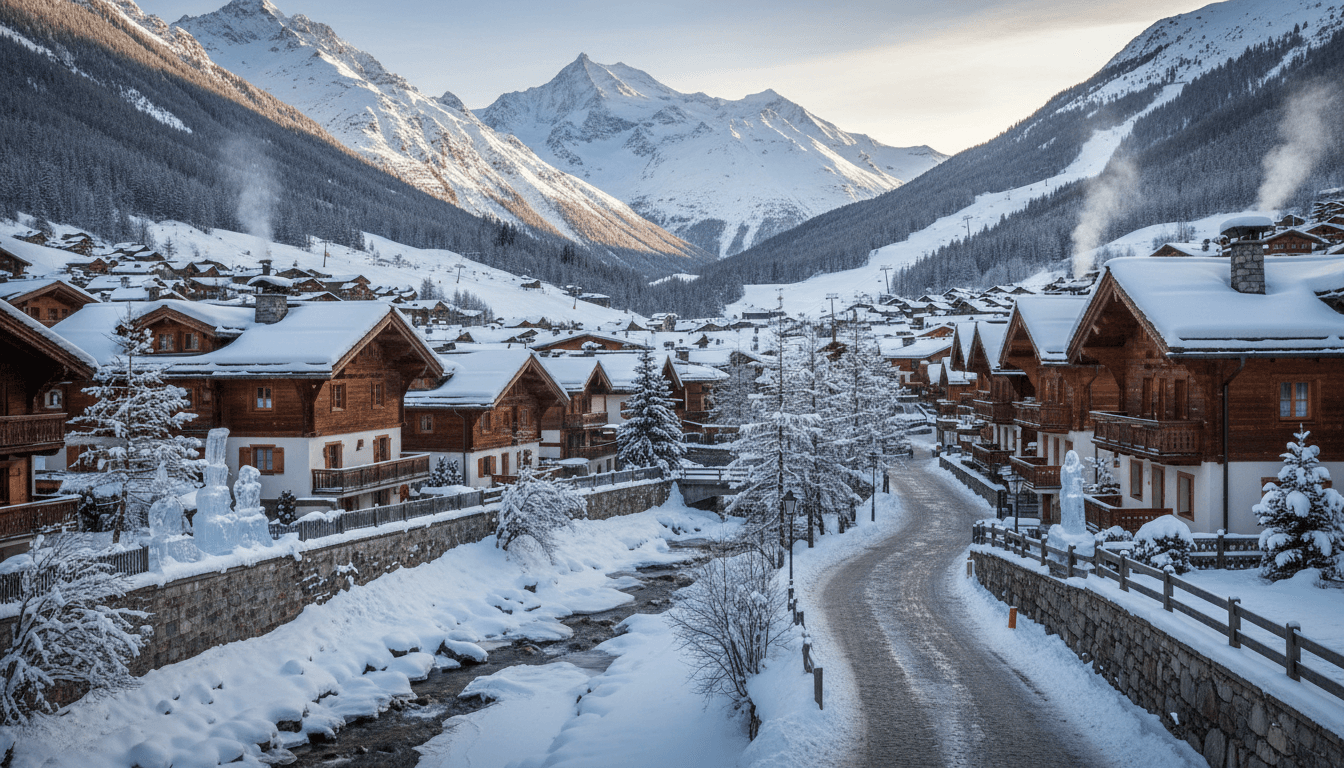
Winter Home Swapping: Top Ski Destinations for Exchanges That'll Save You Thousands

SwappaHome Editorial Team
Home Exchange & Slow Travel Editorial
Discover the best ski destinations for winter home swapping. From the Alps to the Rockies, learn how to score free slope-side accommodation through home exchange.
There's a particular kind of magic that happens when you wake up in someone else's ski chalet, the morning light catching fresh powder outside the window, and realize you're not paying $400 a night for this view.
I discovered winter home swapping almost by accident. It was 2019, and I'd just canceled a trip to Chamonix after seeing the hotel prices—we're talking €350 per night for a basic room during peak season. My friend Sarah, who'd been doing home exchanges for years, casually mentioned she'd just booked a two-week stay in a three-bedroom apartment with mountain views for zero dollars. Zero. I thought she was exaggerating until she showed me the photos.
That conversation changed how I travel during ski season forever.
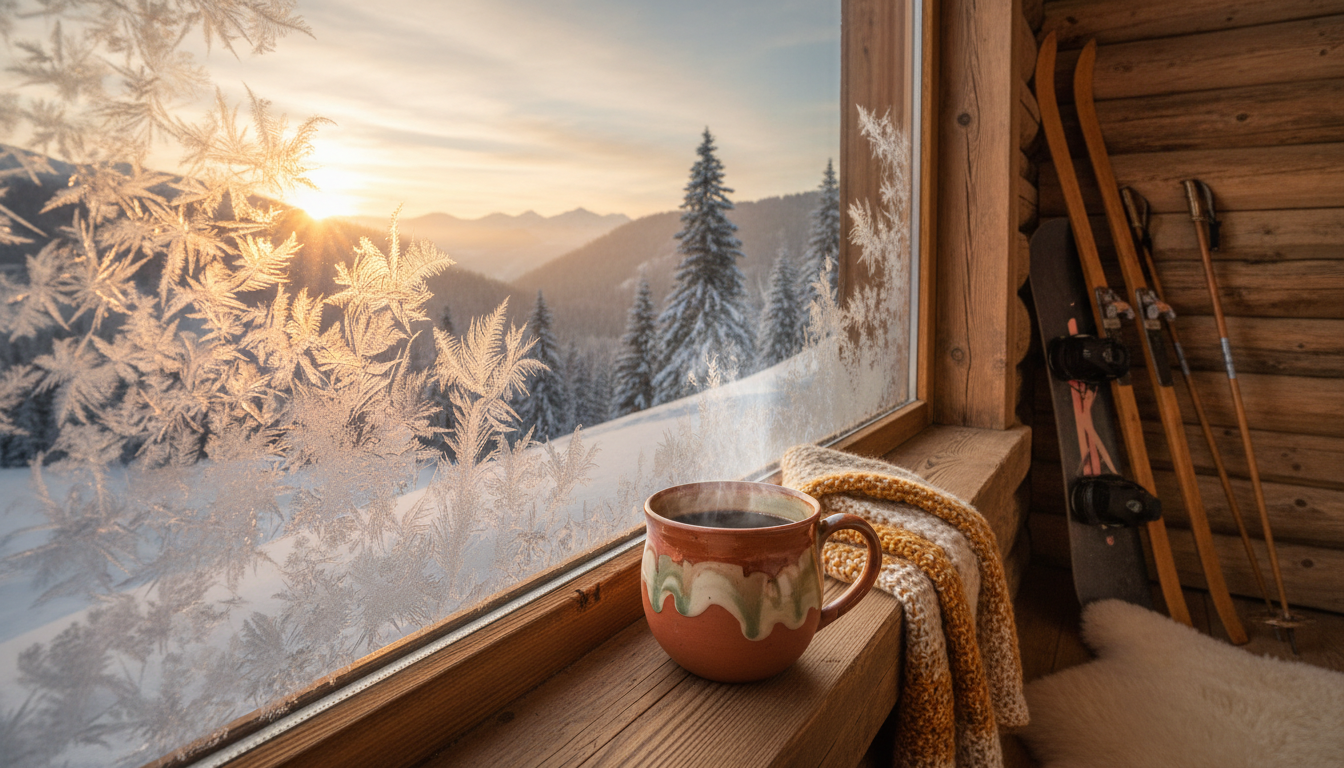 frost-covered window of a wooden ski chalet at dawn, with fresh powder visible on the slopes beyond,
Why Winter Home Swapping Makes Ridiculous Financial Sense
Let me throw some numbers at you, because this is where it gets interesting.
The average ski resort hotel in Colorado runs $280-450 per night during peak season. That's before you factor in resort fees, parking (another $25-40 daily at most mountains), and eating out for every meal because you don't have a kitchen. A week in Vail or Aspen can easily cost $3,000-4,500 just for accommodation.
Now compare that to winter home swapping through a platform like SwappaHome. You earn credits by hosting guests in your home—one credit per night, regardless of your home's size or location—then spend those credits to stay in ski destinations. One credit per night, whether you're booking a studio in Vermont or a five-bedroom chalet in the Swiss Alps.
My San Francisco apartment has hosted guests from twelve different countries. Those credits? They've funded ski trips to Japan, France, Austria, and three different Colorado resorts. I've calculated my savings over the past four winters: roughly $14,000. That's not a typo.
But honestly, the money isn't even the best part. It's staying in actual homes where locals live, with full kitchens for après-ski cooking, washer-dryers for drying out gear, and the kind of space that makes a week-long trip actually relaxing instead of cramped.
The French Alps: Chamonix and Beyond for Serious Skiers
Chamonix sits at the base of Mont Blanc, and the skiing here isn't for beginners—this is steep, challenging terrain that attracts serious skiers from around the world. The Vallée Blanche descent is legendary, a 20-kilometer off-piste route through glacier scenery that feels more like mountaineering than skiing.
What makes Chamonix exceptional for home exchanges is the town itself. Unlike purpose-built resorts, Chamonix is a real French alpine town with year-round residents, which means there's a genuine community of homeowners looking to travel. I've seen listings for everything from compact apartments in the town center (walking distance to the Aiguille du Midi cable car) to standalone chalets in Les Houches, a quieter village ten minutes down the valley.
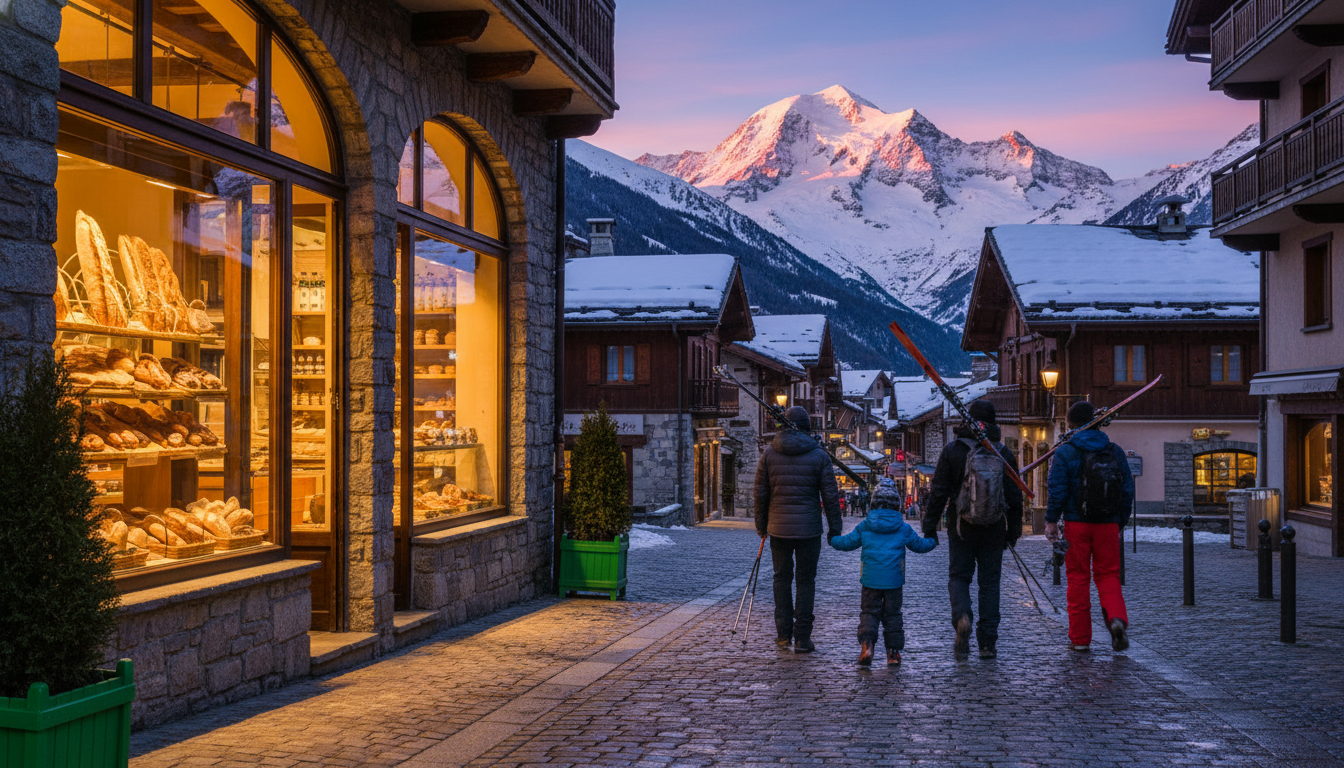 cobblestone street in Chamonix town center at dusk, with warm light spilling from a boulangerie, Mon
So here's the thing about logistics: Lift passes run about €70 per day or €350 for six days. The Mont Blanc Unlimited pass (€450 for six days) covers multiple resorts including Courmayeur in Italy—yes, you can ski into another country for lunch. Geneva airport is the closest major hub, about an hour's drive, and the bus transfer costs around €35 each way.
For home swapping specifically, I'd recommend looking at listings in Argentière (slightly quieter, direct access to Grands Montets) or the center of Chamonix itself. Avoid Les Praz unless you don't mind a short drive to lifts—it's peaceful but less convenient.
Other French Alps destinations worth considering: Megève for a more upscale, traditional village vibe, or La Clusaz for a family-friendly atmosphere with lower prices than the big-name resorts. I did a swap in La Clusaz two years ago—a converted farmhouse with exposed beams and a wood-burning stove—and the skiing surprised me. Excellent intermediate terrain, almost no crowds, and lift tickets around €45 per day.
The Swiss Alps: Where Luxury Meets Legendary Terrain
Switzerland is expensive. Let's just acknowledge that upfront. A coffee costs $6, a basic lunch runs $25-35, and don't even think about what hotels charge in places like Zermatt or Verbier.
This is exactly why winter home swapping in Switzerland feels almost subversive. You're accessing one of the world's most expensive destinations while spending credits you earned hosting guests back home.
Zermatt deserves its reputation. The Matterhorn dominates every view, the skiing connects to Cervinia in Italy (giving you access to over 360 kilometers of runs), and the car-free village maintains a fairy-tale quality that's genuinely hard to find elsewhere. Home exchange listings here tend to be apartments rather than chalets—space is limited in the valley—but I've seen some incredible options: a two-bedroom with a balcony facing the Matterhorn, a renovated traditional Walliser house with a private sauna.
The catch with Zermatt? Getting there. You'll fly into Zurich or Geneva, take a train to Visp, then another train to Zermatt itself (no cars allowed in town). The journey is scenic but takes 3-4 hours from either airport. Budget about $150-200 round-trip for the train unless you book well in advance.
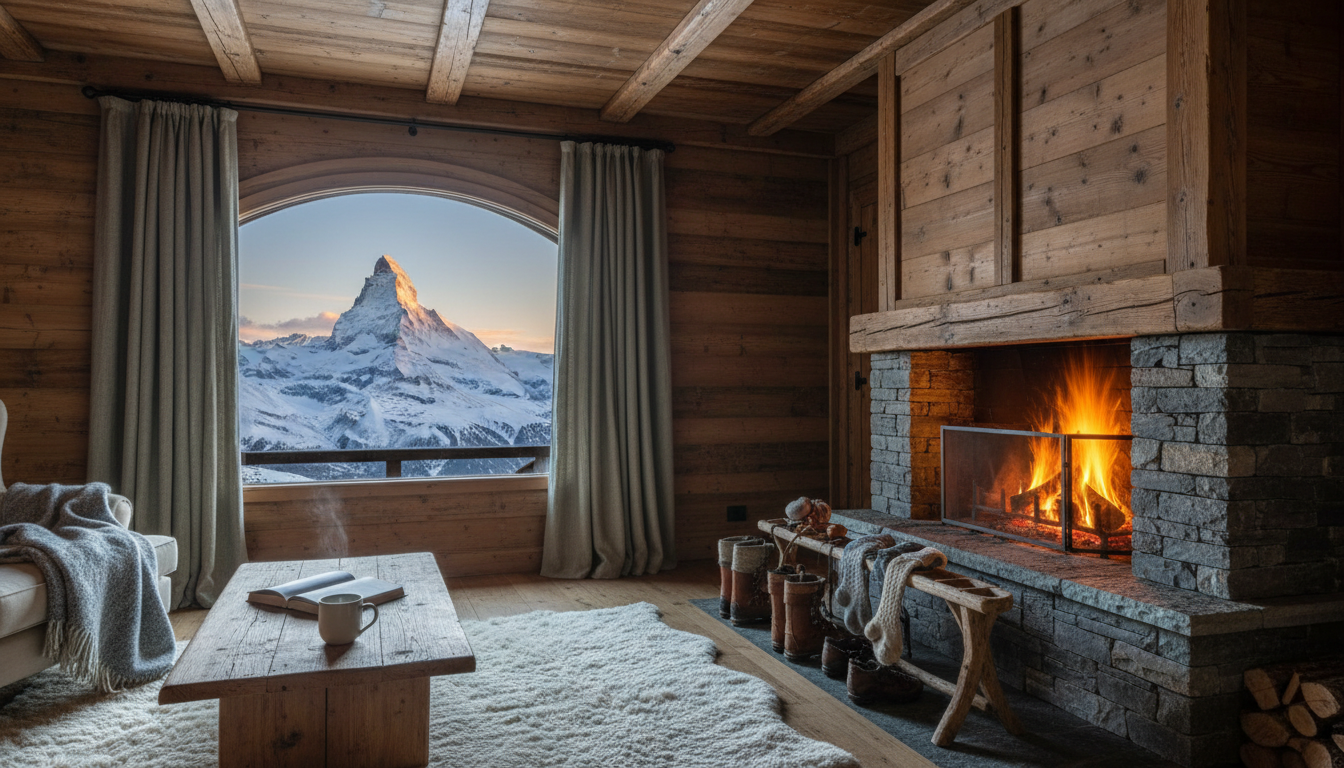 traditional Swiss chalet interior with warm wood paneling, a crackling fireplace, ski boots drying b
Verbier offers a different Swiss experience—more international, more nightlife, and terrain that's famous for its off-piste opportunities. The town attracts a younger, more party-oriented crowd, which means more homeowners who travel frequently and are open to exchanges. Lift passes are pricey (around CHF 79 per day, roughly $88 USD), but the 4 Vallées ski area is massive.
For a more affordable Swiss option, look at Grindelwald in the Jungfrau region. It's less famous than Zermatt but the scenery is equally dramatic, and I've noticed more family homes available for exchange—larger spaces, better for groups.
The Austrian Alps: Best Value in Europe
If Switzerland is the splurge, Austria is the smart choice.
I spent two weeks in St. Anton am Arlberg last February through a home swap, and I'm still thinking about it. The skiing is world-class—St. Anton hosted the first-ever Alpine World Ski Championships in 1937 and the terrain remains challenging and varied. But unlike Swiss resorts, you can actually afford to eat lunch on the mountain without wincing.
St. Anton has a reputation as a party town, and that's not wrong—the après-ski scene at the Mooserwirt and Krazy Kanguruh is legendary (and loud). But the town also has quieter corners, and home exchanges here often put you in residential areas away from the main strip. The apartment I stayed in was a fifteen-minute walk from the lifts, in a building full of Austrian families. My neighbors invited me over for homemade schnapps. You don't get that at a hotel.
Lift passes for the Ski Arlberg region (which includes St. Anton, Lech, and Zürs) run about €72 per day or €350 for six days. Innsbruck airport is about 90 minutes away, with regular bus transfers for around €25.
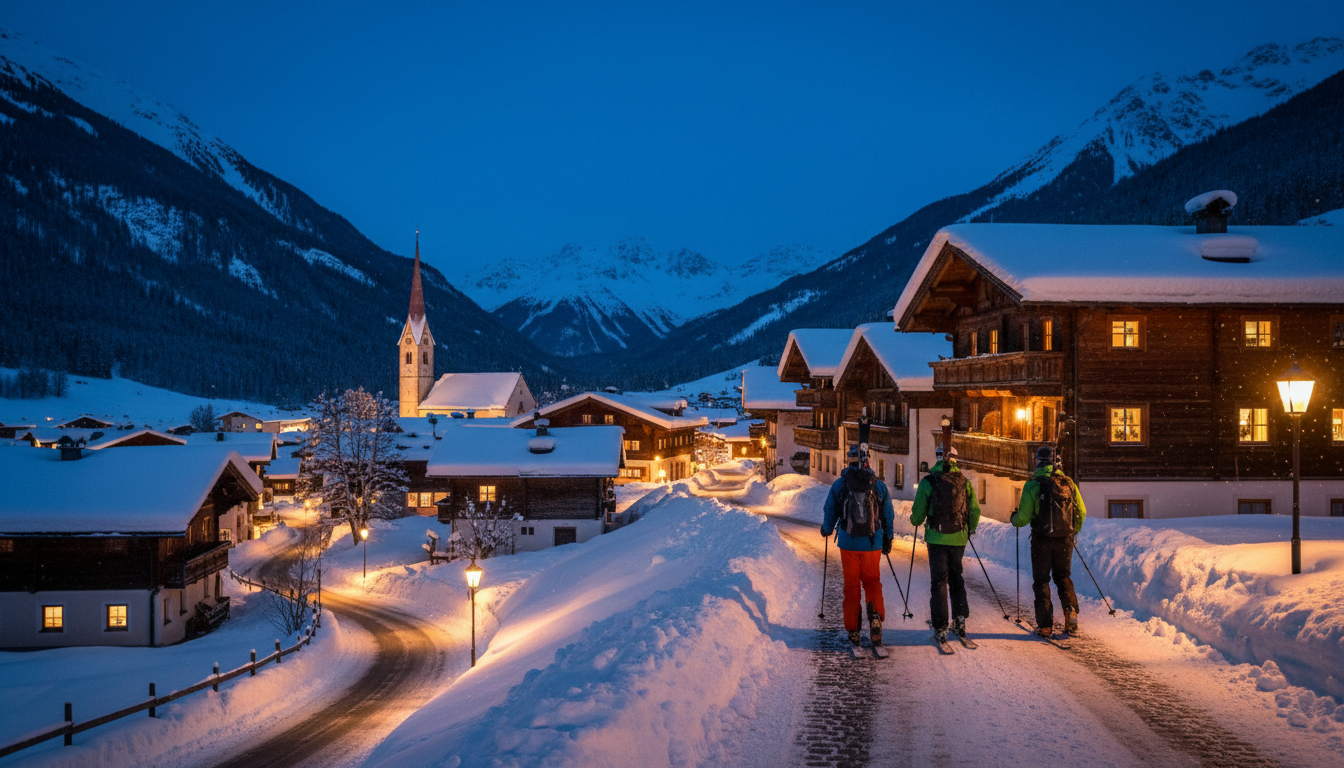 Austrian mountain village at night with snow-covered rooftops, warm lights glowing from traditional
Other Austrian destinations I'd recommend for home swapping: Kitzbühel for a more upscale village with excellent intermediate skiing, or the Stubai Valley near Innsbruck for glacier skiing that extends the season well into spring. The Stubai Glacier stays open until early June—perfect if your schedule doesn't align with peak winter dates.
The Colorado Rockies: North America's Premier Ski Destination
I'll be honest—Colorado ski resort pricing has gotten out of control. Vail lift tickets hit $279 per day last season. Aspen isn't far behind. Even "budget" options like Breckenridge or Keystone run $200+ during peak weeks.
This makes home swapping in Colorado not just smart but almost necessary if you want to ski here without taking out a second mortgage.
The good news: Colorado has a huge population of ski-oriented homeowners who travel frequently. Denver's tech scene means plenty of young professionals with ski condos who are eager to explore other destinations. I've found more Colorado listings on SwappaHome than almost any other ski region.
Vail Village itself has limited home exchange options (most properties are investment rentals), but the surrounding towns are goldmines. Minturn, about ten minutes from Vail, is a real town with real residents—and significantly more swap opportunities. Eagle-Vail, between Vail and Beaver Creek, offers the same access to both resorts with a more neighborhood feel.
For Aspen, look at listings in Basalt or Carbondale, both about 20-30 minutes down-valley. You'll need a car, but the free RFTA bus system connects these towns to the ski areas, and the drive along the Roaring Fork River is genuinely scenic. A friend of mine did a two-week swap in Carbondale last winter—a three-bedroom house with a hot tub—and skied Aspen, Snowmass, Aspen Highlands, and Buttermilk all on one pass.
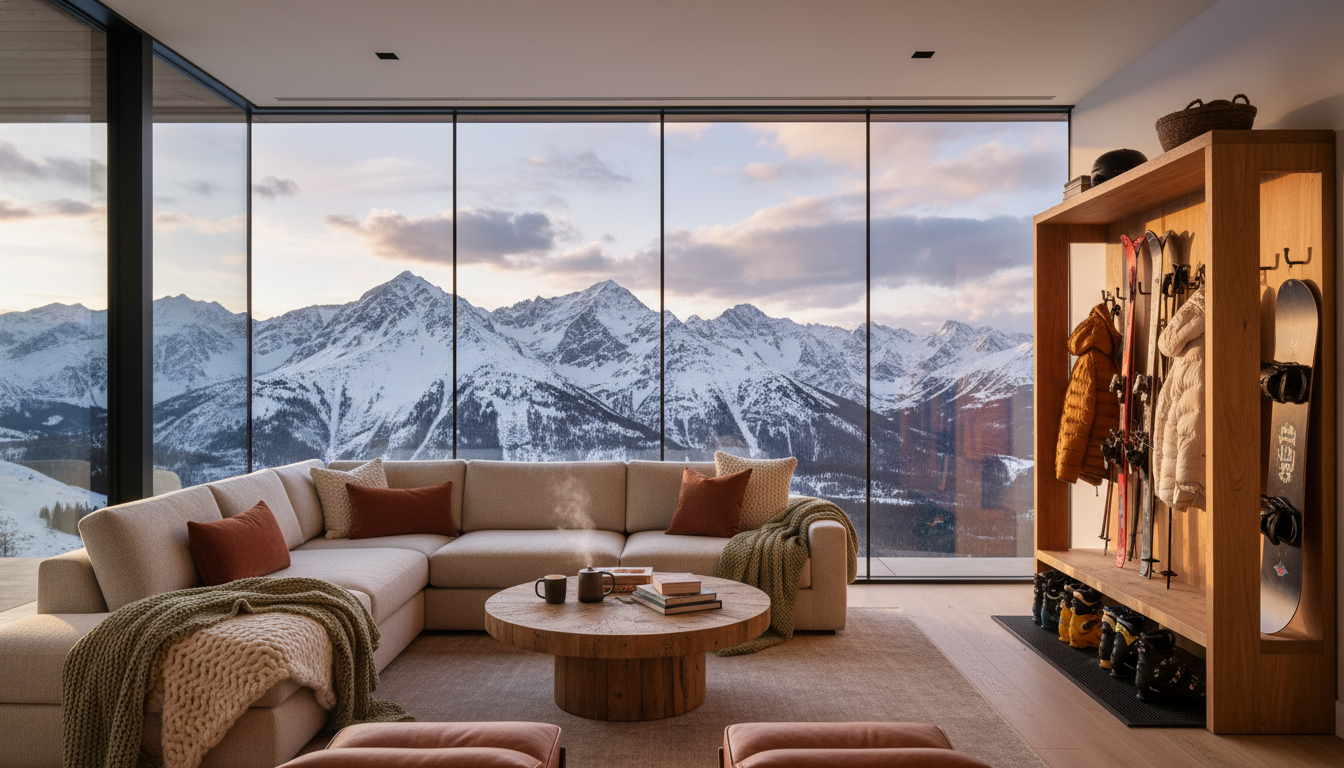 modern mountain home interior in Colorado with floor-to-ceiling windows overlooking snow-covered pea
Breckenridge and Keystone are more accessible for home swapping, with more year-round residents and a younger demographic. The Epic Pass (about $900 for the season if you buy early) covers both resorts plus Vail, Beaver Creek, and a dozen others—a good investment if you're planning multiple trips or a longer stay.
Don't overlook Steamboat Springs, about three hours from Denver. It's less crowded than the I-70 corridor resorts, the town has genuine Western character, and the famous "Champagne Powder" lives up to its reputation. Home exchange options here tend to be larger—actual houses rather than condos—which makes it ideal for families or groups.
Japan: The Powder Paradise You're Overlooking
Okay, this might be my most enthusiastic recommendation.
Japanese ski resorts receive absurd amounts of snow. Niseko, on Hokkaido island, averages over 15 meters of snowfall per season. That's nearly 50 feet. The powder is light, dry, and seemingly endless—I've had days where I was skiing knee-deep snow at 2 PM, hours after the lifts opened.
Home swapping in Japan requires a bit more cultural awareness than European or North American exchanges, but it's absolutely possible. Niseko has attracted enough international investment that you'll find English-speaking homeowners with properties available for exchange. The town of Kutchan, about ten minutes from the main ski areas, has more residential properties and often better swap opportunities than the resort village itself.
What surprised me about my Japan ski trip: the food. Après-ski in Niseko means fresh sushi, steaming bowls of ramen, and izakaya pubs with grilled yakitori. It's a completely different experience from fondue in the Alps or burgers in Colorado.
Logistics: Fly into New Chitose Airport (Sapporo), then take a bus or rental car to Niseko—about 2.5 hours. Lift passes are reasonable by international standards, around ¥7,500 per day (roughly $50 USD). The season runs from mid-December through early May, with January and February offering the deepest powder.
For a less touristy Japanese experience, look at Hakuba in the Nagano prefecture, about four hours from Tokyo. It hosted events during the 1998 Winter Olympics and has excellent terrain across multiple interconnected resorts. More Japanese homeowners, fewer Australian tourists (Niseko has become very popular with Australians), and a more authentic cultural experience.
Practical Tips for Winter Home Swapping Success
After four winters of ski-focused home exchanges, I've learned a few things the hard way.
Book early—really early. Popular ski destinations during Christmas, New Year's, and February school holidays get snapped up fast. I start reaching out to potential hosts in August or September for winter trips. Yes, that feels absurdly early, but the best listings go quickly.
Be flexible on exact dates if you can. Skiing the week before Christmas is often dramatically cheaper (in terms of lift tickets and flights) than the week of, and the snow is usually just as good. Same with late March or early April—spring skiing conditions can be excellent, and you'll have far more home exchange options.
Communicate about ski-specific needs. When I message potential hosts, I always ask about: ski storage (is there a heated boot room or garage?), proximity to lifts (walking distance, or will I need a car/shuttle?), and drying space for gear. There's nothing worse than putting on damp boots at 8 AM.
Consider what you're offering in return. If you're trying to swap your beach house for a ski chalet, timing matters. Your coastal property is most valuable in summer—so you might host a ski family in July who then hosts you in February. The credit system on SwappaHome makes this easy: host whenever it's convenient for you, travel whenever you want.
The Hidden Gems: Lesser-Known Ski Destinations for Home Swapping
Everyone knows about Chamonix and Vail. But some of my best ski swaps have been in places that don't make the glossy magazine lists.
Andorra, the tiny principality between France and Spain, offers surprisingly good skiing at about half the cost of the French Alps. Grandvalira is the largest ski area in the Pyrenees, and the duty-free shopping means your grocery bills will be noticeably lower. Home exchange options here are growing as more Europeans discover the value proposition.
Slovenia's Kranjska Gora is another hidden gem—a charming village with access to excellent intermediate terrain, and prices that feel almost quaint compared to Austria or Switzerland. Ljubljana airport is about an hour away, and you can easily combine skiing with a day trip to the capital.
In North America, look at Whitefish, Montana. It's got legitimate terrain (3,000 feet of vertical, 105 trails), a genuine small-town atmosphere, and Glacier National Park right next door for non-ski adventures. Home swap options here are often larger properties—Montana does not lack for space—and the local community is welcoming in a way that bigger resorts sometimes aren't.
Making Your First Winter Home Swap Happen
If you've never done a home exchange before, winter might feel like a high-stakes time to start. Fair enough—ski trips require more planning than a beach weekend.
Here's how I'd approach it.
Start building your credits now. List your home on SwappaHome, make your profile thorough and welcoming, and begin hosting guests. Every night someone stays with you earns one credit. A busy summer of hosting could fund an entire ski week by December.
Be an excellent host. This sounds obvious, but your reviews matter enormously when you're trying to book a desirable ski property. Respond quickly to messages, provide local recommendations, leave a welcome note. The home exchange community is built on mutual trust and generosity—people who give get more in return.
When you're ready to book a ski trip, reach out to multiple potential hosts. Write personalized messages explaining who you are, when you'd like to visit, and why their home appeals to you. Mention your own home and what you can offer in return (even if they won't be staying with you directly, it establishes credibility).
And honestly? Start with a less intimidating destination for your first winter swap. A long weekend in Vermont or a week in a smaller Colorado town is lower pressure than jumping straight to Zermatt. You'll learn the rhythms of home exchange—how to communicate with hosts, what to expect, how to be a good guest—before tackling the bucket-list destinations.
The Après-Ski Advantage: Why Home Swapping Beats Hotels After Dark
I want to end with something that rarely makes the travel articles: what happens after the lifts close.
Hotel ski trips have a particular rhythm. You ski hard, you're exhausted, you go back to a small room, you shower, you go out for an expensive dinner, you repeat. It's fine. But it's also... transactional.
Home swap ski trips feel different. You come back to a real home—someone's actual space, with their books on the shelves and their coffee in the cabinet. You cook dinner in a real kitchen, maybe using ingredients from the local market. You sprawl on a comfortable couch instead of perching on a hotel bed. You might light a fire, or soak in a hot tub, or just sit by a window watching the snow fall.
Last winter in Austria, I made friends with my host's neighbor—an older Austrian woman who brought over homemade apple strudel when she saw me struggling with the recycling system. We ended up having coffee together three times that week. She told me about skiing in St. Anton in the 1970s, before it became famous, when the lifts were rope tows and the après-ski was just farmers drinking schnapps.
You don't get that story at the Marriott.
Winter home swapping isn't just about saving money on ski trips—though you absolutely will. It's about traveling like you actually live somewhere, even if just for a week. It's about being part of a community of people who believe that sharing homes makes travel richer for everyone.
The mountains will still be there whether you're in a hotel or a home swap. But I promise: the experience is not the same.
Frequently Asked Questions
Is winter home swapping safe for ski destinations?
Winter home swapping is as safe as any home exchange, with the added benefit that ski communities tend to be tight-knit and trustworthy. SwappaHome's verification system and member reviews help you assess potential hosts. I'd recommend getting your own travel insurance that covers ski equipment and any personal liability concerns—the platform connects you with hosts but doesn't provide coverage for damages or issues.
How much can I save with home swapping versus hotels at ski resorts?
The savings are substantial. A week at a Colorado ski resort hotel averages $2,000-3,500 for accommodation alone. With home swapping, you spend credits earned by hosting guests at your own home—essentially making your ski accommodation free. Over a typical ski season with two week-long trips, you could save $4,000-7,000 compared to hotel stays.
When should I start planning a winter home swap for ski season?
Start 4-6 months in advance for the best selection. Popular ski destinations during Christmas, New Year's, and February school holidays book up quickly. I begin reaching out to potential hosts in August or September for winter trips. Being flexible on exact dates also dramatically increases your options and can help you avoid peak pricing on lift tickets and flights.
Can I find home swaps at luxury ski resorts like Aspen or Zermatt?
Absolutely. While listings in the most exclusive resort villages may be limited, nearby towns offer excellent options. For Aspen, look at Basalt or Carbondale (20-30 minutes away). For Zermatt, consider apartments in the town itself rather than expecting standalone chalets. The SwappaHome credit system means one credit equals one night regardless of the property's luxury level.
What should I look for in a ski destination home swap listing?
Prioritize: ski storage or a heated boot room, proximity to lifts (walking distance or reliable shuttle), drying space for wet gear, and a full kitchen for cooking après-ski meals. Also check for parking if you'll have a rental car, and ask about the home's heating system—mountain homes can get cold, and you'll want reliable warmth after a day on the slopes.

Published by
SwappaHome
SwappaHome Editorial Team
Home Exchange & Slow Travel Editorial
The SwappaHome Editorial Team brings together travel research, home-exchange community insights, and platform data to produce practical guides for first-time and experienced home swappers. Every article cites real platforms, current market rates, and verifiable city-level facts so readers can make informed decisions without guessing.
Ready to try home swapping?
Join SwappaHome and start traveling by exchanging homes. Get 7 free credits when you sign up!
Related articles

Home Swap in Rome: Where to Find the Best Properties for Your Italian Exchange
Discover where to find the best home swap properties in Rome—from Trastevere's cobblestone charm to Testaccio's local authenticity. Real neighborhoods, real advice.

Home Swap in Bangkok: Where to Find the Best Properties for Free Stays
Discover where to find the best home swap properties in Bangkok—from riverside condos in Charoen Krung to family homes in Ari. Real neighborhoods, real savings.

Home Swap for Beach Lovers: 12 Coastal Destinations Ranked for 2026
Discover the best coastal destinations for home swapping in 2026. From Portugal's Algarve to Australia's Gold Coast, find your perfect beach exchange.