Abu Dhabi for Retirees: Your Complete Guide to Relaxed Home Exchange Experiences

SwappaHome Editorial Team
Home Exchange & Slow Travel Editorial
Discover why Abu Dhabi is perfect for retired home swappers seeking warm winters, world-class healthcare, and a pace of life that actually lets you breathe.
My friend Patricia—71, retired pediatrician, self-proclaimed "skeptic of anything trendy"—called me last February from a waterfront apartment in Abu Dhabi's Al Raha Beach district. "Maya," she said, "I'm watching flamingos from my balcony. Actual flamingos. And I haven't spent a dime on accommodation in three weeks."
That conversation rewired something in my brain about Abu Dhabi. This isn't Dubai's flashier sibling demanding your attention and your wallet. Abu Dhabi moves differently—at a rhythm that just happens to sync with what most retirees actually want: real cultural immersion, logistics that don't make you want to scream, and a pace that won't leave you collapsed on a hotel bed by day three.
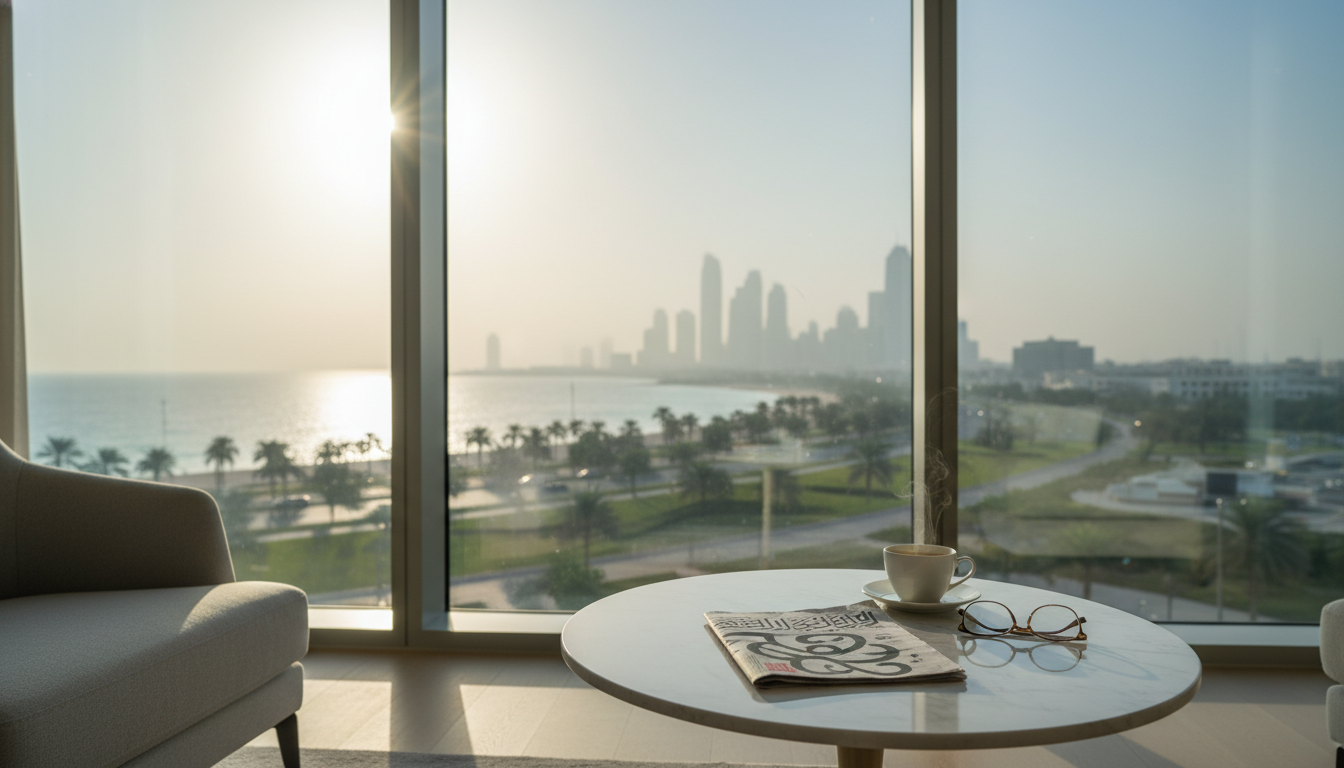 Morning light streaming through floor-to-ceiling windows of a modern Abu Dhabi apartment, with the C
I've been facilitating home swaps for seven years now. Honestly? I'd written off the UAE for the over-60 crowd. Too hot. Too expensive. Too... much. Wrong on all three counts. Patricia's flamingo phone call was my wake-up moment.
Why Abu Dhabi Works So Well for Retired Home Swappers
Here's what nobody tells you: Abu Dhabi was essentially designed for comfortable living. Impeccable infrastructure. Healthcare that ranks among the world's best. English everywhere. And between October and April, the weather hovers around a perfect 24-28°C (75-82°F)—which, if you're escaping a Minnesota winter, feels like a small miracle.
But the real magic? The pace.
Unlike Dubai's relentless energy, Abu Dhabi exhales. Mornings involve slow walks along the 8-kilometer Corniche, stopping for cardamom-spiced coffee at waterfront cafés where nobody rushes you. Afternoons might mean wandering the Louvre Abu Dhabi at whatever speed your knees prefer—the museum was designed with generous seating throughout, and the air conditioning is aggressive in the best possible way.
Home exchange makes this sustainable. Three weeks in a hotel here? You're looking at $4,500-$7,000 USD minimum. Through SwappaHome's credit system, Patricia's entire accommodation cost was zero. She'd hosted guests in her Portland townhouse earlier that year, earning credits she then spent on her Abu Dhabi adventure. One credit per night, regardless of the property's actual value. Simple math. Significant savings.
Best Abu Dhabi Neighborhoods for Retiree Home Exchanges
Not all neighborhoods suit the relaxed traveler equally. After talking with dozens of retired home swappers and visiting myself twice (once in November, once in March), here's my honest breakdown:
Al Raha Beach: The Sweet Spot
This is where Patricia stayed. I get why she keeps returning. Al Raha Beach sits about 20 minutes from downtown—close enough for day trips but removed from the intensity. The neighborhood clusters around a marina with waterfront restaurants, a small beach, and that flamingo-frequented mangrove reserve Patricia couldn't stop photographing.
Typical listings here: modern 2-3 bedroom apartments with full kitchens, pools, and gyms included in building amenities. Most properties have dedicated parking—important if you're renting a car, which I'd recommend for flexibility.
Walkability? Moderate. You can walk to restaurants and the beach, but groceries and medical facilities require a short drive or taxi (around 25-40 AED / $7-11 USD).
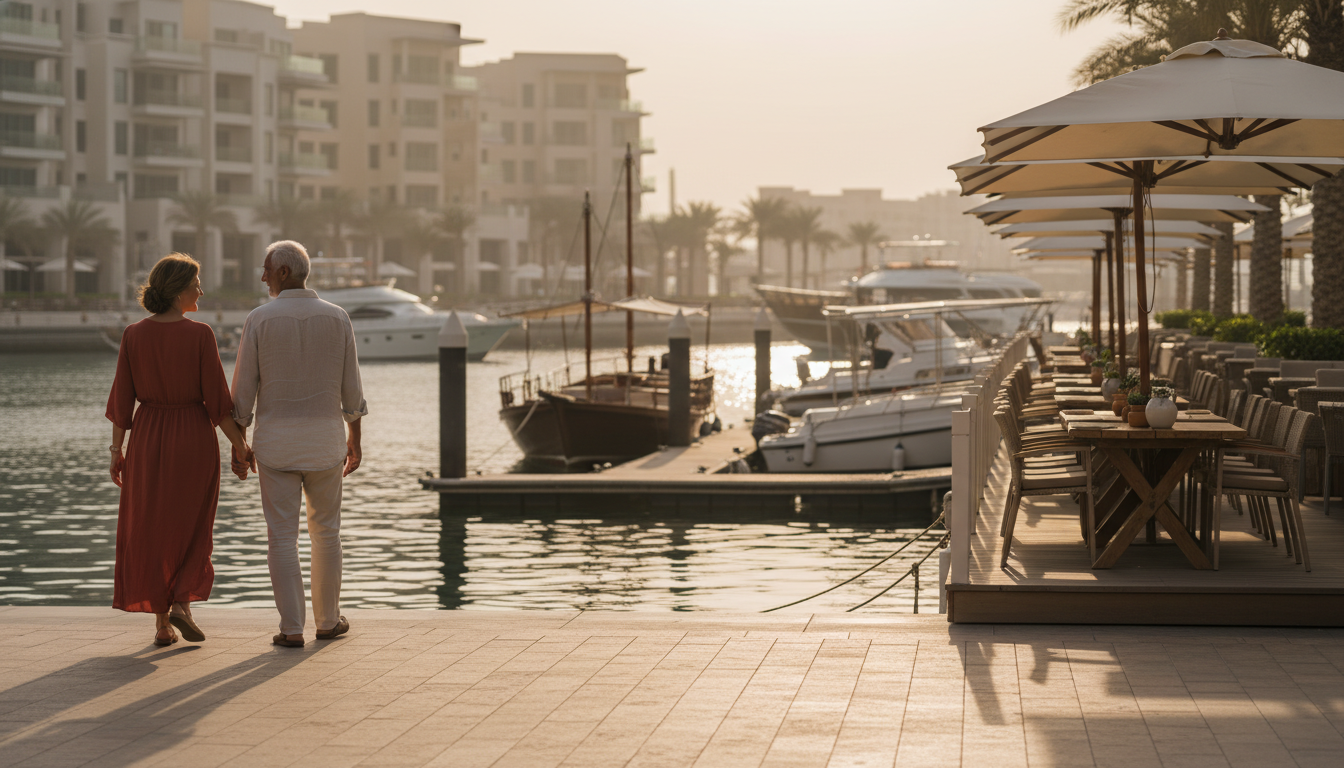 Al Raha Beach marina at golden hour, small boats bobbing, retiree couple walking hand-in-hand along
Saadiyat Island: Culture Without Crowds
If you spend mornings in museums and afternoons reading on the beach, Saadiyat is your place. The Louvre Abu Dhabi is here. So is the upcoming Guggenheim (opening 2025). The beaches are pristine and significantly less crowded than Dubai's.
Home exchange properties on Saadiyat tend toward the luxurious—villa-style homes with private gardens, or high-end apartments in developments like Mamsha Al Saadiyat. These listings get snapped up fast, so set up alerts if this area interests you.
The trade-off: Saadiyat feels somewhat isolated. You'll need transportation for everything, and the restaurant scene is limited to hotel venues (excellent quality, but $$$).
The Corniche Area: Urban Convenience
For retirees who prefer walking to driving, the Corniche neighborhood offers Abu Dhabi's most pedestrian-friendly experience. The waterfront promenade stretches for kilometers, lined with benches, exercise stations, and cafés. Heritage Village is nearby. The main hospital (Cleveland Clinic Abu Dhabi) is a 10-minute taxi ride.
Home exchanges here often mean older apartment buildings—less flashy than Saadiyat, but more character and better prices at local restaurants. A shawarma and fresh juice at a Corniche café runs about 25-35 AED ($7-10 USD), compared to $40+ at hotel restaurants.
Yas Island: Only If You're Active
I need to mention Yas Island because it appears in every Abu Dhabi guide, but I'll be real: unless you golf daily or want to attend Formula 1 races, this area skews younger and louder. The theme parks (Ferrari World, Warner Bros. World) are genuinely fun but exhausting. Most retired home swappers I know prefer visiting Yas for a day rather than staying there.
Planning Your Abu Dhabi Home Exchange: Month-by-Month
Timing matters enormously here.
October-November: Ideal. Temperatures drop to manageable levels (25-30°C / 77-86°F), summer crowds have dispersed, and cultural events begin. The Abu Dhabi Art Fair typically happens in November. Home exchange availability is good but not overwhelming—this is when savvy travelers book.
December-February: Peak season. Perfect weather (20-25°C / 68-77°F), but listings get competitive. Request swaps 3-4 months in advance. Hotel prices during this period can exceed $400/night, making home exchange savings particularly dramatic.
March-April: The shoulder season sweet spot. Weather remains pleasant until mid-April, crowds thin, and hosts are often more flexible with dates. Patricia's second trip was in March. She said the city felt "like it belonged to her."
May-September: I'd skip it unless you're extremely heat-tolerant. Temperatures regularly exceed 40°C (104°F), and while everything is air-conditioned, stepping outside feels oppressive. That said, some retirees specifically seek summer exchanges because listings are abundant and hosts are eager.
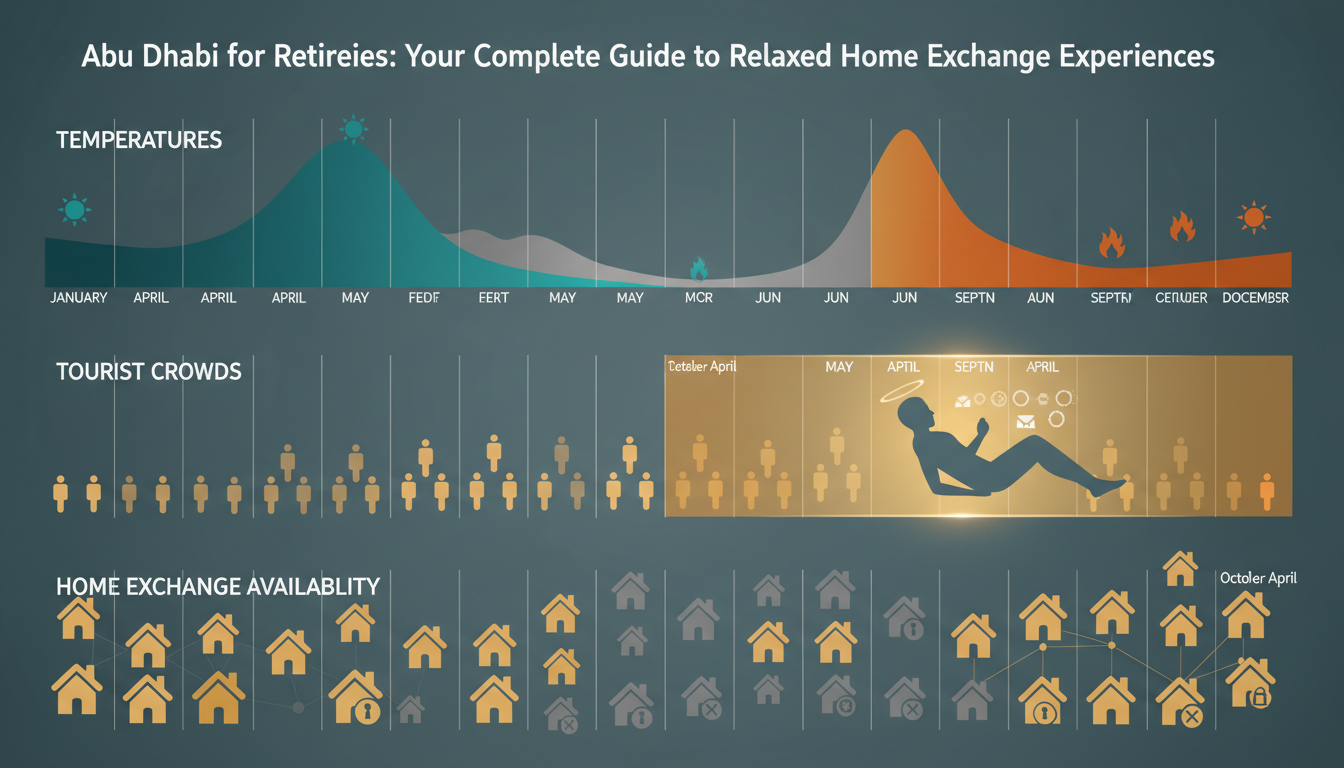 Infographic showing Abu Dhabi monthly temperatures, tourist crowds, and home exchange availability a
What Abu Dhabi Home Exchange Hosts Typically Expect
Cultural context matters when you're staying in someone's home.
Most Emirati and expat hosts share similar expectations:
Respect for the space. Might seem obvious, but worth emphasizing. Abu Dhabi residents often invest significantly in their homes—quality furniture, art, carefully maintained balcony gardens. Treat the space as you'd want yours treated.
Shoe removal. Many homes follow the Middle Eastern custom of removing shoes at the door. Your host will usually mention this, but when in doubt, ask.
Quiet hours. Abu Dhabi is generally quieter than Western cities, especially in residential buildings. Most hosts appreciate guests who keep noise minimal after 10 PM.
Communication style. In my experience, Abu Dhabi-based hosts tend toward formal politeness initially, then warm considerably once the exchange is confirmed. Don't mistake formality for coldness.
One thing that consistently surprises Western retirees: many Abu Dhabi homes come with a housekeeper or building concierge service included. Your host will explain what's available, but don't be shy about accepting help with grocery delivery or laundry—it's standard here, not an imposition.
Healthcare Considerations for Retired Home Swappers
This deserves its own section because I know it's top-of-mind.
Abu Dhabi's healthcare system is genuinely excellent. Cleveland Clinic Abu Dhabi, located on Al Maryah Island, is a full-service hospital with English-speaking staff and American-trained physicians. For less urgent needs, Mediclinic and NMC have facilities throughout the city.
Costs for tourists (without UAE insurance): a general practitioner visit runs 300-500 AED ($82-136 USD), specialist consultations 500-800 AED ($136-218 USD), and emergency room visits start at 500-1,000 AED ($136-272 USD) base fee plus treatment costs. Prescription medications are generally 30-50% cheaper than US prices.
My strong recommendation: purchase comprehensive travel insurance before any extended home exchange. SwappaHome connects members but doesn't provide medical coverage—that's on you. Companies like World Nomads, Allianz, and IMG Global offer policies specifically designed for travelers over 60, typically running $150-400 USD for a month-long trip depending on your health history.
Pharmacies (look for the green cross signs) are everywhere and well-stocked. Many medications that require prescriptions in the US or UK are available over-the-counter here, though you'll need a prescription for anything controlled.
 Modern Abu Dhabi pharmacy interior with clearly labeled sections in English and Arabic, a pharmacist
Daily Life: What Three Weeks Actually Looks Like
Let me paint a realistic picture based on Patricia's experience and my own visits.
Morning: Wake around 7 AM to golden light flooding through those characteristic floor-to-ceiling windows. Coffee on the balcony—many properties have Nespresso machines, but the local Arabic coffee (gahwa) from nearby cafés is worth seeking out. Lighter than espresso, flavored with cardamom, typically served with dates.
By 9 AM, the day's heat is still gentle. Prime time for outdoor activities: walking the Corniche, exploring the mangroves by kayak (rentals around 150 AED / $41 USD for two hours), or visiting the Sheikh Zayed Grand Mosque before tour buses arrive.
Midday: Head indoors. This is when Patricia would visit the Louvre Abu Dhabi (63 AED / $17 USD for seniors over 60), explore the massive Marina Mall, or simply return to her apartment for lunch and a nap. Air conditioning is aggressive throughout the city—bring a light sweater for museums and malls.
Afternoon: Around 4 PM, temperatures ease and the city reawakens. Golden hour territory—perfect for photography at the Corniche, sunset views from the Emirates Palace grounds (free to walk around), or exploring the traditional souk in the World Trade Center area.
Evening: Dinner happens late here, often 8-9 PM. The Lebanese and Middle Eastern restaurants along the Corniche offer exceptional value—a full mezze spread with grilled meats for two runs about 200-300 AED ($55-82 USD). For a splurge, the restaurants at Emirates Palace or Jumeirah at Saadiyat Island deliver memorable experiences around 500-800 AED ($136-218 USD) per person.
Transportation That Actually Works for Retirees
Abu Dhabi's public transportation is clean, safe, and air-conditioned—but not comprehensive. Here's my honest assessment:
Taxis: The most practical option. Metered, inexpensive (starting fare 5 AED / $1.36 USD, then about 1.8 AED per kilometer), and drivers generally speak English. The official Abu Dhabi Taxi app works well, though many visitors just hail cabs on the street.
Ride-sharing: Uber and Careem both operate here. Prices similar to taxis, sometimes slightly higher. The apps are convenient for avoiding language barriers.
Rental cars: Worth considering for stays longer than two weeks, especially if you want to explore beyond the city. Daily rates start around 150 AED ($41 USD) for basic sedans. Driving is straightforward—wide roads, clear signage in English, respectful (if fast) drivers. Parking is usually free or inexpensive outside downtown.
Public buses: Extensive network, very cheap (2-4 AED per ride), but routes can be confusing and stops aren't always convenient. I'd only recommend buses for retirees comfortable with some navigation challenges.
The hop-on-hop-off tour bus: Actually decent for first-time visitors. Big Bus Abu Dhabi covers major attractions with audio commentary. About 200 AED ($54 USD) for a 24-hour pass. Air-conditioned, and you can rest your feet between stops.
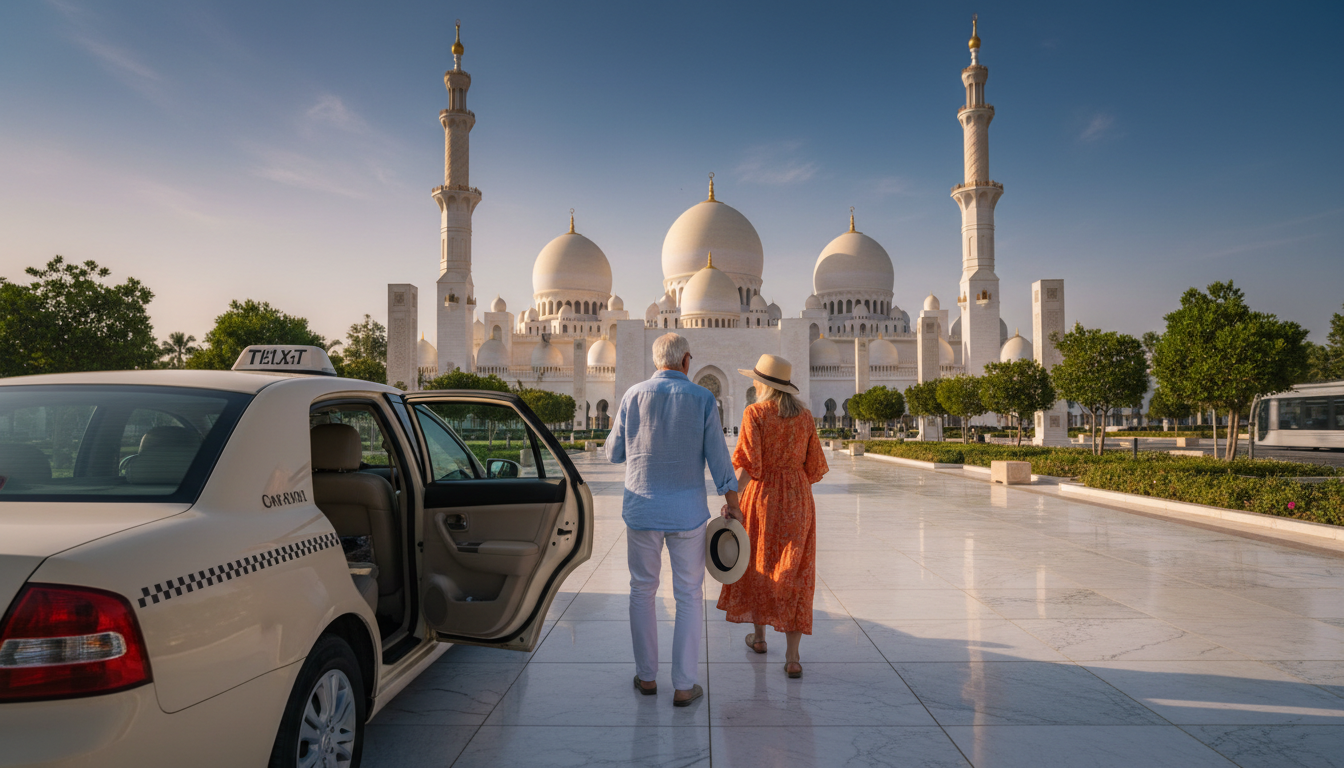 Silver-haired couple exiting an air-conditioned Abu Dhabi taxi at the Sheikh Zayed Grand Mosque entr
Cultural Experiences That Resonate With Retired Travelers
Retired home swappers often seek deeper cultural engagement than younger travelers rushing between Instagram spots. Abu Dhabi delivers.
Sheikh Zayed Grand Mosque
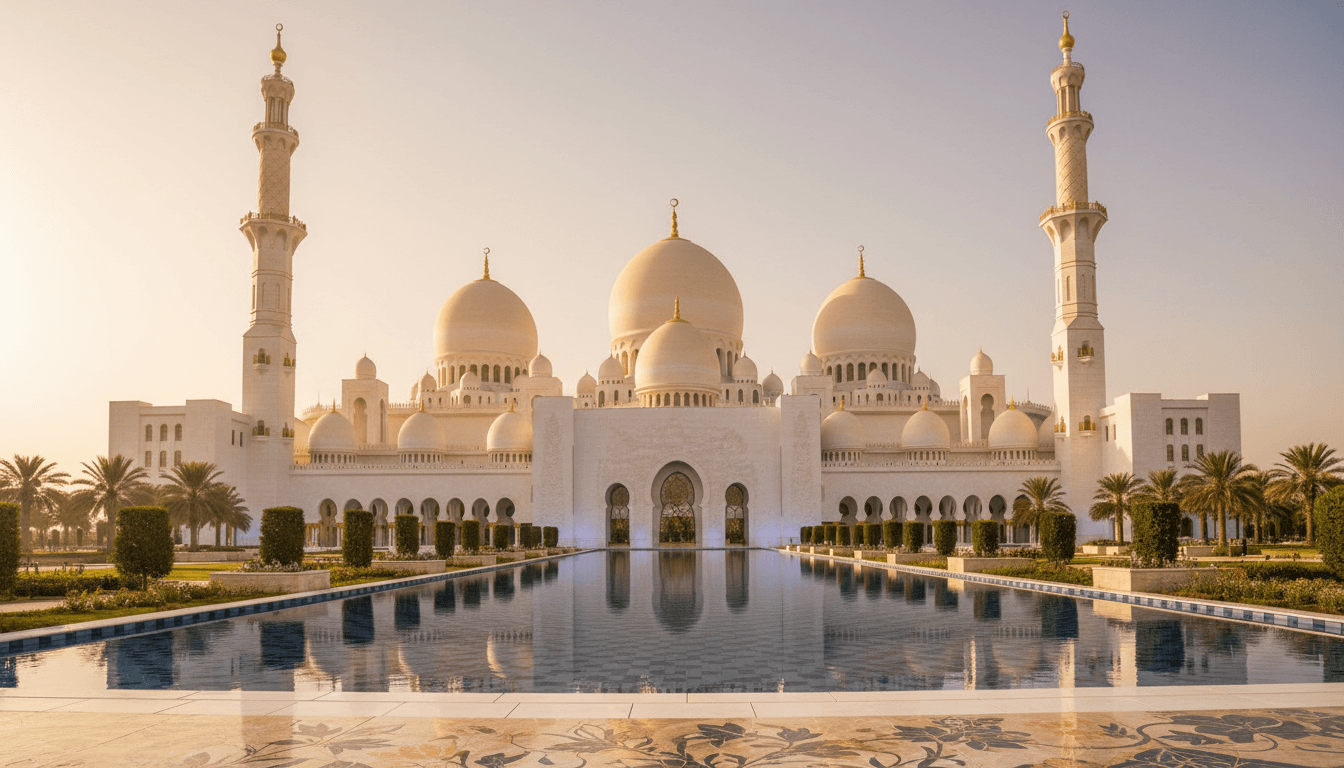
Yes, it's the obvious choice—but obvious for good reason. One of the world's largest mosques, accommodating 40,000 worshippers, and staggeringly beautiful. White marble, gold-plated chandeliers, the world's largest hand-knotted carpet. Free guided tours run throughout the day (check timings, as they pause during prayer times).
Practical notes: The mosque provides abayas (robes) and headscarves for women at the entrance—no need to purchase your own. Wear comfortable shoes you can slip on and off easily. The marble floors can be hot in direct sun, so stick to shaded walkways. There's extensive seating throughout, and the air-conditioned underground parking area has elevators.
Louvre Abu Dhabi
The building itself—designed by Jean Nouvel with a massive perforated dome creating "rain of light" patterns—is worth the visit even before you see the art. The collection spans civilizations and eras, thoughtfully curated to show connections between cultures.
For retirees: entirely accessible, with wheelchairs available at no charge. There's a café with waterfront seating for mid-visit breaks. Audio guides (included with admission) let you move at your own pace. Budget 3-4 hours minimum.
Qasr Al Watan (Presidential Palace)
Opened to visitors in 2019, this working presidential palace offers insight into Emirati governance and architecture. The interior is overwhelming in the best way—vast halls, intricate geometric patterns, a library housing rare manuscripts.
The light show in the evenings (separate ticket, around 60 AED / $16 USD) projects onto the palace facade and is genuinely spectacular. Arrive early for good seating.
Al Ain Day Trip
About 90 minutes from Abu Dhabi, Al Ain offers a glimpse of traditional Emirati life. The oasis—yes, a genuine date palm oasis—is UNESCO-listed and free to explore. The Al Ain Palace Museum shows how the ruling family lived in the pre-oil era. The camel market is chaotic and fascinating.
I'd recommend hiring a driver for the day (around 800-1,000 AED / $218-272 USD including waiting time) rather than renting a car, especially if you'd rather focus on the experience than navigation.
Practical Tips From Retirees Who've Done It
I reached out to six retired SwappaHome members who've completed Abu Dhabi home exchanges. Here's what they wish they'd known:
"Bring more layers than you'd expect. The AC everywhere is arctic." — Robert, 68, Oregon
"We did two weeks and it was perfect. Three might have felt long. The city is wonderful but compact." — Margaret, 72, Edinburgh
"Don't sleep on the Indian restaurants. Abu Dhabi has incredible Indian food—often better than what we've had in London." — Priya, 66, Manchester
"Our host left a detailed house manual with restaurant recommendations, emergency numbers, and even her favorite walking routes. Ask if yours can do the same—it made everything easier." — David, 70, Toronto
"It's not an adventure destination. It's a comfort destination. Once I stopped expecting excitement around every corner and leaned into the relaxation, I loved it." — Susan, 74, Phoenix
Setting Up Your Abu Dhabi Home Exchange: Step by Step
Ready to make this happen?
First: Create or update your SwappaHome profile with recent photos of your home. Abu Dhabi residents considering exchanges want to see exactly what they'd be getting. Highlight features that appeal to international travelers—proximity to airports, local attractions, comfortable beds.
Second: Search Abu Dhabi listings and save favorites. Pay attention to neighborhood descriptions, building amenities, and host response rates. Properties with multiple positive reviews from other retirees are gold.
Third: Reach out to potential hosts 3-4 months before your intended travel dates. Be specific about your dates, your needs (ground floor? walk-in shower? dedicated parking?), and what you offer in return. Personalized messages get better responses than generic requests.
Fourth: Once a match is confirmed, exchange detailed information. Ask about local grocery delivery services, pharmacy locations, and any quirks of the home ("The AC remote is sensitive—here's how to use it"). Offer the same level of detail about your own home.
Fifth: Arrange your own travel insurance. I can't emphasize this enough. SwappaHome facilitates connections, but insurance is your responsibility. Make sure your policy covers medical emergencies, trip cancellation, and—if you want—coverage for your own home while you're away.
The Cost Reality: What You'll Actually Spend
Realistic daily costs for a retired home exchanger in Abu Dhabi (October-April, moderate comfort level):
Accommodation: 0 credits spent per night through SwappaHome (you'll have earned credits by hosting previously)
Food: 150-250 AED ($41-68 USD) per day for two people, mixing home cooking with restaurant meals
Transportation: 50-100 AED ($14-27 USD) per day if using taxis/ride-shares; less with a rental car
Activities: 100-200 AED ($27-54 USD) per day average, though many days might be zero (beach, walking, relaxing)
Miscellaneous: 50 AED ($14 USD) per day for coffee, small purchases, tips
Total daily budget: Approximately $100-175 USD per day for a couple, excluding flights
Compare that to hotel-based travel: a mid-range hotel runs $200-300 USD/night alone. Over three weeks, home exchange saves roughly $4,000-6,000 USD on accommodation—money that could fund business class flights, splurge dinners, or simply stay in your retirement account.
Why This Matters
I'll end with something Patricia told me during our last call. She'd just returned from her third Abu Dhabi home exchange—this time bringing her sister, also retired, who'd been skeptical about the whole concept.
"What changed her mind," Patricia said, "wasn't the savings, though those are real. It was waking up in a real home, in a real neighborhood, with a real kitchen. We bought vegetables from a guy who remembered us from the previous week. We had a favorite bench on the Corniche. The building security guard knew our names."
That's what home exchange offers that hotels can't: the texture of actual life in a place. For retirees especially—people with the time to settle in, to establish small routines, to move at the pace a destination actually moves—this texture transforms travel from tourism into something richer.
Abu Dhabi, with its gentle rhythm, its world-class infrastructure, and its genuine warmth toward visitors, might be the perfect place to discover what that kind of travel feels like.
If you're curious, start browsing Abu Dhabi listings on SwappaHome. Set up alerts for neighborhoods that interest you. Reach out to a host or two, just to start the conversation.
Patricia's flamingo-watching balcony is waiting for someone. Maybe it's you.
Frequently Asked Questions
Is Abu Dhabi safe for retired travelers doing home exchanges?
Abu Dhabi consistently ranks among the world's safest cities, with extremely low crime rates and strict law enforcement. Retired home exchangers report feeling completely secure walking alone, using public transportation, and staying in residential neighborhoods. The main safety considerations are heat exposure (stay hydrated, avoid midday sun) and traffic awareness when crossing streets.
How much money can retirees save with home exchange in Abu Dhabi compared to hotels?
Over a three-week stay, home exchange typically saves $4,000-6,000 USD compared to mid-range hotel accommodation. During peak season (December-February), savings can exceed $7,000 USD as hotel rates spike above $350/night. The SwappaHome credit system means accommodation costs nothing beyond the credits you've earned by hosting guests at your own home.
What's the best time of year for retirees to visit Abu Dhabi?
October through April offers ideal conditions, with temperatures ranging from 20-30°C (68-86°F). December through February is peak season with perfect weather but higher demand for home exchanges. March-April provides excellent weather with fewer crowds. Avoid May through September unless you're extremely heat-tolerant, as temperatures regularly exceed 40°C (104°F).
Do I need a visa for Abu Dhabi as a retired home exchanger?
Visa requirements depend on your nationality. Citizens of the US, UK, EU countries, Canada, Australia, and many others receive visa-on-arrival for 30-90 days. Check the UAE government's official visa portal for your specific country. Long-stay retirees (over 90 days) may need to apply for extended visas in advance.
Can I access quality healthcare during an Abu Dhabi home exchange?
Abu Dhabi offers world-class healthcare facilities including Cleveland Clinic Abu Dhabi, Mediclinic, and NMC hospitals with English-speaking staff. A general practitioner visit costs approximately $82-136 USD without local insurance. Strongly recommended: purchase comprehensive travel insurance before your trip, as SwappaHome does not provide medical coverage for members.

Published by
SwappaHome
SwappaHome Editorial Team
Home Exchange & Slow Travel Editorial
The SwappaHome Editorial Team brings together travel research, home-exchange community insights, and platform data to produce practical guides for first-time and experienced home swappers. Every article cites real platforms, current market rates, and verifiable city-level facts so readers can make informed decisions without guessing.
Ready to try home swapping?
Join SwappaHome and start traveling by exchanging homes. Get 7 free credits when you sign up!
Related articles
Bachelor and Bachelorette Parties in Singapore: The Complete Home Swap Group Guide for 2026
Planning a bachelor or bachelorette party in Singapore? Discover how home swapping lets groups of 6-12 stay together in luxury condos, saving thousands while partying in Marina Bay.

Cycling in Lisbon: 7 Home Swap Bike Tour Itineraries for Every Rider
Discover the best cycling routes in Lisbon with these home swap bike tour itineraries—from waterfront paths to hilltop adventures, all starting from your borrowed home.
Graduation Trip to Barcelona: How Home Swapping Gives New Graduates the Ultimate Celebration
Planning a graduation trip to Barcelona? Discover how home swapping lets new graduates explore Spain's most vibrant city without the hostel crowds or hotel costs.