Retirement Travel to Dubai: Why Home Exchange Is the Smart Choice for Extended Stays

SwappaHome Editorial Team
Home Exchange & Slow Travel Editorial
Discover why retirement travel to Dubai through home exchange beats hotels and rentals. Save thousands while living like a local in this desert paradise.
My friend Barbara called me last February, absolutely giddy. She'd just returned from six weeks in Dubai—her first major trip since retiring from her nursing career—and she couldn't stop talking about her morning walks along the Marina, the $2 shawarmas she'd discovered near her borrowed apartment, and how she'd spent maybe a third of what her neighbor paid for a two-week hotel package.
"Maya," she said, "retirement travel to Dubai doesn't have to drain your savings. I lived in a gorgeous apartment in Jumeirah Beach Residence, had a full kitchen, a view of the Palm, and I didn't pay a single dollar for accommodation."
That conversation stuck with me. Because here's the thing—Dubai has this reputation as a playground for the ultra-wealthy, all gold-plated everything and $50,000-a-night hotel suites. And sure, that Dubai exists. But there's another Dubai, one that retirees are increasingly discovering through home exchange, where you can stretch your retirement budget while experiencing one of the world's most fascinating cities.
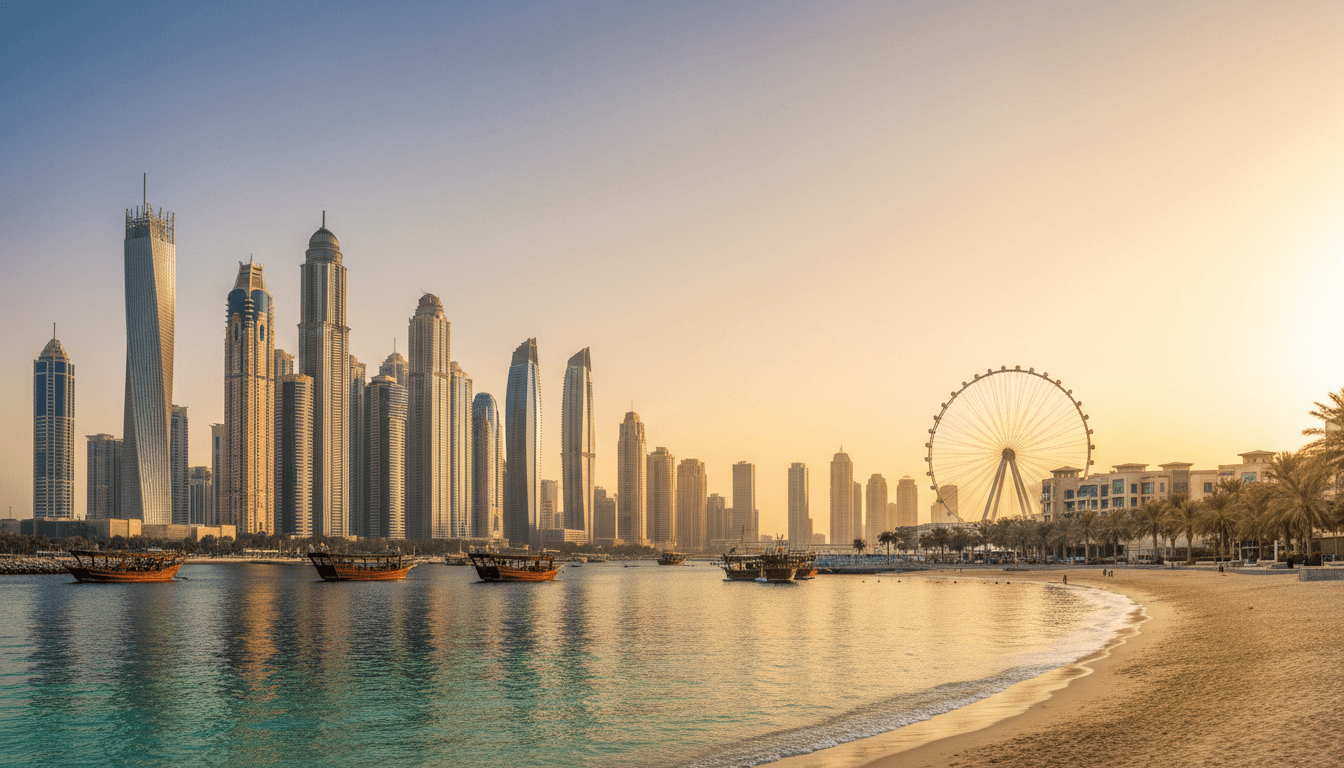
 sunrise over Dubai Marina with yachts in the foreground, modern high-rises catching golden light, a
Why Dubai Has Become a Retirement Travel Hotspot
I'll be honest—when I first heard retirees raving about Dubai, I raised an eyebrow. Isn't it just malls and artificial islands? Then I spent three weeks there last winter, swapping my San Francisco apartment for a two-bedroom in Downtown Dubai, and suddenly I got it.
The practical stuff first: Dubai is absurdly safe. Like, leave-your-phone-on-a-café-table safe. For retirees traveling solo or as couples, this matters. A lot. The healthcare is world-class—many retirees actually time their visits around medical checkups at places like Cleveland Clinic Abu Dhabi or American Hospital Dubai. And the infrastructure? Everything's air-conditioned, wheelchair accessible, connected by a spotless metro system.
But beyond logistics, there's something almost magical about Dubai for the 60+ crowd.
The pace is whatever you want it to be. Spend a morning wandering the spice souks in Deira, haggling for saffron and frankincense, then have a quiet afternoon reading by a rooftop pool. The city caters to both adventure-seekers and those who just want to sip Arabic coffee while watching the world go by.
And the weather from October through April? Genuinely perfect. We're talking 70-80°F (21-27°C), minimal humidity, endless sunshine. For retirees escaping harsh winters in Canada, the UK, or the northern US—it's paradise.
The Real Cost of Retirement Travel to Dubai (And Why Hotels Don't Make Sense)
Let me break down some numbers, because this is where home exchange becomes a no-brainer for extended retirement travel.
A decent mid-range hotel in Dubai—not luxury, just comfortable—runs about $150-200 per night. Over a month? That's $4,500-6,000 just for a room. A nice Airbnb in a desirable area? $120-180 per night, so $3,600-5,400 monthly, plus cleaning fees and service charges that somehow keep multiplying.
With home exchange through a platform like SwappaHome, you're paying zero dollars for accommodation. You earn credits by hosting travelers in your home, then spend those credits staying in Dubai. One credit equals one night, regardless of whether you're staying in a studio in Deira or a penthouse in Palm Jumeirah.
Barbara's six-week Dubai stay cost her roughly $2,700 total—accommodation was free (she used 42 credits she'd accumulated hosting over the previous year), flights came to $890 round-trip from Chicago during a November sale, food ran about $1,200 since she cooked most meals in her full kitchen, and activities plus transport added another $600.
Her neighbor's two-week hotel package? $4,200. For less than half the time.
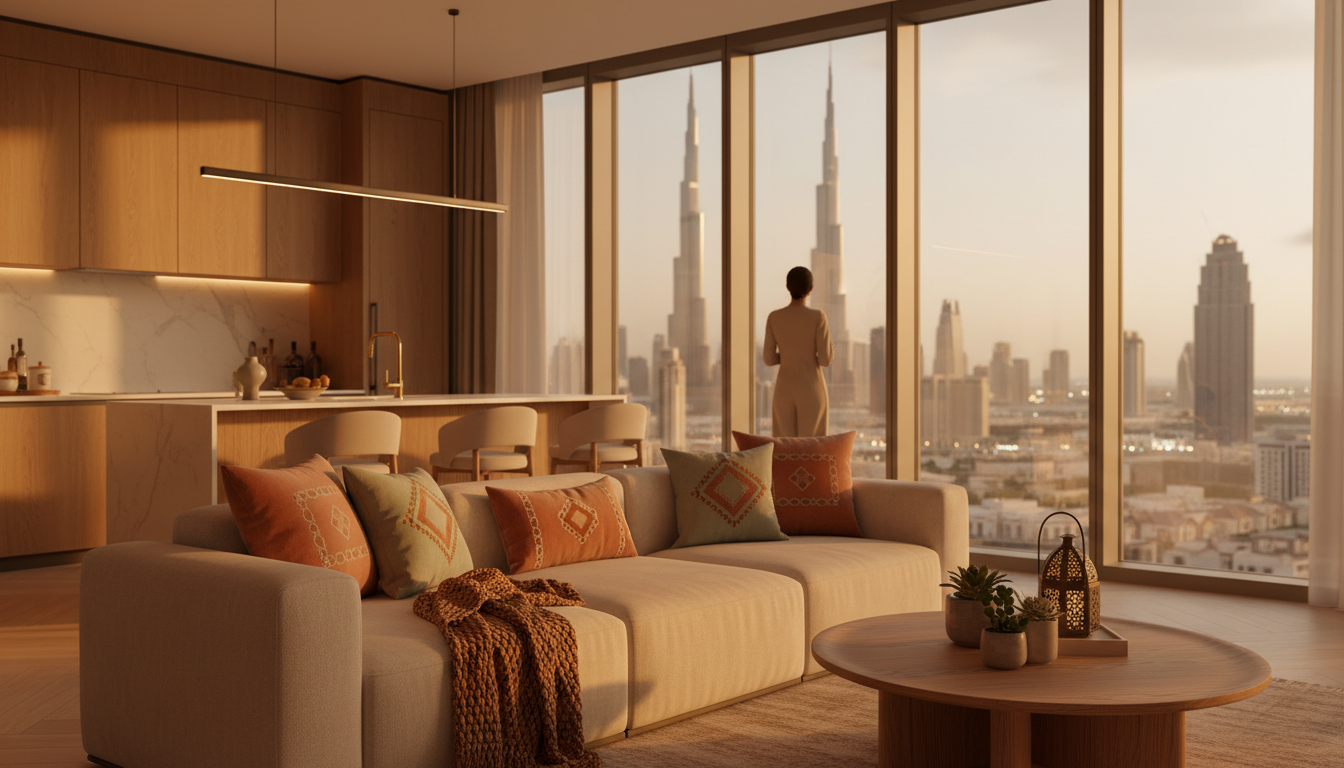 modern Dubai apartment interior with floor-to-ceiling windows overlooking Burj Khalifa, comfortable
Best Dubai Neighborhoods for Retirement Home Exchange
Not all Dubai neighborhoods are created equal, especially for retirees. After my own stays and countless conversations with retired home exchangers, here's my honest take:
Dubai Marina: The Social Hub
This is where Barbara stayed, and I understand why she loved it. The Marina is essentially a city within a city—a 3km waterfront promenade lined with restaurants, cafés, and shops. Everything is walkable. The tram connects you to the beach in minutes. There's a genuine neighborhood feel, with regulars at the coffee shops and familiar faces on morning walks.
For retirees, the Marina offers something crucial: community without effort. You'll find yourself chatting with other expats and long-term visitors at the Friday market, or joining informal walking groups along the promenade. The grocery stores—Carrefour, Spinneys—are well-stocked and reasonably priced. Home exchange options here range from compact studios to sprawling three-bedrooms with marina views, typically in high-rise towers with pools, gyms, and 24-hour security.
Jumeirah Beach Residence (JBR): Beach Life Made Easy
JBR is essentially Dubai Marina's beachfront neighbor. The main draw is obvious—direct beach access, with a gorgeous stretch of sand and the famous Walk at JBR for shopping and dining.
I'd recommend JBR for retirees who prioritize outdoor time. The beach is clean, well-maintained, and has plenty of shaded areas. Early mornings here are spectacular—the water is calm, the light is golden, and you'll share the sand with yoga practitioners and swimmers rather than crowds. One caveat though: JBR can feel touristy, especially around The Beach mall. If you want a more "local" experience, Marina might suit you better.
Downtown Dubai: Culture and Convenience
This is where I stayed, in a lovely two-bedroom apartment about ten minutes' walk from the Burj Khalifa. Downtown is Dubai's cultural heart—home to the Dubai Opera, the Dubai Mall (which, yes, is overwhelming, but also has an incredible aquarium and ice rink), and the famous Dubai Fountain shows.
For retirees interested in arts, dining, and people-watching, Downtown delivers. The Souk Al Bahar offers traditional architecture and waterfront restaurants. The metro station connects you to everywhere. The downside? It's pricier for dining out, and the area can feel more commercial than residential. Home exchanges in Downtown tend to be in newer, luxury towers—many with stunning Burj Khalifa views, though these listings get snapped up quickly.
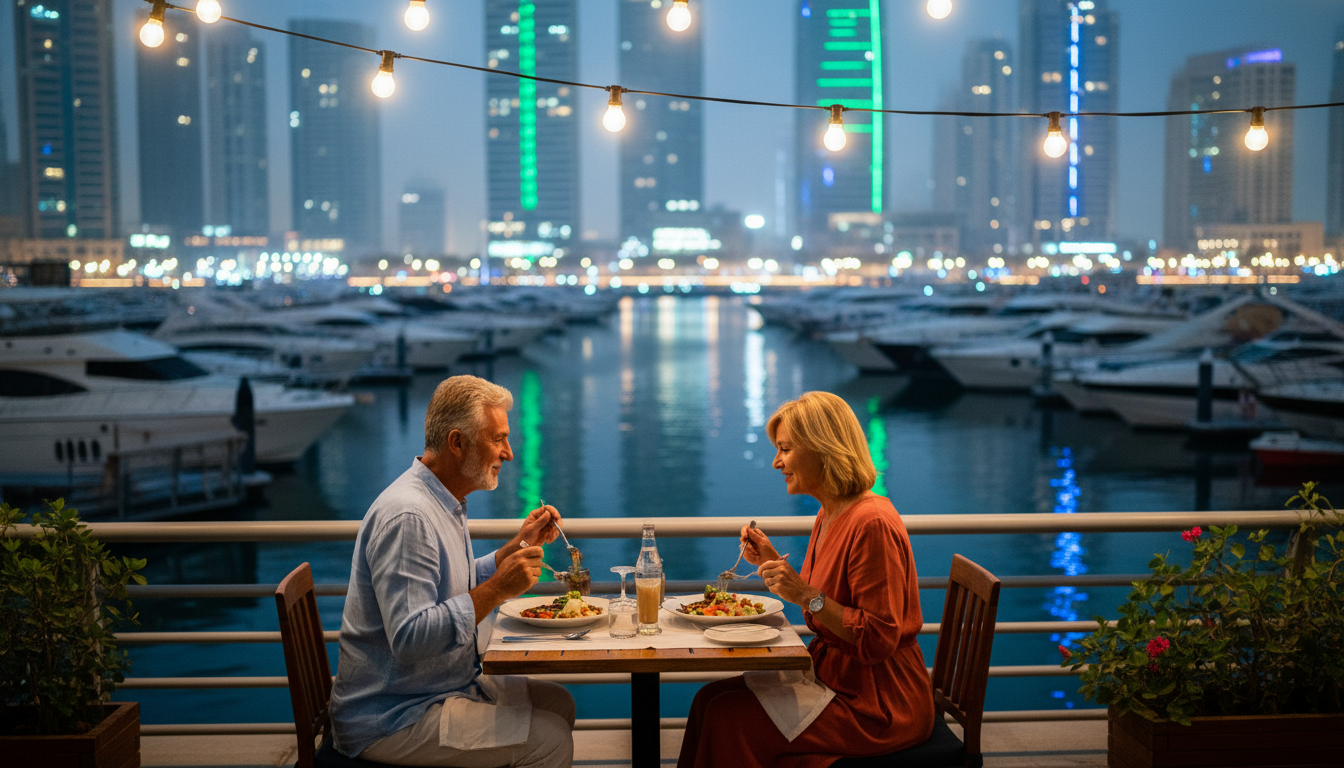 evening scene at Dubai Marina promenade, outdoor caf tables with retiree couple enjoying dinner, boa
Al Barsha and Jumeirah: The Local Experience
If you want to live more like a Dubai resident than a tourist, consider these areas. Al Barsha is a middle-class neighborhood with excellent value—think large apartments, family-friendly vibes, and easy access to Mall of the Emirates. Jumeirah (the neighborhood, not JBR) offers beautiful villas and a quieter, more suburban feel.
These areas require more reliance on taxis or the metro, but you'll pay less for groceries and find more authentic Emirati restaurants. For retirees planning stays of two months or more, the slower pace and lower costs can be worth the trade-off.
How Home Exchange Works for Extended Retirement Stays in Dubai
Some of you might be new to home exchange, so let me explain how this actually works—especially for longer retirement trips.
On SwappaHome, the system is straightforward. You list your home with photos and a description. When travelers stay at your place, you earn one credit per night they stay. Then you use those credits to book stays elsewhere—one credit per night, regardless of the property's size or location. New members start with 7 free credits, which is enough for a 10-night trial run in Dubai or anywhere else.
Many retirees I know accumulate credits during the year by hosting during their city's peak tourist season, then "spend" those credits on extended winter stays in warm destinations.
Here's what makes this particularly smart for retirement travel: you're not locked into simultaneous swaps. Traditional home exchange requires finding someone who wants your home exactly when you want theirs. With a credit system, you host a family from Germany in July, then use those credits for Dubai in January. The flexibility is enormous.
Extended stays become genuinely affordable—hotels nickel-and-dime you for long stays, but home exchange doesn't. Whether you stay 5 nights or 50, it's the same credit-per-night rate. And you get real homes, not hotel rooms. Full kitchens mean you can cook, which is both healthier and cheaper. Washing machines mean you pack lighter. Living rooms mean you have space to breathe.
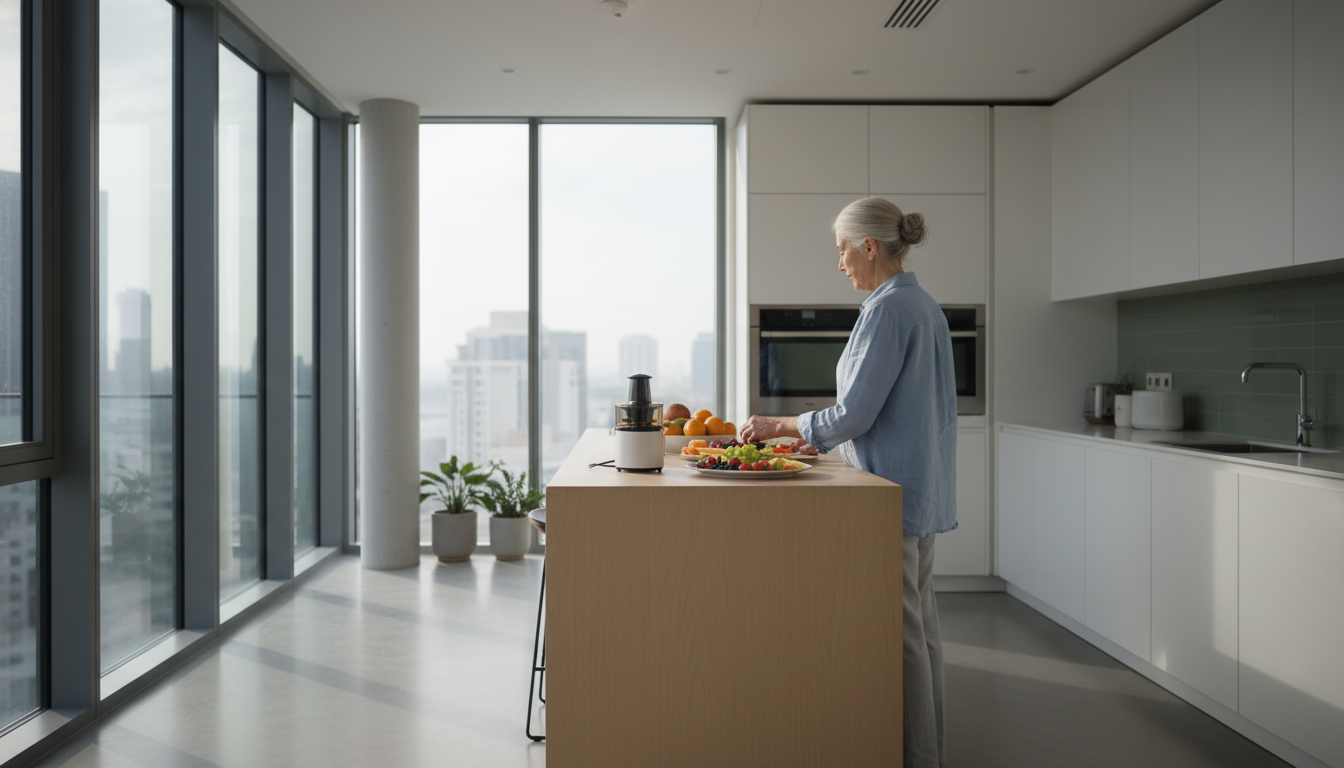 retiree woman in casual clothes preparing breakfast in a bright Dubai apartment kitchen, fresh fruit
Practical Tips for Retirement Home Exchange in Dubai
After talking with dozens of retired home exchangers and doing my own Dubai stays, here's what actually matters:
Timing Your Trip
The sweet spot is November through March. October can still be hot (85°F+), and April starts warming up uncomfortably. December and January are peak season, so book your home exchange early—ideally 3-4 months ahead.
Ramadan dates vary yearly since it's based on the lunar calendar. While Dubai remains functional during Ramadan, some restaurants close during daylight hours and the vibe is more subdued. Some retirees love the cultural experience; others prefer to avoid it. Check dates before booking.
What to Look for in a Dubai Home Exchange
Prioritize air conditioning that you control (not central building AC), walking distance to metro or tram since Dubai is sprawling and you don't want to rely solely on taxis, a real kitchen with an oven because many Dubai apartments have only cooktops, pool access since it's hot and you'll want to swim, and reliable WiFi for video calls with family back home.
Ask hosts about the building's facilities. Many Dubai towers have gyms, pools, saunas, and even tennis courts included.
Healthcare Considerations
Dubai has excellent medical facilities, but treatment is expensive without insurance. Before your trip, confirm your travel insurance covers the UAE, bring sufficient prescription medications (Dubai customs can be strict about certain drugs—check the Ministry of Health website), note the location of the nearest hospital or clinic to your exchange home, and consider scheduling any routine checkups at Dubai's medical tourism facilities, which offer high quality at lower prices than the US.
Getting Around
The Dubai Metro is clean, cheap (about $1-3 per ride), and covers most tourist areas. The Red Line connects the airport to Downtown, Marina, and beyond. The tram serves the Marina and JBR area. Taxis are plentiful and affordable—a 20-minute ride rarely exceeds $15. Uber and Careem (the local equivalent) work well.
For retirees, I'd suggest staying somewhere metro-accessible and using taxis for areas the metro doesn't reach, like the old souks in Deira or desert excursions.
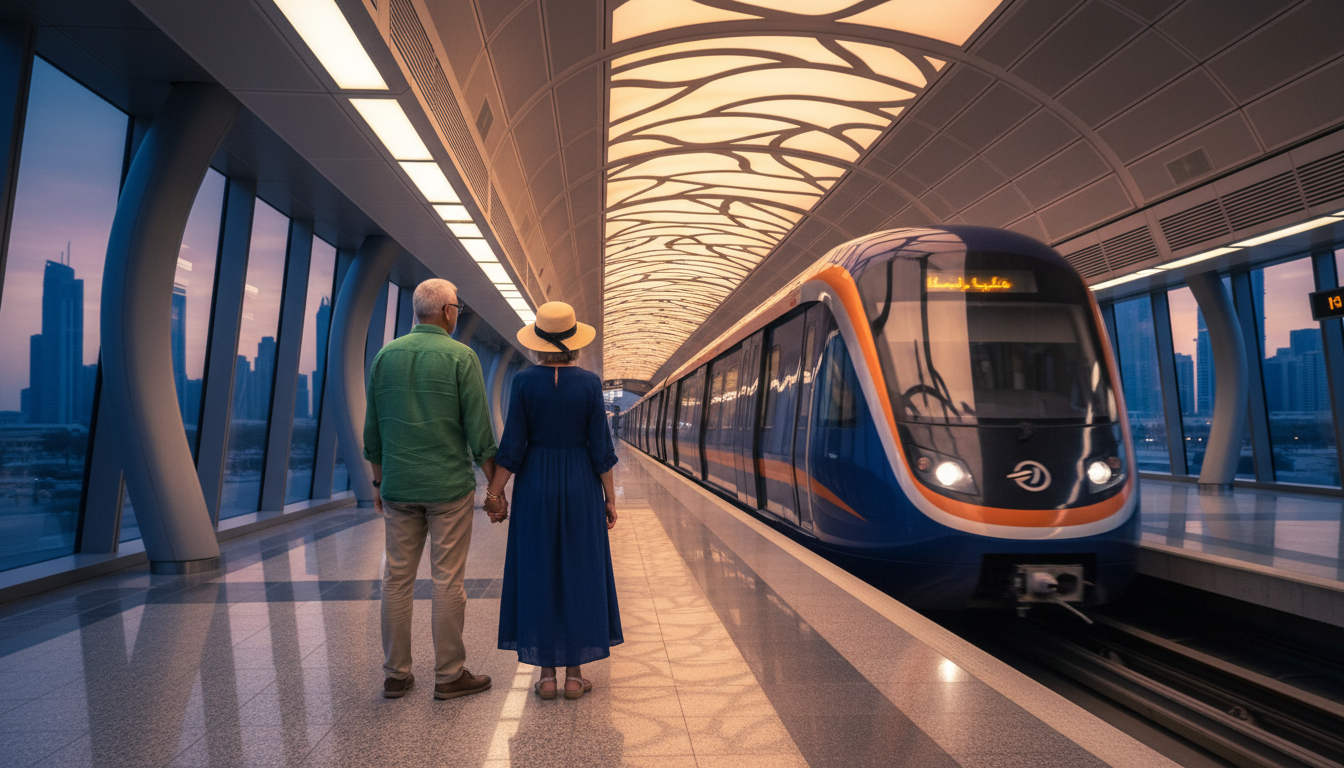 Dubai Metro train arriving at station with retiree couple waiting on platform, modern architecture,
What to Actually Do During an Extended Dubai Retirement Stay
Here's where Dubai surprises people. Beyond the headline attractions, there's genuinely interesting stuff to fill weeks or months:
Cultural Experiences
The Al Fahidi Historical District is my favorite corner of Dubai—narrow lanes, wind-tower architecture, tiny museums and galleries tucked into restored buildings. The Coffee Museum here serves traditional Arabic coffee with dates. The Sheikh Mohammed Centre for Cultural Understanding offers "Cultural Meals" where you share Emirati food and conversation with locals—about $25 per person, and absolutely worth it.
The Etihad Museum (free admission for seniors) tells the story of the UAE's formation. The Jameel Arts Centre showcases contemporary Middle Eastern art in a stunning waterfront building.
Outdoor Adventures
Dubai isn't all skyscrapers. The Ras Al Khor Wildlife Sanctuary hosts thousands of flamingos—free to visit, with viewing hides. The Al Marmoom Desert Conservation Reserve offers camel treks, cycling, and stargazing away from city lights.
Many retired home exchangers I know take day trips to the Hajar Mountains, about 90 minutes away, where you can hike, visit traditional villages, and escape the heat at higher elevations.
Social Connections
Loneliness is a real concern for extended solo travel. Dubai has surprisingly robust expat communities—InterNations hosts regular events, many gyms and pools have informal morning groups, and various walking clubs welcome visitors.
Barbara told me she made friends within her first week—fellow retirees she met at the Marina promenade who became her breakfast companions for the rest of her stay.
Building Your Home Exchange Profile for Dubai Success
I've noticed that retirees often have an advantage in home exchange. Hosts tend to trust older travelers—there's an assumption (usually correct) of responsibility and respect for property.
To maximize your success finding Dubai exchanges, complete your profile thoroughly. Include photos of yourself, mention your retirement status, and describe your travel style. Dubai hosts want to know their home will be cared for.
Highlight your home's appeal, too. Even if you live in a modest apartment in a small city, there's something appealing about it. Proximity to nature? Local restaurants? A quiet neighborhood? Someone in Dubai dreams of exactly that.
Be flexible with dates—the more flexibility you offer, the more options you'll have. If you can travel anytime between November and March, say so. Start hosting before you travel to build up credits and reviews. A profile with positive reviews gets significantly more responses.
And reach out personally. Don't just send generic booking requests. Mention specific things about the Dubai home that appeal to you. Ask questions about the neighborhood. Build a human connection.
The Emotional Case for Home Exchange Retirement Travel
I want to end with something that goes beyond budgets and logistics.
Retirement travel should be about more than checking boxes on a bucket list. It should be about living, even temporarily, in a place—understanding its rhythms, finding your favorite coffee shop, recognizing the security guard who waves good morning.
Hotels don't give you that. They give you a room, a breakfast buffet, a concierge who hands you the same tourist map they hand everyone.
Home exchange gives you a life. You wake up in someone's home, surrounded by their books and art. You shop at their local grocery store, cook in their kitchen, maybe water their plants. You become, for a few weeks, a resident rather than a visitor.
For retirees—especially those traveling for extended periods—this matters enormously. You're not killing time between activities. You're living.
Barbara told me that her Dubai trip didn't feel like a vacation. It felt like a chapter of her life. She has friends there now. She knows which café makes the best karak chai. She's already planning her return.
That's what retirement travel to Dubai through home exchange offers. Not just savings—though those are real and significant. But a richer, deeper way of experiencing one of the world's most surprising cities.
If you're considering it, my advice is simple: start building your SwappaHome profile today. Host a few guests this summer. Accumulate some credits. And when winter comes, book that Dubai apartment with the Marina view.
You won't regret it.
Frequently Asked Questions
Is retirement travel to Dubai safe for seniors?
Dubai is exceptionally safe for retirees, with very low crime rates, excellent healthcare facilities, and infrastructure designed for accessibility. The city is well-lit, heavily monitored, and locals are generally helpful to older visitors. Solo female travelers and couples consistently report feeling secure throughout extended stays.
How much can retirees save with home exchange in Dubai versus hotels?
Retirees typically save $3,000-6,000 per month by using home exchange instead of hotels in Dubai. A mid-range hotel costs $150-200 nightly ($4,500-6,000 monthly), while home exchange accommodation costs zero dollars—just credits earned by hosting travelers in your own home.
What's the best time of year for retirement travel to Dubai?
November through March offers ideal weather for retirees, with temperatures between 70-80°F (21-27°C) and minimal humidity. December and January are peak season, so book home exchanges 3-4 months ahead. Avoid May through September when temperatures exceed 100°F.
Do I need special insurance for extended Dubai stays?
Yes, ensure your travel insurance covers the UAE for your entire stay length. Dubai's medical care is excellent but expensive without coverage. SwappaHome connects you with hosts but doesn't provide insurance—arrange your own travel and health coverage before departure.
Can I find wheelchair-accessible home exchanges in Dubai?
Dubai's modern buildings generally offer excellent accessibility, including elevators, ramps, and accessible bathrooms. When searching on SwappaHome, filter for ground-floor units or message hosts directly about specific accessibility features. Many Marina and Downtown towers meet international accessibility standards.

Published by
SwappaHome
SwappaHome Editorial Team
Home Exchange & Slow Travel Editorial
The SwappaHome Editorial Team brings together travel research, home-exchange community insights, and platform data to produce practical guides for first-time and experienced home swappers. Every article cites real platforms, current market rates, and verifiable city-level facts so readers can make informed decisions without guessing.
Ready to try home swapping?
Join SwappaHome and start traveling by exchanging homes. Get 7 free credits when you sign up!
Related articles

Bachelor and Bachelorette Parties in Singapore: The Complete Home Swap Group Guide for 2026
Planning a bachelor or bachelorette party in Singapore? Discover how home swapping lets groups of 6-12 stay together in luxury condos, saving thousands while partying in Marina Bay.

Cycling in Lisbon: 7 Home Swap Bike Tour Itineraries for Every Rider
Discover the best cycling routes in Lisbon with these home swap bike tour itineraries—from waterfront paths to hilltop adventures, all starting from your borrowed home.

Graduation Trip to Barcelona: How Home Swapping Gives New Graduates the Ultimate Celebration
Planning a graduation trip to Barcelona? Discover how home swapping lets new graduates explore Spain's most vibrant city without the hostel crowds or hotel costs.