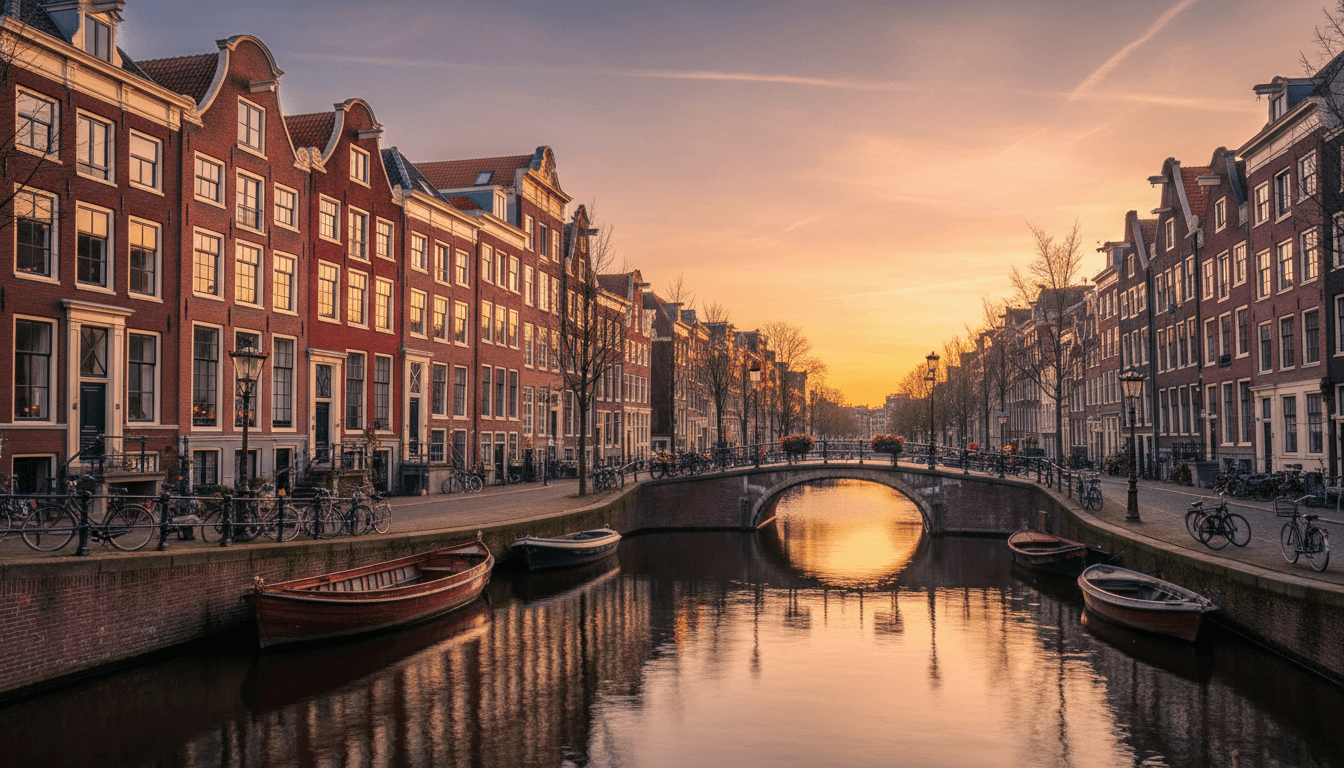
Amsterdam Long-Term Home Exchange: What a Month Actually Teaches You

SwappaHome Editorial Team
Home Exchange & Slow Travel Editorial
A month-long home exchange in Amsterdam reveals what short trips miss—from navigating the OV-chipkaart to finding your local Albert Heijn rhythm.
The Jordaan at 7 AM: What a Month-Long Amsterdam Home Exchange Actually Teaches You
The Jordaan neighborhood smells different at 7 AM than it does at midnight. Early morning brings the yeasty warmth drifting from bakeries along Lindengracht, mixed with canal water and the particular dampness of centuries-old brick. By midnight, it's all spilled Heineken and the sweet smoke wafting from coffee shops on Haarlemmerstraat. You don't learn this in a weekend. You learn it after a month of Amsterdam long-term home exchange—when the city stops being a destination and starts being something closer to a temporary life.
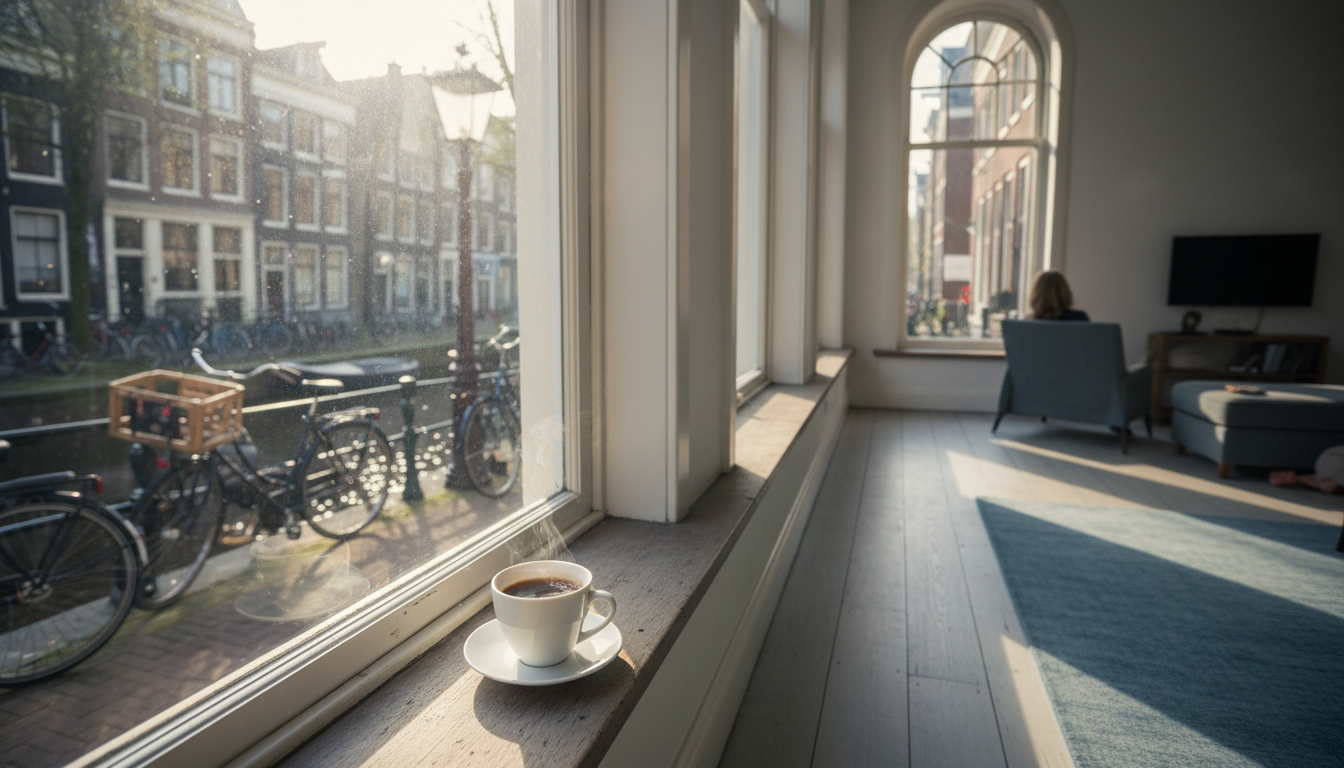 Early morning light filtering through tall windows of a canal house apartment in Amsterdams Jordaan,
Here's what nobody tells you about extended home swapping in Amsterdam: the real insights don't come from guidebook attractions. They come from the Tuesday afternoon when you finally figure out which Albert Heijn has the best broodjes, or the rainy Wednesday when you discover that your borrowed apartment's radiator has a secret sweet spot. A month-long home exchange transforms you from tourist to something else entirely—not quite local, but no longer just passing through.
Why Amsterdam Rewards the Long-Term Home Exchange
Amsterdam actively resists the weekend visitor. The city's most interesting qualities hide behind routines that take weeks to establish. The best Indonesian rijsttafel spots don't advertise to tourists—they're the places where regulars nod at each other over nasi goreng at Tempo Doeloe on Utrechtsestraat. The most beautiful canal views happen at 6:30 AM when the water goes glassy and the only sounds are delivery bikes and church bells from Westerkerk.
SwappaHome members who've done extended stays here consistently report the same revelation: the city's famous attractions—Anne Frank House, Van Gogh Museum, Rijksmuseum—become background rather than agenda. When you have a month, you stop rushing. You visit the Rijksmuseum on a random Tuesday at 2 PM when the galleries are nearly empty, not because it's on your itinerary but because you felt like seeing Vermeer.
The financial math makes extended stays particularly compelling. Amsterdam hotel rates average €180-280 per night for anything decent in the centrum. Even budget options in outlying areas run €90-140. A month in a hotel would cost between €2,700 and €8,400. Through home exchange, that entire accommodation cost disappears—you're trading nights, not currency. The only expenses become your flights, food, and the occasional museum ticket.
The First Week: Orientation Chaos and Small Victories
Every long-term Amsterdam home exchange starts the same way: mild panic about bicycles.
The cycling infrastructure here isn't optional—it's the circulatory system of the entire city. Within 72 hours, you'll realize that walking everywhere isn't just inefficient, it's borderline antisocial. The dedicated bike paths (fietspaden) have their own traffic lights, their own rules, and their own unspoken etiquette that takes about a week to absorb.
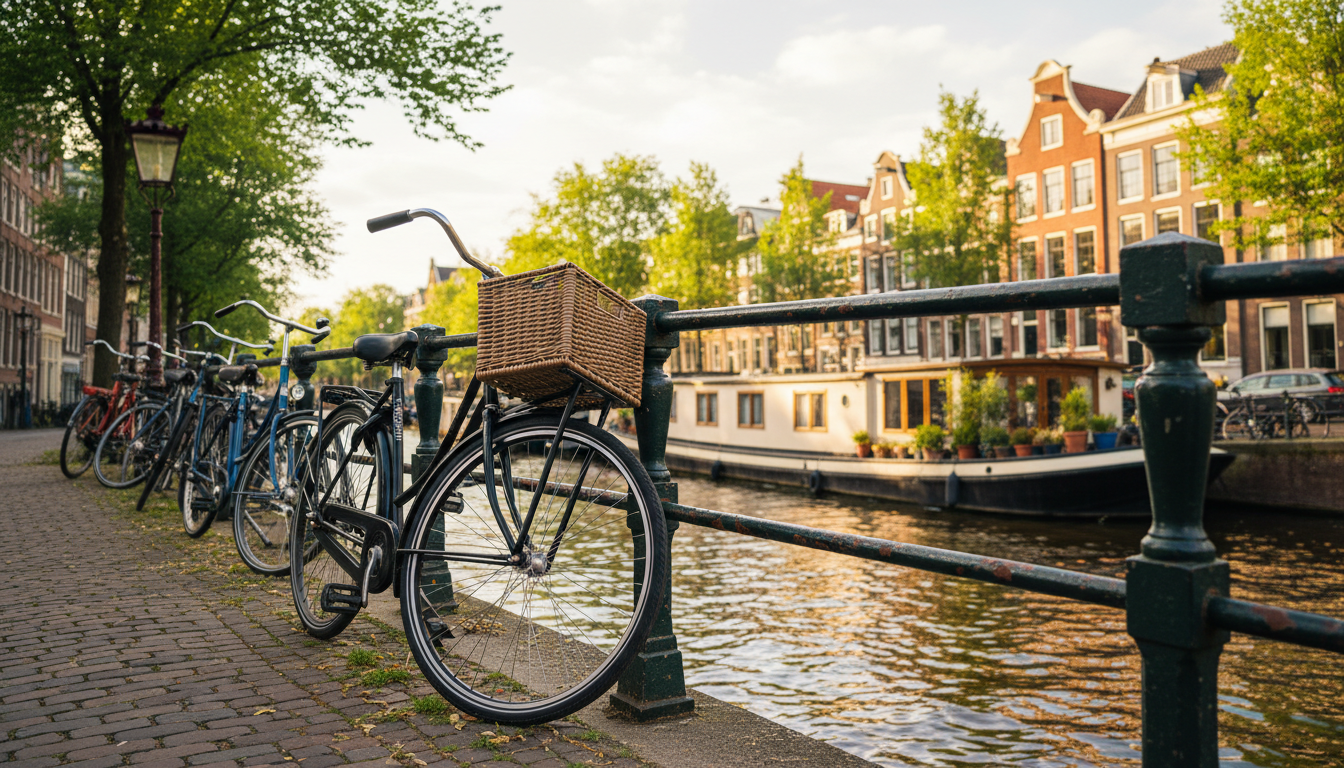 A classic Dutch omafiets grandmothers bike parked against a canal railing in Amsterdam, with other b
Most home exchange hosts in Amsterdam include bicycle access—it's practically expected. The SwappaHome community notes that roughly 80% of Amsterdam listings mention bike availability. If your host hasn't arranged one, MacBike near Centraal Station rents for around €12-15 per day, but monthly rates drop to roughly €60-80 through local shops like Black Bikes on Nieuwezijds Voorburgwal.
The first week also introduces you to the OV-chipkaart, the transit card that works across all Dutch public transportation. You'll load it at any NS ticket machine in Centraal Station or at AH To Go shops. A month of Amsterdam exploration doesn't require a car—the tram system (lines 2, 5, and 13 being the most useful for tourists-turned-temporary-residents) connects everything worth connecting. But honestly, after week two, you'll barely use it. The bike becomes your default.
Grocery orientation happens fast. Albert Heijn dominates, with locations roughly every 400 meters in central Amsterdam. The one on Haarlemmerdijk has better cheese; the one on Nieuwmarkt has longer hours. Jumbo offers slightly lower prices. Marqt on Utrechtsestraat caters to the organic crowd. These distinctions matter when you're cooking dinner for 30 nights instead of eating out for three.
Week Two: When Amsterdam Starts Making Sense
Something shifts around day ten. The canal grid that seemed impossibly confusing suddenly clicks into a mental map. You stop needing Google Maps to find your way from De Pijp to the Jordaan. You develop opinions about bridge crossings—the Magere Brug is pretty but crowded; the smaller bridges along Reguliersgracht offer better views with fewer tourists.
This is when neighborhood personalities emerge. De Pijp feels younger, scrappier, with the Albert Cuypmarkt's daily chaos of cheese vendors and stroopwafel stands. The Jordaan has its boutique-and-brunch energy, all tiny shops and €4 espressos. Oud-West around Kinkerstraat offers a more residential vibe—families, parks, and the Foodhallen for when you want fancy food court options.
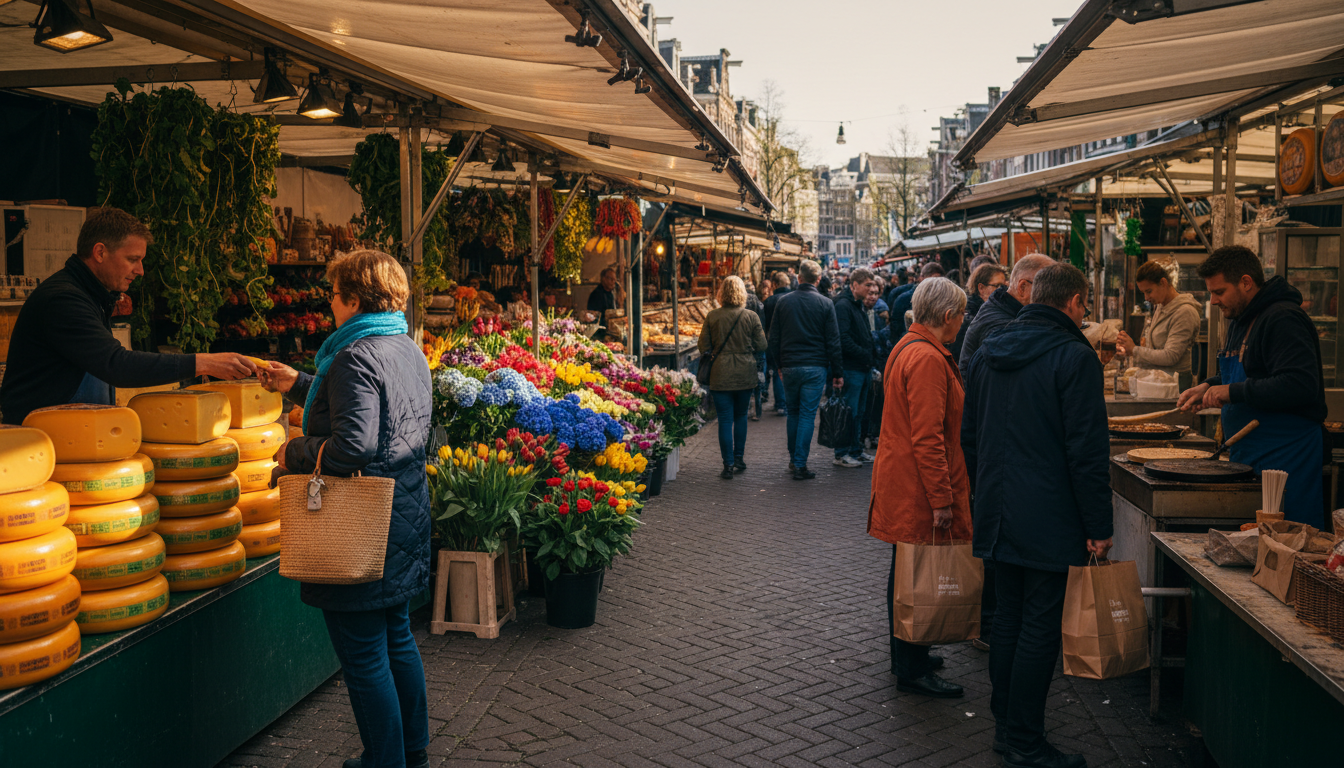 The bustling Albert Cuypmarkt in De Pijp neighborhood, with vendors selling Dutch cheese wheels, fre
The second week is also when home exchange rhythms establish themselves. You learn your borrowed apartment's quirks: which window sticks, how long the water takes to heat, where the afternoon sun hits the reading chair perfectly. The host's book collection becomes your library. Their coffee maker becomes your morning ritual.
SwappaHome members frequently mention this phase as the turning point—when a home exchange stops feeling like an elaborate hotel alternative and starts feeling like actually living somewhere. You have a favorite mug. You know which neighbor walks their dog at 7:15 AM. The building's front door code is muscle memory.
The Neighborhood Question: Where to Base Your Extended Stay
Not all Amsterdam neighborhoods suit month-long stays equally. The choice matters more than it would for a weekend visit.
Jordaan: The Classic Choice
Narrow streets, canal views, and the highest concentration of cozy cafés per square meter in the city. The Jordaan works beautifully for extended stays if you can handle the tourist density around Anne Frank House and the Negen Straatjes shopping district. Mornings and evenings, it's peaceful. Midday on weekends? A slow-moving parade of selfie sticks.
Home exchange listings in the Jordaan typically feature the classic Amsterdam canal house experience—steep stairs, tall windows, and that particular Dutch coziness (gezelligheid) that's impossible to fake. Expect smaller spaces; square footage comes at a premium here.
De Pijp: Where Locals Actually Live
South of the centrum, De Pijp offers a more neighborhood-y feel with easier access to Vondelpark and the museum district. The Albert Cuypmarkt provides daily entertainment and cheap lunch options. Sarphatipark gives you green space without the Vondelpark crowds.
Apartments here tend to be slightly larger, slightly more modern, and significantly easier to reach by bike from Centraal Station. The area around Gerard Doustraat has excellent Indonesian and Surinamese food—Warung Spang Makandra for rijsttafel, Roopram Roti for the best Surinamese roti in the city.
Oud-West: The Quiet Compromise
West of Vondelpark, Oud-West offers residential calm with reasonable access to everything. The Foodhallen in the former tram depot provides a social hub. Ten Kate Markt offers a smaller, more local alternative to Albert Cuyp. Bike commute to the centrum takes about 12 minutes.
For a month-long home exchange, Oud-West often represents the sweet spot—close enough to feel connected, far enough to feel like you're actually living somewhere rather than camping in a tourist zone.
Noord: The Adventurous Option
Across the IJ river, Amsterdam Noord has transformed from industrial wasteland to creative hub over the past decade. The free ferry from Centraal Station runs 24/7. NDSM Wharf hosts weekend markets and waterfront bars. Eye Filmmuseum offers both cinema and architecture worth seeing.
Noord listings through SwappaHome tend to offer more space for less—actual houses rather than apartments, sometimes with gardens. The trade-off is genuine separation from the centrum. You'll need that ferry or a long bike ride for anything south of the river.
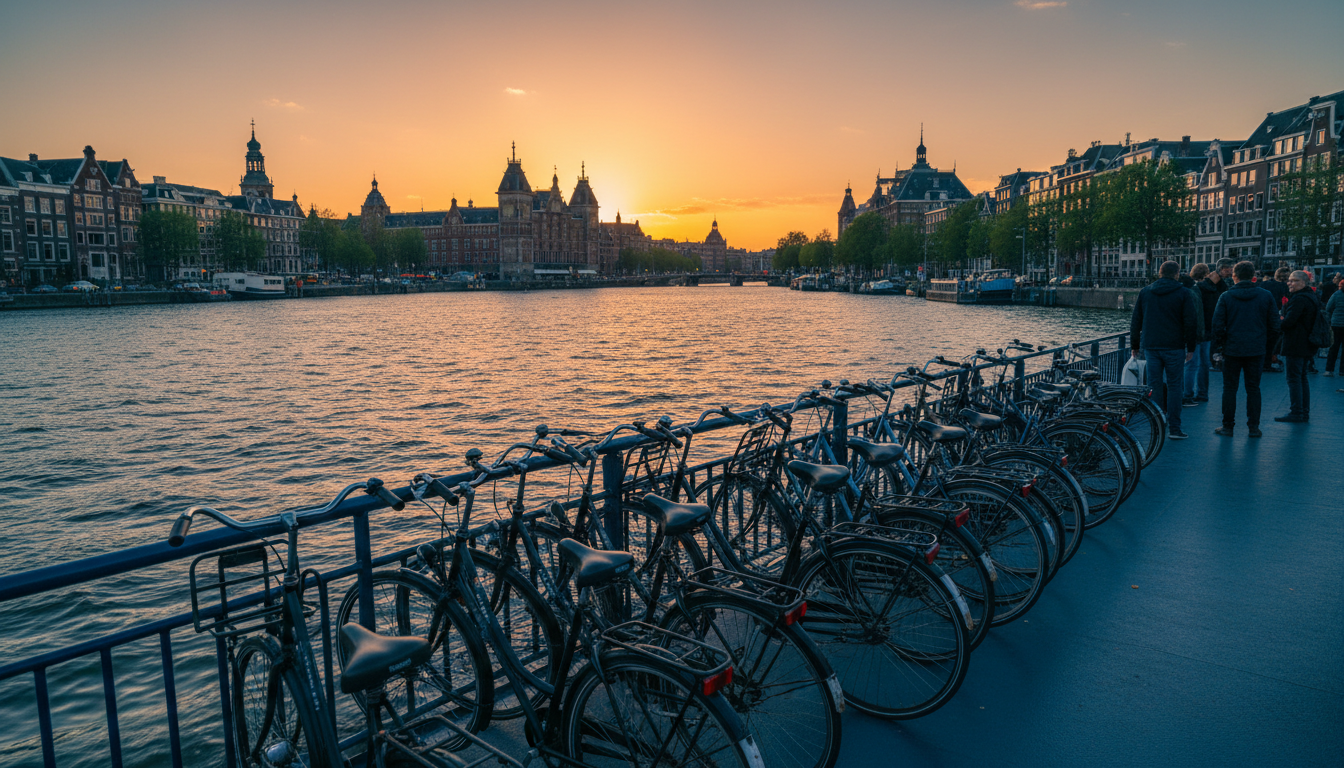 View from the free ferry crossing the IJ river, with Amsterdams skyline including Centraal Station v
Week Three: The Deeper Rhythms
By week three, you've stopped being impressed by canals. This sounds like a loss, but it's actually a gain—you've normalized beauty, which means you're finally paying attention to other things.
You notice the way Dutch people actually live. The birthday calendar in the bathroom (a genuine Dutch tradition—your host probably has one). The directness that initially feels rude but eventually feels refreshing. The fact that dinner happens at 6 PM sharp and anything later is considered slightly bohemian.
You develop a coffee shop (the regular kind) routine. Maybe it's Lot Sixty One on Kinkerstraat for their flat white, or Screaming Beans near Spui for the atmosphere, or the tiny place on your corner that nobody outside the neighborhood knows about. You stop ordering from the English menu because you've memorized the Dutch names for things.
The weather becomes a relationship rather than an inconvenience. Amsterdam in any given month will offer rain, wind, surprise sunshine, and at least one day of genuinely perfect weather. You learn to layer, to always carry a rain jacket, and to never trust a morning forecast. The Dutch phrase "er is geen slecht weer, alleen verkeerde kleding" (there's no bad weather, only wrong clothing) stops being a cliché and starts being survival wisdom.
Practical Logistics for Month-Long Amsterdam Home Exchange
Healthcare and Insurance
The Netherlands has excellent healthcare, but EU visitors should bring their European Health Insurance Card (EHIC) or UK Global Health Insurance Card (GHIC). Non-EU visitors need travel insurance with medical coverage—this isn't optional for a month-long stay.
Pharmacies (apotheek) are common; the one at Leidsestraat 74-76 stays open late. For minor issues, the drogisterij (drugstore) like Etos or Kruidvat handles basics. For anything serious, the VU Medical Center or OLVG hospital provide English-speaking care.
The Money Situation
Amsterdam runs almost entirely on cards—many places don't accept cash at all. Maestro and V-Pay work everywhere; Visa and Mastercard work almost everywhere but occasionally face rejection at smaller shops. Having a backup payment method matters.
Budget roughly €50-80 per day for food, transport, and entertainment if you're cooking most meals and being reasonable about activities. That's €1,500-2,400 for the month, compared to €3,000+ if you're eating out for every meal and doing paid attractions daily.
Internet and Communication
Most home exchange apartments include WiFi. For mobile data, Lebara or Lycamobile offer prepaid SIM cards at any phone shop or supermarket—around €15-20 for a month of data. EU roaming rules mean European SIM cards work without extra charges.
The Visa Question
Schengen rules allow visa-free stays up to 90 days within any 180-day period for most nationalities. A month falls well within this limit. However, you're technically a tourist, not a resident—working remotely occupies a gray area that Dutch immigration doesn't actively police but doesn't officially sanction either.
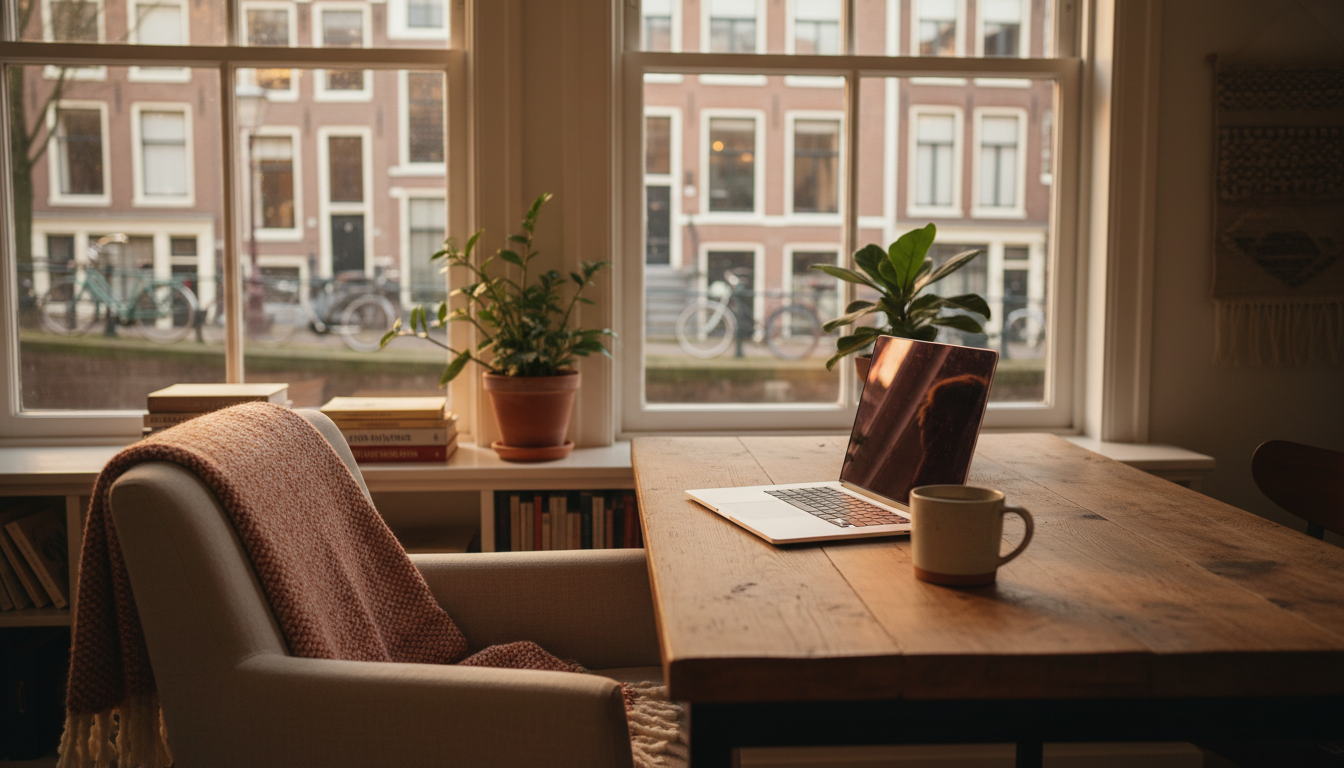 A cozy Amsterdam apartment interior with laptop on a wooden desk, large windows overlooking a canal,
Week Four: What You'll Miss When You Leave
The final week of a month-long Amsterdam home exchange brings a specific kind of melancholy. You've built something—routines, preferences, a temporary life—and now you're dismantling it.
You'll miss the bike. Wherever you go next, you'll find yourself wishing you could just hop on a fiets and be there in ten minutes. You'll miss the casual efficiency of Dutch infrastructure, the way everything works without drama.
You'll miss the light. Amsterdam sits at 52°N latitude, which means summer evenings that stretch past 10 PM and winter days that feel like extended twilight. The quality of light through those tall canal house windows is specific and irreplaceable.
You'll miss the sounds: bicycle bells, church carillons, the particular rhythm of Dutch conversation from the café below. You'll miss the smells: fresh bread, canal water, the inexplicable warmth of a brown café (bruine kroeg) on a cold afternoon.
Most of all, you'll miss the feeling of being somewhere without rushing through it. A month-long home exchange in Amsterdam offers something hotels can never provide: the experience of actually being there, not just visiting.
Making It Happen: Practical Steps for Extended Amsterdam Home Exchange
Listing your own home on SwappaHome is the first step—you can't receive if you don't offer. Amsterdam hosts, like hosts everywhere, want to see that you're a real person with a real home and genuine reviews.
For Amsterdam specifically, plan your timing carefully. Summer (June-August) offers the best weather but the highest tourist density and the most competition for listings. Shoulder seasons—late April through May for tulip season, or September through October for golden autumn light—provide better balance.
Winter (November-February) is the secret season. Fewer tourists, lower flight prices, and the genuine Dutch experience of gezelligheid—that untranslatable coziness that only makes sense when it's dark at 4:30 PM and you're nursing a coffee in a warm café while rain streaks the windows.
Start your search 3-4 months ahead for summer, 6-8 weeks for off-season. Amsterdam listings on SwappaHome typically show 100+ options at any given time, but month-long availability requires more advance planning than weekend swaps.
Communicate clearly with your host about the extended timeline. Month-long exchanges require more detailed house instructions, clearer expectations about mail handling and plant watering, and often a mid-stay check-in to make sure everything's working smoothly.
What Changes After a Month
A month-long home exchange in Amsterdam doesn't just give you a free place to stay. It gives you a different relationship with travel itself.
You return home with opinions about Dutch cheese (aged gouda from the Reypenaer tasting room, specifically). You have a favorite bench in Vondelpark. You know that the best time to visit Rijksmuseum is Tuesday at 2 PM and that the Vermeer room is worth circling back to twice.
You've experienced what it means to live somewhere rather than visit it. And once you've had that experience, regular travel feels slightly hollow—like reading the summary instead of the book.
The SwappaHome community is full of members who started with a single extended exchange and never went back to hotels. There's a reason for that. Once you've had a month in Amsterdam—once you've learned the smell of the Jordaan at 7 AM—the tourist version of travel loses its appeal.
The city will still be there when you leave. The canals will keep reflecting the gabled houses. The bikes will keep flowing like water through the streets. But you'll be different—you'll have lived it, not just seen it. And that's what a month-long home exchange actually teaches you: the difference between going somewhere and being somewhere.
Frequently Asked Questions
How far in advance should I book an Amsterdam long-term home exchange?
For a month-long Amsterdam home exchange, start searching 3-4 months ahead for summer dates (June-August) when competition peaks. Shoulder seasons require 6-8 weeks of lead time. Winter months offer more flexibility—you can sometimes find availability 4-6 weeks out. Amsterdam listings number 100+ on SwappaHome at any time, but month-long availability requires earlier planning than weekend swaps.
Is it legal to do a month-long home exchange in Amsterdam?
Yes, home exchanges are legal in Amsterdam under Dutch short-stay regulations. Unlike vacation rentals, home exchanges aren't subject to the city's 30-night annual rental limit because no money changes hands. However, you're technically a tourist under Schengen rules, which allow visa-free stays up to 90 days within 180 days for most nationalities.
What's the best neighborhood in Amsterdam for a month-long home exchange?
De Pijp and Oud-West offer the best balance for extended stays—residential enough to feel like actual neighborhoods, close enough to the centrum for easy access. The Jordaan provides classic canal house charm but higher tourist density. Amsterdam Noord suits those wanting more space and an adventurous vibe, though the ferry commute adds complexity.
Do Amsterdam home exchange hosts typically provide bicycles?
Roughly 80% of Amsterdam home exchange listings include bicycle access—it's practically expected given the city's cycling culture. If your host doesn't provide one, MacBike near Centraal Station rents for €12-15 daily, while local shops like Black Bikes offer monthly rates around €60-80. Having a bike transforms your month-long stay from manageable to genuinely enjoyable.
How much can I save with a month-long Amsterdam home exchange versus hotels?
Amsterdam hotels average €180-280 nightly for decent centrum options, meaning a month costs €5,400-8,400 minimum. Through home exchange, accommodation costs disappear entirely—you're trading nights via SwappaHome's credit system, not paying cash. Your only expenses become flights, food (roughly €50-80 daily if cooking most meals), and activities. Total savings typically range from €4,000-7,000 per month.

Published by
SwappaHome
SwappaHome Editorial Team
Home Exchange & Slow Travel Editorial
The SwappaHome Editorial Team brings together travel research, home-exchange community insights, and platform data to produce practical guides for first-time and experienced home swappers. Every article cites real platforms, current market rates, and verifiable city-level facts so readers can make informed decisions without guessing.
Ready to try home swapping?
Join SwappaHome and start traveling by exchanging homes. Get 7 free credits when you sign up!
Related articles

Bachelor and Bachelorette Parties in Singapore: The Complete Home Swap Group Guide for 2026
Planning a bachelor or bachelorette party in Singapore? Discover how home swapping lets groups of 6-12 stay together in luxury condos, saving thousands while partying in Marina Bay.

Cycling in Lisbon: 7 Home Swap Bike Tour Itineraries for Every Rider
Discover the best cycling routes in Lisbon with these home swap bike tour itineraries—from waterfront paths to hilltop adventures, all starting from your borrowed home.

Graduation Trip to Barcelona: How Home Swapping Gives New Graduates the Ultimate Celebration
Planning a graduation trip to Barcelona? Discover how home swapping lets new graduates explore Spain's most vibrant city without the hostel crowds or hotel costs.