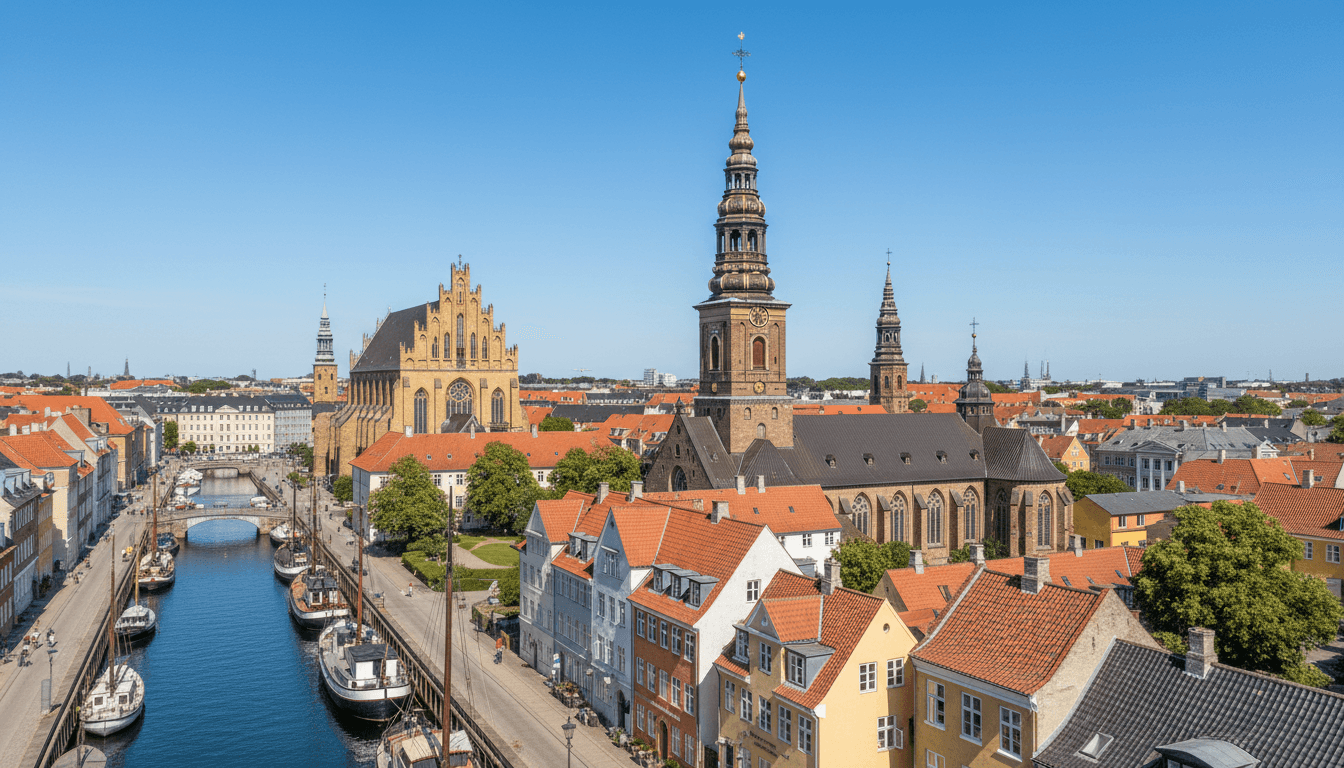
Religious Heritage of Copenhagen: A Home Swap Cultural Tour Through Denmark's Sacred Spaces

SwappaHome Editorial Team
Home Exchange & Slow Travel Editorial
Discover Copenhagen's religious heritage through a home swap cultural tour—from Vor Frue Kirke to the Great Synagogue, experience Denmark's sacred history like a local.
The bells of Vor Frue Kirke toll across Nørreport at 10 AM sharp, and if you're staying in a home swap apartment in Copenhagen's Latin Quarter, you'll feel the vibrations in your coffee cup. That particular resonance—the way centuries-old bronze reverberates through cobblestone streets and into kitchen windows—is something no hotel lobby can offer. It's the difference between visiting Copenhagen's religious heritage and actually living within it.
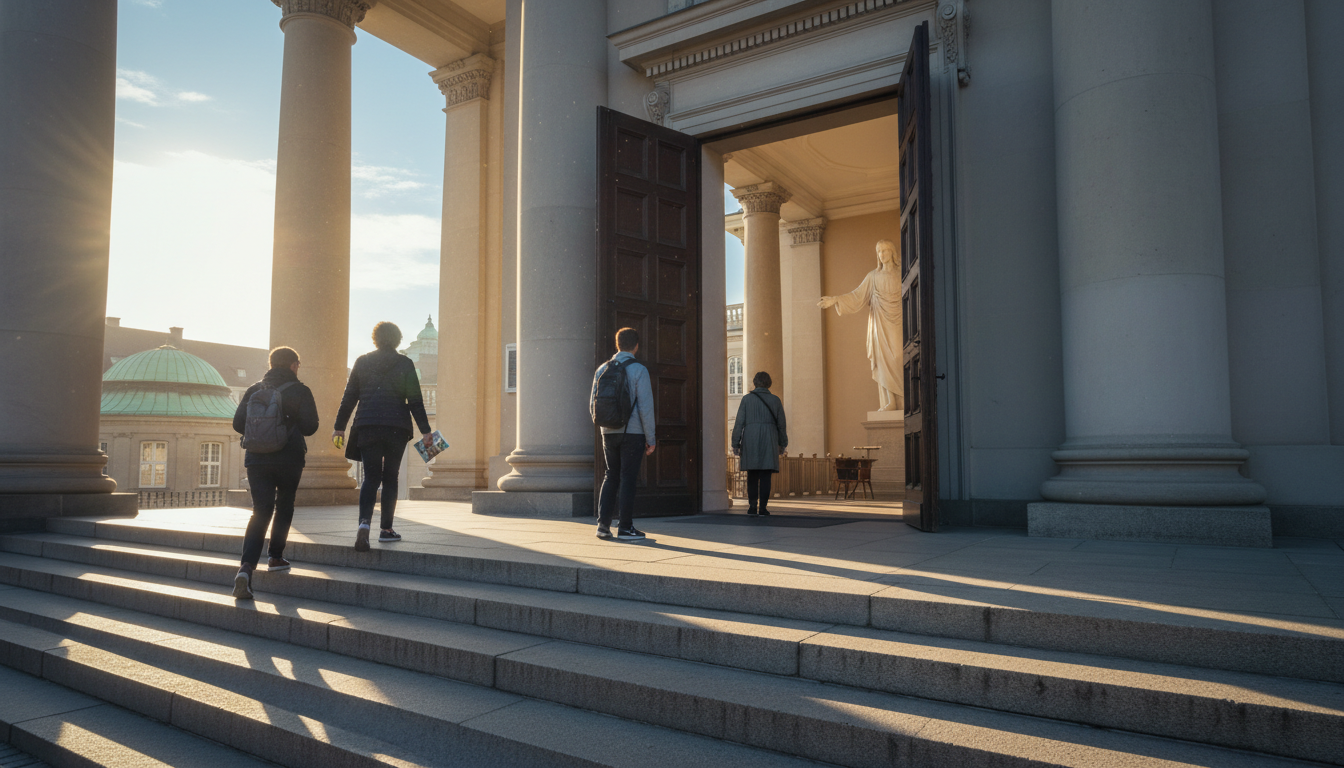 Morning light streaming through the neoclassical columns of Vor Frue Kirke Church of Our Lady with B
A home swap cultural tour through Copenhagen's sacred spaces isn't about ticking off churches from a guidebook. It's about waking up in Christianshavn and walking past the golden spire of Vor Frelsers Kirke on your way to buy rugbrød from the local bakery. It's about understanding why Denmark—one of the world's most secular nations—still maintains some of Europe's most meticulously preserved religious architecture. The contradiction tells you everything about Danish culture: Danes may not fill the pews on Sundays, but they'll fight to preserve every hand-carved altarpiece.
Why Copenhagen's Religious Heritage Deserves More Than a Day Trip
Most travelers blow through Copenhagen's churches in an afternoon. They photograph the Marble Church dome, glance at the Thorvaldsen sculptures, and move on to Tivoli. That's a mistake—not because the churches require more time (though they do), but because Copenhagen's religious heritage reveals itself in layers that only extended stays can uncover.
Here's the thing: Copenhagen has been the seat of Danish Christianity since 1417, when the University of Copenhagen was founded partly to train clergy. The city weathered the Protestant Reformation of 1536, which transformed every Catholic church into a Lutheran one overnight. It survived the devastating fire of 1728 that destroyed most of the medieval city, including five churches. And it witnessed the 1943 rescue of Danish Jews—a story inseparable from the religious institutions that sheltered them.
You can read about this history in a museum. Or you can stay in an apartment in Indre By, walk the same streets Bishop Absalon walked in the 12th century, and piece together the narrative yourself. Travelers who've spent a week or more in Copenhagen consistently report that the city's religious sites become more meaningful after multiple visits—once you've established a rhythm, once you've seen the same church in morning light and evening shadow, once you've noticed which doors locals actually use.
The practical advantage matters too. Copenhagen accommodation runs steep—expect €150-250 per night for a central hotel, €100-180 for a decent Airbnb. A two-week stay to properly explore the religious heritage could cost €2,000-3,500 in accommodation alone. Through home exchange, that cost drops to your SwappaHome membership fee. The savings aren't theoretical; they're the difference between rushing through the Marble Church in twenty minutes and returning three times to watch how the light moves through those 150 windows.
The Essential Copenhagen Churches: A Walking Route for Home Swap Guests
Let's map this out properly. If you're staying in central Copenhagen—and most home swap listings cluster in Indre By, Vesterbro, Nørrebro, and Christianshavn—you can reach every major religious site on foot or by bike. The city is compact; nothing in this guide is more than 4 kilometers from Rådhuspladsen (City Hall Square).
Vor Frue Kirke (Church of Our Lady): The Emotional Center
Start here. Not because it's the most architecturally impressive—it isn't—but because Vor Frue Kirke is where Copenhagen's spiritual and civic life intersect. This is Denmark's national cathedral, where royal weddings and state funerals happen, where Søren Kierkegaard was baptized, where the Danish Resistance held memorial services during the Nazi occupation.
The current building dates to 1829, a neoclassical reconstruction after the British bombardment of 1807 destroyed the medieval original. But what makes Vor Frue Kirke unmissable is Bertel Thorvaldsen's sculpture cycle—the Christus statue and twelve apostles that line the nave. Thorvaldsen was Denmark's answer to Michelangelo, and these works represent his masterpiece. The Christus, with its open arms and downward gaze, has been reproduced millions of times worldwide, but the original carries a weight that copies can't capture.
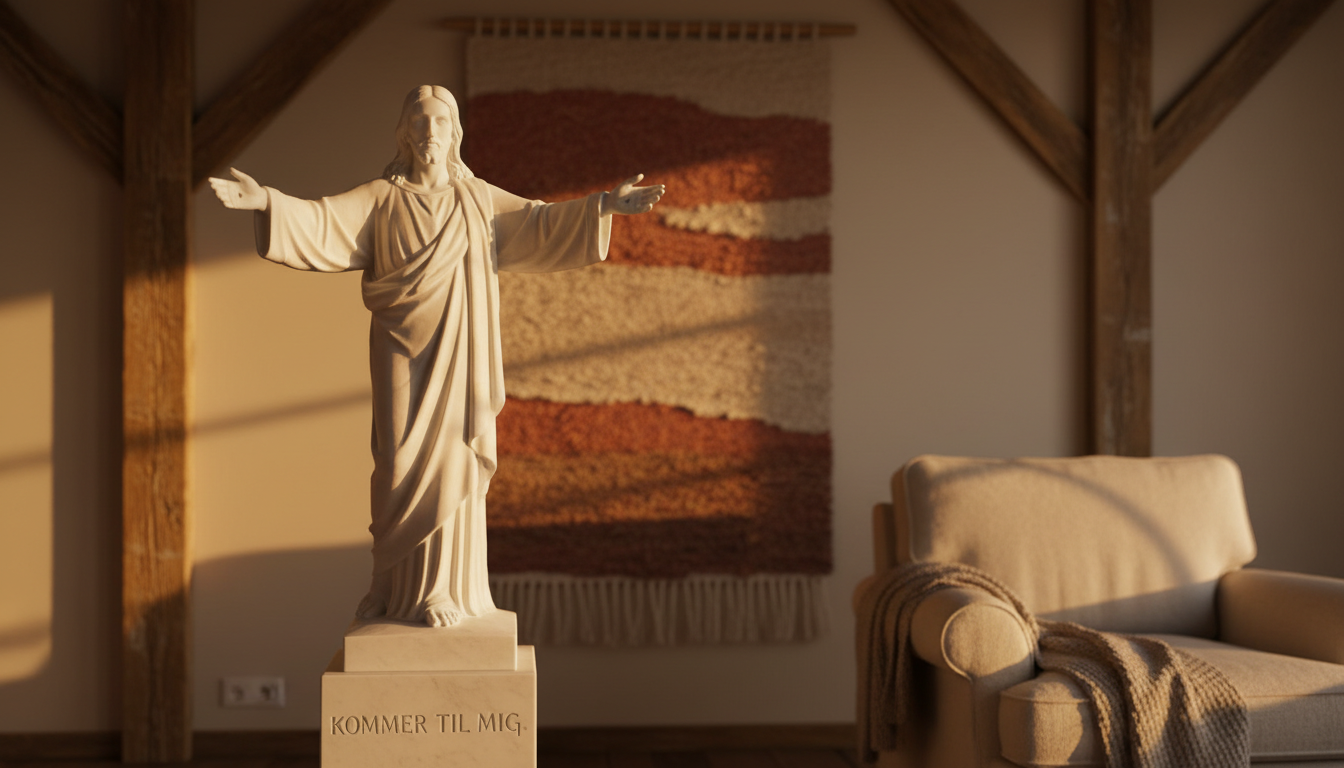 Close-up of Thorvaldsens Christus statue in white marble, arms extended in welcome, with the inscrip
Practical details: Vor Frue Kirke is free to enter. Open daily 8 AM-5 PM (until 7 PM on Thursdays). Sunday services at 10 AM and 5 PM—worth attending even if you're not Lutheran, just to hear the organ and experience the space as intended. The church sits on Frue Plads, a five-minute walk from Nørreport Station.
Vor Frelsers Kirke (Church of Our Saviour): The Climb Everyone Talks About
Cross the harbor to Christianshavn for Copenhagen's most recognizable church—the one with the external spiral staircase winding around a golden spire. Vor Frelsers Kirke was completed in 1752, and that staircase was considered so audacious that the architect, Lauritz de Thurah, allegedly threw himself from the top when he realized he'd built it spiraling the wrong direction. (The story is apocryphal but tells you something about Danish humor.)
The climb is 400 steps, the last 150 on that exposed external spiral. It's not for the acrophobic, but the view from 90 meters up is the best in Copenhagen—better than the Rundetårn, better than any rooftop bar. You'll see the entire city laid out: Christiania to the south, the opera house across the water, the green copper roofs of the old town.
Inside, the church is high baroque: a monumental organ, elaborate woodcarvings, and an altarpiece that took 15 years to complete. The acoustics are exceptional—if you can time your visit to a concert, do it. The church hosts regular performances, with tickets running 150-300 DKK (roughly $20-45 USD).
Entry to the church is free; the tower climb costs 65 DKK ($9.50 USD) for adults. Open daily, but tower access is weather-dependent—they close it in high winds. The neighborhood around the church, Christianshavn, has some of Copenhagen's best home swap options: canal-side apartments with that particular Danish blend of historic charm and modern design.
Marble Church (Frederik's Church): The Dome That Almost Wasn't
Walk north through Nyhavn—yes, the postcard-famous colored houses—and you'll reach Frederiksstaden, the 18th-century district built around Amalienborg Palace. At its center stands the Marble Church, formally Frederik's Church, with a dome that rivals St. Peter's in ambition if not quite in scale.
The story of this church is pure Copenhagen: construction began in 1749, money ran out in 1770, and the half-built structure sat abandoned for over a century. A private banker finally financed its completion in 1894, but by then the original marble proved too expensive—the dome is actually limestone painted to match. The Danes find this hilarious rather than embarrassing.
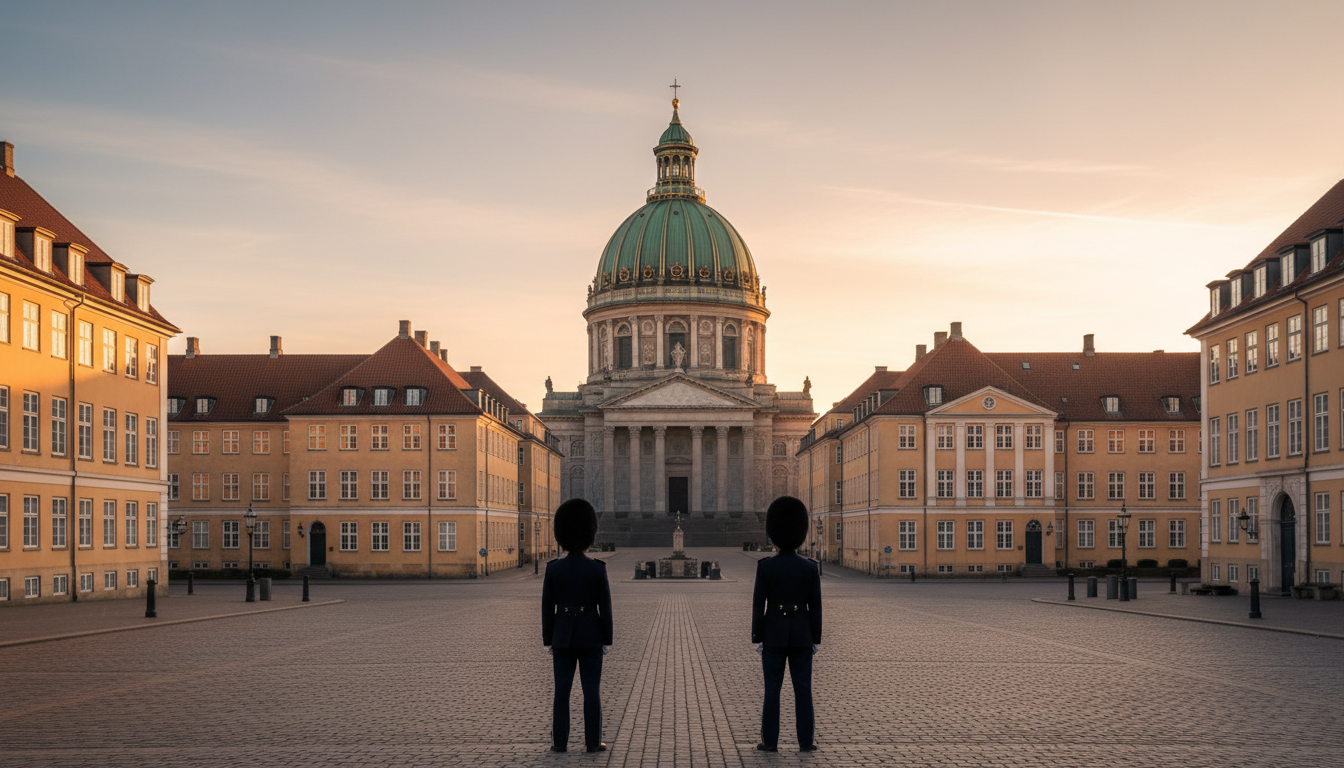 The massive green copper dome of the Marble Church Marmorkirken rising above the symmetrical streets
The dome interior is genuinely spectacular—12 paintings depicting the apostles, with natural light flooding through the lantern. Dome tours run on weekends (June-August daily) at 1 PM and 3 PM, costing 50 DKK ($7.50 USD). The church itself is free and open Monday-Thursday 10 AM-5 PM, Friday-Sunday noon-5 PM.
From a home swap base in Østerbro or Nørrebro, you're a 15-minute bike ride from the Marble Church—and the ride takes you through some of Copenhagen's most livable neighborhoods, the kind of areas where locals actually live.
Beyond Lutheran Denmark: Copenhagen's Religious Diversity
Here's where Copenhagen's religious heritage gets more interesting than the standard church tour. Denmark has been officially Lutheran since 1536, but the city has always harbored religious minorities—sometimes openly, sometimes in the shadows. Tracing these communities reveals a different Copenhagen.
The Great Synagogue and Jewish Copenhagen
Copenhagen's Great Synagogue on Krystalgade has stood since 1833, making it one of Europe's oldest synagogues still in continuous use. The building survived the Nazi occupation—one of the few European synagogues that did—because the Danish Resistance evacuated nearly all of Denmark's 7,500 Jews to Sweden in October 1943 before the planned deportations.
The synagogue itself is a striking example of Egyptian Revival architecture, with lotus-column capitals and a stunning ark. Tours are available but must be arranged in advance through the Jewish Community of Denmark (Det Mosaiske Troessamfund). Expect security screening—a sad necessity in contemporary Europe.
More accessible is the Danish Jewish Museum (Dansk Jødisk Museum), designed by Daniel Libeskind and housed in the Royal Library complex. The architecture alone is worth the visit: Libeskind created the interior as a physical manifestation of the Hebrew word "mitzvah" (good deed), with tilted floors and unexpected angles that disorient in a deliberate way. Entry is 100 DKK ($14.50 USD), free with Copenhagen Card.
For the full context, walk through the old Jewish neighborhood around Købmagergade and Pilestræde. The streets look like any other part of Indre By now, but plaques mark the former locations of Jewish businesses, schools, and homes. This is the kind of exploration that benefits from time—from staying in the neighborhood, from passing the same corners repeatedly until the history settles in.
St. Ansgar's Church: Catholic Copenhagen
Catholicism was effectively illegal in Denmark from 1536 until 1849, and even after legalization, Catholics remained a tiny minority. St. Ansgar's Church on Bredgade—named for the "Apostle of the North" who brought Christianity to Scandinavia in the 9th century—was the first Catholic church built in Copenhagen after the Reformation.
The current building dates to 1842, but the congregation traces its roots to the handful of Catholic diplomats and merchants who maintained secret worship during the centuries of prohibition. The interior is surprisingly ornate for Copenhagen: gilded altars, painted ceilings, and a genuine sense of counter-Reformation grandeur that feels almost subversive in this Lutheran city.
Mass is celebrated daily, with Sunday services at 10 AM (Danish) and 12 PM (English). The church welcomes visitors and doesn't charge admission.
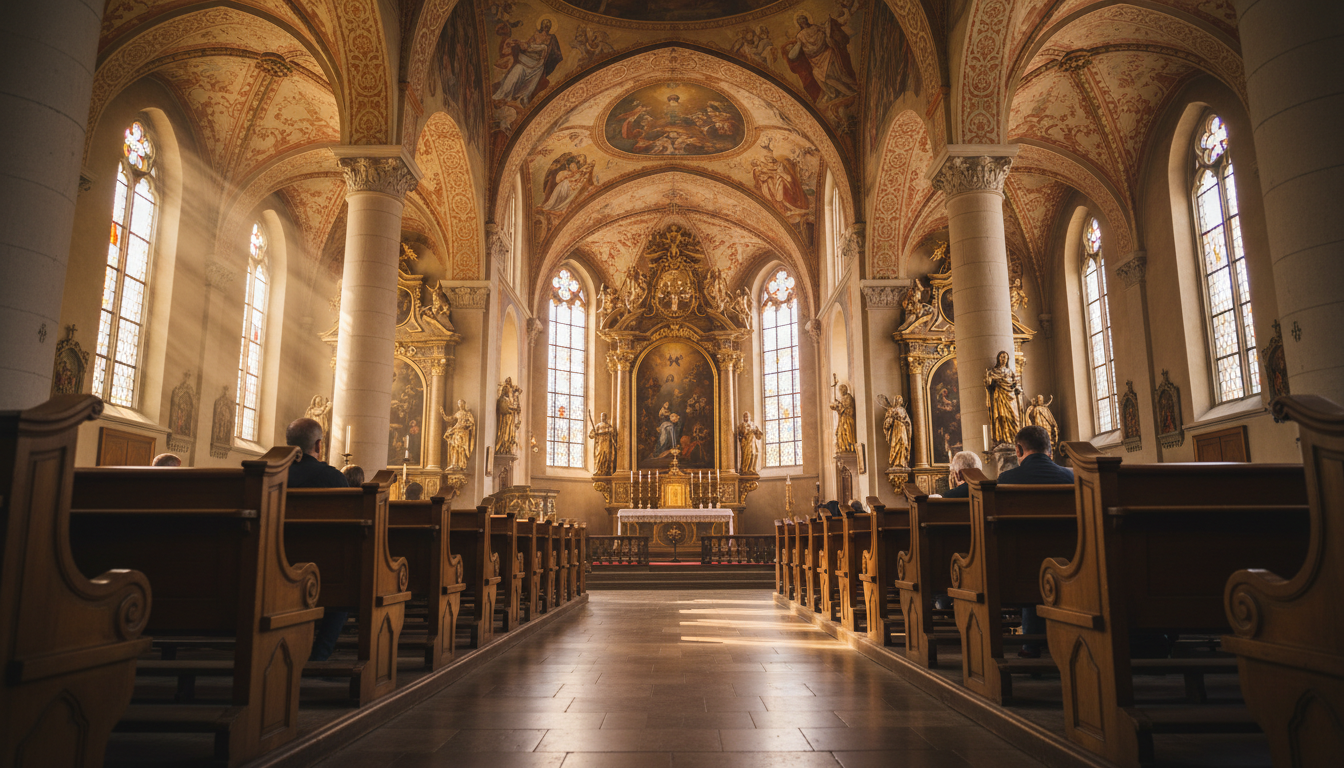 Interior of St. Ansgars Catholic Church showing the gilded baroque altar, painted ceiling vaults, an
Alexander Nevsky Church: Russian Orthodox in Scandinavia
Just behind Amalienborg Palace, the golden onion domes of Alexander Nevsky Church look transplanted from Moscow. They were, in a sense—Tsar Alexander III built this church in 1883 for his wife, Princess Dagmar of Denmark (later Empress Maria Feodorovna of Russia). The church served the Russian diplomatic community and, later, the wave of White Russian émigrés who fled the Bolshevik Revolution.
The interior is intimate and intensely atmospheric: icons, incense, and the particular acoustic quality of Orthodox chant. Services follow the Russian Orthodox calendar, with the main liturgy on Sunday mornings. Non-Orthodox visitors are welcome but should be prepared for a service that involves standing (no pews) and may last two hours or more.
The church doesn't maintain regular tourist hours, but if you knock during reasonable times, someone will usually let you look inside. This is the kind of discovery that rewards the home swap approach—you have time to return, to try different days, to catch the church when it's open rather than rushing past on a tight schedule.
Practical Planning: Timing Your Copenhagen Religious Heritage Tour
Copenhagen's religious sites don't require special timing the way some destinations do—there's no equivalent of catching Semana Santa in Seville or Easter in Rome. But certain periods offer distinct advantages.
Best Seasons for Religious Heritage Exploration
May-June brings the longest days (sunset after 10 PM in late June), meaning you can visit churches in evening light without rushing. The weather is mild, the city is green, and the tourist crowds haven't peaked yet. This is arguably the ideal window.
September-October offers autumn color, fewer tourists, and the return of Copenhagen's cultural season—concerts, organ recitals, and special church events resume after the summer hiatus. The light turns golden and moody, which photographers love.
December transforms the churches for Advent and Christmas. Vor Frue Kirke hosts candlelit services, the Marble Church installs a massive nativity scene, and even secular Danes attend Christmas Eve services. If you want to see Copenhagen's religious spaces in active use rather than as museums, this is the month. Just book your home swap early—December is competitive.
Avoid July-August if you can. The churches are open, but Copenhagen empties out as Danes flee to their summer houses. The city feels half-asleep, and many cultural programs pause. You'll have the churches to yourself, which has its appeal, but you'll miss the living religious community.
Neighborhoods for Home Swap Base Camps
Where you stay shapes your experience. Here's how Copenhagen's neighborhoods map to religious heritage exploration:
Indre By (City Center): Maximum convenience. Vor Frue Kirke, the Great Synagogue, and St. Ansgar's are all walkable. Expect smaller apartments—this is the historic core—but you're in the thick of it. SwappaHome listings here tend to book quickly; plan ahead.
Christianshavn: Best for Vor Frelsers Kirke and the harbor churches. The neighborhood has a village feel despite being minutes from the center. Bonus: you can bike to Christiania, the famous freetown, which has its own peculiar spiritual energy.
Frederiksberg: Technically a separate municipality within Copenhagen, Frederiksberg offers larger apartments, quieter streets, and good metro connections. The neighborhood has its own church, Frederiksberg Kirke, worth a visit for its cemetery where Hans Christian Andersen is buried.
Nørrebro: Copenhagen's most diverse neighborhood, home to immigrant communities and the closest thing the city has to religious pluralism on the street level. You'll find mosques, Sikh gurdwaras, and evangelical churches alongside the traditional Lutheran Assistens Kirkegård (cemetery-turned-park where Kierkegaard rests).
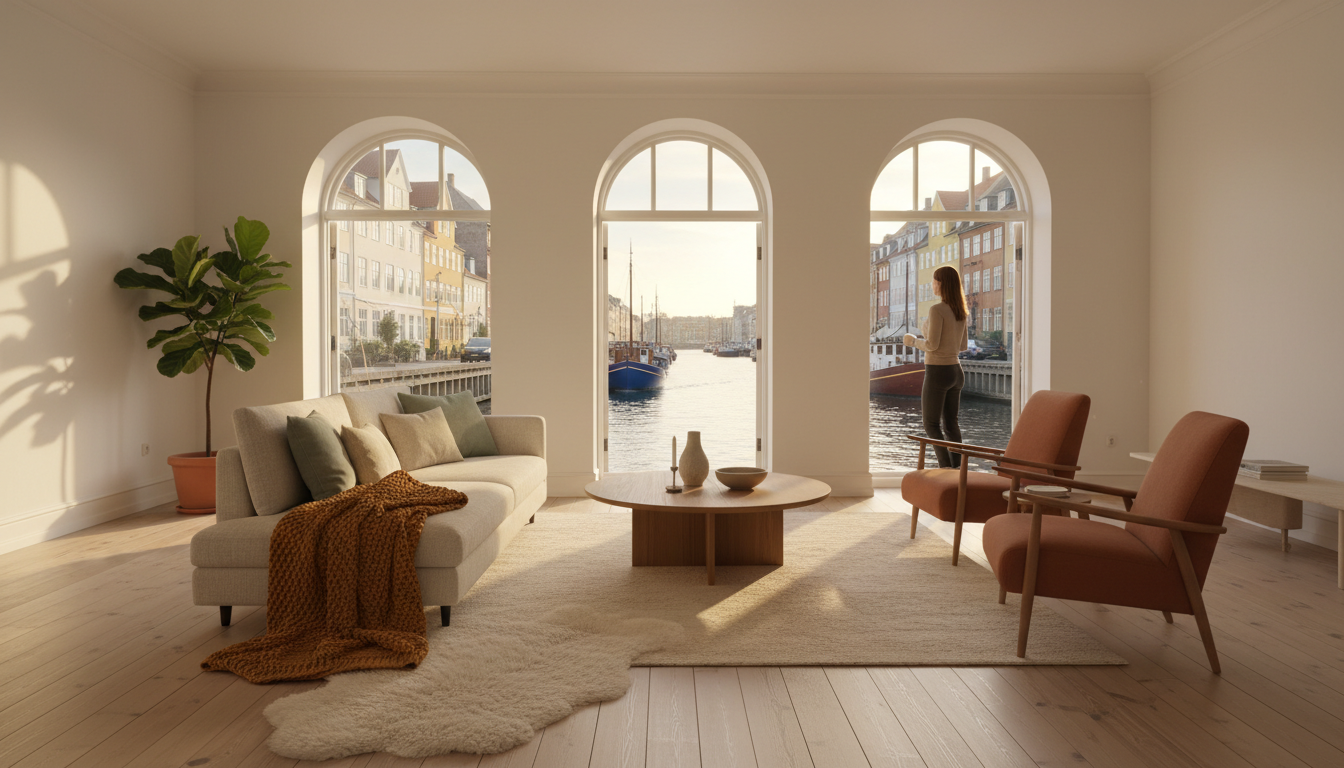 A typical Copenhagen home swap apartment in Christianshavn bright Scandinavian interior with white w
The Hidden Religious Sites: What Most Tourists Miss
Beyond the major churches, Copenhagen hides religious heritage in unexpected places. These discoveries justify the extended stay that home swapping enables.
Holmen Church and the Naval Heritage
Holmen Kirke, on the island of Holmen, served as the church for the Danish Navy from 1619. The interior contains naval artifacts, model ships, and memorials to sailors lost at sea. The anchor from the frigate Jylland hangs from the ceiling. It's a working church with an active congregation, not a museum, which gives it an authenticity that more famous sites sometimes lack.
Queen Margrethe II was married here in 1967, and the church continues to host royal ceremonies. Open Tuesday-Saturday, free admission.
Grundtvig's Church: The Expressionist Cathedral
Take the S-train to Emdrup and walk ten minutes to encounter Copenhagen's most architecturally significant church—and one of its least visited. Grundtvig's Church, completed in 1940, is a masterpiece of Expressionist architecture: six million yellow bricks arranged to evoke both a Gothic cathedral and a traditional Danish village church, but abstracted into something entirely modern.
The interior is vast, austere, and deeply moving. The organ, with its 4,000 pipes, is considered one of Europe's finest. Named for N.F.S. Grundtvig, the 19th-century theologian who shaped modern Danish national identity, the church represents Denmark's attempt to reconcile tradition and modernity—a tension that defines Copenhagen to this day.
Most tourists never make it out here because it's off the central circuit. But if you're staying a week or more through a home swap, you have time for the S-train ride. You have time to sit in the pews for an hour, watching the light shift. You have time to come back.
The Round Tower (Rundetårn): Science and Faith
Not a church, but inseparable from Copenhagen's religious history. Christian IV built the Round Tower in 1642 as an astronomical observatory attached to Trinitatis Kirke (Trinity Church). The tower represents the 17th-century belief that studying the heavens was a form of worship—that astronomy and theology were complementary rather than conflicting.
The spiral ramp inside (no stairs—horses could theoretically walk up) leads to an observation deck with panoramic views. The library hall halfway up, with its original plaster ceiling, once held the university's book collection. Entry is 40 DKK ($6 USD). The attached Trinitatis Kirke, still an active Lutheran church, is free and often overlooked by visitors focused on the tower.
Making the Most of Your Home Swap Stay
A few practical notes specific to exploring Copenhagen's religious heritage through home exchange:
Transportation: Copenhagen is a cycling city. Your home swap host will likely have bikes available, or you can use the city's Donkey Republic bike-share (around 100 DKK per day). Every church in this guide is bikeable from any central neighborhood. The metro and S-train fill gaps for destinations like Grundtvig's Church.
Language: Services are in Danish, but most churches offer English-language information and some provide translated service programs. Clergy and volunteers typically speak excellent English.
Etiquette: Danish churches are generally relaxed about visitors during services—you can slip in and out quietly. Photography is usually permitted except during worship. Dress code is casual by European standards; you don't need to cover shoulders or knees.
Copenhagen Card: If you're planning intensive sightseeing, the Copenhagen Card (starting at 489 DKK for 24 hours) covers public transport and museum admission, including the Danish Jewish Museum. It doesn't cover church entry fees, but most churches are free anyway.
Seasonal hours: Churches often reduce hours in winter. Check ahead, especially for tower climbs and dome tours that depend on daylight and weather.
The deeper point is this: home swapping changes how you experience religious heritage. You're not a tourist passing through—you're a temporary resident. You shop at the same Irma supermarket, you nod at the same neighbors, you develop routines. And within those routines, Copenhagen's sacred spaces become part of your daily landscape rather than items on a checklist.
The SwappaHome community includes members across Copenhagen's neighborhoods, many of whom have hosted travelers specifically interested in cultural and religious heritage. The platform's credit system means you can stay for two weeks or more without accommodation costs spiraling—time enough to visit Vor Frue Kirke on a quiet Tuesday morning, return on Thursday for an organ concert, and come back Sunday for the service. Time enough to let the city's religious history sink in.
Copenhagen's religious heritage spans a thousand years, from the medieval foundations beneath the current churches to the Expressionist brick of Grundtvig's. It encompasses Lutheran cathedrals and hidden Catholic chapels, a synagogue that survived the Holocaust and an Orthodox church built by a Russian empress. None of this reveals itself in a weekend. But give it time—the kind of time that home swapping makes possible—and the sacred geography of this small, secular, surprisingly spiritual city will open up in ways you didn't expect.
Frequently Asked Questions
Is Copenhagen's religious heritage worth a dedicated trip?
Absolutely. Copenhagen contains Denmark's national cathedral, one of Europe's oldest active synagogues, and architectural landmarks like Grundtvig's Church that rival anything in major religious tourism destinations. The compact city means you can explore a thousand years of sacred history on foot or by bike. A dedicated religious heritage trip of 7-10 days, ideally through a home swap to keep costs manageable, allows you to experience these sites in depth rather than rushing through on a standard city break.
How much does it cost to visit Copenhagen's churches and religious sites?
Most Copenhagen churches are free to enter, including Vor Frue Kirke, the Marble Church (ground level), and St. Ansgar's. Specific attractions cost extra: Vor Frelsers Kirke tower climb is 65 DKK ($9.50 USD), Marble Church dome tour is 50 DKK ($7.50 USD), and the Danish Jewish Museum charges 100 DKK ($14.50 USD). Budget roughly 300-400 DKK ($45-60 USD) total for paid attractions over a week-long religious heritage tour.
Can non-religious visitors attend services at Copenhagen churches?
Yes. Danish churches welcome visitors regardless of faith. Lutheran services at Vor Frue Kirke and other major churches are open to all—you can observe quietly or participate as you're comfortable. The Great Synagogue requires advance arrangement for tours, and Alexander Nevsky Orthodox Church welcomes observers though services involve standing for extended periods. Respectful curiosity is appreciated across all Copenhagen's religious communities.
What's the best neighborhood for a Copenhagen home swap focused on religious heritage?
Indre By (the city center) offers the most convenient access to major sites including Vor Frue Kirke, the Great Synagogue, and St. Ansgar's Church. Christianshavn provides proximity to Vor Frelsers Kirke and a charming canal-side atmosphere. For those interested in the full spectrum of Copenhagen's religious diversity, Nørrebro combines traditional Lutheran heritage with the city's most multicultural religious landscape. SwappaHome listings exist across all these neighborhoods.
When is the best time to visit Copenhagen for a religious heritage home swap tour?
May-June offers ideal conditions: long daylight hours (sunset after 10 PM), mild weather, and fewer tourists than peak summer. September-October brings autumn atmosphere and the return of concert seasons at major churches. December provides the most active religious calendar with Advent services and Christmas celebrations, though home swaps book quickly. Avoid July-August when many Danes vacation and cultural programming pauses.

Published by
SwappaHome
SwappaHome Editorial Team
Home Exchange & Slow Travel Editorial
The SwappaHome Editorial Team brings together travel research, home-exchange community insights, and platform data to produce practical guides for first-time and experienced home swappers. Every article cites real platforms, current market rates, and verifiable city-level facts so readers can make informed decisions without guessing.
Ready to try home swapping?
Join SwappaHome and start traveling by exchanging homes. Get 7 free credits when you sign up!
Related articles
Bachelor and Bachelorette Parties in Singapore: The Complete Home Swap Group Guide for 2026
Planning a bachelor or bachelorette party in Singapore? Discover how home swapping lets groups of 6-12 stay together in luxury condos, saving thousands while partying in Marina Bay.
Cycling in Lisbon: 7 Home Swap Bike Tour Itineraries for Every Rider
Discover the best cycling routes in Lisbon with these home swap bike tour itineraries—from waterfront paths to hilltop adventures, all starting from your borrowed home.
Graduation Trip to Barcelona: How Home Swapping Gives New Graduates the Ultimate Celebration
Planning a graduation trip to Barcelona? Discover how home swapping lets new graduates explore Spain's most vibrant city without the hostel crowds or hotel costs.