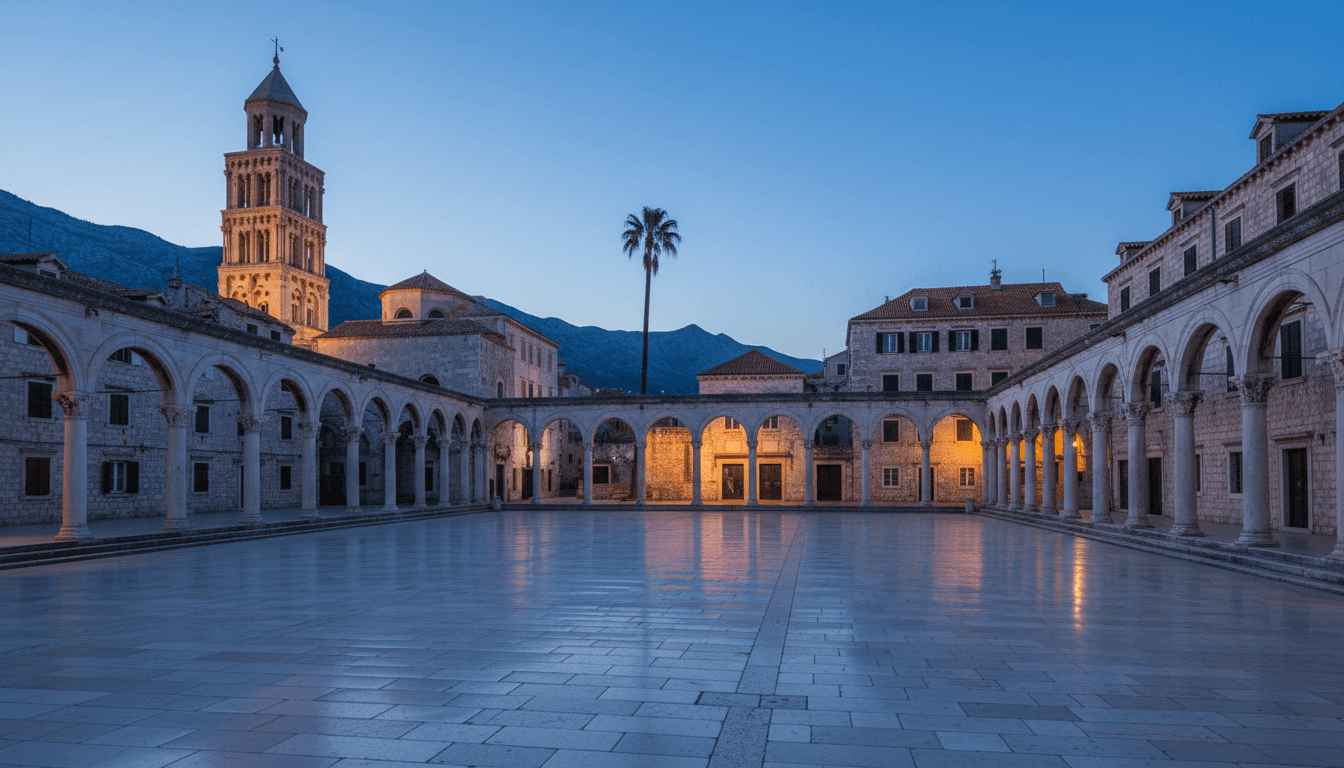
Food Lover's Home Swap Guide to Split: How to Eat Like a Local in Croatia's Culinary Capital

SwappaHome Editorial Team
Home Exchange & Slow Travel Editorial
Discover Split's best local food through home swapping—from Pazar market mornings to hidden konobas. Your complete guide to eating authentically in Dalmatia.
That smell hit me before I even opened the apartment door. My home swap host in Split had left a note on the counter: "Peka is in the oven. Eat it hot. Welcome to Dalmatia."
I stood there, jet-lagged and completely overwhelmed, staring at a clay dome covering what turned out to be the most transcendent lamb I've ever tasted—slow-roasted with potatoes, rosemary, and enough olive oil to make an Italian grandmother weep. That was my introduction to eating in Split, and honestly? It ruined restaurants for me forever.
A food lover's home swap in Split isn't just about saving money on accommodation (though you absolutely will). It's about unlocking a completely different relationship with Croatian cuisine. When you're staying in someone's actual home, in their actual neighborhood, you don't eat like a tourist. You eat like you belong there.
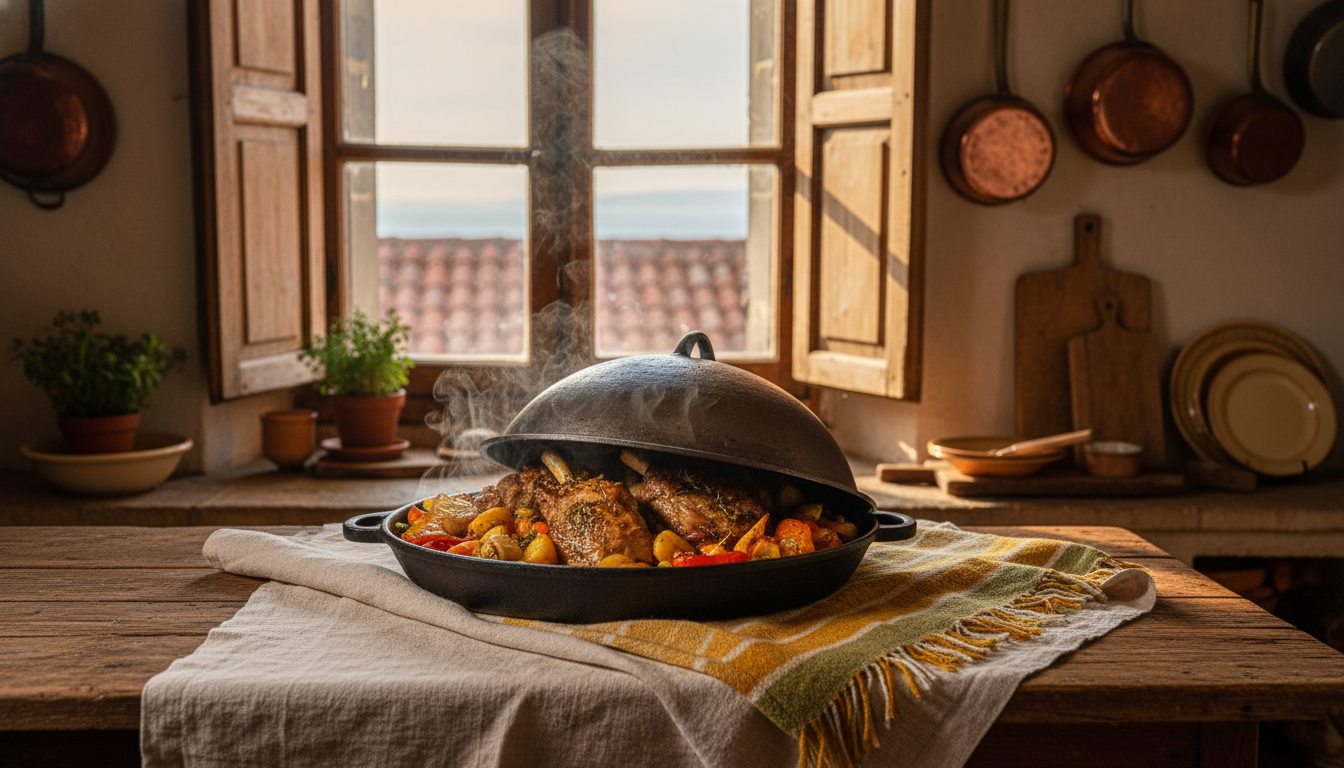 Steam rising from a traditional peka dish with lamb and vegetables, rustic Croatian kitchen with ter
Why Split Is the Ultimate Home Swap Destination for Food Lovers
Real talk: I've done food-focused trips to Lyon, Oaxaca, Bangkok, and Bologna. Split wasn't even on my radar until a fellow home swapper mentioned it offhand at a meetup in Portland. "It's like Italy," she said, "but without the crowds, and the seafood is better."
She wasn't wrong.
Split sits on Croatia's Dalmatian coast, which means you get this incredible collision of Mediterranean, Venetian, and Balkan influences. The Romans were here. The Venetians were here. The Ottomans influenced the hinterlands. And somehow, all of that history ended up on your plate—grilled fish so fresh it was swimming that morning, pasta shapes you've never seen before, vegetables that actually taste like something.
But here's what makes a home swap different from just booking an Airbnb: you get context. My host, Marko, didn't just leave me keys. He left me a hand-drawn map to his favorite bakery ("go before 8am or the burek is gone"), his fish guy's phone number ("tell him Marko sent you, he'll save you the good brancin"), and a list of konobas—traditional taverns—where tourists never go.
That's not something you get from a hotel concierge.
Finding the Perfect Home Swap in Split for Culinary Adventures
Not all neighborhoods are created equal when it comes to food access. If you're serious about eating like a local, you need to think strategically about where you swap.
Varoš: The Sweet Spot
This is where I stayed, and I'd do it again in a heartbeat. Varoš is the old neighborhood climbing up Marjan Hill, just west of Diocletian's Palace. The streets are too narrow for cars, the buildings are 400 years old, and every other doorway seems to hide a grandmother making pasta.
From a home swap in Varoš, you're a five-minute walk to Pazar (the green market), ten minutes to the fish market, and surrounded by neighborhood konobas where menus don't exist—you eat what they made that day.
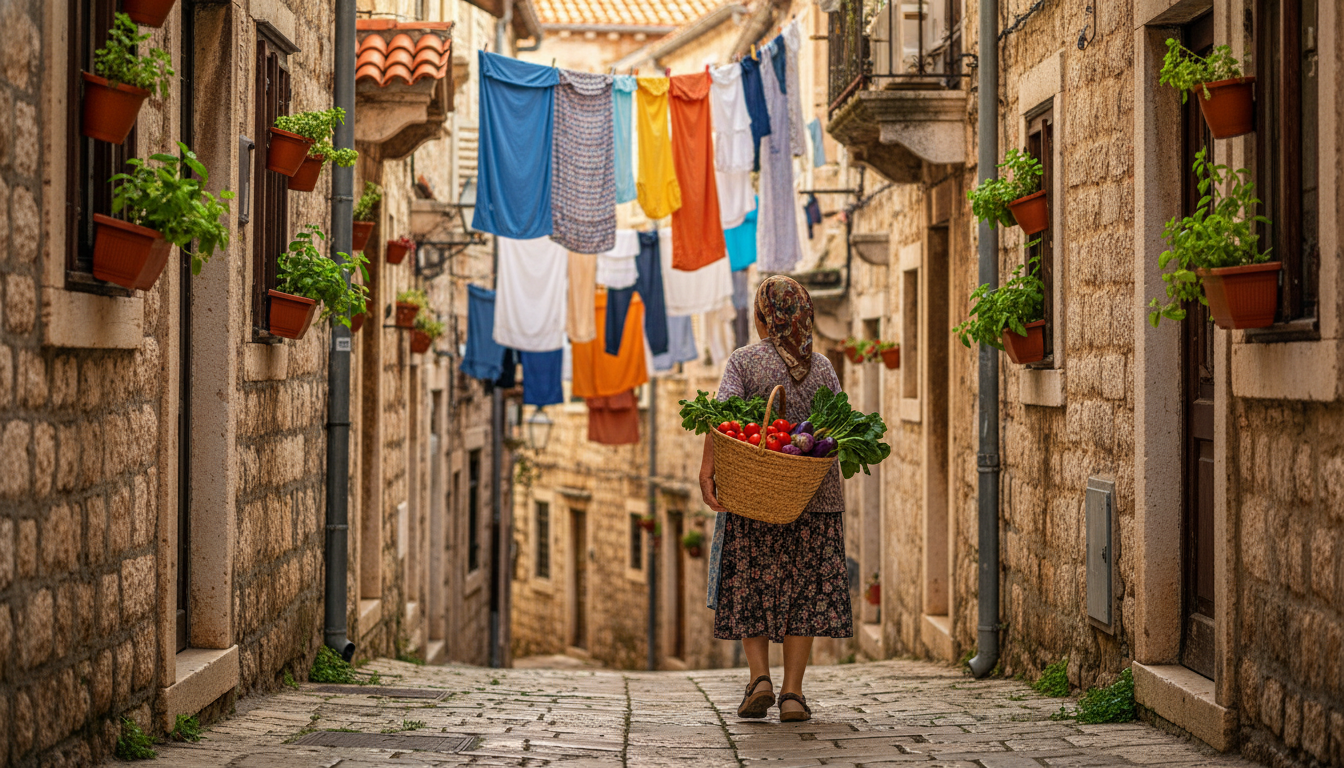 Narrow stone street in Varo neighborhood with laundry hanging between buildings, potted herbs on win
Home swaps here tend to be in older buildings—think stone walls, wooden shutters, and kitchens that are small but functional. I've seen listings range from cozy studios perfect for solo travelers to three-bedroom apartments that could fit a family. The key is looking for hosts who mention their kitchen setup. If they talk about their espresso machine or their collection of olive oils, you know they take food seriously.
Manuš and Lučac: The Local's Choice
These adjacent neighborhoods east of the palace are where young Split families actually live. Less picturesque than Varoš, more authentic. You'll find modern apartments with full kitchens, better grocery store access, and a completely different restaurant scene—more casual, more affordable, almost entirely Croatian clientele.
I did a three-night swap in Lučac on a return trip, and the difference was noticeable. My host's kitchen had a proper oven (rare in the old town), a balcony with a grill, and I could hear the fish market vendors from my bedroom window at 6am. That's how you know you're in the right spot.
Bačvice and Firule: Beach Vibes, Less Food Cred
These beachside neighborhoods are popular with home swappers who want to swim every day, and I get it—the beaches are gorgeous. But from a food perspective, you're trading convenience for sunbathing. The restaurant scene here skews touristy, and you'll need to walk or bus into town for the markets.
If beach access is non-negotiable, look for a swap with a serious kitchen so you can cook at home. The grocery stores in this area are actually quite good—Konzum and Tommy both stock local products—so you can still eat well, just differently.
The Split Food Markets: Your Home Swap Kitchen's Best Friend
This is where home swapping transforms from "nice accommodation" to "life-changing travel experience." When you have a kitchen, the markets become your playground.
Pazar: The Green Market
Every morning except Sunday, the eastern edge of Diocletian's Palace erupts into chaos. Farmers from the surrounding villages set up stalls selling whatever's in season—and in Dalmatia, something is always in season.
I'm talking tomatoes that smell like tomatoes. Figs so ripe they're splitting. Wild arugula that bites back. Peppers in colors I didn't know peppers came in.
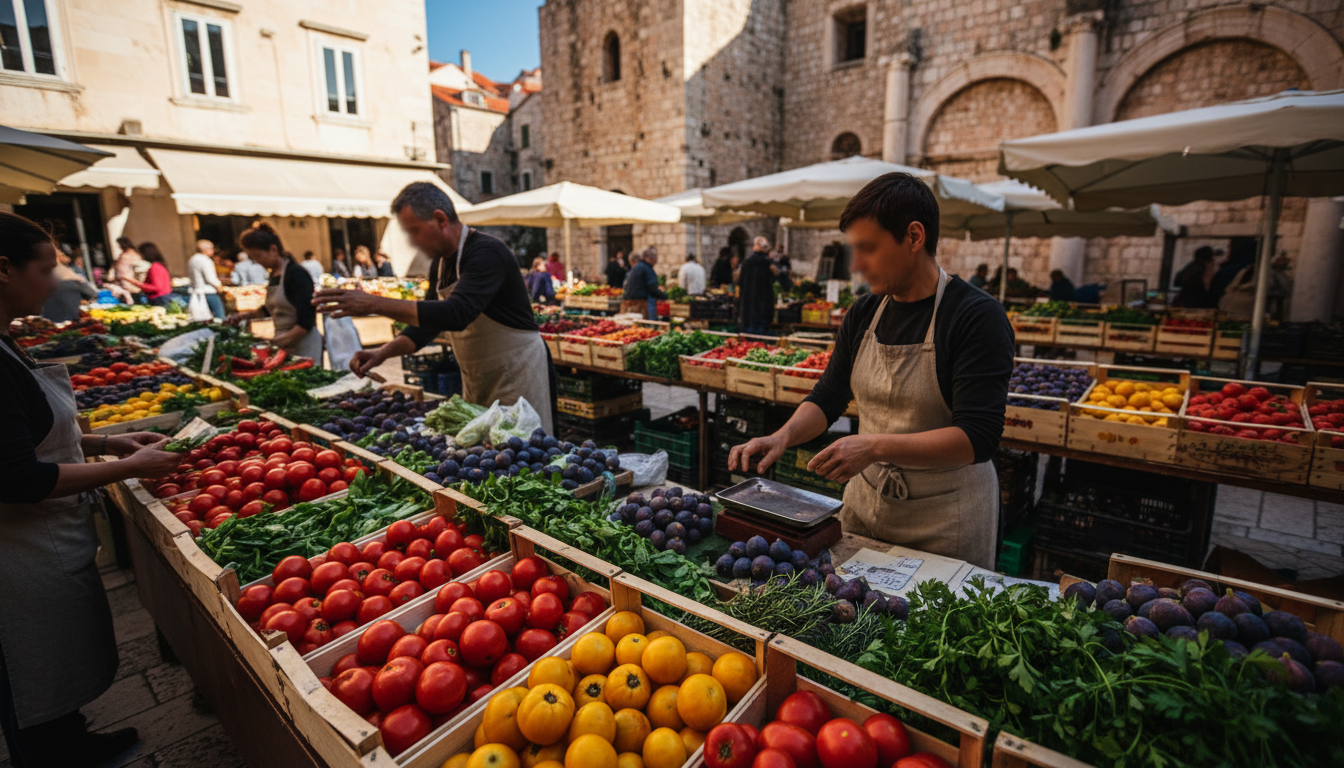 Overhead view of Pazar market at morning peak, wooden crates overflowing with red and yellow tomatoe
Here's my system: arrive by 8am, do a full lap without buying anything, then circle back to the stalls with the best-looking produce. The vendors expect haggling, but honestly? The prices are so reasonable it feels almost rude. I regularly walked out with enough vegetables for three days for under $15 USD (about 13 EUR).
Pro tip from Marko: the ladies selling from buckets on the ground (not the permanent stalls) often have the best stuff. They're selling from their own gardens, and they'll tell you exactly how to cook what you're buying—if you ask.
Ribarnica: The Fish Market
Adjacent to Pazar, inside a purpose-built hall, is where the magic happens. The Ribarnica opens at 6am, and by 10am, the good stuff is gone.
I'm not exaggerating when I say this fish market changed how I think about seafood. In Split, you don't buy "fish." You buy specific fish, caught specific ways, from specific waters. The vendors will tell you where it came from, how it was caught, and how you should cook it.
My favorites: Brancin (sea bass) runs about 80-100 HRK per kilo ($11-14 USD)—perfect for grilling whole with olive oil and lemon. Orada (sea bream) is slightly cheaper and just as delicious; ask them to clean it for you and they'll do it in seconds. Skuša (mackerel) is the budget option at around 40 HRK per kilo ($5.50 USD), and it's incredible grilled over charcoal. Small shrimp and squid are sold by the scoop for pasta dishes.
I watched a grandmother spend fifteen minutes interrogating a vendor about the exact location where his octopus was caught. That's the energy you want to bring.
Cooking in Your Split Home Swap: What to Make
Having a kitchen is pointless if you don't use it. Here's what I cooked during my three weeks in Split, and what I'd recommend you try.
The Simple Dalmatian Supper
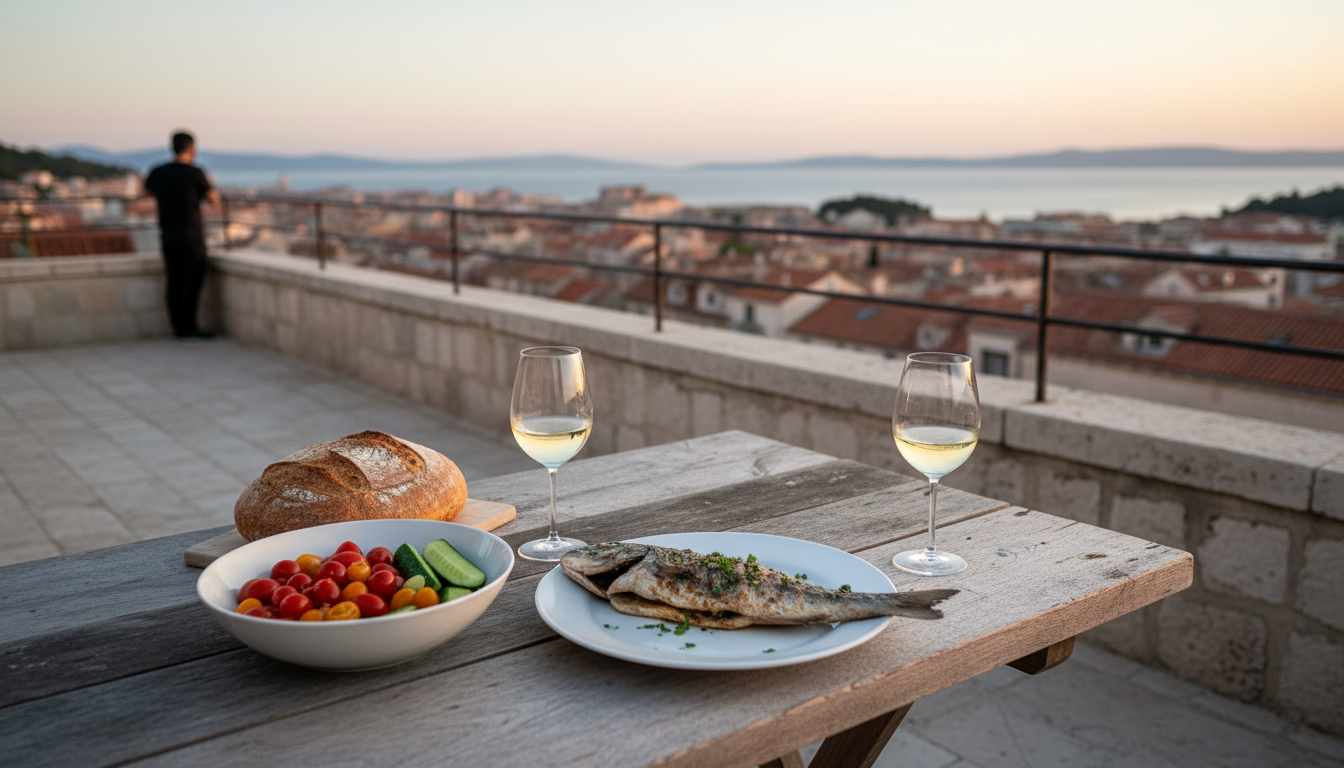
This became my default dinner: grilled fish (whole, always whole), a tomato salad dressed with nothing but olive oil and flaky salt, crusty bread from the bakery, and a glass of Pošip (the local white wine). Total cost for two people: maybe $20 USD.
The key is the olive oil. Dalmatian olive oil is different—grassy, peppery, almost aggressive. Buy a bottle at the market (look for "domaće" which means homemade) and use it on everything.
 Simple dinner spread on a weathered wooden tablewhole grilled fish on a white plate, tomato salad gl
Pašticada (If You're Ambitious)
This is Dalmatia's signature beef dish—braised for hours in a sauce of prunes, wine, and aromatics, served over gnocchi. My host's mother came over to teach me how to make it (home swap bonus: sometimes you meet the family), and it took most of a Sunday.
Worth it? Absolutely. But only attempt this if your swap has a proper oven and you're staying at least a week.
Breakfast the Split Way
Forget the hotel buffet. Breakfast in Split is simple: strong coffee (domaća kava, made in a džezva if your host has one), bread with jam or honey, maybe some cheese and prosciutto if you're hungry.
Or—and this is the move—you walk to the bakery for burek. This flaky, savory pastry filled with cheese (sirnica) or meat (mesnica) is about 15 HRK ($2 USD) and will fuel you until lunch. Every neighborhood has a bakery. Find yours.
The Konobas: Where Locals Actually Eat in Split
A konoba is a traditional Dalmatian tavern, and eating in one is non-negotiable. But here's the thing: the konobas in the palace and along the Riva (waterfront promenade) are for tourists. The real ones are hidden in the neighborhoods, and you need local intel to find them.
This is where home swapping pays off. Every host I've had in Split has given me konoba recommendations, and they've all been spectacular.
Konoba Fetivi (Varoš)
My favorite. It's literally in someone's converted garage, up a steep street in Varoš. There's no sign—look for the door with the green plant. The owner, a retired fisherman, cooks whatever his wife bought at the market that morning. You don't order. You sit down, and food appears.
Expect to pay around 150-200 HRK ($20-28 USD) per person for a full meal with wine. Cash only. No reservations. Go early (7pm) or late (9:30pm) to get a table.
Konoba Hvaranin (Lučac)
Slightly more formal, but still deeply local. They specialize in dishes from Hvar island, including a black risotto (crni rižot) that haunts my dreams. The octopus salad here is the best I've had in Croatia—tender, lemony, with just enough olive oil.
Prices are moderate: 100-150 HRK ($14-20 USD) for a main course. They take reservations, which you'll need on weekends.
Konoba Matejuška (By the Fishing Harbor)
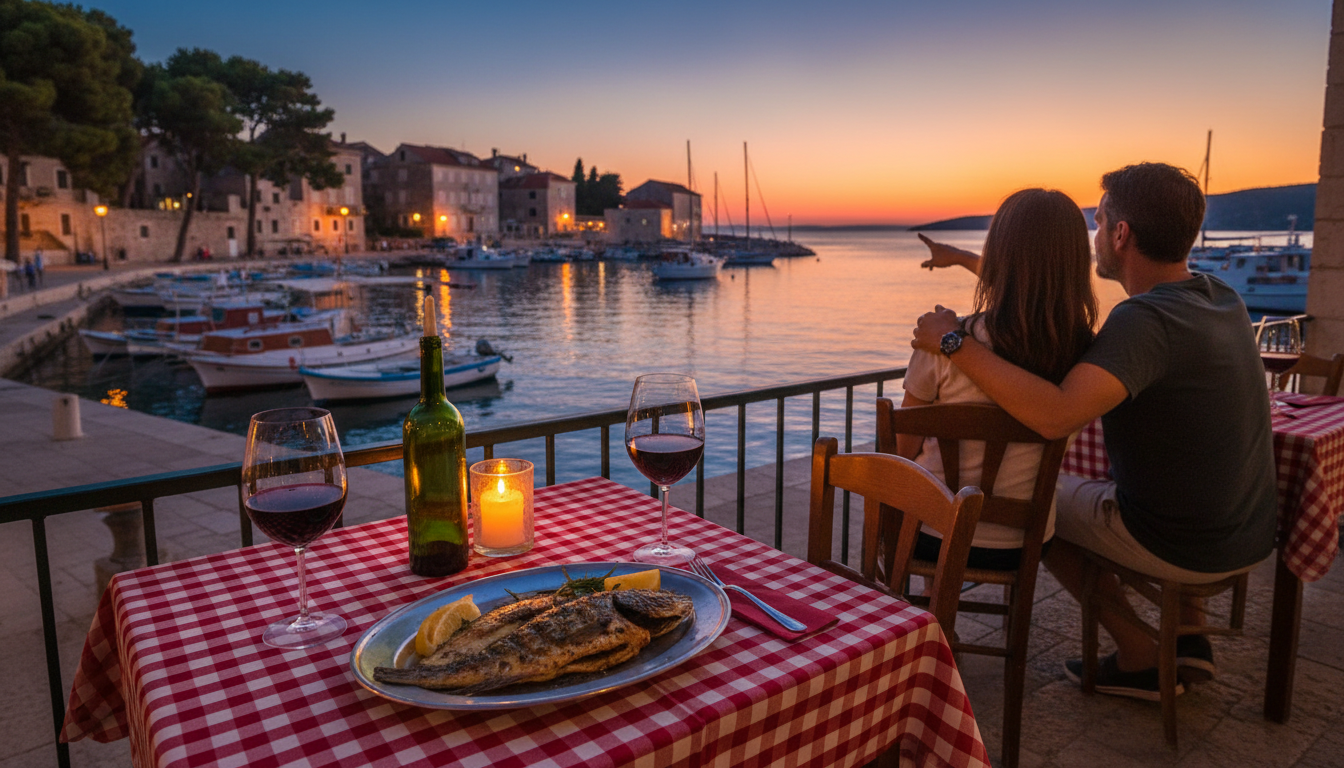
This one's slightly more discoverable, but it's still excellent. Sit outside by the tiny fishing harbor where the boats come in, order whatever fish is freshest, and watch the sunset. It's a cliché, but it's a cliché for a reason.
 Evening scene at a small konoba terrace, checkered tablecloths, candles in wine bottles, view of sma
Beyond the Kitchen: Split Food Experiences Worth Your Time
Not everything needs to be cooked at home. Some experiences are worth paying for.
The Pazar Market Tour
Several local guides offer market tours that include shopping, cooking, and eating. I took one with a woman named Ivana who runs tours through her home (she's also on SwappaHome, actually—small world). For about 400 HRK ($55 USD), she took me through the market, taught me to pick produce like a local, and then we cooked lunch together in her apartment.
This is the kind of experience that's impossible to replicate in a hotel. When you're home swapping, you're already embedded in the neighborhood—the tour just deepens that connection.
Wine Tasting in the Palace Cellars
Diocletian's Palace has underground cellars that now house wine bars. It sounds touristy, but hear me out: the wines they pour are genuinely excellent and hard to find outside Croatia.
Look for Plavac Mali (a bold red from the Pelješac peninsula) and Pošip (the crisp white I mentioned earlier). A tasting flight runs about 100-150 HRK ($14-20 USD) and includes 4-5 wines with snacks.
Day Trip to a Winery
If you have a car (or can rent one for a day), drive an hour north to the Kaštela region or south to Omiš. Small family wineries dot the hillsides, and most offer tastings with food pairings. I visited one where the grandfather made prosciutto in a stone shed while his granddaughter explained the fermentation process of their orange wine.
Expect to pay 200-300 HRK ($28-42 USD) for a full tasting with food. Book ahead.
Practical Tips for Your Food-Focused Home Swap in Split
After three trips and five different swaps, here's what I wish I'd known from the start.
Kitchen Essentials to Confirm Before Booking
Not all home swap kitchens are created equal. Before confirming a swap, ask your host about stove type (gas is better for cooking fish), oven availability (many old town apartments don't have one), basic supplies (olive oil, salt, spices—some hosts leave these, some don't), and coffee setup (džezva for Turkish coffee? Moka pot? Espresso machine?).
I once showed up to a swap with a stunning terrace but a kitchen that consisted of a hot plate and a mini fridge. Still made it work, but I would've planned differently.
What to Bring From Home
Honestly? Almost nothing. Split has everything you need. But if you're particular about your morning coffee, bring your own beans—Croatian coffee is excellent but very specific (dark roast, fine grind, strong). And if you have a favorite knife, bring it. Rental kitchen knives are universally terrible.
Timing Your Swap Right
Split's food scene peaks from May through October, but the sweet spots are May-June and September-October. July and August are hot, crowded, and the markets get picked over by 9am.
Winter swaps are possible and increasingly popular—the city is quiet, prices drop, and you'll have the konobas to yourself. Just know that some market vendors take the season off, and the fish selection is smaller.
The Credit System Works Beautifully Here
Quick SwappaHome reminder: you earn 1 credit per night when hosting, spend 1 credit per night when staying. New members start with 7 free credits—that's 7 nights in Split without spending a dime on accommodation.
I've found that Croatian hosts are particularly active on the platform. Split, Zagreb, and Dubrovnik all have strong home swap communities. My host Marko has been swapping for four years and has done exchanges everywhere from Tokyo to Toronto.
What to Eat Month by Month in Split
Seasonal eating is everything here. Plan your swap around what's in season:
May-June: Wild asparagus, artichokes, first strawberries, spring lamb. The markets explode with green things. Sardines are running.
July-August: Tomatoes at their peak, figs starting, stone fruits everywhere. It's hot—eat lots of cold salads and grilled fish. Watermelon from the Neretva valley is transcendent.
September-October: Grape harvest means fresh wine (young wine, cloudy and sweet). Figs are perfect. Pomegranates appear. The olive harvest starts in late October—if you're lucky, you'll taste fresh-pressed oil.
November-December: Citrus season. Mandarins from the south are everywhere. It's time for heavier dishes—pašticada, lamb peka, hearty stews. Fewer tourists mean more attention from vendors.
The Home Swap Advantage: A Final Thought
I've stayed in Split hotels. I've rented Airbnbs. And I've done home swaps. The difference isn't just about money (though saving $150-200 per night adds up fast). It's about how you experience the place.
When you're in a hotel, you're a tourist. When you're in someone's home, in their neighborhood, shopping at their market, cooking in their kitchen—you're something else. Not quite a local, but not quite a visitor either. You're a guest in the truest sense.
My last morning in Split, I walked to the bakery at 7am, just like I'd done every morning for two weeks. The woman behind the counter didn't ask what I wanted anymore. She just handed me my usual—sirnica and a coffee—and nodded.
That nod meant more to me than any Michelin star ever could.
Frequently Asked Questions
Is home swapping in Split safe for solo travelers?
Absolutely. Split is one of Europe's safest cities, and the home swap community here is well-established and welcoming. SwappaHome's review system lets you check host reputations before booking. I've done two solo swaps in Split and felt completely comfortable—the neighborhoods are walkable, locals are friendly, and the hosts I've met genuinely care about their guests' experiences.
How much can I save with a home swap in Split compared to hotels?
Significant savings. Mid-range hotels in Split run $150-250 USD per night in summer, while home swapping costs nothing beyond your SwappaHome membership. For a two-week food-focused trip, you could save $2,000-3,500 on accommodation alone—money better spent on market ingredients, wine tastings, and konoba dinners. Plus, having a kitchen means you'll spend less on restaurants.
What kitchen equipment should I expect in a Split home swap?
Most Split apartments have basic cooking essentials: stovetop, pots and pans, dishes, and utensils. Older town apartments often lack ovens, so confirm this before booking if you plan to roast or bake. Ask your host specifically about coffee-making equipment, knife quality, and whether they leave pantry staples like olive oil and salt. Communication before your swap prevents kitchen surprises.
When is the best time to visit Split for food lovers?
May-June and September-October offer the ideal combination of excellent weather, peak produce seasons, and manageable crowds. September is particularly special—tomatoes and figs are perfect, the grape harvest brings fresh wine, and summer tourists have departed. Avoid July-August if you dislike heat and crowds, though the markets are still excellent if you arrive early.
Can I find vegetarian and vegan food in Split?
Yes, though Dalmatian cuisine is traditionally meat and seafood-heavy. The markets are your best friend—incredible seasonal vegetables, local cheeses, olive oils, and breads make vegetarian cooking easy in your home swap kitchen. For dining out, newer restaurants in Split cater to plant-based diets, and traditional konobas always have vegetable sides, salads, and pasta dishes. Ask for "bez mesa" (without meat) and you'll be accommodated.

Published by
SwappaHome
SwappaHome Editorial Team
Home Exchange & Slow Travel Editorial
The SwappaHome Editorial Team brings together travel research, home-exchange community insights, and platform data to produce practical guides for first-time and experienced home swappers. Every article cites real platforms, current market rates, and verifiable city-level facts so readers can make informed decisions without guessing.
Ready to try home swapping?
Join SwappaHome and start traveling by exchanging homes. Get 7 free credits when you sign up!
Related articles

Bachelor and Bachelorette Parties in Singapore: The Complete Home Swap Group Guide for 2026
Planning a bachelor or bachelorette party in Singapore? Discover how home swapping lets groups of 6-12 stay together in luxury condos, saving thousands while partying in Marina Bay.
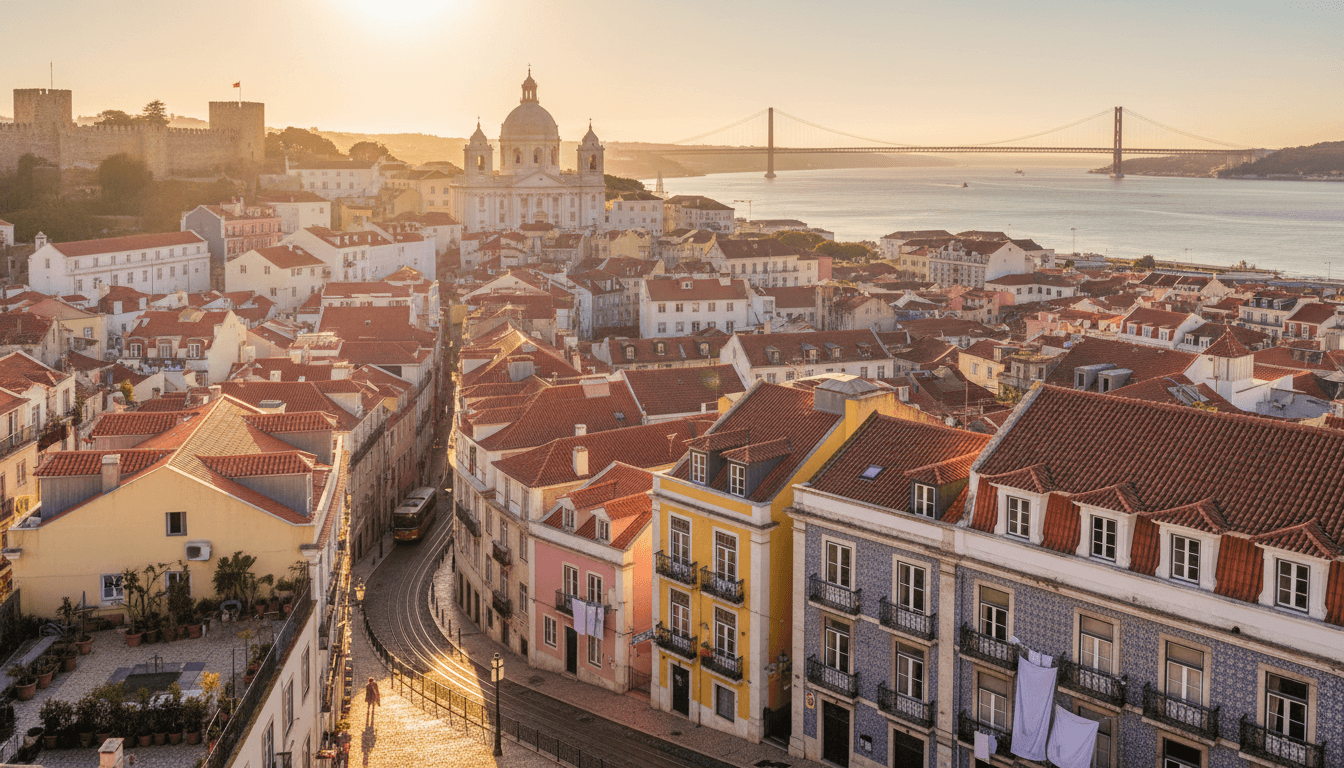
Cycling in Lisbon: 7 Home Swap Bike Tour Itineraries for Every Rider
Discover the best cycling routes in Lisbon with these home swap bike tour itineraries—from waterfront paths to hilltop adventures, all starting from your borrowed home.
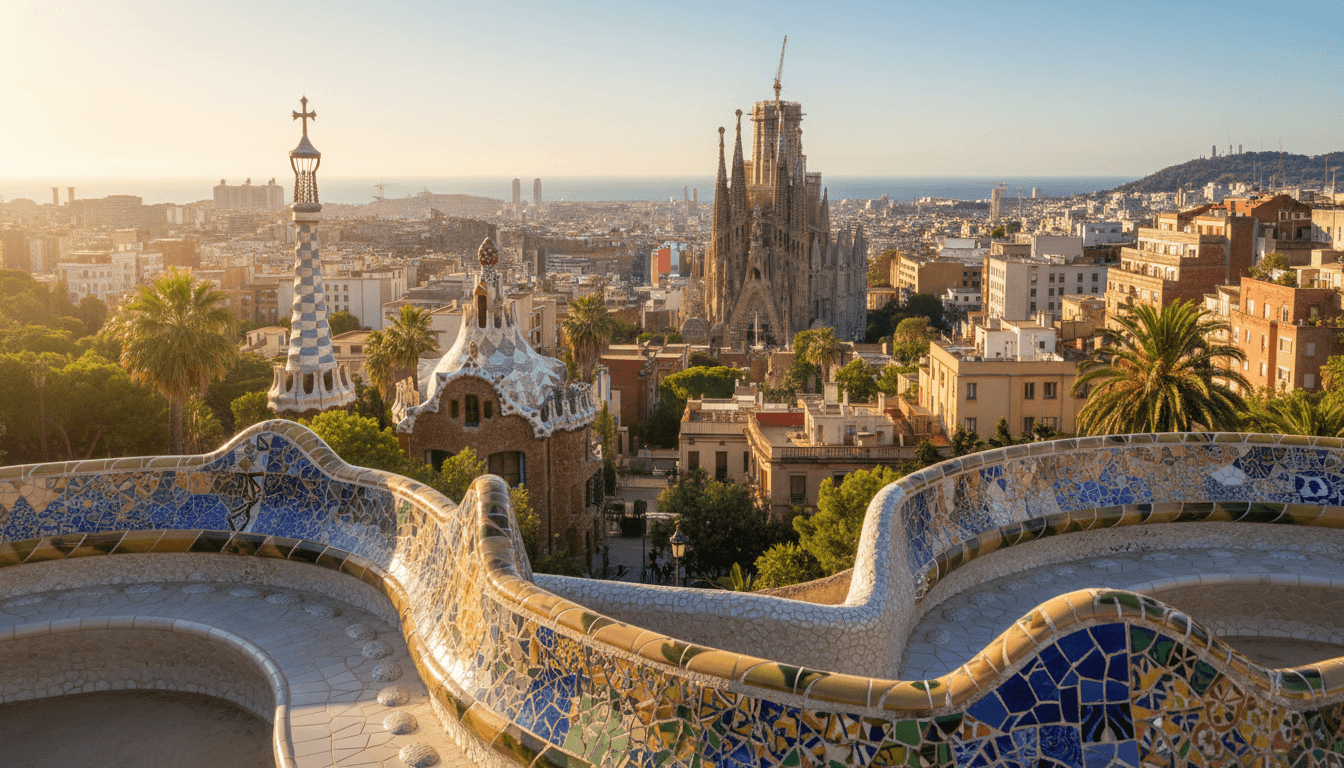
Graduation Trip to Barcelona: How Home Swapping Gives New Graduates the Ultimate Celebration
Planning a graduation trip to Barcelona? Discover how home swapping lets new graduates explore Spain's most vibrant city without the hostel crowds or hotel costs.