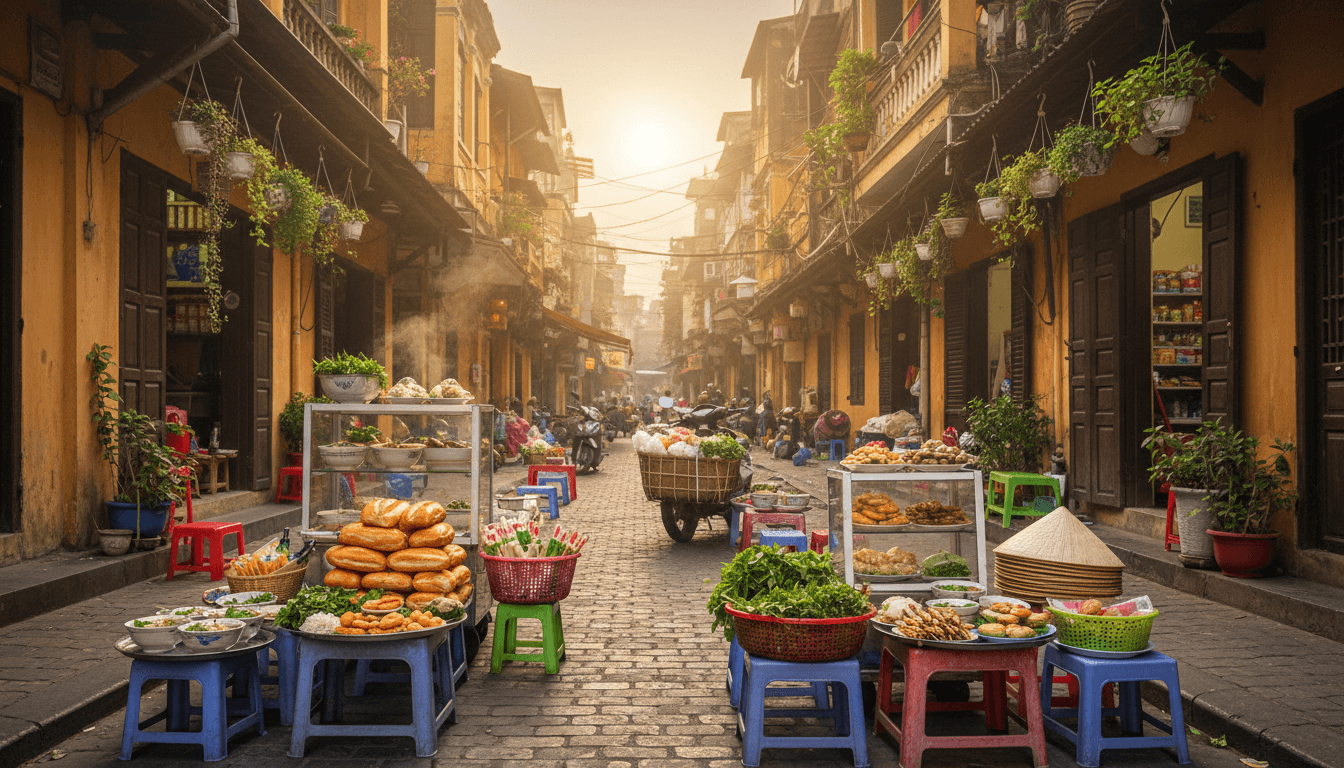
Hanoi Food Scene: The Ultimate Culinary Guide for Home Exchange Travelers
Maya Chen
Travel Writer & Home Exchange Expert
Discover Hanoi's legendary food scene through the eyes of a home exchanger. From 6 AM phở spots to secret bún chả stalls, this is how locals really eat.
That first morning in my Hanoi apartment, I made a mistake I still laugh about. I'd planned to "sleep in" and grab breakfast around 9 AM—plenty of options, right? My host Linh, a university professor, had left a note: "Best phở is at the corner. But go before 7 or it's gone."
I rolled out of bed at 9:15, wandered to the corner, and found nothing but empty plastic stools and a woman hosing down the sidewalk.
The Hanoi food scene operates on its own clock. And if you want to eat like a local during your home exchange? You need to learn the rhythm.
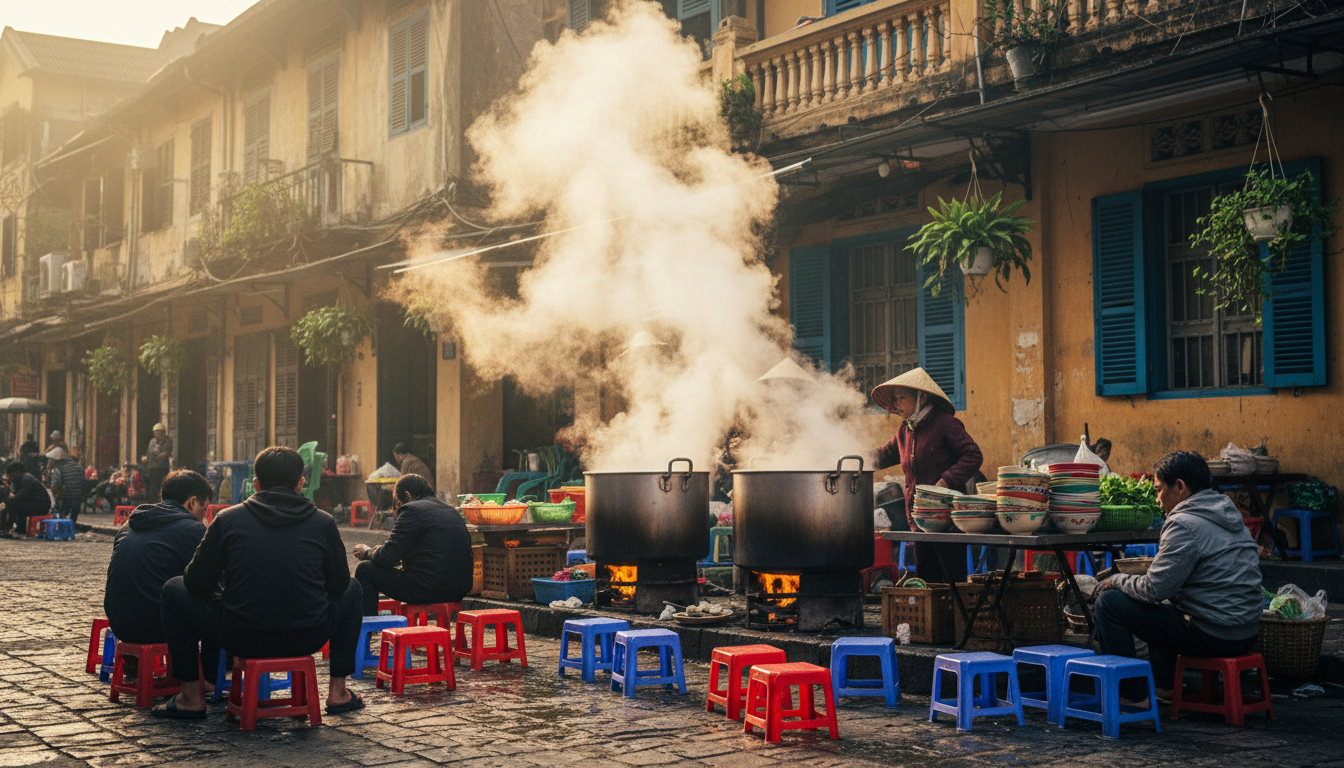 Early morning street food stall in Hanois Old Quarter with steam rising from giant ph pots, plastic
That was three years ago. Since then, I've done two more home swaps in Hanoi—each in a different neighborhood—and I've become borderline obsessed with how this city eats. Not the tourist version. The real one. The version where you're living in someone's apartment, shopping at their local market, and learning which bánh mì cart their grandmother swears by.
This is everything I wish someone had told me before that first swap.
Why Home Exchange Changes Everything About Hanoi's Food Scene
Here's something I didn't expect: having a kitchen in Hanoi made me eat more street food, not less.
Stay with me.
When you're in a hotel, every meal feels like an event. You're paying for the room whether you eat there or not, so there's this weird pressure to make each restaurant choice count. Should we try that famous phở place? What if it's not worth the trek? What if we get food poisoning and ruin the whole trip?
But when you're home swapping, you have a base. A fridge. A backup plan. Suddenly you can be adventurous because the stakes are lower. That sketchy-looking bánh cuốn stall in the alley? Why not—if it's terrible, you can always make instant noodles at home.
My second Hanoi swap was in a tiny apartment in Đống Đa district, about twenty minutes by motorbike from the Old Quarter. Not a tourist area at all. My host left me a hand-drawn map (I still have it) marking her favorite breakfast spot, the market where she bought vegetables, and—this is the best part—a note that said "Tell Mrs. Hoa you're staying in my apartment. She'll give you extra herbs."
 Hand-drawn map on notebook paper with Vietnamese annotations, marking local food spots with small sk
That's what guidebooks miss about the Hanoi food scene: so much of it runs on relationships. The best food isn't in restaurants with menus and air conditioning. It's at stalls where regulars get extra broth, where the owner's daughter practices her English with you, where showing up three days in a row earns you a smile and a slightly larger portion.
Home exchange gives you the time—and the neighborhood presence—to build those micro-relationships. You're not a tourist passing through. You're the person staying in Linh's apartment. The foreigner who keeps coming back for the bún chả.
A Day of Eating in Hanoi: The Real Schedule
Let me walk you through how I actually eat here. This isn't a "best restaurants" list. It's a rhythm.
Breakfast: 6 AM to 8 AM (Yes, Really)
I know 6 AM sounds aggressive. But Hanoi breakfast culture is one of the most magical things about this city, and it happens early. By 8 AM, many of the best spots are closing down or running out.
Phở – Obviously. But here's what I learned: the phở you get at a street stall at 6:30 AM, when the broth has been simmering all night and the owner is still fully caffeinated, is categorically different from noon phở. The broth is clearer, more complex. The herbs are fresher. The whole experience is quieter. More meditative.
Expect to pay 35,000-50,000 VND ($1.40-$2 USD). My favorite spot during my last swap was on Hàng Điếu street—no name, just look for the crowd.
Xôi – Sticky rice with various toppings. This is the breakfast I got addicted to. Xôi xéo (with mung bean and fried shallots) costs about 20,000 VND ($0.80 USD) and will fuel you until lunch.
Bánh cuốn – Steamed rice rolls filled with minced pork and mushrooms. Watching them made fresh is half the experience—the cook spreads batter on cloth stretched over boiling water, and within seconds you have a translucent sheet of deliciousness.
Mid-Morning: The Coffee Ritual
Between breakfast and lunch, Hanoi slows down for cà phê. This isn't grab-and-go culture. You sit. You watch the street. You let the condensed milk slowly mix with the dark roast.
Ask your home exchange host where they go. During my Đống Đa swap, my host's favorite café was a second-floor place with exactly six tables, overlooking a small park. No tourists. No English menu. Just incredible egg coffee (cà phê trứng) for 25,000 VND ($1 USD) and the best people-watching in the city.
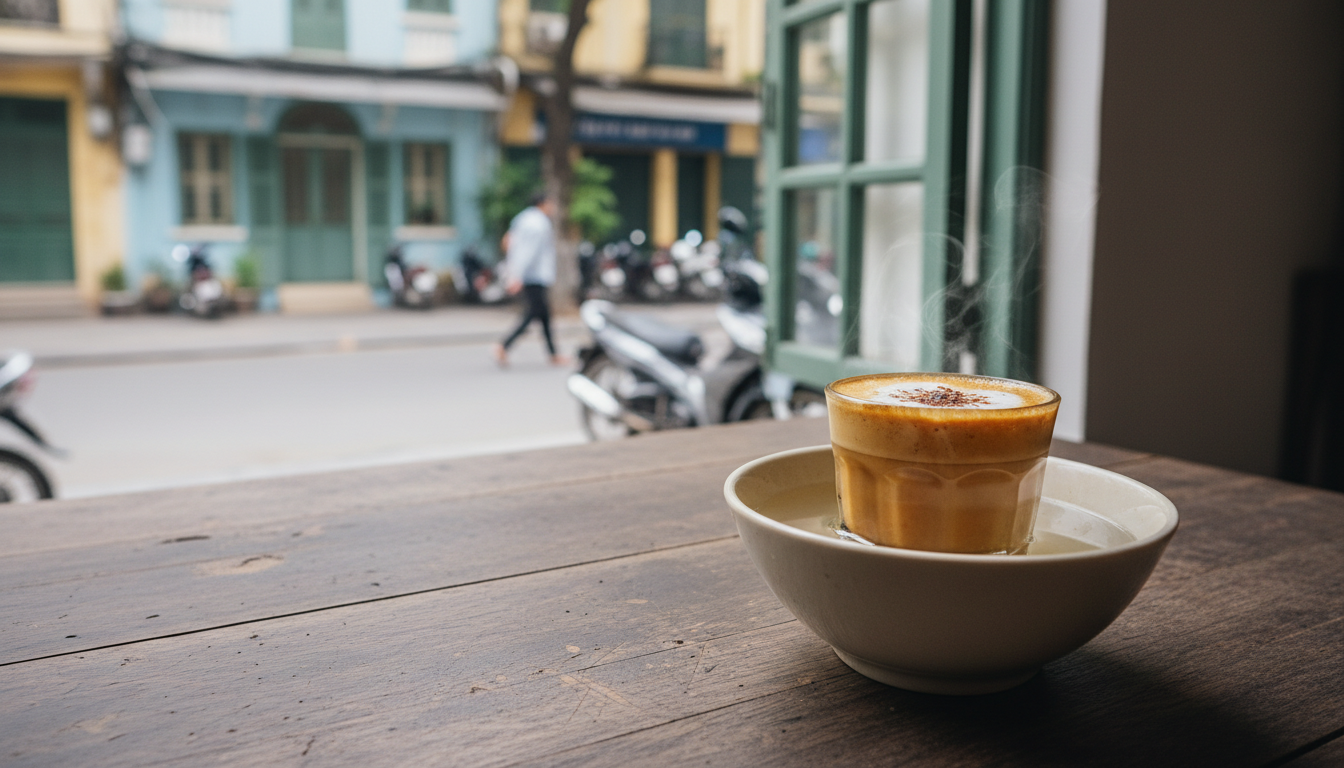 Vietnamese egg coffee in a small glass cup sitting in a bowl of hot water, served on a worn wooden t
Lunch: 11 AM to 1 PM
This is when Hanoi gets serious. Office workers stream out of buildings, and every sidewalk becomes a restaurant.
Bún chả – Grilled pork with rice noodles and herbs. Yes, this is the dish Obama ate with Bourdain. And yes, it really is that good. But honestly? The random bún chả place three blocks from my apartment was better than the famous one. Look for places where the grill is right on the sidewalk and the smoke makes your eyes water.
Cost: 40,000-60,000 VND ($1.60-$2.40 USD).
Bún đậu mắm tôm – Not for everyone. Fried tofu, rice noodles, herbs, and fermented shrimp paste. The shrimp paste smells... intense. But if you can get past it, this is one of the most satisfying lunches in the city. I didn't try it until my third swap because I was scared. Now I crave it.
Bánh mì – You can get it anytime, but lunch is prime time. The bread is freshest, the lines are longest at the good places.
My controversial opinion: the best bánh mì in Hanoi isn't at Bánh Mì 25. It's at a cart near Hoàn Kiếm Lake that an elderly woman runs. She's there from about 10 AM to 2 PM. Her pâté is homemade. 25,000 VND ($1 USD).
Afternoon Snacks: 3 PM to 5 PM
Hanoi snacks hard. This is when you'll see people gathered around carts selling bánh tráng trộn (mixed rice paper salad—addictive, 15,000 VND), chè (sweet dessert soups), and fresh fruit from women with baskets on their bicycles.
Dinner: 6 PM to 9 PM
You can eat at a proper restaurant. Or you can do what most locals do—graze.
The grazing approach means hitting a few different spots. Maybe some nem chua rán (fried fermented pork rolls) from one stall, then a bowl of phở cuốn (fresh phở rolls) from another, then sitting at a bia hơi joint for cheap draft beer (5,000 VND / $0.20 USD per glass) and whatever snacks they're serving.
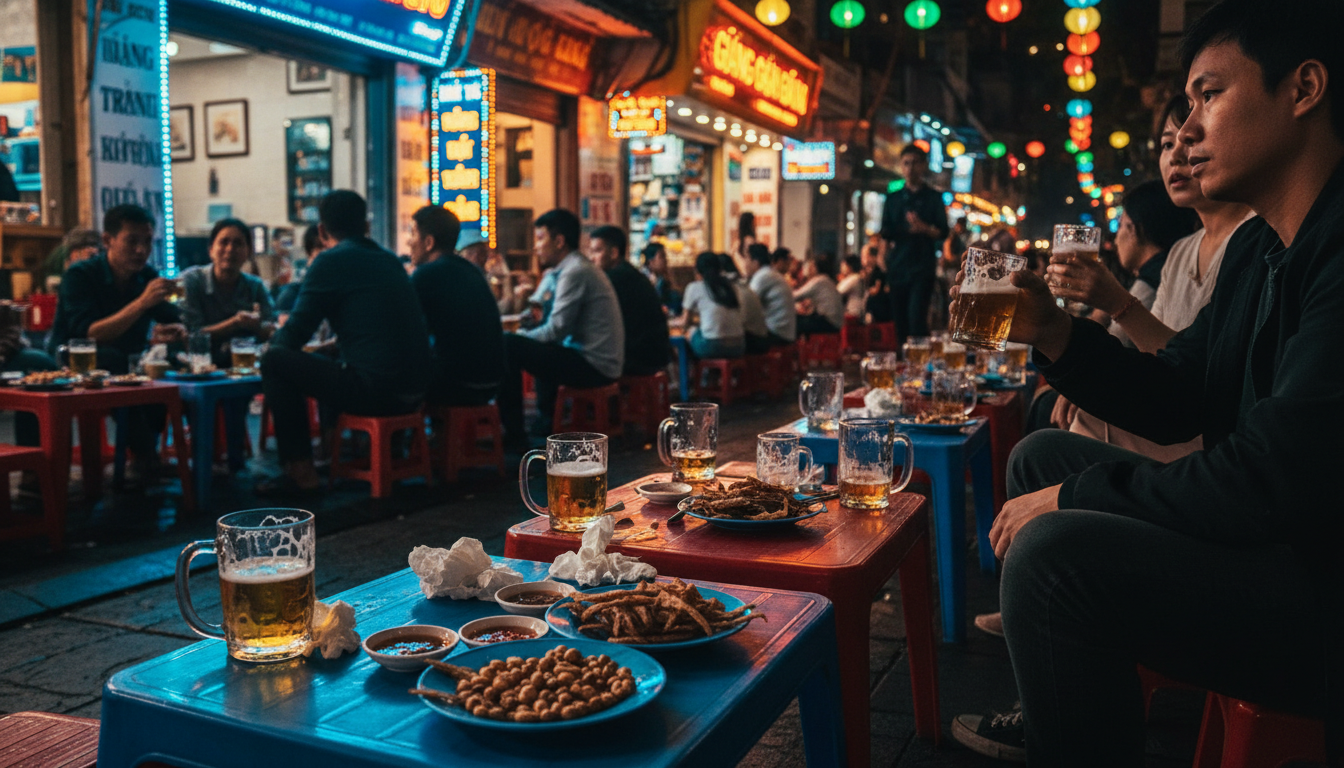 Evening bia hi scene in Hanoi with low plastic tables, locals drinking fresh beer, plates of peanuts
This is where home exchange really shines. You can eat a light dinner out, come home, supplement with fruit from the market. No pressure to make every meal a production.
Best Neighborhoods for Food-Focused Home Exchanges
Not all Hanoi neighborhoods eat the same.
The Old Quarter (Hoàn Kiếm)
The obvious choice—and honestly? Still great for food. Yes, it's touristy. Yes, prices are slightly higher. But the density of options is unmatched.
Best for first-time visitors who want maximum variety within walking distance. The weekend night market lets you sample dozens of dishes in one evening.
Downside: 10-20% higher prices, and some spots are definitely tourist traps.
Ba Đình District
Where I did my most recent swap, near the Temple of Literature. More residential, lots of government workers, excellent local markets.
Best for travelers who want a quieter, more "real" experience. The morning market on Ngọc Hà street—get there by 7 AM—has incredible produce and prepared foods. My host introduced me to a woman selling bánh giò (pyramid-shaped rice dumplings) that I still dream about.
Downside: Fewer late-night options. Things quiet down by 9 PM.
Tây Hồ (West Lake)
Expat-heavy, more international restaurants and cafés. But some excellent local spots if you know where to look.
The food highlight here is bánh tôm Hồ Tây—West Lake shrimp cakes. Crispy fritters with whole shrimp, served with herbs and dipping sauce. There's a famous place on Thanh Niên road that's been there for decades.
Downside: More spread out. You'll need a motorbike or Grab.
 Aerial view of West Lake at sunset with small fishing boats, the Trn Quc Pagoda visible, and lakesid
Practical Stuff You Actually Need to Know
Learn These Phrases
You don't need to speak Vietnamese, but a few words go far:
- "Cho tôi một..." (Cho toy moht) – "Give me one..."
- "Ngon quá!" (Ngon qua) – "Delicious!"
- "Bao nhiêu?" (Bow nyew) – "How much?"
- "Không cay" (Khom kai) – "Not spicy"
The Stomach Adjustment Period
Real talk: your stomach might need a few days. This isn't about food safety—Vietnamese street food is generally very safe because of high turnover. It's about your gut microbiome encountering new bacteria.
My strategy: Start with cooked foods (phở, bánh mì) for the first two days. Avoid raw herbs initially. Then gradually introduce the fresh stuff. By day four, you should be fine.
Having your own apartment helps here. If you do have a rough night, you've got your own bathroom, your own bed, and you can make plain rice the next morning.
Market Shopping
One of my favorite things about home exchange is cooking with local ingredients.
Morning markets (6 AM - 10 AM) are best for produce, meat, seafood. Everything is freshest. Prices are lowest.
During my Ba Đình swap, I got into a routine: market at 7 AM, pick up breakfast on the way home, cook a simple lunch with whatever looked good. A typical haul—morning glory, tofu, eggs, herbs, a mango—cost about 50,000 VND ($2 USD).
Food Safety Basics
I've eaten hundreds of street food meals in Vietnam and only gotten sick once. From a hotel restaurant, ironically.
What I follow: Eat where locals eat (high turnover = fresh food). If it's cooked in front of you, it's almost certainly safe. Ice is fine—it's commercially produced. Trust your nose.
The Questions That Unlock the Best Food
Every home exchange host has favorite spots, but some things are so normal to them they forget to mention them.
"Where do you eat when you're in a hurry?" This unlocked a bánh mì cart my host grabbed from every morning on her way to work. Not on any map.
"What do you cook when you don't feel like going out?" This led to a conversation about instant noodles—the good Vietnamese brands, not what we get abroad.
"Is there anything you think tourists miss?" My Ba Đình host thought for a minute and said, "The bún ốc." Snail noodle soup. Not glamorous, not famous. Absolutely delicious. She took me to her spot on my last night, and it's now one of my favorite Hanoi memories.
Day Trips Worth Taking
If you're doing a longer swap—two weeks or more—consider these:
Ninh Bình (2 hours south): Famous for goat meat, which sounds strange but is prepared dozens of ways. Also the landscape is otherworldly.
Làng Vòng (30 minutes out): A village famous for cốm, young green rice. In autumn, you can watch it being made and buy it fresh.
Bát Tràng (45 minutes): A ceramics village where you can buy beautiful bowls and plates—great thank-you gifts for your host.
What Three Swaps Taught Me
The Hanoi food scene isn't something you "do" in a few days. It's something you sink into. Waking up early because you want to, not because you have to. Learning the name of the woman who sells you breakfast. Coming home with bags of market produce and feeling, for a moment, like you actually live here.
SwappaHome made this possible for me in a way hotels never could. The credits I'd earned hosting travelers in San Francisco translated directly into weeks of living in Hanoi neighborhoods I never would have found otherwise. No nightly rates eating into my food budget. No pressure to justify each meal.
If you're thinking about a Hanoi home exchange, my advice is simple: go. Stay as long as you can. Eat everything.
And wake up early—at least on the first morning. The phở is worth it.
Frequently Asked Questions
What is the best street food to try in Hanoi?
Start with phở (beef noodle soup), bún chả (grilled pork with noodles), bánh mì (Vietnamese sandwich), and egg coffee. Get your phở at a local street stall before 8 AM for the real experience—expect around $1.50-$2 USD per bowl.
Is Hanoi street food safe for tourists?
Generally, yes. High turnover and fresh preparation keep things safe. Stick to busy stalls where food is cooked in front of you, eat where locals eat, and trust your instincts. Most travelers adjust within 2-3 days.
How much should I budget for food in Hanoi per day?
For the full experience at local spots, budget $15-25 USD per day—three meals plus snacks and coffee. Street food meals run $1-3 USD each. Home exchange travelers often spend less since they can cook simple meals and shop at markets.
What time do Vietnamese people eat breakfast in Hanoi?
Early. Most locals eat between 6 AM and 8 AM. Many popular stalls sell out or close by 9 AM. Set an alarm for your first few mornings—you don't want to miss the best phở and xôi spots.
Where should I stay in Hanoi for the best food experiences?
The Old Quarter offers the highest density of options, perfect for first-timers. For something more local, consider Ba Đình (near great markets) or Tây Hồ (West Lake) for a mix of Vietnamese and international food.
40+
Swaps
25
Countries
7
Years
About Maya Chen
Travel Writer & Home Exchange Expert
Maya is a travel writer with over 7 years of experience in the home swapping world. Originally from Vancouver and now based in San Francisco, she has completed more than 40 home exchanges across 25 countries. Her passion for "slow" and authentic travel led her to discover that true luxury lies in living like a local, not a tourist.
Ready to try home swapping?
Join SwappaHome and start traveling by exchanging homes. Get 10 free credits when you sign up!
Related articles

Lyon Home Exchange: Your Complete Guide to France's Hidden Gem for Home Swapping
Discover why Lyon home exchange is booming among savvy travelers. From Croix-Rousse to Presqu'île, find the best neighborhoods and insider tips for your swap.

Zurich Bucket List: 47 Unforgettable Experiences to Enjoy During Your Home Swap
Discover the ultimate Zurich bucket list for home swappers—from secret swimming spots to fondue rituals locals actually do. Save thousands while living like a true Zürcher.
Dublin Home Exchange Utilities Guide: WiFi, Heating & Everything Your Guests Need
Master Dublin home exchange utilities—from dodgy WiFi fixes to heating quirks. Practical tips from 7 years of swapping homes across Ireland.