
Home Exchange for Pet Owners: The Complete Guide to Traveling With Your Furry Friend

SwappaHome Editorial Team
Home Exchange & Slow Travel Editorial
Discover how pet-friendly home exchange lets you travel with cats, dogs, and other pets without kennels or pet sitters. Real tips from 7 years of swapping with animals.
My cat, Mochi, has slept in more countries than most people visit in a lifetime.
She's napped on a velvet couch in Amsterdam, sunbathed on a balcony overlooking the Adriatic, and once spent three weeks terrorizing the pigeons from a fourth-floor Parisian window. And here's the thing—none of this would have been possible if I'd stuck to traditional travel.
Home exchange for pet owners changed everything for me. Instead of choosing between expensive pet-friendly hotels (which often aren't actually that pet-friendly) or the guilt of leaving Mochi in a kennel, I found a third option: staying in real homes where pets are genuinely welcome, often because the hosts have pets of their own.
 Orange tabby cat lounging on a sun-drenched windowsill in a European apartment, with terracotta roof
I've been doing pet-friendly home swaps for seven years now, and I've learned a lot—sometimes the hard way. Like the time I didn't mention Mochi's 4 AM "zoomies" habit and my hosts returned to find claw marks on their vintage armchair. (We're still friends, but barely.)
This guide is everything I wish someone had told me before that first swap. Whether you're traveling with a golden retriever who thinks every human is their best friend or a shy rescue cat who hides under beds, there's a way to make home exchange work for you and your furry companion.
Why Home Exchange Works Better Than Hotels for Pet Owners
Traveling with pets and staying in hotels? It's a special kind of exhausting.
I tried it exactly twice before I gave up. The first time, in a "pet-friendly" hotel in Portland, I paid a $150 non-refundable pet fee for a room that smelled aggressively of industrial cleaner. Mochi spent the entire night hiding behind the toilet. The second time, in a supposedly upscale place in Denver, the front desk staff looked at her carrier like I'd brought in a live raccoon.
Home exchange flips the script entirely.
When you stay in someone's actual home—especially a home where pets already live—everything changes. The space doesn't smell like it's trying to eliminate all evidence of animal existence. There are often pet beds, food bowls, and toys already there. The neighbors don't give you dirty looks when your dog barks at a squirrel.
And the cost difference? Not even close.
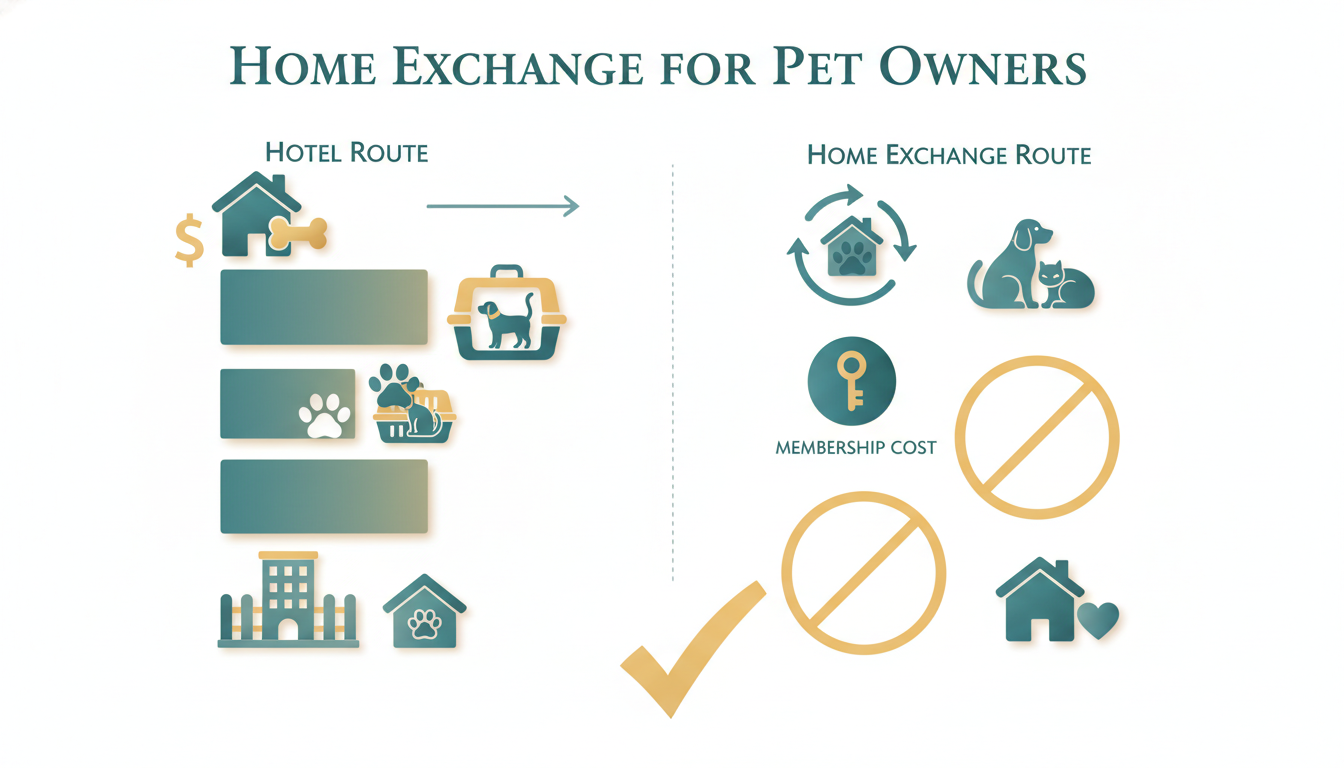 Side-by-side cost comparison infographic showing 2-week trip expenses hotel route 2,800 for pet-frie
A two-week trip with a pet to somewhere like San Diego might run you $2,500-3,000 in pet-friendly hotel fees alone. That's before you've eaten a single fish taco or visited the zoo. With home exchange, your accommodation cost is essentially zero—you're just exchanging hospitality.
But honestly? The money isn't even the best part.
The best part is watching your pet actually relax. Mochi in a hotel: ears flat, tail puffed, suspicious of every sound. Mochi in a home exchange: sprawled across a couch like she owns the place, which in her mind, she probably does.
How Pet-Friendly Home Exchange Actually Works
If you're new to home exchange, here's the quick version: platforms like SwappaHome connect people who want to travel by letting them stay in each other's homes. You list your place, other members list theirs, and you arrange stays using a credit system.
The pet-owner twist is simple but important—you filter for pet-friendly homes, and you make your own listing very clear about your pet situation.
On SwappaHome, the credit system works the same whether you have pets or not. One credit per night, no exceptions. You earn credits by hosting guests, and you spend them to book stays elsewhere. New members start with 7 free credits, which is enough for a solid a full week trip to test the waters.
 Cozy living room with a dog bed near a fireplace, a cat tree by the window, and travel photos on the
The key for pet owners is being upfront and specific. Not just "I have a cat" but "I have a 7-year-old orange tabby named Mochi who is shy with strangers, fully litter-trained, and has a habit of knocking small objects off tables."
Here's what I include in every inquiry message when I'm traveling with Mochi: her age, breed, and temperament. Her vaccination status and that she's spayed. Her daily routine—feeding times, play preferences. Any quirks or habits (the 4 AM zoomies, the table-clearing tendencies). And a recent photo, because who doesn't want to see a cute cat picture?
Most hosts who list their homes as pet-friendly are pet people themselves. They get it. They're not going to judge you for having a dog that drools or a cat that sheds. But they do appreciate knowing what they're signing up for.
Finding the Right Pet-Friendly Home Exchange
Not all pet-friendly listings are created equal. I've learned to read between the lines.
"Pets welcome" could mean anything from "we have three dogs and a goat" to "I guess a goldfish would be fine." You want to look for hosts who actually have pets or have hosted pets before. Check their reviews—do other pet owners mention how the experience went?
What to Look for in a Listing
The best pet-friendly homes usually mention specific details: a fenced backyard, a cat-proof balcony, nearby dog parks, or the fact that their own pets are currently traveling with them or staying with family.
I always look for space considerations first—a 500-square-foot studio might work for a cat, but your Great Dane is going to have a rough time. Be realistic about what your pet needs. Outdoor access matters too, especially for dogs. Ground-floor apartments or homes with yards make life so much easier. Nobody wants to carry a 60-pound Lab down four flights of stairs at 6 AM.
Then there's the neighborhood vibe. Is it a quiet residential area where dogs can walk peacefully, or a busy urban center where your anxious rescue might be overwhelmed? And finally, check for existing pet setup—homes that already have pets often have everything you need: food bowls, beds, sometimes even a stash of treats.
One of my favorite swaps was in Austin, Texas. A bungalow in the Bouldin Creek neighborhood where the hosts had two cats of their own. They'd left out extra litter, a bag of Mochi's preferred food brand (I'd mentioned it in our messages), and a handwritten note about the best sunny spots in the house. That's the gold standard.
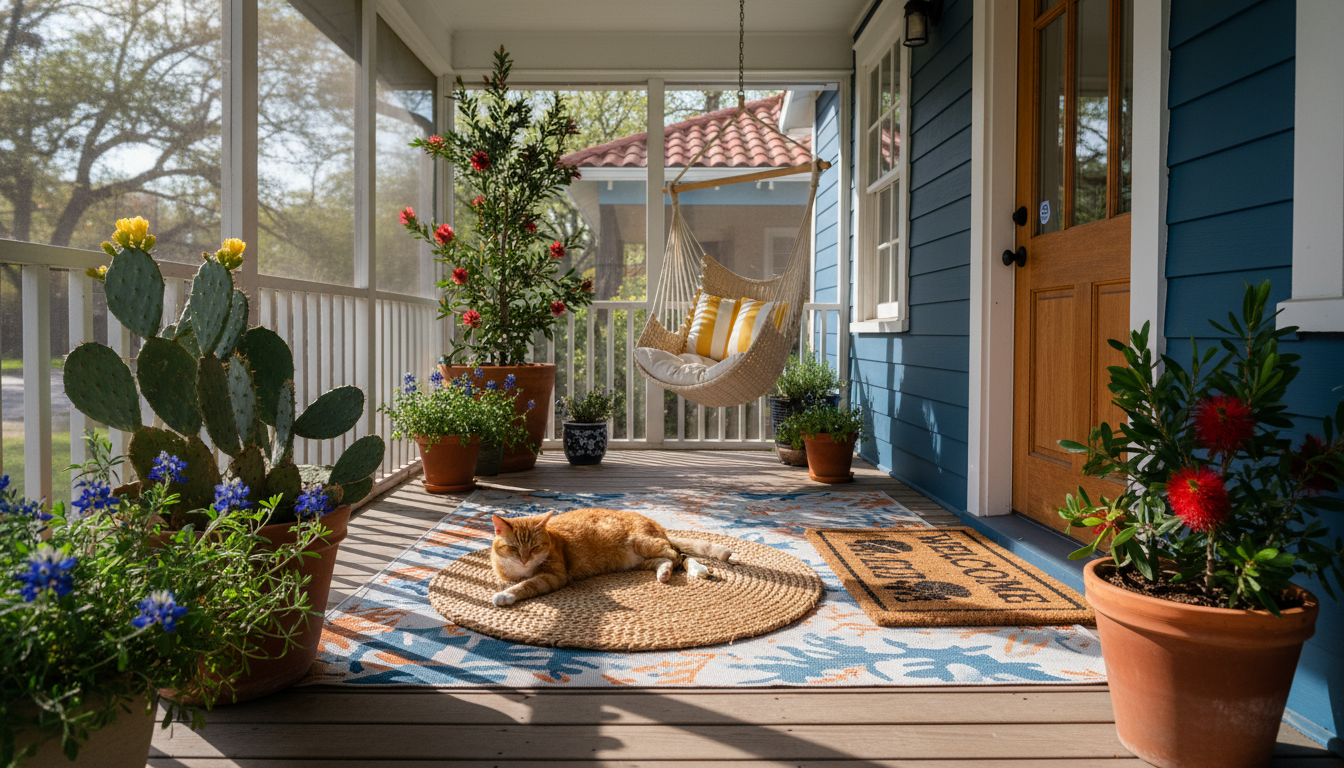 Charming Austin bungalow with a screened-in porch, a cat lounging in a sunbeam, and a Welcome mat fe
Questions to Ask Before Booking
I send a message before every pet-friendly booking with a few key questions. Are there any areas of the home that should be off-limits to my pet? Is there anything breakable or valuable I should be aware of? Are there any neighborhood considerations—busy streets, aggressive dogs nearby, wildlife? Do you have a preferred local vet in case of emergencies?
That last one is crucial. I've never needed it, knock on wood, but knowing there's a vet clinic ten minutes away gives me peace of mind.
Preparing Your Home for Pet-Owning Guests
Home exchange goes both ways. If you want to stay in pet-friendly homes, you should probably offer the same.
This doesn't mean you need to transform your minimalist apartment into a pet paradise. But a few thoughtful touches go a long way.
I keep a "pet guest kit" in my hall closet: a spare litter box, some basic cat toys, a couple of food bowls, and a lint roller. For dog-owning guests, I've added a water bowl that won't tip over and a list of nearby dog parks—Duboce Park and Dolores Park are the favorites in my San Francisco neighborhood.
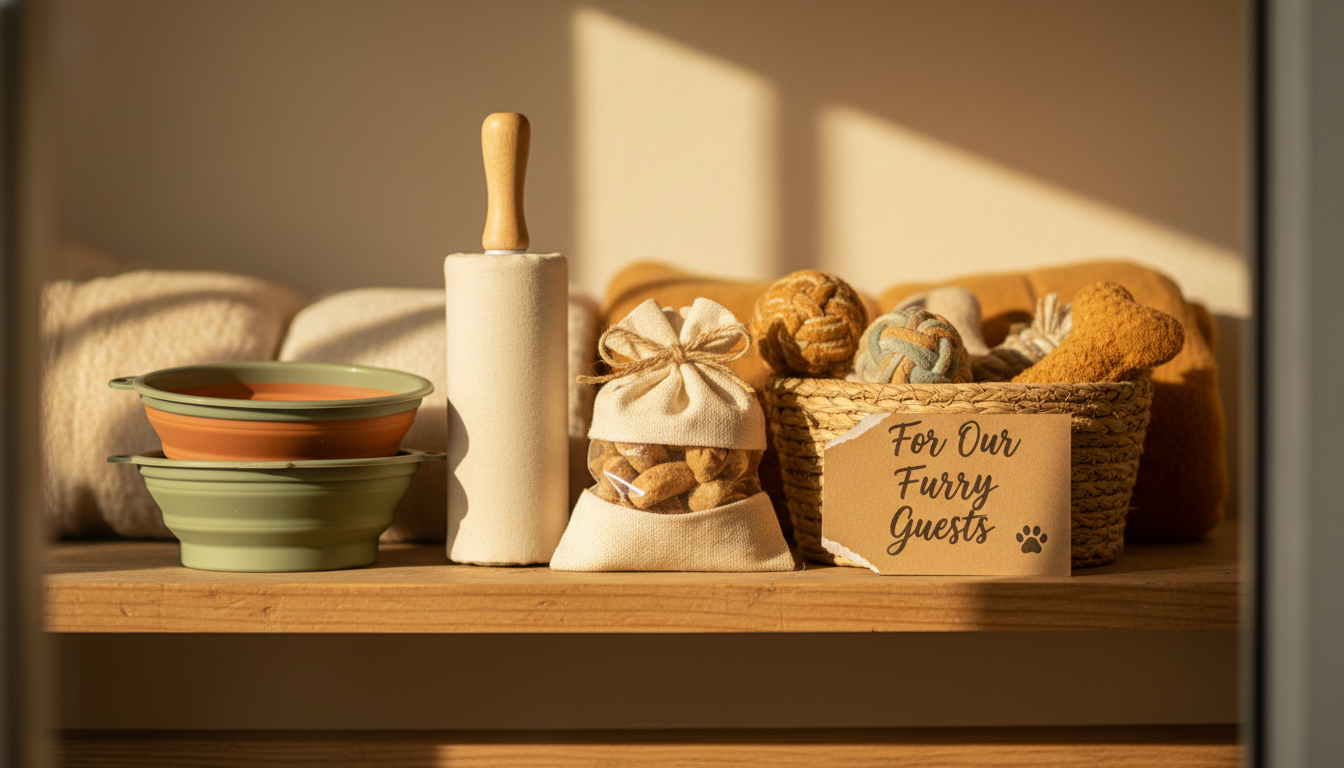 Organized closet shelf with pet supplies neatly arranged collapsible food bowls, a bag of treats, a
The most important preparation, though, is pet-proofing. Walk through your home with fresh eyes. That trailing phone charger cable? A chew toy waiting to happen. The toxic houseplant on the windowsill? A disaster for curious cats. The chocolate stash in the low cabinet? You see where I'm going.
I also leave a detailed "pet info" sheet for guests with the emergency vet contact (VCA San Francisco Veterinary Specialists, about 15 minutes away), location of cleaning supplies for accidents, any house rules (no pets on the white couch, please close the balcony door), and a local pet store recommendation—Jeffrey's Natural Pet Foods on Church Street, where the staff are incredibly helpful.
The Logistics of Traveling With Pets
So you've found the perfect pet-friendly home exchange. Now you actually have to get there with your animal.
This is where things get real.
Flying With Pets
If you're flying domestically in the US with a small dog or cat, most airlines allow them in-cabin for a fee—$95-150 each way on major carriers. The pet needs to fit in a carrier under the seat in front of you, which generally means animals under 20 pounds.
For larger dogs, you're looking at cargo. Which is stressful, expensive ($200-500+ depending on the airline and distance), and honestly something I'd avoid unless absolutely necessary.
International travel with pets is a whole other beast. Different countries have different requirements: microchipping, rabies titers, health certificates, sometimes quarantine periods. The USDA APHIS website has country-specific requirements, and I'd recommend starting that research at least three months before your trip.
Mochi and I have done a few international swaps, but I won't pretend it was simple. The paperwork for bringing her to Portugal took six weeks and cost about $400 in vet visits and certificates. Worth it? Absolutely. Easy? Not remotely.
Driving With Pets
Honestly, if you can drive to your home exchange destination, do it. So much less stressful for everyone involved.
I've done road trip swaps up and down the West Coast—Portland, Seattle, Los Angeles, San Diego—and they're infinitely easier than flying. Mochi has her travel carrier set up in the back seat, I stop every few hours for her to use a portable litter box (yes, this is a thing, and yes, it's as awkward as it sounds), and we listen to podcasts together. She's partial to true crime, apparently.
For dogs, road trips are often even easier. Regular potty breaks, a familiar car environment, and no TSA agents giving you suspicious looks.
Real Talk: Challenges and How to Handle Them
I'm not going to pretend pet-friendly home exchange is all sunny balconies and cozy naps. There are challenges, and you should know about them.
The Damage Question
This is the big one. What happens if your pet damages something in your host's home?
Here's my honest take: this is on you to handle.
SwappaHome connects members and facilitates exchanges, but they're not an insurance company. If Mochi scratches a couch or your dog chews through a rug, you need to make it right with your host directly.
I always message hosts immediately if anything happens—even minor stuff. Once, Mochi knocked a small ceramic dish off a shelf and it cracked. I told the hosts right away, found a replacement online, and had it shipped to their house before they even got home. Total cost: $35. Relationship preserved: priceless.
Some people recommend getting travel insurance that covers pet-related damages. I haven't personally done this, but it might give you peace of mind, especially if you have a more... enthusiastic pet.
Pet Anxiety in New Environments
Some pets adapt to new spaces like they've lived there forever. Others—like Mochi for the first day or two of any trip—hide under furniture and refuse to eat.
I've learned to bring familiar items like Mochi's favorite blanket, her regular food, a toy that smells like home. These make a huge difference. I give her time to explore without forcing interaction, letting her sniff every corner at her own pace. I maintain routines—same feeding times, same play sessions, same bedtime rituals. And I use calming aids if needed, like Feliway diffusers for cats or Adaptil for dogs. I travel with a small Feliway spray and use it on Mochi's blanket before we arrive.
By day three, she's usually ruling the place like she always has.
Finding Hosts Who Truly Welcome Pets
Not everyone who clicks "pet-friendly" on their listing is actually enthusiastic about hosting animals. Some are just trying to get more booking requests.
I've learned to trust my gut. If a host's messages feel hesitant or they ask a lot of nervous questions about pet behavior, it might not be the right fit. You want hosts who are genuinely excited to meet your furry friend, not ones who are tolerating them.
The review system helps here. Look for hosts who have specific positive comments about pets from previous guests.
Best Destinations for Pet-Friendly Home Exchange
Some places are just easier to travel to with pets than others.
Domestic US Favorites
Portland, Oregon is possibly the most dog-friendly city in America. Off-leash parks everywhere, dogs allowed in most breweries, and a home exchange community full of pet lovers. I did a two-week swap in the Alberta Arts District and my friend's dog, Biscuit, had the time of his life.
Austin, Texas is another dog paradise—Zilker Park, the Barton Creek Greenbelt, and countless patios where dogs are welcome. The home exchange options here are excellent, and Texans tend to have big, pet-friendly yards.
San Diego, California has Dog Beach in Ocean Beach, which is exactly what it sounds like. Plus the weather means year-round outdoor adventures with your pet.
International Pet-Friendly Spots
The Netherlands might be the most pet-friendly country I've visited. Dogs are allowed on trains, in most restaurants, and Dutch people genuinely seem to love animals. My Amsterdam swap was in the Jordaan neighborhood, and Mochi spent hours watching boats go by from the window.
Portugal—Lisbon and Porto both have strong home exchange communities and relaxed attitudes toward pets. The café culture means lots of outdoor seating where your dog can join you.
Canada is an easy option if you're in the northern US. Vancouver and Montreal both have excellent pet-friendly home exchange options, and you can often drive there.
Making Your Listing Irresistible to Pet Owners
Want more home exchange opportunities? Make your listing a magnet for fellow pet travelers.
Beyond marking it as pet-friendly, include photos that show your space is genuinely welcoming to animals. A shot of your fenced backyard, your cat tree, or even just a cozy corner where a pet bed could go.
Mention specific pet amenities in your description: "We have a secure backyard perfect for dogs, and our neighborhood has three parks within walking distance." Or: "Cat lovers welcome—we have a sunny window seat that our own cat claims, and we're happy to share."
When you're responding to inquiries from pet owners, ask about their animal with genuine interest. "Tell me about your dog! What's their favorite way to spend an afternoon?" This signals that you're not just tolerating pets—you're excited to host them.
The Unexpected Joys of Pet-Friendly Home Exchange
I want to end with something that surprised me when I started doing this.
The best part of pet-friendly home exchange isn't just that I get to travel with Mochi. It's the connections I've made with other pet people.
There's something about trusting someone with your home AND your knowledge of local pet resources that creates a bond. I've stayed in touch with hosts who've sent me updates about their own cats, asked for pet care advice, and even met up with me when they visited San Francisco.
Last year, I stayed in a gorgeous apartment in Barcelona's Gràcia neighborhood. The hosts had a senior cat named Whiskers who was staying with their daughter during the swap. They left me a three-page guide to the best cat cafés in the city, the name of their vet "just in case," and a note that said, "We know you'll take care of our home because you understand what it means to love an animal."
That's what this is really about. Not just free accommodation or avoiding kennels—though those are great—but finding your people. The ones who get that your pet isn't just a pet. They're family. And family travels together.
If you're ready to try it, SwappaHome is a solid place to start. The credit system is straightforward (one credit per night, no complicated pricing), the community is genuinely welcoming to pet owners, and you can filter specifically for pet-friendly homes.
Mochi and I have our next swap lined up: a cottage in Cornwall, England, where the hosts have promised excellent bird-watching from the garden window.
She's already practicing her hunting crouch.
Frequently Asked Questions
Is home exchange safe for traveling with pets?
Home exchange for pet owners is generally safe when you communicate clearly with hosts. Use platforms like SwappaHome that have review systems and member verification. Always discuss pet details upfront, ask about the neighborhood, and request emergency vet information. Many pet-friendly hosts are pet owners themselves who understand animal needs and maintain safe, welcoming spaces.
How much does pet-friendly home exchange cost compared to hotels?
Pet-friendly hotels typically charge $100-250 per night plus $25-75 daily pet fees, totaling $1,750-4,550 for two weeks. Home exchange costs only your platform membership—accommodation is free through the credit system. On SwappaHome, new members receive 7 free credits (7 nights), making your first pet-friendly trip essentially cost-free beyond travel expenses.
Can I do home exchange with a large dog?
Absolutely. Filter searches for homes with yards, ground-floor access, or rural properties that accommodate large breeds. Be specific in your listing about your dog's size and exercise needs. Many home exchange hosts in suburbs and smaller cities have spacious properties perfect for big dogs. Always ask hosts about fencing, nearby parks, and any size restrictions before booking.
What happens if my pet damages something during a home exchange?
You're responsible for any pet-related damages during your stay. Contact your host immediately, offer to repair or replace items, and handle costs directly. SwappaHome facilitates connections but doesn't provide damage insurance. Consider purchasing travel insurance that covers pet incidents, and always be transparent about your pet's behavior to prevent issues.
How do I find pet-friendly home exchanges internationally?
Research pet import requirements 3-6 months ahead—many countries require microchipping, vaccinations, and health certificates. Filter SwappaHome searches by "pet-friendly" in your destination country. The Netherlands, Portugal, and Canada are particularly welcoming. Start with countries that have simpler pet entry requirements before attempting destinations with quarantine rules or complex paperwork.

Published by
SwappaHome
SwappaHome Editorial Team
Home Exchange & Slow Travel Editorial
The SwappaHome Editorial Team brings together travel research, home-exchange community insights, and platform data to produce practical guides for first-time and experienced home swappers. Every article cites real platforms, current market rates, and verifiable city-level facts so readers can make informed decisions without guessing.
Ready to try home swapping?
Join SwappaHome and start traveling by exchanging homes. Get 7 free credits when you sign up!
Related articles

Bachelor and Bachelorette Parties in Singapore: The Complete Home Swap Group Guide for 2026
Planning a bachelor or bachelorette party in Singapore? Discover how home swapping lets groups of 6-12 stay together in luxury condos, saving thousands while partying in Marina Bay.

Cycling in Lisbon: 7 Home Swap Bike Tour Itineraries for Every Rider
Discover the best cycling routes in Lisbon with these home swap bike tour itineraries—from waterfront paths to hilltop adventures, all starting from your borrowed home.

Graduation Trip to Barcelona: How Home Swapping Gives New Graduates the Ultimate Celebration
Planning a graduation trip to Barcelona? Discover how home swapping lets new graduates explore Spain's most vibrant city without the hostel crowds or hotel costs.