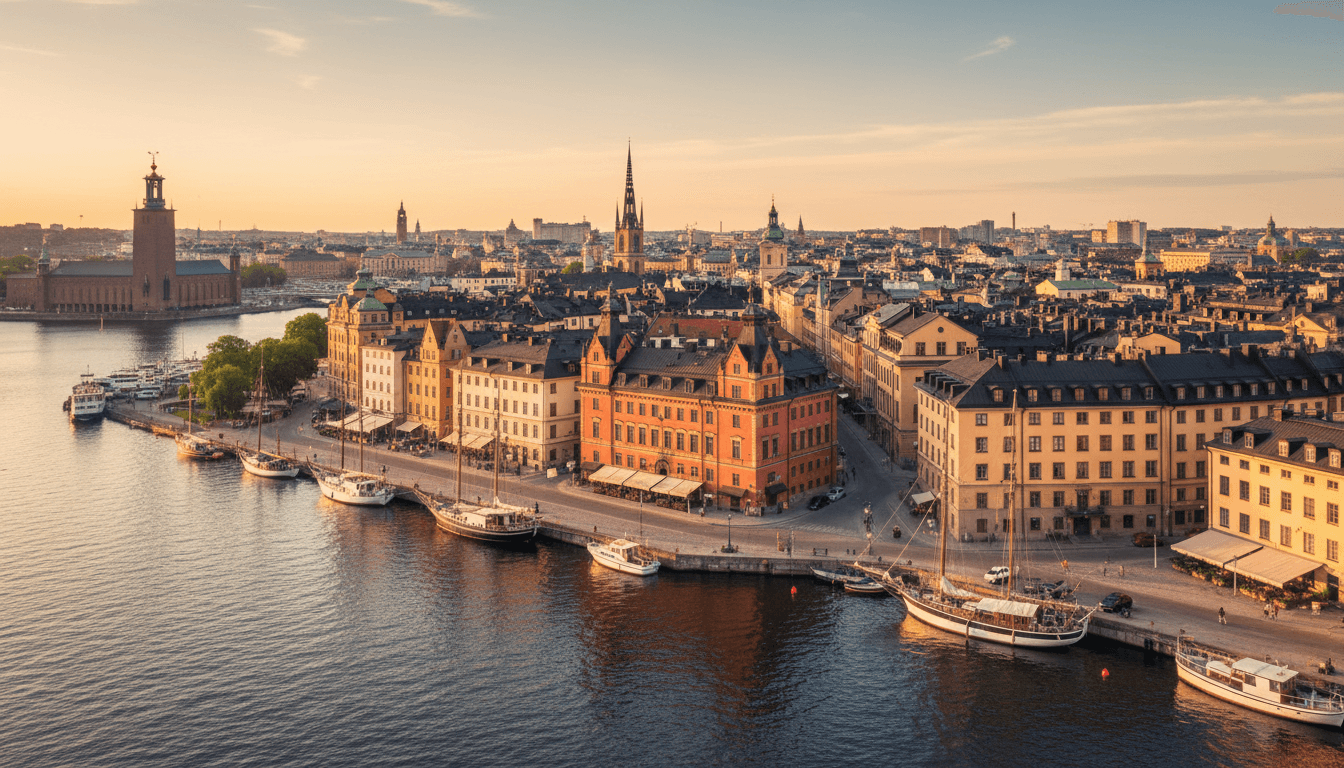
Home Exchange in Stockholm: 7 Hidden Neighborhoods Locals Actually Love

SwappaHome Editorial Team
Home Exchange & Slow Travel Editorial
Skip Gamla Stan's crowds. These 7 underrated Stockholm neighborhoods offer authentic home exchange experiences where locals actually live—and tourists rarely venture.
I almost didn't go to Södermalm.
My original plan for home exchange in Stockholm involved the usual suspects—somewhere near the Royal Palace, maybe a place overlooking Stortorget. You know, the Instagram spots. But my swap partner, a ceramicist named Linnea, lived in a neighborhood I'd never heard of, in a 1920s building with creaky wooden floors and a balcony facing an inner courtyard where neighbors hung laundry and grew tomatoes in summer.
That was four years ago. I've since done three more home exchanges in Stockholm, deliberately avoiding the tourist center each time. And here's what I've learned: the real Stockholm—the one with corner bakeries that don't take credit cards, the one where people actually know their neighbors, the one that feels like living rather than visiting—exists in neighborhoods most travelers never consider.
 morning light streaming through lace curtains in a vintage Stockholm apartment, coffee cup on wooden
If you're planning a home exchange in Stockholm's hidden neighborhoods, this guide is your invitation to skip the obvious and discover where Stockholmers actually want to live.
Why Underrated Stockholm Neighborhoods Make Better Home Exchanges
Let me be direct: Gamla Stan is gorgeous. The cobblestones, the ochre buildings, the medieval alleyways—I get it. But here's the thing about staying in Stockholm's Old Town or the central Norrmalm district.
You're paying a premium in credits for location prestige. You're surrounded by souvenir shops and tourist restaurants charging 280 SEK ($26) for a mediocre pasta. And your home exchange host? They probably bought that apartment as an investment, not because they love living there.
The hidden neighborhoods I'm about to share offer something different. There's authentic daily life—corner shops where the owner knows regulars by name, neighborhood pubs with 65 SEK ($6) lunch specials, parks where local families picnic on summer evenings. You get better value too: larger apartments, often with outdoor space like balconies, shared gardens, or rooftop terraces that central Stockholm simply can't offer at the same price point. And maybe most importantly, there's real community. Hosts who genuinely love their neighborhood leave notes about their favorite fika spots, the best running routes, which bakery makes the cardamom buns worth waking up for.
When I stayed in Linnea's Södermalm apartment, she'd left a hand-drawn map of her daily walking route—past the vintage shop where she found her favorite lamp, the park bench where she read on lunch breaks, the Thai place that locals line up for at noon. That's the kind of home exchange experience you don't get in tourist zones.
Södermalm: Stockholm's Creative Heart (But Skip the Trendy Parts)
Everyone's heard of Södermalm—it's Stockholm's Brooklyn, the hipster haven, the neighborhood that launched a thousand lifestyle blogs. But here's what most travelers miss: Södermalm is massive, and the parts tourists flock to (SoFo, Medborgarplatsen) are just a fraction of it.
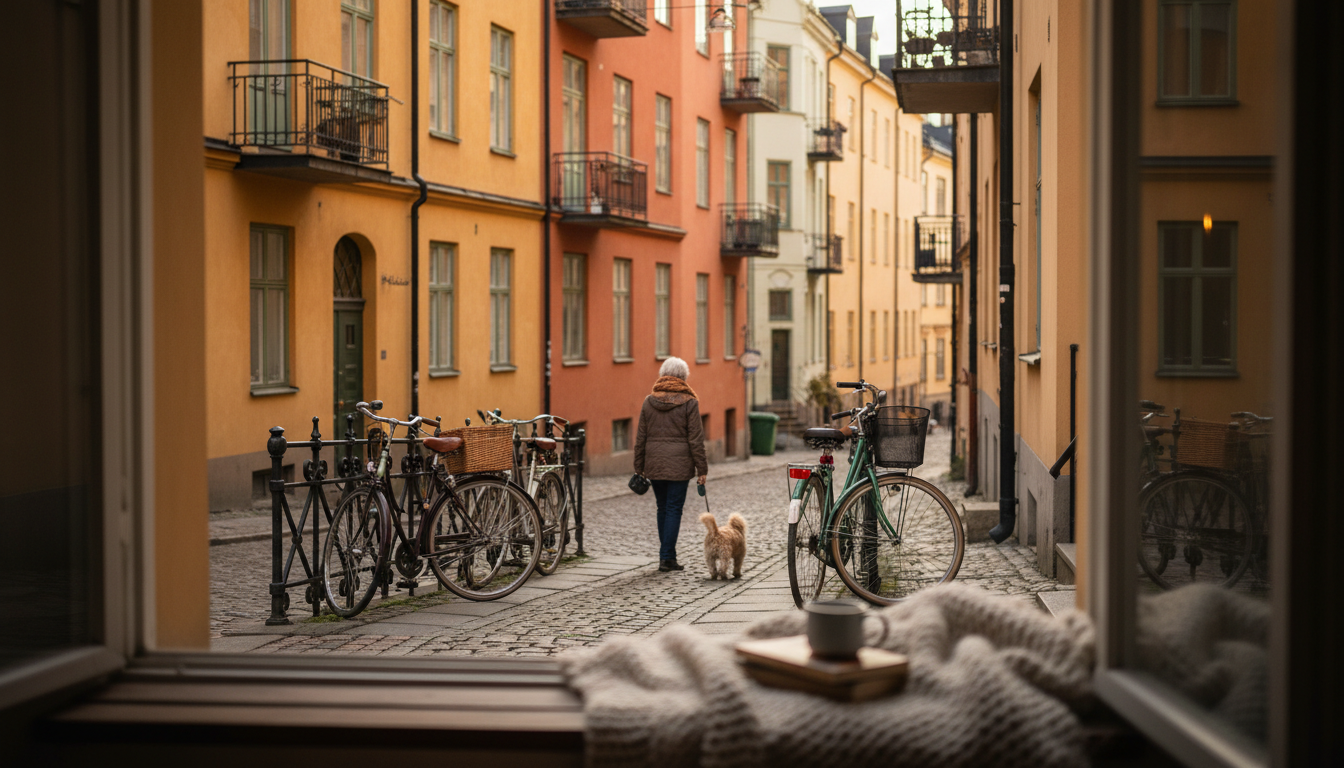 quiet residential street in Sdermalm with colorful apartment buildings, vintage bicycles parked agai
For home exchange in Stockholm's Södermalm, I'd specifically recommend Hornstull, which sits at the western edge where the island meets the water. It's got that slightly rough-around-the-edges charm that central Södermalm has gentrified away. The Sunday flea market at Hornstulls Marknad (April through September) is legendary—vintage Swedish design pieces, local food vendors, and absolutely zero tourists. Apartments here average 60-80 square meters, often with water views. My friend Marcus swapped his Hornstull one-bedroom last summer and his guests couldn't stop raving about the sunset views from his tiny balcony.
Then there's Tanto—a secret even some Stockholmers don't know. It's essentially a hillside covered in allotment gardens: tiny cottages painted in traditional Falu red, surrounded by vegetable plots and fruit trees. While you can't do a home exchange in the cottages themselves (they're summer-only gardening plots), the apartments overlooking Tantolunden park offer front-row seats to this impossibly charming scene. Imagine waking up to roosters crowing and the smell of someone's bonfire breakfast. In Stockholm. Seriously.
Södermalm connects to central Stockholm via the Slussen hub (currently under massive reconstruction, so expect some chaos). The green line metro serves the whole island. Budget around 180-220 SEK ($17-20) for a nice dinner at neighborhood restaurants, versus 300+ SEK ($28+) in Gamla Stan.
Hammarby Sjöstad: Scandinavia's Eco-Neighborhood
Okay, I'll admit it—when someone first suggested Hammarby Sjöstad for a home exchange, I was skeptical. A planned eco-district built on former industrial land? It sounded... sterile. Corporate. The kind of place architects love and actual humans find soulless.
I was completely wrong.
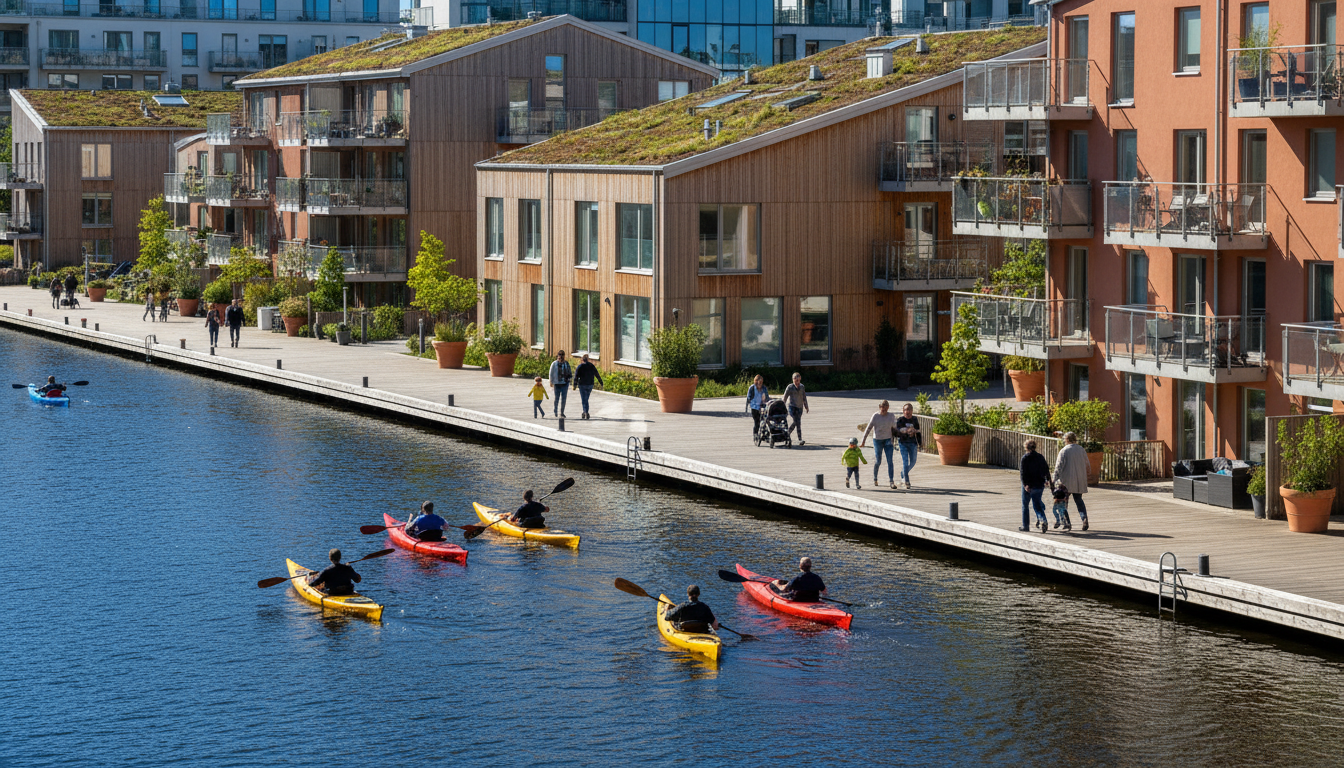 modern waterfront apartments in Hammarby Sjstad with kayakers on calm water, green rooftops visible,
Hammarby Sjöstad (locals just call it "Hammarby") has matured beautifully since its early 2000s construction. The trees have grown in. The cafés have developed personalities. And the community—young families, creative professionals, retirees who downsized from suburban houses—has created something genuinely warm.
The waterfront living is unreal. Almost every building has water access—canals, the lake, or the bay. In summer, residents kayak to work (yes, really). In winter, some hardy souls ice skate. The ferry to Södermalm takes 10 minutes and is included in your transit pass.
The apartments are designed for actual living. Open floor plans, huge windows, balconies that function as outdoor rooms. Swedish design at its most practical. Most units have 70-100 square meters—try finding that in central Stockholm. And the sustainability infrastructure is genuinely impressive: automated waste sorting, district heating from recycled energy, car-sharing pools. If you're interested in how cities can actually work better, staying here is basically a live case study.
Real talk though: Hammarby can feel quiet, especially in winter. It's not where you go for nightlife or spontaneous street life. But for families, for people who want to actually live in Stockholm rather than just visit it, for anyone craving space and nature access—it's perfect. Tram line 22 from Södermalm gets you there, or the Sjövägen ferry. About 15 minutes to the central station.
Vasastan: Old Stockholm Money Meets Young Professional Energy
If Södermalm is Stockholm's Brooklyn, Vasastan is its Upper West Side—established, elegant, slightly buttoned-up, but with excellent restaurants and genuinely beautiful architecture.
I did a home exchange in Vasastan two winters ago, in a turn-of-the-century apartment with 3.5-meter ceilings, original tile stoves (decorative now, sadly), and those distinctly Swedish double windows that make everything feel like a Bergman film. My host was a retired diplomat who'd lived there for 40 years. His notes included not just restaurant recommendations but which neighbors to greet by name and which park bench had the best afternoon light for reading.
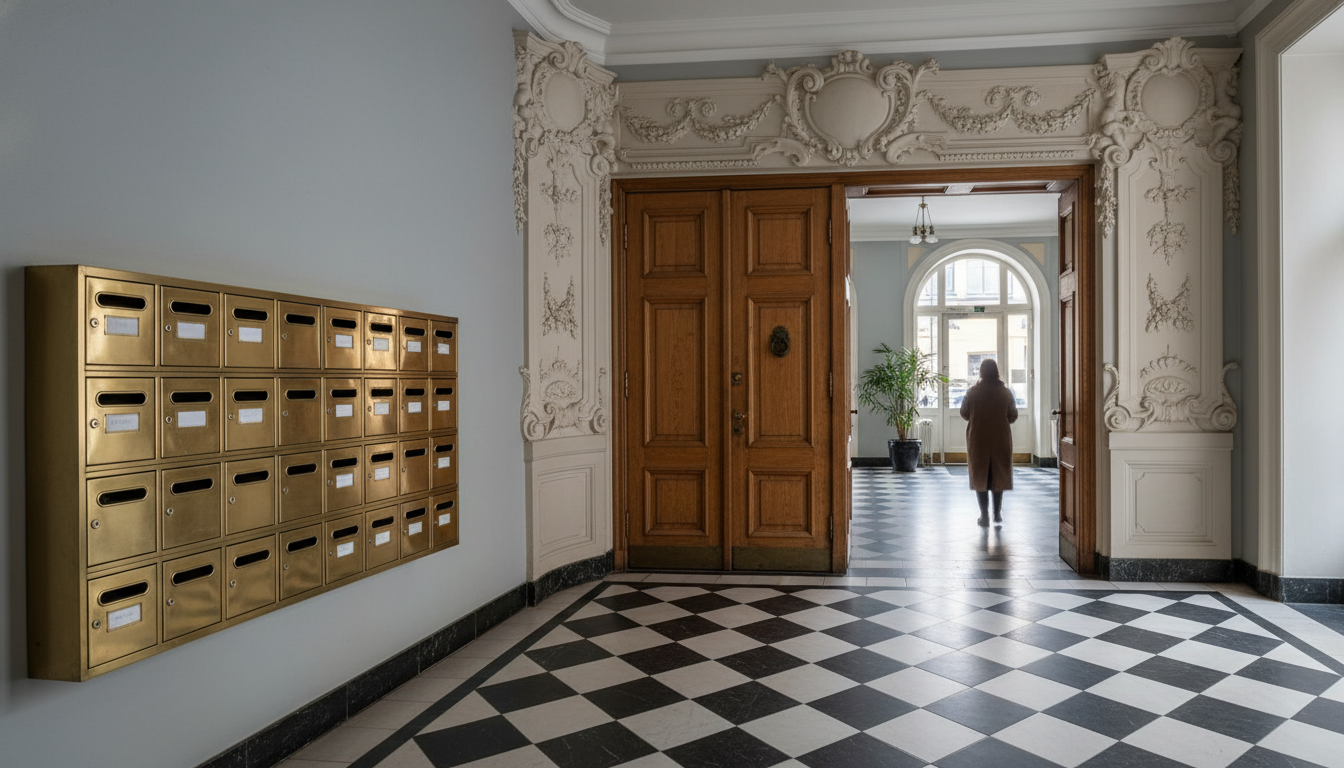 grand Vasastan apartment building entrance with ornate stonework, vintage brass mailboxes, black and
For home exchange in Stockholm's Vasastan neighborhood, understand that this is old Stockholm. Not medieval-old like Gamla Stan, but turn-of-the-century bourgeois old. The apartments have character—crown moldings, built-in bookshelves, those gorgeous Swedish ceramic stoves. But they also have quirks: tiny kitchens (Swedes historically ate out or had servants cook), limited closet space, sometimes unreliable hot water in older buildings.
Within Vasastan, Röda Bergen ("Red Mountains") features distinctive red-brick workers' housing from the 1920s, now highly coveted. Tree-lined streets, small courtyards, a village-within-the-city feel. Odenplan centers around the circular plaza and its excellent food hall, Saluhall Odenplan—great for anyone who wants walkable access to specialty grocers, wine bars, and the kind of bakery where you'll spend 85 SEK ($8) on a single cinnamon bun and feel it was worth every öre.
Green and orange metro lines serve Vasastan well. Expect to pay slightly more in local restaurants than Södermalm—this is a wealthier neighborhood and prices reflect it. A casual dinner runs 200-250 SEK ($19-23).
Kungsholmen: The Island Everyone Forgets
Here's a geography fact that surprises many visitors: Stockholm is built on 14 islands. Gamla Stan gets all the attention, Södermalm has the hipster cachet, but Kungsholmen—the island immediately west of the city center—somehow flies under the radar.
Which is exactly why it's perfect for home exchange.
Kungsholmen has the city hall (you know, where they give out Nobel Prizes), but beyond that one tourist attraction, it's almost entirely residential. Families. Dog walkers. People jogging around the island's perimeter path. The kind of neighborhood where you see the same faces at the same café every morning.
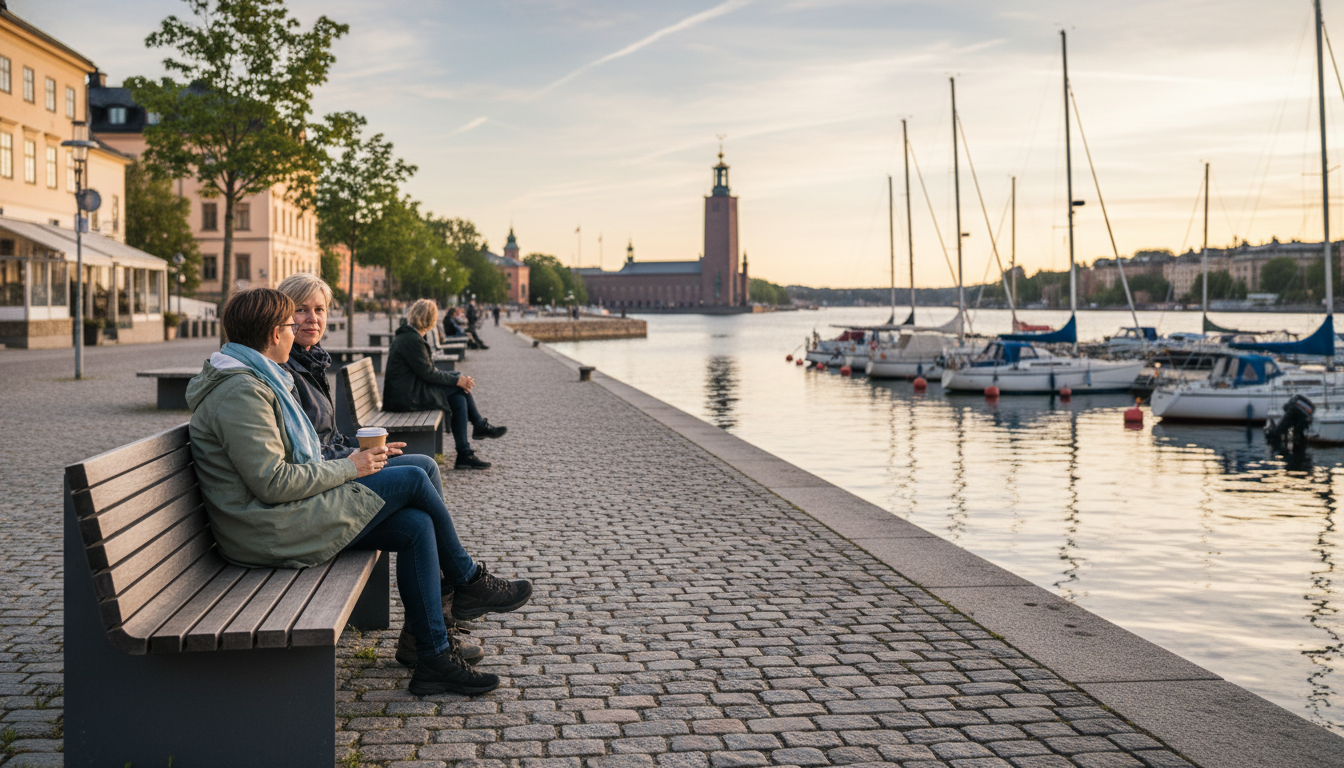 Kungsholmen waterfront promenade at golden hour, locals sitting on benches with takeaway coffee, cit
My favorite home exchange in Stockholm happened on Kungsholmen's northern shore. The apartment was modest—a 1960s building, nothing architecturally special—but the location was magic. A five-minute walk to the water. A neighborhood pizzeria that had been run by the same family for 30 years. A tiny park where I watched the sunset every evening, usually alone except for a woman walking her enormous Great Dane.
The prices are reasonable here. You're technically "central Stockholm" (the city hall is here, after all) but you're not paying Norrmalm premiums. Apartments tend to be practical rather than fancy—good for families or anyone who values function over Instagram aesthetics. The walking and cycling infrastructure is exceptional too. The island perimeter is about 8 kilometers, mostly waterfront paths. Rent a bike (or borrow your host's—many Stockholmers have bikes they're happy to lend) and you can circumnavigate the whole island in an hour.
Blue line metro runs through, plus several bus routes. You're 10 minutes from the central station but worlds away from tourist chaos.
One local tip: Smedsuddsbadet is a small beach on Kungsholmen's southern tip. In summer, locals swim here after work. The water's clean (Stockholm takes its water quality seriously) and the vibe is pure neighborhood—kids splashing, older folks sunbathing, someone inevitably grilling sausages nearby.
Årsta and Enskede: Stockholm's Garden Suburbs
Now we're getting into territory that might make Stockholm purists nervous. Årsta and Enskede aren't "central." They're not on most tourist maps. They're the kind of neighborhoods where people move when they have kids and need more space.
And that's precisely why they're gold for home exchanges.
These southern suburbs developed in the early-to-mid 20th century as "garden cities"—planned communities with small houses, generous yards, and community facilities. They feel almost like small towns transplanted into a major city.
For home exchange in Stockholm's Årsta area, you're looking at a mix of apartment buildings and small houses, excellent parks (Årsta Holmar is a nature reserve accessible by footbridge), and a community center that hosts everything from yoga classes to neighborhood potlucks. The vibe is decidedly family-oriented—strollers everywhere, playgrounds packed on weekends—but also genuinely welcoming to visitors. Enskede goes even further into garden suburb territory. Streets of small wooden houses, many painted in traditional Falu red or yellow ochre. Allotment gardens everywhere. The kind of place where neighbors share surplus zucchini in summer and shovel each other's walks in winter.
I know what you're thinking: I'm visiting Stockholm, why would I stay in the suburbs?
Fair question. Here's my answer: because you'll get twice the space for the same credit value, because you'll experience how Swedes actually live (spoiler: they love their gardens and their outdoor time), and because the green line metro gets you to the center in 15-20 minutes anyway.
These neighborhoods have fewer restaurants and cafés than central areas. You'll want to cook more—which, honestly, is part of the appeal of home exchange. Swedish supermarkets are excellent, and shopping at a neighborhood ICA store is its own cultural experience.
Lidingö: The Island of Understated Wealth
Lidingö is technically its own municipality, not part of Stockholm proper. It's also one of Sweden's wealthiest areas—think old money, summer houses that have been in families for generations, and a certain understated elegance that makes flashy displays of wealth seem vulgar.
For home exchange, Lidingö offers something you won't find elsewhere: space, nature, and a distinctly Swedish approach to the good life.
The island is mostly residential—large houses with gardens, some apartment buildings near the commercial center, and vast stretches of forest and waterfront. The Lidingöloppet, one of the world's largest cross-country running races, happens here every fall, and the trails are spectacular year-round.
If you're traveling with kids, the space and nature access are unbeatable. Many homes have gardens, and the island has beaches, hiking trails, and the kind of safe, quiet streets where children can actually play outside unsupervised (a distinctly Scandinavian luxury). The architecture ranges from grand turn-of-the-century villas to charming 1950s houses to modern eco-builds. There's genuine variety here, unlike the more homogeneous apartment stock in central Stockholm. And you'll experience Swedish outdoor culture at its finest. Sailing, kayaking, cross-country skiing in winter, mushroom foraging in fall—Lidingö residents take their friluftsliv (outdoor life) seriously.
The Lidingöbanan light rail connects to the red line metro at Ropsten. About 25-30 minutes to the city center. You'll want a transit pass—driving in Stockholm is expensive and unnecessary.
Honestly though? Lidingö is quiet. Very quiet. If you want nightlife, spontaneous street energy, or the buzz of urban life, this isn't your spot. But for a week of genuine relaxation, nature access, and a glimpse into how well-off Swedes actually live? It's unmatched.
Making Your Hidden Stockholm Home Exchange Work
So you're convinced—you want to skip the tourist center and experience real Stockholm through a neighborhood home exchange. Here's how to make it happen.
Be specific in your search. On SwappaHome, use the map feature to explore beyond the obvious areas. Filter by neighborhood, not just "Stockholm." Many hosts in these hidden gems are enthusiastic about their areas and write detailed descriptions—read them carefully.
Communicate your priorities. Tell potential hosts what matters to you. Nature access? Local café culture? Family-friendliness? Hosts in residential neighborhoods often have strong opinions about what makes their area special and can help you decide if it's the right fit.
Ask about transportation. Stockholm's public transit is excellent, but some outer neighborhoods have less frequent service, especially on weekends. Ask your host about their commute to the center—it'll give you a realistic sense of connectivity.
Embrace the season. These hidden neighborhoods shine differently throughout the year. Summer means outdoor living, long evenings, and neighborhood gatherings. Winter means cozy interiors, early darkness, and the particular Swedish skill of making indoor life beautiful. Both are worth experiencing—just know what you're signing up for.
And request the local intel. The best part of home exchange is getting insider knowledge. Ask your host for their personal recommendations—not the tourist stuff, but where they actually go. The bakery. The park bench. The shortcut through the courtyard. That's the real treasure.
The Bottom Line on Home Exchange in Stockholm's Hidden Neighborhoods
Look, I get the appeal of staying in Gamla Stan. The photos would be incredible. You'd feel like you were in a fairy tale.
But here's what I've learned from seven years of home swapping: the best travel experiences happen when you stop being a tourist and start—even temporarily—being a local. When you know which bakery opens early. When you nod at the same dog walker every morning. When you have a "usual" café order.
Stockholm's hidden neighborhoods make that possible. They're not hidden because they're inferior—they're hidden because tourists rarely think to look beyond the postcard views. The locals who live there aren't keeping secrets; they're just living their lives in places that happen to be wonderful.
Your job is simply to show up, pay attention, and let the neighborhood teach you what Stockholm actually feels like when you're not performing tourism.
I'll be back in Stockholm next spring, swapping into an apartment in Hammarby Sjöstad that a ceramicist friend of Linnea's is listing. Full circle, in a way. And I already know the first thing I'll do: find the nearest bakery, order a cardamom bun and a coffee, and sit somewhere quiet to watch the neighborhood wake up.
That's the real Stockholm. And it's waiting for you.
Frequently Asked Questions
Is home exchange in Stockholm safe for solo travelers?
Absolutely. Stockholm consistently ranks among the world's safest cities, and the neighborhoods mentioned here are residential areas with low crime rates. SwappaHome's verification and review system adds another layer of trust. Solo travelers should still take standard precautions—share your itinerary with someone, keep valuables secure—but Stockholm's hidden neighborhoods are genuinely safe for independent exploration.
How much can I save with home exchange vs hotels in Stockholm?
Stockholm hotels average $180-300 per night in central areas, with budget options around $120. A two-week stay easily costs $2,500-4,000. With SwappaHome's credit system (1 credit per night, regardless of location), you're essentially staying free after earning credits by hosting. Even factoring in the annual membership, most members save 70-90% compared to traditional accommodation.
What's the best Stockholm neighborhood for families doing home exchange?
Hammarby Sjöstad and the garden suburbs (Årsta, Enskede) offer the most family-friendly home exchanges. You'll find larger apartments, outdoor space, playgrounds, and safe streets where kids can play. Kungsholmen is another excellent option—central enough for sightseeing but with a relaxed, residential feel and waterfront paths perfect for family walks or bike rides.
When is the best time for home exchange in Stockholm?
May through September offers the best weather and longest days—June has nearly 24 hours of daylight. Winter (December-February) provides a completely different experience though: cozy hygge culture, Christmas markets, and potential Northern Lights visibility. Spring (April-May) and fall (September-October) offer shoulder-season benefits with fewer tourists, moderate weather, and locals returning to their regular routines.
Do I need a car for Stockholm's outer neighborhoods?
No. Stockholm's public transit system (SL) is excellent and covers all neighborhoods mentioned here. A 7-day transit pass costs 430 SEK ($40) and includes metro, buses, trams, and ferries. Many residential neighborhoods are actually easier to navigate by bike—ask your home exchange host if they have bicycles available to borrow.

Published by
SwappaHome
SwappaHome Editorial Team
Home Exchange & Slow Travel Editorial
The SwappaHome Editorial Team brings together travel research, home-exchange community insights, and platform data to produce practical guides for first-time and experienced home swappers. Every article cites real platforms, current market rates, and verifiable city-level facts so readers can make informed decisions without guessing.
Ready to try home swapping?
Join SwappaHome and start traveling by exchanging homes. Get 7 free credits when you sign up!
Related articles

Bachelor and Bachelorette Parties in Singapore: The Complete Home Swap Group Guide for 2026
Planning a bachelor or bachelorette party in Singapore? Discover how home swapping lets groups of 6-12 stay together in luxury condos, saving thousands while partying in Marina Bay.
Cycling in Lisbon: 7 Home Swap Bike Tour Itineraries for Every Rider
Discover the best cycling routes in Lisbon with these home swap bike tour itineraries—from waterfront paths to hilltop adventures, all starting from your borrowed home.
Graduation Trip to Barcelona: How Home Swapping Gives New Graduates the Ultimate Celebration
Planning a graduation trip to Barcelona? Discover how home swapping lets new graduates explore Spain's most vibrant city without the hostel crowds or hotel costs.