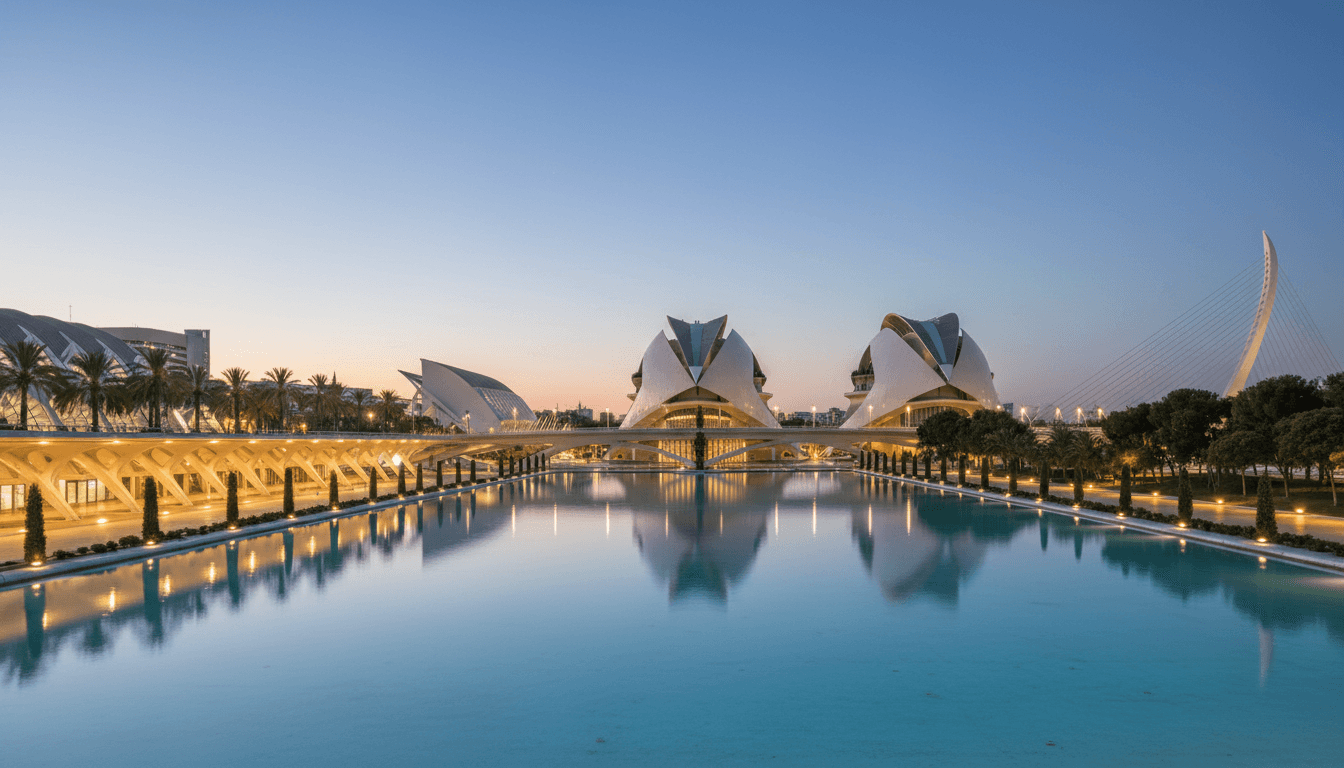
Home Swap in Valencia: Why Spain's Third City Is the Hottest Exchange Destination Right Now

SwappaHome Editorial Team
Home Exchange & Slow Travel Editorial
Valencia is exploding as a home swap destination. Here's why savvy travelers are choosing this Mediterranean gem over Barcelona—and how to score the best exchanges.
I'm going to tell you about the moment I knew Valencia had officially arrived.
It was 6 AM on a Tuesday, and I was standing on the balcony of a gorgeous Art Nouveau apartment in the Ruzafa neighborhood. Below me, the streets were empty except for one guy hosing down the sidewalk outside his bakery. The smell of fresh ensaïmadas drifted up. Church bells started somewhere. And I remember thinking: this is what Barcelona felt like fifteen years ago, before it got discovered.
That was my third home swap in Valencia, and honestly? It won't be my last. Because here's what's happening—Valencia is quietly becoming the most sought-after home swap destination in Spain, maybe in all of Southern Europe. And if you're not paying attention, you're missing out on something special.
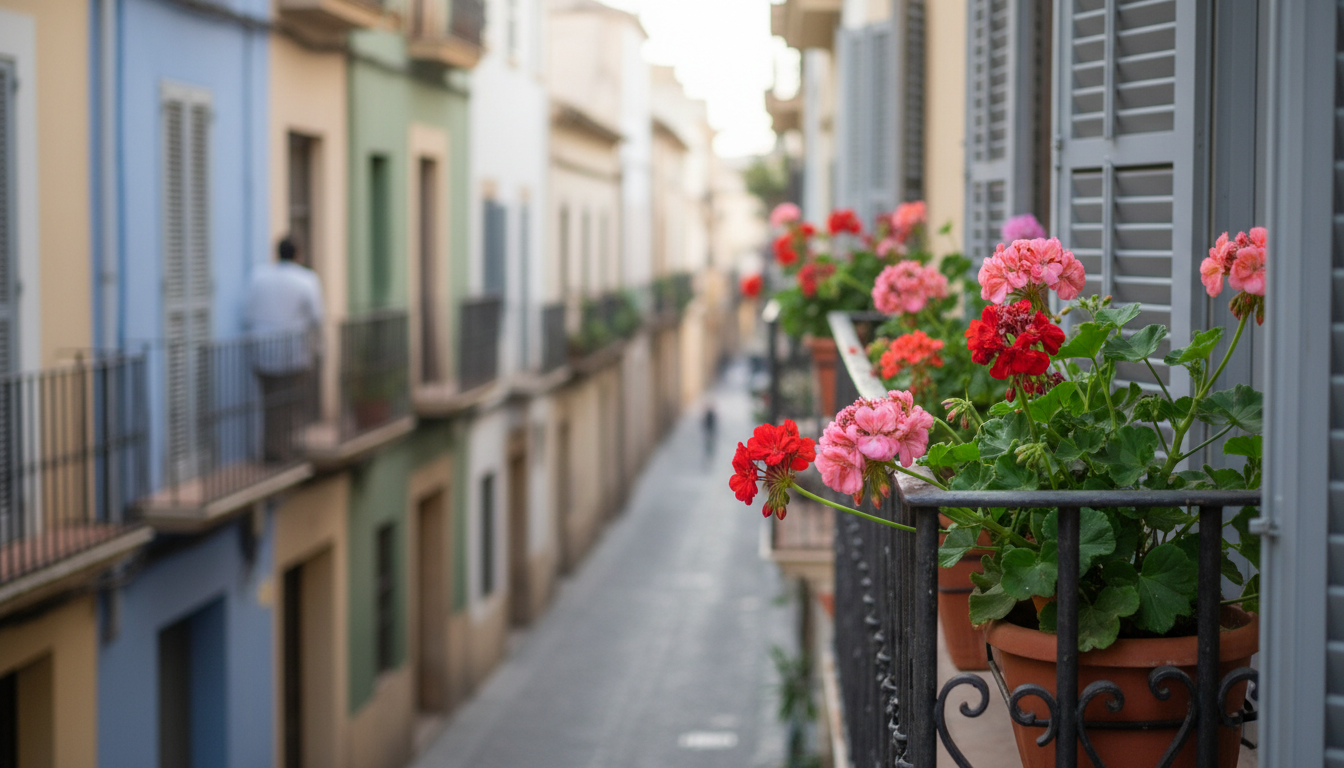 Early morning light on a traditional Valencian balcony with wrought-iron railings, terracotta pots o
Why Home Swap in Valencia Is Exploding Right Now
When I started home swapping seven years ago, everyone wanted Barcelona. Then Lisbon had its moment. Seville got trendy. But Valencia? Barely on anyone's radar—just Spain's third-largest city, known for paella and... that was about it for most travelers.
That's changed. Dramatically.
On SwappaHome, Valencia listings have more than doubled in the past two years. Request rates for Valencian homes are up significantly. And here's the kicker—the acceptance rate is still high because supply is growing to meet demand. Translation: you can actually get these swaps, unlike trying to score a Paris apartment in June.
So what's driving this? A few things converged at once.
Barcelona got expensive. Like, really expensive. A mid-range hotel in Gràcia now runs €180-220/night ($195-240 USD). Airbnbs aren't much better, and the city has cracked down hard on short-term rentals anyway. Meanwhile, Valencia offers a similar Mediterranean vibe—beaches, Gothic architecture, incredible food—at roughly 40% lower cost of living.
Then there's the remote worker invasion. The city invested heavily in co-working spaces, fiber internet, and startup infrastructure. Digital nomads flooded in. And where digital nomads go, home exchange follows—because these are exactly the people who have flexible schedules and apartments sitting empty while they travel.
But here's what matters more than people realize: Valencians are incredibly hospitable. The culture here is more relaxed than Madrid, less touristy than Barcelona. People actually want to connect with visitors. That translates directly into home swapping, where the whole experience depends on trust and goodwill between strangers.
Best Valencia Neighborhoods for Home Exchange
Alright, let's get practical. Valencia is a medium-sized city (around 800,000 people), but neighborhoods vary wildly. Where you swap determines your entire experience.
Ruzafa: The Creative Heart
This is where I stayed on that early morning balcony, and it's become ground zero for Valencia's home swap scene. Ruzafa is the city's former working-class neighborhood, now transformed into a hub of independent cafés, vintage shops, and some of the best restaurants in Spain.
The housing stock here is perfect for swapping—mostly early 20th-century apartment buildings with high ceilings, original tile floors, and those gorgeous interior courtyards called patios de luz. Expect listings to feature 2-3 bedrooms, balconies, and character that hotels simply cannot replicate.
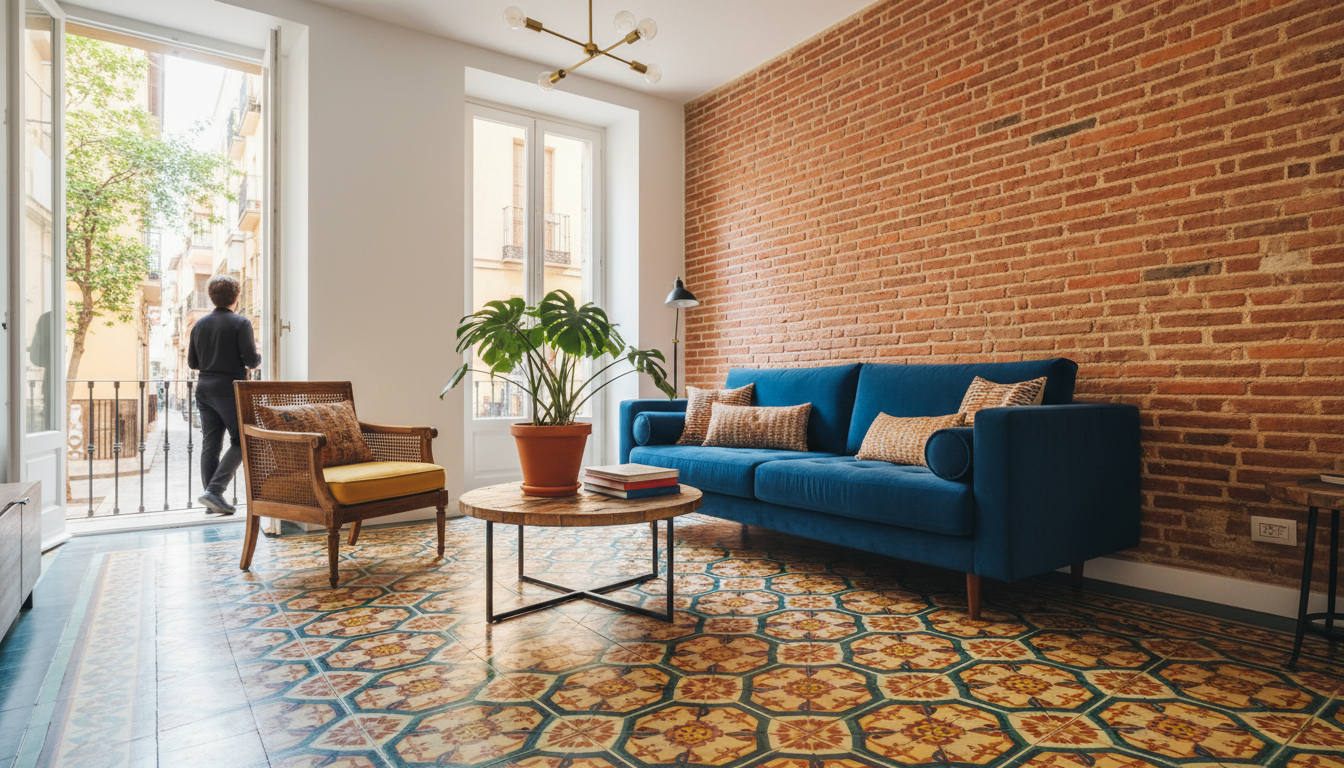 Interior of a renovated Ruzafa apartment showing original hydraulic tile floors in geometric pattern
Best for foodies, nightlife seekers, anyone who wants to feel like a local immediately. The Ruzafa market (Mercado de Ruzafa) is smaller and less touristy than the Central Market—I'd go there for breakfast tortilla and people-watching.
Real talk: Ruzafa gets noisy on weekend nights. If you're a light sleeper, ask your swap partner about which side of the building their apartment faces.
El Carmen: Gothic Quarter Charm
This is Valencia's oldest neighborhood, a maze of medieval streets inside what used to be the city walls. El Carmen has that Instagram-ready aesthetic—crumbling palaces, street art on ancient stone, tiny plazas where you'll stumble onto flamenco performances.
Home swaps here tend to be smaller (space was at a premium in medieval times, shockingly) but dripping with atmosphere. Think exposed wooden beams, stone walls, and windows overlooking churches that have been standing since the 1300s.
Best for history buffs, architecture lovers, couples who prioritize ambiance over square footage. You're steps from the Cathedral, the Silk Exchange (a UNESCO site), and the Central Market.
Watch out for tourist crowds during peak hours. El Carmen is the most visited neighborhood, so mornings and evenings are your friends.
Benimaclet: The Local's Secret
Okay, this one's my personal favorite, and I almost don't want to share it.
Benimaclet is a former village that got absorbed into Valencia but never lost its village feel. It's where university students, artists, and longtime residents mix in a way that feels genuinely ungentrified.
The home swaps here are often houses rather than apartments—actual houses with gardens, in a major Spanish city. You'll find converted farmhouses (alquerías), townhouses with rooftop terraces, and family homes where kids' drawings are still on the fridge.
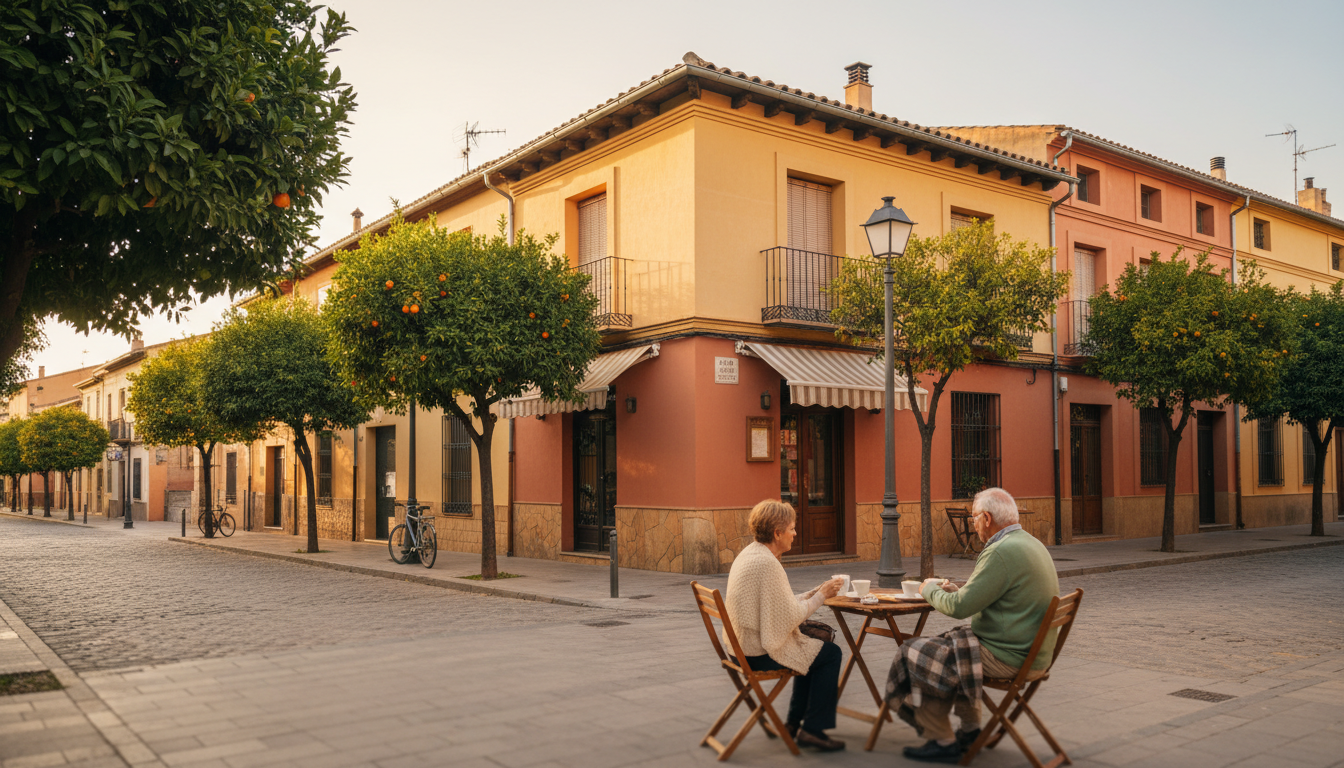 Quiet street in Benimaclet with low-rise houses painted in warm yellows and oranges, orange trees li
Best for families, anyone wanting a slower pace, people who'd rather have a garden than be in the center. The neighborhood has its own market, excellent horchaterías (Valencia's famous tiger nut drink), and a community garden scene that's genuinely inspiring.
The trade-off: You're 15-20 minutes from the historic center by metro or bike. For me, that's a feature, not a bug.
Cabanyal: Beach Life Without the Resort Feel
Cabanyal is Valencia's old fishing neighborhood, right on the Mediterranean. For decades it was neglected, even threatened with demolition. But a community fight saved it, and now it's experiencing a careful revival that's kept its soul intact.
The architecture here is unlike anywhere else in Valencia—rows of colorful tile-fronted houses built by fishermen in the 19th century. Many have been converted into unique homes with rooftop terraces overlooking the sea. Home swaps in Cabanyal let you wake up, walk three blocks, and have your feet in the Mediterranean.
Best for beach lovers, anyone visiting in summer, people who want that seaside village atmosphere. The Cabanyal market is fantastic for fresh seafood—I once watched my swap host's neighbor bring in the morning catch.
Something to consider: Cabanyal is still gentrifying unevenly. Some streets are polished; others are rough around the edges. Ask for specific location details before confirming a swap.
What Makes Valencia Home Swaps Different
I've done exchanges in 25 countries, and Valencian hosts consistently stand out. There's something about the culture here—a combination of pride in their city and genuine warmth toward visitors—that makes the whole experience smoother.
The welcome ritual is serious. Every Valencia swap I've done has included a handwritten guide to the neighborhood, recommendations that clearly weren't copied from TripAdvisor, and often a bottle of local wine or a bag of oranges from someone's family grove. One host left me a hand-drawn map of her favorite running routes along the Turia riverbed.
They actually want to meet you. In some cities, home exchange is purely transactional—keys in a lockbox, see you never. Valencians tend to prefer at least a coffee together, either at handover or via video call beforehand. This might feel like extra effort, but it builds the trust that makes home swapping work.
The apartments are genuinely lived-in. This might sound obvious, but some home exchange listings feel staged, almost like Airbnbs. Valencian homes feel like homes—books on shelves, art collected over years, kitchens where someone actually cooks. That's the whole point, right?
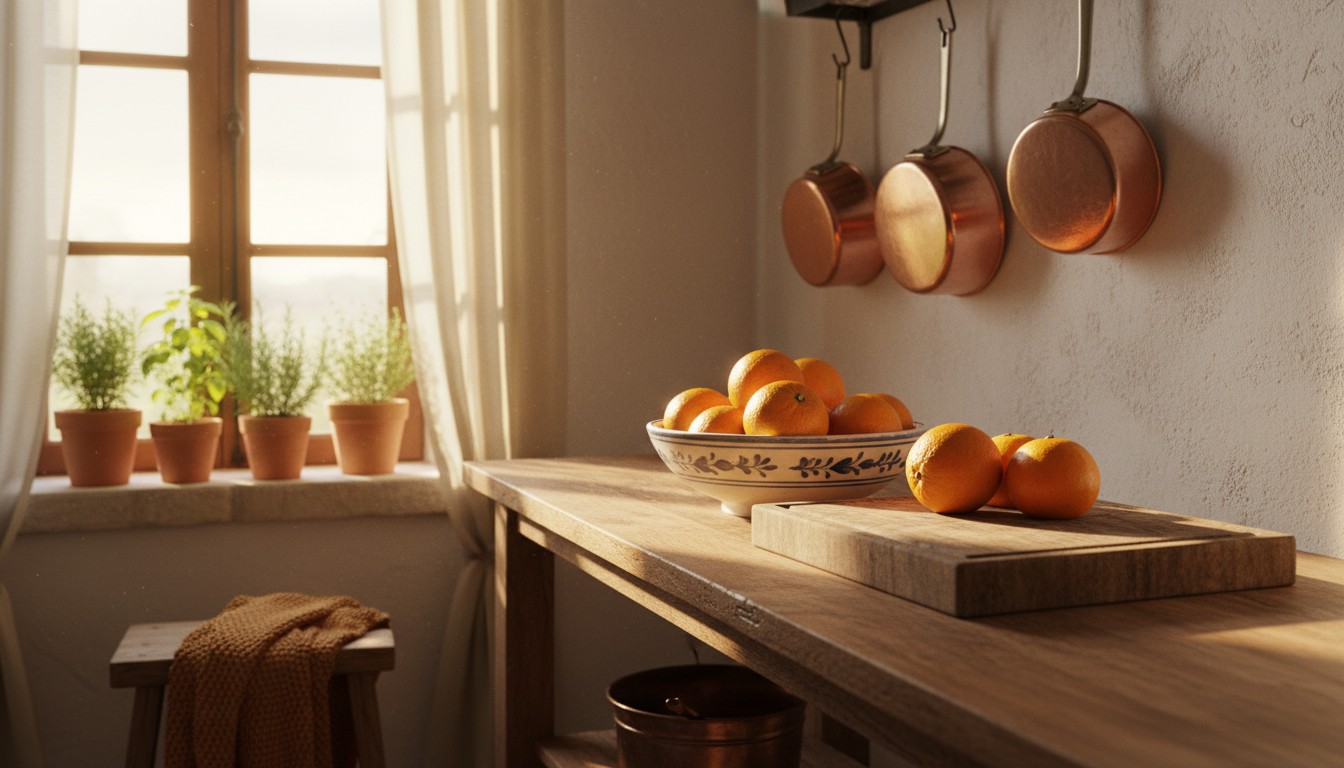 Kitchen counter in a Valencian home showing a ceramic bowl of fresh oranges, a worn wooden cutting b
How to Score the Best Valencia Home Swaps
Here's where I share what actually works. Valencia is getting competitive, especially for peak season (April-June and September-October). You need a strategy.
Timing Your Request
Send your swap request 2-3 months in advance for peak season, 4-6 weeks for off-season. Earlier than that and hosts haven't finalized their own travel plans; later and the good listings are taken.
Avoid Las Fallas (March 15-19) unless you specifically want to experience it—and if you do, start looking 4-5 months ahead. This is Valencia's biggest festival, and locals often leave to escape the noise, making swaps theoretically available. But demand is intense.
Crafting Your Request
Valencians respond to personality. Don't send a generic "we'd love to stay at your place" message. Mention something specific from their listing. Share why you're visiting Valencia. If you have any connection to Spain—studied Spanish, love paella, whatever—mention it.
I always include a few photos of my own home in the initial message, even though they can see my listing. It shows you're serious and gives them a taste of what they'd get in return.
What Valencians Want in Return
Here's something useful: Valencia hosts disproportionately want to visit certain destinations. Based on what I've seen, the most successful reverse swaps are to London (always in demand from Spanish travelers), New York or California (the American dream is real), Nordic countries (Valencians crave those long summer days), and Japan (huge interest, limited supply of Japanese swappers).
If you're from any of these places, emphasize it. Your San Francisco apartment or Stockholm flat is catnip to Valencian hosts.
Cost Comparison: Home Swap vs. Traditional Stays
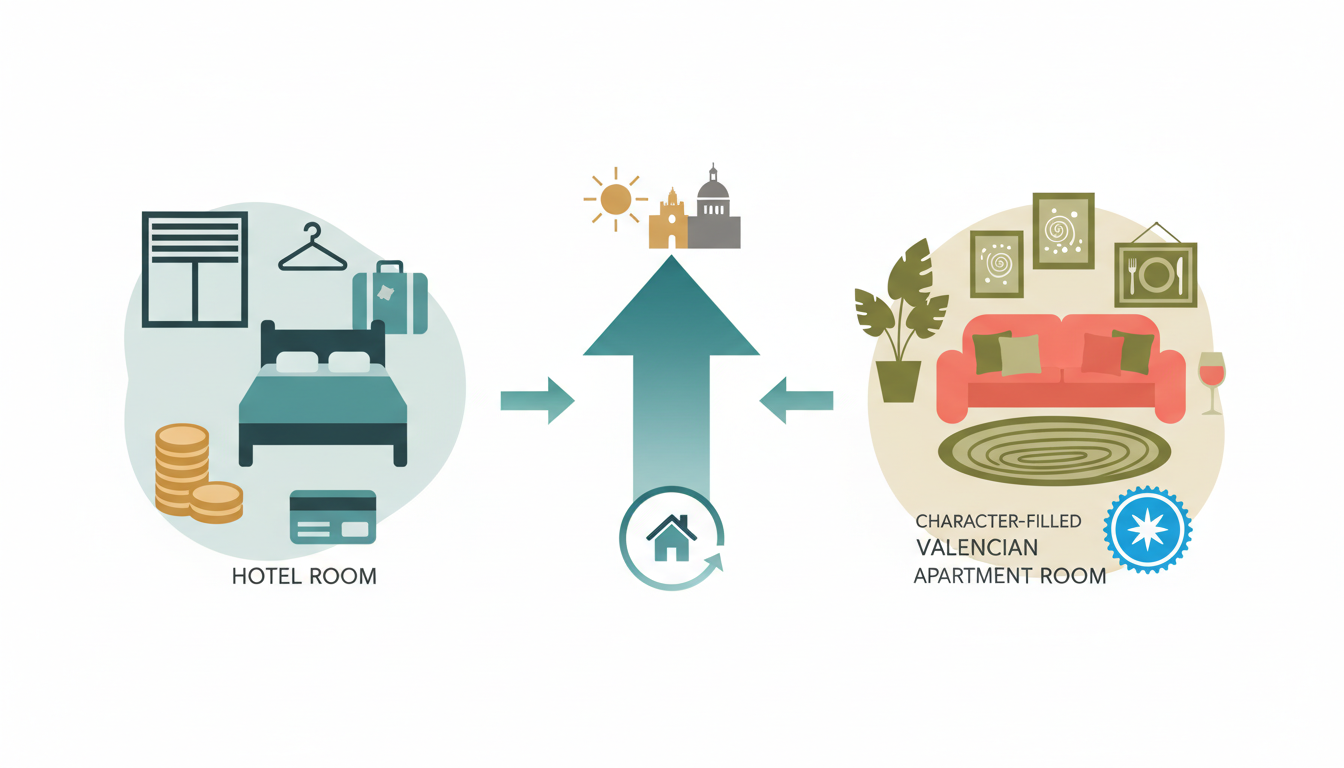
Let me break down what you're actually saving with a Valencia home swap. I'll use a 10-night trip as an example, since that's the sweet spot for really experiencing the city.
A mid-range, 3-star hotel runs €95-130 ($103-141 USD) per night. For 10 nights, you're looking at €950-1,300 ($1,030-1,410 USD)—and that's without breakfast, which adds another €12-15 per day.
Airbnb? A 1-bedroom apartment in Ruzafa costs €85-120 ($92-130 USD) nightly, plus a €40-60 ($43-65 USD) cleaning fee, plus ~15% service fees. Total for 10 nights: €1,050-1,450 ($1,140-1,570 USD).
Home swap via SwappaHome: 10 credits used (1 per night). Actual cost for accommodation: €0. You earn credits back by hosting, so it's actually net positive.
The math is almost embarrassing.
 Split-screen comparison showing a generic hotel room on one side and a character-filled Valencian ap
Living Like a Local: What Your Valencia Swap Unlocks
This is the part that's hard to quantify but matters most.
When you stay in someone's actual home, you experience the city differently. You shop at their neighborhood market because they left you a note saying the fish guy on the left has the freshest gambas. You drink coffee at the bar downstairs because the owner knows the apartment and gives you a nod. You discover that the best horchata in the city isn't at the famous places—it's at a tiny stand in Alboraya that your host's family has visited for three generations.
On my last Valencia swap, my host left me her bike. Not a rental—her actual bike, the one she rides to work. I spent ten days cycling the Turia gardens, the old riverbed that's now a 9-kilometer park cutting through the city. I found swimming spots, hidden cafés, a jazz club in a basement that I never would have discovered otherwise.
That's what home swapping offers that no hotel can match: access to someone's actual life.
Practical Tips for Your Valencia Home Swap
A few things I've learned that'll make your exchange smoother:
Bring a small gift. Valencians appreciate the gesture. Something from your home region works perfectly—local honey, specialty coffee, a cookbook. I brought maple syrup from a Vancouver trip once, and my host still messages me about it.
Learn basic Spanish. Valencia is bilingual (Spanish and Valencian), but English isn't as widespread as in Barcelona. Even broken Spanish earns goodwill. Download Google Translate offline just in case.
Respect the siesta. Shops close 2-5 PM. Restaurants don't serve dinner until 9 PM at the earliest. Fighting this rhythm will frustrate you; embracing it is part of the experience.
Get a transport card. The Valencia metro and bus system is excellent. A 10-trip card costs €8.50 ($9.20 USD) and covers most of what you'll need. Your host probably has tips on this.
Ask about the building. Some older Valencian buildings don't have elevators. If you're on the 4th floor with luggage, you'll want to know. Also ask about air conditioning—essential in summer, not universal in older apartments.
When to Visit Valencia for Home Swapping
Valencia's climate is genuinely excellent—300+ sunny days per year, mild winters, and a Mediterranean breeze that takes the edge off summer heat. But timing affects your swap options.
March-May: Perfect weather (18-24°C / 64-75°F), Las Fallas in March brings chaos and magic. High demand for swaps, but also high availability as locals travel.
June-August: Hot (30-35°C / 86-95°F), beach season in full swing. Many Valencians leave the city, making swaps easier to secure. But some hosts close their homes rather than swap during peak heat.
September-October: My favorite. Warm but not brutal, the sea is still swimmable, and the city has a back-to-school energy. Excellent swap availability.
November-February: Mild (12-18°C / 54-64°F), occasional rain, very few tourists. Best rates on everything, easiest time to secure premium swaps. The city feels authentically local.
The Future of Home Swapping in Valencia
Here's my prediction, and I'll stake my reputation on it: Valencia is going to be the European home swap capital within five years.
The city has everything going for it. A growing population of remote workers who travel frequently and need to offset costs. A housing stock full of characterful apartments perfect for exchange. A culture of hospitality that makes the whole system work. And—crucially—it hasn't been ruined by overtourism yet.
Barcelona is implementing harsh restrictions on tourist apartments. Lisbon's housing crisis has made locals resentful of visitors. But Valencia is still in that sweet spot where growth is welcome, where travelers are seen as guests rather than problems.
Get in now, while it's still possible to find that perfect Ruzafa apartment or that Cabanyal fisherman's cottage. In a few years, you'll be competing with everyone who reads articles like this one.
Getting Started with Your Valencia Home Swap
If you're new to home exchange, Valencia is honestly an ideal place to start. The community is welcoming, the stakes feel manageable (it's not like swapping a Manhattan penthouse), and the reward—free accommodation in one of Europe's most livable cities—is immediate and tangible.
SwappaHome makes the process straightforward. Create your listing, be honest and detailed about your home, upload good photos. Then start browsing Valencia listings. When you find one that speaks to you, send a personalized message. Be patient—good hosts get lots of requests.
The credit system means you don't need a direct swap. Host someone from anywhere in the world, earn your credits, then spend them in Valencia. Or use your starter credits to book your first trip and pay it forward later by hosting.
I know I'm biased—I've been doing this for seven years and it's changed how I travel completely. But Valencia specifically feels like a place where home swapping makes sense in a way that transcends the practical benefits. It's a city that rewards slow travel, genuine connection, and the kind of serendipity that only happens when you're living in a real neighborhood rather than a tourist zone.
That 6 AM moment on the Ruzafa balcony, with the church bells and the bread smell and the absolute quiet? You can't buy that.
But you can swap for it.
Frequently Asked Questions
Is home swapping in Valencia safe for first-time exchangers?
Valencia is one of the safest cities in Spain, with low crime rates and a welcoming local culture. The home swap community here is well-established and hosts tend to be experienced and communicative. SwappaHome's review system helps you verify potential swap partners before committing. Consider getting your own travel insurance for extra peace of mind.
How much money can I save with a Valencia home swap versus hotels?
For a typical 10-night stay, you'll save €950-1,300 ($1,030-1,410 USD) compared to mid-range hotels, or €1,050-1,450 ($1,140-1,570 USD) compared to Airbnb rentals. Home swaps cost zero euros for accommodation—you simply exchange credits through the SwappaHome platform, making Valencia incredibly affordable.
What's the best neighborhood in Valencia for home exchange?
Ruzafa offers the best combination of local atmosphere, dining options, and swap availability. El Carmen suits history lovers wanting Gothic Quarter charm. Benimaclet is perfect for families seeking houses with gardens. Cabanyal delivers beach access within walking distance. Your ideal neighborhood depends on your travel style.
When is the best time to do a home swap in Valencia?
September through October offers ideal weather, swimming temperatures, and excellent swap availability. March through May is perfect but competitive due to Las Fallas festival. Winter months (November-February) provide the easiest access to premium listings with fewer tourists and mild Mediterranean weather.
How far in advance should I request a Valencia home swap?
Request 2-3 months ahead for peak season (April-June, September-October) and 4-6 weeks for off-season visits. For Las Fallas in March, start looking 4-5 months in advance. Earlier requests often fail because hosts haven't confirmed their own travel plans yet.

Published by
SwappaHome
SwappaHome Editorial Team
Home Exchange & Slow Travel Editorial
The SwappaHome Editorial Team brings together travel research, home-exchange community insights, and platform data to produce practical guides for first-time and experienced home swappers. Every article cites real platforms, current market rates, and verifiable city-level facts so readers can make informed decisions without guessing.
Ready to try home swapping?
Join SwappaHome and start traveling by exchanging homes. Get 7 free credits when you sign up!
Related articles
Home Swap in Rome: Where to Find the Best Properties for Your Italian Exchange
Discover where to find the best home swap properties in Rome—from Trastevere's cobblestone charm to Testaccio's local authenticity. Real neighborhoods, real advice.

Home Swap in Bangkok: Where to Find the Best Properties for Free Stays
Discover where to find the best home swap properties in Bangkok—from riverside condos in Charoen Krung to family homes in Ari. Real neighborhoods, real savings.
Home Swap for Beach Lovers: 12 Coastal Destinations Ranked for 2026
Discover the best coastal destinations for home swapping in 2026. From Portugal's Algarve to Australia's Gold Coast, find your perfect beach exchange.