Luxury Home Swap in Rome: Premium Properties and Elite Neighborhoods (2026)

SwappaHome Editorial Team
Home Exchange & Slow Travel Editorial
Discover luxury home swap opportunities in Rome's most prestigious neighborhoods. From Parioli penthouses to Trastevere townhouses, find premium properties for sophisticated travelers.
The elevator opens directly into a marble-floored foyer on Via Veneto, and suddenly you understand why Fellini set La Dolce Vita here. Floor-to-ceiling windows frame the umbrella pines of Villa Borghese. A Murano chandelier catches the late afternoon light. This isn't a five-star hotel—it's someone's home, and for the next two weeks, it's yours through a luxury home swap in Rome.
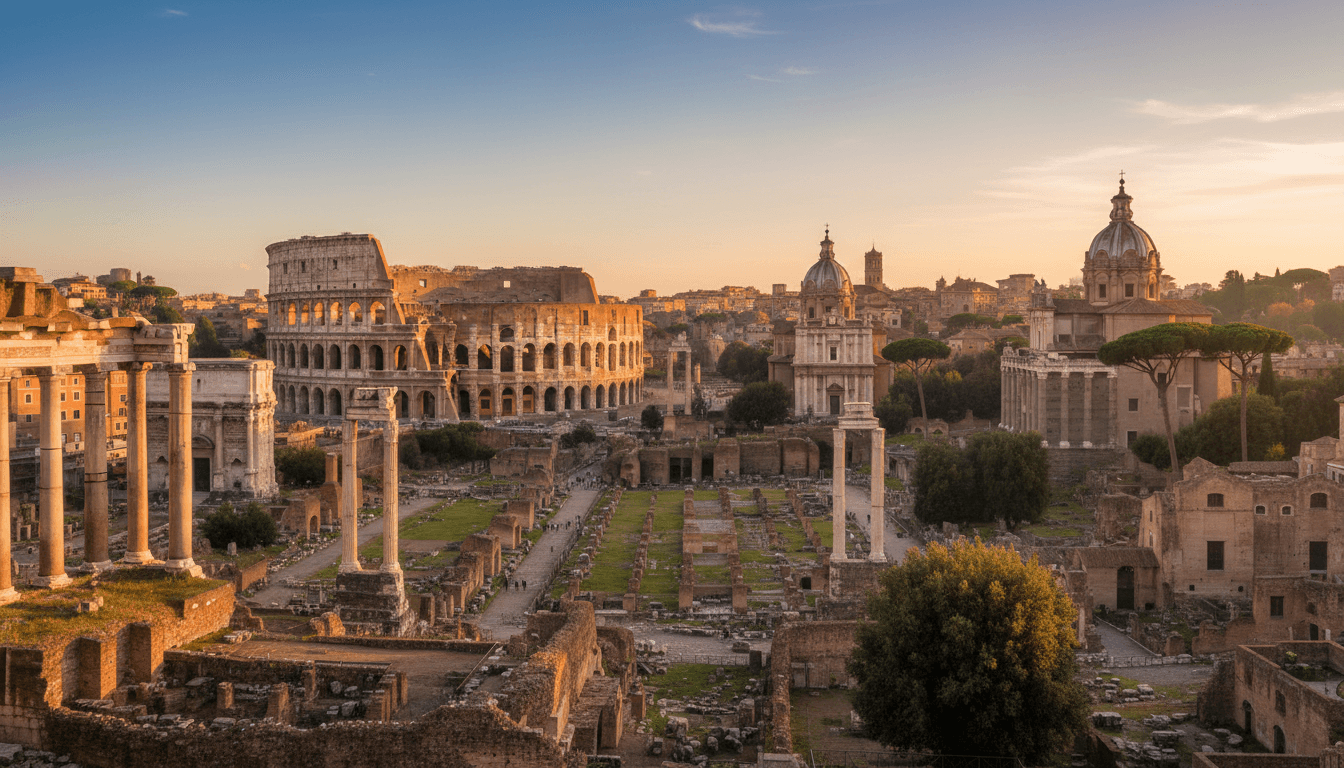
This is what premium home exchange looks like in the Eternal City: not cramped vacation rentals or sterile hotel suites, but genuine Roman residences in neighborhoods where old money still holds aperitivo on private terraces. The luxury home swap market in Rome has matured significantly since 2020, with SwappaHome members listing everything from restored Renaissance palazzos in the Centro Storico to contemporary penthouses overlooking the Colosseum.
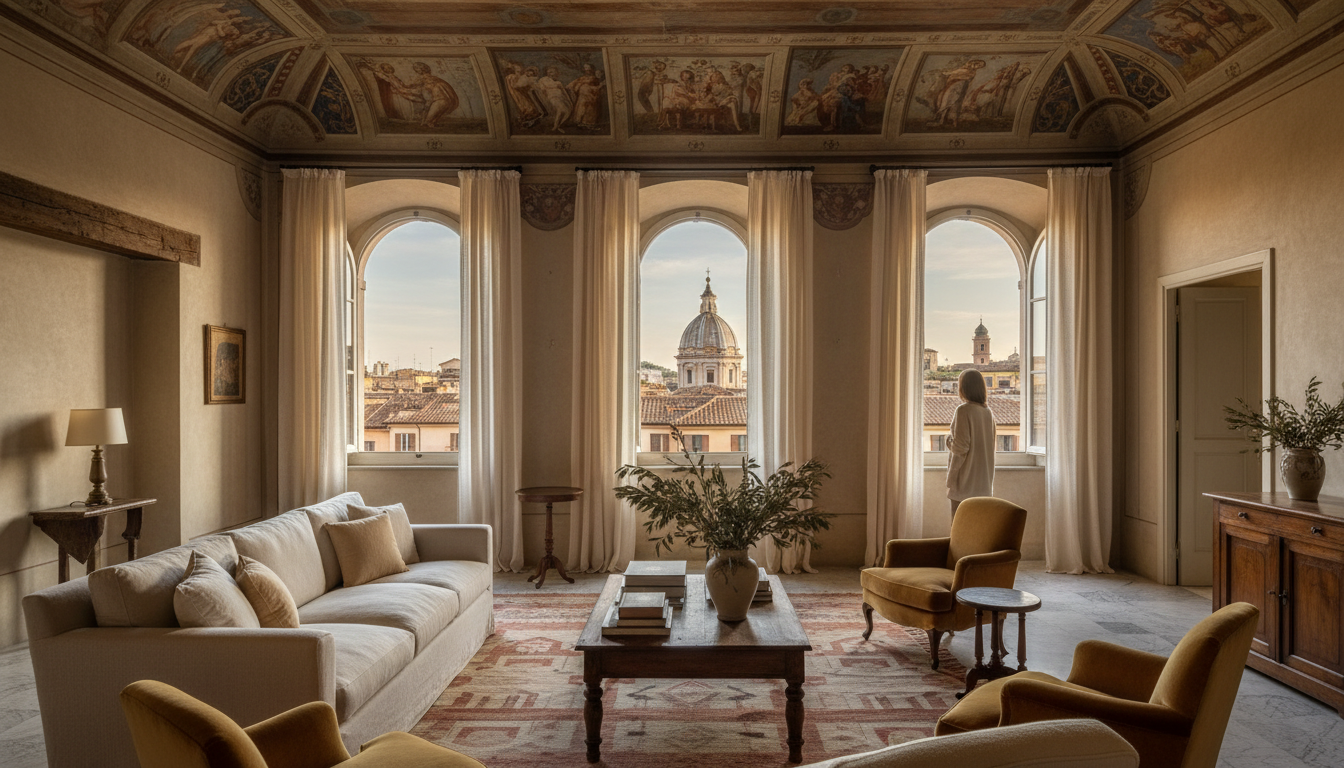 Elegant Roman apartment interior with original frescoed ceilings, antique furnishings, and tall wind
Why Luxury Travelers Choose Home Swap in Rome Over Hotels
Here's what the five-star hotel brochures won't tell you: even the most prestigious Roman hotels can't offer what a private residence provides. The Hassler's rooftop restaurant has spectacular views, certainly—but you can't pad to the kitchen at midnight in your robe to make pasta with ingredients from Campo de' Fiori. The Hotel de Russie's gardens are lovely, but they're not your gardens.
The SwappaHome community includes a substantial segment of luxury property owners who've grown tired of the hotel circuit. They're seeking two things: authentic neighborhood immersion that hotels simply can't provide, and the reciprocal opportunity to stay in equally impressive homes worldwide.
Consider the economics. A suite at the Hotel Eden runs €1,200-2,500 per night in high season. A two-week stay during Rome's glorious October—when the light turns golden and the summer crowds evaporate—would cost €16,800-35,000. Through home exchange, that same period costs nothing beyond your SwappaHome membership, regardless of whether you're staying in a modest apartment or a palazzo with a private courtyard.
The credit system works identically for luxury properties as for any other listing: host guests and earn one credit per night, spend one credit per night when you travel. A member with a €3 million apartment in Parioli earns the same credits as someone with a modest flat in Testaccio. This democratization is precisely what makes high-end home swapping viable—luxury homeowners aren't losing rental income, they're gaining access to a global network of premium properties.
Rome's Most Prestigious Neighborhoods for Luxury Home Exchange
Not all Roman neighborhoods carry equal cachet. Understanding the city's geography of wealth matters enormously when searching for premium properties—and the luxury home swap inventory clusters in specific zones, each with distinct character.
Parioli: Old Money and Embassy Row
North of Villa Borghese, Parioli remains Rome's most consistently affluent residential quarter. This is where Roman aristocratic families retreated when the centro storico became too touristed, and where international diplomats cluster around their embassies. The neighborhood feels almost suburban by Roman standards—tree-lined streets, art nouveau villas, doormen who've worked the same buildings for decades.
Luxury listings here typically feature private gardens (rare in Rome), underground parking (rarer still), and square footage that would be unthinkable in the historic center. Expect apartments of 200-400 square meters, often across entire floors of early 20th-century palazzine. The trade-off? You're a 20-minute taxi ride from the Pantheon. But many sophisticated travelers prefer this residential authenticity.
SwappaHome listings in Parioli currently range from elegant three-bedroom apartments to full villas with pools. The neighborhood's family-friendly character means many premium properties accommodate larger groups comfortably.
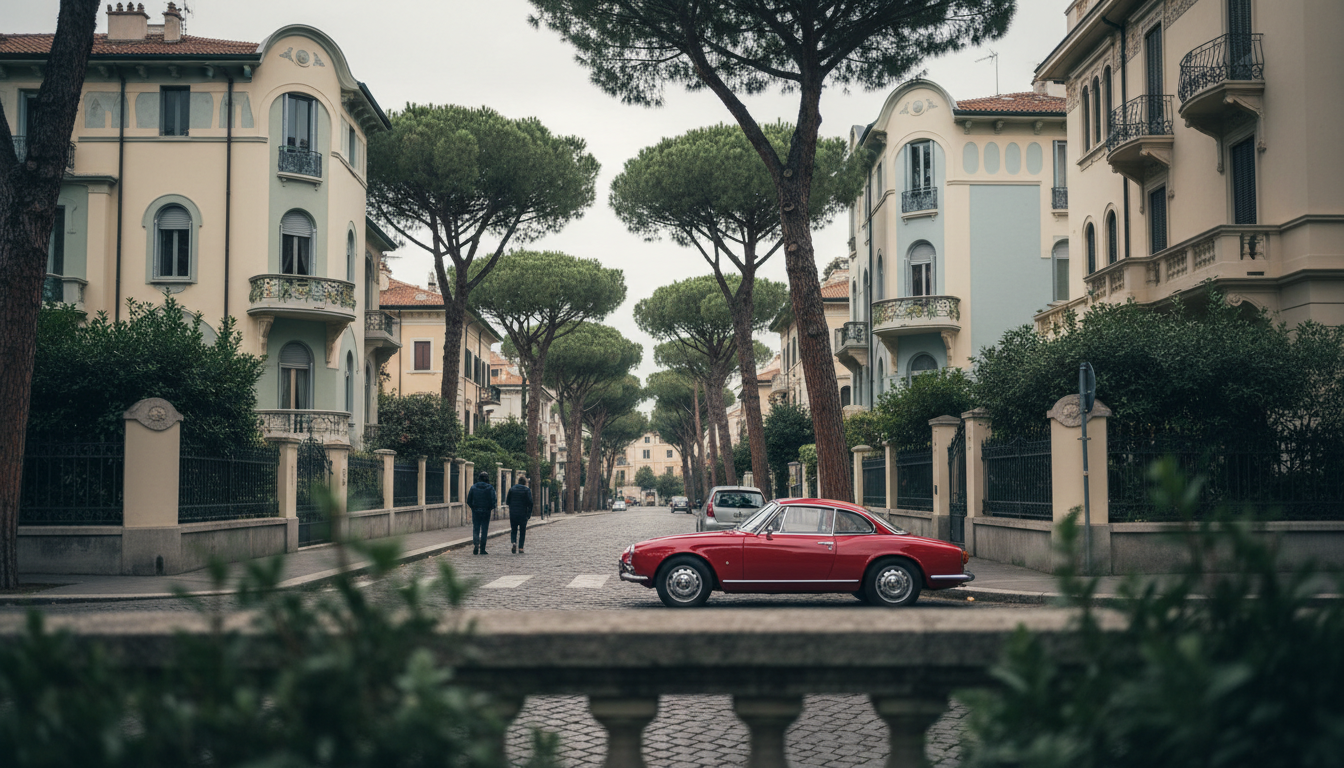 Leafy residential street in Parioli with art nouveau villa facades, mature umbrella pines, and a vin
Trastevere: Bohemian Luxury in Medieval Streets
Across the Tiber, Trastevere offers a different luxury proposition entirely. The neighborhood's medieval street grid—largely unchanged since the Renaissance—creates an intimacy impossible to replicate elsewhere. Luxury here means restored townhouses with exposed beam ceilings, interior courtyards with lemon trees, and rooftop terraces overlooking the dome of Santa Maria in Trastevere.
The Trastevere premium market has exploded since the early 2010s, driven partly by American and Northern European buyers who fell in love during Roman holidays and returned with checkbooks. These owners often list their properties on home exchange platforms during months they're not in residence—creating opportunities for travelers seeking the neighborhood's particular magic.
Equivalent rental properties in Trastevere run €300-600 per night for truly premium listings. A two-week home swap eliminates €4,200-8,400 in accommodation costs while placing you in homes that rarely appear on traditional rental platforms.
Worth noting: Trastevere's cobblestone streets and ancient buildings mean accessibility can be challenging. Many luxury properties involve stairs, narrow passages, or buildings without elevators. Confirm these details before committing to any exchange.
Monti: Where History Meets Contemporary Design
Rome's oldest residential neighborhood—where ancient Romans actually lived—has become the city's most design-forward district. Monti's luxury properties often blend archaeological elements (exposed ancient walls, original Roman columns) with contemporary Italian design. It's not unusual to find apartments where a glass floor reveals excavated Roman foundations beneath your living room.
The neighborhood sits between the Colosseum and Termini station, making it exceptionally convenient for travelers who want walkable access to major sites. Via dei Serpenti and Via del Boschetto form the main arteries, lined with independent boutiques, wine bars, and restaurants that cater to Romans rather than tourists.
Luxury home swap listings in Monti tend toward smaller footprints than Parioli—150-250 square meters is typical—but with extraordinary architectural details. Original terrazzo floors. Sixteenth-century frescoes. Kitchens that Italian design magazines would happily feature.
Aventino: Rome's Secret Garden District
Most tourists never venture to the Aventine Hill, which is precisely why Roman elites have favored it for centuries. This residential enclave above Testaccio offers something genuinely rare: silence. The neighborhood centers on the Orange Garden (Giardino degli Aranci), with its famous keyhole view of St. Peter's dome, and the ancient churches of Santa Sabina and Sant'Alessio.
Luxury properties on the Aventino often include private gardens—a near-impossibility elsewhere in central Rome. The neighborhood's villa character means many homes function as single-family residences rather than apartments, with multiple bedrooms, dedicated parking, and outdoor space for al fresco dining.
The SwappaHome community includes several Aventino properties that rarely appear on any rental platform. Their owners participate in home exchange specifically because they seek equivalent privacy and exclusivity when traveling—not commercial rental income.
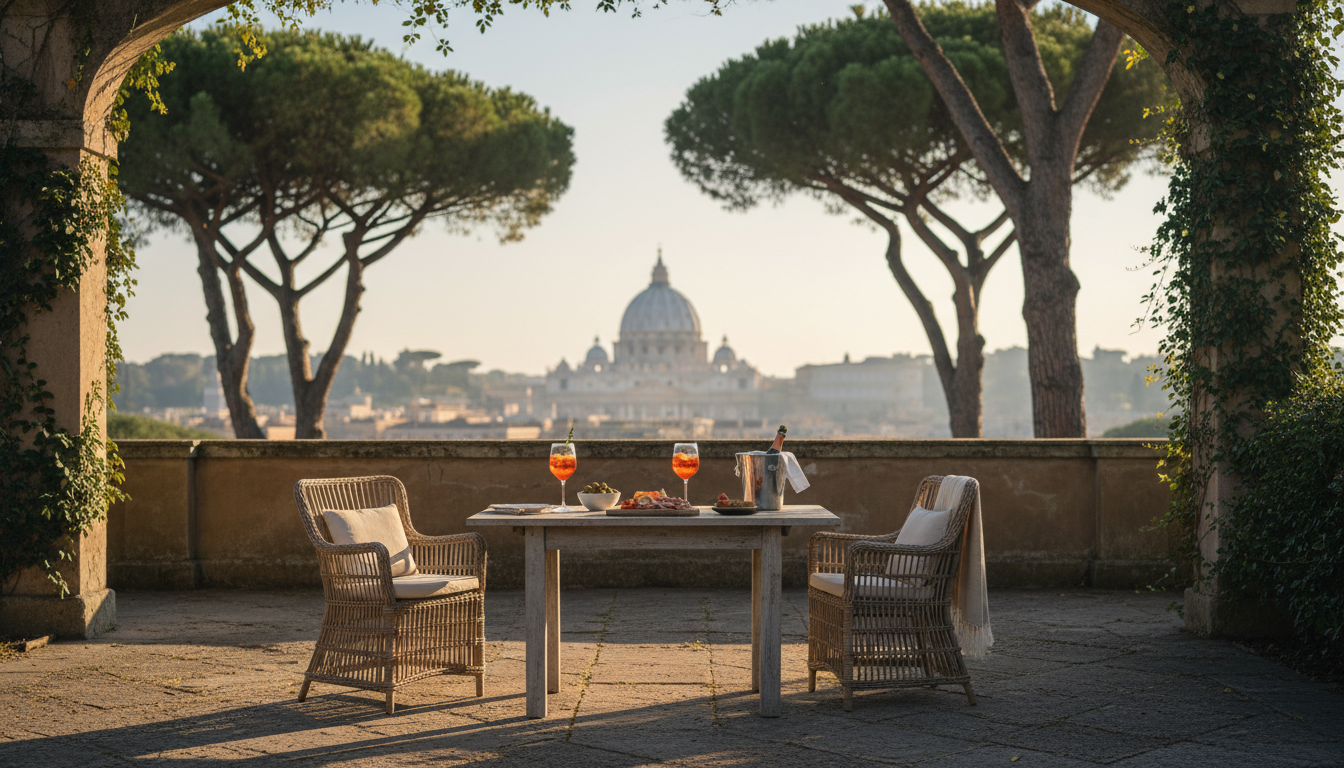 Private garden terrace on the Aventine Hill at golden hour, with umbrella pines framing a distant vi
What Defines a Luxury Home Swap Property in Rome
The term "luxury" gets thrown around carelessly on travel platforms. For Rome home exchange specifically, premium properties share certain characteristics that distinguish them from merely nice apartments.
Architectural Significance
Rome's building stock spans three millennia, and luxury properties typically occupy historically significant structures. This might mean a piano nobile (the principal floor of a Renaissance palazzo), a converted convent with original cloisters, or a rationalist-era penthouse in EUR designed by a notable architect.
SwappaHome listings in Rome's premium tier frequently mention specific architectural features: coffered ceilings from the 1600s, original majolica tile floors, private chapels, interior courtyards with Renaissance fountains. These aren't marketing embellishments—they're genuine distinguishing features that justify the luxury classification.
Professional-Grade Amenities
Luxury Roman homes increasingly include amenities that match or exceed five-star hotels: professional espresso machines (La Marzocco or similar), wine refrigeration, smart home systems, premium linens (Frette is the Roman standard), and fully equipped kitchens with high-end appliances.
Air conditioning deserves specific mention. Many historic Roman buildings lack it entirely, and even some expensive apartments rely on portable units that struggle against August heat. Truly premium properties have invested in discreet climate control systems—often at considerable expense, given heritage building restrictions.
Location Within Location
Within prestigious neighborhoods, specific micro-locations command premium status. In Trastevere, properties on Piazza Santa Maria or overlooking the Tiber carry more cachet than those on busy Via della Lungaretta. In Parioli, proximity to Villa Ada or Villa Borghese matters. In Monti, the quiet streets between Via Panisperna and Via Cavour are preferred over the main commercial arteries.
Experienced home-swappers learn to read these location signals. A listing that mentions "steps from Piazza Navona" is advertising tourist convenience; one that mentions "overlooking Palazzo Spada's garden" is signaling insider knowledge and genuine prestige.
How to Find and Secure Premium Rome Properties on SwappaHome
The luxury home swap market operates differently from standard listings. Premium property owners tend to be more selective, more communicative, and more interested in reciprocal quality than in maximizing their credit earnings.
Crafting a Compelling Profile
Your SwappaHome profile functions as your introduction to potential hosts. For luxury exchanges, this matters enormously—premium property owners review potential guests' profiles extensively before accepting requests. They're entrusting valuable homes and possessions to strangers.
Effective profiles for luxury exchanges include: professional-quality photos of your own home (regardless of its value), detailed descriptions of your lifestyle and travel preferences, verification of your identity, and a history of positive reviews from previous exchanges. The goal is establishing yourself as a responsible, respectful guest who will treat their Roman palazzo as carefully as they'd treat your property.
Timing and Flexibility
Rome's luxury home swap calendar follows predictable patterns. Premium properties see highest demand during Easter week, late September through October, and the Christmas-New Year period. Availability is typically better during January-February (cold but uncrowded), July (when Romans flee to the coast), and November (shoulder season with mild weather).
Flexibility dramatically increases your options. Members who can adjust their travel dates by even a few days often secure properties that would otherwise be unavailable. Similarly, offering longer stays—two weeks rather than one—appeals to luxury homeowners who prefer fewer exchanges with more committed guests.
The Initial Outreach
First contact with a premium property owner should be substantive, not generic. Mention specific elements of their listing that appeal to you. Explain why you're visiting Rome and what you hope to experience. Share relevant details about yourself that establish common ground—perhaps you're both architects, or both have young children, or both collect contemporary art.
What to avoid: generic messages that could apply to any listing, requests that focus primarily on the property's features rather than the exchange relationship, and anything that suggests you view this as a transaction rather than a community connection.
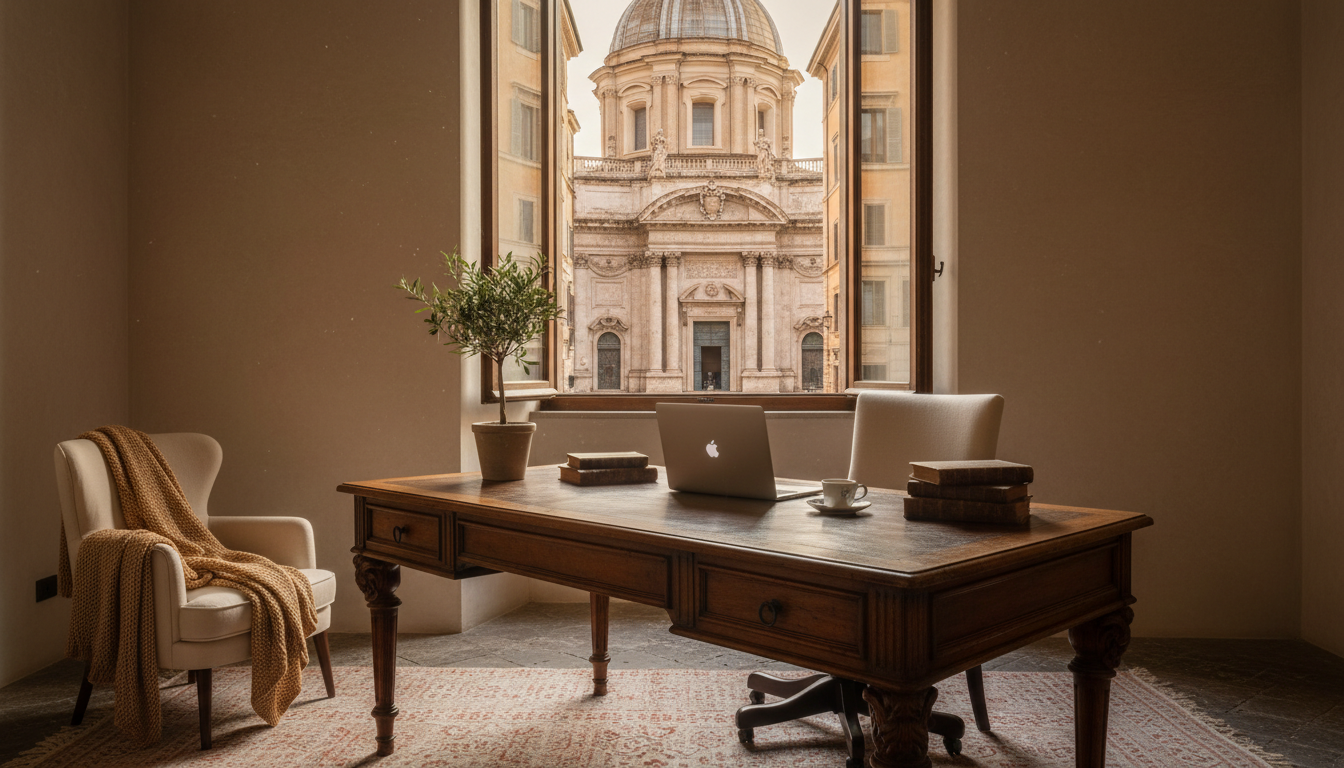 Elegant home office setup in a Roman apartment with antique desk, modern laptop, and window view of
Preparing Your Own Home for Reciprocal Luxury Exchange
Here's the honest truth about luxury home swapping: it works best when both parties bring comparable value to the exchange. If you're hoping to stay in a €2 million Trastevere townhouse, your own home should offer something genuinely appealing to that property's owner.
"Comparable value" doesn't necessarily mean equivalent real estate prices. A charming cottage in the Cotswolds, a beach house in Malibu, a historic brownstone in Brooklyn—these properties attract Roman luxury homeowners who want experiences unavailable in their own city. What matters is quality, character, and desirability.
Elevating Your Listing
Professional photography transforms how potential guests perceive your property. The investment—typically €200-500 for a quality real estate photographer—pays dividends across every exchange request you send. Natural light, thoughtful staging, and wide-angle lenses reveal your home's best qualities.
Your listing description should emphasize what makes your property special, not just its basic specifications. "Three bedrooms, two bathrooms" tells potential guests nothing distinctive. "A 1920s craftsman with original built-ins, a chef's kitchen overlooking mature gardens, and a neighborhood where you can walk to James Beard-nominated restaurants" creates genuine appeal.
The Details That Matter
Luxury homeowners notice details that casual travelers might overlook. Before listing your property or hosting guests, make sure all light bulbs work and are consistent (no mix of warm and cool tones). Stock quality basics: good olive oil, decent coffee, fresh flowers upon arrival. Provide premium toiletries, not hotel miniatures. Include a curated guidebook with genuine local recommendations, not tourist-trap suggestions. Arrange professional cleaning before and after each exchange.
These touches signal that you understand and respect the luxury exchange ethos. They also increase the likelihood that premium property owners will accept your exchange requests.
Living Like a Roman: Making the Most of Your Luxury Stay
Securing a premium home swap in Rome is only the beginning. The real value lies in using that home as a base for experiencing the city as residents do—not as tourists passing through.
Neighborhood Integration
Your host's recommendations matter more than any guidebook. Before your exchange, ask for their preferred morning coffee bar (Romans are fiercely loyal to their local barista), their go-to produce market (Campo de' Fiori for tourists, Testaccio or Trionfale for quality), their trusted wine shop (an enoteca where staff know them by name), and their restaurant for special occasions.
Many luxury home swap hosts leave detailed notes about their neighborhood routines. Follow them. The dry cleaner who does same-day service, the newsstand that stocks international papers, the pharmacy with the knowledgeable staff—these connections transform a vacation into temporary residency.
Domestic Rhythms
One of home exchange's underappreciated pleasures is adopting local domestic rhythms. In Rome, this means espresso at the bar around 7:30 AM (never sitting down, which doubles the price), shopping for dinner ingredients in the morning when produce is freshest, respecting the sacred afternoon pause between 1-4 PM, and embracing the late dinner hour (8:30 PM is early by Roman standards).
A luxury home swap provides the infrastructure for this rhythm: a proper kitchen for cooking, a comfortable living space for afternoon reading, a dining area for leisurely evening meals. Hotels, regardless of their star rating, simply can't replicate this domestic immersion.
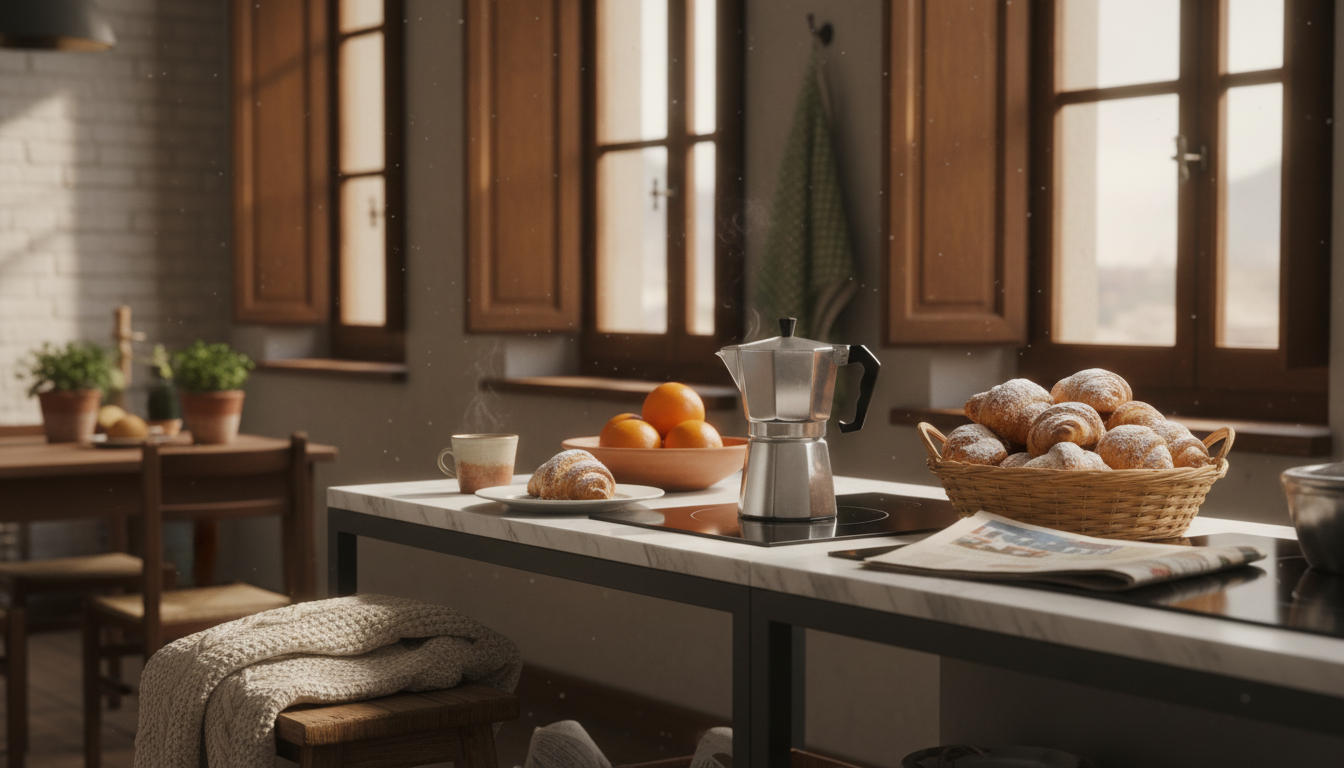 Morning scene in a Roman kitchen with moka pot on the stove, fresh cornetti from the local pasticcer
Cultural Access
Roman luxury homeowners often have connections that facilitate cultural experiences unavailable to ordinary tourists. Hosts commonly offer introductions to private gallery owners, restaurant reservations at fully-booked establishments, access to normally-closed historic sites, and invitations to cultural events.
This isn't transactional—it's the community aspect of home exchange functioning as intended. You're not a customer; you're a guest of someone embedded in Roman cultural life. Reciprocate by offering similar connections in your own city.
Practical Considerations for Luxury Home Exchange in Rome
Insurance and Security
SwappaHome facilitates connections between members but does not provide insurance coverage for damages or theft. For luxury exchanges involving valuable properties and possessions, members typically arrange their own coverage.
Options include specialized home exchange insurance (several companies now offer policies designed specifically for this purpose), extending your existing homeowner's policy to cover exchange guests, and travel insurance that includes personal liability coverage. Discuss insurance arrangements openly with your exchange partner—this transparency builds trust and prevents misunderstandings.
Many luxury Roman homes include valuable art, antiques, and furnishings. Clarify expectations about these items before your exchange. Some hosts prefer to secure certain items; others trust their guests completely. Neither approach is wrong, but alignment matters.
Arrival Logistics
Rome's Fiumicino airport (FCO) sits 30 kilometers from the city center. Private transfers to central neighborhoods run €50-70 for sedan service, €80-100 for luxury vehicles. Alternatively, the Leonardo Express train reaches Termini station in 32 minutes for €14 per person—efficient but requiring a taxi or rideshare to your final destination.
For luxury properties, coordinate arrival timing carefully with your host or their designated key-holder. Many premium apartments in historic buildings have specific access procedures—courtyard codes, elevator keys, security protocols—that require in-person explanation.
The August Question
Romans famously abandon their city in August, fleeing to coastal or mountain retreats. This creates both opportunity and challenge for home swappers. The opportunity: many luxury properties become available as owners depart for Sardinia or the Amalfi Coast. The challenge: the city itself partially shuts down, with neighborhood shops, restaurants, and services operating on reduced schedules or closing entirely.
August in Rome means temperatures regularly exceeding 35°C, intense afternoon sun, and a particular quality of light that photographers love but pedestrians curse. If you're considering an August luxury home swap, confirm that the property has effective air conditioning and that your host can recommend which neighborhood establishments remain open.
The Rome Home Swap Community: What to Expect
The SwappaHome community in Rome skews toward a particular demographic: internationally-minded professionals, academics with sabbatical flexibility, retired couples with time for extended travel, and creative-industry workers with location independence. These are people who've chosen home exchange deliberately, not as budget necessity but as lifestyle preference.
This self-selection creates a community of conscientious, communicative members. Luxury property owners consistently report that home exchange guests treat their homes with more care than commercial renters—perhaps because the reciprocal nature creates mutual accountability.
Many Rome-based SwappaHome members maintain ongoing connections with guests, hosting them again on return visits or meeting up when traveling to guests' home cities. This network effect—where a single successful exchange spawns multiple future connections—represents home swapping's deepest value proposition.
Beyond the Centro: Emerging Luxury Zones
Rome's luxury geography continues evolving. Several neighborhoods that weren't on the premium radar a decade ago now host significant high-end home swap inventory.
Ostiense and Testaccio
These adjacent neighborhoods south of the Aventine have transformed from working-class districts to creative-industry hubs. Former industrial buildings now house contemporary loft apartments with the exposed brick, high ceilings, and open floor plans that appeal to design-conscious travelers. The area's food scene—anchored by the historic Testaccio market and innovative restaurants like Flavio al Velavevodetto—rivals any neighborhood in the city.
Luxury listings in Ostiense tend toward contemporary aesthetics rather than historic character. If your preference runs to Poliform kitchens and Molteni sofas rather than baroque frescoes, this neighborhood offers compelling options.
Prati and the Vatican Area
Immediately north of Vatican City, Prati offers elegant late-19th-century architecture, tree-lined streets, and a distinctly residential character despite proximity to St. Peter's. The neighborhood attracts families and professionals seeking space and quiet without sacrificing central location.
Prati's luxury properties often feature generous proportions—apartments of 180-300 square meters are common—with the high ceilings and architectural details characteristic of Rome's Umbertine period. The neighborhood's excellent public transport connections (Metro A, multiple bus lines) make it practical for exploring the entire city.
Making Your First Luxury Home Swap in Rome
For members new to premium home exchange, Rome offers an ideal introduction. The city's established SwappaHome community, abundance of quality listings, and year-round appeal create favorable conditions for successful first exchanges.
Start by browsing Rome listings without sending requests—get a sense of what's available, at what quality level, and in which neighborhoods. Note properties that genuinely excite you, then examine what those listings have in common. This research helps you understand the market and refine your own listing to appeal to similar property owners.
When you're ready to reach out, begin with properties whose owners have multiple positive reviews and responsive communication patterns. These experienced exchangers can guide you through the process, answer questions, and set appropriate expectations. A successful first luxury exchange builds confidence and reputation for increasingly premium future opportunities.
Frequently Asked Questions
Is a luxury home swap in Rome safe for valuable properties?
Safety in luxury home exchange relies on the SwappaHome verification system, member reviews, and direct communication between parties. Premium property owners report that home exchange guests typically exercise more care than commercial renters due to the reciprocal nature of the arrangement. Members should arrange their own insurance coverage for valuable items, discuss expectations openly before exchanges, and use the platform's secure messaging for all communications. The community-based accountability system has proven effective for properties at all value levels.
How much can I save with a luxury home swap in Rome compared to five-star hotels?
Premium Rome hotels range from €800-2,500 per night for suites comparable to luxury home swap properties. A two-week stay would cost €11,200-35,000 at these rates. Through SwappaHome, that same period requires only your membership fee plus the credits earned by hosting guests—potentially saving €10,000-30,000 or more. The savings scale dramatically for longer stays or family travel requiring multiple hotel rooms.
What's the best time of year for a luxury home swap in Rome?
October offers the ideal combination of weather, availability, and atmosphere—warm days averaging 20-22°C, golden afternoon light, and manageable tourist crowds. Late April through May provides similar conditions. Luxury property availability peaks during July-August when Roman owners vacation elsewhere, though the city's heat and partial closures may not suit all travelers. The Christmas-New Year period sees high demand but magical atmosphere, while January-February offers excellent availability and surprisingly mild weather.
Do I need to own a luxury property to participate in premium home exchanges?
Not necessarily. SwappaHome's credit system means any member can stay in any property for one credit per night, regardless of their own home's value. However, luxury property owners often prefer exchanging with members whose homes offer comparable appeal—whether through location, character, or amenities. A charming, well-maintained home in a desirable destination can attract premium exchange partners even if its market value is lower than Roman luxury properties.
Can I arrange a direct swap with a specific Rome property owner?
Yes, though direct swaps (simultaneous exchanges where you stay in each other's homes at the same time) require schedule alignment that can be challenging. Most luxury home exchanges work through the credit system: you host guests from anywhere to earn credits, then use those credits to book Rome properties when their owners have availability. This flexibility makes exchanges far more practical than requiring perfect schedule matches between specific parties.

Published by
SwappaHome
SwappaHome Editorial Team
Home Exchange & Slow Travel Editorial
The SwappaHome Editorial Team brings together travel research, home-exchange community insights, and platform data to produce practical guides for first-time and experienced home swappers. Every article cites real platforms, current market rates, and verifiable city-level facts so readers can make informed decisions without guessing.
Ready to try home swapping?
Join SwappaHome and start traveling by exchanging homes. Get 7 free credits when you sign up!
Related articles

Bachelor and Bachelorette Parties in Singapore: The Complete Home Swap Group Guide for 2026
Planning a bachelor or bachelorette party in Singapore? Discover how home swapping lets groups of 6-12 stay together in luxury condos, saving thousands while partying in Marina Bay.

Cycling in Lisbon: 7 Home Swap Bike Tour Itineraries for Every Rider
Discover the best cycling routes in Lisbon with these home swap bike tour itineraries—from waterfront paths to hilltop adventures, all starting from your borrowed home.

Graduation Trip to Barcelona: How Home Swapping Gives New Graduates the Ultimate Celebration
Planning a graduation trip to Barcelona? Discover how home swapping lets new graduates explore Spain's most vibrant city without the hostel crowds or hotel costs.