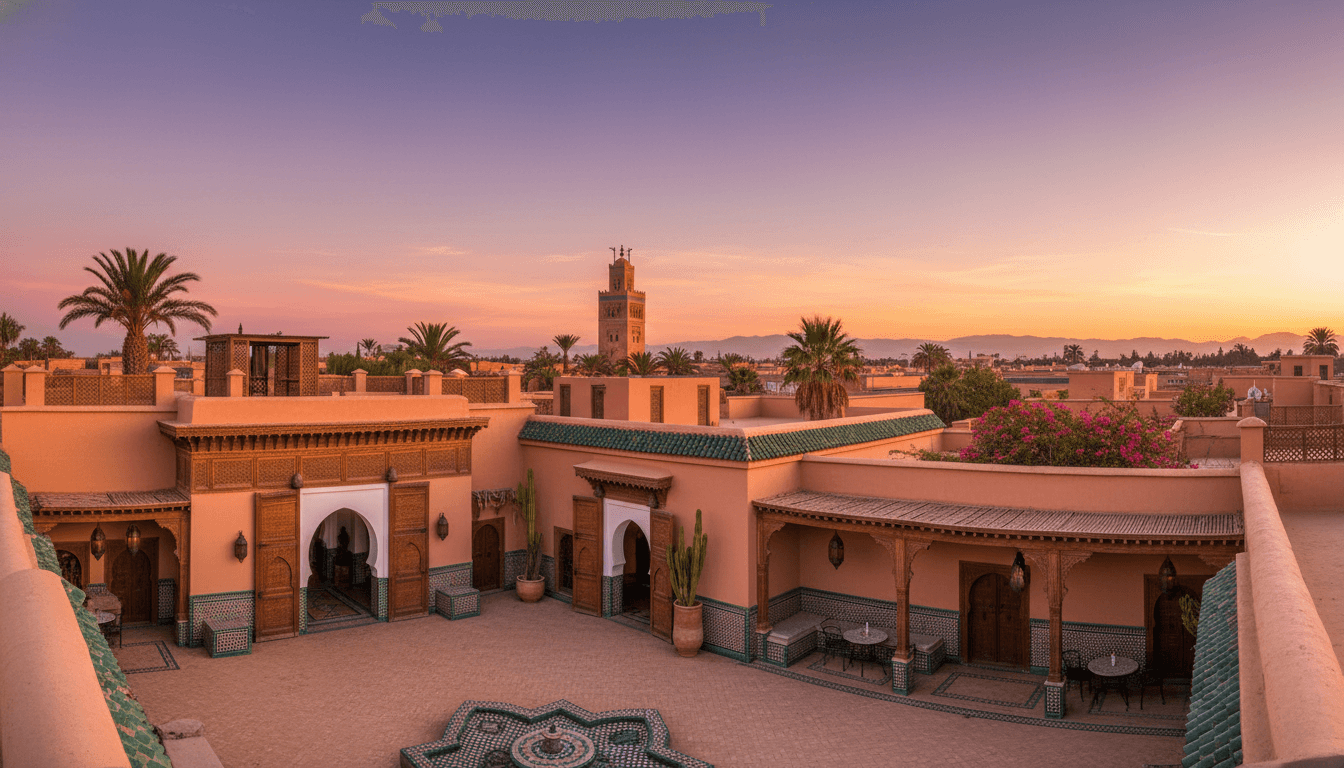
Marrakech with Children: Why Home Swap Makes Family Travel Actually Work

SwappaHome Editorial Team
Home Exchange & Slow Travel Editorial
Discover why home swapping in Marrakech with children transforms chaotic family travel into an authentic adventure—with space, kitchens, and real neighborhood life.
My seven-year-old was having a meltdown in the middle of Jemaa el-Fnaa square. Not because of the snake charmers or the overwhelming sensory explosion of Marrakech's famous plaza—but because she desperately needed to pee and we'd been walking for forty minutes trying to find our hotel through the maze of the medina.
That was my first trip to Marrakech with children. We stayed in a gorgeous riad, the kind you see on Instagram with the mosaic tiles and the plunge pool. What Instagram didn't show? The four flights of steep stairs with no railings, the 2 PM checkout that left us wandering with exhausted kids for six hours before our evening flight, and the $180/night price tag that meant we could only afford three nights.
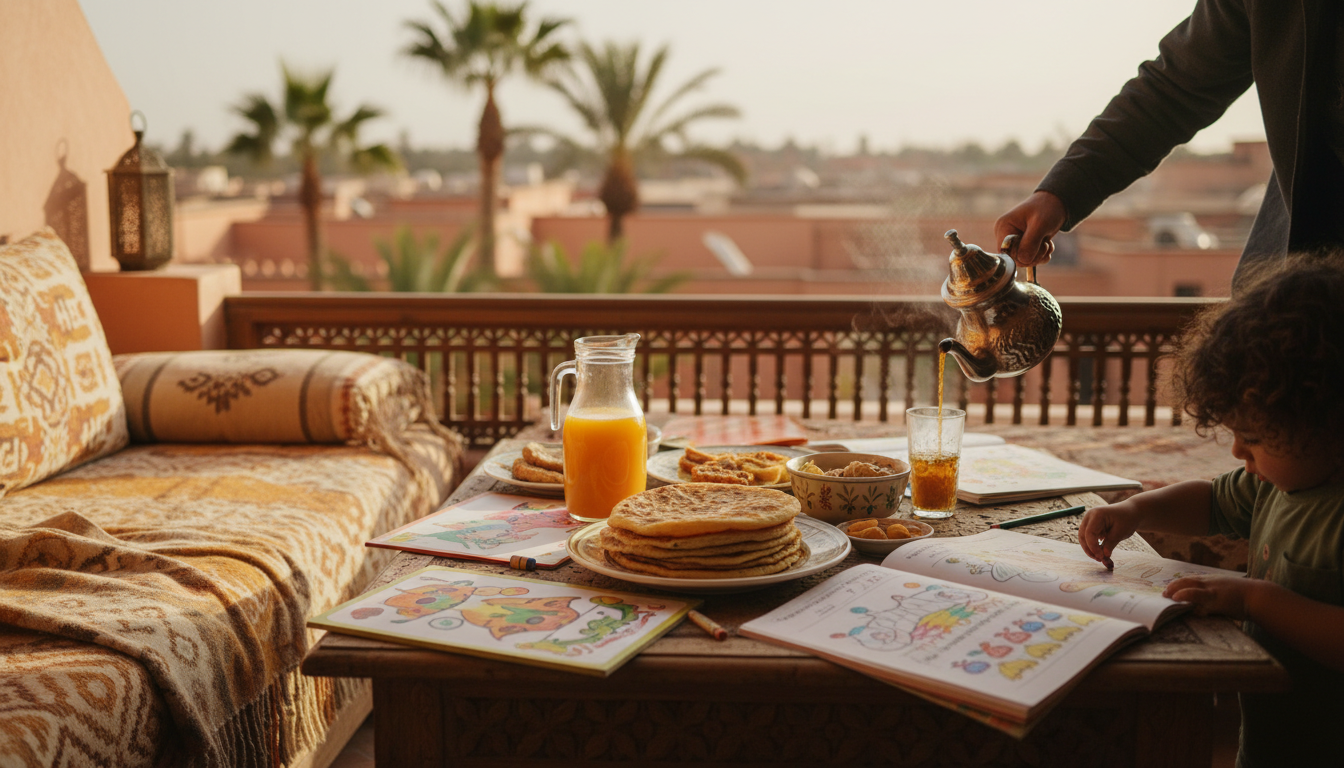
Fast forward to last October. Same city, same kids (now 10 and 7), completely different experience. We did a home swap in Marrakech—a three-bedroom apartment in Guéliz with a washing machine, a full kitchen, and a terrace where my kids ate breakfast in their pajamas every morning. We stayed for twelve nights. The total accommodation cost? Zero dollars.
I'm going to tell you everything I've learned about traveling to Marrakech with children through home exchange. And honestly? I think it's the best way to experience this incredible city as a family.
 sun-drenched Moroccan terrace with traditional breakfast spread of msemen flatbread, mint tea, and f
Why Home Swap in Marrakech Works Better Than Hotels for Families
Real talk: Marrakech is intense. The medina is a sensory overload even for adults. The call to prayer echoes five times daily. Motorbikes zip through pedestrian alleys. Vendors call out. Spices perfume the air. It's magical, but it's a lot.
For kids, this intensity needs to be balanced with downtime. Real downtime. Not "quiet time in a hotel room where everyone's on top of each other" downtime—actual space to decompress.
A home swap gives you that.
Our apartment in Guéliz had a living room where my kids could spread out with their Legos while my husband and I sipped wine on the terrace after they went to bed. There was a separate bedroom for us, so we weren't tiptoeing around sleeping children at 8 PM. The kitchen meant we could make pasta on the nights when everyone was too tired for another restaurant adventure.
Hotels in Marrakech—even the family-friendly ones—typically offer one room. Maybe a suite if you're spending $300+ per night. The riads, while gorgeous, are often designed for romantic getaways, not families with energetic kids. Steep stairs, fragile antiques, plunge pools without safety barriers. Home swapping flips the equation entirely.
The Real Cost Savings of Home Exchange in Marrakech with Kids
Let's talk numbers, because this is where home swapping becomes genuinely game-changing for family travel.
A mid-range family-friendly hotel in Marrakech runs about $120-180 USD per night. A riad with enough space for a family of four? $200-350. For a two-week trip, you're looking at $1,680 to $4,900 just for accommodation.
With SwappaHome's credit system, you spend 1 credit per night regardless of the property. We'd hosted a couple from Lyon for a long weekend before our trip—earned 3 credits—and combined that with credits from previous exchanges. Our twelve nights in Marrakech cost us 12 credits total.
But the savings go deeper than accommodation.
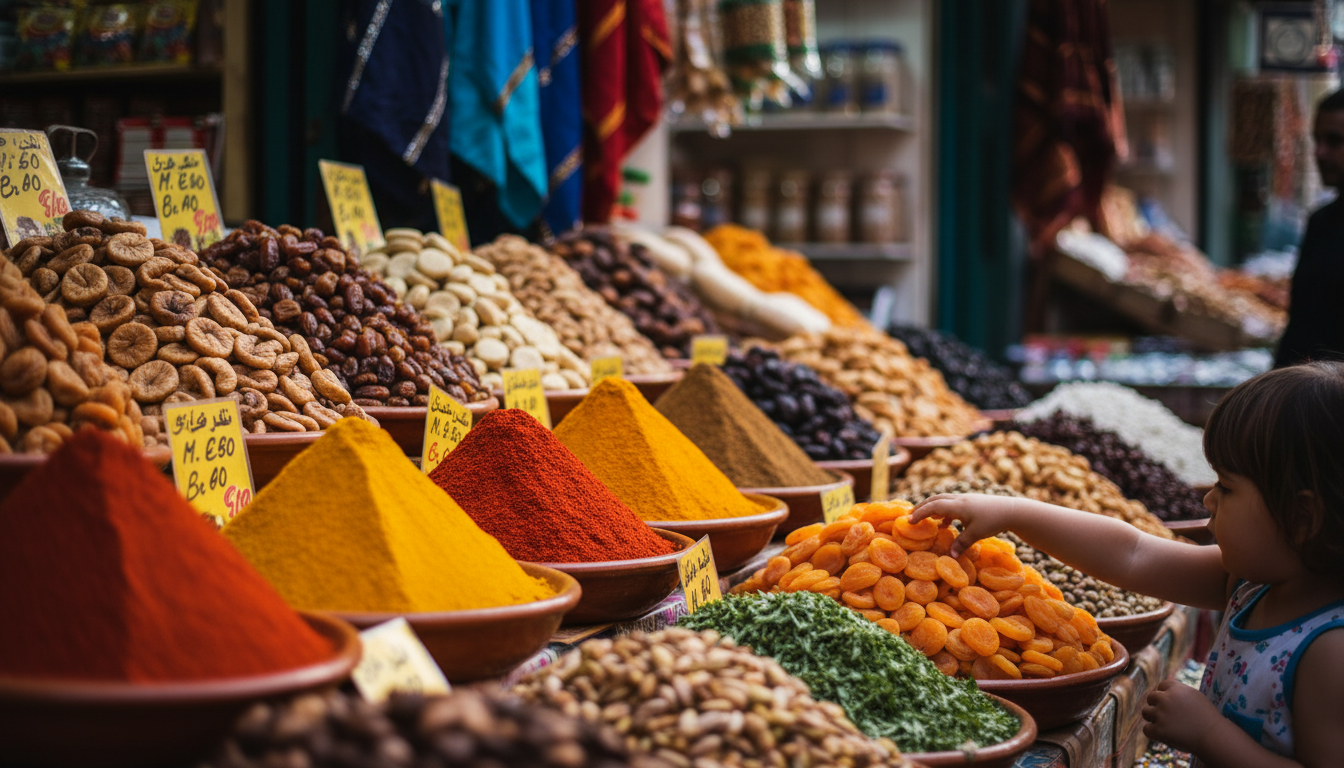
With a kitchen, we made breakfast every morning. Moroccan markets are incredible—fresh orange juice for about 10 dirhams ($1 USD), warm msemen bread for 5 dirhams ($0.50), local eggs and vegetables for almost nothing. Our family breakfast cost maybe $5 total versus $40+ at a hotel. We did laundry—sounds mundane, but traveling with kids means someone's always spilling tagine on their shirt or sweating through their clothes in the souks. Instead of packing two weeks of clothing or paying hotel laundry prices ($5 per item adds up fast), we ran a load every few days. We had snacks on hand. Hungry kids in Marrakech can turn a pleasant medina walk into a nightmare. Our apartment always had fruit, crackers, and water bottles ready to go.
My rough calculation? We saved approximately $3,000 compared to what we would have spent on hotels and eating every meal out. That's a significant chunk of the airfare for a family of four.
 colorful Moroccan market stall overflowing with pyramids of spices in terracotta bowls, dried fruits
Best Neighborhoods for Family Home Swaps in Marrakech
Where you stay matters enormously when traveling to Marrakech with children. The city has distinct neighborhoods, each with different vibes and practical considerations for families.
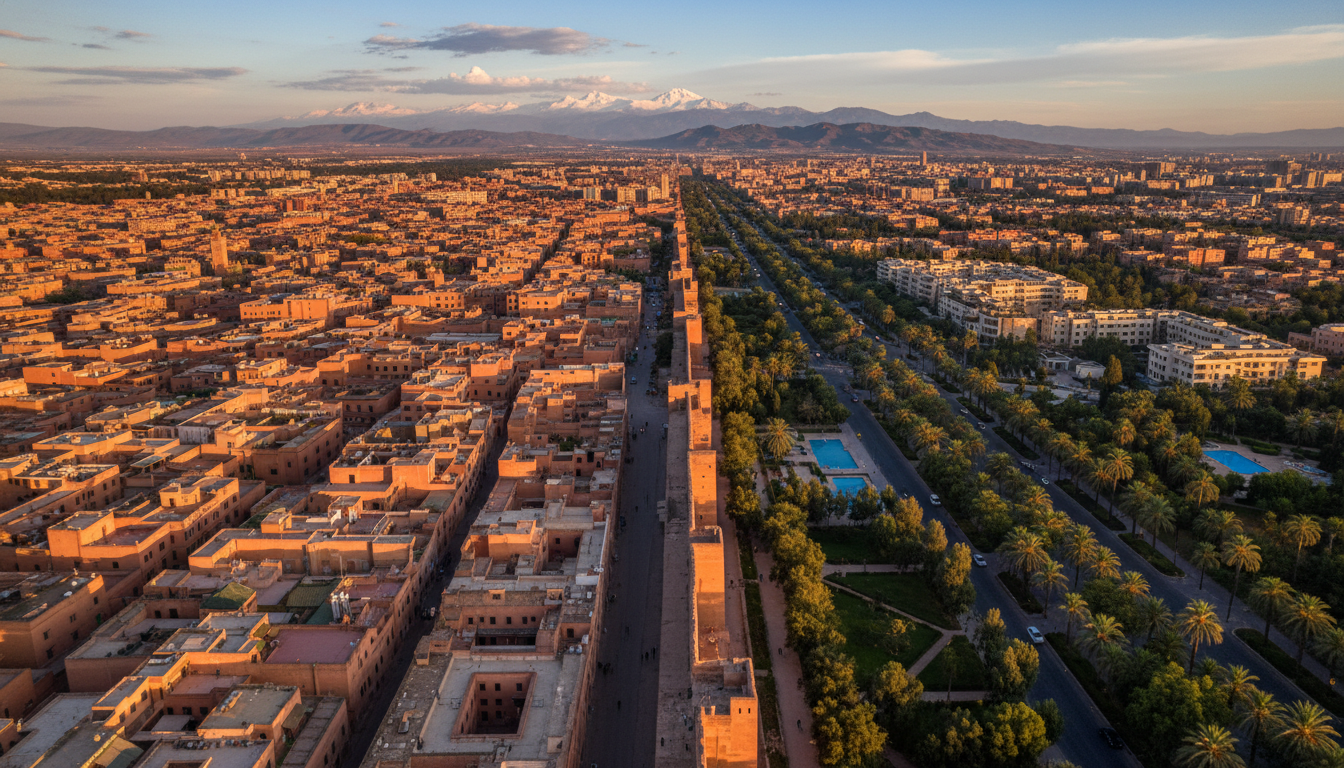
Guéliz: The Practical Choice for First-Time Family Visitors
Guéliz is the French-built "new town," and I know—it sounds less romantic than staying in the ancient medina. But hear me out.
Guéliz has wide sidewalks. Actual sidewalks where you can push a stroller without playing chicken with motorbikes. It has pharmacies (Pharmacie du Passage on Avenue Mohammed V is excellent) for when someone inevitably gets a stomach bug. It has Carrefour supermarkets where you can grab familiar snacks if your kids are having a "I only want plain pasta" day.
The apartments in Guéliz tend to be more modern, with reliable hot water, elevators, and layouts designed for actual living rather than Instagram aesthetics. Our swap had three bedrooms, two bathrooms, and a terrace—try finding that in a medina riad for under $400/night.
Guéliz is about a 20-minute walk or 20-dirham ($2) taxi ride from Jemaa el-Fnaa. Close enough for daily adventures, far enough for genuine escape.
Hivernage: Upscale and Calm
Hivernage sits between Guéliz and the medina, known for luxury hotels and a quieter atmosphere. Home swaps here often feature pools—a massive win when traveling with children in Marrakech's heat.
The neighborhood has excellent restaurants (try Le Comptoir Darna for a splurge dinner with live entertainment) and is walkable to both the modern city and the old medina. Properties tend to be villas or high-end apartments, so you're more likely to find serious space.
The Medina: Magical But Challenging
I won't pretend the medina isn't tempting. Waking up to the call to prayer echoing through ancient walls, stepping out your door into centuries of history—it's intoxicating.
But.
The medina with children requires serious consideration. Navigation is genuinely difficult; GPS barely works in the narrow alleys, and you will get lost. The streets are uneven, often with open drainage channels. Traffic—motorbikes, donkeys, carts—shares space with pedestrians.
If you're set on a medina home swap, look for properties near major landmarks (easier to find your way home) and ask specifically about stair situations. Some riads have rooftop terraces accessible only via steep, narrow staircases that would make me nervous with young kids.
My recommendation? Stay in Guéliz or Hivernage, visit the medina daily for adventures, then retreat to your comfortable base.
 aerial view of Marrakech showing the contrast between the ochre-colored medinas dense maze and the t
What to Look for in a Marrakech Home Swap When Traveling with Children
Not all home swaps are created equal, especially for families. Here's my checklist after multiple exchanges with kids in tow.
Kitchen essentials matter more than you'd think. A full-size refrigerator (not a mini-bar fridge) means you can stock up at the market. A stovetop with at least two burners lets you make real meals. Ask your swap host about kitchen equipment—we once arrived to find a beautiful kitchen with literally no pots.
Sleeping arrangements need to be explicit. "Sleeps 4" can mean two bedrooms with double beds, or it can mean one bedroom plus a sofa bed in the living room. For a two-week stay, you want actual beds for everyone. Message potential swap partners and ask for specifics.
Air conditioning is non-negotiable in summer. Marrakech regularly hits 40°C (104°F) from June through August. Even in spring and fall, afternoons get hot. Ceiling fans alone won't cut it for comfortable sleep.
Outdoor space transforms the experience. A terrace, balcony, or courtyard gives kids room to run around without leaving the apartment. Our Guéliz terrace became the kids' favorite spot—they'd play out there for hours while we read nearby.
Washing machine access. I mentioned this earlier, but it bears repeating. Two weeks of kids' laundry in Marrakech's dusty climate is no joke.
Ground floor or elevator. Hauling sleeping children up four flights of stairs after a long day at Jardin Majorelle is exactly as fun as it sounds.
On SwappaHome, you can message hosts directly with these questions before committing to an exchange. I always send a detailed message explaining we're traveling with children and asking about specific amenities. Most hosts are incredibly helpful and honest about whether their space works for families.
Planning Your Days: A Realistic Marrakech Itinerary with Kids
Here's where home swapping really shines—it removes the pressure to maximize every moment.
When you're paying $250/night for a hotel, there's an unconscious push to see everything, do everything, get your money's worth. You end up dragging exhausted kids through one more souk, one more museum, because you're only here for four nights.
With a twelve-night home swap? You can breathe.
Our rhythm in Marrakech looked like this:
Mornings: Slow breakfast at home. Leave around 9:30 AM before the heat peaks. One main activity—Jardin Majorelle, the medina, a day trip to the Atlas Mountains.
Early afternoons: Back to the apartment by 1 PM. Lunch at home or at a nearby restaurant. Rest time—the kids would read, play, sometimes nap. Adults would enjoy the quiet.
Late afternoons: Second outing if everyone had energy. Often just a walk to a nearby café for fresh juice and people-watching.
Evenings: Dinner out every few nights, home-cooked meals in between. The kids loved helping make simple Moroccan dishes with ingredients from the market.
This pace meant we actually enjoyed Marrakech instead of surviving it. My kids remember feeding the turtles at Le Jardin Secret, not the meltdown at the crowded tanneries (we skipped those entirely—the smell and the aggressive guides aren't worth it with young children).
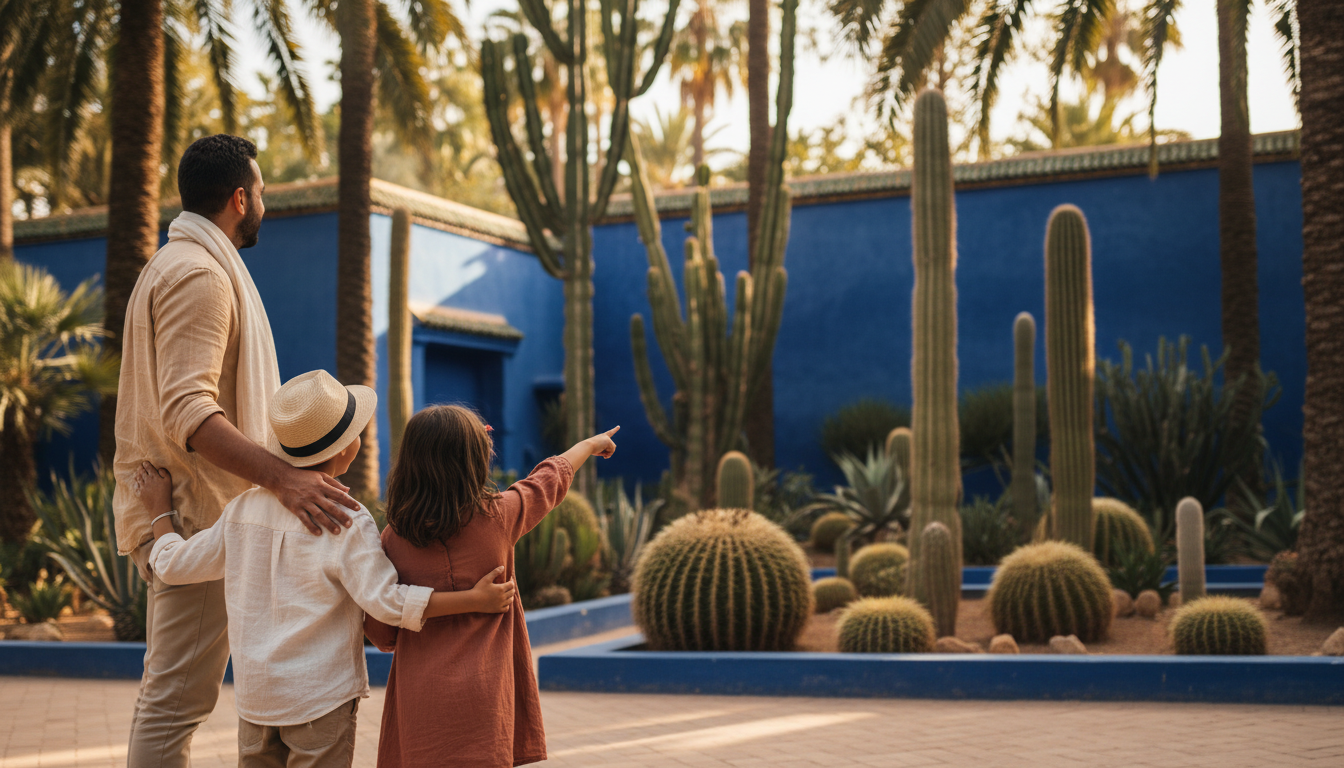 family moment at Jardin Majorelle, cobalt blue walls and cacti in background, two children pointing
Kid-Friendly Marrakech Experiences Worth Your Time
After two trips with children, here are the experiences I'd genuinely recommend—and a few I'd skip.
Jardin Majorelle
Yes, it's touristy. Yes, it's crowded. Go anyway—but go early. Gates open at 8 AM, and the first hour is magical before the tour groups arrive. Entry is 150 dirhams ($15) for adults, 50 dirhams ($5) for children under 12.
My kids were obsessed with the koi ponds and the cacti. The vibrant blue buildings photograph beautifully. Budget about two hours.
Le Jardin Secret
Less famous than Majorelle but equally beautiful, this restored riad garden in the medina has a tower you can climb for panoramic views. The gardens are peaceful, the turtles in the fountain are endlessly entertaining for kids, and there's a lovely café for mint tea. Entry is 80 dirhams ($8) for adults.
Cooking Class
Several riads offer family-friendly cooking classes. We did one through Souk Cuisine (about $80 per person, kids half-price) that included a market tour and hands-on tagine-making. My 10-year-old still talks about it.
Horse-Drawn Carriage Ride
The calèches (horse carriages) near Jemaa el-Fnaa are touristy but genuinely fun for kids. Negotiate before you get in—expect to pay about 150-200 dirhams ($15-20) for a 45-minute circuit around the ramparts. Best at sunset.
Day Trip to the Atlas Mountains
The Ourika Valley is about an hour from Marrakech and offers a complete change of scenery—green valleys, waterfalls, cooler temperatures. Many tour operators offer family-friendly day trips for around $50-80 per person including lunch.
What to Skip with Young Kids
The tanneries. The smell is overwhelming, the aggressive guides are stressful, and kids will be bored. The Ben Youssef Madrasa is beautiful but requires quiet contemplation that's challenging with energetic children. The main souks during peak hours (10 AM-1 PM, 4-7 PM) are overwhelming—go early morning or skip the deepest parts entirely.
The Home Exchange Advantage: Living Like Locals
There's something that happens when you stay in a neighborhood for two weeks instead of a hotel for three nights. You become a regular.
The guy at the corner hanout (convenience store) started greeting my kids by name. The café owner would have our usual order—fresh orange juice, café crème, chocolate croissant—ready when he saw us coming. The woman who sold vegetables at the small market near our apartment would set aside the best tomatoes for us.
This isn't possible with hotel stays. It's barely possible with short-term rentals, where you're still clearly a tourist passing through.
Home swapping creates a different dynamic. You're staying in someone's actual home, in their actual neighborhood. The neighbors know someone lives there. You're not a stranger in quite the same way.
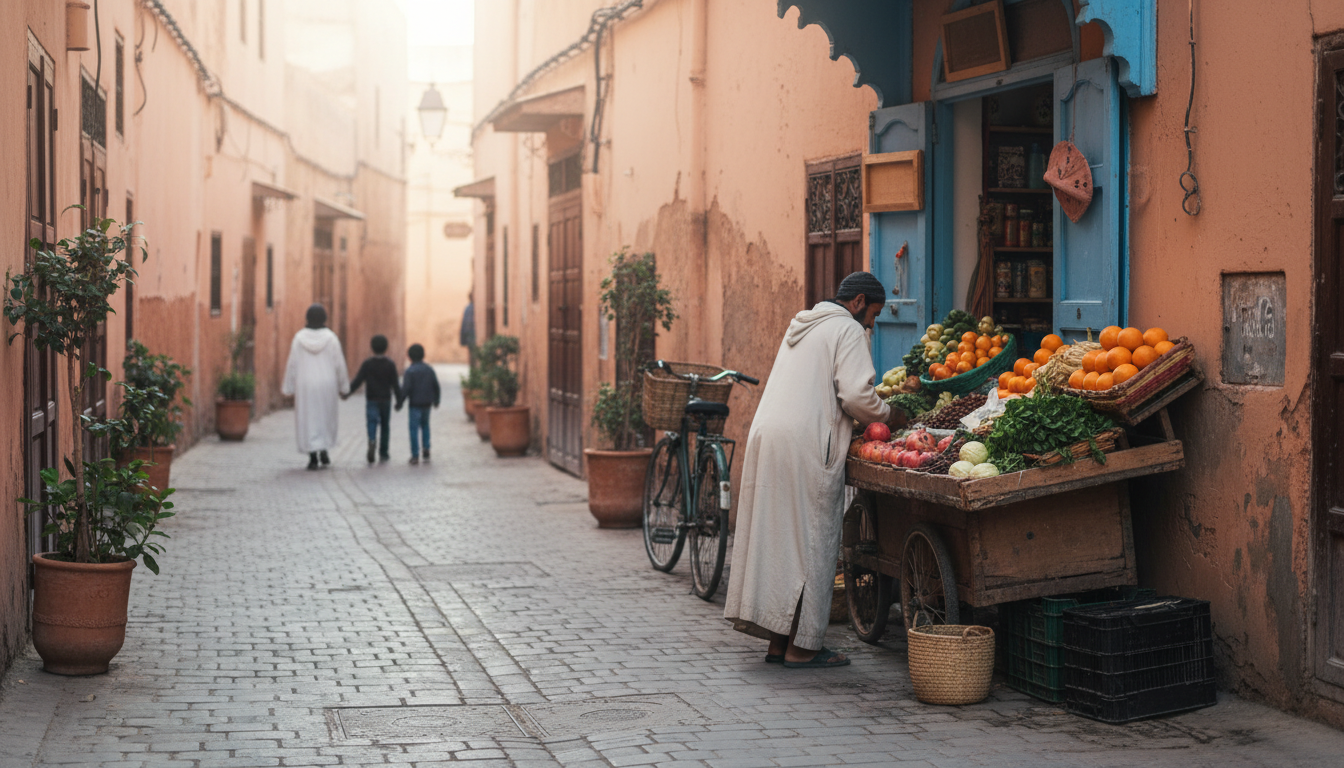 narrow Marrakech street in the morning light, local vendor arranging fresh produce outside a small s
Practical Tips for Your Marrakech Home Swap with Children
After two successful exchanges, here's what I wish I'd known from the start.
Bring a small first-aid kit. Pharmacies in Marrakech are excellent and well-stocked, but having basics on hand (children's pain reliever, bandages, anti-diarrheal medication, rehydration salts) saves a pharmacy hunt when someone's not feeling well at 10 PM.
Download offline maps. Google Maps works reasonably well in Guéliz but struggles in the medina. Maps.me has better offline coverage for the old city. Mark your accommodation clearly before you arrive.
Get local SIM cards. Maroc Telecom and Orange both sell tourist SIM cards at the airport for about 50-100 dirhams ($5-10) with data included. Being able to call a taxi or look up directions makes everything easier.
Carry small bills. Many places only accept cash, and breaking large bills is challenging. Get change at your first supermarket visit and hoard those 10 and 20 dirham notes.
Water bottles are essential. Tap water in Marrakech isn't safe to drink. Buy large bottles at the supermarket and refill reusable bottles daily. Dehydration sneaks up on kids fast in the dry heat.
Schedule rest days. At least every third day, plan nothing. Stay home, let the kids play, recharge. Marrakech will still be there tomorrow.
Setting Up Your Home Swap: A Step-by-Step Approach
If you're new to home exchange, the process might seem daunting. It's actually straightforward.
First, create a detailed listing of your own home on SwappaHome. Include plenty of photos, mention that your home is family-friendly (if it is), and highlight kid-relevant features—the backyard, the game collection, the proximity to parks.
Then, start searching for Marrakech properties. Filter by number of bedrooms, look for mentions of families or children in the descriptions, and read reviews from previous guests. When you find promising options, send personalized messages introducing your family and asking specific questions about the space.
The credit system means you don't need to find a direct swap—someone in Marrakech doesn't need to want your specific home. You can host guests from anywhere, earn credits, and use those credits for your Marrakech stay.
New members start with 7 free credits, which covers a decent trip to get started. Our twelve-night Marrakech stay used credits we'd accumulated over several previous exchanges.
The Verdict: Is Home Swap the Best Way to Visit Marrakech with Children?
I've done Marrakech both ways now—the expensive hotel route and the home exchange route. There's no comparison.
Home swapping gave us space, savings, and sanity. It let us stay longer, explore deeper, and actually enjoy the city instead of racing through it. My kids remember Marrakech fondly instead of as "that trip where we were always tired and hot."
Is it perfect? No. You need to plan further ahead than hotel bookings. You need to communicate clearly with your swap partners. You need to be flexible and respectful of someone else's home.
But for families willing to put in a bit of extra effort, traveling to Marrakech with children through home exchange transforms the experience entirely.
Next October, we're already planning our return. This time, we're looking at a house with a pool in the Palmeraie. Three weeks. Zero accommodation cost.
That's the magic of home swapping—once you start, hotels just don't make sense anymore.
Frequently Asked Questions
Is home swapping in Marrakech safe for families with children?
Home swapping through established platforms like SwappaHome includes member verification and review systems that build trust and accountability. You're staying in a real person's home, often in residential neighborhoods that feel safer than tourist-heavy areas. I'd recommend reading reviews carefully, communicating thoroughly with your host beforehand, and considering your own travel insurance for additional peace of mind.
How much money can families save with home exchange in Marrakech?
A family of four staying in Marrakech hotels for two weeks typically spends $2,500-5,000 on accommodation alone. With home swapping, your accommodation cost is essentially zero—just the credits you've earned by hosting others. Add kitchen savings of $30-50 per day on meals, and most families save $3,000-4,000 on a two-week trip compared to traditional travel.
What's the best neighborhood in Marrakech for a family home swap?
Guéliz offers the best balance for families—modern apartments with space, walkable sidewalks, nearby supermarkets and pharmacies, plus easy access to the medina by taxi or foot. Hivernage is ideal if you want pool access and a quieter atmosphere. The medina itself is challenging with young children due to navigation difficulties and uneven streets.
How far in advance should I book a home swap in Marrakech?
For peak season (October-November, March-April), start searching and messaging potential hosts 3-4 months ahead. Summer months are less crowded and offer more flexibility—6-8 weeks advance planning usually works. School holiday periods require earlier booking as family-friendly properties get claimed quickly.
Can I do a home swap in Marrakech if I've never swapped before?
Absolutely. SwappaHome gives new members 7 free credits to start, enough for a solid introduction to home exchange. Create a detailed, honest listing of your home, be proactive about messaging hosts in Marrakech, and consider hosting a guest or two before your trip to build reviews and earn additional credits.

Published by
SwappaHome
SwappaHome Editorial Team
Home Exchange & Slow Travel Editorial
The SwappaHome Editorial Team brings together travel research, home-exchange community insights, and platform data to produce practical guides for first-time and experienced home swappers. Every article cites real platforms, current market rates, and verifiable city-level facts so readers can make informed decisions without guessing.
Ready to try home swapping?
Join SwappaHome and start traveling by exchanging homes. Get 7 free credits when you sign up!
Related articles

Bachelor and Bachelorette Parties in Singapore: The Complete Home Swap Group Guide for 2026
Planning a bachelor or bachelorette party in Singapore? Discover how home swapping lets groups of 6-12 stay together in luxury condos, saving thousands while partying in Marina Bay.

Cycling in Lisbon: 7 Home Swap Bike Tour Itineraries for Every Rider
Discover the best cycling routes in Lisbon with these home swap bike tour itineraries—from waterfront paths to hilltop adventures, all starting from your borrowed home.

Graduation Trip to Barcelona: How Home Swapping Gives New Graduates the Ultimate Celebration
Planning a graduation trip to Barcelona? Discover how home swapping lets new graduates explore Spain's most vibrant city without the hostel crowds or hotel costs.