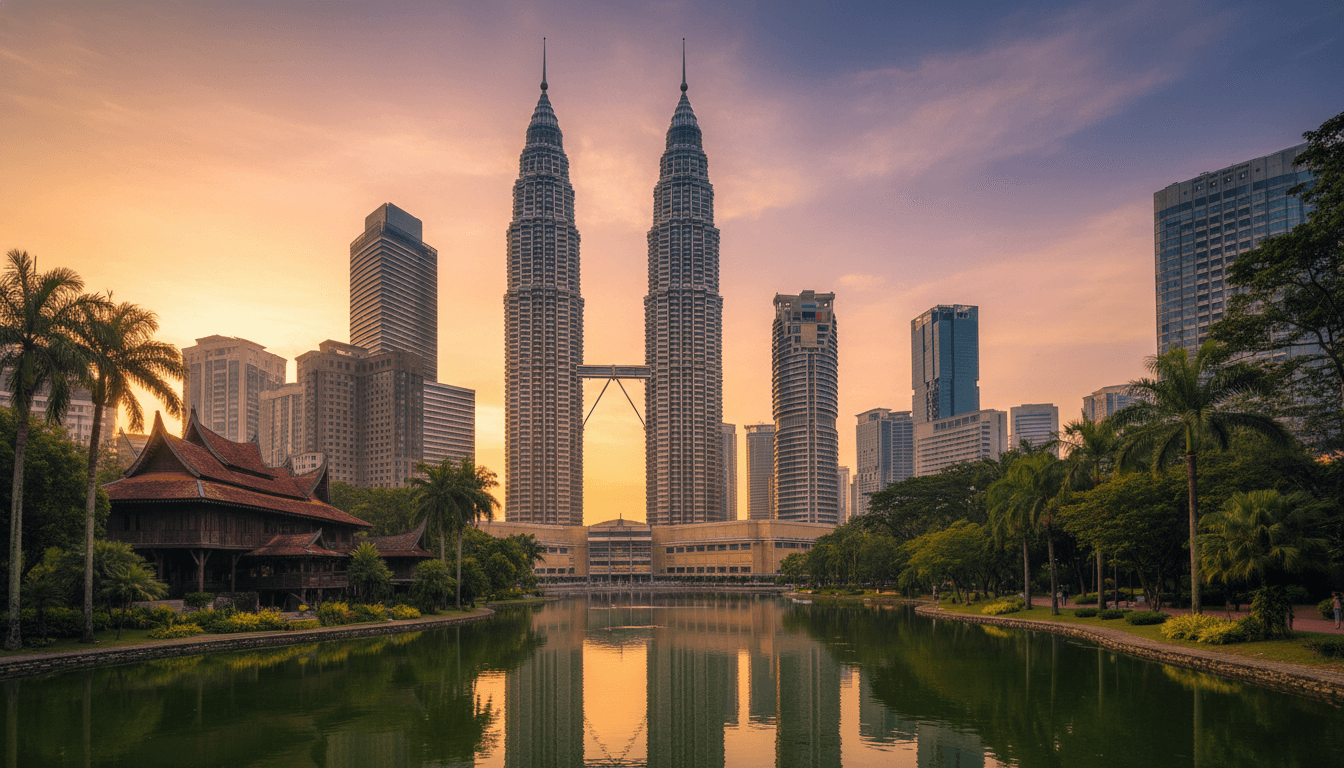
Retirement Travel to Kuala Lumpur: Why Home Exchange Is the Smartest Way to Explore Malaysia

SwappaHome Editorial Team
Home Exchange & Slow Travel Editorial
Discover why retirement travel to Kuala Lumpur through home exchange offers retirees authentic experiences, massive savings, and the comfort of real homes in Malaysia's vibrant capital.
My friend Linda called me last March, practically buzzing through the phone. She'd just returned from three weeks in Kuala Lumpur—her first big trip since retiring from teaching—and she couldn't stop talking about the rooftop pool in her borrowed apartment, the $2 laksa she ate every morning from the hawker stall downstairs, and how she'd spent a grand total of $800 on the entire trip. Not per week. The whole thing.
Retirement travel to Kuala Lumpur through home exchange had completely transformed how she thought about her golden years. And honestly? It's changing how I think about recommending destinations to retirees, too.
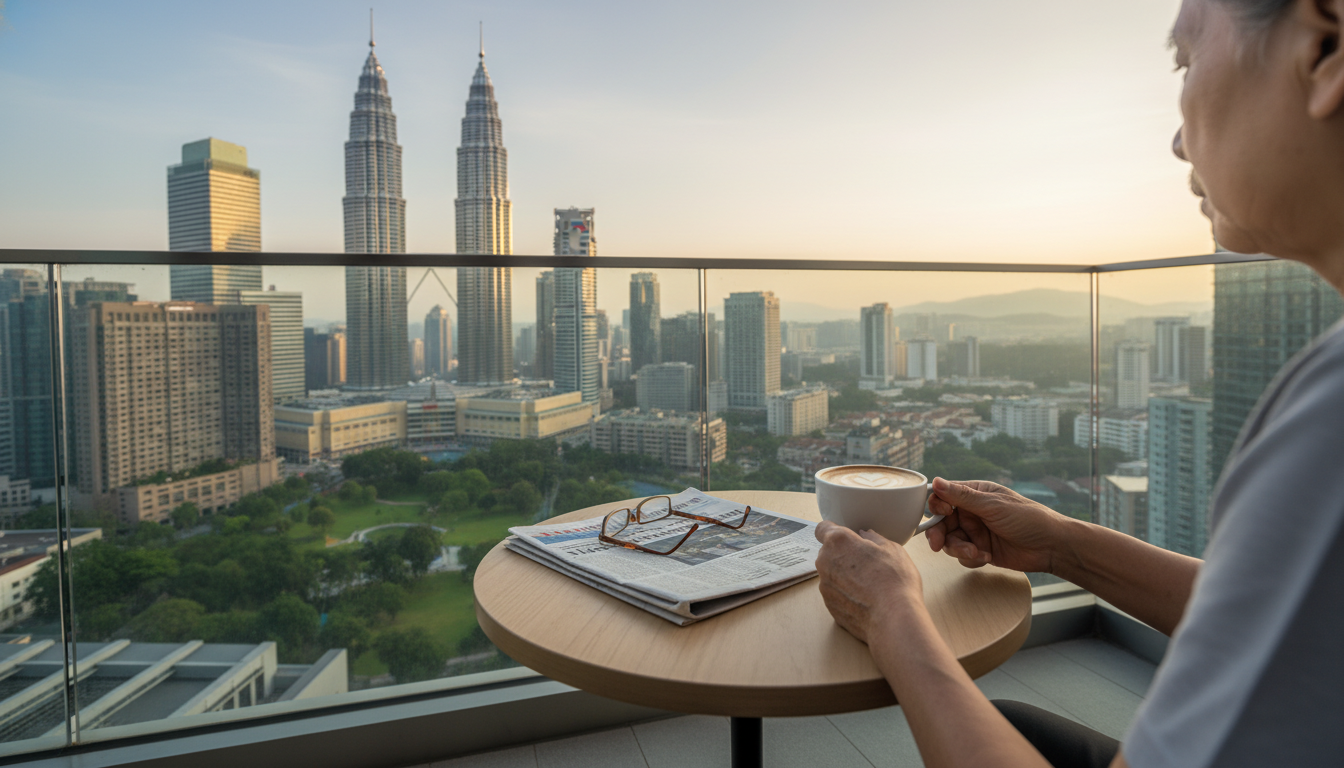 Morning view from a high-rise apartment balcony in Kuala Lumpurs KLCC district, showing the Petronas
Here's what most retirement travel guides won't tell you: Kuala Lumpur is quietly becoming one of the best cities in the world for longer stays. The healthcare is world-class (and shockingly affordable), English is widely spoken, the food scene rivals anywhere I've been in Southeast Asia, and the cost of living means your retirement savings stretch further than you'd believe. But the real magic happens when you stop thinking like a tourist and start living like a local—which is exactly what home exchange makes possible.
Why Kuala Lumpur Is Perfect for Retirement Travel
I'll be real with you: when I first visited KL (as locals call it) back in 2019, I didn't get it. Spent four days in a business hotel near Bukit Bintang, ate at the same three restaurants the concierge recommended, and left thinking it was fine but forgettable.
Then I did a home swap there last year—stayed in a member's apartment in the Mont Kiara neighborhood for two weeks—and it was like visiting a completely different city.
The thing about Kuala Lumpur is that it rewards slow travel. The city unfolds in layers: the colonial architecture around Merdeka Square, the chaos and charm of Chinatown's Petaling Street, the gleaming modernity of KLCC, the leafy calm of Bangsar's café-lined streets. You can't absorb any of this in a rushed hotel stay. You need time. You need a kitchen where you can store the rambutans you bought at the wet market. You need a living room where you can collapse after a morning of temple-hopping.
For retirees specifically, KL offers something rare: genuine comfort without the premium price tag. A doctor's visit might cost you $15-30 USD. A spectacular meal at a proper restaurant runs $8-15 USD. Grab rides (Malaysia's Uber equivalent) cost a fraction of what you'd pay for taxis in most Western cities—I rarely spent more than $3-4 USD to get across town.
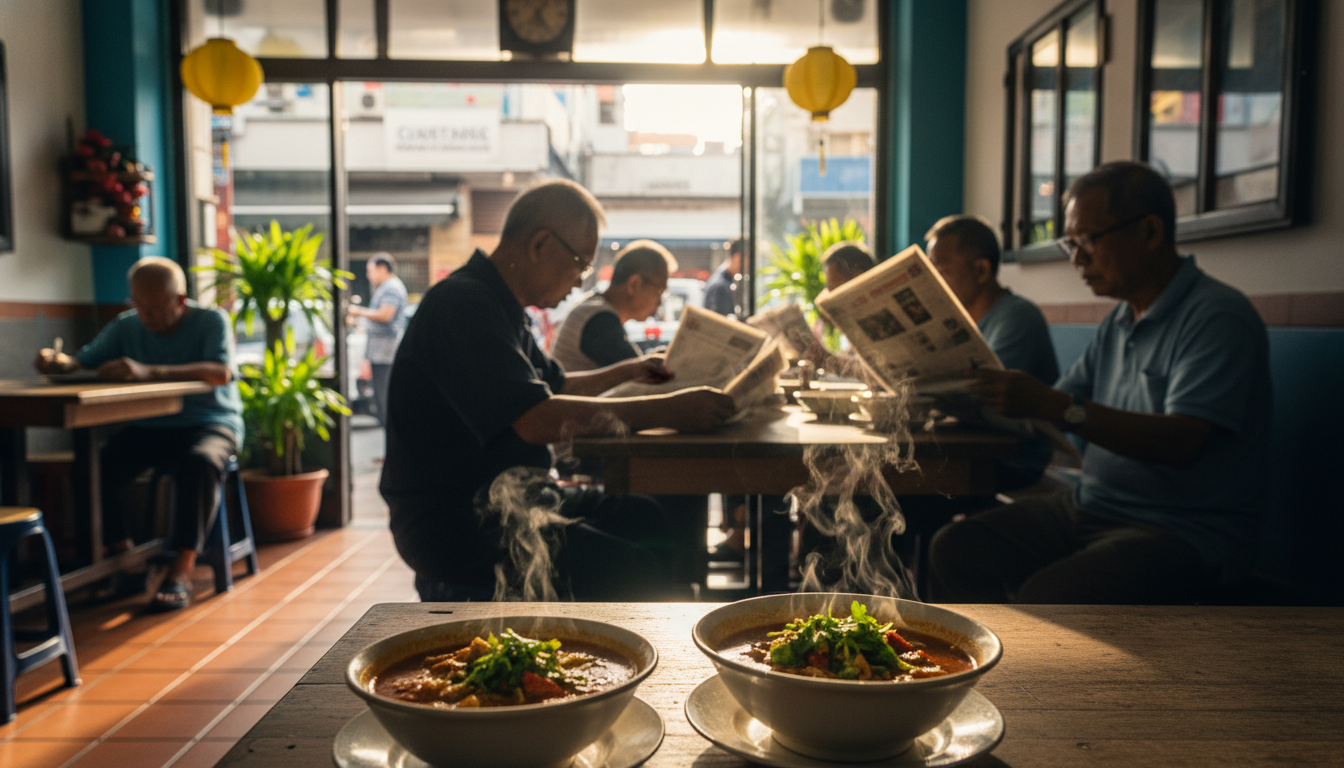 Bustling morning scene at a traditional kopitiam coffee shop in Kuala Lumpurs Chow Kit neighborhood,
How Home Exchange Works for Retirement Travel to Kuala Lumpur
If you're new to home exchange, here's the basic idea: instead of paying for hotels or rentals, you swap homes with other travelers. On SwappaHome, it works through a credit system that's beautifully simple—you earn 1 credit for every night someone stays at your place, and you spend 1 credit for every night you stay somewhere else. New members start with 7 free credits, which means you could literally book 7 nights in Kuala Lumpur without hosting anyone first.
The beauty for retirees? You're not locked into the traditional "simultaneous swap" model where you have to find someone who wants your home at the exact same time you want theirs. Host a young couple from Singapore for a weekend in October, then use those credits to spend January in Malaysia. The flexibility is everything.
I've talked to dozens of retirees who've made home exchange their primary travel strategy, and they all say the same thing: it's not just about saving money (though that's significant). It's about having a real home base. A proper kitchen. A comfortable couch. A neighborhood that becomes yours.
One retired couple I know—Dave and Patricia from Oregon—spent three months in KL last winter. They hosted maybe eight different guests throughout the previous year, banked their credits, and then lived in a lovely two-bedroom apartment in Desa ParkCity. Patricia told me she spent her mornings doing tai chi in the park with a group of local retirees who adopted her. Dave found a coffee shop where the owner saved him "his" table every afternoon.
That's not a vacation. That's a life.
Best Kuala Lumpur Neighborhoods for Retirement Home Exchange
Not all KL neighborhoods are created equal, especially if you're looking for longer stays with specific needs. Here's my honest breakdown based on my own experiences and feedback from the retiree community:
Mont Kiara: The Expat Favorite
Mont Kiara is where a huge chunk of KL's expat community lives, and there's good reason for it. The area is modern, well-maintained, and packed with international restaurants, supermarkets (including the excellent Village Grocer), and medical facilities. Most condos here have pools, gyms, and 24-hour security.
The vibe is suburban-comfortable rather than culturally immersive. If you want a soft landing—somewhere that feels familiar while you get your bearings—Mont Kiara is ideal. Expect home exchange listings here to feature newer apartments with full amenities.
Downside: You'll need Grab rides to reach most tourist attractions, and it can feel a bit... sanitized? Like you could be in any international city.
Bangsar: The Sweet Spot
Bangsar is my personal favorite for longer stays. It's got the walkability that Mont Kiara lacks—you can stroll to excellent restaurants, quirky bookshops, and cozy cafés without ever calling a car. The neighborhood has real character: tree-lined streets, a mix of old shophouses and modern developments, and a diverse crowd of locals, expats, and students from the nearby university.
The Bangsar Village malls have everything you'd need for daily life, including a great supermarket, pharmacy, and even a decent wine shop. Healthcare options are nearby, including the well-regarded Pantai Hospital.
For retirees who want to walk to dinner, browse a morning market, and feel genuinely embedded in Malaysian life, Bangsar hits the sweet spot.
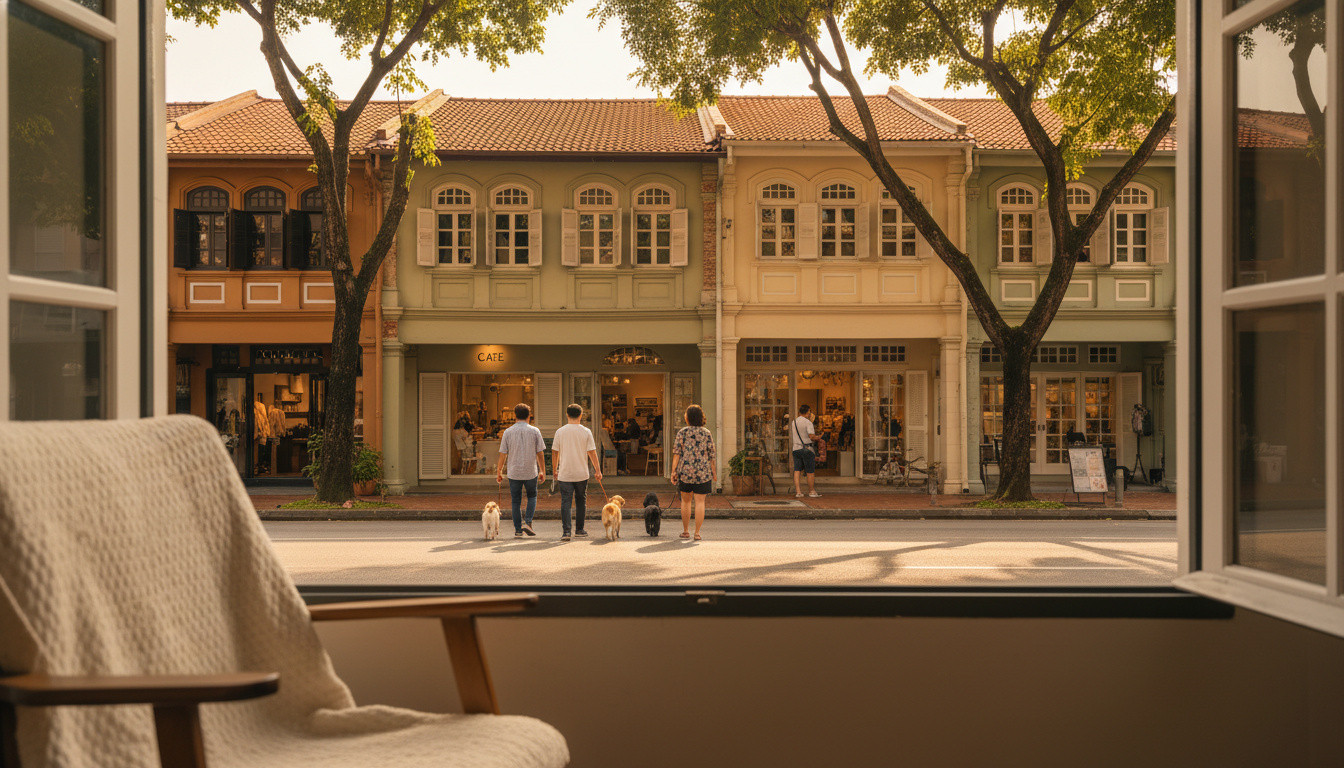 Quiet tree-lined street in Bangsar, Kuala Lumpur, with colonial-era shophouses converted into cafes
KLCC and Bukit Bintang: Central but Intense
The area around the Petronas Towers and the Bukit Bintang shopping district is where most tourists stay, and I'd generally steer retirees away from it for longer visits. It's loud, crowded, and expensive by KL standards. That said, if you want to be in the absolute heart of the action—walking distance to the towers, Suria KLCC mall, and KLCC Park—there are some stunning high-rise apartments available through home exchange.
The park itself is actually lovely: 50 acres of green space with a jogging track, a children's playground, and a wading pool. I've met retirees who loved staying here specifically because they could do their morning walks in the park and then retreat to air-conditioned comfort.
Desa ParkCity: Suburban Serenity
This planned township about 20 minutes from central KL has become increasingly popular with retirees, and I understand why. It's built around a beautiful lake with walking paths, the streets are clean and quiet, and there's a genuine community feel. The Waterfront area has restaurants, a supermarket, and regular community events.
If you're traveling with a spouse and want somewhere peaceful to return to after days of exploring, Desa ParkCity offers that suburban comfort without feeling isolated. Just know that you'll need transportation to reach most attractions.
The Financial Reality: Home Exchange Savings for Retirees
Let me break down some real numbers, because this is where retirement travel to Kuala Lumpur through home exchange gets genuinely exciting.
A decent hotel in central KL—nothing fancy, just clean and comfortable—runs about $60-80 USD per night. A serviced apartment with a kitchen might cost $80-120 USD. For a three-week stay, you're looking at $1,260-2,520 USD in accommodation alone.
With home exchange? Zero dollars. You're using credits you earned by hosting guests at your own home.
But the savings go deeper than the obvious. When you have a kitchen, you're not eating every meal at restaurants. My friend Linda—the one who spent $800 total on her three-week trip—told me she cooked breakfast and lunch most days, then splurged on dinner out. Her food budget averaged maybe $15-20 USD per day, including those dinners.
Compare that to hotel travelers who eat three restaurant meals daily, and you're easily saving another $30-50 USD per day.
Over a three-week trip, home exchange can realistically save a retiree $2,000-4,000 USD compared to traditional hotel travel. Do that twice a year, and you've funded a pretty spectacular retirement travel lifestyle.
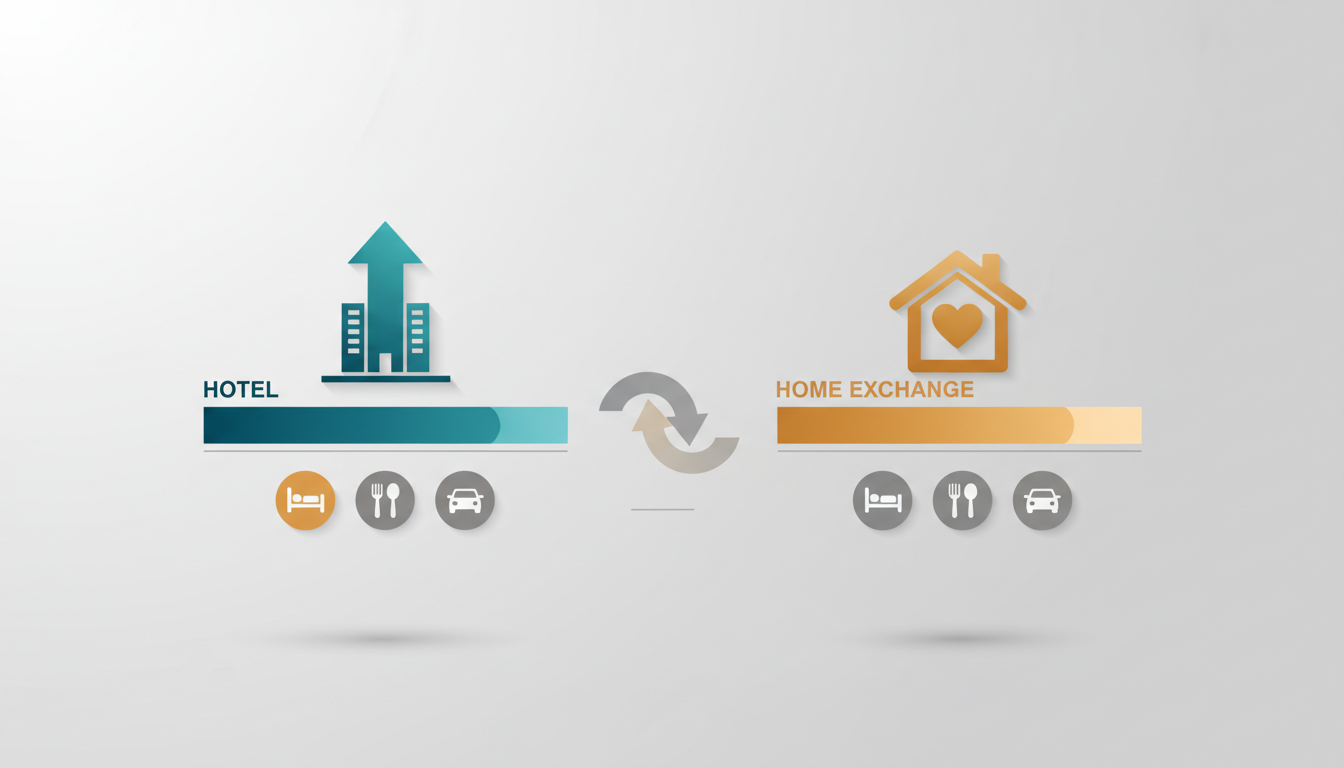 Infographic showing cost comparison 3-week Kuala Lumpur trip via hotel 3,500-5,000 vs home exchange
Practical Tips for Your First KL Home Exchange
Alright, let's get into the nitty-gritty. If you're a retiree planning your first home exchange trip to Kuala Lumpur, here's what I wish someone had told me:
Timing Your Visit
Malaysia is tropical, which means it's hot and humid year-round. But there's hot, and then there's hot. The driest months are typically June through August, which also happens to be when many European and American retirees want to escape their own summers. January through March offers slightly cooler temperatures and fewer tourists.
Ramadan timing varies each year, and while KL is wonderfully diverse (you'll have no trouble finding food during fasting hours), some restaurants in Malay-majority areas may have reduced hours. Check the dates before booking.
Healthcare Considerations
This is a big one for retirees, so let me be direct: Malaysian healthcare is excellent and affordable, but you should absolutely have travel insurance that covers medical emergencies. SwappaHome is a platform that connects members—it doesn't provide insurance or coverage for anything that happens during your stay. Get your own policy before you travel.
That said, KL's private hospitals are world-class. Gleneagles, Prince Court, and Pantai Hospital are all highly regarded, with English-speaking staff and modern facilities. A consultation with a specialist might cost $30-50 USD. Many retirees I know actually schedule dental work or medical checkups during their KL stays because the savings are so significant.
Getting Around
KL's public transportation has improved dramatically in recent years. The LRT and MRT lines connect most major areas, and the trains are clean, air-conditioned, and cheap (most rides under $1 USD). That said, the city isn't as walkable as, say, Singapore or Tokyo. The heat makes long walks uncomfortable, and sidewalks can be inconsistent.
My recommendation: download the Grab app before you arrive. It's safe, reliable, and affordable. Most rides within the city cost $2-5 USD. For retirees who don't want to navigate public transit, Grab is a game-changer.
Communication with Your Host
SwappaHome's messaging system makes it easy to connect with hosts before your stay, and I cannot overemphasize how important this is. Ask about the neighborhood, the building's amenities, where to find the nearest pharmacy, whether there's a coffee shop they recommend. Good hosts are usually thrilled to share their local knowledge.
I always ask about the bed situation (firm or soft?), the kitchen setup (is there a rice cooker? a good knife?), and any quirks about the apartment (does the hot water take a minute to warm up?). These details matter when you're staying somewhere for weeks instead of days.
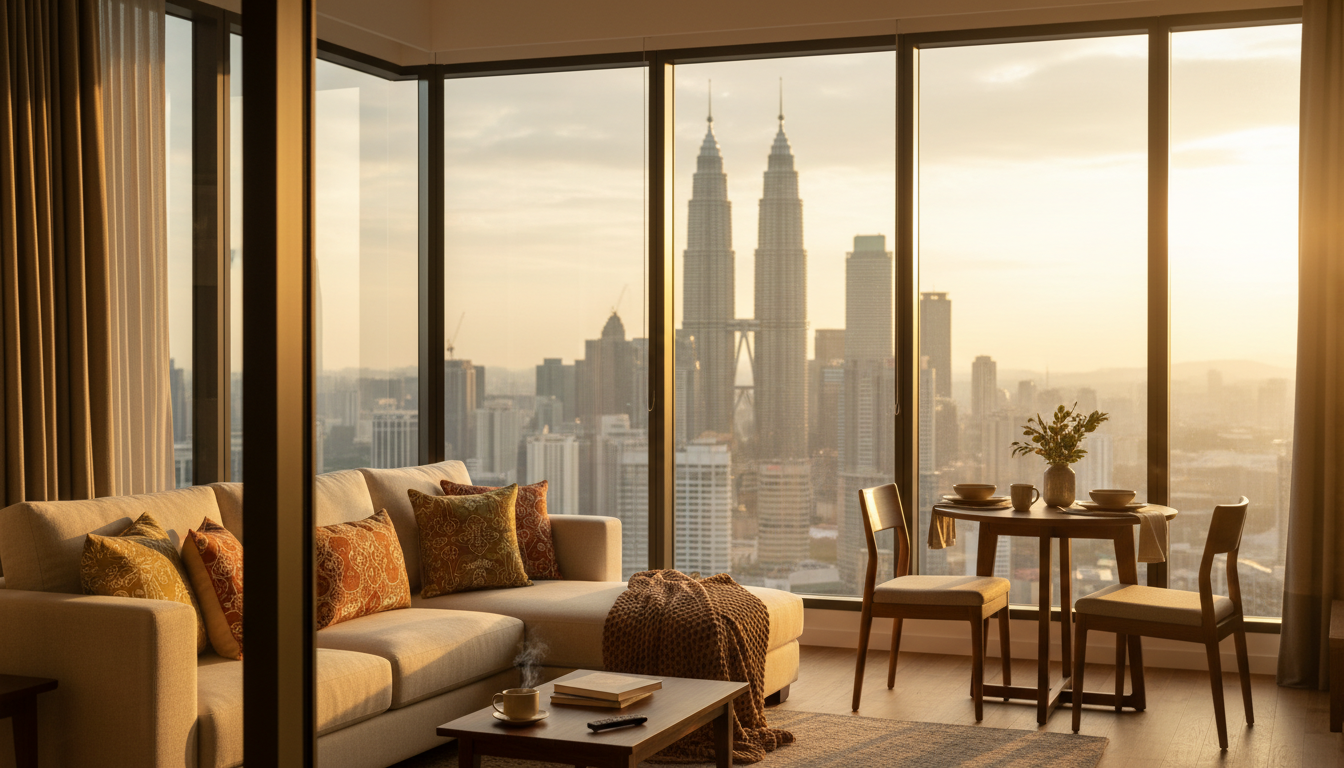 Cozy living room in a modern Kuala Lumpur apartment with floor-to-ceiling windows overlooking the ci
What to Do During Your Extended KL Stay
Three weeks in Kuala Lumpur gives you time to go beyond the obvious attractions—though you should absolutely see the obvious attractions too. Here's how I'd structure an extended stay:
Week One: Tourist Mode
Get the big stuff out of the way while you're still energized from arrival. Visit the Petronas Towers (book the skybridge tickets online in advance—they sell out). Explore the Batu Caves, ideally early morning before the heat and crowds peak. Wander through the Islamic Arts Museum, which is genuinely one of the best museums I've visited anywhere. Eat your way through Jalan Alor's hawker stalls at night.
Week Two: Neighborhood Deep Dives
This is when home exchange really shines. Pick a different neighborhood each day and just... exist there. Spend a morning in Chow Kit, exploring the wet market and eating breakfast at a kopitiam. Take the monorail to KL Sentral and walk through Brickfields, Little India, where the colors and smells and sounds are overwhelming in the best way. Visit the Thean Hou Temple in the afternoon when the light is golden.
Week Three: Day Trips and Slow Days
KL makes an excellent base for exploring the surrounding region. Take a day trip to Malacca (about two hours by bus), a UNESCO World Heritage city with Portuguese, Dutch, and British colonial history layered over Malay and Chinese culture. Visit the Genting Highlands for cooler temperatures and, if you're into it, casino entertainment. Or just stay home—read on the balcony, cook a proper meal, video call the grandkids.
The beauty of having three weeks is that you don't have to do anything. Some of my best travel memories are the nothing days: the afternoon I spent reading in a KL café while rain hammered the windows, the evening I cooked pasta in a borrowed kitchen and watched the city lights come on.
Building Trust: The Home Exchange Community
I know some retirees hesitate about home exchange because it feels vulnerable—you're staying in a stranger's home, and potentially letting strangers stay in yours. This is a reasonable concern, and I want to address it directly.
SwappaHome's review system is the foundation of trust in the community. After every stay, both hosts and guests leave reviews. Over time, active members build up a reputation that's visible to everyone. When I'm considering a home exchange, I read every review carefully. I look for specifics: did they communicate well? Leave the place clean? Follow house rules?
The platform also offers identity verification, which adds another layer of accountability. Members who've verified their identity are marked, and many experienced exchangers won't stay with (or host) unverified members.
That said—and this is important—SwappaHome is a platform that connects people. It doesn't provide insurance, damage coverage, or dispute resolution. If something goes wrong, you're responsible for working it out directly with the other member. This is why I always recommend getting your own travel insurance that covers personal liability, considering home insurance that covers short-term guests if you're hosting, communicating clearly and thoroughly before every exchange, and trusting your instincts—if something feels off about a potential exchange, it's okay to decline.
In seven years of home swapping, I've had exactly one mildly negative experience (a guest who left dishes in the sink). The vast majority of exchanges have been wonderful, and many have turned into genuine friendships.
Making Home Exchange Work for Retirement Travel
If you're retired and considering home exchange for your Kuala Lumpur adventure—or any adventure, really—here's my honest advice:
Start hosting before you travel. Even if you're not ready to take a big trip yet, open your home to guests and start building your credit balance and your reputation. Every positive review makes future exchanges easier to arrange.
Be flexible with dates. Retirees have a massive advantage here: you're not locked into school holidays or limited vacation days. If a perfect KL apartment is available in February instead of January, you can adjust. This flexibility makes you incredibly attractive to potential hosts.
Communicate more than you think you need to. Send a message introducing yourself. Share a bit about why you're interested in their home. Ask questions. The best exchanges happen between people who've already established a rapport before keys change hands.
Think long-term. The retirees I know who've fully embraced home exchange don't think trip-by-trip—they think in terms of building a lifestyle. They host regularly, bank credits steadily, and plan extended stays months in advance. One couple I know hasn't paid for accommodation in four years.
The Bigger Picture
Retirement travel to Kuala Lumpur through home exchange isn't just about saving money, though the savings are real and significant. It's about a different way of experiencing the world.
When you stay in someone's home, you inherit their neighborhood. You shop where they shop. You walk paths they've worn into the sidewalk. You sit in their favorite chair and look out their window at a view they've looked at a thousand times. There's an intimacy to it that hotels simply cannot replicate.
For retirees especially—people with time, curiosity, and the freedom to travel slowly—home exchange unlocks something precious. It turns trips into temporary lives. It transforms foreign cities into places where you belong, even if just for a few weeks.
KL is waiting. The hawker stalls are steaming. The towers are gleaming. Somewhere in Bangsar or Mont Kiara or Desa ParkCity, there's an apartment with your name on it—metaphorically speaking.
Maybe it's time to find out what retirement travel could really look like.
Frequently Asked Questions
Is retirement travel to Kuala Lumpur safe for seniors?
Kuala Lumpur is generally very safe for retirees, with low violent crime rates and excellent healthcare facilities. The main concerns are typical urban issues—watch your belongings in crowded areas and be cautious crossing streets. English is widely spoken, making communication easy, and the expat community is welcoming to newcomers. Most retirees find KL more comfortable and accessible than many Southeast Asian destinations.
How much can retirees save with home exchange in Kuala Lumpur?
Retirees typically save $2,000-4,000 USD on a three-week Kuala Lumpur trip through home exchange compared to hotel stays. Accommodation savings alone run $1,500-2,500 USD, with additional savings from cooking meals in a full kitchen. Combined with KL's already low cost of living (meals $3-15 USD, transportation $2-5 USD per ride), home exchange makes extended stays remarkably affordable.
What's the best neighborhood in Kuala Lumpur for retired home exchangers?
Bangsar offers the best balance for most retirees: walkable streets, excellent restaurants and cafés, proximity to healthcare, and genuine Malaysian character. Mont Kiara suits those wanting modern amenities and expat community, while Desa ParkCity appeals to retirees seeking suburban tranquility with lakeside walking paths. Your choice depends on whether you prioritize walkability, community, or peaceful surroundings.
How long should retirees stay in Kuala Lumpur for a home exchange?
Two to four weeks is ideal for retirement travel to Kuala Lumpur via home exchange. This allows time to settle into a neighborhood rhythm, explore beyond tourist attractions, take day trips to places like Malacca, and truly benefit from having a home base with kitchen facilities. Shorter stays feel rushed; longer stays may require visa considerations (Americans get 90 days visa-free).
Do I need travel insurance for home exchange in Malaysia?
Yes, absolutely. SwappaHome connects members but doesn't provide insurance or liability coverage. Retirees should purchase comprehensive travel insurance covering medical emergencies, trip cancellation, and personal liability before any home exchange trip. Malaysian healthcare is affordable, but emergency medical evacuation can cost $50,000+ without insurance. Consider policies specifically designed for longer stays.

Published by
SwappaHome
SwappaHome Editorial Team
Home Exchange & Slow Travel Editorial
The SwappaHome Editorial Team brings together travel research, home-exchange community insights, and platform data to produce practical guides for first-time and experienced home swappers. Every article cites real platforms, current market rates, and verifiable city-level facts so readers can make informed decisions without guessing.
Ready to try home swapping?
Join SwappaHome and start traveling by exchanging homes. Get 7 free credits when you sign up!
Related articles

Bachelor and Bachelorette Parties in Singapore: The Complete Home Swap Group Guide for 2026
Planning a bachelor or bachelorette party in Singapore? Discover how home swapping lets groups of 6-12 stay together in luxury condos, saving thousands while partying in Marina Bay.
Cycling in Lisbon: 7 Home Swap Bike Tour Itineraries for Every Rider
Discover the best cycling routes in Lisbon with these home swap bike tour itineraries—from waterfront paths to hilltop adventures, all starting from your borrowed home.

Graduation Trip to Barcelona: How Home Swapping Gives New Graduates the Ultimate Celebration
Planning a graduation trip to Barcelona? Discover how home swapping lets new graduates explore Spain's most vibrant city without the hostel crowds or hotel costs.