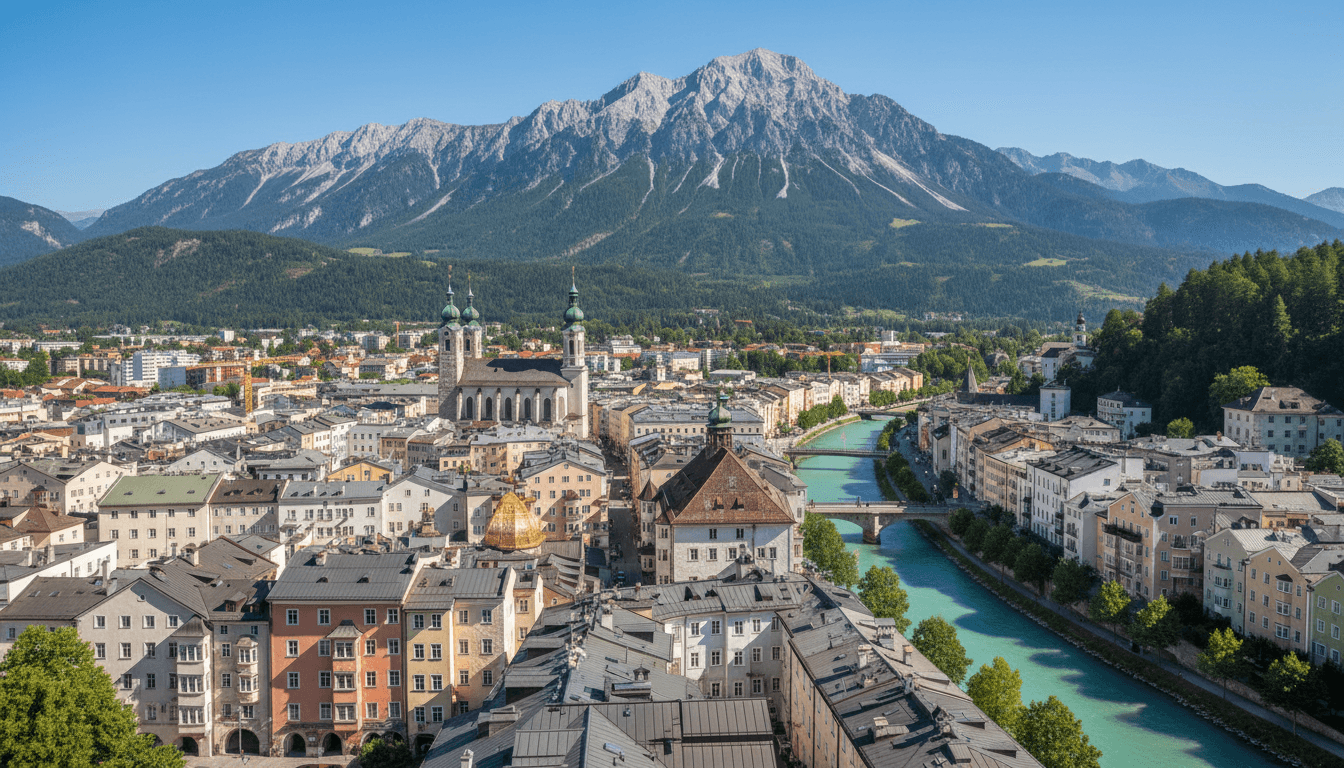
Senior-Friendly Home Swap in Innsbruck: Your Complete Guide to Accessible Austrian Alps Adventures
Maya Chen
Travel Writer & Home Exchange Expert
Discover how senior travelers can enjoy accessible home swaps in Innsbruck. From elevator-equipped apartments to ground-floor chalets, find your perfect Austrian Alps accommodation.
My mom called me last October with a question I wasn't expecting: "Maya, do you think I could do one of those home swaps you're always raving about? But somewhere with mountains and... you know, not too many stairs?"
She'd just turned 68, had a new hip, and was absolutely determined not to let that slow her down. A senior-friendly home swap in Innsbruck wasn't even on my radar until that conversation—but six months later, I was helping her settle into a gorgeous ground-floor apartment in the Wilten district, watching her eyes light up as the Nordkette mountains turned pink at sunset through her accessible terrace doors.
That trip changed everything I thought I knew about home swapping for older travelers. And honestly? Innsbruck might just be the most underrated destination in Europe for seniors who want adventure without sacrificing comfort.
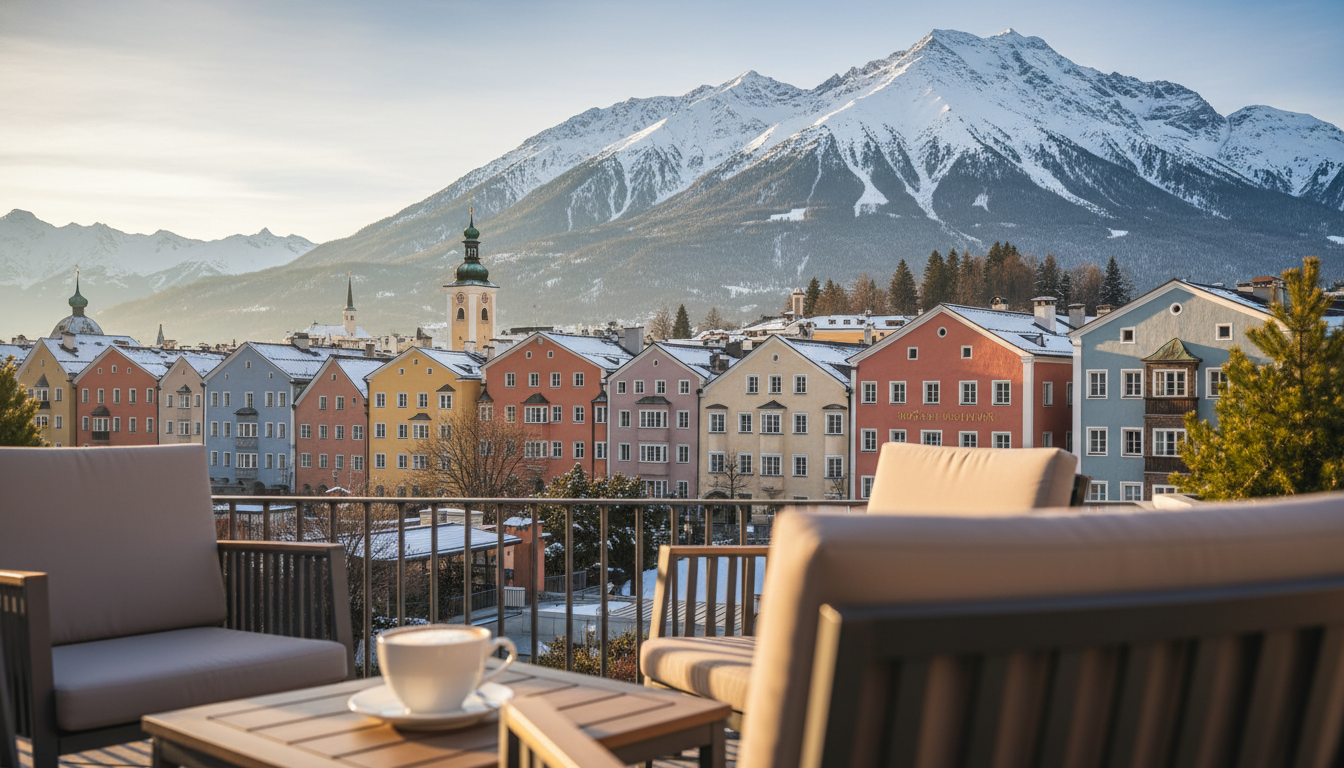 Golden hour view of Innsbrucks colorful Old Town buildings with snow-capped Alps rising dramatically
Why Innsbruck Is Perfect for Senior Home Swaps
Here's something that surprised me: Innsbruck is genuinely, thoughtfully accessible in ways that many European cities simply aren't. The compact Old Town means you're never far from anything. The public transportation system—including funiculars and cable cars—was designed with mobility in mind. And the Austrian approach to hospitality extends to how they build and maintain homes.
When I started researching accessible home exchanges in Innsbruck for my mom, I expected slim pickings. Instead, I found a city where ground-floor apartments are common, elevators are standard in most buildings constructed after the 1980s, and homeowners genuinely understand what "accessible" means.
The climate helps too. Unlike the scorching Mediterranean or the damp British Isles, Innsbruck offers mild summers (averaging 70-75°F/21-24°C) and crisp, manageable winters. My mom's physical therapist actually recommended mountain air for her recovery—something about the altitude and clean air being good for circulation.
But let me be real with you: not every home swap in Innsbruck will work for seniors with mobility concerns. The key is knowing exactly what to look for and how to communicate your needs clearly.
Finding Accessible Home Exchanges in Innsbruck: What to Look For
After helping my mom—and since then, three of her travel-happy friends—find senior-friendly accommodations in Innsbruck, I've developed a mental checklist that goes way beyond "ground floor" or "elevator."
The Building Itself
Innsbrucker buildings fall into roughly three categories for accessibility purposes. The charming Old Town buildings (pre-1900) are gorgeous but often have narrow staircases, uneven floors, and bathtubs you'd need to climb into. The mid-century apartments (1950s-1980s) vary wildly—some have been retrofitted with elevators, others haven't. The newer constructions (1990s onward) typically meet modern accessibility standards.
When browsing listings on SwappaHome, I always look at the building photos first, not just the apartment interior. Can you see an elevator panel? Are there handrails visible in common areas? Is the entrance at street level or up a flight of stairs?
Inside the Home
The bathroom situation is make-or-break for most seniors. Austrian bathrooms tend to be smaller than American ones, which can actually be an advantage—everything's within reach. But you want to confirm: Is there a walk-in shower or just a tub? Are there grab bars? Is the toilet standard height?
My mom's Innsbruck apartment had something I'd never seen before: a heated towel rail positioned perfectly to serve as a grab bar beside the toilet. Intentional or not, it was genius.
Kitchens matter too. Austrian homes often have wall-mounted cabinets that might be too high for someone in a wheelchair or with limited reach. Counter heights vary. And those charming European apartments sometimes come with tiny refrigerators that require more frequent shopping trips—fine if you're mobile, potentially exhausting if you're not.
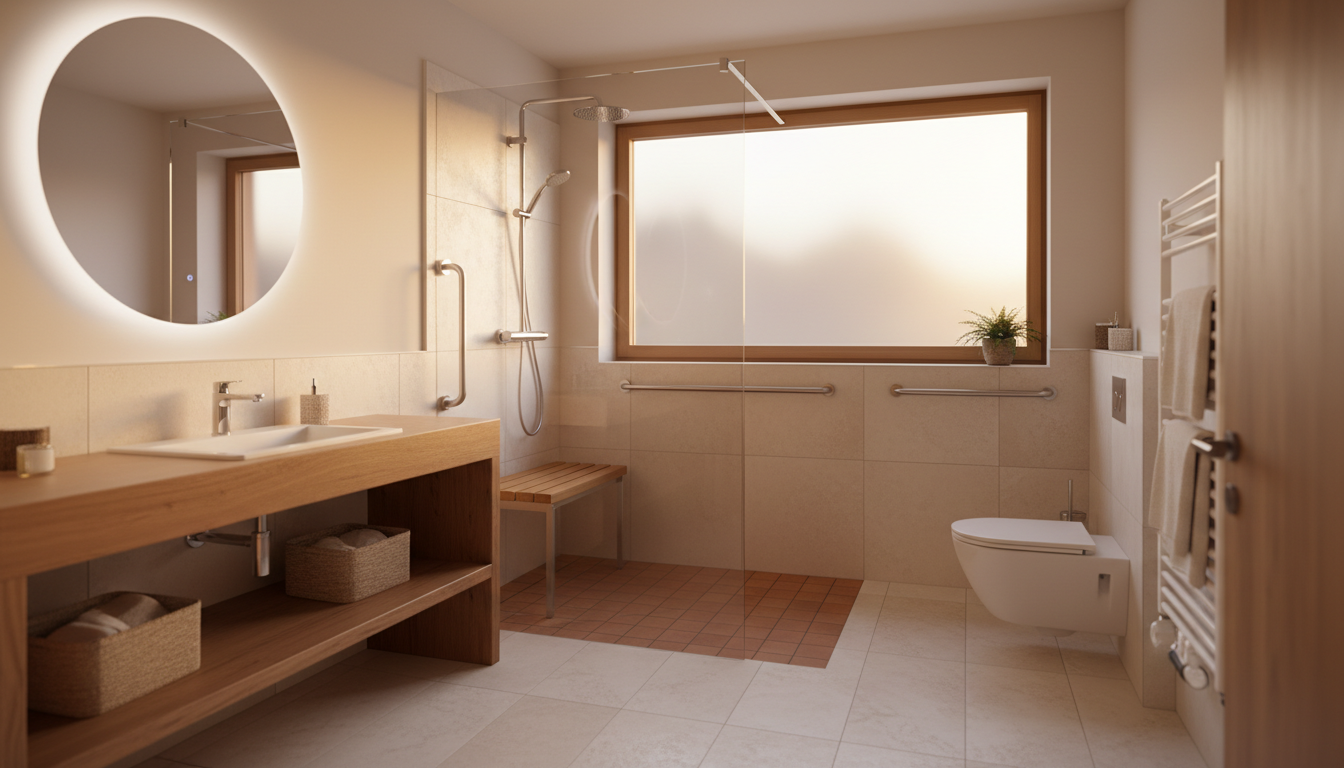 Bright, modern Austrian bathroom with walk-in shower featuring built-in seat, chrome grab bars, non-
The Neighborhood Factor
This is where Innsbruck really shines for senior travelers. Unlike cities where accessible housing might be stuck in distant suburbs, Innsbruck's most senior-friendly neighborhoods are often the most desirable ones.
Wilten (where my mom stayed) is flat, residential, and a 10-minute walk—or quick tram ride—from the Old Town. The Sillpark shopping center has everything you'd need, and the neighborhood is full of locals rather than tourists. Apartments here often have balconies or small gardens, and the buildings tend to be 1970s-1990s construction with good accessibility features. Expect home swap listings here to be apartments in the 600-900 square foot range.
Pradl is similar—working-class roots, increasingly popular with young families, and notably flat. The Olympiaworld sports complex is here, which means excellent accessible pathways and facilities nearby. My mom's friend Diane did a swap here and loved being able to walk to the farmer's market every Saturday without navigating a single cobblestone.
Hötting is trickier. It's stunning—perched on the hillside with incredible views—but "hillside" is the operative word. Some parts are steep enough that I'd hesitate to recommend them for anyone with mobility concerns. The lower sections near the Inn River can work well though, and the homes here tend to be larger (think: actual houses rather than apartments).
The Altstadt (Old Town) is charming but challenging. Cobblestones everywhere, buildings that predate elevators by centuries, and crowds during tourist season. That said, I've seen a few Old Town listings with ground-floor access and modern renovations. If you find one, snag it—waking up in the heart of Innsbruck is magical.
How to Communicate Your Accessibility Needs on SwappaHome
This is where I see seniors (and their well-meaning adult children) make the biggest mistakes. They either don't mention their needs at all—hoping for the best—or they send a wall of text that overwhelms potential hosts.
Here's the approach that worked for my mom:
In her initial message, she was specific but warm: "I'm 68, recently had hip replacement surgery, and am doing great—but I do need a home without stairs to the entrance and ideally a walk-in shower. I noticed your listing mentions an elevator—could you confirm it's working and accessible from the parking area?"
Notice what she didn't do: she didn't apologize for her needs, didn't over-explain her medical history, and didn't make assumptions. She asked direct questions that could be answered simply.
The response she got was incredibly helpful. The host not only confirmed the elevator but mentioned that the building had a ramp entrance from the street, that she kept a shower stool available for guests who needed it, and that the nearest pharmacy was a 3-minute walk away. That kind of detailed response tells you everything about whether a host will be accommodating.
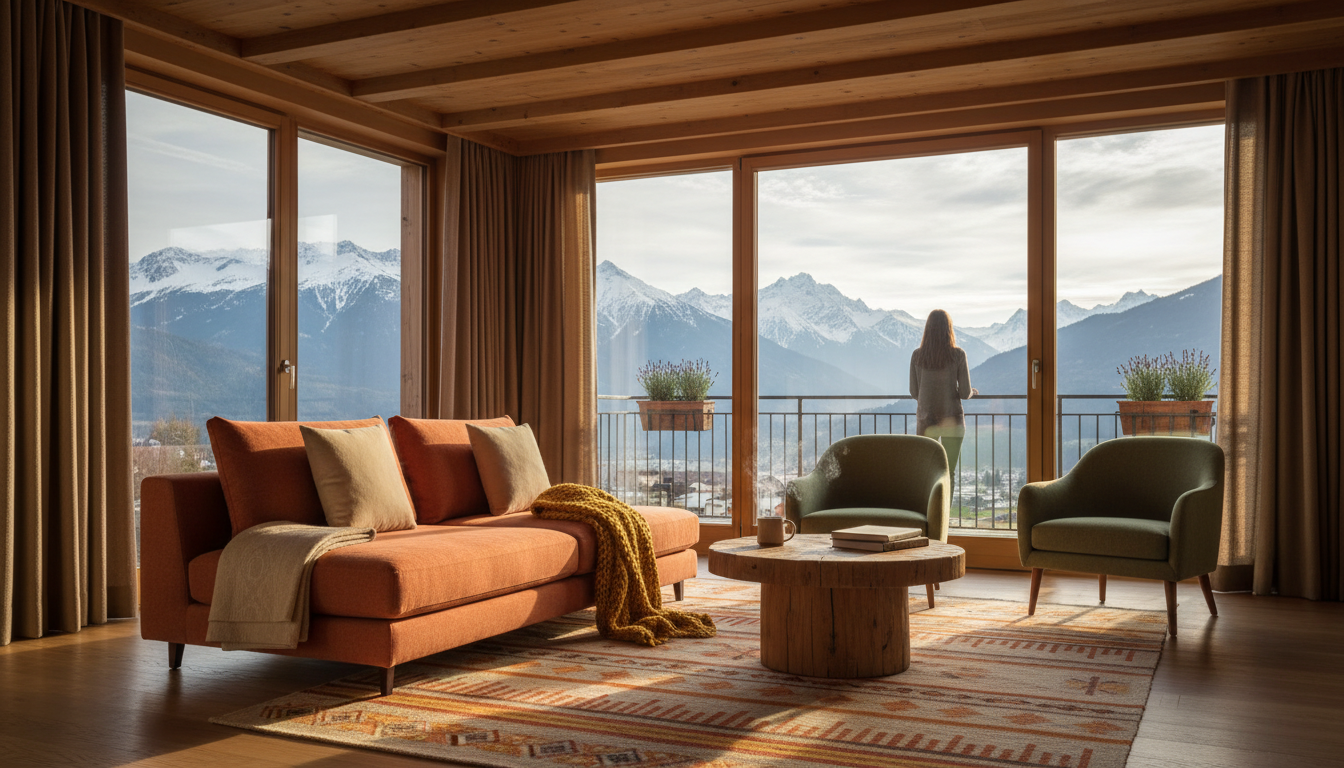 Cozy Austrian living room with large windows overlooking mountains, comfortable low-seated sofa with
Getting Around Innsbruck as a Senior Traveler
Innsbrucker Verkehrsbetriebe (IVB)—the local transit authority—operates one of the most senior-friendly public transportation systems I've encountered in Europe. And I say this as someone who's navigated Rome's chaotic buses and Paris's labyrinthine metro with her 70-something parents.
The tram system is the backbone of Innsbruck transit, and every single tram is low-floor accessible. No steps to climb, plenty of space for mobility aids, and priority seating near the doors. The main lines (1, 2, 3, and 6) connect the major neighborhoods to the city center, running every 7-10 minutes during the day.
But here's the real gem: the Nordkettenbahnen, the cable car system that takes you from the city center up to 2,300 meters altitude. I know what you're thinking—cable cars and seniors don't mix. Except these do. The Hungerburgbahn funicular from Congress station is fully accessible, with staff specifically trained to assist passengers with mobility aids. The views from Seegrube station are absolutely worth the trip, and there's a restaurant at the top with accessible facilities.
One practical note: the IVB offers a senior discount card (Seniorenkarte) for anyone 60+, but you'll need to visit a ticket office in person with your passport to get it. The savings are significant—about 50% off regular fares—so it's worth the 15-minute errand on your first day.
For days when walking feels like too much, Innsbruck has several reliable taxi services with accessible vehicles. Taxi Innsbruck (0512/5311) can dispatch wheelchair-accessible vans with advance notice. Expect to pay around €10-15 ($11-17 USD) for trips within the central districts.
Accessible Innsbruck Attractions for Senior Travelers
So what will you actually do once you're settled into your home swap? Innsbruck punches well above its weight for accessible sightseeing.
The Hofburg Imperial Palace
The Habsburg's Tyrolean residence is fully wheelchair accessible, with elevators to all exhibit floors and accessible restrooms. The state rooms are stunning—all that gilt and those painted ceilings—and audio guides are available in multiple languages. Entry is €12 ($13 USD) for seniors, and you could easily spend 2-3 hours here. Pro tip: visit in the morning before tour groups arrive.
Swarovski Crystal Worlds
About 20 minutes outside the city in Wattens, this bizarre and wonderful attraction is surprisingly accessible. The outdoor gardens have some gravel paths that can be challenging for wheelchairs, but the indoor chambers—including the famous crystal dome—are fully accessible. There's a free shuttle from Innsbruck's main train station, and the shuttle buses are equipped with wheelchair lifts. Entry is €23 ($25 USD), with a small senior discount available.
The Tyrolean Folk Art Museum
Connected to the Hofkirche (Court Church), this museum showcases traditional Alpine life through reconstructed farmhouse rooms, traditional costumes, and folk art. The museum is accessible via elevator, though some of the reconstructed rooms have uneven floors that require caution. The combination ticket with Hofkirche is €12 ($13 USD) for seniors.
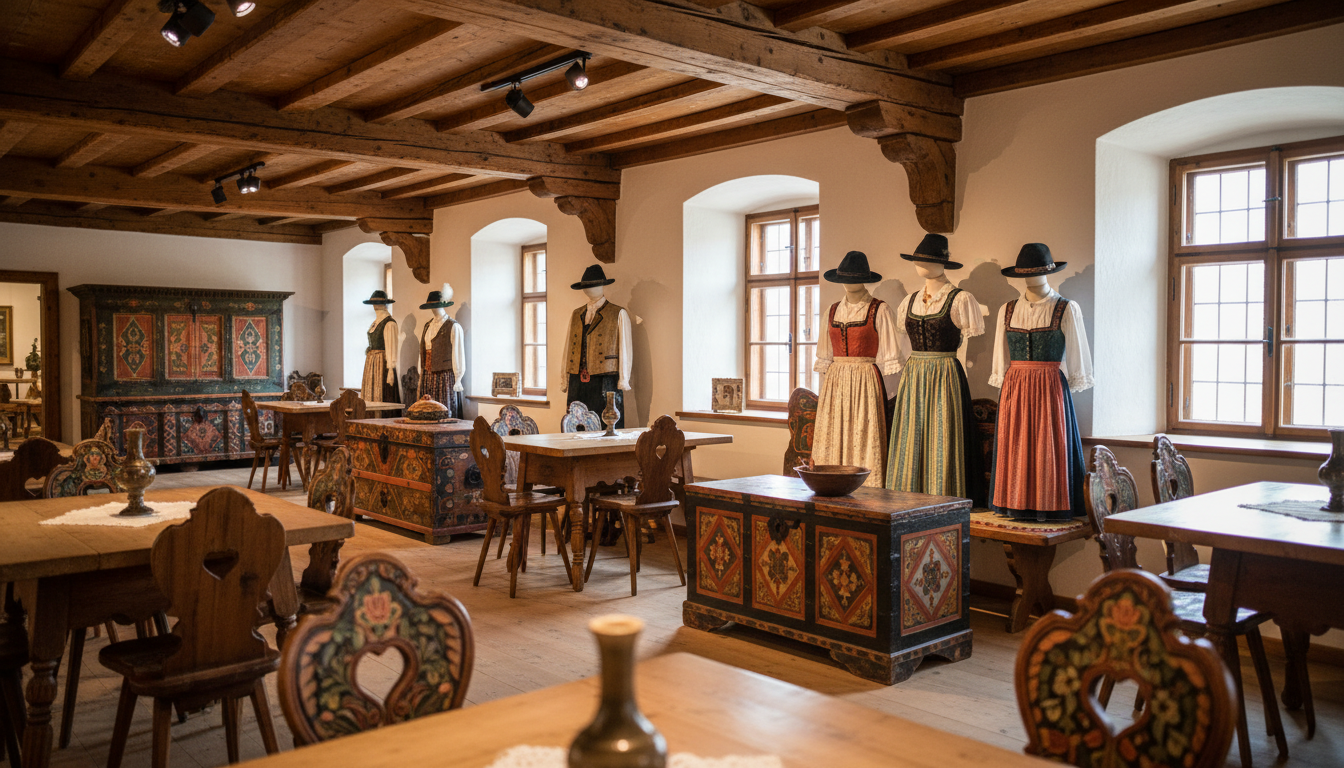 Interior of Tyrolean Folk Art Museum showing traditional carved wooden furniture, colorful painted c
The Alpenzoo
Europe's highest-elevation zoo focuses on Alpine wildlife—ibex, wolves, bears, eagles. It's built into a hillside, which sounds problematic, but the zoo has invested heavily in accessibility. A special "comfort route" avoids the steepest sections, and there's a small train that covers the most challenging terrain. That said, I'd recommend this only for seniors who are comfortable with moderate walking. Entry is €14 ($15 USD) for seniors.
Dining and Daily Life: What Seniors Should Know
Austrian cuisine is hearty, which is a polite way of saying "heavy." Wiener Schnitzel, Käsespätzle (cheese noodles), Tiroler Gröstl (pan-fried potatoes with meat)—delicious, but not exactly light fare. My mom learned quickly to order half portions (halbe Portion) when available, or to share dishes.
The good news: Innsbruck has embraced lighter, modern Austrian cooking alongside the traditional stuff. Restaurants like Lichtblick (on the 7th floor of the Rathaus Galerien, accessible by elevator, with panoramic views) offer contemporary menus with vegetable-forward options. Expect to pay €20-35 ($22-38 USD) per person for a nice dinner.
For everyday groceries, the major chains—Spar, Billa, MPreis—all have locations with accessible entrances and wide aisles. MPreis is the local Tyrolean chain and tends to have the best selection of regional products. The Markthalle (market hall) on Herzog-Siegmund-Ufer is worth a visit for fresh produce, cheese, and people-watching, though it gets crowded on Saturday mornings.
Pharmacies (Apotheken) are everywhere and well-stocked. If you need prescription medications, bring documentation from your doctor—Austrian pharmacists are helpful but strict about controlled substances. Over-the-counter medications are readily available, though brands will be different from what you know at home.
Planning Your Senior-Friendly Innsbruck Home Swap: A Timeline
I've found that seniors often need more lead time than younger travelers—not because they're slower, but because accessible properties are in higher demand and require more coordination.
6-8 months before: Start browsing SwappaHome for Innsbruck listings. Save favorites, but don't reach out yet—you're just getting a sense of what's available.
4-6 months before: Begin messaging hosts whose properties look promising. Be upfront about your accessibility needs from the first message. If a host seems hesitant or vague about accessibility features, move on.
3-4 months before: Confirm your swap and start detailed planning. Ask your host for specific recommendations—best pharmacy nearby, closest accessible grocery store, any quirks about the building or neighborhood.
1 month before: Arrange travel insurance that covers pre-existing conditions and trip interruption. This is non-negotiable for seniors—medical emergencies abroad are expensive, and you want coverage that will actually pay out.
1 week before: Confirm all details with your host. Exchange phone numbers for emergencies. Make sure you have clear instructions for accessing the property.
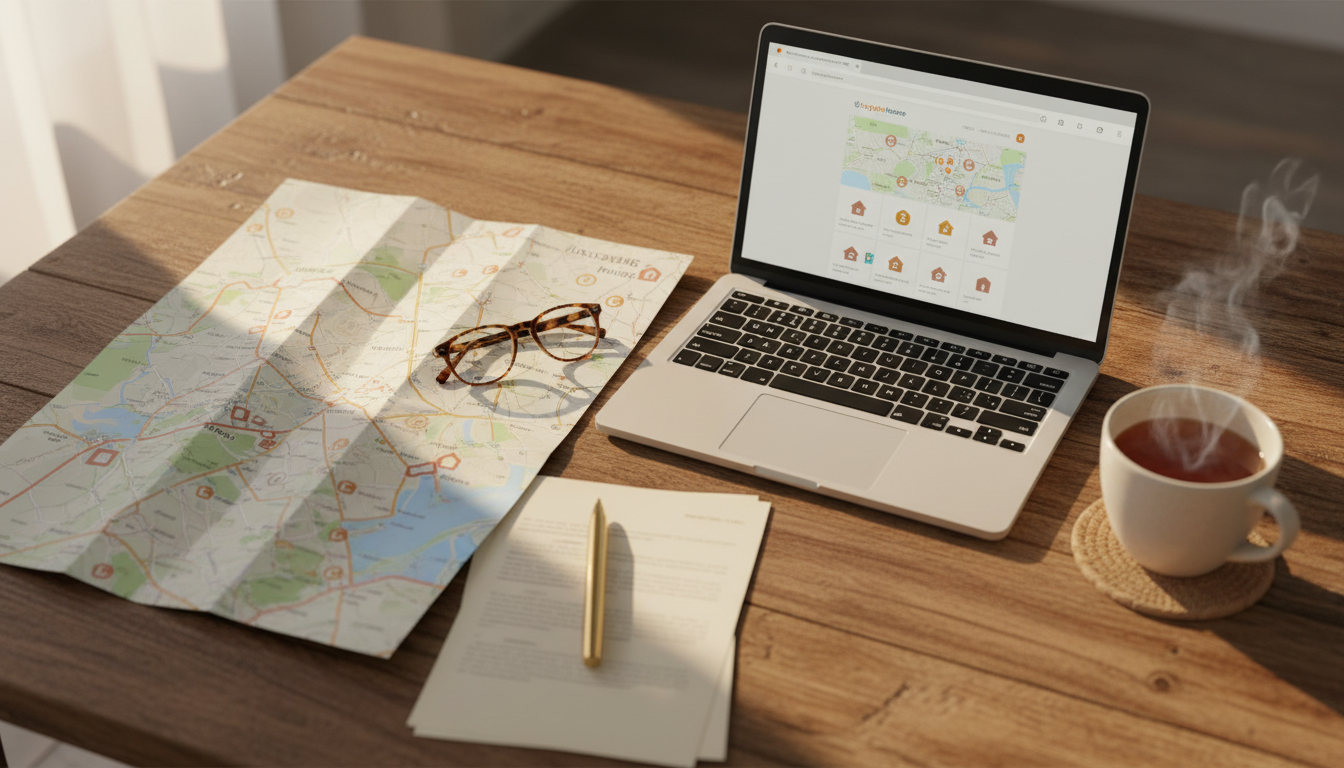 Overhead view of a well-organized travel planning setup laptop showing SwappaHome interface, printed
What My Mom Wishes She'd Known
After her three-week stay, my mom had a list of things she wished someone had told her beforehand. Consider this your insider intel:
The altitude is real. Innsbruck sits at about 574 meters (1,880 feet), which doesn't sound high, but it's enough to affect some people. My mom felt slightly more winded than usual for the first few days. If you're planning excursions to higher elevations, give yourself time to acclimatize.
Austrian beds are... different. Instead of one large blanket, you'll often find two individual duvets on a double bed. It's actually great for temperature regulation, but it surprised my mom the first night.
Sundays are quiet. Like, really quiet. Most shops close, and the city takes on a peaceful, almost sleepy quality. Stock up on groceries Saturday, and plan Sunday for leisurely walks or museum visits.
The coffee culture is serious. Austrian coffee houses are meant for lingering. Order a Melange (similar to cappuccino), settle into a comfortable chair, and don't rush. The servers won't either.
Healthcare is excellent. The Landeskrankenhaus Innsbruck (University Hospital) is one of Austria's best, and emergency care is available to tourists. Keep your European Health Insurance Card (EHIC) or travel insurance details handy, but know that you're in good hands if something goes wrong.
Making Your Innsbruck Home Swap Work
My mom came back from Innsbruck a different person. Not because anything dramatic happened—no life-changing encounters or spiritual awakenings. Just three weeks of waking up to mountain views, walking at her own pace through a city that didn't make her feel old or limited, and proving to herself that adventure doesn't have an expiration date.
The home swap made it possible. Hotel rooms, even accessible ones, would have cost her €150-200 ($165-220 USD) per night for something comparable. Instead, she used her SwappaHome credits—earned from hosting a lovely couple from Copenhagen the previous summer—and spent that money on cable car rides, museum entries, and really excellent apple strudel.
If you're a senior considering home swapping in Innsbruck, or if you're helping a parent plan their trip, I hope this gives you confidence that it's absolutely doable. The city is ready for you. The homes are out there. And the mountains? They've been waiting.
Frequently Asked Questions
Is home swapping in Innsbruck safe for seniors traveling alone?
Absolutely. Innsbruck consistently ranks among Europe's safest cities, with low crime rates and excellent emergency services. The SwappaHome review system helps you verify hosts before committing, and Austria's healthcare infrastructure means help is always nearby. Many solo senior travelers find Innsbruck's compact size and friendly locals particularly reassuring for independent exploration.
How much can seniors save with home exchange versus hotels in Innsbruck?
Accessible hotel rooms in Innsbruck typically cost €150-250 ($165-275 USD) per night during peak season. A three-week stay would run €3,150-5,250 ($3,465-5,775 USD) in accommodation alone. With SwappaHome's credit system—where every night hosted earns one credit, and every night stayed costs one credit—your accommodation cost is essentially zero, saving thousands on extended stays.
What's the best time of year for senior travelers to visit Innsbruck?
May through June and September through early October offer ideal conditions: mild temperatures (60-75°F/15-24°C), fewer crowds than summer peak, and accessible mountain attractions fully operational. Winter can be magical but presents additional mobility challenges with snow and ice. Avoid August if you dislike crowds—it's peak tourist season.
Are Innsbruck's cable cars and funiculars accessible for wheelchair users?
The Hungerburgbahn funicular is fully wheelchair accessible, with trained staff to assist boarding. The Nordkettenbahn cable cars can accommodate wheelchairs with advance notice—call +43 512 293344 at least 24 hours ahead. The Patscherkofelbahn on the opposite side of the valley also offers accessible options. Staff are generally helpful and experienced with mobility aids.
What should seniors include in their SwappaHome profile to find accessible Innsbruck homes?
Be specific about your mobility needs in your profile: mention if you require step-free access, walk-in showers, grab bars, or elevator access. Include your age range and any relevant health considerations that affect accommodation needs. Hosts appreciate clarity—it helps them determine if their home is genuinely suitable, saving everyone time and ensuring better matches.
40+
Swaps
25
Countries
7
Years
About Maya Chen
Travel Writer & Home Exchange Expert
Maya is a travel writer with over 7 years of experience in the home swapping world. Originally from Vancouver and now based in San Francisco, she has completed more than 40 home exchanges across 25 countries. Her passion for "slow" and authentic travel led her to discover that true luxury lies in living like a local, not a tourist.
Ready to try home swapping?
Join SwappaHome and start traveling by exchanging homes. Get 10 free credits when you sign up!
Related articles
Lyon Home Exchange: Your Complete Guide to France's Hidden Gem for Home Swapping
Discover why Lyon home exchange is booming among savvy travelers. From Croix-Rousse to Presqu'île, find the best neighborhoods and insider tips for your swap.
Zurich Bucket List: 47 Unforgettable Experiences to Enjoy During Your Home Swap
Discover the ultimate Zurich bucket list for home swappers—from secret swimming spots to fondue rituals locals actually do. Save thousands while living like a true Zürcher.
Dublin Home Exchange Utilities Guide: WiFi, Heating & Everything Your Guests Need
Master Dublin home exchange utilities—from dodgy WiFi fixes to heating quirks. Practical tips from 7 years of swapping homes across Ireland.