Vienna Home Exchange: 2026 Market Trends and Opportunities for Smart Travelers

SwappaHome Editorial Team
Home Exchange & Slow Travel Editorial
Discover Vienna home exchange trends for 2026—from Innere Stadt apartments to emerging districts. Real data on savings, timing, and how to land the best swaps.
Vienna Home Exchange: 2026 Market Trends and Opportunities for Smart Travelers
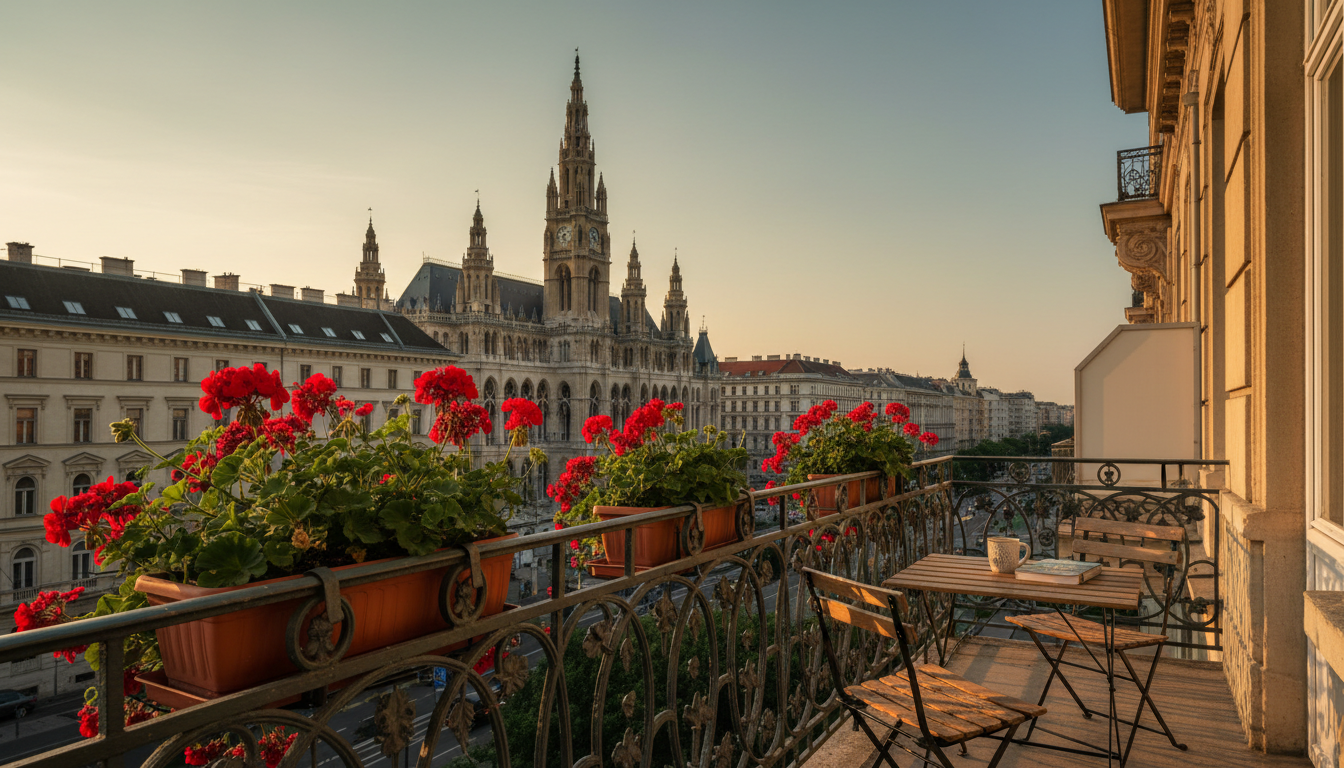
You're standing on the balcony of a third-floor Altbau apartment in Neubau—the 7th district—watching trams glide past the Museumsquartier as late afternoon light catches the Ringstraße. The coffee maker behind you still holds grounds left with a note: "The Meinl beans are better than anything you'll find at the tourist shops." This is what a Vienna home exchange looks like in 2026. And the market for it has never been more dynamic.
 Golden hour view from a classic Viennese apartment balcony overlooking the Ringstrae, with ornate ir
The Vienna home exchange market has undergone a quiet transformation over the past three years. What was once a niche option for budget-conscious academics and retirees has become a mainstream travel strategy—particularly among remote workers, families seeking longer European stays, and travelers who've grown weary of Vienna's hotel prices that regularly exceed €180 per night for anything central and comfortable.
Here's what's actually happening on the ground, what the numbers reveal, and how to position yourself for the best opportunities in one of Europe's most consistently desirable exchange destinations.
Why Vienna Dominates Central European Home Exchange Demand
Vienna consistently ranks among Europe's top five most-requested cities for home exchange. The reasons extend beyond the obvious cultural draws—the city offers something increasingly rare: genuine livability combined with world-class tourism infrastructure.
The SwappaHome community reports that Vienna requests outpace available listings by roughly 3:1 during peak seasons. That ratio tells you two things. If you own property in Vienna, you're sitting on exchange gold. If you're trying to secure a Vienna swap, timing and strategy matter enormously.
What drives this demand? Vienna holds the distinction of being named the world's most livable city by the Economist Intelligence Unit for multiple consecutive years. But livability statistics don't capture what travelers actually experience: a city where the U-Bahn runs with Swiss precision, where a €4.50 Melange at Café Central tastes the same whether you're a tourist or a local, and where you can walk from a Klimt exhibition at the Belvedere to a natural wine bar in the 4th district without ever feeling like you've left a curated experience.
The practical appeal compounds this. Vienna International Airport serves as a hub for connections throughout Central and Eastern Europe. The city operates in the Central European Time zone, making it workable for remote workers collaborating with both London and Dubai. And unlike Paris or London, Vienna's public transit actually makes car ownership unnecessary—a detail that matters when you're staying in someone's home and don't want to navigate parking permits.
Vienna Home Exchange Market Trends: What the 2026 Data Shows
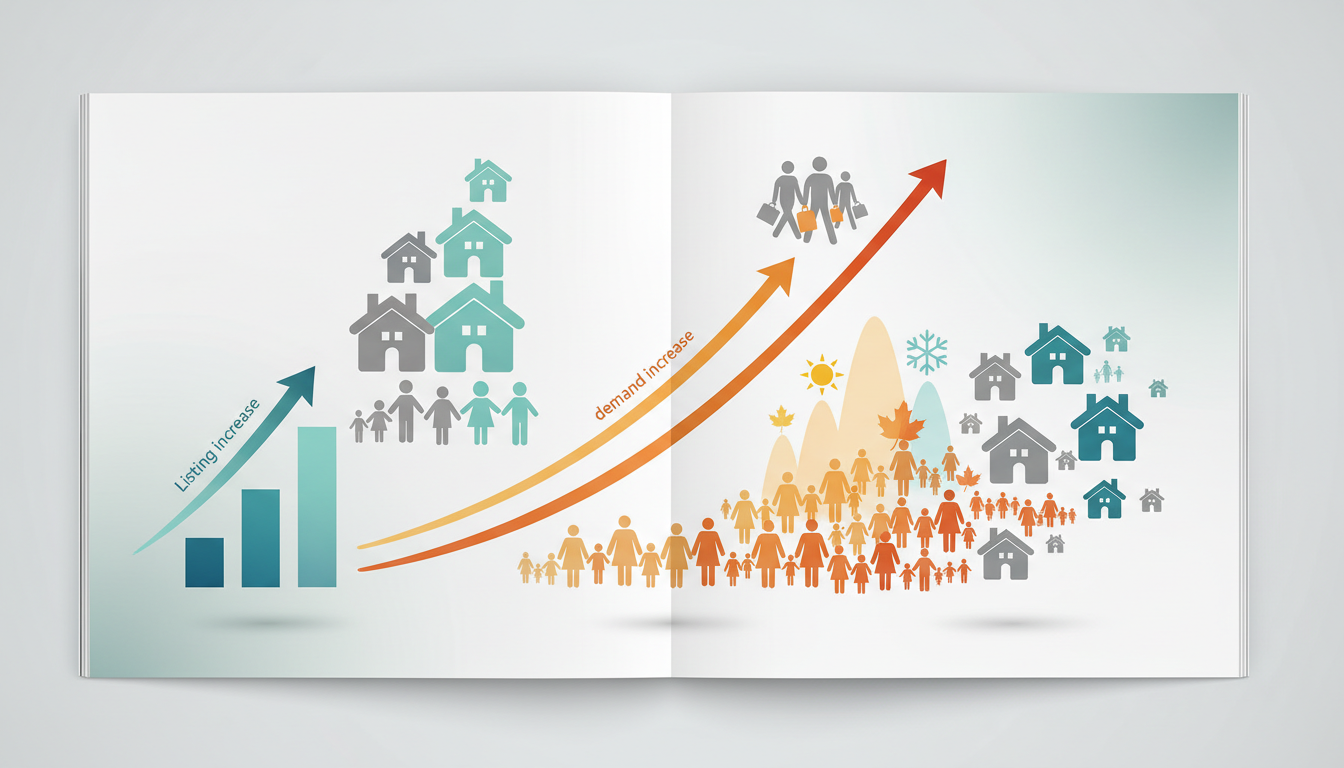
The numbers paint a specific picture. Vienna home exchange listings have grown approximately 40% since 2023, but demand has grown faster—closer to 65% by most platform estimates. This supply-demand gap creates both challenges and opportunities depending on which side of the exchange you're on.
 Infographic showing Vienna home exchange growth listing increase vs. demand increase 2023-2026, with
Seasonal Patterns That Actually Matter
Vienna's exchange market doesn't follow the simple summer-peak pattern you'd expect from Mediterranean destinations. The data reveals three distinct high-demand windows:
December through early January sees the highest competition, driven by the Christkindlmärkte—Vienna's legendary Christmas markets. The market at Rathausplatz alone draws over three million visitors annually. Travelers seeking home exchanges during this period often book 4-6 months in advance, and listings within walking distance of major markets (particularly in districts 1, 7, and 8) get snapped up first.
Late April through May brings a secondary surge. The Vienna Festival kicks off in May, and the weather finally cooperates after a long Central European winter. Gardens at Schönbrunn Palace reach peak bloom. Outdoor dining becomes possible at places like the Naschmarkt, where you can eat Syrian falafel next to Austrian cheese vendors.
September through October has emerged as the savvy traveler's window. The summer tourist crush subsides, but the weather remains mild—averaging 15-20°C. The wine harvest season in nearby regions like Wachau Valley makes day trips particularly appealing. And crucially, Vienna home exchange competition drops by roughly 30% compared to the December peak, while listing availability remains relatively stable.
District-by-District Opportunity Analysis
Not all Vienna neighborhoods offer equal exchange potential. Understanding the micro-markets within the city separates successful swappers from frustrated ones.
Innere Stadt (1st District): The historic center commands premium demand but has limited residential inventory. Most properties here are either commercial, institutional, or owned by families who've held them for generations and rarely travel. When a 1st district listing does appear—say, a pied-à-terre near Stephansplatz—it typically receives 15-20 inquiries within the first week. If you're listing property here, you can essentially choose your exchange partner.
Neubau (7th District): This is where the action is for Vienna home exchange in 2026. The neighborhood has transformed into Vienna's creative hub, with the Museumsquartier at its edge and streets like Kirchengasse lined with design shops and specialty coffee roasters. Listings here move fast but appear more frequently than in the 1st district. Expect properties to be snapped up within 2-3 weeks during shoulder seasons.
Josefstadt (8th District): Often overlooked by first-time visitors, Josefstadt offers what locals consider the best value proposition in central Vienna. The Theater in der Josefstadt—Austria's oldest continuously operating theater—anchors the neighborhood's cultural credentials. Exchange listings here tend to be larger apartments suitable for families, and competition is notably lower than in neighboring Neubau.
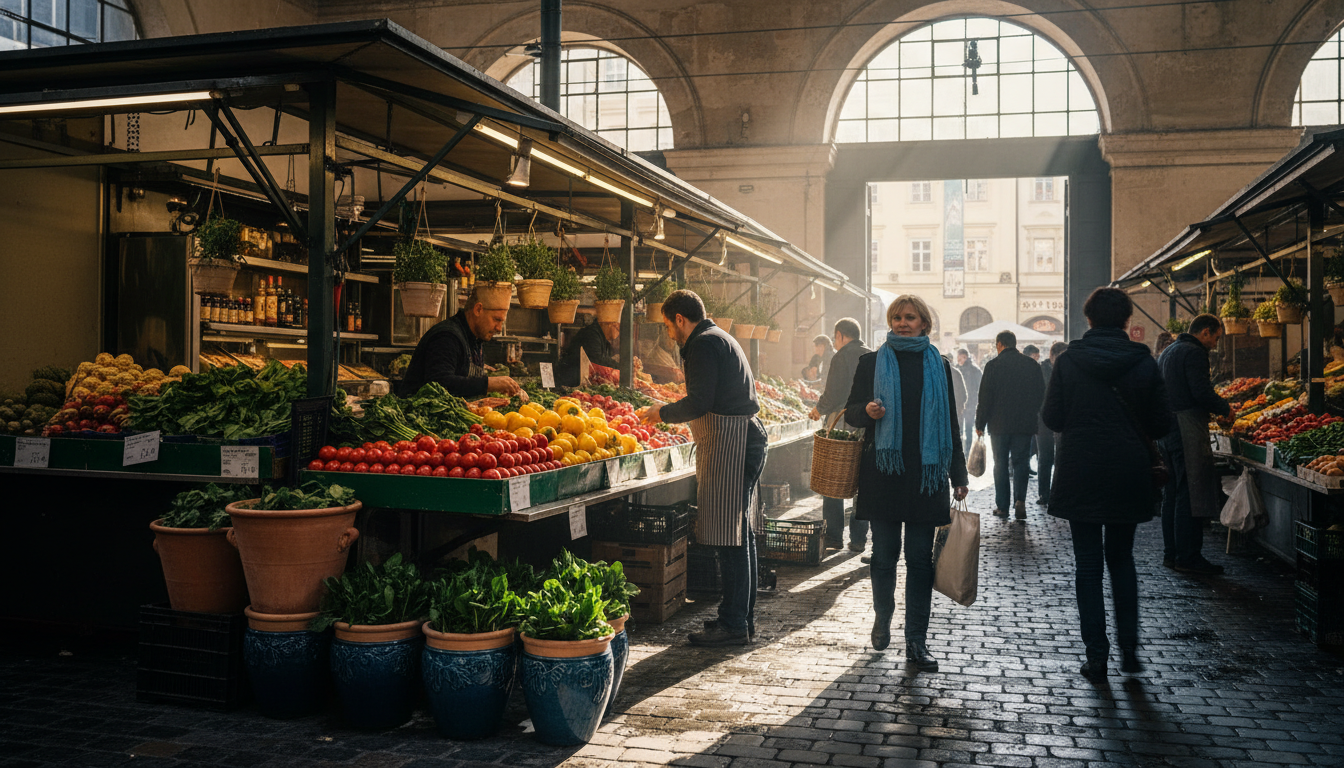
Leopoldstadt (2nd District): The area around the Karmelitermarkt has undergone significant gentrification, and home exchange listings have followed. Younger families and creative professionals dominate the host demographic here. The Prater park provides green space that's genuinely useful for longer stays, not just tourist photo ops. This district represents the best opportunity for travelers seeking 2+ week exchanges, as hosts here tend to travel for extended periods themselves.
 Morning scene at Karmelitermarkt in Viennas 2nd district, with vendors setting up produce stalls, lo
How to Secure a Vienna Home Exchange in a Competitive Market
Strategy matters more in Vienna than in most European cities. The supply-demand imbalance means that passive approaches—listing your home and waiting—rarely yield results for travelers seeking Vienna.
Timing Your Outreach
The SwappaHome community has identified specific timing windows that correlate with successful Vienna exchanges:
For December/Christmas market stays: Begin reaching out to Vienna hosts in July or August. Yes, that early. Hosts with desirable properties often have their December travel plans solidified by late summer, and being among the first inquiries gives you a significant advantage.
For spring stays (April-May): October through December outreach works best. Vienna hosts planning spring travel often finalize arrangements during the winter months.
For autumn stays: June and July outreach catches hosts as they're planning their own late-year travel.
Crafting Requests That Get Responses
Vienna hosts—particularly those in high-demand districts—receive numerous exchange requests. Feedback from the SwappaHome community suggests successful requests share certain characteristics.
They mention specific neighborhood knowledge. Referencing that you're excited to explore the Brunnenmarkt in the 16th district or that you've been wanting to visit the Hundertwasserhaus signals that you're not just looking for "a place in Vienna" but have done genuine research.
They explain why Vienna specifically, not just why home exchange generally. Hosts want to know their city matters to you, not that you're mass-messaging European listings.
They offer concrete value about their own property. Rather than "our apartment is nice," successful requests specify details like bedroom count, neighborhood walkability, and specific amenities like a dedicated workspace.
The Credit Economy in Vienna
Understanding how SwappaHome's credit system interacts with Vienna's market dynamics helps you strategize effectively.
Every night hosted earns you 1 credit. Every night you stay costs 1 credit. This flat rate applies regardless of property luxury or location—a studio in Vienna's 22nd district costs the same credits as a penthouse overlooking the Staatsoper.
New members start with 7 free credits, essentially a free week. For Vienna, this creates an interesting dynamic: you can book a week in one of Europe's most expensive cities without any prior hosting, but you'll need to either host guests or be strategic about shorter stays to extend beyond that initial week.
Here's a practical implication: if you're targeting Vienna and have limited credits, consider splitting your Austrian trip. Perhaps 5 nights in Vienna using credits, then a few nights in Salzburg or Graz where exchange competition is lower and you might find hosts interested in simultaneous swaps.
Vienna Home Exchange Opportunities: What Hosts Are Looking For
If you're a Vienna resident considering listing your property, the market dynamics work strongly in your favor—but certain factors determine whether you'll attract quality exchange partners or struggle to find matches.
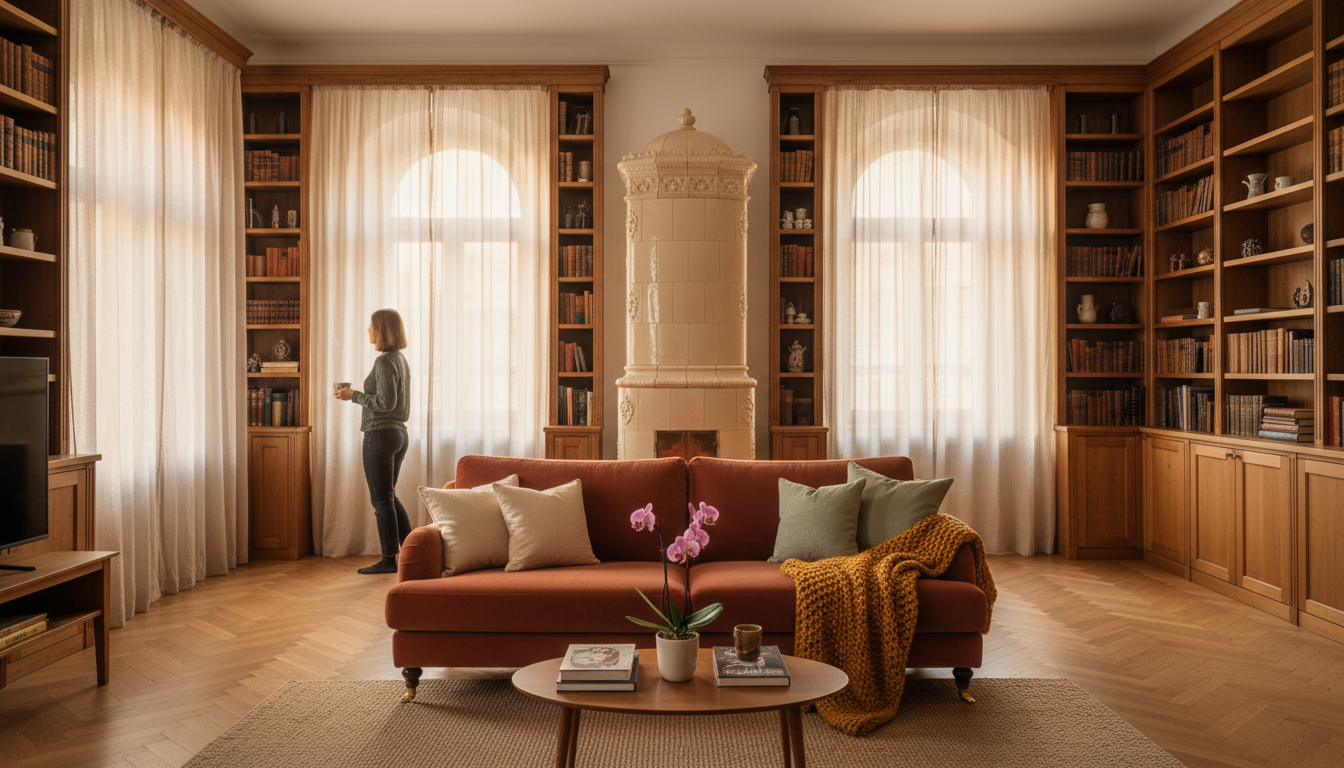 Cozy Viennese living room with parquet floors, a tiled Kachelofen traditional ceramic stove, built-i
Property Features That Drive Demand
Working from home setup: The remote work trend hasn't faded; it's become permanent for a significant portion of travelers. Vienna listings that explicitly mention dedicated workspace, reliable wifi speeds, and a quiet environment for video calls receive measurably more interest.
Kitchen functionality: Vienna's restaurant scene is excellent but expensive. A dinner for two at a mid-range restaurant easily runs €70-90 before wine. Travelers staying more than a few nights want to cook, and that means more than a hot plate. Full-size refrigerators, proper stovetops, and basic pantry staples significantly increase your listing's appeal.
Neighborhood context: The most successful Vienna listings don't just describe the apartment—they describe the life around it. Mentioning that the Billa supermarket is a 3-minute walk, that Café Sperl is around the corner, or that the U3 Neubaugasse station is 200 meters away gives potential guests a sense of daily life.
What Vienna Hosts Seek in Exchange
Data from SwappaHome's community surveys reveals where Vienna hosts most want to travel:
North America (particularly US West Coast and New York): Transatlantic flights from Vienna are relatively affordable, and Austrian travelers show strong interest in American cities. Listings in San Francisco, Los Angeles, Portland, Seattle, and New York receive disproportionate interest from Vienna hosts.
Southern Europe for winter escapes: Lisbon, Barcelona, and southern Italian cities attract Vienna hosts fleeing the gray Central European winter. If you have property in warmer climates, your December-February availability is particularly valuable.
Japan: The Vienna-Tokyo connection is surprisingly strong, driven partly by shared cultural appreciation for precision and craftsmanship. Japanese property listings attract significant Vienna host interest.
The Economics: Vienna Home Exchange vs. Traditional Accommodation
Let's talk actual numbers, because the savings potential in Vienna is substantial.
A centrally located hotel room in Vienna—something comfortable but not luxury—runs €150-220 per night in 2026. During Christmas market season, those same rooms often exceed €280. A two-week stay in a decent hotel easily costs €2,500-4,000.
Airbnb and short-term rentals have become less viable in Vienna due to regulatory changes. The city has implemented strict limits on short-term rentals, reducing supply and pushing prices up. A one-bedroom apartment in a central district now typically lists for €120-180 per night on rental platforms, plus cleaning fees of €50-100.
A Vienna home exchange costs you credits—which you earn by hosting others in your own home. The direct monetary cost is zero for the accommodation itself. Even accounting for SwappaHome membership fees, a two-week Vienna stay through home exchange represents savings of €1,500-3,000 compared to hotels, or €1,200-2,200 compared to short-term rentals.
The math becomes even more compelling for families. A hotel room that fits four people in Vienna—if you can find one—runs €300+ per night. A three-bedroom apartment through home exchange? Same credit cost as a studio.
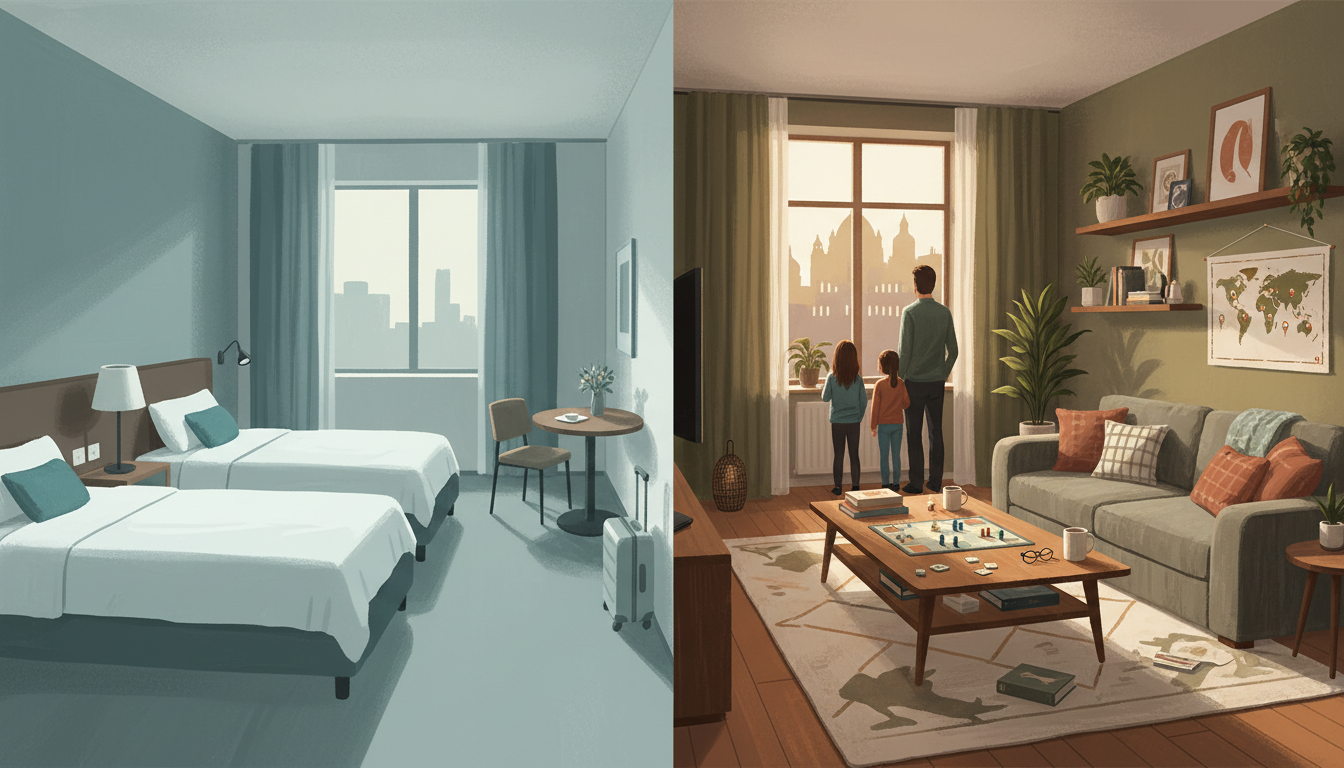 Split-screen comparison left side shows a generic hotel room with two beds right side shows a spacio
Emerging Opportunities in Vienna's Outer Districts
Smart travelers are increasingly looking beyond the traditional tourist districts, and Vienna's outer areas offer genuine opportunities that most visitors miss.
Döbling (19th District): This leafy, affluent district includes the Grinzing wine village, where Heurigen serve new wine alongside simple Austrian food. The area offers larger properties—often houses with gardens—that rarely appear on hotel or rental markets. For families or groups, Döbling home exchanges provide space and tranquility while remaining connected to central Vienna via the D tram line.
Favoriten (10th District): Vienna's most diverse district has emerged as an unexpected home exchange opportunity. The Sonnwendviertel development near the new Hauptbahnhof features modern apartments with amenities that older buildings lack—elevators, in-unit laundry, contemporary kitchens. Hosts here tend to be younger professionals, and the neighborhood offers authentic multicultural dining that the tourist districts can't match. A Vietnamese bánh mì or Turkish breakfast at one of the Reumannplatz cafés costs a fraction of what you'd pay near the Stephansdom.
Floridsdorf (21st District): Across the Danube, Floridsdorf remains off most tourist radars entirely—which is precisely its appeal for longer stays. The Alte Donau provides swimming, sailing, and waterfront cycling that feels nothing like typical city tourism. Home exchange listings here offer the best space-per-credit value in Vienna, and the U6 line connects to central Vienna in under 20 minutes.
Practical Considerations for Your Vienna Home Exchange
Transportation Logistics
Vienna's public transit system operates on an honor system with random ticket checks. A monthly pass costs €51 in 2026—worthwhile for stays of 8+ days. The system includes U-Bahn, trams, and buses, all covered by the same ticket. The Vienna City Card, marketed to tourists, rarely makes financial sense compared to standard tickets.
From Vienna International Airport, the City Airport Train reaches Wien Mitte station in 16 minutes for €14.90 one-way. The cheaper option: the S7 train covers the same route in 25 minutes for €4.40 with a standard transit ticket.
Food and Daily Expenses
Beyond accommodation, Vienna daily costs run approximately:
- Coffee and pastry at a traditional coffeehouse: €8-12
- Lunch at a Beisl (local pub): €12-18
- Dinner at a mid-range restaurant: €25-40 per person
- Supermarket groceries for a day: €15-25
- Museum entry (most major museums): €15-18
The home exchange advantage extends beyond accommodation savings. Having a kitchen means breakfast can be €3 worth of groceries instead of €15 at a café. A bottle of Austrian Grüner Veltliner from the supermarket costs €8-12; the same wine at a restaurant runs €35-50.
Cultural Etiquette for Guests
Vienna operates on unwritten rules that home exchange guests should understand.
Quiet hours are taken seriously. Avoid noise between 10 PM and 6 AM, and on Sundays—when most shops close and the city genuinely rests.
Greetings matter. A simple "Grüß Gott" when entering shops or elevators signals basic cultural awareness.
The coffeehouse tradition involves lingering. Ordering a single Melange and staying for two hours with a newspaper is not just acceptable—it's the point. Rushing through coffee marks you as someone who doesn't understand Viennese Gemütlichkeit.
Looking Ahead: Vienna Home Exchange Projections for 2026-2027
Several trends suggest how the Vienna market will evolve:
Increased regulation of short-term rentals will likely push more travelers toward home exchange as the Airbnb market contracts further. Vienna's city government has shown consistent commitment to protecting residential housing stock, and enforcement has tightened.
The remote work demographic will continue growing among home exchange users. Vienna's livability, timezone position, and infrastructure make it particularly attractive for this segment. Expect listings that emphasize work-from-home features to command premium interest.
Longer stays are becoming more common. The average Vienna home exchange has extended from 5-6 nights in 2022 to 8-10 nights in 2025. This trend favors both hosts and guests seeking deeper neighborhood immersion.
Outer district growth will accelerate as central district competition intensifies. Travelers willing to stay in the 10th, 16th, or 21st districts will find opportunities that central-district seekers miss entirely.
Making Your Move in the Vienna Home Exchange Market
The Vienna home exchange market in 2026 rewards preparation, specificity, and genuine engagement with the city's culture. Whether you're a Vienna resident looking to leverage your property for global travel, or a traveler seeking to experience the city beyond its tourist surface, the opportunity is real—but it requires more than passive participation.
Start by understanding the seasonal rhythms. Identify which districts align with your interests and budget. Craft exchange requests that demonstrate genuine Vienna knowledge. And recognize that in a supply-constrained market, the quality of your own listing and your responsiveness as a potential exchange partner matter as much as your travel dates.
That balcony view over the Ringstraße, the morning coffee ritual, the sense of living in a neighborhood rather than visiting a destination—these aren't luxuries reserved for the wealthy or the lucky. They're available to anyone willing to approach home exchange with intention and preparation.
The Melange is waiting. The Altbau apartment with the creaky parquet floors and the afternoon light is waiting. The question is simply whether you'll position yourself to find it.
Frequently Asked Questions
Is Vienna home exchange safe for first-time swappers?
Vienna ranks among Europe's safest cities, and the home exchange community here reflects that stability. SwappaHome's verification and review systems add accountability, while Vienna's low crime rates and trustworthy culture make it an ideal first exchange destination. Most experienced swappers recommend Vienna specifically for newcomers to home exchange.
How far in advance should I book a Vienna home exchange for Christmas markets?
For December stays during Christkindlmarkt season, begin outreach to Vienna hosts 4-6 months in advance—ideally by July or August. The Rathausplatz and Schönbrunn Palace markets draw millions of visitors, and desirable listings in districts 1, 7, and 8 receive multiple requests. Early planning dramatically improves your chances.
What's the best Vienna district for a home exchange with kids?
Leopoldstadt (2nd district) offers the best combination of family-friendly features: proximity to the Prater amusement park and green spaces, larger apartments typical of the area, the Karmelitermarkt for easy grocery shopping, and excellent U-Bahn connections. Döbling (19th district) provides even more space, often with gardens, though it's further from central attractions.
How much can I realistically save with Vienna home exchange versus hotels?
A two-week Vienna stay in a central hotel costs €2,500-4,000 in 2026. The same duration through home exchange costs only SwappaHome credits earned by hosting others—zero direct accommodation cost. Even accounting for membership fees, typical savings range from €1,500-3,000 compared to hotels, or €1,200-2,200 compared to short-term rental platforms.
Can I find a Vienna home exchange during the Vienna Festival (Wiener Festwochen) in May?
Yes, though competition increases during the festival period. The key is outreach timing—contact Vienna hosts between October and December for May stays. Many Vienna hosts travel during spring themselves, making this period more accessible than the December peak. Focus on districts 4-9 for the best combination of availability and festival venue proximity.

Published by
SwappaHome
SwappaHome Editorial Team
Home Exchange & Slow Travel Editorial
The SwappaHome Editorial Team brings together travel research, home-exchange community insights, and platform data to produce practical guides for first-time and experienced home swappers. Every article cites real platforms, current market rates, and verifiable city-level facts so readers can make informed decisions without guessing.
Ready to try home swapping?
Join SwappaHome and start traveling by exchanging homes. Get 7 free credits when you sign up!
Related articles

Bachelor and Bachelorette Parties in Singapore: The Complete Home Swap Group Guide for 2026
Planning a bachelor or bachelorette party in Singapore? Discover how home swapping lets groups of 6-12 stay together in luxury condos, saving thousands while partying in Marina Bay.
Cycling in Lisbon: 7 Home Swap Bike Tour Itineraries for Every Rider
Discover the best cycling routes in Lisbon with these home swap bike tour itineraries—from waterfront paths to hilltop adventures, all starting from your borrowed home.

Graduation Trip to Barcelona: How Home Swapping Gives New Graduates the Ultimate Celebration
Planning a graduation trip to Barcelona? Discover how home swapping lets new graduates explore Spain's most vibrant city without the hostel crowds or hotel costs.