Water Sports in Vienna: Your Complete Home Swap Activity Guide for 2026

SwappaHome Editorial Team
Home Exchange & Slow Travel Editorial
Discover Vienna's surprising water sports scene—from Danube wakeboarding to Old Danube paddleboarding. Your home swap activity guide with real locations, prices, and insider tips.
You're standing on a wooden dock in Vienna's 22nd district, coffee steam rising in the early morning air, watching the Donauturm tower emerge from the mist across glass-flat water. In an hour, this stretch of the Alte Donau will fill with paddleboarders, kayakers, and families hauling inflatable flamingos. Right now, it's just you and a handful of locals who know the secret: Vienna—yes, the city of Mozart and Sachertorte—is quietly one of Central Europe's most accessible water sports playgrounds.
Most travelers never discover this. They stick to the Ring, tick off the palaces, eat the schnitzel, and leave convinced they've seen the city. But home swap guests staying in districts like Donaustadt or Floridsdorf stumble onto something different: a place where you can windsurf at 10 AM, tour a Baroque palace at 2 PM, and catch a Vienna Philharmonic concert by evening. The SwappaHome community frequently mentions Vienna's water scene as one of those "I had no idea" discoveries that transforms a cultural city break into something far more active.
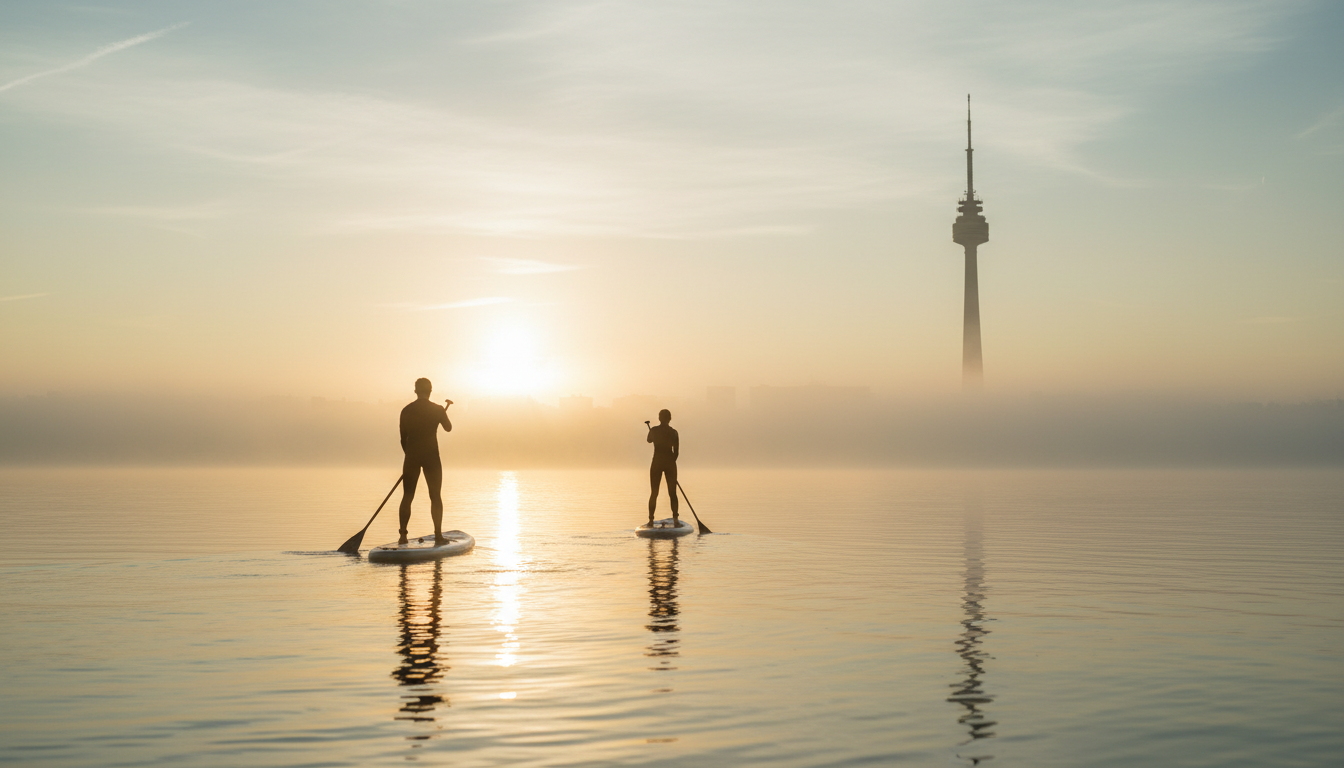 Early morning paddleboarders on the Alte Donau with Viennas Donauturm tower visible in the misty bac
Why Vienna Is Europe's Hidden Water Sports Capital
Here's the thing about Vienna that guidebooks rarely mention: the city sits at the intersection of three distinct water systems, each offering completely different experiences.
The Neue Donau (New Danube) is a 21-kilometer artificial channel running parallel to the main river. Created in the 1970s as flood protection, it's now Vienna's primary water sports arena—no commercial shipping, minimal current, and water quality that consistently earns EU "excellent" ratings. The Alte Donau (Old Donube) is an oxbow lake that feels more like a Mediterranean resort than a Central European capital, with sailing clubs, floating restaurants, and water temperatures reaching 25°C (77°F) in summer. Then there's the Donaukanal, the urban channel cutting through the city center, where kayakers paddle past street art and rooftop bars.
Travelers booking hotels in Vienna's 1st district rarely venture beyond the Ring. Home swap guests—especially those staying in the 21st or 22nd districts—find themselves within walking distance of world-class water sports facilities. A typical Airbnb in these areas runs €80-120 per night. A home swap costs nothing beyond SwappaHome credits.
Stand-Up Paddleboarding on the Alte Donau: Vienna's Calmest Waters
The Alte Donau is where Viennese locals escape the tourist crowds, and it's arguably the best spot for SUP beginners anywhere in Austria. The water is almost eerily calm—protected from wind by surrounding vegetation and buildings—making it ideal for first-timers who don't want to battle currents.
Where to rent: The northern shore near the U1 Alte Donau station has three rental operations within 200 meters of each other. SUP Station Alte Donau (near Arbeiterstrandbad) charges €15 per hour or €45 for a full day, with boards suitable for beginners through advanced paddlers. They open at 9 AM from May through September. Segelschule Hofbauer offers SUP alongside sailing lessons, with hourly rates around €18.
Best time to paddle: Weekday mornings before 10 AM are magic. The water is glass-flat, recreational swimmers haven't arrived yet, and you can paddle the entire 1.6-kilometer length of the lake without dodging a single pedal boat. Weekend afternoons get crowded—the Alte Donau is Vienna's summer living room, and it shows.
What experienced paddlers say: The Alte Donau circuit takes about 90 minutes at a leisurely pace, passing the Gänsehäufel beach complex (Vienna's largest public lido), several floating restaurants, and the historic Kaisermühlen neighborhood. Bring a waterproof bag for your phone—the photo opportunities are constant.
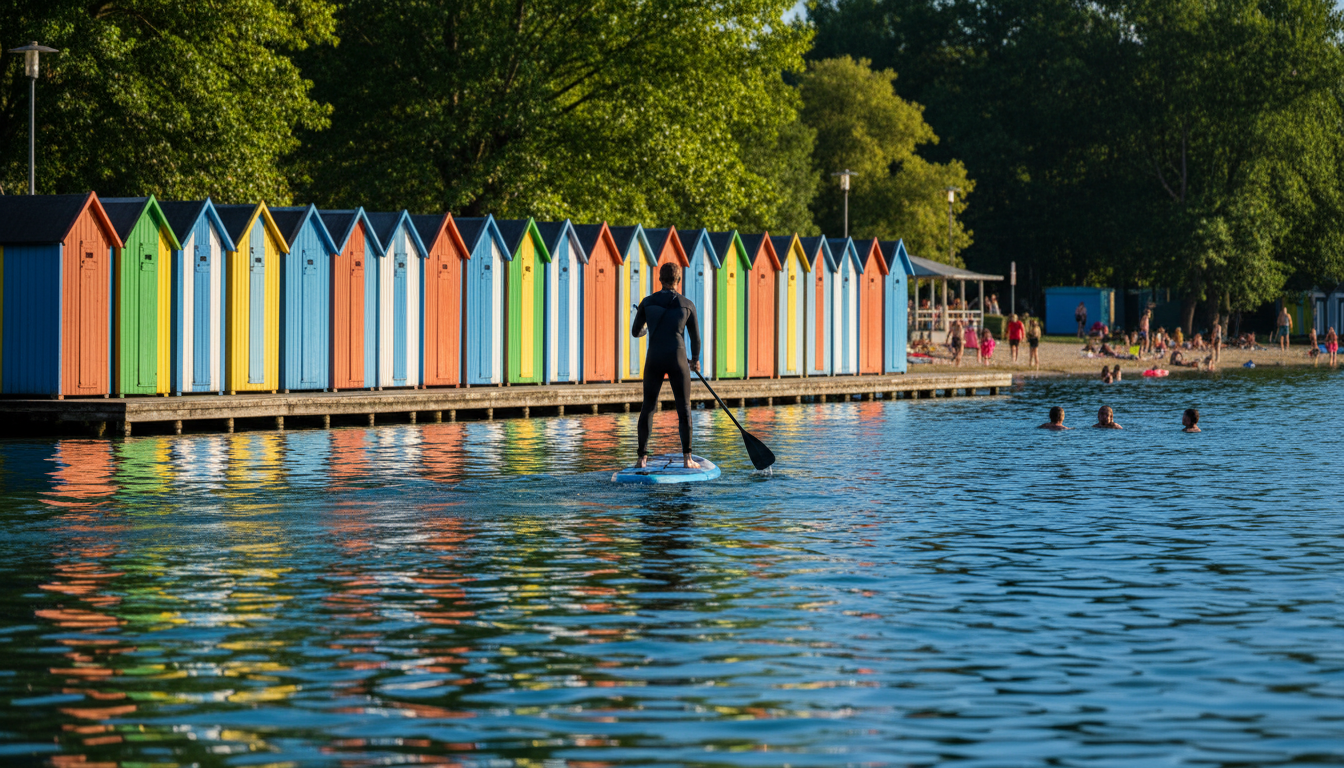 SUP boarder paddling past the Gnsehufel beach complex on the Alte Donau, with colorful changing cabi
Kayaking the Donaukanal: Urban Paddling Through Vienna's Creative Heart
The Donaukanal isn't technically the Danube—it's a regulated arm flowing directly through Vienna's urban core, lined with street art, beach bars, and some of the city's best restaurants. Kayaking here feels like paddling through a living gallery.
The current is gentle but present (roughly 2-3 km/h), so most paddlers launch upstream near the Nussdorfer Wehr and drift down toward the Schwedenplatz area. The 4-kilometer stretch takes about 90 minutes with stops, passing under 11 bridges including the ornate Augartenbrücke and the graffiti-covered Friedensbrücke.
Rental options: Kanu Club Donau near Handelskai offers single kayaks for €25 per half-day, doubles for €35. They include basic instruction and will shuttle you upstream if you'd rather paddle with the current. Vienna Kayak Tours runs guided urban paddles every Saturday from May through September (€55 per person, 3 hours), which include historical commentary—you'll learn why the Urania observatory has a riverside location and spot the exact place where the Danube used to flood the city center before 19th-century regulation.
Safety note: The Donaukanal has designated swimming areas but kayaking requires basic competence. Wear a PFD (provided with rentals), stay right of the channel center, and watch for tour boats near Schwedenplatz. The water quality is good but not rated for swimming outside designated zones.
The honest truth: This isn't wilderness paddling. You'll hear traffic, pass construction sites, and smell döner kebab from riverside stands. But that's exactly the point—it's urban adventure, Vienna-style. Pack a small cooler, stop at one of the floating bars (the Badeschiff has kayak tie-ups), and experience the city from its original transportation route.
Wakeboarding and Waterskiing on the Neue Donau
The Neue Donau's dead-straight, current-free channel makes it ideal for towed water sports. Two cable wakeboard parks and several boat-tow operators mean you can get on the water without owning any equipment.
Cable parks: Wake Zone Vienna (near the Donauinsel U1 station) operates a full-size cable system with beginner and advanced courses. Two-hour sessions run €35 on weekdays, €42 on weekends, including equipment. Complete beginners can book a 90-minute intro lesson for €65, which includes 30 minutes of instruction and an hour of practice time. The park opens mid-April and runs through early October, weather permitting.
Boat-tow operators: For traditional waterskiing or wakeboarding behind a boat, Wasserski Club Neue Donau offers 15-minute sessions for €30-40 depending on the day. They're located near the Copa Beach area and cater to all skill levels. Booking ahead is essential on weekends—Vienna's water sports community is more active than most visitors expect.
What to expect: The Neue Donau water temperature hovers around 20-24°C (68-75°F) from June through August. Wetsuits are available for rent (€10) but most riders go without in peak summer. The cable park has a small café, changing rooms, and equipment storage—you can easily spend a full morning here.
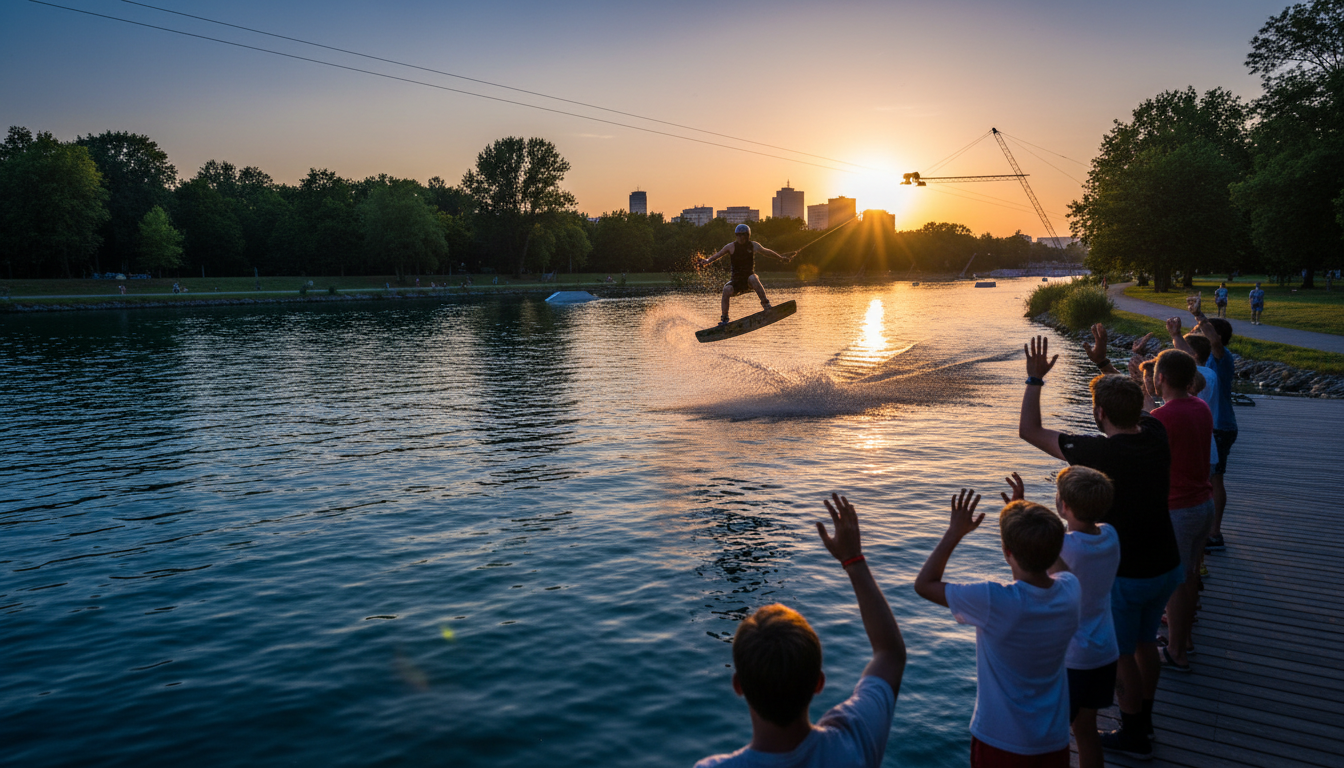 Wakeboarder catching air at Wake Zone Viennas cable park, with the Donauinsels green parkland visibl
Sailing and Windsurfing: Where Viennese Sailors Train
The Alte Donau has been Vienna's sailing center since the early 20th century, and the tradition continues with over a dozen sailing clubs dotting its shores. For visitors, this means excellent rental availability and instruction quality rivaling coastal destinations.
Sailing rentals: Segelschule Hofbauer on the northern shore rents small dinghies (Optimist, Laser) for €25-40 per hour, with larger keelboats available for certified sailors at €80-120 for half-day hire. They require proof of sailing competence for anything larger than a beginner dinghy—a reasonable policy given the lake's popularity.
Windsurfing: The Alte Donau's thermal winds typically pick up after 2 PM on summer afternoons, creating consistent 10-15 knot conditions. Surfclub Alte Donau rents boards and sails for €20-30 per hour, with beginner lessons available for €70 (2 hours, including equipment). The lake's shallow depth (maximum 6 meters) makes it forgiving for learners—falling in means a short swim back to your board, not a rescue situation.
Best conditions: June through August offers the most reliable wind, with July afternoons being particularly consistent. Staying in the 22nd district puts you within cycling distance of both the sailing clubs and the Neue Donau—perfect for multi-sport days.
Swimming in Vienna: The Strandbäder Tradition
Vienna's relationship with recreational swimming dates back to the 1900s, when the city established a network of Strandbäder (beach baths) along its waterways. These aren't pools—they're designated swimming areas in natural water, complete with changing facilities, lifeguards, and often restaurants.
Top swimming spots:
Gänsehäufel (22nd district) is Vienna's largest lido, covering 300,000 square meters of the Alte Donau's northeastern shore. Entry costs €6.50 for adults, and the complex includes FKK (nudist) areas, children's beaches, and multiple restaurants. It's accessible via the U1 to Kaisermühlen-VIC, then a 10-minute walk.
Strandbad Alte Donau (21st district) offers a more local, less touristy atmosphere with the same excellent water quality. Entry is €5.50, and the crowds are noticeably thinner than Gänsehäufel.
Copa Beach on the Neue Donau is free and attracts a younger crowd. No lifeguards here, but the water is shallow near shore and the vibe is distinctly festival-like on summer weekends, with DJs, food trucks, and beach volleyball.
Water quality reality check: Vienna's swimming waters are tested weekly during summer, and both the Alte Donau and Neue Donau consistently earn "excellent" EU ratings. The water is clean, but it's not Caribbean-clear—expect visibility of 2-3 meters and a slight greenish tint from natural algae. Perfectly safe, just different from pool swimming.
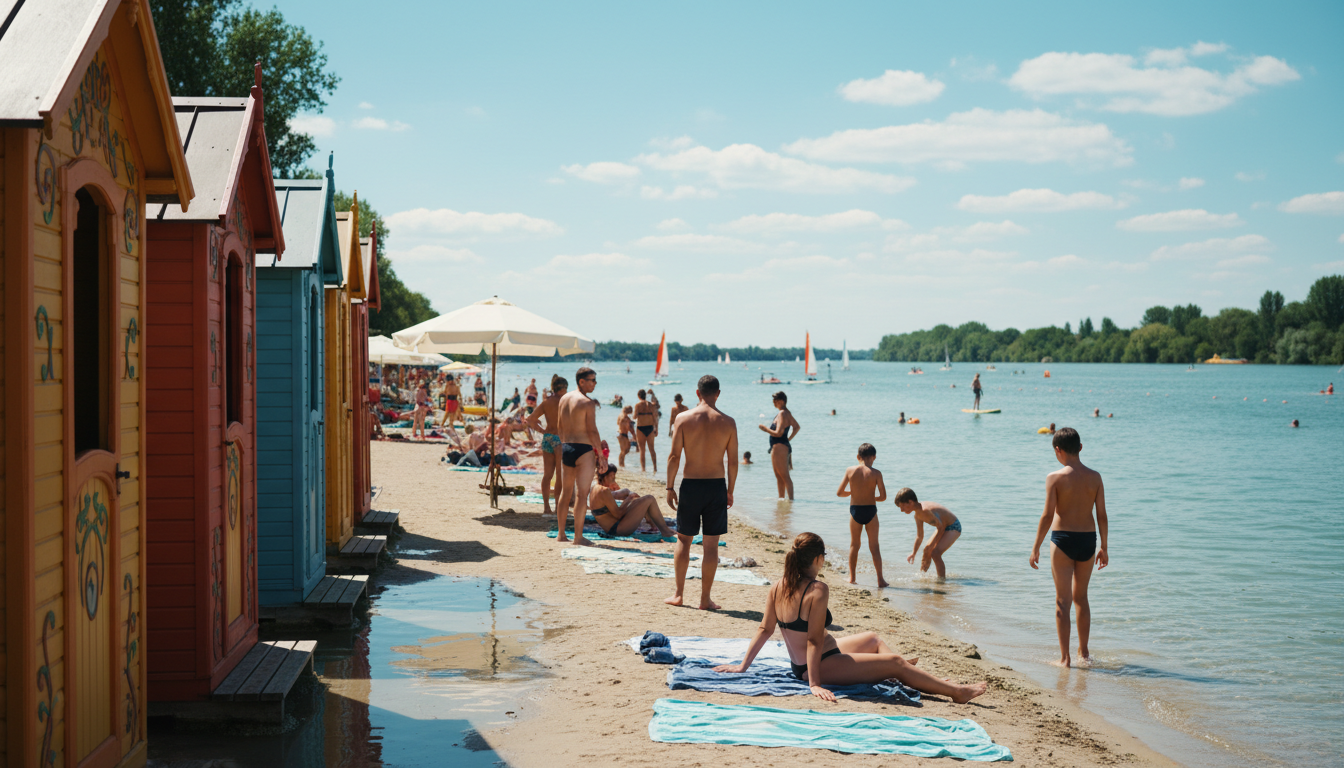 Families swimming and sunbathing at Gnsehufel beach, with wooden changing cabins in Art Nouveau styl
Planning Your Water Sports Home Swap in Vienna
Best Districts for Water Sports Access
Not all Vienna neighborhoods offer equal access to the water. If water sports are a priority, consider these areas:
22nd District (Donaustadt): Ground zero for Vienna's aquatic scene. Neighborhoods like Kaisermühlen, Stadlau, and Aspern put you within cycling distance (or a short U-Bahn ride) of the Alte Donau, Neue Donau, and Donauinsel. Home swap listings here tend to be newer apartments with balconies—perfect for drying wetsuits.
21st District (Floridsdorf): The northern shore of the Alte Donau falls in this district, with direct access to sailing clubs and SUP rentals. Less touristy than Donaustadt, with a more suburban feel. The U6 line connects you to the city center in 20 minutes.
2nd District (Leopoldstadt): For urban paddling on the Donaukanal, Leopoldstadt can't be beat. The Augarten park is nearby, the Prater's green spaces are walkable, and you're still close to Vienna's historic core. Expect slightly higher demand for home swaps here due to the central location.
The SwappaHome platform shows Vienna listings across all these districts, with the 22nd district typically having the highest availability—it's a residential area where locals are more likely to travel during summer, creating swap opportunities.
What to Pack for Vienna Water Sports
Most equipment is available for rent, but a few items are worth bringing:
Essential: Quick-dry towel, reef-safe sunscreen (Austrian lakes are ecologically protected), waterproof phone case, water shoes for rocky entry points at some beaches.
Nice to have: Your own SUP paddle if you're particular about grip and length (boards are easy to rent, quality paddles less so), a small dry bag for valuables, and a lightweight wetsuit top for early-season paddling when water temperatures are still around 18°C (64°F).
Skip it: Full wetsuits (rentals are cheap and you won't need them June-August), inflatable SUPs (the rental quality here is excellent), sailing gear beyond basic gloves.
Combining Water Sports with Vienna's Cultural Scene
Here's where the home swap advantage really shows. Hotel guests typically plan their days around checkout times and restaurant reservations. Home swap guests can structure their days around water conditions.
A typical water sports day in Vienna might look like:
6:30 AM: Coffee on your balcony in Kaisermühlen, checking wind conditions on the Windy app.
7:30 AM: Cycle to the Alte Donau for a sunrise SUP session (crowds don't arrive until 10).
10:00 AM: Return home, shower, change into city clothes.
11:30 AM: U1 to Stephansplatz for the cathedral, then lunch at Figlmüller (the schnitzel is worth the tourist crowd).
3:00 PM: Kunsthistorisches Museum or Belvedere Palace.
6:00 PM: Return to the Donauinsel for sunset drinks at one of the beach bars.
8:00 PM: Cook dinner in your swap home using ingredients from the Naschmarkt.
This rhythm—active mornings, cultural afternoons, relaxed evenings—is nearly impossible to maintain from a hotel. You need a home base with a kitchen, storage for wet gear, and the flexibility to come and go without front desk interactions.
 Split scene showing morning SUP on calm water transitioning to afternoon at the Kunsthistorisches Mu
Seasonal Considerations: When to Plan Your Vienna Water Swap
May-June: Water temperatures climb from 16°C to 22°C (61-72°F). Wetsuit weather for the first half, comfortable by late June. Crowds are manageable, daylight extends past 9 PM, and rental availability is excellent. This is arguably the sweet spot—warm enough for water sports, cool enough for comfortable city walking.
July-August: Peak season. Water hits 24-25°C (75-77°F), every Viennese with a swimsuit heads to the Donau, and weekend crowds at popular spots like Gänsehäufel can be intense. Book cable park sessions and sailing rentals in advance. The upside: maximum daylight (sunrise before 5:30 AM) and consistent afternoon winds for sailing.
September: The secret month. Water remains warm through mid-September (still 20-22°C), tourists thin out dramatically, and the light turns golden. Some rental operations close after Labor Day, so confirm availability before planning. Home swap options often improve as Viennese families return from their own summer travels.
October-April: Water sports largely shut down. The Alte Donau freezes in cold winters, and even mild years see water temperatures below 15°C by October. Planning a shoulder-season swap? Focus on museums, coffee houses, and the opera—save the paddleboard for next summer.
Costs Comparison: Home Swap vs. Hotel for a Water Sports Week
The numbers tell a clear story. A week focused on Vienna's water sports, comparing typical accommodation costs:
Hotel in 22nd district (water sports access): €90-130/night × 7 = €630-910 Airbnb in same area: €80-120/night × 7 = €560-840 Home swap via SwappaHome: 7 credits (earned by hosting guests at your own home)
Add in activity costs:
- SUP rental (3 sessions): €45-60
- Kayak rental (2 sessions): €50-70
- Cable wakeboarding (2 sessions): €70-84
- Strandbad entry (5 days): €27-33
- Equipment (sunscreen, water shoes, etc.): €30-50
Total activity costs: roughly €220-300 regardless of accommodation type.
The home swap saves €500-900 on accommodation alone—money that could fund a sailing course, a day trip to the Wachau Valley, or simply extend your stay by another week.
Safety and Practical Considerations
Water safety: Vienna's designated swimming and water sports areas are well-regulated. Lifeguards staff the major Strandbäder during operating hours (typically 9 AM-8 PM in summer). The Neue Donau has no lifeguard coverage outside designated beaches—swim at your own risk, and always wear a PFD for any towed sports.
Weather awareness: Afternoon thunderstorms roll through Vienna regularly in July and August. They're typically brief but intense. Check forecasts before heading to the water, and know that most rental operators will pause activities during lightning warnings. The Donauinsel's Copa Beach has shelter options; the Alte Donau's northern shore is more exposed.
Insurance: SwappaHome connects members for home exchanges but doesn't provide activity insurance. Planning intensive water sports? Consider travel insurance that covers adventure activities. Most policies exclude motorized water sports (jet skis, etc.), but SUP, kayaking, and sailing are typically covered under standard adventure clauses.
Language: Rental operators in tourist-heavy areas speak English. Smaller sailing clubs and local operations may be German-only—learning "Ich möchte ein SUP mieten" (I'd like to rent a SUP) goes a long way. The Viennese appreciate the effort, even if your pronunciation is rough.
Getting to the Water: Vienna's Transport Advantage
Vienna's public transport makes water sports access remarkably easy. The U1 line runs directly to the Alte Donau (Alte Donau station) and Donauinsel (Donauinsel station). The U2 connects to the Donaukanal area. A 24-hour transit pass costs €8, and a weekly pass is €17.10—both cover unlimited travel on all U-Bahn, tram, and bus routes.
Cycling is equally viable. Vienna's bike-share system (WienMobil Rad) costs €0.60 per 30 minutes, with stations near all major water sports locations. The Donauinsel has dedicated cycling paths running its entire 21-kilometer length—you can pedal from the Copa Beach to the Neue Donau cable park in 15 minutes.
From the airport, the S7 train reaches the city center in 25 minutes (€4.40), or the CAT express does it in 16 minutes (€14.90). If your home swap is in the 22nd district, the S-Bahn connection to Stadlau station puts you near the water faster than reaching the historic center.
Making the Most of Your Vienna Water Sports Swap
The best water sports trips aren't just about the activities—they're about the rhythm of a place. Vienna offers something rare: genuine outdoor adventure within a world-class cultural city. You can spend your morning learning to windsurf from an instructor who trained Olympic sailors, your afternoon standing before Klimt's "The Kiss" at the Belvedere, and your evening cooking Wiener schnitzel in a local kitchen while your wetsuit dries on the balcony.
Home swapping makes this rhythm possible. You're not a tourist passing through—you're temporarily living in Vienna, with all the flexibility that implies. The SwappaHome community includes Vienna locals who swap their Donaustadt apartments for beach houses in Portugal, mountain chalets in Switzerland, or city flats in Barcelona. When they travel, their homes become your base for exactly this kind of immersive experience.
The Danube has flowed through Vienna for millennia. The Habsburgs built their empire on its banks. Strauss wrote waltzes about it. And now, on any summer morning, you can paddle its waters before the city fully wakes—experiencing something most visitors never discover.
That's the real advantage of a water sports home swap in Vienna. Not just the savings, though those are substantial. It's the access to a side of the city that only residents typically see: the early-morning paddlers, the after-work sailors, the families who've been swimming at the same Strandbad for three generations. For a week or two, you become part of that community.
And when you return home, you'll have stories that go far beyond the usual Vienna highlights—stories of glassy water at sunrise, of unexpected winds on the Alte Donau, of discovering that the city of Mozart and Freud is also, improbably, one of Europe's best-kept water sports secrets.
Frequently Asked Questions
Is Vienna good for water sports beginners?
Vienna is excellent for beginners, particularly for stand-up paddleboarding and kayaking. The Alte Donau's calm, protected waters offer ideal learning conditions with minimal current and shallow depths. Rental operators near the U1 Alte Donau station provide basic instruction, and the water quality is consistently rated "excellent" by EU standards. Cable wakeboarding at Wake Zone Vienna also caters specifically to first-timers with dedicated beginner courses.
How much do water sports cost in Vienna?
Expect to pay €15-25 per hour for SUP rentals, €25-35 for half-day kayak hire, and €35-45 for two-hour cable wakeboarding sessions. Sailing dinghy rentals run €25-40 hourly, while Strandbad entry (beach access with facilities) costs €5-7 per day. A full week of varied water activities typically totals €200-300, making Vienna surprisingly affordable compared to coastal destinations.
What's the best month for water sports in Vienna?
June offers the ideal balance: water temperatures reach comfortable levels (20-22°C/68-72°F), crowds remain manageable, and daylight extends past 9 PM. July and August are warmest (24-25°C water) but significantly more crowded. September provides warm water with fewer tourists, though some rental operations close after Labor Day. The water sports season runs May through September.
Can I swim in the Danube in Vienna?
Yes, but only in designated areas. The Alte Donau and Neue Donau have multiple official swimming zones with excellent water quality ratings. The main Danube channel has strong currents and commercial shipping—swimming there is dangerous and prohibited. Strandbäder like Gänsehäufel offer lifeguard-supervised swimming with full facilities. Free swimming is available at Copa Beach on the Neue Donau.
Which Vienna district is best for a water sports home swap?
The 22nd district (Donaustadt) offers the best water sports access, with neighborhoods like Kaisermühlen and Stadlau within walking or cycling distance of the Alte Donau, Neue Donau, and Donauinsel. The 21st district (Floridsdorf) provides direct access to the Alte Donau's northern shore sailing clubs. Both districts connect to Vienna's center via the U1 and U6 lines in under 25 minutes.

Published by
SwappaHome
SwappaHome Editorial Team
Home Exchange & Slow Travel Editorial
The SwappaHome Editorial Team brings together travel research, home-exchange community insights, and platform data to produce practical guides for first-time and experienced home swappers. Every article cites real platforms, current market rates, and verifiable city-level facts so readers can make informed decisions without guessing.
Ready to try home swapping?
Join SwappaHome and start traveling by exchanging homes. Get 7 free credits when you sign up!
Related articles
Bachelor and Bachelorette Parties in Singapore: The Complete Home Swap Group Guide for 2026
Planning a bachelor or bachelorette party in Singapore? Discover how home swapping lets groups of 6-12 stay together in luxury condos, saving thousands while partying in Marina Bay.
Cycling in Lisbon: 7 Home Swap Bike Tour Itineraries for Every Rider
Discover the best cycling routes in Lisbon with these home swap bike tour itineraries—from waterfront paths to hilltop adventures, all starting from your borrowed home.
Graduation Trip to Barcelona: How Home Swapping Gives New Graduates the Ultimate Celebration
Planning a graduation trip to Barcelona? Discover how home swapping lets new graduates explore Spain's most vibrant city without the hostel crowds or hotel costs.