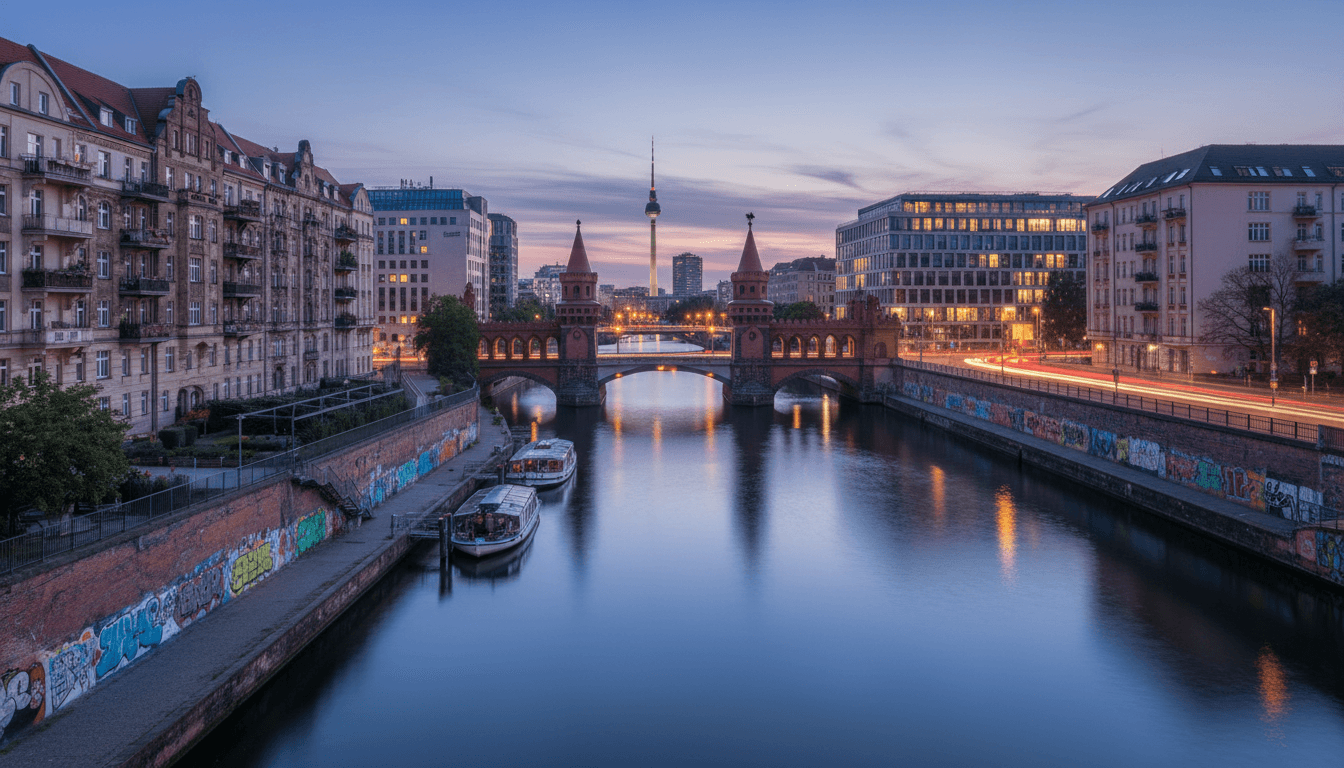
Food Lover's Home Swap Guide to Berlin: Eat Like a Local in Germany's Culinary Capital

SwappaHome Editorial Team
Home Exchange & Slow Travel Editorial
Discover how a home swap in Berlin unlocks authentic German food experiences—from Turkish döner to Vietnamese phở—while saving thousands on accommodation.
The smell hit me before I even found the market stall. Cumin, grilled lamb, and something sweet—maybe the Turkish tea brewing nearby. I was standing in Kreuzberg's Türkenmarkt on a drizzly Tuesday, clutching a paper bag of still-warm börek, and thinking: this is why food lovers need a home swap in Berlin.
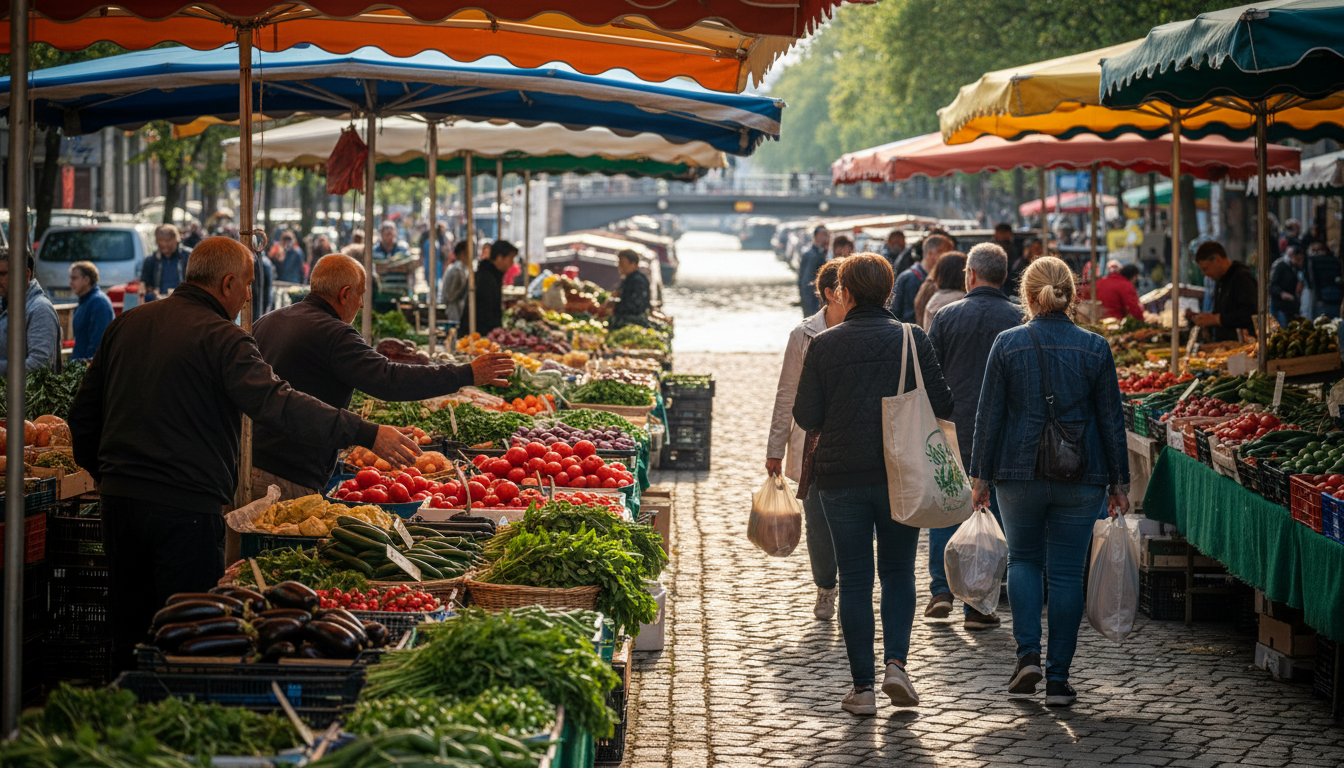 bustling Trkenmarkt on the Maybachufer canal with colorful produce stalls, elderly Turkish vendors,
I'd been staying in a third-floor apartment on Oranienstraße, borrowed through SwappaHome from a graphic designer named Katja who was spending two weeks in my San Francisco flat. Her kitchen had a proper spice rack—sumac, za'atar, Aleppo pepper—and a handwritten note on the fridge: "The best lahmacun is at Hasir, but only order it after 6pm when Mehmet is cooking."
That note changed everything.
And honestly? It's exactly why a food lover's home swap in Berlin beats any hotel stay, any Airbnb, any carefully curated "food tour." You're not just visiting Berlin's food scene. You're borrowing someone's actual life in it.
Why Berlin Is a Food Lover's Home Swap Paradise
Let me be real with you: Berlin isn't Paris. It's not trying to seduce you with Michelin stars and white tablecloths. Berlin's food scene is scrappy, immigrant-driven, gloriously chaotic. Currywurst at 2am. Vietnamese phở for breakfast. Syrian falafel shops shouldering up against century-old German bakeries.
You can't really experience it from a hotel in Mitte.
The best food in Berlin hides in residential neighborhoods—the döner place that locals actually eat at (not the tourist trap near Checkpoint Charlie), the Italian deli run by a Neapolitan family who've been there since the 1970s, the unmarked door that leads to a supper club in someone's living room. When you do a home swap in Berlin, you land in these neighborhoods. You have a kitchen to store your market hauls. You have a local's recommendations scribbled on Post-it notes. You have time—because you're not hemorrhaging €200 a night on a soulless hotel room.
During my two weeks in Katja's apartment, I spent roughly €150 total on accommodation (just SwappaHome's annual membership). A comparable hotel in Kreuzberg? That would've been €2,100 minimum.
I put that €2,000 savings directly into food. I regret nothing.
The Best Berlin Neighborhoods for a Food-Focused Home Swap
Not all Berlin neighborhoods eat equally. Here's where to look when browsing SwappaHome listings, based on what kind of food lover you are.
Kreuzberg: For the Adventurous Omnivore
This is my Berlin home base, and I'm biased—but Kreuzberg genuinely has the most diverse food scene in the city. Turkish, Vietnamese, Syrian, Ethiopian, Mexican (real Mexican, not Tex-Mex), and yes, excellent German spots too.
The Bergmannkiez area feels almost village-like, with indie coffee roasters and natural wine bars tucked between residential blocks. Head toward Kottbusser Tor (locals call it "Kotti") for late-night döner and the controlled chaos of Oranienstraße.
What to eat: Mustafa's Gemüse Kebap (yes, the line is worth it—go at 3pm on a weekday), Cocolo Ramen for the best tonkotsu outside Japan, and Ora for breakfast pastries that'll ruin all other croissants for you. Average meal cost: €8-15 for casual, €25-40 for a proper dinner with wine.
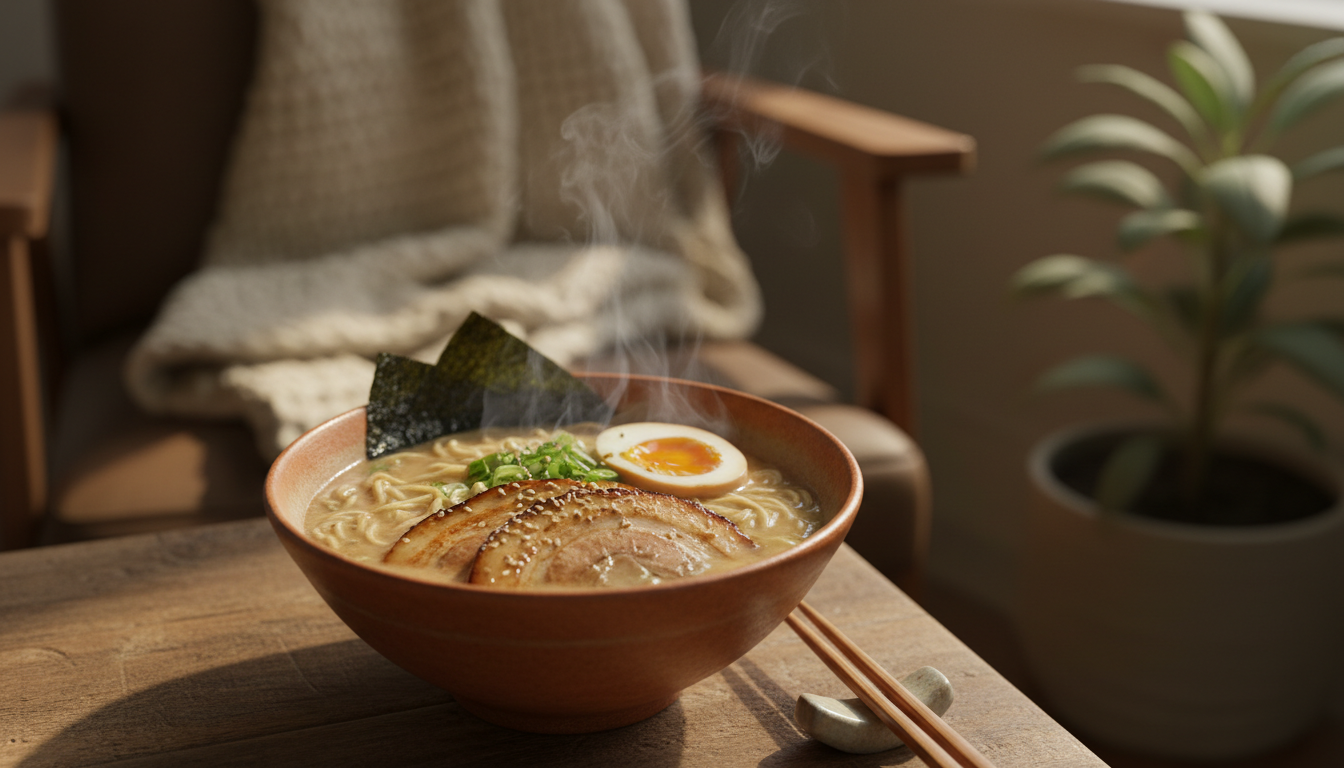 steaming bowl of tonkotsu ramen at Cocolo with perfectly soft-boiled egg, chashu pork, and hand-pull
Neukölln: For the Budget-Conscious Foodie
Neukölln used to be Berlin's poorest neighborhood. Now it's where young chefs open restaurants they couldn't afford anywhere else—and the result is incredible food at prices that make New Yorkers weep.
The Weserstraße strip has everything from Levantine small plates to Sichuan hot pot. Richardplatz, the old village center, hosts a weekly farmers' market that's actually for locals (read: not overpriced).
What to eat: Gordon at Allerstraße (constantly changing seasonal menu, always under €15), Roamers for the best brunch you'll have in Germany, and Sahara Imbiss for Eritrean injera platters that cost €7 and feed two people. Average meal cost: €6-12 for casual, €20-30 for dinner.
Prenzlauer Berg: For the Organic-Everything Crowd
If you're the type who reads ingredient lists and cares about sourcing, Prenzlauer Berg is your neighborhood. Gentrified, sure—but that gentrification brought excellent natural wine shops, organic bakeries, and farm-to-table restaurants that actually deliver.
The Saturday market at Kollwitzplatz is legendary. Artisan cheese, heritage vegetables, fresh-baked sourdough, and enough samples that you could call it lunch.
What to eat: Konnopke's Imbiss (currywurst since 1930, now with an organic option), Standard Pizza for Neapolitan-style pies, and The Bird for genuinely great American-style burgers. Average meal cost: €10-18 for casual, €35-50 for dinner.
Wedding: For the Undiscovered-Gem Seeker
Wedding is where Berliners go when they want to feel like they've discovered something. Still gritty. Still affordable. And the food scene is exploding quietly.
The area around Leopoldplatz has Ghanaian, Cameroonian, and Lebanese spots that rarely see tourists. Müllerstraße has old-school German pubs serving schnitzel the size of your head.
What to eat: Volta (chef's counter with a €45 tasting menu that rivals Michelin-starred spots), Café Pförtner for breakfast in a converted gatehouse, and any of the African restaurants on Müllerstraße—just walk in and point at what looks good. Average meal cost: €5-10 for casual, €25-45 for dinner.
How to Find the Perfect Berlin Home Swap for Food Lovers
Not every SwappaHome listing is created equal when your priority is eating well. Here's what I look for:
Kitchen essentials: A real stove (not just a hot plate), a decent knife, and enough fridge space for market hauls. I always message hosts to ask about kitchen equipment before confirming. Neighborhood walkability: You want to be able to stumble home after too much Riesling. Check that the listing is within walking distance of restaurants, not stuck in some residential suburb. Local recommendations: The best hosts leave guides. When browsing listings, look for hosts who mention their favorite restaurants in their descriptions—it signals they're food people too. Market proximity: Being near a weekly market changes everything. I specifically filter for Kreuzberg, Neukölln, and Prenzlauer Berg because they all have excellent markets within walking distance.
On SwappaHome, you can message hosts before booking. I always ask: "What's your favorite neighborhood restaurant?" Their answer tells me everything about whether we're food-compatible.
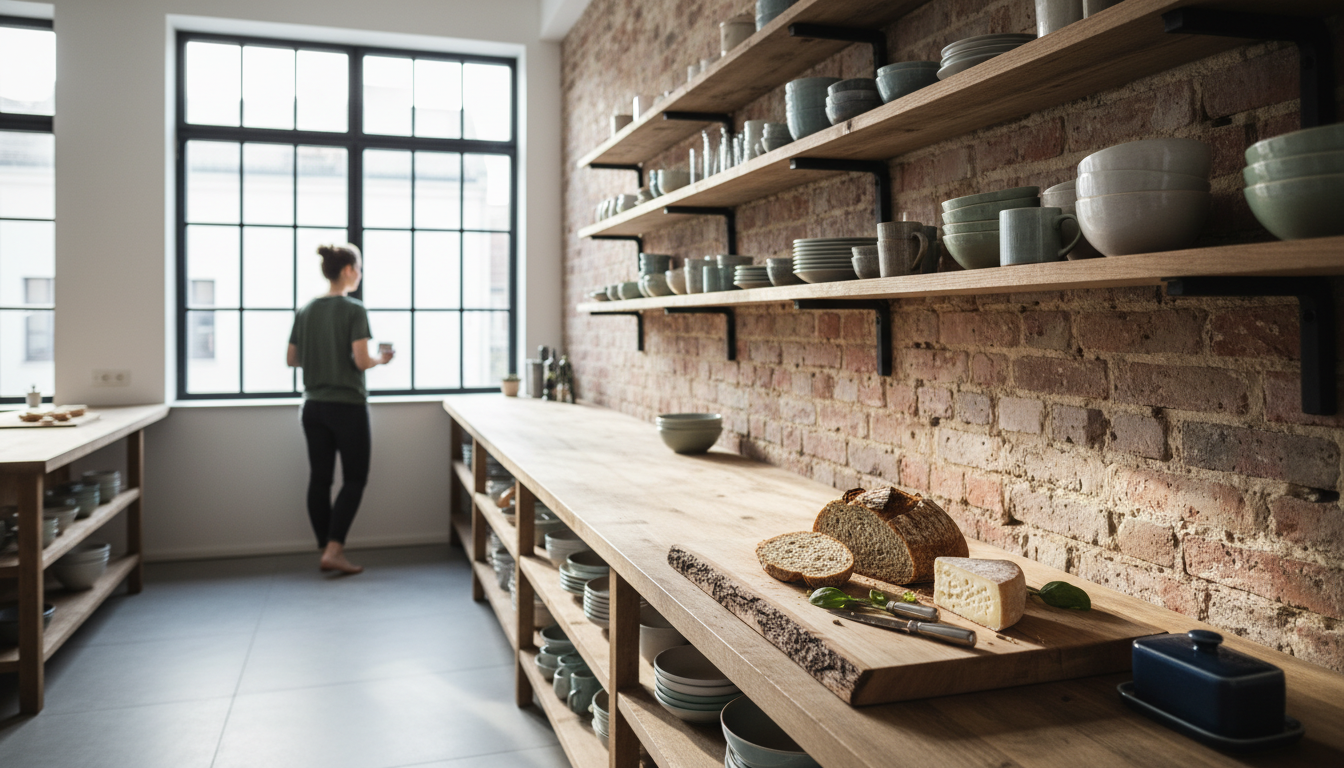 bright Berlin apartment kitchen with exposed brick, open shelving displaying mismatched ceramics, a
A Food Lover's Berlin Itinerary: What I Actually Did
Here's roughly how I spent my two weeks, eating my way through the city. Steal liberally.
Days 1-3: Settling Into Kreuzberg
Jet-lagged and hungry, I kept it simple. Breakfast at my apartment (Katja had left good coffee and pointed me to a bakery around the corner). Lunch at Markthalle Neun, this gorgeous old market hall that hosts a Street Food Thursday every week—but the permanent vendors are great any day.
I spent an afternoon at Türkenmarkt, buying olives, fresh herbs, and too much cheese. Cooked dinner in the apartment: simple pasta with market tomatoes and basil. The key to eating well in Berlin is resisting the urge to eat out every meal. Cook breakfast, snack at markets, save your appetite (and budget) for one great dinner.
Days 4-7: Neighborhood Hopping
I took the U-Bahn to Neukölln for a proper exploration. Brunch at Roamers (get the shakshuka), then wandered Weserstraße, poking into spice shops and bakeries.
One night, I did something I'd never do in a hotel: I hosted a dinner party. Invited two people I'd met at a coffee shop, cooked a big pot of pasta, opened wine. This is the magic of home swapping—you have a home. You can be a person, not just a tourist.
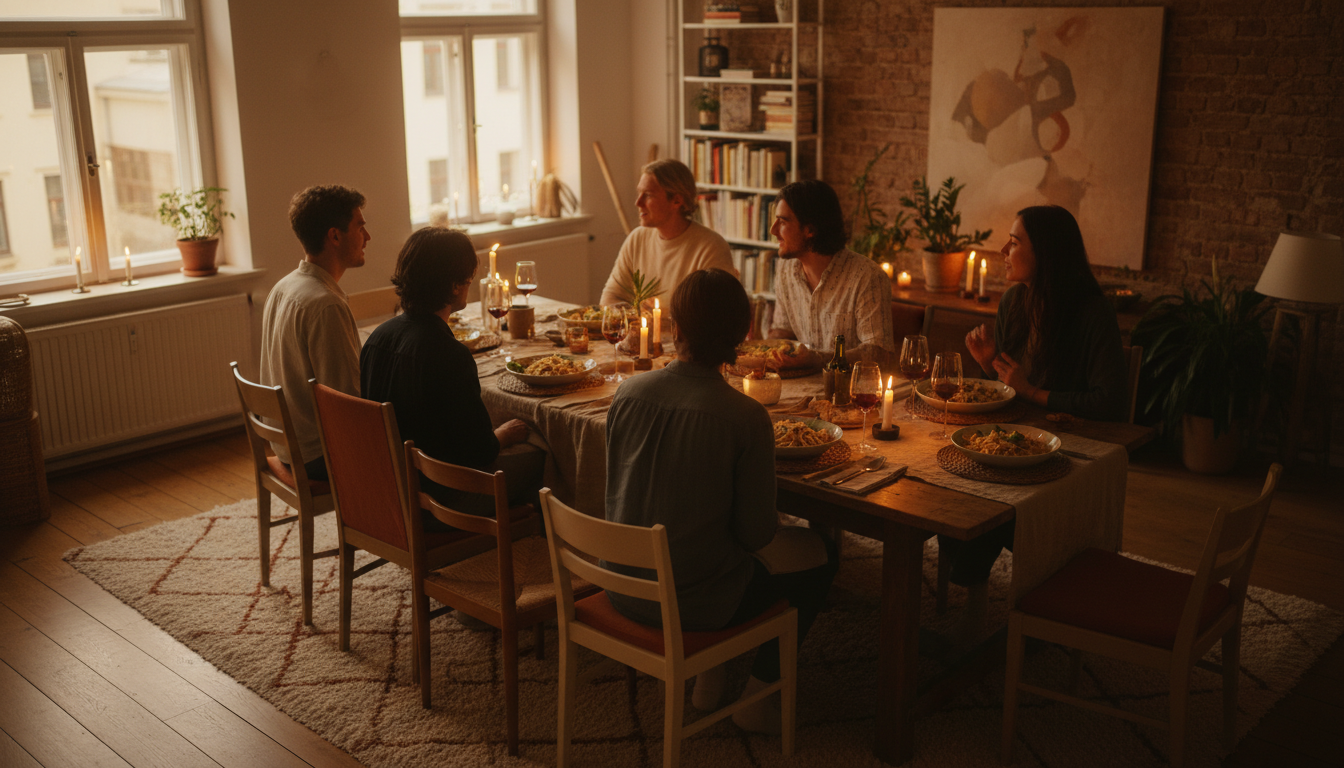 evening dinner party scene in a Berlin apartment with mismatched chairs around a wooden table, candl
Days 8-10: Going Deep on German Food
I realized I'd been so focused on Berlin's international food that I'd barely eaten German. Time to fix that.
Lunch at Zur Kleinen Markthalle in Kreuzberg—proper schnitzel, potato salad, and a beer that cost €3.50. Dinner at Max und Moritz, a 120-year-old pub in the same neighborhood, where I had königsberger klopse (meatballs in caper sauce) and felt extremely German.
I also did a currywurst crawl. Three different spots in one afternoon: Curry 36, Konnopke's, and Witty's (the organic one). My verdict? Konnopke's wins, but they're all good after enough beer.
Days 11-14: Markets, Cooking, and One Fancy Dinner
By the second week, I'd settled into a rhythm. Morning market trips. Afternoon cooking. Evening walks to find new restaurants.
I splurged once: dinner at Ernst, a 12-seat counter restaurant in Wedding where the chef serves you directly. It's €200 per person, and it was the best meal I've ever had in Germany. You need to book months ahead—but if you're planning a Berlin home swap, do it now.
The rest of the time? I ate like a local. Simply, seasonally, surrounded by ingredients I'd never find at home.
What to Cook in Your Berlin Home Swap Kitchen
Your host's kitchen is a resource. Use it.
Breakfast: Good bread (from any bakery—German bread is exceptional), butter, jam, soft-boiled eggs. Maybe some sliced cheese and ham if I was feeling fancy. Coffee from a local roaster.
Market lunches: Assembled, not cooked. Fresh bread, three or four cheeses, olives, pickles, sliced meats, maybe a container of hummus from a Turkish deli. Eaten at the apartment with a view of the street below.
Simple dinners: Pasta with market vegetables. Eggs scrambled with whatever herbs I found. A big salad with good olive oil. Nothing complicated—I saved my appetite for restaurants.
The point isn't to cook elaborate meals. It's to have the option to cook, so you're not forced into restaurants when you're tired or broke or just want to eat cheese in your pajamas.
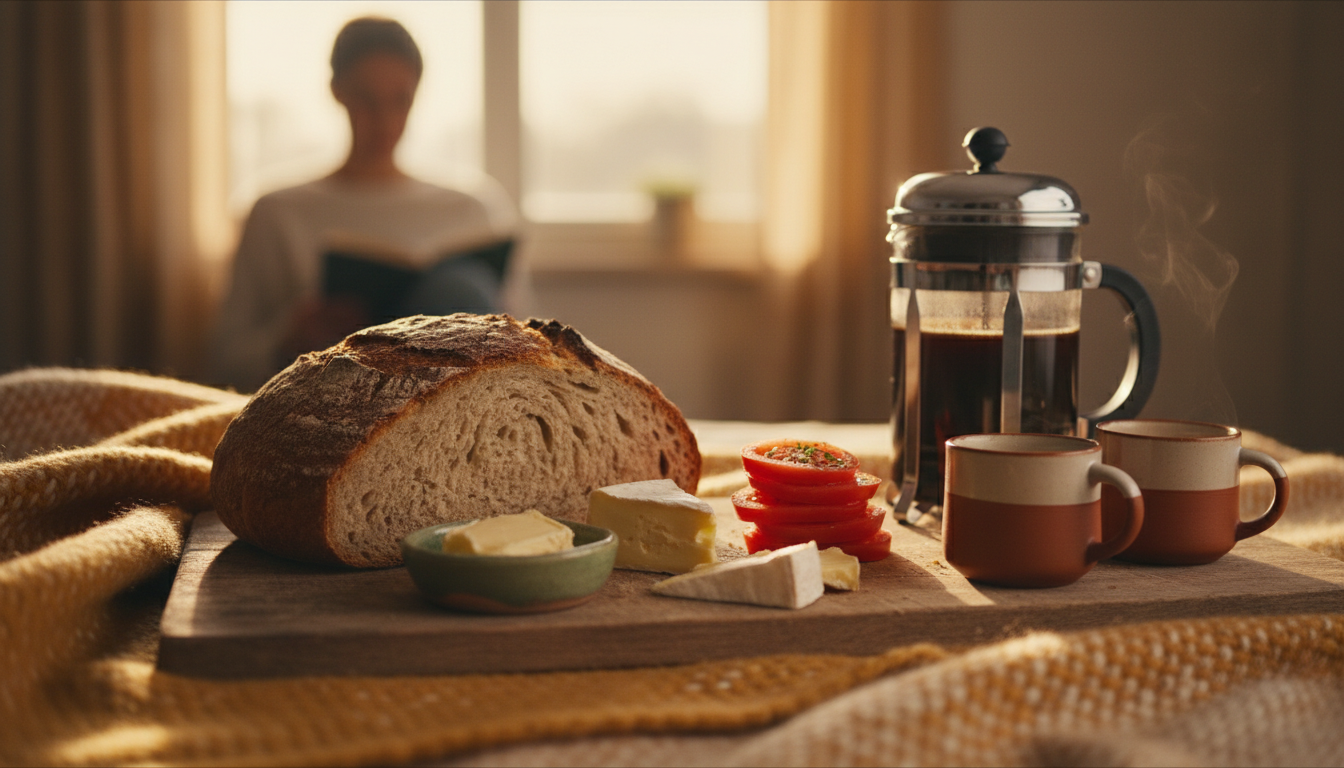 rustic breakfast spread on a wooden board with German sourdough bread, butter in a ceramic dish, sof
The Money Part: How Much Does Eating Well in Berlin Actually Cost?
Let me break down my two-week food budget:
- Accommodation: €0 (home swap—I earned credits hosting earlier in the year)
- SwappaHome membership: €150/year (works out to about €4/day for this trip)
- Groceries and markets: €180
- Casual meals out: €220
- Nice dinners: €280 (including the Ernst splurge)
- Coffee and drinks: €90
Total food spending: €770 for two weeks, or about €55/day.
If I'd stayed in a mid-range hotel (€150/night = €2,100 total) and eaten the same way, my trip would've cost €2,870. Instead, I spent under €1,000. That's the food lover's home swap math. You save so much on accommodation that you can actually afford to eat well.
Berlin Food Experiences You Can't Get Without a Kitchen
Some of the best food experiences in Berlin require a home base:
Markthalle Neun's Thursday market: You'll buy too much. You need somewhere to store it and eat it later.
Turkish breakfast spreads: Buy ingredients from Türkenmarkt—cheeses, olives, simit bread, tomatoes, cucumbers, eggs—and assemble a proper kahvaltı at home. It's an experience, not just a meal.
Wine and cheese nights: Berlin has incredible natural wine shops (try Viniculture in Kreuzberg or Jaja in Neukölln). Buy a bottle, grab cheese from the market, have a night in.
Supper clubs: Berlin's underground dining scene often happens in people's apartments. Having your own place makes you feel less weird about eating in a stranger's living room.
Hangover recovery: After a night in Berlin's clubs (or just its wine bars), you need a kitchen. Trust me.
Tips for Food-Focused Home Swapping in Berlin
After three Berlin home swaps, here's what I've learned:
Time your trip for market days. Türkenmarkt is Tuesday and Friday. Kollwitzplatz is Saturday. Markthalle Neun's Street Food Thursday is... Thursday. Plan accordingly.
Learn three German phrases: "Einmal, bitte" (one, please), "Das war lecker" (that was delicious), and "Die Rechnung, bitte" (the check, please). Berliners appreciate the effort.
Bring an empty suitcase. You will buy spices, chocolate, and possibly an entire wheel of cheese. Leave room.
Ask your host about their freezer. Some Berlin apartments have tiny freezers. If you're planning to stock up on anything frozen (like the incredible dumplings from the Asian supermarkets), check first.
Don't skip the Vietnamese food. Berlin has the largest Vietnamese population in Europe. Dong Xuan Center in Lichtenberg is a massive Vietnamese market complex that feels like stepping into Hanoi. Go hungry.
Making the Most of Your Host's Local Knowledge
The best part of home swapping isn't the free accommodation—it's the insider access.
Before my Kreuzberg stay, Katja sent me a Google Doc with her favorite spots. Not just restaurants, but specifics: "Order the #7 at Hasir, but add extra garlic sauce." "The bakery on the corner sells out of the good bread by 9am." "There's a wine bar with no sign on Graefestraße—just look for the green door."
I found that green door. The wine bar was called Freundschaft, and it became my local spot for two weeks. I never would've found it on TripAdvisor.
When you book through SwappaHome, message your host. Ask questions. Most home swappers are genuinely excited to share their neighborhood. We're all travelers; we get it.
The Emotional Case for Food-Focused Home Swapping
I've stayed in nice hotels. I've done the boutique Airbnb thing. But nothing compares to waking up in someone's actual life.
In Katja's apartment, I used her coffee grinder, her favorite mug (the one with the chip on the handle), her worn cutting board. I followed her handwritten notes to her neighborhood spots. I felt, briefly, like I lived in Berlin.
That feeling changes how you eat. You're not a tourist hunting for "authentic experiences." You're just... a person, getting dinner.
Somehow, that makes everything taste better.
Frequently Asked Questions
Is a home swap in Berlin safe for solo travelers?
Absolutely. Berlin is one of Europe's safest major cities, and SwappaHome's verification and review system helps you choose trustworthy hosts. I've done three solo home swaps in Berlin without any issues. The neighborhoods I recommend—Kreuzberg, Neukölln, Prenzlauer Berg—are all well-populated and walkable at night.
How much money can I save with a Berlin home swap versus hotels?
A mid-range Berlin hotel costs €120-180 per night. Over two weeks, that's €1,680-2,520. With SwappaHome, you pay only the annual membership (around €150) and use credits you've earned by hosting. I saved approximately €2,000 on my last two-week Berlin trip—money I redirected entirely into food experiences.
What's the best time of year for a food-focused Berlin trip?
Late spring (May-June) and early fall (September-October) are ideal. Markets overflow with seasonal produce, outdoor dining is comfortable, and you'll avoid both winter's grey and summer's tourist crowds. The asparagus season in May (Spargelzeit) is particularly special—every restaurant serves white asparagus dishes, and it becomes this whole citywide obsession.
Do I need to speak German to do a home swap in Berlin?
No. Berlin is extremely English-friendly, especially in central neighborhoods. Your SwappaHome host communication will likely be in English, and restaurant staff in most areas speak it fluently. That said, learning basic food vocabulary (Brot = bread, Käse = cheese, Rechnung = bill) enhances the experience—and earns you goodwill.
How far in advance should I book a Berlin home swap?
For popular neighborhoods like Kreuzberg and Prenzlauer Berg, book 2-3 months ahead, especially for summer or holiday periods. Wedding and outer Neukölln have more availability with shorter notice. I recommend setting up SwappaHome alerts for your preferred Berlin neighborhoods so you're notified when new listings appear.
One last thing: if you're reading this and thinking "this sounds like a lot of effort"—it's not. It's actually less effort than researching hotels, booking restaurants, and trying to figure out where locals actually eat.
With a home swap, you just... live somewhere. And in Berlin, living somewhere means eating extraordinarily well.
I'm already planning my next Berlin swap. Katja mentioned her friend in Wedding might be interested in San Francisco. The cycle continues.
See you at Türkenmarkt.

Published by
SwappaHome
SwappaHome Editorial Team
Home Exchange & Slow Travel Editorial
The SwappaHome Editorial Team brings together travel research, home-exchange community insights, and platform data to produce practical guides for first-time and experienced home swappers. Every article cites real platforms, current market rates, and verifiable city-level facts so readers can make informed decisions without guessing.
Ready to try home swapping?
Join SwappaHome and start traveling by exchanging homes. Get 7 free credits when you sign up!
Related articles

Bachelor and Bachelorette Parties in Singapore: The Complete Home Swap Group Guide for 2026
Planning a bachelor or bachelorette party in Singapore? Discover how home swapping lets groups of 6-12 stay together in luxury condos, saving thousands while partying in Marina Bay.

Cycling in Lisbon: 7 Home Swap Bike Tour Itineraries for Every Rider
Discover the best cycling routes in Lisbon with these home swap bike tour itineraries—from waterfront paths to hilltop adventures, all starting from your borrowed home.

Graduation Trip to Barcelona: How Home Swapping Gives New Graduates the Ultimate Celebration
Planning a graduation trip to Barcelona? Discover how home swapping lets new graduates explore Spain's most vibrant city without the hostel crowds or hotel costs.