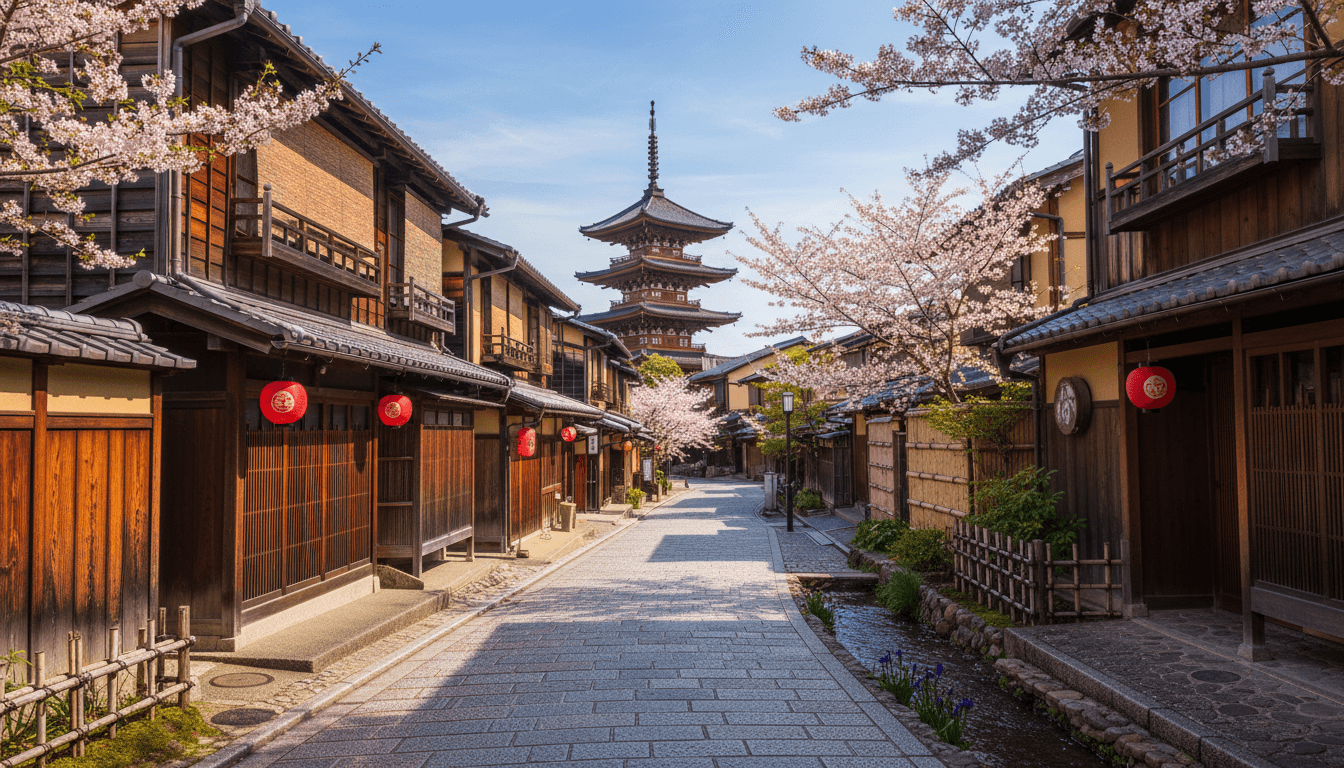
Kyoto Home Swap Guide: Your Complete Blueprint for Authentic Japanese Living

SwappaHome Editorial Team
Home Exchange & Slow Travel Editorial
Everything you need to know about home swapping in Kyoto—from choosing neighborhoods to navigating Japanese home etiquette. Save thousands while living like a local.
I stepped onto the engawa—that narrow wooden veranda wrapping around the house—and the bamboo grove was still dripping from morning rain. Somewhere in that moment, watching neighborhood grandmothers bicycle past with their grocery baskets, I realized I'd accidentally stumbled into the best travel decision of my life.
Three weeks earlier, I'd been doom-scrolling through Kyoto hotels. Four hundred dollars a night for a business hotel? Seriously? That's when I fell down the rabbit hole of Kyoto home swaps. And now here I was, sipping green tea in a 90-year-old machiya townhouse in Nishijin, wondering why I'd ever traveled any other way.
So this is everything I wish someone had told me before that first exchange. The cultural stuff that actually matters. Which neighborhoods feel like home versus which ones feel like you're walking through a snow globe. And the unwritten rules that'll make Japanese hosts genuinely want to swap with you again.
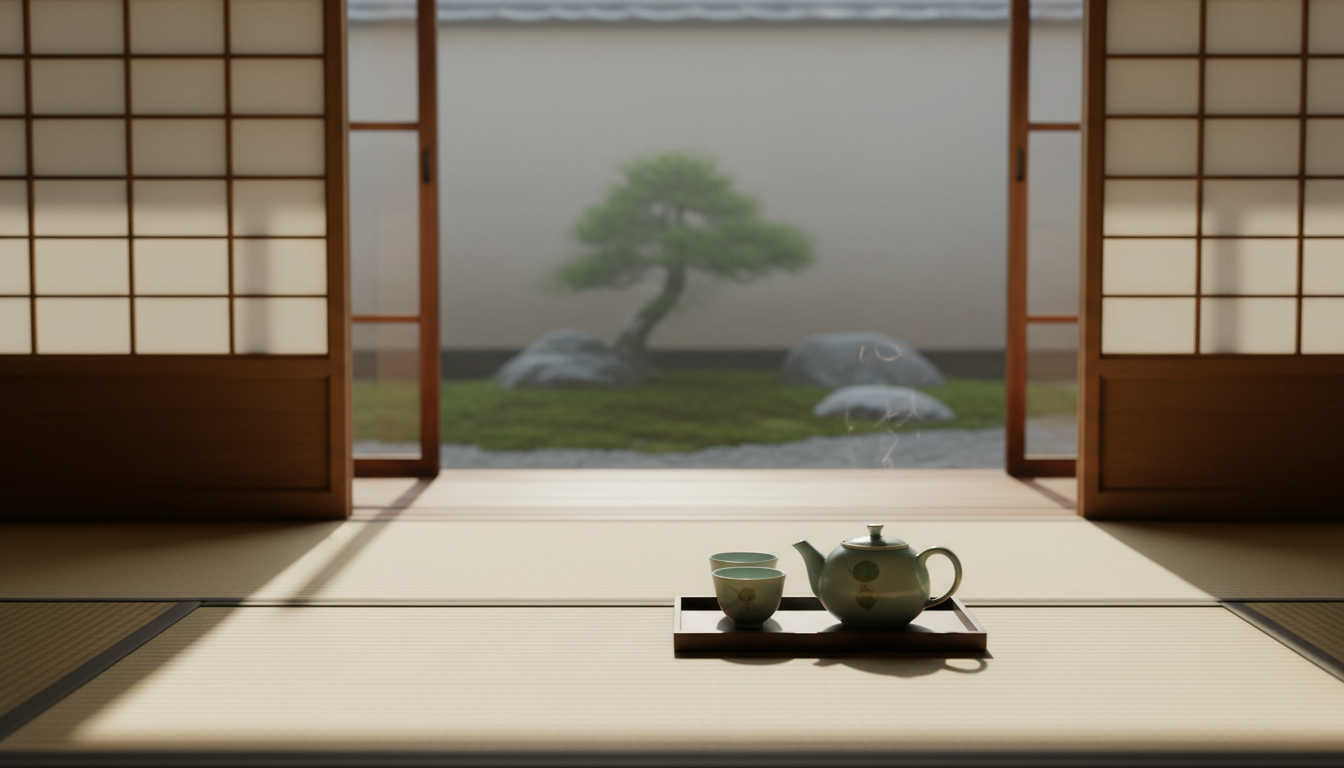 Morning light filtering through shoji screens onto tatami mats, with a ceramic tea set and small gar
Why a Kyoto Home Swap Changes Everything About Your Japan Trip
Here's something most travel guides won't admit: Kyoto's magic isn't in its temples.
I mean, yes—Kinkaku-ji is stunning. Fushimi Inari at dawn feels like walking into another dimension. But the real Kyoto? It lives in the rhythm of daily life that tourists never get to see.
When you do a home swap here, you're not just saving money (though you'll pocket roughly $3,500-5,000 on a two-week trip compared to hotels). You're gaining access to a parallel universe. The neighborhood sento bathhouse where everyone knows each other's names. The tiny tofu shop that's been run by the same family for four generations. The morning market your host scribbled in their welcome notes—the one that doesn't show up in any guidebook.
I've done Kyoto hotels. I've done ryokans (gorgeous, but $600 a night adds up terrifyingly fast). And I've done three separate home swaps over the past four years. The swaps weren't just better. They were fundamentally different experiences.
Last October, my swap host Yuki left me a hand-drawn map to her favorite kissaten—one of those old-school coffee shops—tucked into a residential alley I'd have walked past a hundred times without noticing. The owner, an 80-year-old man named Tanaka-san, made pour-over coffee with beans he'd been roasting since 1967. Cost me ¥500. About $3.50. That's not something money can buy. It's something that happens when you borrow someone's life for a while.
Best Kyoto Neighborhoods for Home Exchange: Where to Actually Stay
Not all Kyoto neighborhoods work equally well for home swapping. Some are tourist-clogged nightmares. Others are so residential you'll wander around hungry at 8 PM wondering where everyone eats. Here's my honest breakdown after spending real time in each.
Nishijin: The Sweet Spot for First-Time Kyoto Home Swappers
This is where I did my first swap, and I'm hopelessly biased—but hear me out. Nishijin is the historic textile district in northwest Kyoto. Machiya townhouses everywhere. Working artisan workshops. Actual neighbors who've lived there for generations and nod at you when you pass.
What makes it work: You're 15 minutes by bus from the major sights but completely removed from the chaos. The neighborhood has everything you need—small supermarkets, local restaurants with handwritten menus, a fantastic covered shopping arcade called Senbon Shotengai. It has that ineffable quality of being a real place where real people live their real lives.
Home swap availability: Moderate. Plenty of machiyas have been converted into vacation rentals, but you'll find genuine exchange listings from local residents. Often in beautifully maintained traditional homes that feel like stepping back in time.
Typical home styles: Traditional machiya townhouses—narrow, deep, with interior gardens called tsuboniwa. Some modern apartments cluster near Kitano Tenmangu shrine.
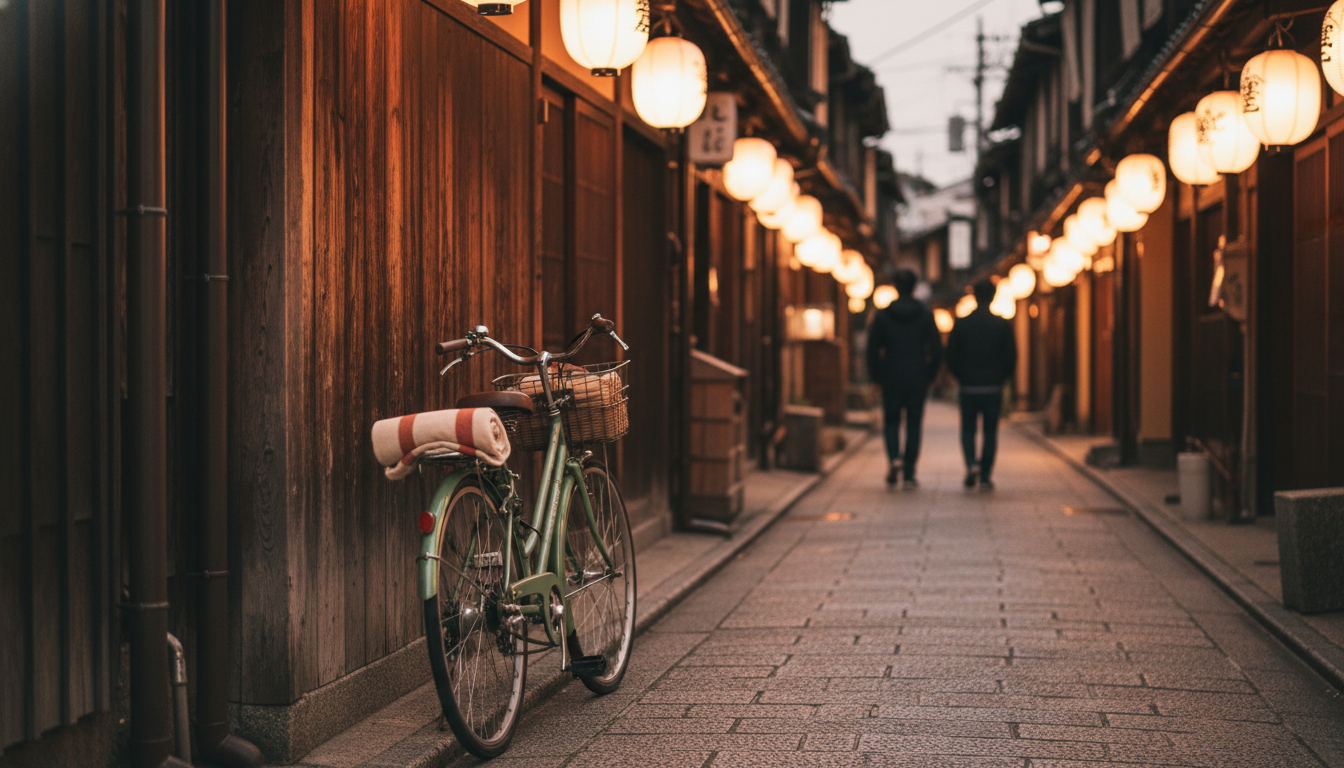 Narrow Nishijin street at dusk with traditional wooden machiya facades, warm light glowing from pape
Higashiyama: Stunning but Complicated
This is postcard Kyoto. Stone-paved streets. Geisha sightings. Temples around every corner. It's absolutely gorgeous.
It's also where you'll find yourself swimming upstream against tour groups every single day.
Honest take: I'd only recommend a Higashiyama home swap if you're the kind of person who's naturally up at 5:30 AM. The neighborhood is genuinely magical before 7 AM, and it empties beautifully after 5 PM too. But midday? It's a theme park. You'll feel like you're in line for a ride that never comes.
Home swap availability: Limited. Most properties here have gone commercial. Genuine home exchanges are rare but do exist—usually in the quieter northern stretches near Ginkaku-ji.
Demachi: My Personal Favorite (Don't Tell Everyone)
Okay, this one I almost didn't want to write about.
Demachi sits where the Kamo and Takano rivers meet. It's a university neighborhood with all the energy and affordability that implies. Not traditional, not picturesque in the guidebook sense. Just vibrant and young and full of cheap eats, vintage shops, and the kind of creative chaos that makes you want to extend your trip.
The vibe: Students cycling everywhere. Excellent kissaten coffee culture. The famous Demachi Masugata shopping arcade—way more authentic than Nishiki Market, which has basically become a tourist attraction. Easy access to both the mountains and downtown.
Home swap availability: Good, actually. Lots of younger Japanese professionals and academics here who travel internationally and are active in home exchange communities. Apartments tend toward modern and compact, but the locations are hard to beat.
Pro tip: The delta where the rivers meet is the best free hangout spot in Kyoto. Locals picnic there. Students study. Couples watch the sunset. It's the opposite of a tourist attraction, and it's perfect.
Other Neighborhoods Worth Considering
Arashiyama: Beautiful but isolated. Great if you want quiet and nature, but you'll spend a lot of time on trains reaching everywhere else.
Fushimi: The sake district, south of central Kyoto. Underrated, affordable, walkable to incredible breweries. Fewer swap options, but worth checking.
Kyoto Station area: Convenient but soulless. Skip it unless logistics trump everything else for you.
How to Find and Secure a Kyoto Home Swap
Real talk: finding a home exchange in Kyoto takes more effort than swapping in Barcelona or London. Japanese homeowners tend to be more cautious. The home exchange community is smaller. Cultural expectations run higher.
But it's absolutely doable. You just have to approach it right.
Making Your Profile Irresistible to Japanese Hosts
Japanese culture values presentation, attention to detail, and demonstrated respect. Your SwappaHome profile needs to reflect all of this.
Photos matter more than you think. Include clean, well-lit shots of every room. Japanese hosts will notice if your space looks cluttered or poorly maintained. Show your home at its best—not staged like a magazine spread, but clearly cared for.
Write a genuine, detailed description. Japanese hosts appreciate thoroughness. Don't just say "cozy apartment." Describe the neighborhood, nearby transit options, what makes your space comfortable. Mention specific amenities: the quality of your kitchen knives, the water pressure in your shower, whether you have a comfortable futon or mattress.
Include a personal introduction. This matters enormously. Share who you are, why you love travel, what draws you to Kyoto specifically. Mention any connection to Japanese culture—have you studied Japanese? Do you love Japanese cinema? Have you visited before? Genuine interest goes a long way.
Timing Your Request Right
Kyoto has extreme seasonal swings in both tourism and swap availability.
Best times for home swaps: Late January through February (cold but uncrowded, plum blossoms start appearing). June (rainy season keeps tourists away, hydrangeas are stunning). Late September through early October (before the autumn leaf madness descends).
Hardest times to find swaps: Cherry blossom season in late March through early April—forget it, everyone wants Kyoto then. Autumn foliage in mid-November, same problem. Golden Week in late April through early May brings a domestic travel surge that swallows everything.
Lead time: Start reaching out 3-4 months ahead. Japanese hosts often plan carefully and genuinely appreciate advance notice.
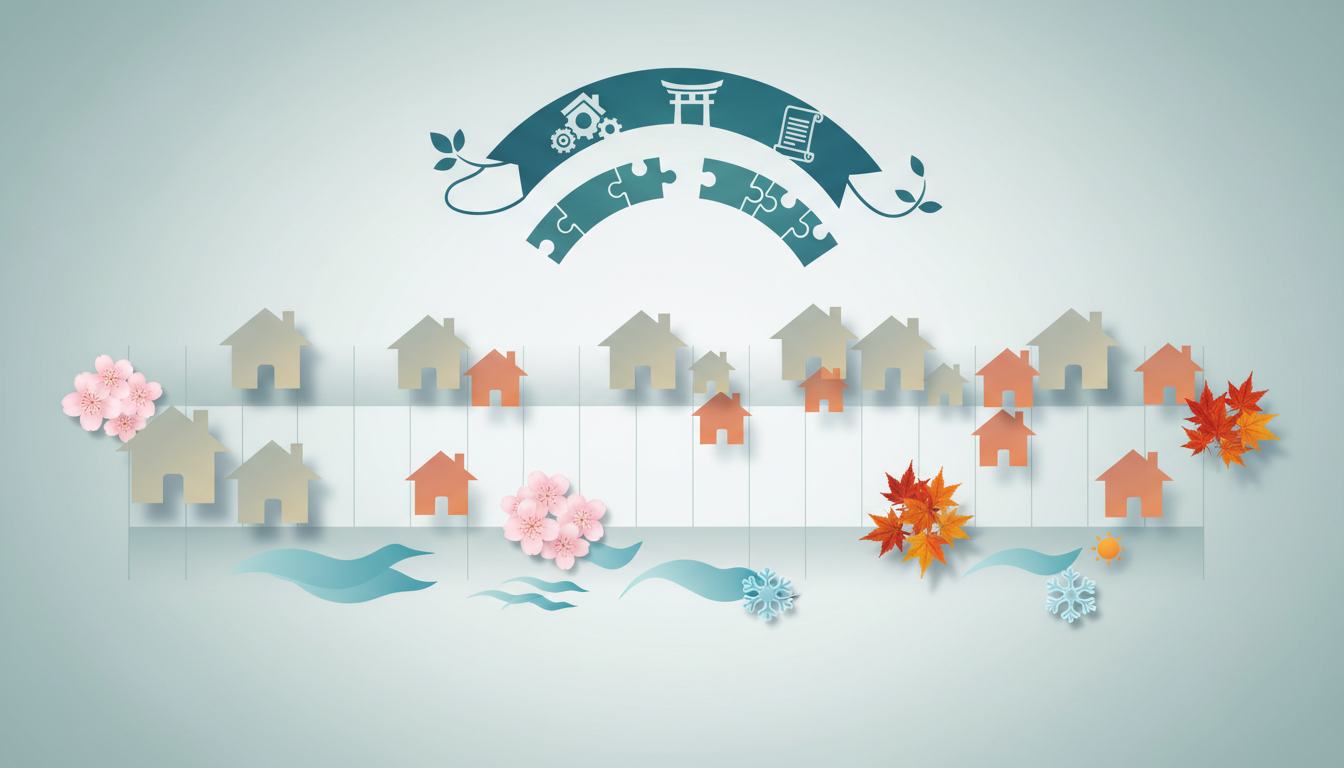 Kyoto seasonal calendar infographic showing best months for home swaps, with cherry blossom and mapl
Crafting Your Request Message
This is where many Western travelers stumble. Japanese communication style is indirect, polite, context-rich. A message that works perfectly for a London swap will feel abrupt—almost rude—in Japan.
Do this: Open with a warm greeting and brief self-introduction. Explain why you're specifically interested in their home and neighborhood—be genuine about it. Share your travel dates with flexibility if possible. Mention your experience with home exchanges and offer references. Ask if they have any questions for you. Close with appreciation for their time.
Sample opening: "Dear Yamamoto-san, I hope this message finds you well. My name is [Name], and I'm a [profession] from [city]. I've been dreaming of spending time in Kyoto's Nishijin district to experience the textile heritage and daily rhythm of the neighborhood. Your beautiful machiya and thoughtful listing immediately caught my attention..."
Avoid: Overly casual language. Assuming the swap is already confirmed. Focusing only on what you want without showing interest in them as people.
Understanding Japanese Home Etiquette: The Unwritten Rules
This section might save your swap. Japanese homes operate on cultural assumptions that aren't obvious to outsiders, and violating them—even innocently—can damage your reputation and hurt the broader home exchange community in Japan.
The Genkan: Your First Test
Every Japanese home has a genkan—an entryway where you remove your shoes before stepping up into the living space. This isn't optional. It's not flexible. Shoes never, ever touch the interior floors.
The system: Leave outdoor shoes in the genkan (usually there's a shoe cabinet). Step up onto the raised floor in socks or bare feet. Your host will likely provide indoor slippers. There will be separate toilet slippers in the bathroom—use them, and never wear them outside the bathroom.
I know this sounds basic. But I've heard horror stories from Japanese hosts about guests who didn't understand or didn't care. Don't be that person.
Trash Separation: It's Serious
Japanese garbage sorting is famously complex, and Kyoto is no exception. Your host should leave instructions, but expect to separate burnable garbage (most food waste, paper), plastics (rinsed, labels removed), PET bottles (caps and labels separated), cans and glass, and cardboard (flattened, bundled).
Collection days vary by neighborhood—sometimes only once a week for certain categories. Ask your host for the schedule and follow it religiously. Leaving garbage out on the wrong day is a serious faux pas that affects your host's relationship with their neighbors.
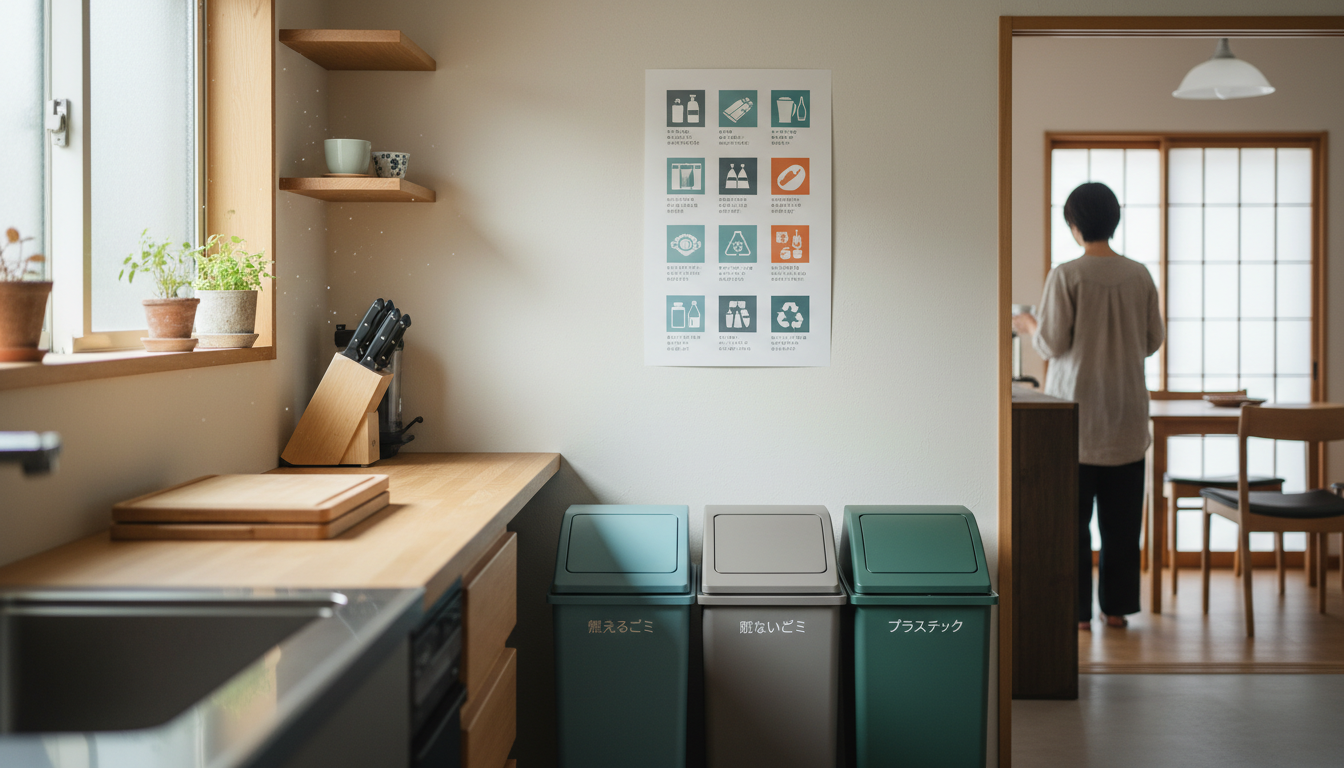 Neatly organized Japanese kitchen corner showing color-coded trash bins with Japanese labels, a smal
Bathroom and Toilet Customs
Japanese bathrooms separate the washing area from the toilet room. The bathtub is for soaking after you've washed and rinsed outside the tub. Never soap up in the tub itself—that water is meant to stay clean for the next person or for reuse.
Many Japanese toilets have elaborate control panels with bidet functions, seat warmers, and sound effects (the "sound princess" button plays flushing sounds for privacy). Don't be intimidated. Experiment. It's actually wonderful once you figure it out.
Noise and Neighbor Relations
Japanese residential neighborhoods are quiet. Really quiet. Sound carries through traditional machiya walls, and neighbors absolutely notice.
No loud conversations after 10 PM. Minimize noise in the morning before 8 AM. Close doors gently. If you're traveling with kids, extra awareness is essential.
Your host's reputation with their neighbors is at stake. Protect it like it's your own.
Leaving the Home Better Than You Found It
Japanese hosts have high standards for cleanliness. Before you leave, clean all surfaces, appliances, and floors. Wash and put away all dishes. Strip beds and fold linens neatly—ask your host if they want you to start laundry. Take out all trash properly. Return everything to its original position. And leave a small thank-you gift.
Gift ideas: Something representative of your home region works beautifully. Local chocolate, specialty food items, a small craft. Nothing too expensive—that creates obligation—but thoughtful. I usually bring San Francisco sourdough chocolate or a nice bottle of California olive oil.
Practical Logistics: Making Your Kyoto Home Swap Work
Getting Around Without a Car
You don't need a car in Kyoto. Honestly, a car would be a hindrance. Parking is expensive, streets are narrow, and public transit is excellent.
Buses are the main way locals get around. Buy an ICOCA card (rechargeable transit card) at any station. Single rides run ¥230, about $1.60. The system is comprehensive but confusing at first—Google Maps will become your best friend.
The subway has two lines, limited coverage but useful for north-south travel.
Bicycles are the absolute best way to experience Kyoto. Many home swap hosts include bikes, or you can rent for about ¥1,000-1,500 per day ($7-10). The city is flat and bike-friendly.
Walking rewards you constantly. Most neighborhoods reveal their best secrets on foot.
Stocking Your Japanese Kitchen
Grocery shopping in Japan is genuinely delightful once you know where to go.
Supermarkets like Life, Fresco, and Izumiya are common chains. Prices are reasonable, quality is high. Most close by 9-10 PM.
Convenience stores—7-Eleven, Lawson, FamilyMart—are everywhere and surprisingly good for quick meals. Onigiri rice balls, salads, bento boxes. Open 24 hours.
Department store basements (depachika) are worth a special trip. Visit the food halls at Takashimaya or Daimaru near Shijo. Expensive but extraordinary—prepared foods, wagashi sweets, specialty items arranged like edible art.
Nishiki Market has gotten touristy but remains worthwhile for specialty ingredients, pickles, and snacks. Go early morning to beat the crowds.
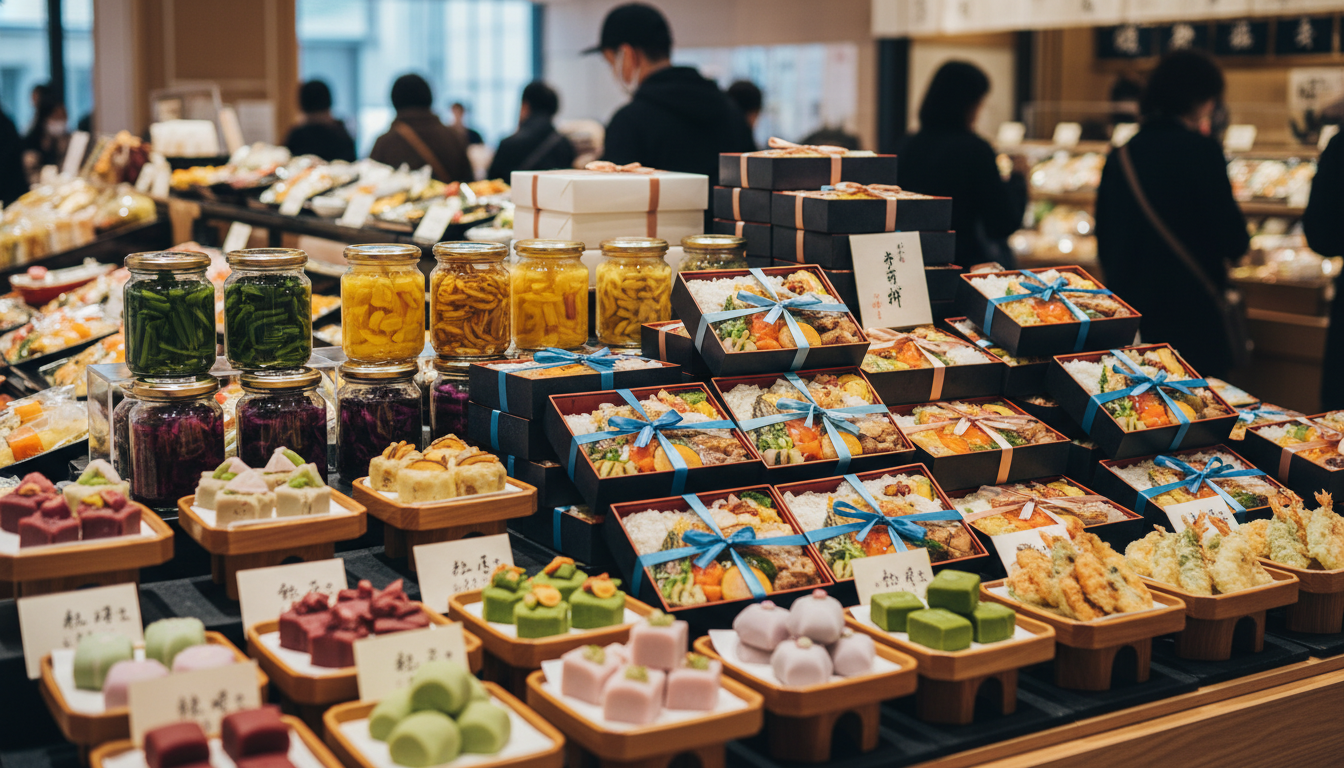 Colorful depachika food hall display showing arranged wagashi sweets, pickled vegetables, and bento
Connectivity and Communication
Most home swap hosts provide WiFi—confirm before booking. For mobile data, pocket WiFi rental is the most reliable option. Reserve online before arrival, pick up at the airport. About ¥900 per day, around $6. eSIMs are increasingly popular—Ubigi and Airalo work well in Japan, and they're cheaper than pocket WiFi for solo travelers. Free WiFi exists at convenience stores, train stations, and many cafes, but it's unreliable for navigation.
Language Basics That Matter
You don't need fluent Japanese. But a few phrases go incredibly far.
Sumimasen (excuse me/sorry)—use it constantly. Arigatou gozaimasu (thank you, polite)—essential. Onegaishimasu (please)—when asking for anything. Oishii (delicious)—makes restaurant staff genuinely happy. Daijoubu (I'm okay/it's fine)—useful in more situations than you'd expect.
Google Translate's camera function handles menus and signs surprisingly well. Download the Japanese language pack offline before you go.
What to Expect From Your Kyoto Home Exchange Experience
Every swap is different. But here's a realistic picture of what Kyoto home exchanges typically look like.
Home Styles You'll Encounter
Traditional machiya are wooden townhouses, often 50-150 years old. Narrow frontage, deep interior, interior garden. Tatami rooms, futon sleeping, sliding shoji screens. Beautiful but can be cold in winter (poor insulation) and hot in summer (no central AC). You're trading comfort for atmosphere.
Modern apartments (manshon) are compact but efficient. Western beds, full kitchens, reliable climate control. Less atmospheric but more comfortable for longer stays.
Suburban houses offer larger spaces, often with parking. Usually requires more transit time to reach central sights but gives you room to spread out.
Realistic Expectations for Amenities
Japanese homes tend to be smaller and more minimalist than Western equivalents. Expect compact kitchens with fewer appliances, smaller refrigerators, futons or smaller beds, efficient but small bathrooms, excellent attention to detail and cleanliness, and high-quality basics like good knives and nice towels.
Don't expect large closets or storage, ovens (many Japanese kitchens have only stovetops and microwaves), clothes dryers (hanging laundry is standard), or central heating (space heaters and kotatsu tables are common).
The Credit System in Practice
On SwappaHome, every night you host someone earns you one credit. Every night you stay somewhere costs one credit. Beautifully simple—whether you're staying in a tiny Tokyo apartment or a sprawling country house, it's the same exchange rate.
New members start with 7 free credits, which gets you a solid week-plus in Kyoto. If you're hosting guests at your home while you're away in Japan, you're earning credits simultaneously. I've had trips where I came back with more credits than I left with.
My Honest Advice After Three Kyoto Home Swaps
I could tell you every Kyoto home swap is perfect. But that wouldn't be true.
My first swap, I struggled with the cold. February, traditional machiya, no central heating. I spent the first two nights shivering under a pile of blankets before I figured out how to properly use the kerosene heater. My host had left instructions. I just hadn't read them carefully enough.
My second swap, there was a miscommunication about arrival time. I waited outside for two hours because my host thought I was coming the next day. My fault for not confirming clearly enough.
But here's the thing: those small struggles are part of what makes home swapping valuable. You learn. You adapt. You develop the kind of travel resilience that makes you better at navigating unfamiliar situations everywhere.
And the rewards? Incomparable.
Waking up to the sound of a bamboo water fountain in a garden that's been tended for generations. Having a neighbor bow and say good morning as you walk to the corner bakery. Finding a handwritten note from your host recommending a temple you'd never heard of—where you end up having a conversation with a monk who speaks perfect English because he spent a decade in Portland.
Those moments don't happen in hotels. They happen when you borrow someone's life for a while and treat it with care.
Getting Started With Your Kyoto Home Swap
If you've read this far, you're probably serious about trying this. Here's how I'd approach it.
Get your SwappaHome profile in excellent shape first. Photos, descriptions, personal introduction—make it shine. Japanese hosts will scrutinize it. Then start browsing Kyoto listings to understand what's available. Note which neighborhoods appeal to you and what home styles you'd be comfortable with.
Reach out to 3-5 hosts whose homes genuinely interest you. Personalize each message. Be patient—responses may take a week or more. Once you've confirmed a swap, ask your host detailed questions. What should you know about the neighborhood? Any specific house rules? What would they like as a welcome gift?
Then go. Stay curious. Make mistakes. Learn from them. Leave the home better than you found it.
Kyoto has been welcoming travelers for over a thousand years. Through home exchange, you get to be part of that tradition in a way that feels honest—not as a consumer of experiences, but as a temporary neighbor, borrowing a piece of someone's daily life and offering yours in return.
That bamboo grove I mentioned at the beginning? It was in my host's tiny backyard garden. Maybe fifteen feet square. I'd walked past a dozen temple gardens that week, all of them larger and more famous.
None of them felt like that one did at 7 AM. Steam rising from my tea. Light changing on the wet leaves. The quiet sounds of a neighborhood waking up around me.
That's what a Kyoto home swap can give you. Not just a place to sleep—a place to belong. Even if only for a little while.
Frequently Asked Questions
Is home swapping in Kyoto safe for solo travelers?
Kyoto is one of the safest cities in the world, and home swapping adds accountability through community reviews. SwappaHome's system means hosts and guests build reputations over time. I've done solo swaps in Kyoto twice and felt completely secure. That said—always trust your instincts, communicate clearly with your host, and consider personal travel insurance for peace of mind.
How much money can I save with a Kyoto home exchange versus hotels?
For a two-week trip, you're looking at roughly $3,500-5,000 in savings compared to mid-range hotels ($180-250/night), or $7,000+ compared to quality ryokans ($400-600/night). Home swaps cost only SwappaHome credits—one per night regardless of the property. New members get 7 free credits to start, so your first Kyoto swap is essentially free accommodation.
Do I need to speak Japanese for a successful Kyoto home swap?
Nope. Most Japanese hosts on SwappaHome communicate in English, and Google Translate handles most situations. That said, learning basics like "sumimasen" and "arigatou gozaimasu" goes incredibly far. Your host will typically leave detailed written instructions, and the messaging system allows clear communication before and during your stay.
What's the best neighborhood in Kyoto for first-time home swappers?
Nishijin. It offers authentic neighborhood life, traditional machiya homes, excellent local amenities, and easy bus access to major sights—all without tourist crowds. Demachi is a close second if you prefer a younger, more energetic atmosphere. I'd avoid Higashiyama unless you specifically want to be in the tourist center and genuinely don't mind the crowds.
When should I book my Kyoto home swap in advance?
Start reaching out 3-4 months before your trip. Avoid cherry blossom season (late March–early April) and autumn foliage (mid-November) unless you book 6+ months ahead—demand is extreme. Best availability comes during January-February, June, and late September, when tourism drops but Kyoto remains beautiful.

Published by
SwappaHome
SwappaHome Editorial Team
Home Exchange & Slow Travel Editorial
The SwappaHome Editorial Team brings together travel research, home-exchange community insights, and platform data to produce practical guides for first-time and experienced home swappers. Every article cites real platforms, current market rates, and verifiable city-level facts so readers can make informed decisions without guessing.
Ready to try home swapping?
Join SwappaHome and start traveling by exchanging homes. Get 7 free credits when you sign up!
Related articles

Bachelor and Bachelorette Parties in Singapore: The Complete Home Swap Group Guide for 2026
Planning a bachelor or bachelorette party in Singapore? Discover how home swapping lets groups of 6-12 stay together in luxury condos, saving thousands while partying in Marina Bay.

Cycling in Lisbon: 7 Home Swap Bike Tour Itineraries for Every Rider
Discover the best cycling routes in Lisbon with these home swap bike tour itineraries—from waterfront paths to hilltop adventures, all starting from your borrowed home.

Graduation Trip to Barcelona: How Home Swapping Gives New Graduates the Ultimate Celebration
Planning a graduation trip to Barcelona? Discover how home swapping lets new graduates explore Spain's most vibrant city without the hostel crowds or hotel costs.