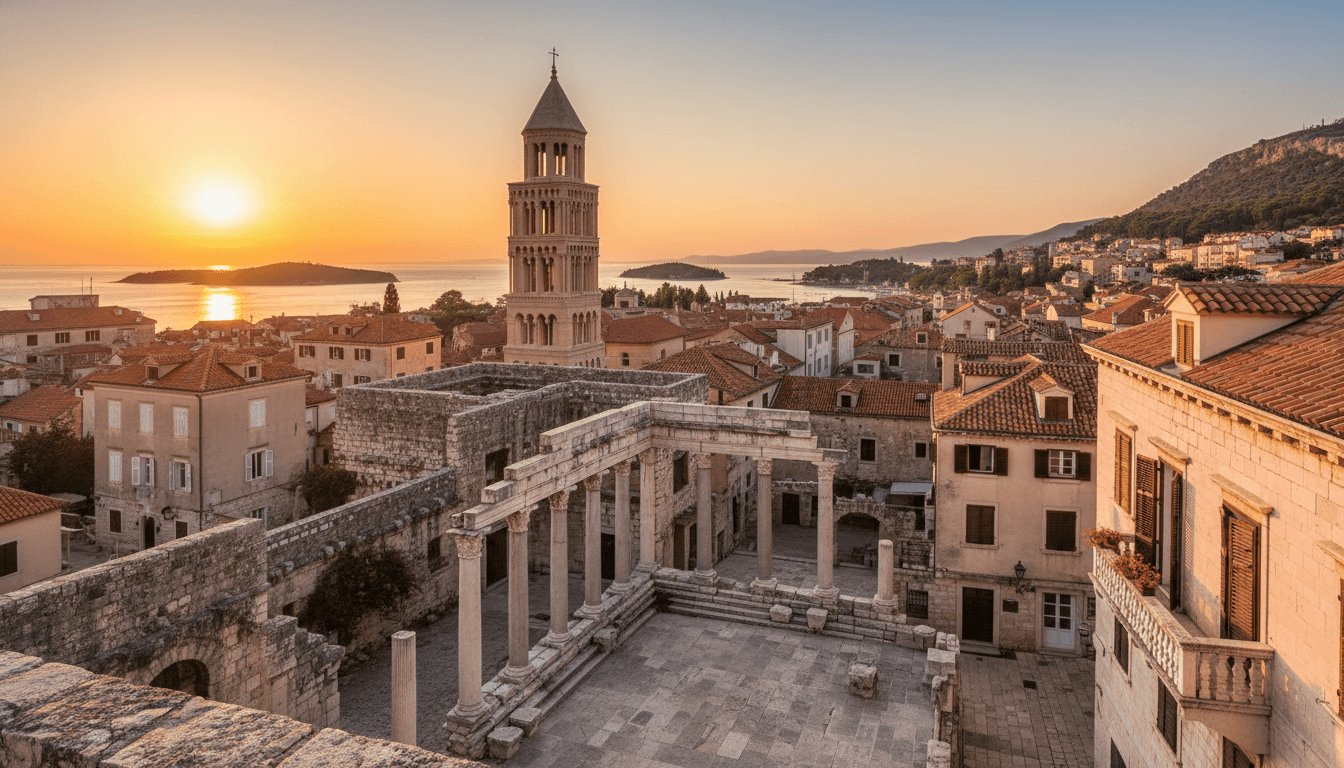
Split on a Budget: How Home Swapping Saves You Thousands in Croatia's Coastal Gem

SwappaHome Editorial Team
Home Exchange & Slow Travel Editorial
Discover how home swapping in Split can save you $2,000+ on accommodation while living like a local in Croatia's most stunning coastal city.
The moment I stepped off the ferry from Hvar and saw Split's waterfront promenade glowing amber in the late afternoon sun, I did something I rarely do—I checked my bank account. Not because I was worried, but because I was genuinely shocked at how little this trip was costing me.
Three weeks in Croatia. Peak summer. Diocletian's Palace practically in my backyard. Total accommodation cost? Zero dollars.
Well, zero dollars exchanged, anyway. I'd spent credits I earned hosting a lovely couple from Melbourne in my San Francisco apartment two months earlier. That's Split on a budget done right—and honestly, it's the only way I travel to expensive destinations anymore.
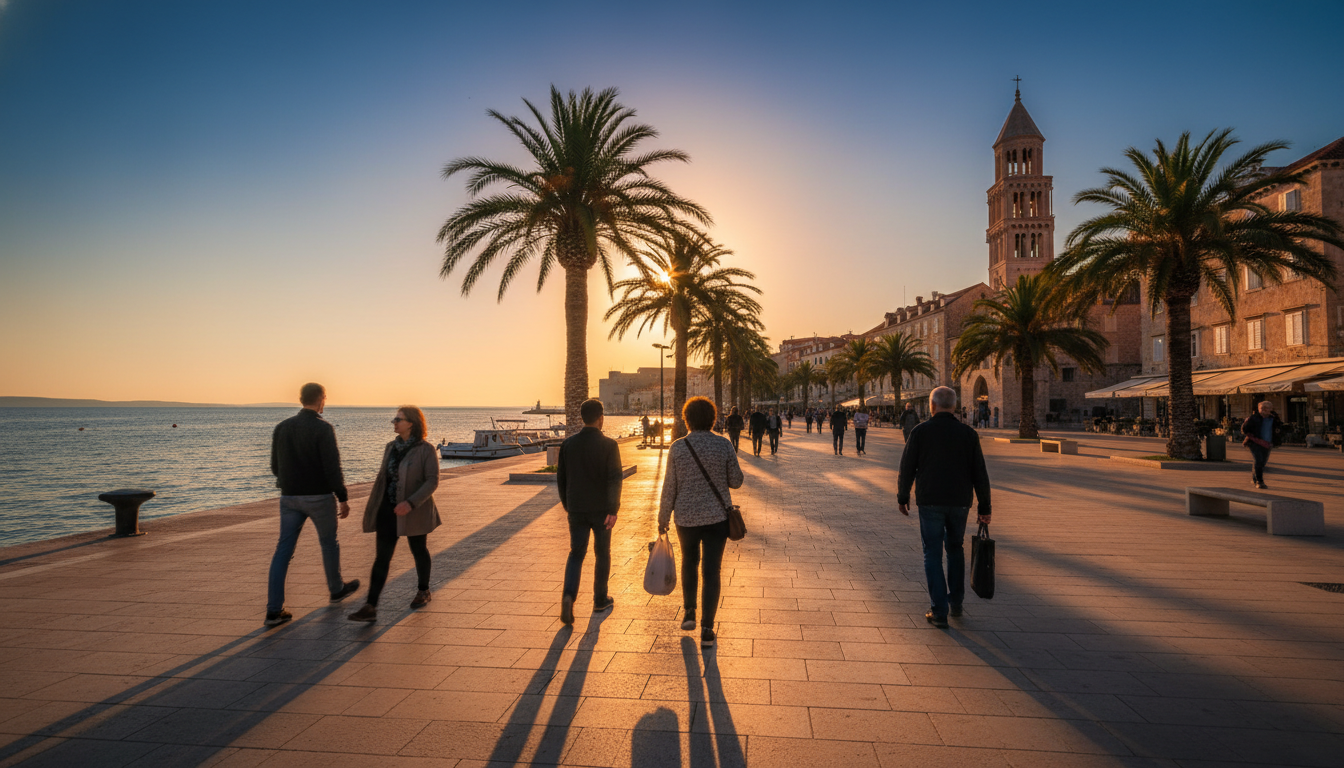 Golden hour view of Splits Riva promenade with locals walking along the waterfront, palm trees swayi
Why Split on a Budget Requires a Different Strategy
Here's the thing about Split that nobody tells you until you're already there, watching your travel fund evaporate like morning mist off the Adriatic: this city has gotten expensive. Like, really expensive.
I remember my first visit back in 2016. You could grab a gorgeous seafood dinner for $15, rent a decent apartment for $60 a night, and feel like you'd discovered Europe's best-kept secret. Fast forward to now? Split has firmly landed on the "it" list. Game of Thrones tourists, cruise ship crowds, Instagram influencers doing that same jumping shot at Klis Fortress—they've all arrived. And prices followed.
Last summer, I watched a friend book a "budget" hotel room near the old town for $180 a night. In July. For a room the size of my bathroom. She spent nearly $2,500 on accommodation alone for two weeks.
Meanwhile, I was making espresso in a sun-filled apartment in Varoš, the old fisherman's quarter, with a terrace overlooking terracotta rooftops and the sea. My cost? The credits I'd banked from previous hosting. This is why home swapping in Split isn't just a nice option—it's become essential for budget-conscious travelers who refuse to sacrifice experience for savings.
How Home Swapping Actually Works (The Credit System Explained)
I get asked about this constantly, so let me break it down simply.
When you join SwappaHome, you start with 7 free credits. Every time you host someone in your home, you earn 1 credit per night—doesn't matter if you've got a studio in Cleveland or a villa in Malibu. Then, when you want to travel, you spend those credits to stay in someone else's home. Again, 1 credit per night, regardless of whether you're booking a cabin in Norway or a penthouse in Dubai.
No money changes hands between members. No complicated negotiations. No "my place is worth more than yours" drama.
The beauty of this system? You don't need a direct swap. I hosted those Australians, and then used my credits to book a place in Split owned by a retired architect from Zagreb who was traveling to Japan. That flexibility is what makes it actually work for real life.
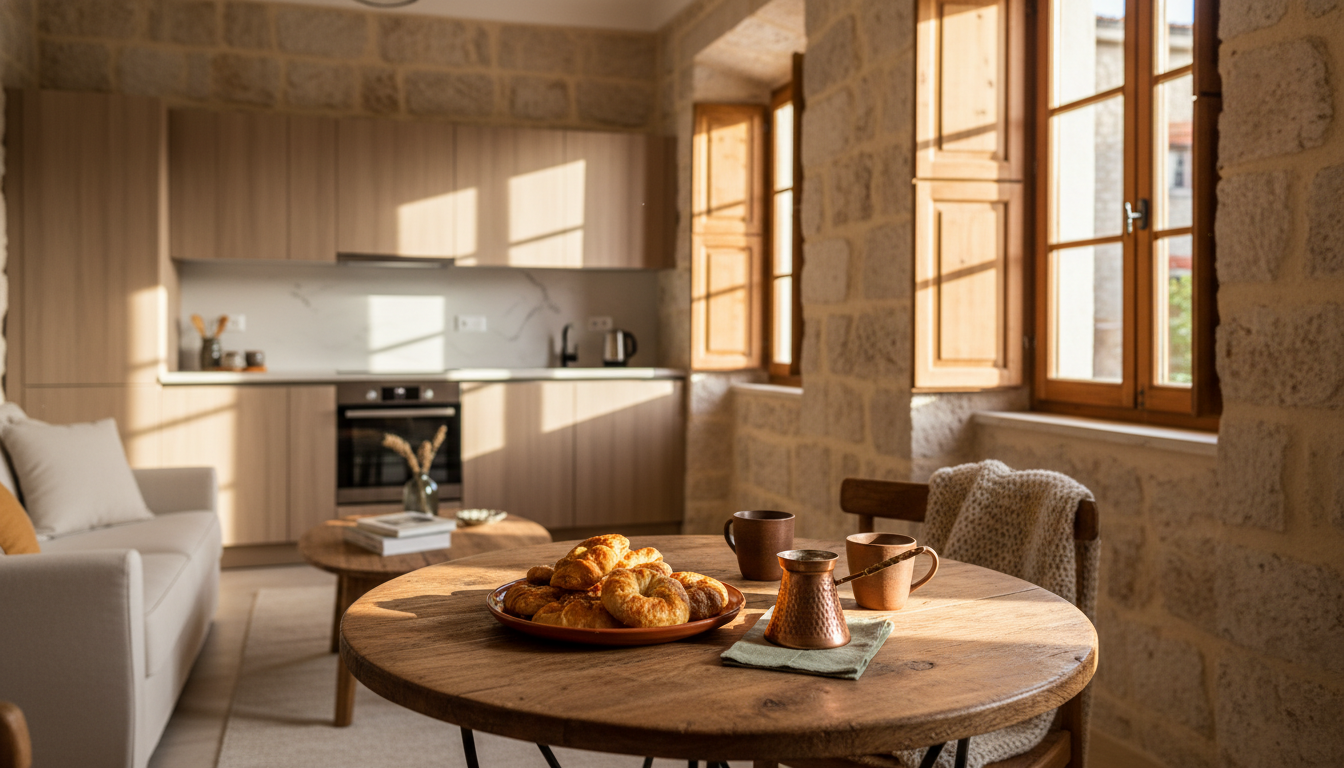 Cozy interior of a traditional Split apartment with exposed stone walls, modern kitchen, and morning
The Real Numbers: Split Hotel Costs vs. Home Swapping Savings
I'm a data nerd. Can't help it. So when I planned my three-week Split trip, I tracked what I would have spent versus what I actually spent. The results made me want to shake every budget traveler I know.
Accommodation Comparison (July, Peak Season)
A decent hotel room in or near Split's old town runs $150-250 per night in summer. Let's be generous and say you found a deal at $150. For 21 nights, that's $3,150.
An Airbnb in a good location? You're looking at $100-180 per night minimum, often with cleaning fees ($50-100) and service fees tacked on. Call it $120/night average plus fees: roughly $2,700 for three weeks.
My home swap apartment in Varoš? I spent 21 credits. Credits I earned by hosting guests in my own home when I wasn't using it anyway. The only money I spent on accommodation was a $50 thank-you gift of local olive oil and wine I left for my host.
That's a savings of over $2,600 on accommodation alone. Enough to cover flights, eat at restaurants every night, and still come home with money in my pocket.
The Hidden Bonus Nobody Talks About
Here's what the savings calculator doesn't capture: home swapping in Split gives you something hotels literally cannot provide. A kitchen.
Croatian markets are spectacular. The Pazar green market behind Diocletian's Palace is a sensory explosion every morning—mountains of tomatoes still warm from the sun, peppers in every color, cheese from Pag island that tastes like the sea air the sheep breathe. I'd grab breakfast supplies for maybe $5 and eat better than any hotel buffet.
Over three weeks, cooking half my meals at home saved me another $400-500 easily. That's Split on a budget working on multiple levels.
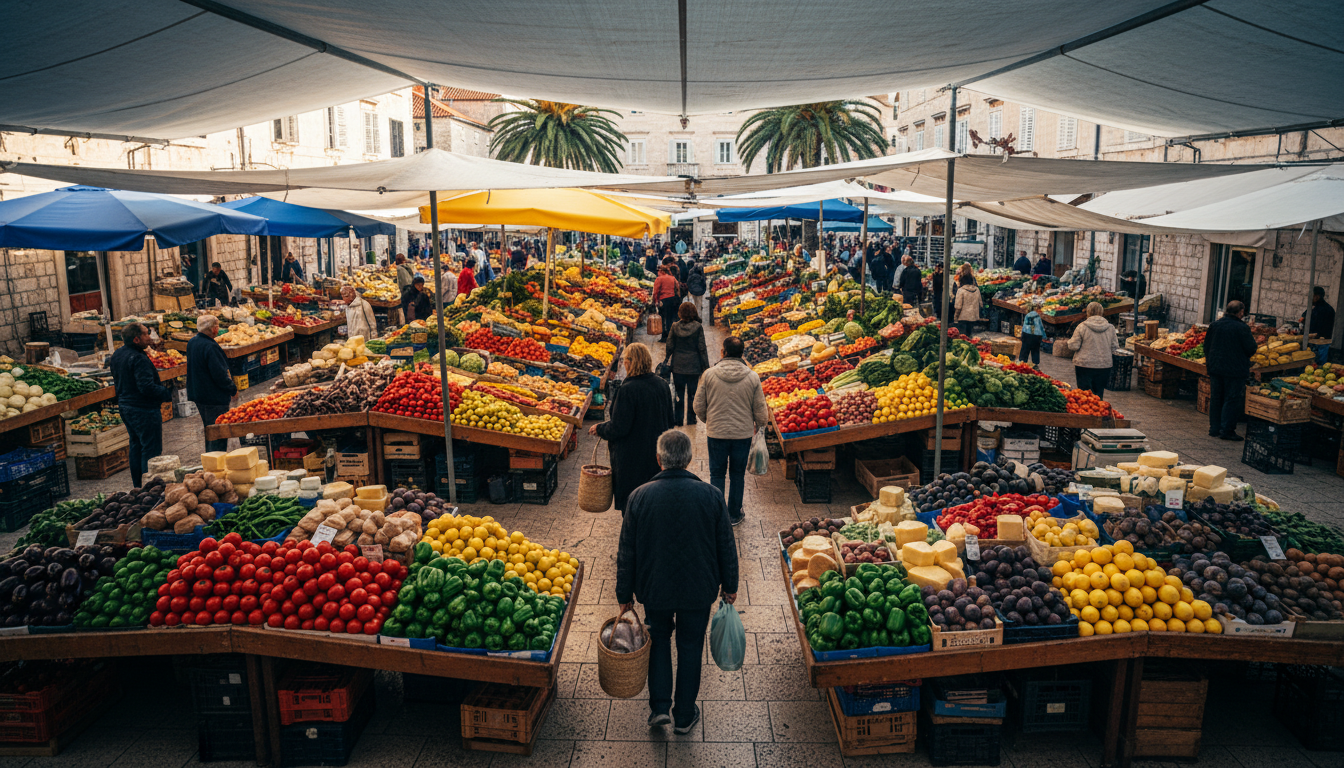 Overhead view of Splits Pazar market with colorful produce stalls, local vendors, and morning shoppe
Best Split Neighborhoods for Home Swapping
Not all Split locations are created equal, and where you stay dramatically affects your experience. After multiple trips and way too many hours scrolling through listings, here's my honest breakdown.
Varoš: My Personal Favorite
This is the old fisherman's quarter climbing the western hill behind the Riva. Narrow stone staircases, cats lounging on every corner, laundry strung between buildings, grandmothers gossiping on doorsteps. It's the Split that existed before tourism took over.
The homes here tend to be older—thick stone walls that keep things cool without AC, traditional layouts, sometimes quirky plumbing. But the authenticity is unmatched. I'd wake up to church bells, walk three minutes to the waterfront, and feel like I actually lived there.
One thing to know: Varoš involves stairs. Lots of stairs. If mobility is a concern, look elsewhere. But if you're able-bodied, the slight inconvenience is worth the atmosphere.
Bačvice Area: Best for Beach Lovers
South of the old town, near Split's famous Bačvice beach—where locals play picigin, that uniquely Croatian game of keeping a small ball in the air while standing in shallow water. More modern apartments here, often with better amenities. You're a 15-minute walk to the old town but steps from the beach.
I stayed here on my second Split trip. The apartment had actual air conditioning—not nothing in August—and a balcony where I'd drink wine and watch the sunset paint the islands pink.
Manuš and Lučac: The Local Vibe
These neighborhoods just north and east of Diocletian's Palace are where young Croatians actually live. More affordable restaurants, less tourist markup, authentic konobas (taverns) where the menu is whatever they made that day.
The trade-off? Less "charming" architecture, more Soviet-era apartment blocks mixed with older buildings. But if you want to feel like a temporary local rather than a tourist, this is it.
What to Avoid
I'd skip anything too far from the center—Split's public transport isn't great, and you'll spend half your vacation in buses or expensive taxis. Also be wary of listings that seem too good to be true in the palace walls themselves; those ancient buildings can be damp, noisy (bars below), and cramped.
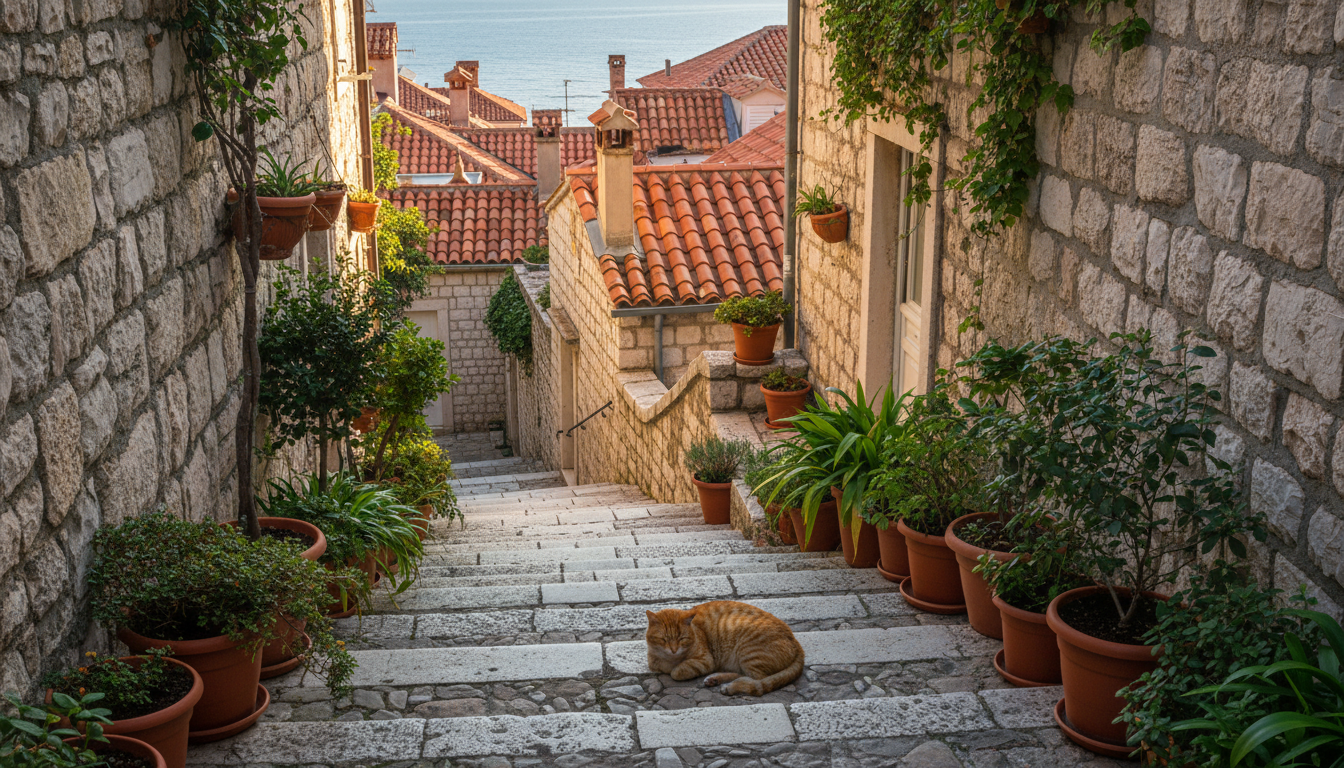 Narrow stone staircase in Splits Varo neighborhood with potted plants on each step, an orange cat sl
My Split Home Swap Story: The Architect's Apartment
I should tell you about the place I stayed, because it illustrates why this whole thing works.
Marin, the owner, is a 68-year-old retired architect who spent his career restoring historic buildings in Dalmatia. His apartment in Varoš was his passion project—a 200-year-old fisherman's house he'd carefully renovated over a decade, preserving original stone walls and wooden beams while adding a modern kitchen and a bathroom that actually had water pressure.
We messaged back and forth for two weeks before I arrived. He told me which café made the best coffee (Lvxor, in the peristyle of Diocletian's Palace, where you can sit where Roman emperors once walked). I told him about the best dim sum in San Francisco. He left me a hand-drawn map of his favorite swimming spots—hidden coves you'd never find on TripAdvisor.
This is what budget travel in Split misses when you book a faceless hotel room. The human connection. The local knowledge. The sense that you're participating in a community rather than just consuming a destination.
Marin's apartment would easily rent for $180/night on Airbnb. I know because I checked. Instead, we exchanged homes, experiences, and recommendations. He used my apartment as a base to visit his daughter in Berkeley. I got three weeks in his labor of love.
Practical Tips for Budget Travel in Split
Beyond accommodation, here's how to stretch your kuna—or euros now, since Croatia switched in 2023.
Eating Well Without Going Broke
Skip anything directly on the Riva promenade—you're paying for the view, not the food. Instead, walk five minutes in any direction.
My go-to spots: Fife in Bačvice is a no-frills konoba where fishermen actually eat. Cash only. The grilled fish is whatever came off the boats that morning, and you'll spend $12-15 for a full meal with wine. Bokeria Kitchen & Wine Bar is slightly fancier but still reasonable—their octopus salad ($14) is the best I've had in Croatia. Make reservations. And Pizzeria Portas sits inside the palace walls but somehow isn't a tourist trap. A massive pizza and a beer for under $15.
For groceries, hit Konzum or Tommy (local supermarket chains) for basics, and the Pazar market for produce. A week's worth of breakfast and lunch supplies costs maybe $30-40.
Getting Around
Split is walkable. That's the whole point.
But if you want to explore the coast, ferries are your friend. Jadrolinija runs regular ferries to nearby islands—a day trip to Brač costs about $8 round trip, Hvar is $15-20 depending on the boat. The bus station is next to the ferry terminal, with buses to Trogir (30 minutes, $4), Omiš (45 minutes, $5), and even Dubrovnik (4 hours, $15-20) running frequently.
Skip rental cars. Parking in Split is a nightmare, and you don't need one unless you're doing serious road-tripping.
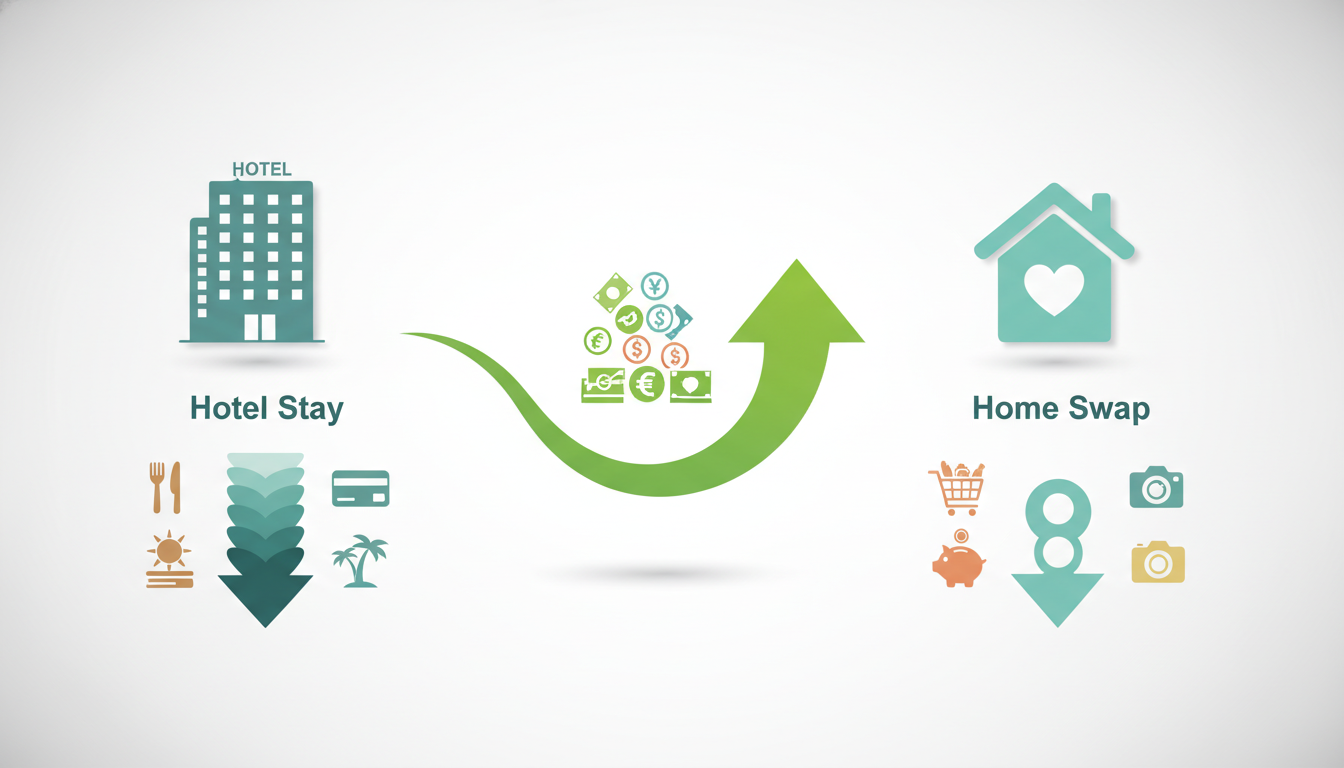 Comparison infographic showing Split travel costs hotel stay vs home swap savings over 2 weeks, with
What to Do in Split Without Spending a Fortune
The best experiences in Split are either free or cheap. Seriously.
Free Things That Don't Feel Budget
Diocletian's Palace is the obvious one. You can wander the ancient Roman palace complex 24/7 without paying anything. It's not a museum—it's a living neighborhood with shops, apartments, and bars built into 1,700-year-old walls. I'd grab a coffee and just sit in the peristyle, watching the world go by.
Marjan Hill is the forested peninsula west of the old town. Hiking trails, hidden beaches, stunning viewpoints, medieval chapels. Pack a picnic and spend half a day. Free.
Swimming costs nothing. Beaches are public in Croatia—Bačvice, Kašjuni, Bene—all free, all gorgeous. Bring a towel, buy a $2 burek from a bakery, and you've got a perfect afternoon.
Worth Paying For
The Split Cathedral bell tower climb runs $7 for panoramic views. Do it at sunset. A day trip to Krka National Park costs about $35 including bus and entrance—waterfalls you can actually swim in. Life-changing. And the Game of Thrones tour ($25-30 for a walking tour of filming locations) is honestly pretty fun even if you haven't watched the show.
The Trust Factor: Is Home Swapping Safe?
I'd be lying if I said I wasn't nervous my first time. Letting strangers stay in my home? Staying in a stranger's home in a foreign country?
But here's what I've learned after 40+ swaps: the system works because everyone has skin in the game.
On SwappaHome, every member has reviews from previous exchanges. You can see their history, read what other hosts said about them, verify their identity. There's a mutual accountability that hotels simply don't have—if someone trashes your place, it shows up in their profile forever.
I've never had a serious issue. A few minor things—someone left dishes in the sink, another guest accidentally broke a wine glass and replaced it with a nicer one. But nothing that made me regret the exchange.
That said, I always recommend getting your own travel insurance that covers accommodation issues, just for peace of mind. And communicate extensively before the swap. If someone gives you weird vibes in messages, trust your gut and decline.
Making Your First Split Home Swap Happen
Ready to try this? Here's the practical playbook.
Step 1: Get your own home listed first. Take good photos. Write an honest description. Mention what's nearby. You don't need a fancy place—I've seen people successfully swap studios, spare rooms, even houseboats.
Step 2: Start hosting to bank credits. Those 10 free starter credits are great, but you'll want more. Open your calendar to guests, be a responsive host, and watch your credit balance grow.
Step 3: Search for Split listings 2-3 months ahead. Summer books fast. Be flexible on exact dates if you can—you'll have more options.
Step 4: Send thoughtful booking requests. Don't just click "book." Write a personal message. Mention why you want to visit Split, ask a question about their neighborhood, show you're a real human who'll respect their space.
Step 5: Communicate like you would with a friend. Once confirmed, exchange local tips, discuss logistics, build rapport. The better your relationship with your host, the better your experience.
The Bigger Picture: Why This Matters
I've been writing about budget travel for years now, and I'll be honest—it's getting harder. Flights are more expensive. Hotels have figured out dynamic pricing. "Budget" destinations get discovered and prices spike.
Home swapping isn't just a hack. It's a fundamentally different way of traveling.
You're not a customer; you're a community member. You're not consuming a destination; you're participating in it. And yes, you're saving thousands of dollars in the process.
Split on a budget used to mean staying in a hostel dorm and eating grocery store bread. Now it can mean waking up in a renovated fisherman's cottage, making coffee on a terrace with sea views, and spending your accommodation savings on experiences that actually matter.
That Melbourne couple I hosted? They're now friends. We've had dinner together twice when they've passed through California. Marin and I still exchange Christmas cards. This is what travel can be when you step outside the transactional hotel model.
So yeah. Split is expensive now. But it doesn't have to be expensive for you.
Frequently Asked Questions
How much can you save with home swapping in Split?
During peak summer season, home swapping in Split typically saves $150-250 per night compared to hotels, and $100-150 per night versus Airbnb. For a two-week trip, that's $2,000-3,500 in accommodation savings alone. Add kitchen access for cooking, and total savings can exceed $3,000.
Is home swapping in Croatia safe for solo travelers?
Yes, home swapping in Croatia is generally safe for solo travelers. SwappaHome's review system lets you vet potential hosts thoroughly before committing. I recommend reading all previous reviews, verifying identity, and communicating extensively before your trip. Consider getting personal travel insurance for extra peace of mind.
When is the best time to home swap in Split?
May-June and September-October offer the best balance of good weather and availability for home swapping in Split. July-August is peak season with fewer listings and more competition. Book 2-3 months ahead for summer, or 4-6 weeks for shoulder season. Winter swaps are easiest to find but weather is unpredictable.
Do I need to speak Croatian for home swapping?
No, you don't need Croatian for home swapping in Split. Most SwappaHome hosts in Croatia speak English, especially in tourist areas like Split. That said, learning basic phrases—hvala for thank you, dobar dan for good day—goes a long way with locals and shows respect for the culture.
What if something goes wrong during my home swap?
Members handle issues directly through communication—most problems are minor and easily resolved. Document any concerns with photos, message your host immediately, and work together on solutions. For serious concerns, having your own travel insurance provides backup coverage. The review system encourages hosts to resolve issues fairly.

Published by
SwappaHome
SwappaHome Editorial Team
Home Exchange & Slow Travel Editorial
The SwappaHome Editorial Team brings together travel research, home-exchange community insights, and platform data to produce practical guides for first-time and experienced home swappers. Every article cites real platforms, current market rates, and verifiable city-level facts so readers can make informed decisions without guessing.
Ready to try home swapping?
Join SwappaHome and start traveling by exchanging homes. Get 7 free credits when you sign up!
Related articles
Bachelor and Bachelorette Parties in Singapore: The Complete Home Swap Group Guide for 2026
Planning a bachelor or bachelorette party in Singapore? Discover how home swapping lets groups of 6-12 stay together in luxury condos, saving thousands while partying in Marina Bay.
Cycling in Lisbon: 7 Home Swap Bike Tour Itineraries for Every Rider
Discover the best cycling routes in Lisbon with these home swap bike tour itineraries—from waterfront paths to hilltop adventures, all starting from your borrowed home.
Graduation Trip to Barcelona: How Home Swapping Gives New Graduates the Ultimate Celebration
Planning a graduation trip to Barcelona? Discover how home swapping lets new graduates explore Spain's most vibrant city without the hostel crowds or hotel costs.