Teaching Kids About Travel Through Home Swapping: A Parent's Complete Guide

SwappaHome Editorial Team
Home Exchange & Slow Travel Editorial
Discover how home swapping transforms family travel into hands-on education. Learn practical strategies for teaching kids about culture, geography, and global citizenship.
My seven-year-old once asked me why the toilet in our Barcelona apartment had two flush buttons. That single question—sparked by something as mundane as bathroom plumbing—led to a thirty-minute conversation about water conservation, Mediterranean climate, and why different places solve problems differently.
That's the thing about teaching kids through home swapping. The lessons don't come from textbooks or museum audio guides. They come from noticing that Spanish families eat dinner at 9 PM. That the washing machine in your Tokyo apartment plays a little song when it's done. That the corner bakery in Lyon doesn't open on Mondays.
I've been swapping homes with my family for five years now—twenty-three exchanges across fourteen countries—and I can tell you that my kids have learned more about the world from living in other people's homes than from any classroom. They've learned empathy by caring for other families' pets. Responsibility by respecting other people's belongings. Adaptability by figuring out how to use a French coffee maker at 6 AM when Mom desperately needs caffeine.
But here's what I wish someone had told me before our first family home swap: there's an art to turning these experiences into lasting lessons. It's not automatic. You have to be intentional without being annoying about it—a delicate balance when you're traveling with kids who'd rather find the WiFi password than discuss cultural differences.
Why Home Swapping is the Ultimate Classroom for Kids
Hotels are comfortable, but they're also bubbles. You wake up, eat the same international breakfast buffet whether you're in Munich or Miami, and venture out to see the sights. The experience is curated, sanitized, and—let's be honest—forgettable for kids.
Home swapping drops your family into real life.
When we stayed in a family's apartment in Copenhagen last summer, my kids discovered that Danish children have different toys, different books, different everything. The family we swapped with had a ten-year-old who'd left behind a collection of LEGO sets my son had never seen—Danish-exclusive designs that sparked a whole conversation about how companies market differently around the world. He's eleven. He now wants to study international business. I'm not making this up.
The educational value goes beyond casual observations. Living in someone's home means shopping at their local grocery store (why is milk in bags in Canada?), using their public transportation (my daughter can now navigate the Paris Métro better than I can), following their household rhythms, and interacting with their neighbors—who often become impromptu cultural ambassadors.
One study from the Family Travel Association found that children who travel internationally show measurably higher levels of curiosity and adaptability. But I'd argue home swapping amplifies this because you're not just visiting a place—you're temporarily becoming part of it.
Preparing Kids for Home Exchange Adventures
The preparation phase is where teaching kids about travel through home swapping actually begins. Weeks before we leave, the lessons start.
Geography Comes Alive
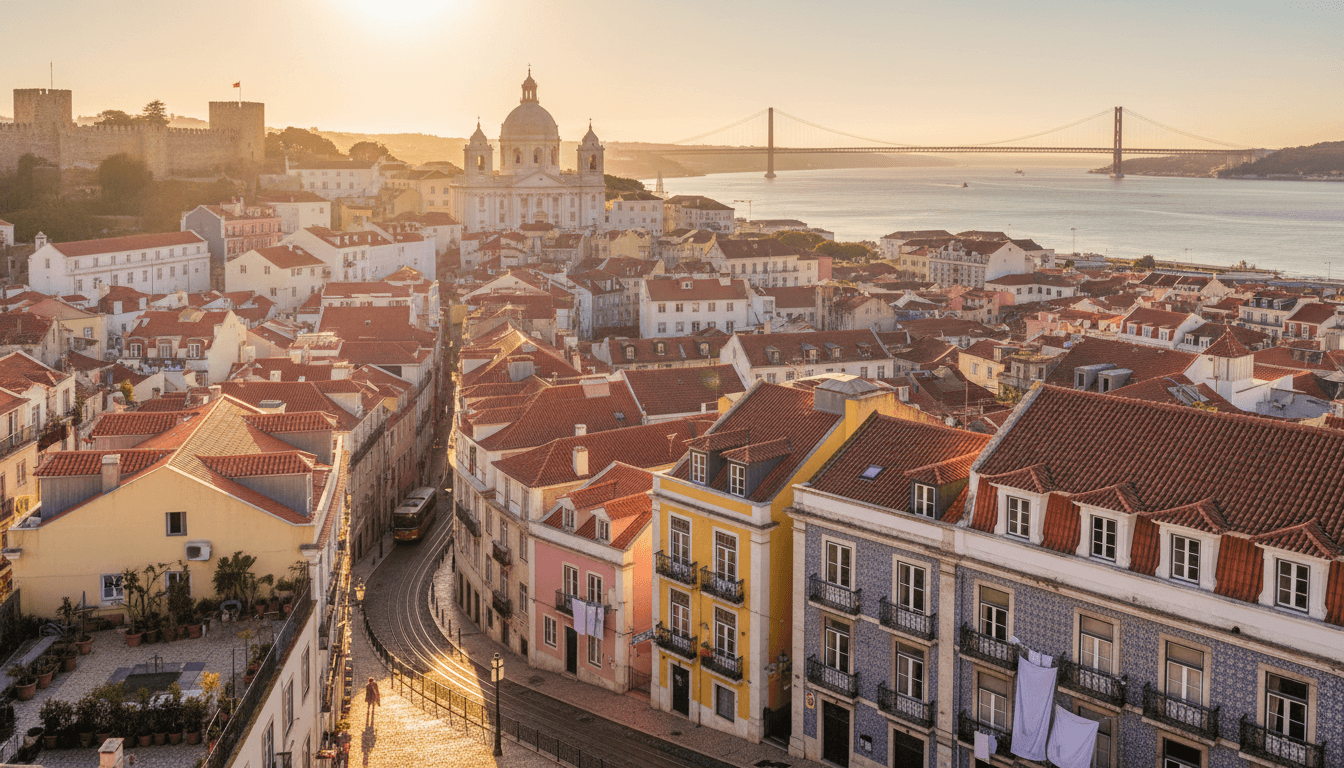
Forget pointing at a map and saying "we're going here." Instead, I involve my kids in the actual planning. When we were considering a swap in Lisbon, I asked my then-nine-year-old to research the neighborhood where we'd be staying. She discovered that Alfama is the oldest district, that it survived the 1755 earthquake, and that Fado music originated there.
By the time we arrived, she was the family tour guide. She'd walk us through narrow streets, explaining why the buildings looked a certain way, why the tiles on the walls told stories. That knowledge stuck because she'd earned it herself.
Have your kids create a "destination journal" before you leave. They research three things they want to see, three foods they want to try, and three questions they want answered. It gives the trip structure and makes them active participants rather than passive tourists.
Understanding the Swap Family
Before every exchange, we have a family meeting about the people whose home we'll be staying in. Through SwappaHome's messaging system, we've exchanged photos, stories, and details about our lives. My kids know the names of the other family's children, their pets, their favorite spots in the neighborhood.
This builds empathy before we even arrive. We're not just staying in "a house in Amsterdam"—we're staying in the home of the Jansen family, who have a cat named Whiskers and a daughter who plays violin. My kids treat the space differently because they see it as someone's real life, not just accommodation.
Setting Expectations (Without Killing the Magic)
Home swapping means accepting that things will be different. The beds might be harder. The shower might be confusing. There might not be a dishwasher.
I frame this as adventure, not inconvenience. "We're going to live like a French family for two weeks," I tell my kids. "That means figuring out how they do things."
This mindset shift is crucial. Instead of complaining that the TV only has French channels, my daughter started watching French cartoons and picked up basic phrases. Instead of whining about the lack of a dryer, my son learned to hang laundry on the line—a skill he still uses at home.
Lessons That Happen Naturally During Home Swaps
The best education during home exchanges isn't planned—it emerges from daily life. Here's what I've watched my kids learn without any formal instruction.
Money and Economics
Nothing teaches currency conversion like a kid wanting to buy candy in a foreign country. When we swapped homes in Stockholm, my son quickly learned that Sweden uses kronor, that things cost more there than at home, and that many places don't accept cash at all.
We give our kids a small daily budget in local currency—usually around $5-10 USD equivalent—and let them manage it. They learn to compare prices, save up for bigger purchases, and understand that the same money buys different things in different places. In Mexico City, my daughter was shocked that her daily budget could buy lunch AND a treat. In Switzerland, she learned that her budget barely covered a hot chocolate.
Language Immersion (Even Without Speaking the Language)
You don't need to be fluent to learn from language immersion. My kids have picked up basic greetings in seven languages, learned how to read food labels by recognizing patterns, mastered the universal language of pointing and smiling, and discovered that trying to speak someone's language—even badly—opens doors.
In our Seville apartment, the elderly neighbor spoke no English. My daughter spent three weeks communicating with her through gestures, drawings, and Google Translate. By the end, they had a genuine friendship. She learned that language is just one way to connect—and that persistence matters more than perfection.
Environmental Awareness
Different countries approach sustainability differently, and kids notice. In Germany, our swap home had an elaborate recycling system with five different bins. My kids became recycling experts out of necessity. In Japan, they learned about the cultural value of not wasting food. In Portugal, they experienced water conservation firsthand during a drought.
These aren't abstract concepts when you're living them. My son now turns off lights obsessively because "that's what they do in Denmark." He has no idea he's absorbed environmental consciousness—he just thinks he's being Danish.
Practical Strategies for Educational Home Swap Travel
After twenty-plus family exchanges, I've developed systems that work. Here's what I've learned about maximizing the educational value without turning your vacation into school.
The Daily Discovery Ritual
Every evening, we do a five-minute "discovery share" at dinner. Each family member shares one thing they noticed that day that was different from home. No pressure, no judgment—just observations.
Recent examples from my kids: "The bread here doesn't come sliced." "Kids walk to school alone here, even little ones." "The pharmacies have green crosses that light up." "Nobody wears shoes inside."
These observations lead to conversations about why things are different. Why don't French people pre-slice bread? (Freshness, texture, different eating habits.) Why do Japanese people remove shoes indoors? (Cleanliness, respect, historical reasons.) The discussions are organic and kid-driven.
Cooking as Cultural Education
One of our family rules: we cook at least half our meals in the swap home, using local ingredients from local markets. This isn't about saving money (though it does—about $50-80 per day compared to restaurants). It's about learning.
Shopping at a foreign grocery store is an adventure. My kids have learned to identify vegetables they'd never seen, to ask for help in other languages, to understand that "normal" food varies wildly around the world. My daughter now loves octopus because she helped prepare it in a Spanish kitchen. My son makes pasta from scratch because an Italian grandmother in our Naples swap taught him.
Neighborhood Exploration Missions
Instead of hitting tourist attractions first, we spend our initial days exploring the immediate neighborhood. I give my kids "missions": find the closest bakery and buy breakfast for the family, count how many different languages you hear on the street, locate the nearest park and report back on what kids are playing, find something beautiful and take a photo of it.
These missions build confidence, observational skills, and genuine knowledge of how locals live. By the time we visit the Eiffel Tower or the Colosseum, my kids have context. They understand that Paris isn't just monuments—it's also the boulangerie where we bought croissants every morning.
Age-Specific Approaches
What works for a five-year-old doesn't work for a fifteen-year-old. Here's how I've adapted our approach as my kids have grown.
Ages 4-7: Sensory Learning
Young children learn through their senses. Focus on tastes (different foods, different flavors), sounds (church bells, street vendors, different languages), textures (cobblestones, different fabrics, unfamiliar toys), and smells (bakeries, markets, flowers unique to the region).
At this age, don't push for deep understanding. Let them experience. A four-year-old doesn't need to understand the history of Rome—they need to feel the bumpy cobblestones under their feet and taste their first real gelato.
Ages 8-12: Curiosity and Comparison
This is the golden age for educational travel. Kids are curious, capable of abstract thinking, but still open to new experiences. Focus on comparing (how is this different from home? why might that be?), investigating (what do you want to know more about?), participating (can we take a cooking class? join a local activity?), and documenting through journals, photos, videos, and scrapbooks.
My daughter started a travel blog at age nine. It's mostly photos of cats she's met in various countries, but the writing has improved dramatically, and she's developed genuine research skills.
Ages 13-18: Independence and Depth
Teenagers want autonomy. Give it to them—within reason. Let them navigate alone (with phone tracking if needed). If they're interested in art, let them spend a whole day at a museum. Encourage them to connect with local teens. Give them real responsibilities: they can handle grocery shopping, cooking, and logistics.
My friend's sixteen-year-old spent their Barcelona swap volunteering at a local animal shelter. She found it herself, arranged it herself, and came home wanting to be a veterinarian. That's education you can't plan.
The Credit System: Teaching Alternative Economics
Here's an unexpected lesson from home swapping: my kids now understand that not everything has to involve money.
SwappaHome uses a credit system—you earn 1 credit for every night you host, and you spend 1 credit for every night you stay somewhere. Simple. But for kids raised in a cash-based economy, this concept is revolutionary.
My son asked, "So we're trading houses?" Sort of, I explained, but not directly. We hosted a family from Berlin, earned credits, and used those credits to stay in Tokyo. The Berlin family might use their credits for New York. It's a web of generosity and trust.
This sparked conversations about sharing economies (Uber, Airbnb, libraries), trust between strangers, value beyond money, and community and reciprocity. My daughter now asks, "Could we share this instead of buying it?" when she wants something. That's a mindset shift that started with understanding home exchange.
Handling Challenges: When Home Swapping Gets Real
I won't pretend every swap has been perfect. Teaching kids about travel also means teaching them to handle difficulties.
When Things Go Wrong
In our Amsterdam swap, the heating broke on our second night. It was March. It was cold.
My kids watched as I calmly messaged the homeowners, found the emergency number they'd left, and worked with a Dutch repair person who spoke limited English. They learned that problems are solvable, that adults don't panic, that communication works even when it's hard. The repair person became a highlight of the trip—my son still talks about how he handed him tools and felt like a "real helper."
When Kids Are Homesick
It happens. Especially on longer swaps. My daughter hit a wall during week two of our month in Portugal. She missed her bed, her friends, her routine.
We didn't cut the trip short. Instead, we created "home touches"—video calls with friends, cooking her favorite meal, finding a playground that reminded her of home. We also talked about how the Portuguese kids in our neighborhood might feel if they were in San Francisco. Empathy works both ways.
When Cultural Differences Are Hard
Not every difference is charming. My kids struggled with the lack of air conditioning in our southern France swap during a heat wave. They didn't understand why the family didn't have screens on windows (bugs everywhere). They were frustrated that everything closed between 2-5 PM.
These moments are teaching opportunities. We discussed why air conditioning is less common in Europe (energy costs, older buildings, different climate history). We talked about siestas and different approaches to work-life balance. We didn't have to agree that the French way was better—we just had to understand it.
Creating Lasting Memories and Lessons
The goal isn't to turn every moment into a lecture. It's to create experiences that naturally teach.
Documentation That Kids Actually Enjoy
Forget forcing kids to keep traditional journals. Try photo challenges (take a photo of something red every day), voice memos (record sounds and reactions), a postcard tradition (send one to themselves from every destination), or collection building (ticket stubs, coins, small souvenirs).
My daughter has a box of foreign coins that she uses to tell stories. Each coin triggers memories—the gelato shop in Rome, the metro in Paris, the street performer in Barcelona.
Post-Trip Processing
The learning continues after you're home. We have a tradition of creating a "trip book" together—a combination of photos, writing, and mementos. But we wait a month before starting. By then, the kids remember what actually mattered, not just what they thought was important in the moment.
We also cook meals from our swap destinations. Last month, we made the pasta recipe we learned in Naples. My son remembered the grandmother who taught him, the tiny kitchen, the way she insisted we use "enough salt, more salt, always more salt." Food triggers memory like nothing else.
Getting Started with Family Home Swapping
If you're ready to try this, here's how to begin.
Create a profile on SwappaHome that highlights your family. Include photos of your kids' rooms (other families want to know their children will be comfortable). Mention your kids' ages and interests. Families with children tend to swap with other families with children—there's an unspoken understanding about kid-friendliness.
Start with a short swap—three to five nights—somewhere relatively familiar. Your first exchange shouldn't be a month in rural Japan. Try a nearby city or a country where you speak the language. Build confidence before going adventurous.
Involve your kids in choosing the destination. Show them listings and let them vote. When they've had input, they're invested in the experience.
And remember: the goal isn't perfection. The goal is presence. The messy moments, the confusing moments, the "why is the toilet different" moments—those are the lessons. Embrace them.
My daughter is twelve now. Last week, she came home from school and told me about a new student from Brazil. "I showed him around," she said. "I told him it's confusing at first, but you figure it out. That's what travel taught me."
That's what I want for my kids. Not just stamps in a passport, but the deep knowledge that the world is big, people are different, and different isn't scary—it's interesting. Home swapping gave us that. It can give your family that too.
Frequently Asked Questions
Is home swapping safe for families with children?
Home swapping through platforms like SwappaHome includes member verification and review systems that help build trust. Most families swap with other families, creating natural accountability. You're staying in someone's real home while they're in yours—both parties have strong incentives to be respectful. Many parents also choose to get their own travel insurance for additional peace of mind.
What age is best to start teaching kids about travel through home swapping?
Children as young as four can benefit from home exchange travel, though the lessons differ by age. Young children (4-7) learn through sensory experiences—new foods, sounds, and textures. The sweet spot is ages 8-12 when kids are curious, capable of comparison, and still open to new experiences. Teenagers benefit from the independence home swapping allows.
How much money can families save with home swapping versus hotels?
Families typically save $150-400 per night compared to hotels, depending on the destination. A two-week family vacation could save $2,100-5,600 on accommodation alone. SwappaHome's credit system means no money changes hands—you earn 1 credit per night hosting and spend 1 credit per night staying, regardless of location or home size.
How do I prepare my kids for staying in a stranger's home?
Start by introducing the swap family through photos and messages before you travel. Explain that you'll be caring for someone's home just as they're caring for yours. Create a "destination journal" where kids research the location and develop questions they want answered. Frame differences as adventures, not inconveniences—"we're going to live like a French family" works better than listing what might be different.
What if my child gets homesick during a home swap?
Homesickness is normal, especially on longer exchanges. Create "home touches" like video calls with friends, cooking familiar meals, or finding playgrounds similar to ones at home. Use it as a teaching moment about empathy—discuss how children in your swap location might feel visiting your hometown. Don't cut trips short immediately; often the homesickness passes within a day or two.

Published by
SwappaHome
SwappaHome Editorial Team
Home Exchange & Slow Travel Editorial
The SwappaHome Editorial Team brings together travel research, home-exchange community insights, and platform data to produce practical guides for first-time and experienced home swappers. Every article cites real platforms, current market rates, and verifiable city-level facts so readers can make informed decisions without guessing.
Ready to try home swapping?
Join SwappaHome and start traveling by exchanging homes. Get 7 free credits when you sign up!
Related articles

Bachelor and Bachelorette Parties in Singapore: The Complete Home Swap Group Guide for 2026
Planning a bachelor or bachelorette party in Singapore? Discover how home swapping lets groups of 6-12 stay together in luxury condos, saving thousands while partying in Marina Bay.
Cycling in Lisbon: 7 Home Swap Bike Tour Itineraries for Every Rider
Discover the best cycling routes in Lisbon with these home swap bike tour itineraries—from waterfront paths to hilltop adventures, all starting from your borrowed home.

Graduation Trip to Barcelona: How Home Swapping Gives New Graduates the Ultimate Celebration
Planning a graduation trip to Barcelona? Discover how home swapping lets new graduates explore Spain's most vibrant city without the hostel crowds or hotel costs.